A lot of people start looking up electrical safety standards after something small feels off. A breaker trips more than it used to. An outlet in the garage looks old. A remodel, hot tub, tenant improvement, or EV charger suddenly turns an older panel into a real question mark.
For homes and small businesses across Northern Utah, safe electrical work isn't just about making power work. It's about making sure the whole system is still suitable for how the property is being used today.
Understanding NEC and Local Utah Electrical Codes
Most property owners hear “code” and picture one giant rulebook. That's close, but not quite right.
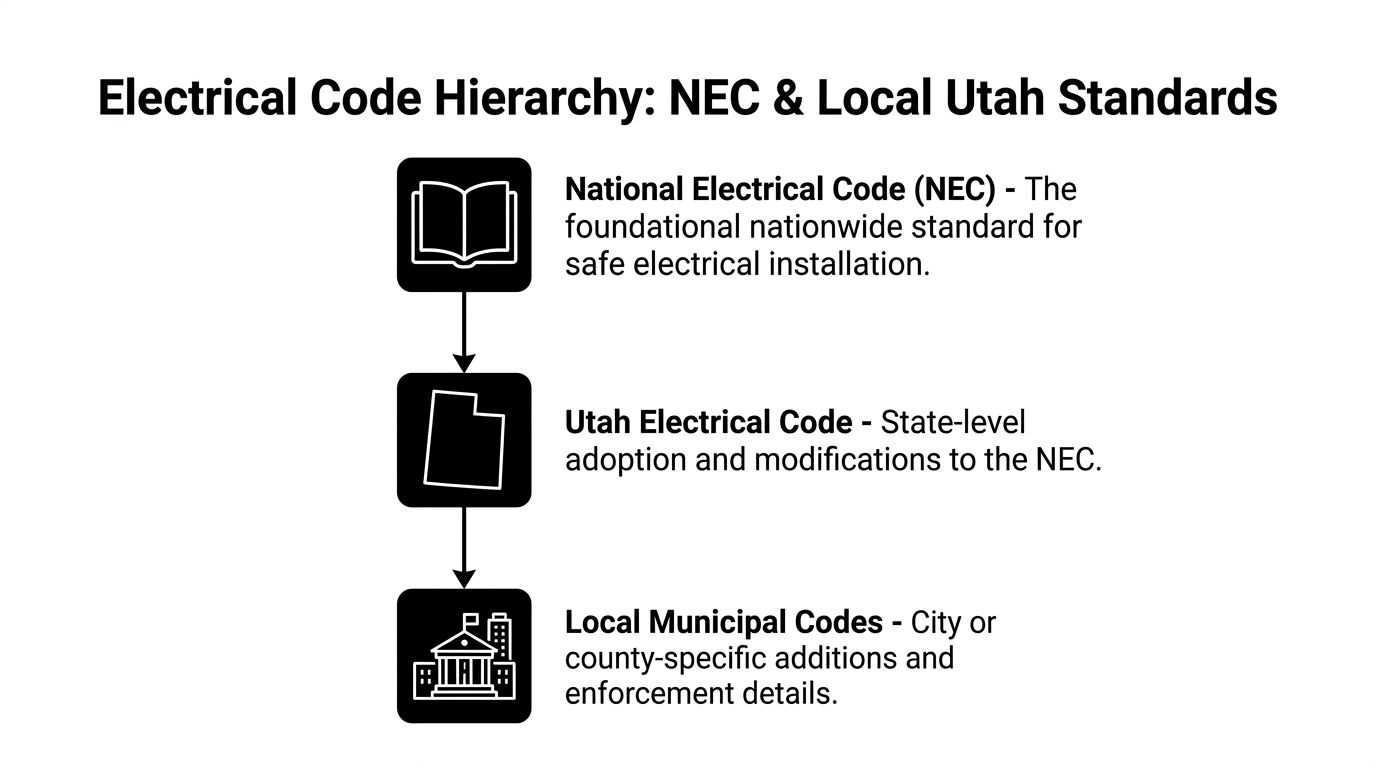
The National Electrical Code, usually called the NEC, is the main safety standard electricians, inspectors, and contractors work from across the country. It sets the baseline for how electrical systems should be installed so people and buildings are protected from shock, overheating, and fire. But the NEC by itself isn't the full answer for a project in Ogden, Layton, Bountiful, or Salt Lake City.
How the code hierarchy works
The easiest way to think about it is a funnel.
At the top, the NEC gives the national safety framework. In the middle, Utah adopts and applies that framework at the state level. At the bottom, local jurisdictions handle enforcement details, permit processes, and inspection expectations. That's why a generic internet answer often misses what really matters on an actual job site.
A homeowner might read that a project is “minor” and assume no permit is needed. Then the city says otherwise because the scope changed when a circuit was extended, a panel was touched, or a service upgrade became part of the work. That's where a local permit and inspection process matters as much as the wiring method itself. This homeowner's guide to electrical permits is useful if the job involves a remodel, panel change, new circuit, or equipment addition.
Practical rule: National code tells you the safety standard. State adoption and local enforcement tell you how that standard gets applied to your specific property.
Why local experience matters in Northern Utah
Older housing stock changes the conversation. A newer home in a planned subdivision usually raises different issues than an older home with remodels added over time, unfinished basement work, swapped fixtures, or circuits that were extended long after the original build.
Small commercial spaces have the same problem. A storefront may look simple from the front, but inside the panel there may be years of tenant changes, abandoned wiring, mislabeled breakers, overloaded circuits, and equipment added without a full load review.
That's why code compliance isn't just “meeting NEC.” It means asking the right local questions:
- Was the work permitted: If not, an inspector may require corrections before new work can move forward.
- Does the existing system support the new load: Panels, feeders, and branch circuits all matter.
- Are safety devices current: Protection standards have changed a lot over time.
- Will the local inspector expect more than a basic replacement: Sometimes the scope triggers related upgrades.
What owners should ask before work starts
Before approving electrical work, it helps to ask a contractor a few direct questions:
- What code cycle applies here
- Will this require a permit and inspection
- Does the existing panel have room and capacity
- Are there any visible code issues that should be corrected while the job is open
- Will this change trigger GFCI, AFCI, grounding, or dedicated-circuit requirements
That kind of conversation usually reveals very quickly whether the work is being approached as a patch job or as a safe installation.
Essential Safety Devices GFCIs and AFCIs
A lot of older homes in Weber, Davis, and Salt Lake counties still work without the safety devices that newer homes take for granted. The lights come on, the microwave runs, and nothing looks urgent. That doesn't mean the protection is up to modern standards.
GFCIs and AFCIs solve different problems. Mixing them up is common, but they don't do the same job.
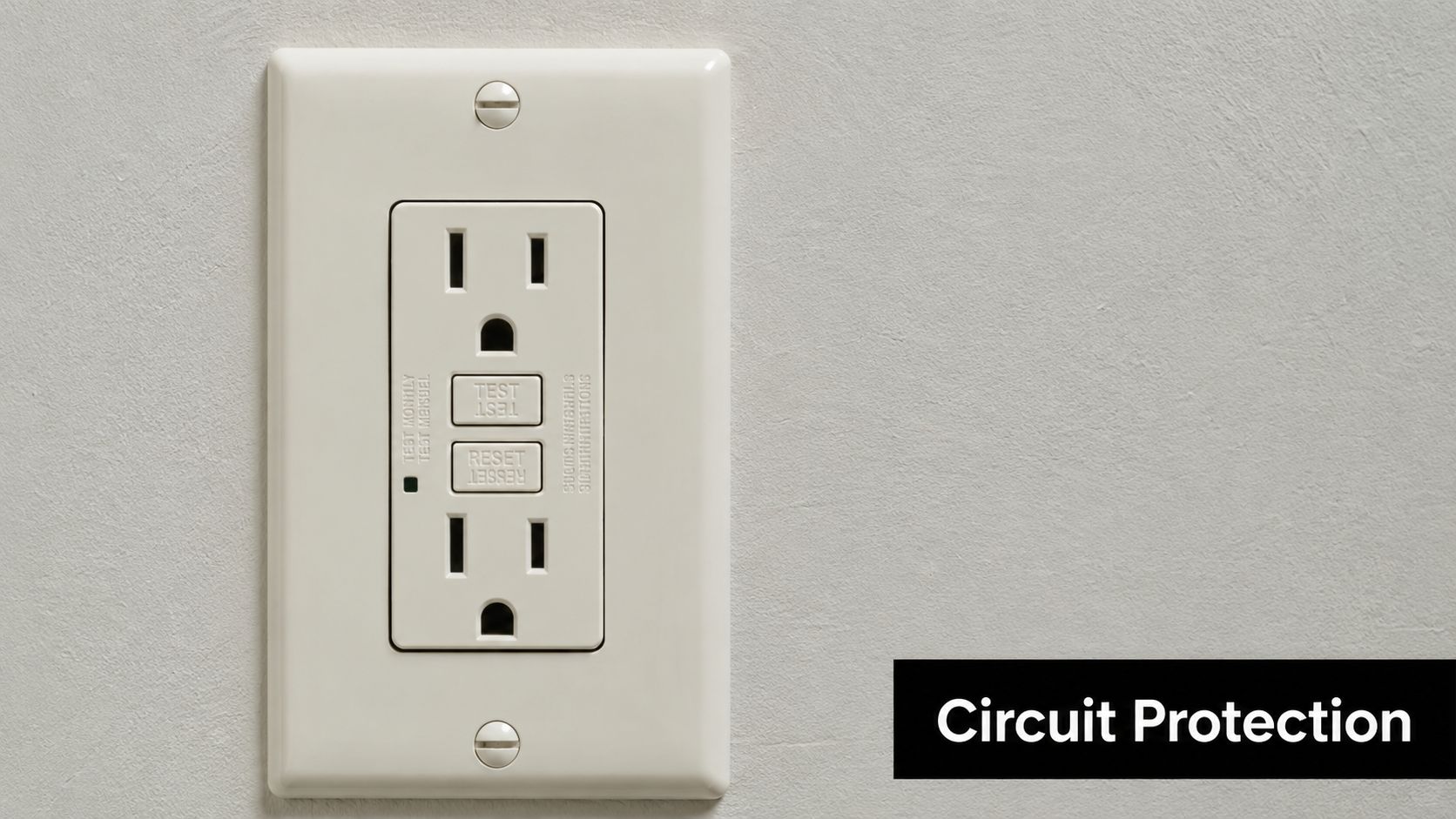
What a GFCI does
A GFCI protects people from shock. It watches for current going where it shouldn't, such as through water, a damp surface, or a person. If it senses that imbalance, it cuts power fast.
In Utah, GFCIs are mandatory in all areas near water, including outdoor outlets, garages, basements, kitchens, and laundry rooms, as outlined in this Utah electrical safety maintenance guide. That's one of the clearest examples of how electrical safety standards affect everyday spaces, not just specialized equipment rooms.
A simple way to picture it is this: a breaker protects the circuit, but a GFCI protects the person.
What an AFCI does
An AFCI is aimed at fire prevention. It looks for dangerous arcing patterns that can happen when a conductor is damaged, a connection is loose, or wiring has started to break down inside a wall or device box.
That matters in older homes where the wiring may have been altered multiple times. A loose connection behind an outlet might not trip a standard breaker right away, but it can still create heat and damage over time. AFCI protection helps catch that kind of fault earlier.
For a straightforward breakdown of how these two protections differ, this guide to home electrical safety devices is a good reference.
A house can feel “fine” for years and still be missing the two devices that most directly reduce shock and fire risk on everyday circuits.
What homeowners and business owners can safely check
No one should open energized equipment or start testing live conductors without proper training. But there are a few safe observations that help identify whether an upgrade is worth discussing.
- Look at receptacles near sinks or in garages: A GFCI outlet usually has test and reset buttons.
- Check the panel directory: If breakers are labeled as AFCI or GFCI protected, that helps show what circuits were updated.
- Notice nuisance tripping patterns: Repeated trips on one area can point to a fault, damaged device, or poor connection.
- Watch for mixed outlet types in one room: That often suggests partial upgrades over time instead of a coordinated safety update.
Where older properties usually fall short
The compliance gap in older Northern Utah homes usually shows up in familiar places:
- Basement finishes from years ago: Added outlets, lighting, or bedrooms may not have current protection.
- Garage conversions or workshop areas: More tools and more moisture exposure create more risk.
- Kitchen remodels with only cosmetic updates: New surfaces get installed while old branch-circuit protection stays in place.
- Rental turnovers: Quick fixes often replace the visible device, not the underlying safety problem.
For small businesses, break rooms, utility sinks, exterior receptacles, and storage areas are common trouble spots. The outlet works, so people assume it's acceptable. But code doesn't judge by whether it powers on. It judges by whether it protects the people using it.
Safe Panels Grounding and Wiring Requirements
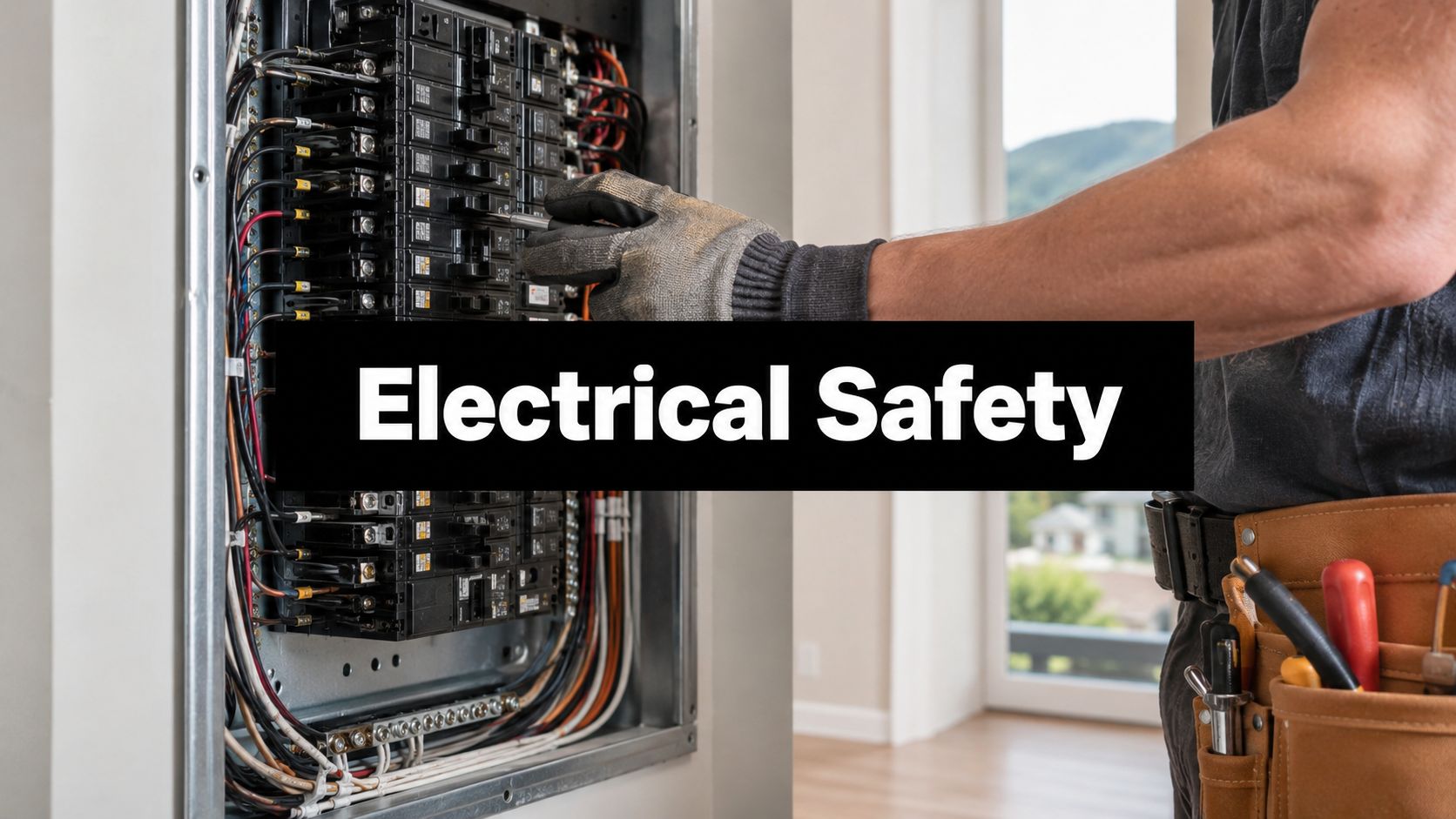
The panel is where a lot of hidden problems finally become visible. It doesn't have to look burned or broken to be unsafe. Poor labeling, blocked access, missing bonding details, loose terminations, undersized conductors, and years of add-on work can all turn a routine service call into a correction list.
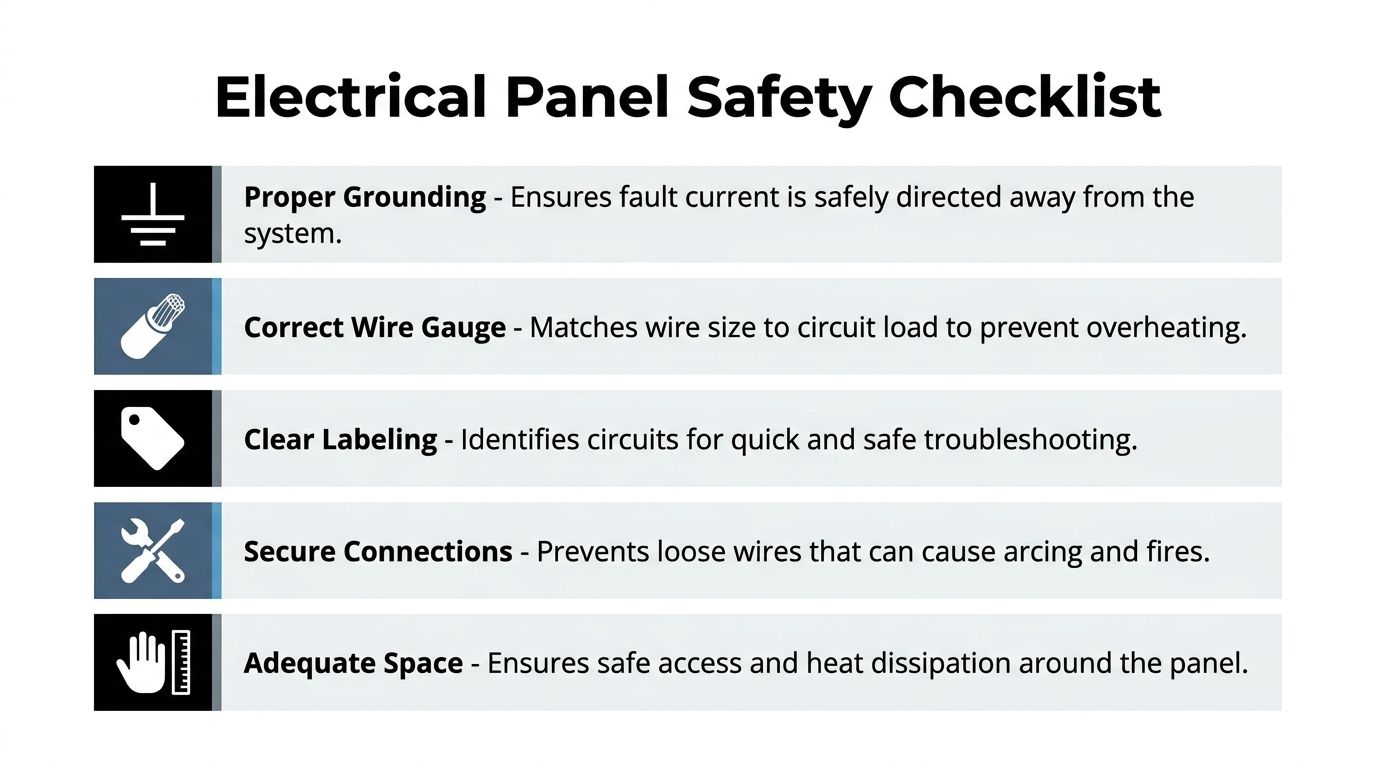
Panel clearance isn't optional
Utah follows NEC 2023 §110.26(A) without state amendments for panel working space. That means the required space is 30 inches wide, or the panel width if greater, 36 inches deep from the panel face, and clear to a height of 6 feet 6 inches from the floor, and that area can't be used for storage, as summarized in this review of Utah's key amendments to MEP codes.
That rule gets ignored all the time in utility rooms, garages, back offices, and storage closets. Shelving gets built in front of the panel. Paint cans and holiday bins get stacked below it. Freezers, file cabinets, and carts migrate into the workspace.
The code reason is simple. If someone needs to shut off power, troubleshoot a fault, or work safely on the equipment, there has to be enough room to stand there and access it without obstacles.
What a safe panel area should look like
A quick visual check should show a clear working zone, a readable panel directory, and no signs of overheating or damage. Here's a simple reference:
| Item | What to look for |
|---|---|
| Access | Nothing stored in front of the panel |
| Labeling | Breakers identified clearly enough to be useful |
| Cover condition | No missing knockouts or damaged panel cover |
| Heat signs | No scorch marks, melting, or discoloration |
| Add-on work | No obvious abandoned wires or makeshift modifications |
For panel concerns, a qualified breaker panel electrician can inspect load capacity, breaker condition, terminations, and whether the equipment is still appropriate for the property's current use.
Grounding and conductor sizing matter
Grounding gives fault current a safe path. When it's done correctly, the system has a way to clear dangerous faults instead of letting metal parts stay energized. That protects people and helps protective devices operate the way they're supposed to.
For lighting fixtures, clear explanations of safe ground wire connections for lights can help owners understand why the grounding conductor isn't just an extra wire to tuck aside. It has a real safety role.
Conductor size matters too. The minimum conductor cross-sectional area listed in the general specification for electrical installation includes 1.0 mm² for 6 A circuits, 1.5 mm² for 10 A circuits, and 2.5 mm² for 16 A circuits, with flexible cords requiring at least 0.75 mm², and the Circuit Protective Conductor requiring at least 1.5 mm² when integrated in the same cable and 2.5 mm² if separate. The safety point is straightforward. Undersized conductors overheat.
If the wire is too small for the load, the insulation usually suffers before the owner notices a problem.
Warning signs that deserve a service call
Some issues are visible without touching live equipment:
- Frayed or brittle insulation
- Two-prong receptacles where grounded equipment is now being used
- Extension cords serving as permanent wiring
- Buzzing at the panel or devices
- Lights dimming when larger loads start
- Warm outlets, switches, or breaker handles
Those signs don't identify the exact failure, but they do tell an electrician where to start.
Code Compliance for Modern Upgrades like EV Chargers
Modern electrical upgrades often fail for one reason. People focus on the new device and forget the old system feeding it.
That shows up constantly with EV charging. A homeowner sees open wall space in the garage and assumes the installation question is just where to mount the charger. However, the key question is whether the service, panel, breaker space, grounding, and dedicated circuit arrangement can support that load safely.
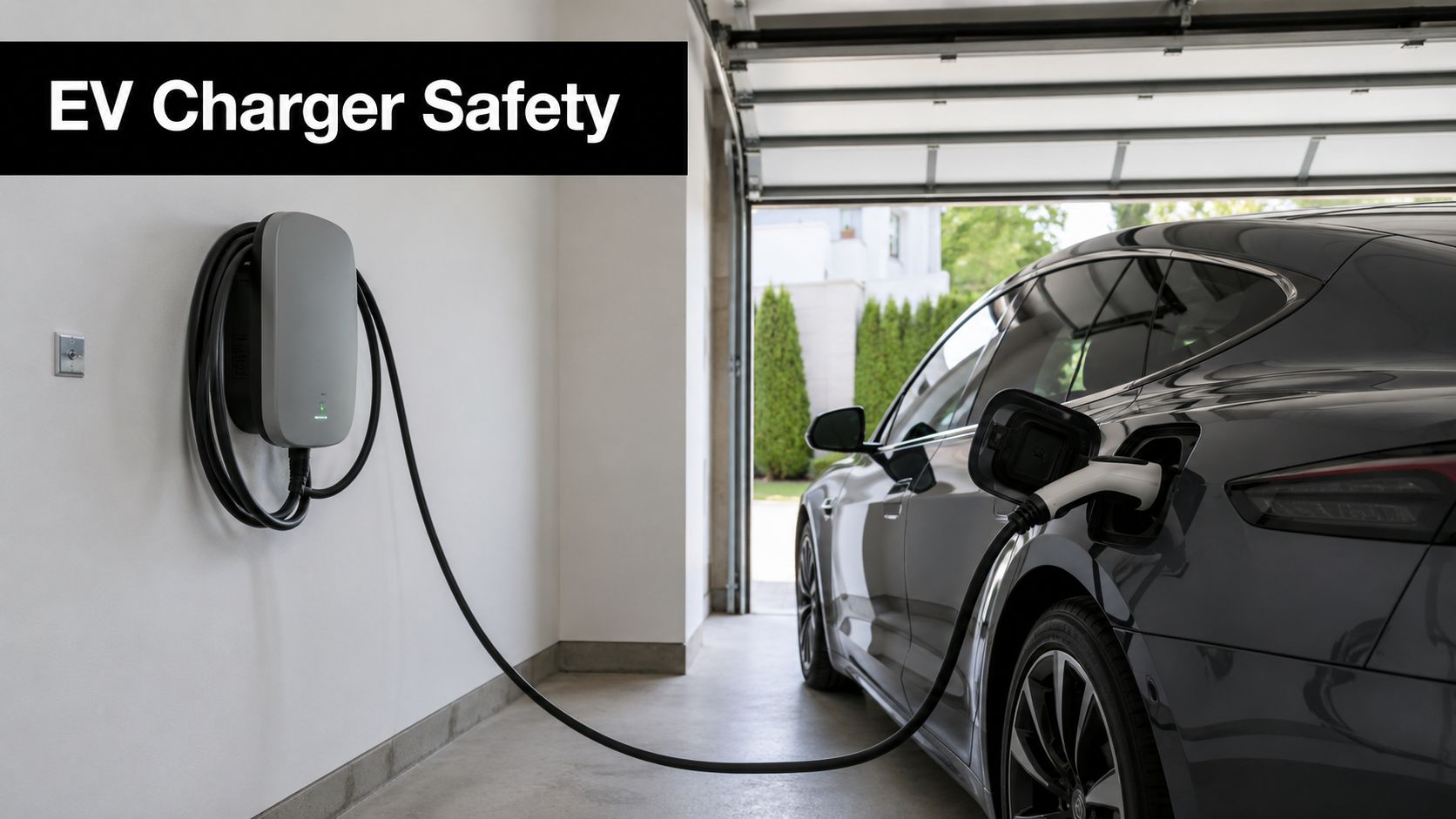
Why EV chargers expose older panel limits
The panel-capacity problem is real in older housing. According to this EV charging safety analysis, 60% of residential panels in older homes built before 1990 can't safely support EV loads without a 2024 NEC 2023 compliant upgrade, and 25% of EV-related electrical fires occur in homes with un-upgraded panels lacking the required dedicated circuits and GFCI protection mandated by NEC Article 625.
That doesn't mean every older home needs a full replacement. It does mean every EV charger should start with a load and panel review instead of a shortcut. Sometimes the fix is a dedicated circuit. Sometimes it's panel work. Sometimes load management changes the design. The right answer depends on the whole system.
What gets checked before installation
A proper EV charger assessment usually looks at these points:
- Panel capacity: Whether the existing service can handle sustained charging load.
- Physical breaker space: Not just total amperage, but actual room for the required overcurrent protection.
- Circuit routing: Garage, exterior wall, detached structure, or parking layout can change the installation method.
- Protection requirements: GFCI, equipment listing, disconnecting means, and location details all matter.
- Usage pattern: Daily commuting, overnight charging, and multiple vehicles affect design choices.
For owners looking at garage solar and charging planning, HighFlow Energy's guide for solar EVs offers useful system-level context on how charging strategy and generation planning can fit together.
It's not just an EV issue
The same code principle applies to hot tubs, spas, workshops, remodeled kitchens, and commercial equipment. New loads have to be evaluated against the infrastructure already in place. A property can handle one more outlet and still be a poor candidate for a major continuous load.
For Northern Utah homeowners planning a charger or Tesla Wall Connector, professional EV charger installation should start with the panel, not the product box.
Common Electrical Code Violations in Utah Homes
A lot of code violations aren't hidden behind drywall. They're sitting in plain view.
A walk-through of a typical older home often tells the story fast. In the garage, there may be an extension cord feeding a freezer full time. Near the panel, boxes and paint cans are stacked where working clearance should be. In a basement storage room, a junction box is missing its cover. Upstairs, a bedroom has old two-prong receptacles, while a remodeled room nearby has newer devices mixed in with older wiring methods.
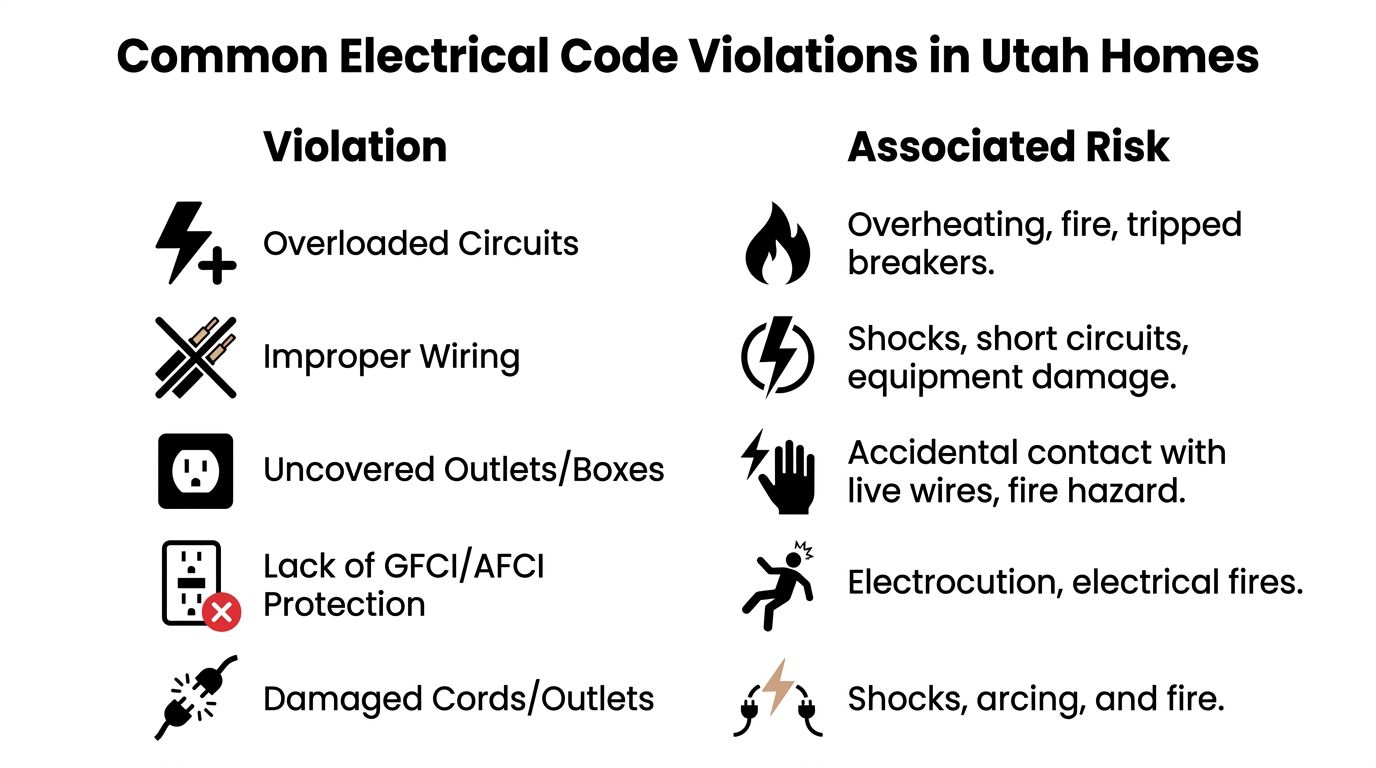
The violations seen most often
These are the kinds of issues that regularly turn up in homes and small commercial spaces:
- Uncovered boxes or open splices: Live parts can be exposed, and loose connections are more likely to be disturbed.
- Overloaded power strips: Temporary convenience becomes permanent wiring by accident.
- Cords run under rugs or through doors: Heat builds up, insulation gets damaged, and cords get crushed.
- Missing cover plates: It looks minor, but it increases contact risk and leaves openings for debris.
- DIY wiring inside walls with improper materials: Flexible cord and other non-building wiring methods don't belong inside concealed spaces.
- Blocked panels: The equipment may technically work, but safe access has already been compromised.
- Damaged outlets or loose devices: Movement at the device usually means movement at the termination.
Why these aren't “small” issues
People often treat code violations like paperwork problems. They aren't. They usually point to a real hazard, or to workmanship that skipped a basic safety rule.
The broader national injury picture helps explain why these standards matter. In the United States from 2011 to 2023, there were 1,940 electrical fatalities, and about 74% occurred in non-electrical occupations, according to these workplace electrical safety statistics. That matters because the risk doesn't stay inside the trade. It reaches office staff, maintenance workers, tenants, homeowners, and anyone else using the space.
Most electrical injuries don't happen to people who think of themselves as electrical workers. They happen to regular people around ordinary equipment.
A room-by-room way to spot trouble
A useful property check doesn't require opening anything live. It just requires looking carefully.
Living areas and bedrooms
Watch for loose receptacles, scorch marks, lamps or electronics supported by daisy-chained power strips, and outlets that don't hold plugs firmly. Those signs often point to wear, poor terminations, or too much use on too little circuiting.
Kitchens, laundry, garages, and exterior areas
These spaces deserve extra attention because they combine electricity with moisture, metal surfaces, and heavier-use equipment. If the outlet protection looks outdated, the receptacles are damaged, or cords are doing the work of permanent wiring, that's enough reason to schedule an inspection.
Basements, utility rooms, and attics
In such areas, many hidden shortcuts show up. Open boxes, abandoned conductors, makeshift lighting connections, and old branch circuits often collect in these spaces because they're out of everyday sight.
When to stop observing and call
A visual check is useful. Repairing live electrical issues without proper training isn't.
Call a professional when there are repeated breaker trips, burning smells, buzzing, warm devices, visible damage, or any sign that previous work may have been improvised. Visible problems often come with hidden ones.
How Black Rhino Electric Ensures Code-Compliant Work
Good electrical work isn't just neat wiring and a passed inspection sticker. It starts with understanding how the building is used, what condition the existing system is in, and which safety updates the job should trigger.
That matters in older Northern Utah properties where remodels, additions, basement finishes, detached garages, hot tubs, service changes, and equipment upgrades often stack new demands onto old infrastructure. The right process is usually less dramatic than people expect. Inspect the existing conditions, identify what's unsafe or outdated, confirm what the jurisdiction requires, and correct the work in a way that supports the property long term.
What a code-focused service visit should include
A serious electrical visit usually involves more than replacing the failed part. It should also look at the surrounding conditions that may have caused the problem or may keep causing it.
That often includes:
- Safety review of the affected circuit: Not just the symptom, but the wiring path, protection, and load.
- Panel evaluation: Space, labeling, visible defects, and whether newer loads are realistic on the existing equipment.
- Protection review: Whether GFCI or AFCI upgrades are appropriate for the area being worked on.
- Code violation correction: Open boxes, damaged devices, grounding issues, and improper connections should be flagged.
- Permit awareness: If the scope crosses into work that should be permitted, that needs to be addressed before corners get cut.
For owners who need inspections, troubleshooting, panel upgrades, code corrections, or charger planning, licensed electrician in Northern Utah is the standard to look for. Black Rhino Electric handles residential and commercial electrical work in the local market, including repairs, breaker and panel work, EV charger installations, lighting, rewiring, low-voltage systems, and code violation corrections.
What tends to work and what doesn't
What works is a full-system mindset. If a garage outlet keeps failing, the answer may involve the circuit layout, moisture exposure, device type, grounding condition, or panel issue behind it.
What doesn't work is replacing the same device over and over while ignoring the cause. The same goes for adding an EV charger, spa circuit, or commercial equipment feed without checking whether the existing service can support it.
Safe electrical work is usually quiet, organized, and a little unglamorous. That's exactly what it should be.
If a home or small business in Weber County, Davis County, Salt Lake County, or nearby communities needs electrical safety corrections, panel review, troubleshooting, GFCI or AFCI upgrades, or planning for a remodel or EV charger, contact Black Rhino Electric at 385-396-7048 or request service through the online quote form.