
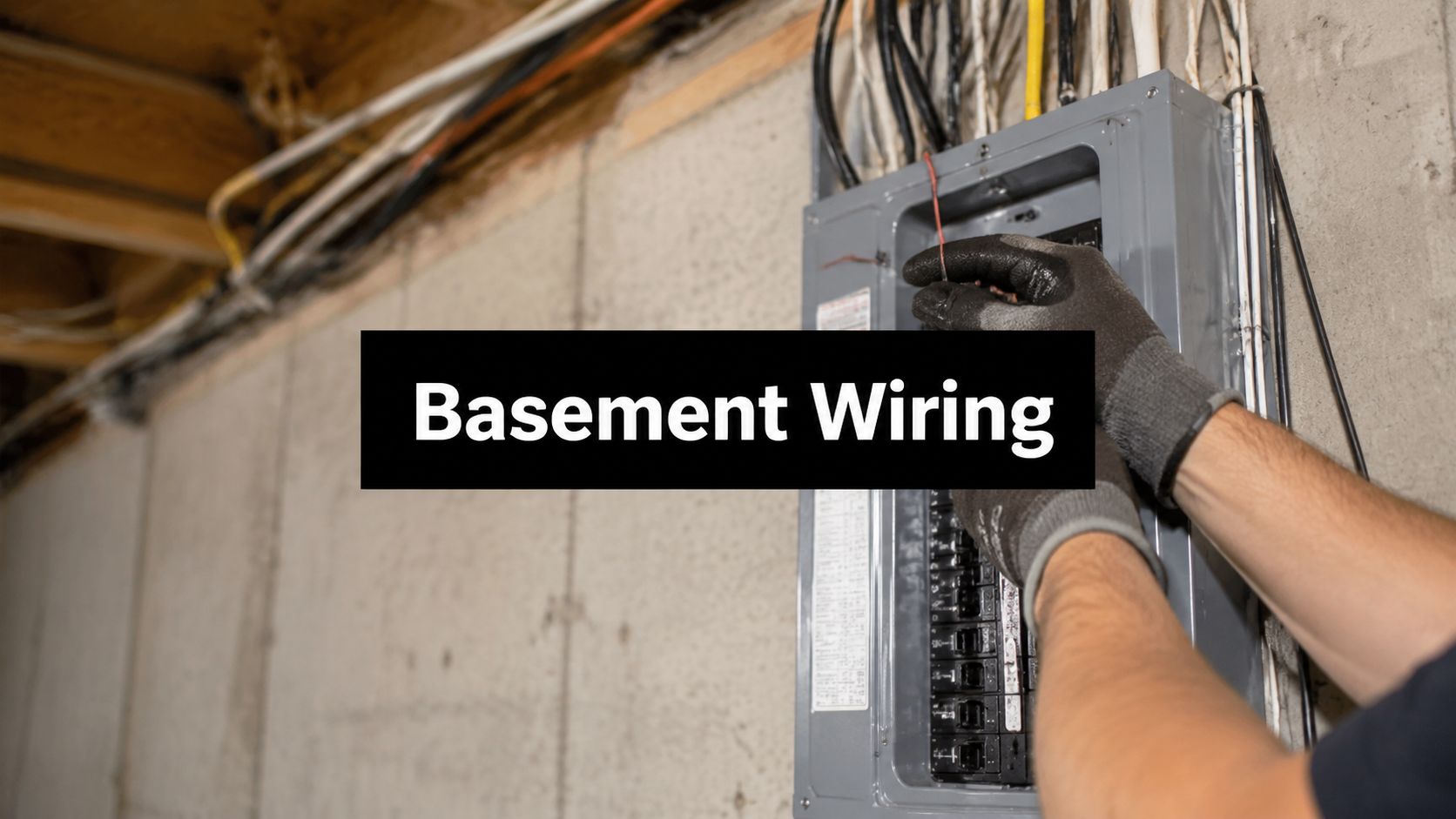
A lot of Northern Utah homeowners start looking into basement electrical wiring at the same point. The framing is up, the remodel is getting real, and the old plan of “just add a few outlets later” stops making sense.
A basement can be a simple storage area, or it can function like a full second living floor. The wiring plan has to match that reality.
Finished vs Unfinished Basement Wiring Scope
The first decision isn't where the outlets go. It's what the basement is supposed to be.
An unfinished basement is closer to wiring a utility space. A finished basement is closer to wiring a guest house inside the home. Those are two different scopes, two different inspection paths, and usually two different conversations about circuits, lighting, and panel capacity.
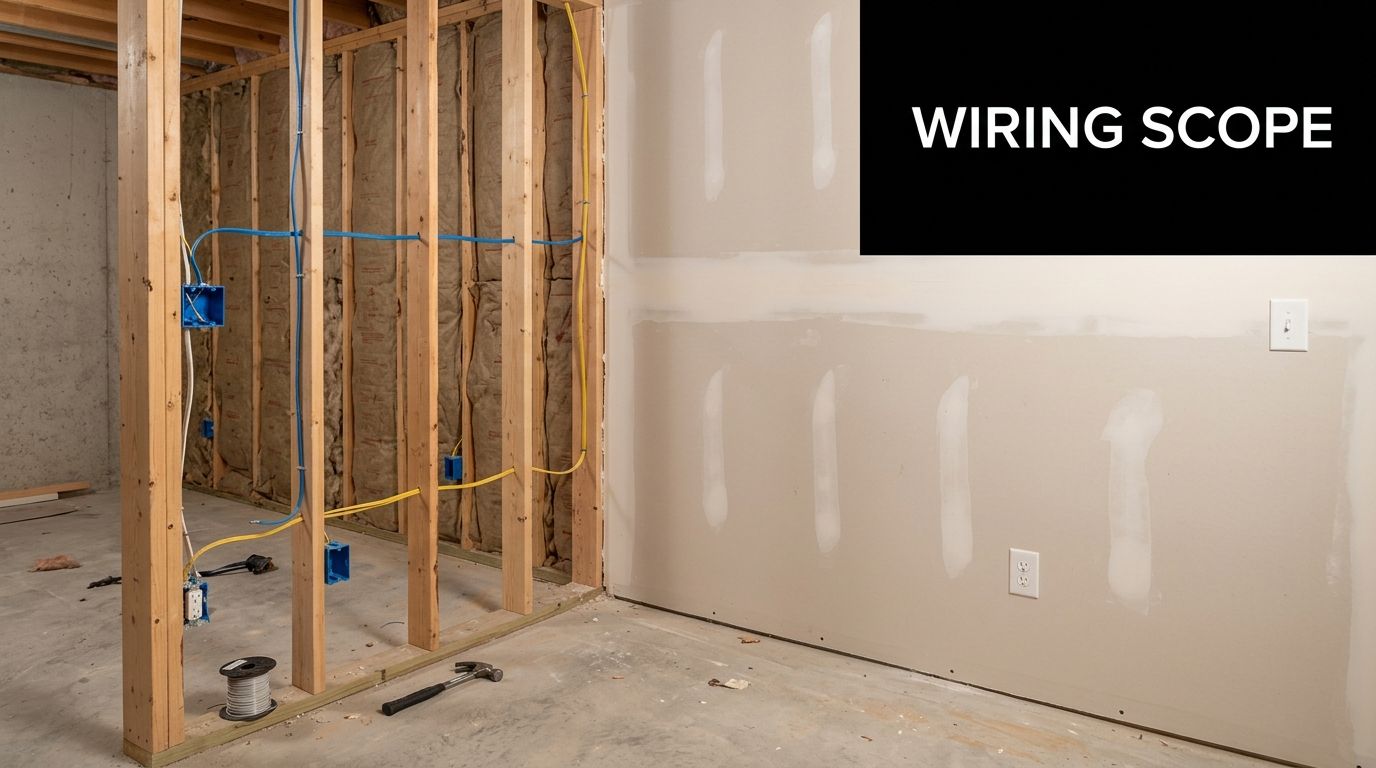
What an unfinished basement usually needs
In an unfinished space, the baseline is utility and safety.
That typically means:
- General lighting: Enough light to move around safely, access storage, and service equipment.
- Required receptacles: At least one receptacle in each unfinished portion, with GFCI protection where required by code.
- Equipment access: Power near areas like laundry, utility equipment, or a sump pump if those are part of the layout.
- Future planning: Conduit paths or rough-in planning if the owner may finish the basement later.
The code side still matters, but the layout is usually simpler. The goal is safe access, serviceability, and no shortcuts that create expensive rework later.
Practical rule: If drywall, flooring, and trim are likely within the next few years, it's smarter to rough in with the finished layout in mind now than to reopen walls later.
What changes in a finished basement
A finished basement is treated like occupied living space. That changes nearly everything.
Now the plan needs to account for family rooms, bedrooms, offices, home theaters, exercise areas, wet bars, and storage rooms separately. Receptacle spacing becomes more demanding. Lighting gets broken into zones. Appliance loads matter more. Switch placement has to feel natural when someone lives in the space.
Common additions in finished basements include:
- Room-based lighting zones for living areas, hallways, and bedrooms
- More branch circuits to avoid nuisance tripping
- Dedicated circuits for refrigerators, freezers, treadmills, or entertainment equipment
- Trim-out planning for fixtures, dimmers, and specialty controls
A clean project usually starts with framing review, room use decisions, and rough-in inspection readiness before insulation and drywall cover everything up.
A basement that's only “partly finished” is where mistakes often start. If one side is utility and the other side is a rec room, the wiring plan has to respect both uses instead of treating the whole level the same.
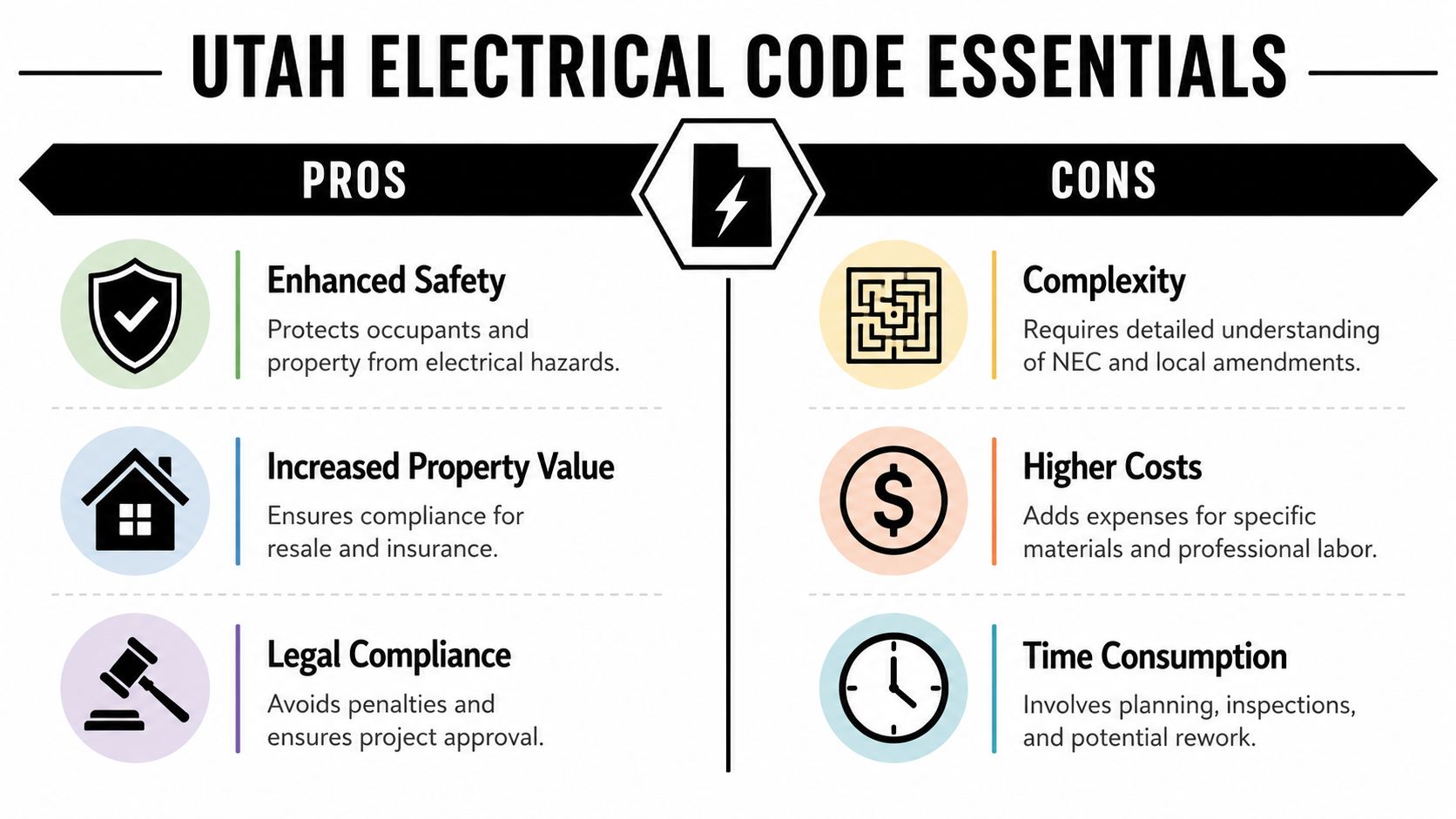
Code isn't paperwork for its own sake. It's the set of rules that keeps a damp basement from becoming a shock hazard and keeps hidden wiring defects from turning into a fire problem behind finished walls.
In Weber County, Davis County, and Salt Lake County, homeowners should expect basement work to be reviewed against NEC-based requirements and local enforcement standards. That's why a quote that looks “simpler” on paper can end up costing more once failed inspections and corrections start.
Why GFCI protection matters in a basement
Basements tend to be treated like dry living areas, but they often behave more like damp spaces. Concrete, seasonal moisture, utility equipment, and occasional water intrusion all change the risk.
According to the verified code summary provided, every single 125-volt through 250-volt receptacle installed in a basement must be protected by a GFCI, and in unfinished basement areas, all such receptacles must be GFCI-protected, with at least one receptacle required in each unfinished portion. That same verified guidance states a GFCI device must trip within 25 milliseconds at a fault current of 5mA to shut power off fast enough to reduce shock risk.
That's the difference between a standard breaker and a GFCI. A standard breaker watches for overloads and shorts. A GFCI watches for electricity taking the wrong path, including through a person.
Where AFCI enters the picture
Shock protection is only part of basement safety. Fire prevention matters too, especially once the basement becomes finished living space.
For any circuit serving a finished living space within a basement, including recreational or family rooms, the breaker must be equipped with Arc-Fault Circuit Interrupter protection to prevent fires caused by electrical arcs in damaged wiring, as noted in this verified requirement tied to finished-space AFCI protection.
Hidden wiring doesn't get safer because drywall covers it. Finished spaces need protection from arc faults because damaged conductors can fail long before a standard breaker reacts.
Permits and inspections are part of the job
The permit process protects the homeowner. It creates a documented review of the wiring plan, the rough-in, and the final installation before the walls are permanently closed.
A proper permit discussion should include:
- Scope review: Which rooms are being finished, what equipment is being added, and whether circuits are being extended or newly installed
- Inspection stages: Rough-in before insulation or drywall, then final after devices, fixtures, and panels are complete
- Correction risk: Work that skips permit review often gets exposed during resale, insurance review, or later remodeling
Homeowners who want to understand that process better can review this 2026 Utah electrical permit guide.
Planning Your Basement Lighting and Outlet Layout
A good layout works like a blueprint you can live inside. It should pass inspection, fit the furniture, support daily use, and avoid the familiar problem of extension cords stretched across finished rooms.
The most common layout mistake is waiting too long to decide where the room will function. A television wall, a desk area, a treadmill corner, and a wet bar all change where the wiring should go.
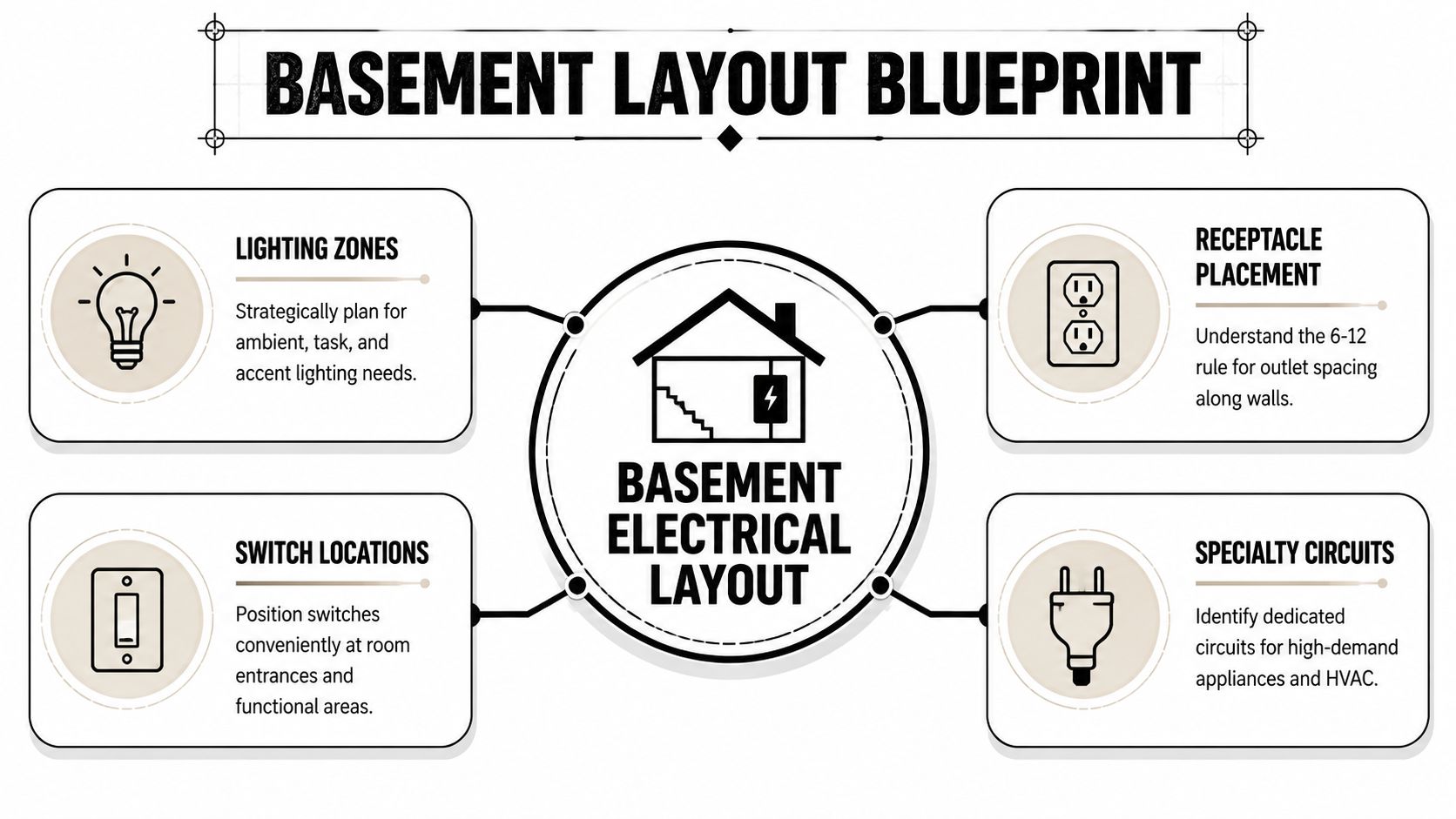
Using the 6-12 rule in real rooms
By NEC standards for finished basements, no point along any wall can be more than 6 feet from an electrical outlet, and any wall section at least 2 feet wide must have its own dedicated outlet, which is the spacing rule applied in major markets like Weber, Davis, and Salt Lake counties according to this verified reference for finished basement receptacle spacing.
That sounds technical until it's put on a floor plan.
Think of walking around the room with a lamp cord. If the layout is compliant, a cord shouldn't need to travel far to find power. That's the practical purpose behind the rule.
The verified code summary also states receptacles must be installed within 6 feet of any wall break and then at least every 12 feet along continuous wall space. For unfinished basements, outlets are typically installed every 12 feet along the wall length. Those spacing standards keep the room usable and reduce extension-cord dependence.
Lighting should follow how the room is used
Lighting plans fail when they're too uniform. A basement family room doesn't need the same approach as a storage room or workshop.
A useful plan often separates lighting into:
- Ambient lighting: General room illumination from ceiling fixtures or recessed cans
- Task lighting: Focused light over desks, workbenches, reading chairs, or counters
- Accent lighting: Lighting for shelves, theater areas, or display walls if the basement includes finished design features
For finished living areas, many homeowners also want dimming and better switch placement. That's especially common in media rooms, bedrooms, and open rec spaces. If the project includes cans or layered lighting, it helps to review options for recessed lighting installation before rough-in starts.
Dedicated circuits prevent everyday frustration
A basement can look fine on paper and still perform badly if too many loads land on shared circuits.
The verified code summary states the NEC limits branch circuits to a maximum of 10 receptacles on a 15-amp circuit and 13 on a 20-amp circuit. It also notes a 15-amp GFCI circuit has a maximum load of 1440 watts at 80% capacity. Those numbers matter when someone plugs in a freezer, treadmill, entertainment equipment, or kitchenette appliances in the same area.
A quick planning table helps:
| Basement use | Wiring concern | What usually works better |
|---|---|---|
| Family room | TV, sound equipment, chargers, lamps | Separate circuit planning for entertainment loads |
| Home office | Computer equipment and lighting | Dedicated planning for desk wall and network location |
| Workout area | Treadmills or other motor loads | Circuit review before devices are installed |
| Wet bar or kitchenette | Fridge and countertop use | Separate appliance planning and GFCI-aware layout |
Choosing Between a Subpanel and Panel Upgrade
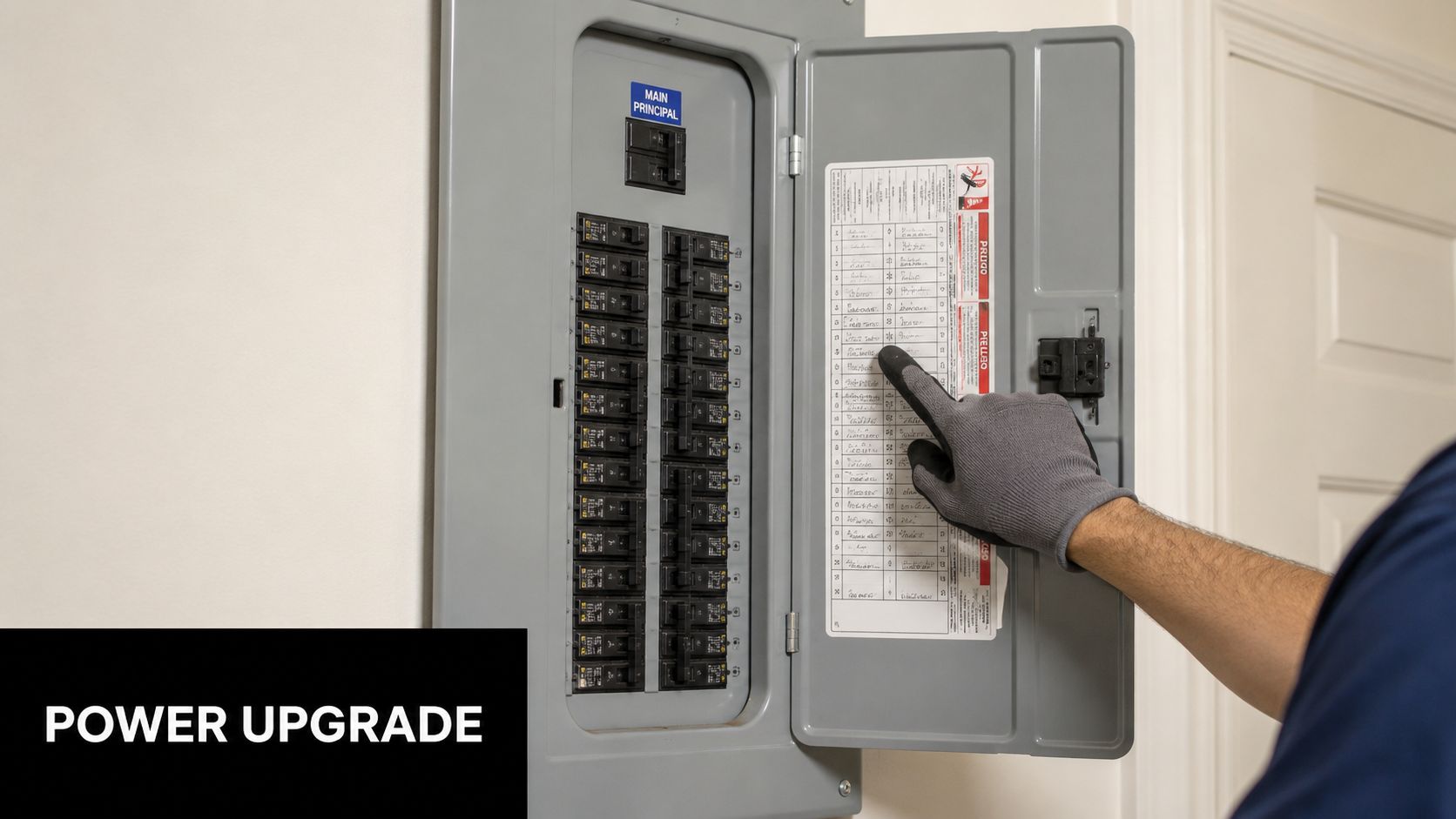
The electrical panel is the heart of the system. If the basement asks for more power than the panel can safely support, the rest of the design doesn't matter much.
Homeowners often hear two terms that sound similar but solve different problems. A subpanel is a downstream distribution point. A main panel upgrade increases the home's overall electrical capacity and often makes room for broader changes.
When a subpanel makes sense
A subpanel works well when the home already has adequate service capacity, but the basement needs a cleaner way to distribute multiple new circuits.
That's often useful when:
- The main panel has capacity available but basement runs would be cleaner from a local distribution point
- The basement includes several new circuits for lighting, receptacles, and dedicated equipment
- Future basement expansion is likely and the owner wants room for later additions
In practical terms, a subpanel acts like a neighborhood branch office. The main panel still controls the broader service, but the basement gets a more organized local hub.
When the main panel needs to be upgraded
A panel upgrade is usually the better answer when the house is already near its limit.
Warning signs include:
- A crowded panel: Little or no breaker space left
- Large planned loads: Basement finish plus hot tub, workshop equipment, or vehicle charging
- Frequent nuisance trips: Existing demand may already be stressing the system
- Older service setup: The panel may not fit the home's current use
The decision shouldn't be made by guesswork. It should come from a load calculation and a review of existing service conditions.
A basement remodel is often the project that exposes a panel problem that was already there. The remodel didn't create the weakness. It just brought enough new demand to reveal it.
For homeowners comparing options, an electrical panel upgrade may be the right move when the basement is part of a larger modernization plan instead of a stand-alone project.
A subpanel is usually about organization and distribution. A full upgrade is about capacity. Mixing those up leads to expensive corrections later.
Wiring for Modern Basements EV Chargers and Smart Homes
A basement wired for today should account for more than lights, receptacles, and a television wall. Modern projects often include EV charging, stronger networking, security wiring, and planning for devices that haven't even been purchased yet.
That's where many standard basement guides fall short. They treat modern electrical needs as add-ons, when they should be part of the layout from the beginning.
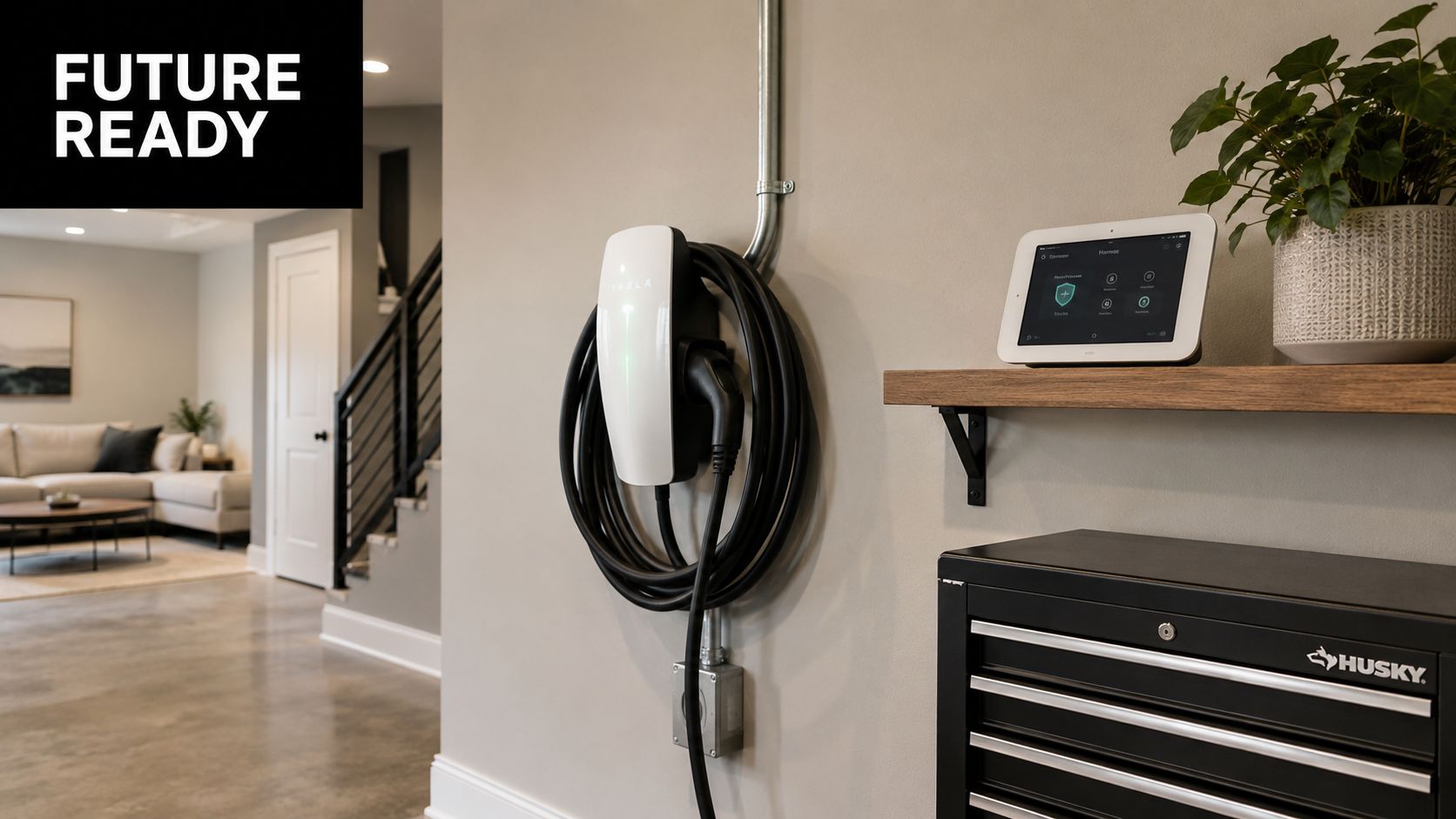
EV charger planning starts at the panel
A Level 2 charger changes the electrical conversation fast. It needs dedicated capacity, proper circuit design, and load planning that fits the rest of the home.
Verified data states that 68% of new EV charger installations in residential remodels encounter panel-capacity mismatch because contractors fail to perform load-calculations before wiring basement circuits, according to 2025 DOE data on panel-capacity mismatch in remodel charger installs.
That number lines up with what many homeowners run into in practice. The basement plan looks manageable until an EV charger gets added. Then the service calculation changes, the panel space gets tight, and the project needs a different path.
For homeowners comparing the broader process, this guide to residential EV charger install is useful background reading before discussing dedicated circuit and service requirements with an electrician.
Low-voltage wiring needs its own plan
Smart home wiring is another area where shortcuts cause trouble.
Verified data states that 55% of basement wiring inspections in 2024 failed due to low-voltage/high-voltage separation violations, where ethernet or alarm wiring was improperly bundled alongside power circuits, according to the 2025 IAEI report on basement separation violations.
That matters because smart home wiring isn't just about getting cable from one point to another. It needs routing, separation, and future access. Ethernet, alarms, cameras, audio lines, and similar low-voltage systems should be planned as their own infrastructure.
Useful future-proofing usually includes:
- Separate pathways: Low-voltage lines shouldn't be bundled with power wiring
- Accessible routes: Conduit or planned access for future changes
- Room-by-room thinking: Office, theater, security, and Wi-Fi needs aren't identical
- Equipment location planning: Network gear, alarm panels, and hubs need a defined home
For homeowners in Northern Utah who want basement planning to include dedicated charging and modern wiring paths, EV charger wiring can be coordinated as part of the broader remodel scope. Black Rhino Electric handles that work as part of residential electrical projects in the region.
Common Wiring Pitfalls and Essential Safety Checks
Most basement wiring problems don't start with dramatic failures. They start with small shortcuts that get buried behind drywall.
One common example is the “clean looking” bundle that isn't correct. Power wiring and low-voltage cable get run together because it seems tidy and fast. Then the inspection fails, or worse, the finished basement ends up needing sections opened back up.
What homeowners can safely look for before drywall
A homeowner shouldn't handle live work, but there are safe visual checks worth making during rough-in:
- Cable routing: Wires should look intentional, supported, and protected, not draped loosely through framing
- Box planning: Device boxes should align with the finished wall surface and room use
- Clear separation: Ethernet, alarm, and similar low-voltage lines should not be mixed carelessly with power wiring
- Service access: Equipment areas should still be practical to maintain after the basement is finished
The separation issue is a major one. The verified data states that 55% of basement wiring inspections in 2024 failed due to low-voltage/high-voltage separation violations, based on the same IAEI inspection finding on separation failures.
Shortcuts that usually cost more later
Another frequent problem shows up in layout decisions made too late. A room gets framed as a bedroom, office, or theater, but the electrical plan still reflects “open basement” thinking. That can leave the owner with missing switching, awkward outlet placement, or circuits that don't fit the room's real use.
Good basement wiring should look boring at rough-in. Straight runs, clear organization, proper spacing, and no mystery decisions hidden behind framing.
A second issue is equipment access. Utility areas still need serviceable power and working clearances. A basement can be beautifully finished and still be frustrating if basic maintenance was treated like an afterthought.
Hiring a Licensed Electrician What to Expect
The best hiring decisions usually happen before the first wire is pulled. Basement work goes smoother when the scope, inspection path, and service capacity questions are settled early.
A professional visit should start with room use, not just fixture count. The electrician should ask how the basement will function, what equipment is planned, whether the panel has capacity, and where future needs might grow.
Questions worth asking before signing off
A homeowner doesn't need to speak in code terms to ask good questions. These are the practical ones:
- What circuits will be new versus extended? That helps clarify scope.
- Will the current panel support this basement safely? That gets the load discussion on the table.
- Which parts of the job require permit and inspection? The answer should be clear, not vague.
- How are specialty items being handled? Wet bar areas, office equipment, entertainment walls, or charging equipment all deserve specific answers.
- How is low-voltage being routed? This matters for smart home and security planning.
What a well-run project usually looks like
Most basement electrical projects follow a predictable sequence:
- Initial walkthrough and scope review
- Load and layout planning
- Permit handling where required
- Rough-in wiring before insulation and drywall
- Inspection and any corrections
- Trim-out of devices, switches, fixtures, and breakers
- Final inspection and turnover
That process should feel organized, not improvised.
For homeowners screening contractors, online reputation matters, but it helps to understand how those systems are maintained. This overview of review management for contractors gives useful context on how service businesses handle customer feedback and public review presence.
In Northern Utah, especially around Marriott-Slaterville, Ogden, Roy, Layton, Clearfield, Bountiful, Farmington, Kaysville, and Salt Lake City, basement projects often involve a mix of rewiring, panel decisions, lighting design, troubleshooting, and code corrections. The right electrician should be able to explain trade-offs plainly, identify safety issues early, and provide a quote that reflects the actual use of the finished space instead of guessing from square footage alone.
If a basement project needs code-conscious planning for outlets, lighting, panel capacity, low-voltage separation, or EV charging, Black Rhino Electric can help homeowners in Northern Utah review the scope and next steps. To discuss a project, call 385-396-7048 or use the request a quote form.