
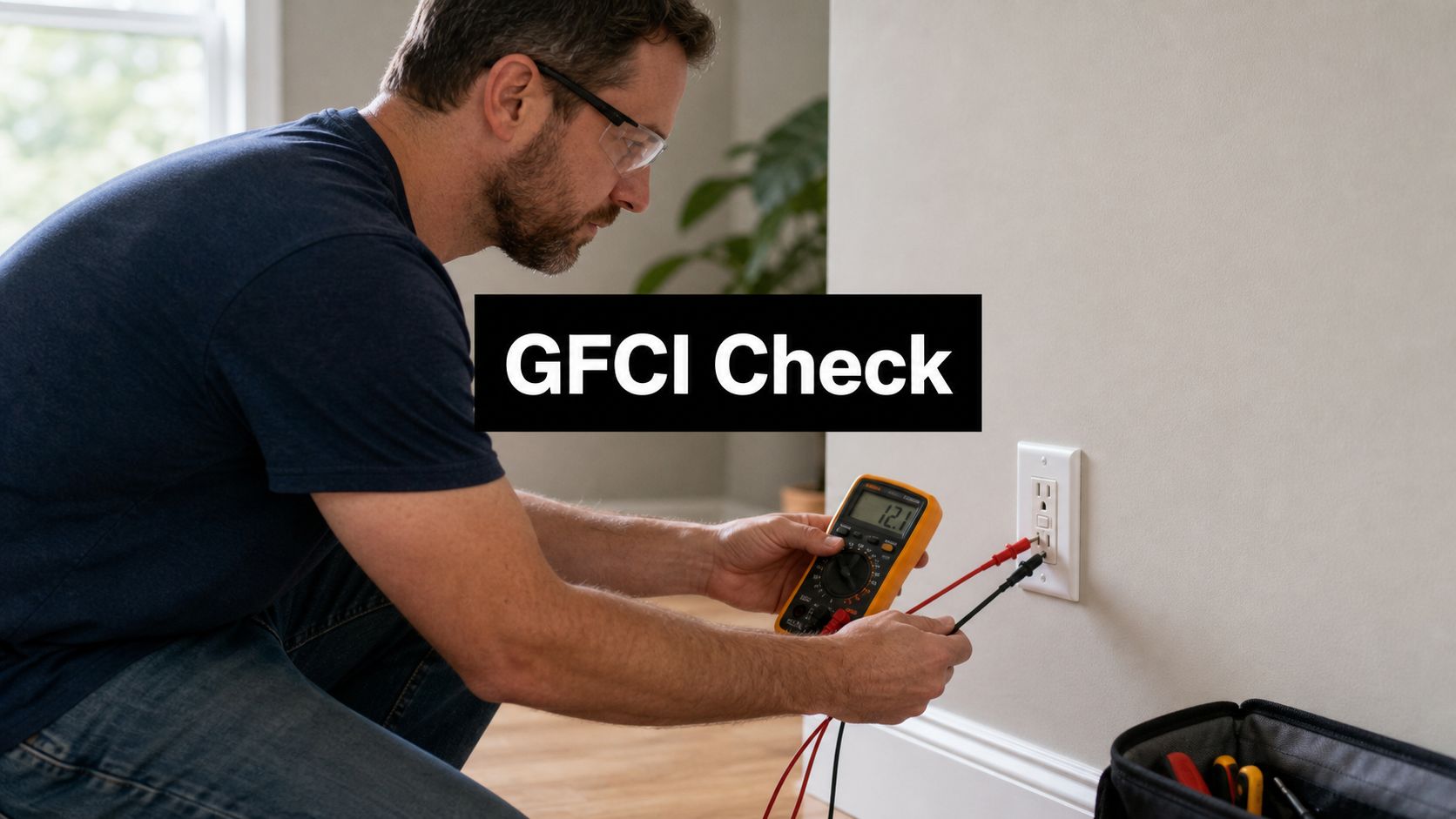
A GFCI that keeps tripping usually means something is leaking current where it shouldn't, or moisture has gotten into a place that needs attention. The fastest fix is not to keep hitting reset. The right question is what to check when a GFCI keeps tripping, and whether the problem is the device, the wiring, or something plugged into it.
Understanding Why Your GFCI Keeps Tripping
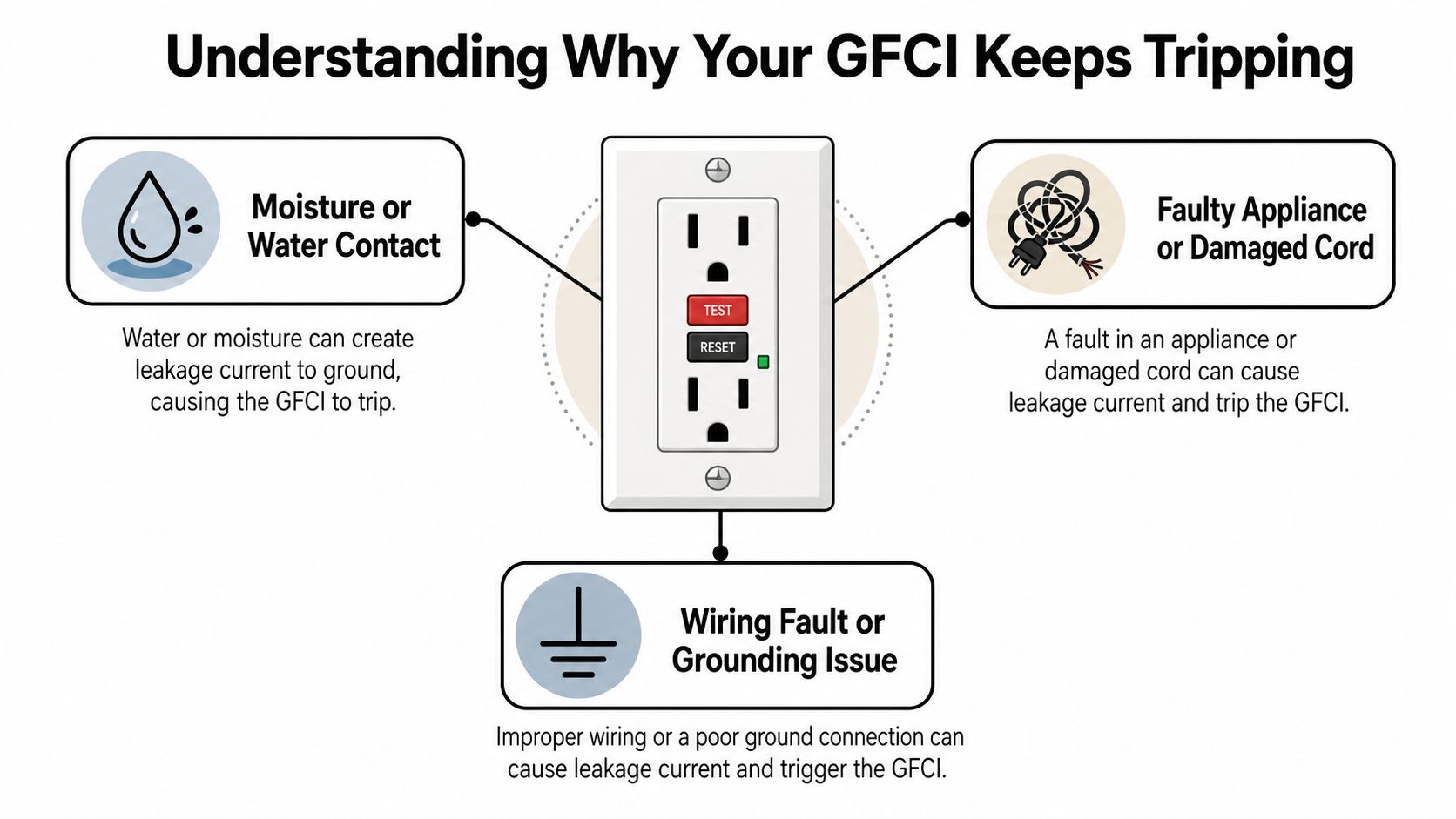
A homeowner usually notices the problem the same way every time. The garage outlet works, then shuts off again. The bathroom receptacle resets for a moment, then trips as soon as a light, fan, or tool is used. That behavior is the GFCI doing its job, because it's designed to trip when it detects a ground-fault imbalance of about 4 to 6 milliamps Fluke's troubleshooting guide.
Safety device, not a nuisance switch
A GFCI is watching for current that leaves on the hot wire and doesn't come back on the neutral wire. That missing current can mean water intrusion, damaged insulation, a failing appliance, or a wiring fault that creates a shock hazard. The point is protection, not convenience.
In practical terms, a trip can mean two very different things. Sometimes the outlet has found a real fault that needs correction. Other times, several small leakage sources add up and push the circuit past the trip threshold even though no single device looks obviously broken.
Practical rule: repeated tripping is a measurement problem before it's a parts problem.
Where the problem usually starts
Ground-fault protection is commonly used in kitchens, bathrooms, garages, laundry areas, outdoors, and other damp locations. Those are exactly the places where homeowners in Weber County, Davis County, and Salt Lake County tend to notice the issue first, especially when weather swings bring condensation, snowmelt, or moisture into outlets and boxes. A protected outlet in a dry room and one on an outdoor wall don't fail for the same reasons.
That's why a tripping GFCI shouldn't be treated as a random nuisance. The device is giving a clue. The goal is to figure out whether the leak is coming from the receptacle itself, a connected load, or the branch wiring feeding the circuit, which is the same logic electricians use during a service call. For more background on the device itself, see the GFCI requirements for residences.
Safe Troubleshooting Steps You Can Do Yourself
The safest homeowner checks stay outside the box. If a GFCI will not hold, the circuit is already pointing to a fault somewhere on that protected branch, so start with the simplest isolation steps and leave the wiring alone.
Use the reset and isolate the load
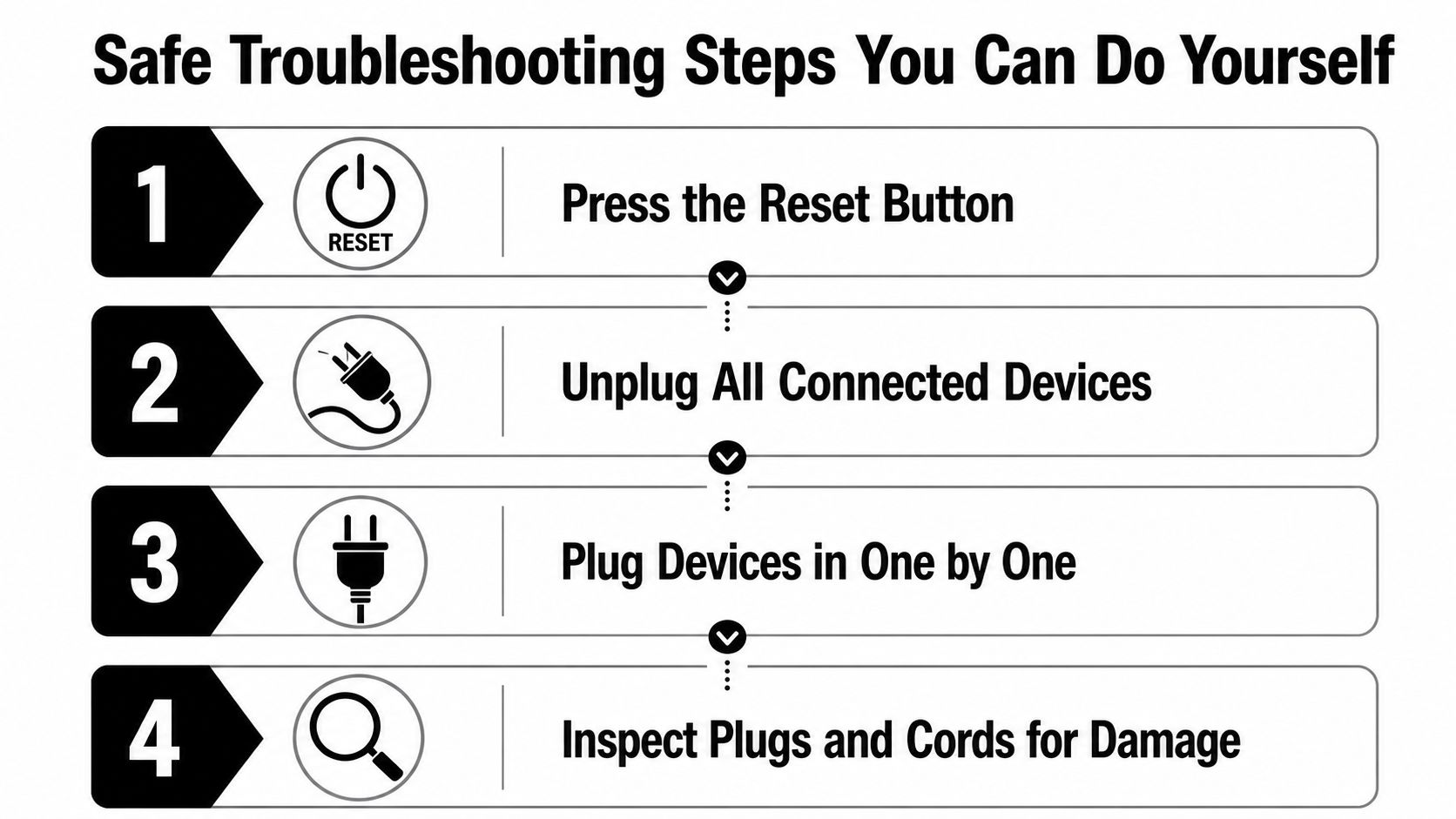
Start with the reset button on the device. If it will not reset, that tells you the problem is still present. If it does reset, unplug every device on that circuit, then try again. After that, plug items back in one at a time until the trip returns.
That sequence matters because it separates a bad appliance from a circuit issue. A hair dryer, outdoor power tool, space heater, or holiday light string can be the source even if it still runs. The last item connected before the trip is the one to watch first, because GFCIs respond to leakage that may not be obvious during normal use.
A quick visual check helps here. Look for damaged cords, loose plugs, blackened receptacle faces, cracked plugs, or overheated lamp connections. Bulbs that exceed fixture ratings can also create heat and insulation damage, which is enough to push a sensitive circuit over the edge. If the outlet is feeding a countertop appliance, an outdoor tool, or a portable light, treat that device as a suspect until it proves otherwise.
Know when the circuit is still the problem
If the GFCI trips with nothing plugged in, the portable equipment is less likely to be the cause. Moisture inside the box, a fault in the fixed wiring, or an aging device moves to the front of the list. One engineering source notes that GFCIs older than 5 years can become unreliable, which is a practical reminder that age matters when repeated trips keep showing up Henderson Engineers on nuisance tripping.
That is where the sequence matters most. First isolate the load, then look at the device, then consider the branch wiring feeding it. For a homeowner, that is the same logic behind careful home electrical troubleshooting, and it keeps the check focused on what can be ruled out safely. If the circuit is empty and the outlet still will not behave, the fault has moved past a basic reset-and-retry situation.
Hidden Causes Behind Repeated GFCI Trips
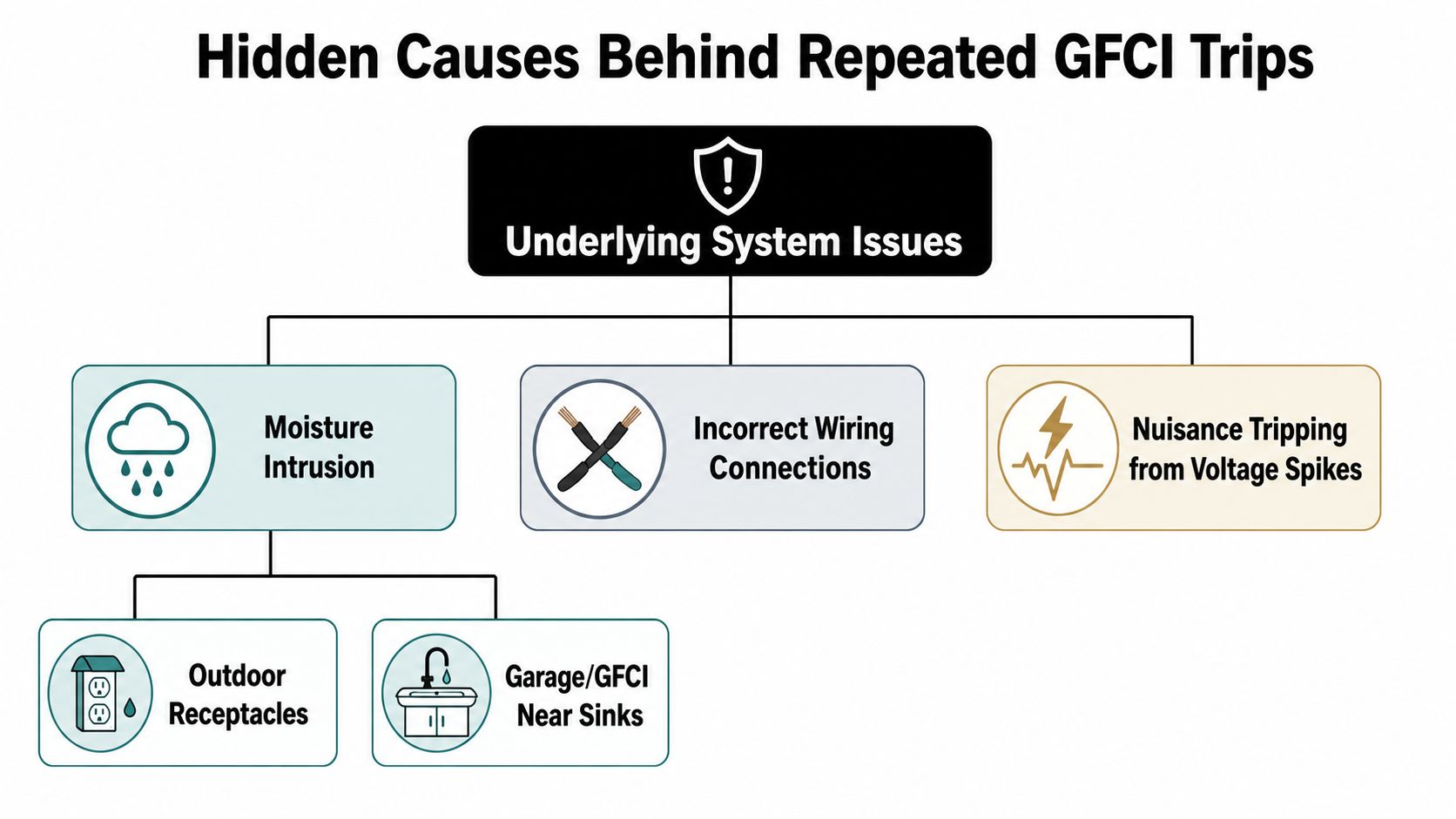
A GFCI that keeps tripping is not always a bad receptacle. In the field, the repeat problem often sits in the environment or the wiring path, which is why swapping the device alone may not change anything. Moisture, leakage spread across multiple loads, and incorrect connections can all make a sound GFCI act like it failed.
Moisture and environmental exposure
Moisture is one of the first things I check in garages, basements, outdoor outlets, and any box near a sink, a slab wall, or an exterior opening. A little water, condensation, rust, or corrosion inside the device box can create a leakage path that the GFCI reads as trouble. Outdoor covers need to be weatherproof and used correctly, and a wet box should dry out fully before anyone resets the device Mertal on common GFCI causes.
In Northern Utah homes, that shows up in winter and the shoulder seasons. Snowmelt, sprinkler overspray, and cold-weather condensation can keep a receptacle damp long enough to trip again after each reset. In those cases, the outlet may be working as designed, even if it is frustrating to live with.
Cumulative leakage and circuit design
A single appliance does not have to be broken to cause repeated trips. Several devices on the same protected circuit can each leak a small amount of current, and together they can push the GFCI past its limit. Fluke notes that this kind of nuisance trip is best approached by measuring leakage current and checking the phase and neutral together on single-phase circuits so the stray return path can be identified Fluke's leakage-current guidance.
That kind of check changes the diagnosis. Instead of blaming one outlet, the electrician looks at how the branch is built, where the protected run starts and ends, and whether the connected equipment is adding up to a fault-like condition. In some homes, the fix is to move a heavy or noisy load to another circuit. In others, the answer is to shorten protected conductor runs where practical, clean up the wiring layout, or separate equipment that belongs on different branches.
A field rule of thumb is to keep protected conductor length to 150 feet or less Fluke's troubleshooting guide. For protection-type questions and wiring confusion, the Black Rhino Electric GFCI AFCI guide is a helpful companion.
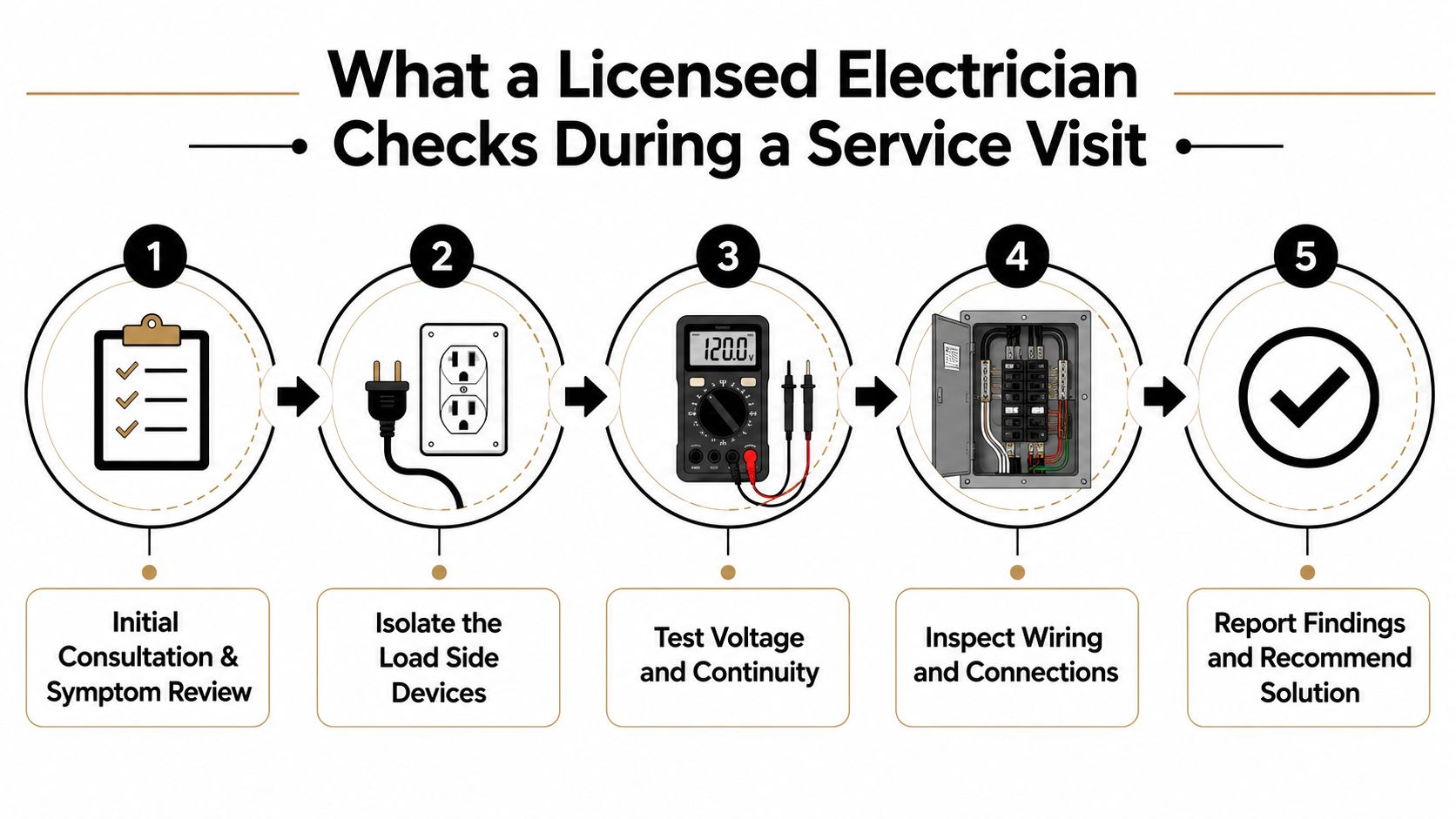
What a Licensed Electrician Checks During a Service Visit
A service call usually starts with a clear question, where is the fault sitting. A licensed electrician is looking for the point where current is escaping or returning by the wrong path, because that is what makes a GFCI trip. When the same outlet keeps tripping after repeated resets, the job becomes a controlled search instead of guesswork.
Isolating line side and load side
The first cut is usually to separate the line side from the load side. If the GFCI resets and stays on with the load side disconnected, the problem is downstream of the device rather than on the incoming feed BM Electric on GFCI troubleshooting. That narrows the work to the branch wiring, the next receptacle in line, or a load that is leaking current only when it is energized.
From there, the electrician checks for loose terminations, corrosion, reversed line and load wiring, and shared-neutral conditions that can make a protected circuit behave erratically. Those are not checks a homeowner should open up on their own, but they are common in service work. A plug-in GFCI tester is often part of the visit too, and if the device will not trip on test, the receptacle itself is suspect and may need replacement YouTube diagnostic guide.
A device that will not trip on test is not being picky. It has failed its job.
Testing the fault, not just the outlet
Once the circuit is isolated, the electrician may use a megohmmeter or insulation-resistance check to see whether the wiring can hold up under voltage that is higher than normal operating conditions. That helps separate a weak cable, a damaged splice, or moisture in a junction box from a simple device issue. It is a field check that gives a clearer answer than swapping parts and hoping the problem disappears.
Clamp-meter checks also matter during a visit, especially on circuits with several connected loads. The electrician can measure whether small leakage currents are adding up across the branch, then trace which appliance, cord, or fixed load is contributing to the nuisance trip. Environmental clues count here too, since damp outdoor boxes, condensation, and weather-exposed fittings can all create a fault path that only shows up under certain conditions. The circuit may test fine in the shop and still fail once it is back under real use.
That is why a service visit follows a sequence. The electrician tests the device, opens the circuit in sections, checks the wiring path, and then decides whether the fix is a repair, a device change, or a circuit correction. If the issue keeps returning, it may also be time to review the broader wiring plan, including the average cost of rewiring a home as part of deciding whether the branch needs more than a quick repair. When the fault is in the branch layout, the job may end with a cleaner circuit split, better moisture protection, or a recommendation to schedule an electrician for a full correction rather than another reset and retry.
When to Stop DIY and Call a Professional Electrician
Some warning signs should end DIY troubleshooting immediately. If the GFCI won't reset at all, if there's a burning smell or discoloration at the outlet, or if tripping starts affecting more than one room, the problem is past basic homeowner checks. At that point, a licensed electrician needs to inspect the branch circuit and, if needed, the panel side of the system.
A frequent mistake is replacing the GFCI first and hoping the new one solves everything. If the underlying fault is still there, the replacement will trip too, and the original hazard remains in place. That can waste money and delay a correction that should have been handled from the start.
The same caution applies when the work would require opening an electrical box or working near the panel. In Northern Utah, permitted electrical work in Weber, Davis, and Salt Lake counties is expected to be handled by licensed contractors, especially when repairs move beyond a simple device swap. If the issue may involve rewiring, it helps to understand the broader scope by reviewing the average cost of rewiring a home alongside the electrical problem at hand.
For a service call, the main cost factors are usually the diagnostic time, any device replacement, and whether the electrician finds a wiring repair, moisture damage, or a circuit reconfiguration. If the outlet keeps tripping across multiple rooms or the problem points to a hidden branch fault, the visit often turns into a troubleshooting and repair job rather than a quick receptacle swap. Homeowners who want to move from guesswork to a real fix can schedule an electrician.
Protecting Your Home with Proper GFCI Maintenance
A GFCI that seems fine today can still drift into nuisance trips later, so maintenance should be part of the routine, not an afterthought. Test each device with the built-in Test and Reset buttons once a month, then confirm it resets cleanly and keeps the connected outlet live. If a receptacle serves an outdoor area, check the cover, gasket, and box for water entry, and look over any location that sees splash, condensation, or weather exposure. If trips keep coming back on a protected run, the issue may be cumulative leakage, a loose connection, or a load-side fault that needs a closer look, as noted in Henderson Engineers on nuisance tripping and Fluke's troubleshooting guide.
Seasonal checks help too. Before wet weather arrives, inspect outdoor outlets, basement receptacles, garage circuits, and any device near sinks, tubs, or utility areas. After heavy rain, snowmelt, or a long stretch of humidity, look for moisture around the box, rust on the device, or staining that suggests water has found its way into the circuit path. In colder months, cords, plugs, and extension setups often get stressed more, so a quick review of anything feeding portable equipment can prevent a nuisance trip from becoming a repeated call.
Keep a simple log of what trips and when. If the same GFCI trips while one appliance is running, that points you toward the connected load. If several outlets on the same protected branch start acting up, the problem is usually farther upstream, and the fix is often in the wiring, splices, or device placement rather than the receptacle itself. That kind of pattern is exactly why home electrical safety with Black Rhino starts with the circuit layout, not just the face of the outlet.
The best maintenance habit is to treat every trip as useful information. Reset the device only after the area is dry, the connected loads are known, and the breaker is not showing a wider problem. If you keep seeing the same outlet trip under the same conditions, it is time for a licensed electrician to separate normal protection from a fault that should be corrected.