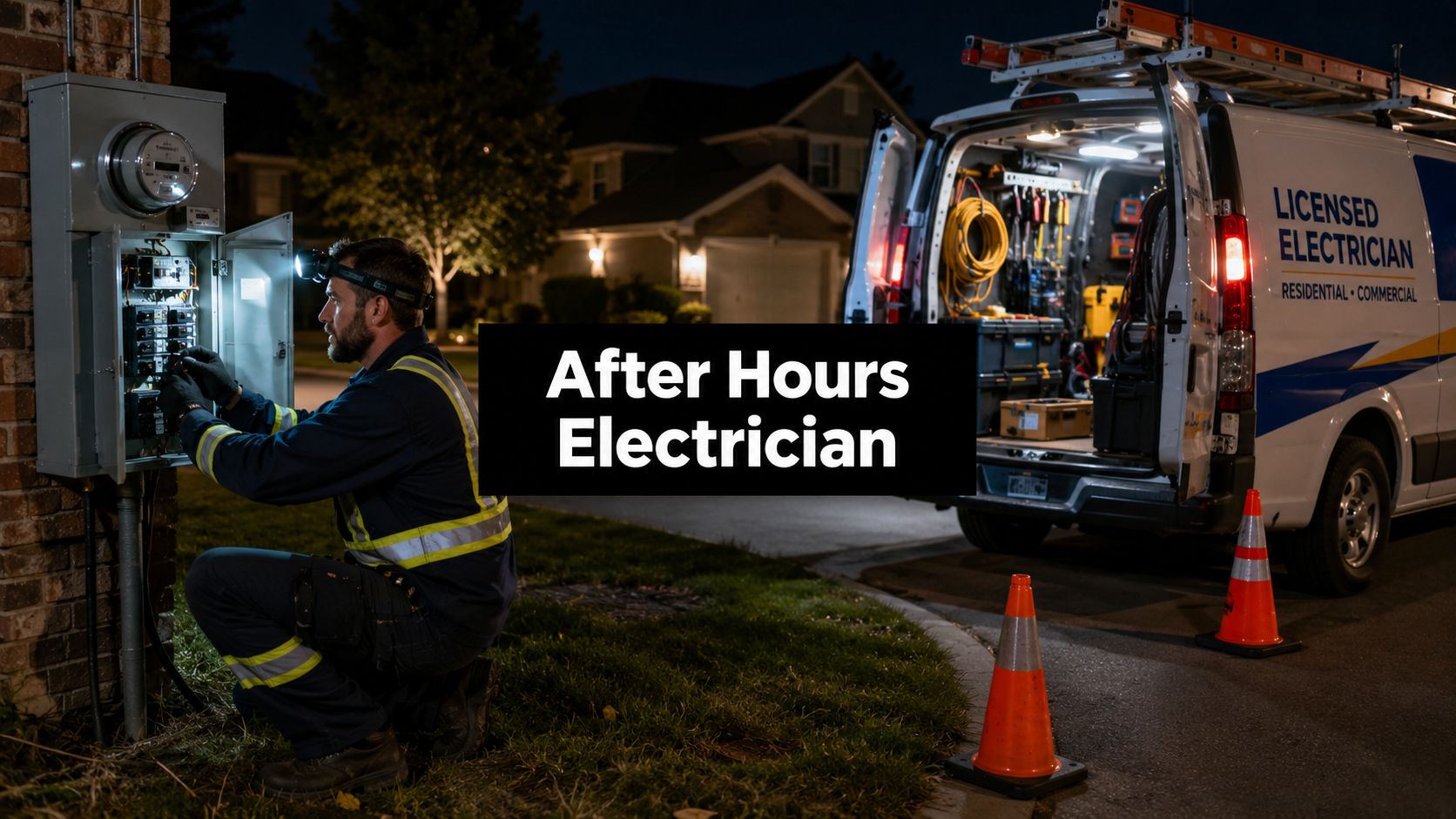
The lights start flickering after dinner, the panel clicks again, and now part of the house is dark. In that moment, most homeowners don't need jargon. They need a calm way to decide whether this is an emergency and whether an after hours electrician should be called right now.
What Qualifies as an Electrical Emergency
Not every late-night electrical problem is a call-now event. Some issues are inconvenient but stable. Others can turn dangerous fast, especially because delayed or mistaken decisions matter. Data from the U.S. Consumer Product Safety Commission indicate that roughly 51,000 electrical fires occur annually in homes (emergency electrical repair overview).
A good rule is simple. If the problem involves heat, smoke, sparking, exposed parts, or power loss that points to a fault inside the home, treat it as urgent.
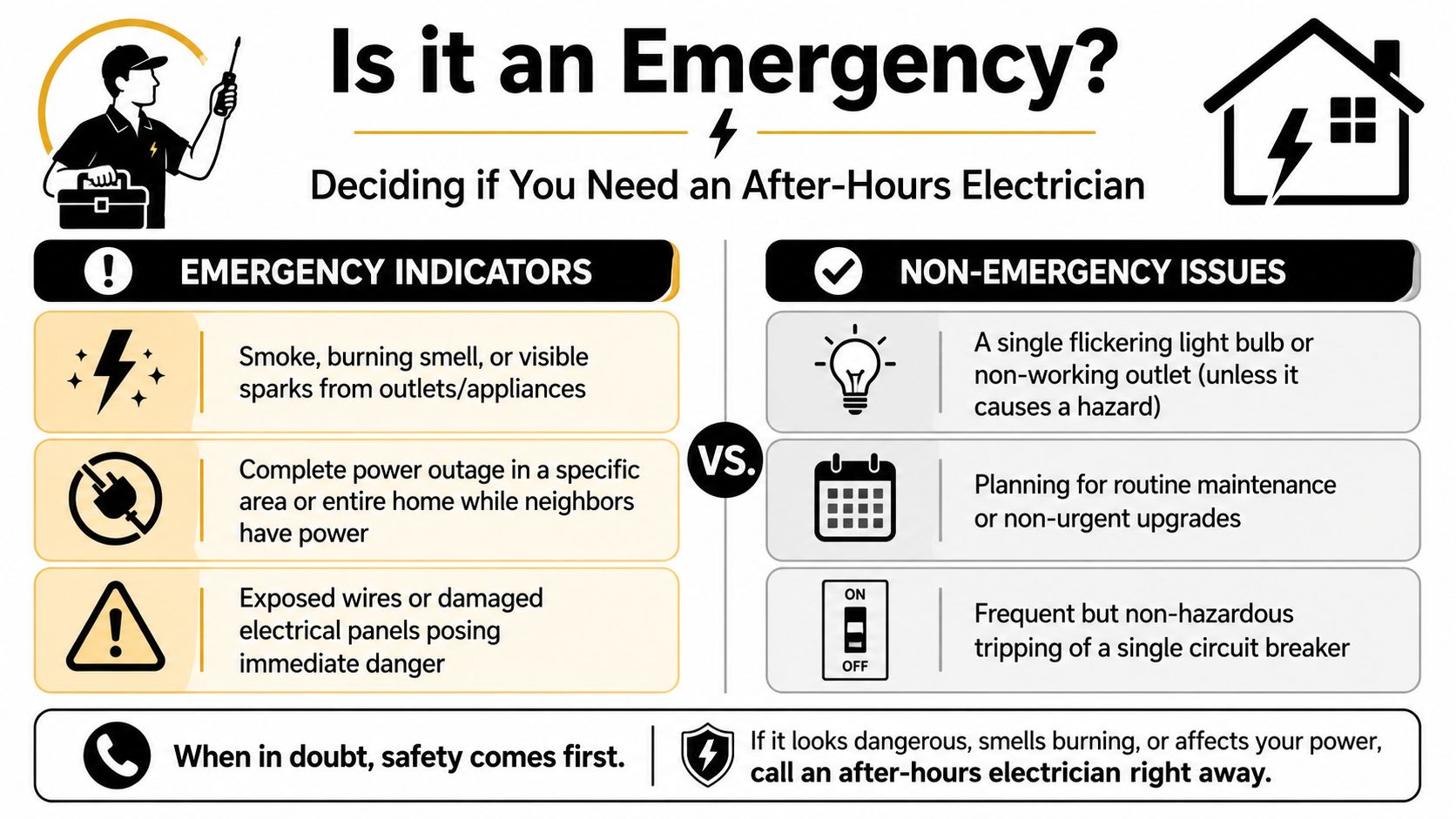
Call Immediately If You See or Smell These Signs
- Smoke or a burning odor: That sharp hot-plastic or scorched smell is never something to “watch until morning.”
- Visible sparks or arcing: A brief spark when plugging something in can already be a warning. Repeated sparking, buzzing, or flashing at an outlet, switch, panel, or appliance connection is more serious.
- A breaker that trips and won't stay reset: One trip can happen. A breaker that trips again right away is usually reacting to a real fault, not being “annoying.”
- Partial or complete power loss inside the home while nearby homes still have power: That points away from a neighborhood outage and toward a house-side issue.
- Exposed wires or damaged electrical equipment: A broken outlet, loose conductor, missing panel cover, or impact-damaged meter or panel needs professional attention.
- Water near electrical components: Flooding around a panel, soaked receptacles, or outdoor damage after weather should be treated cautiously.
Practical rule: If the issue involves heat, smell, noise, or damage, it's safer to assume the system is warning you for a reason.
Schedule a Priority Visit For These Problems
Some after-hours concerns can usually wait until the next available opening if there's no active hazard.
- One dead outlet with no burning smell, heat, or visible damage
- A single flickering light that may be related to the bulb, fixture, or a loose connection local to that circuit
- A breaker that tripped once and stays on after one reset, with no other warning signs
- Planned upgrades or maintenance such as replacing old devices, adding circuits, or reviewing panel capacity
- Recurring nuisance issues that seem stable but still need diagnosis before they become dangerous
That last category matters. Frequent “small” issues often trace back to overloaded circuits, aging devices, or protective components that need a closer look. Homeowners who want a useful baseline for regular prevention can review this electrical maintenance guide for homeowners to understand what should be checked before an emergency happens.
One Safe Question to Ask Before Resetting Anything
A breaker is like a guard at a door. It shuts the door when current flow looks unsafe. Resetting once can be reasonable if there's no smoke, smell, heat, or water involved. Repeated resetting isn't troubleshooting. It's overriding a warning.
If there's uncertainty, this Black Rhino Electric emergency advice page gives another local reference point for deciding whether a symptom has crossed into emergency territory.
Immediate Safety Steps Before the Electrician Arrives
Once the problem looks like a real electrical hazard, the job changes. The goal isn't to fix anything. The goal is to isolate, observe, and stay clear.
Electrical safety guidance emphasizes that incidents involving sparks, burning smells, tripped breakers, or exposed wiring require immediate isolation of power, often at the main breaker, and professional assessment to reduce fire or shock risk (electrical emergency safety guidance).
What a Homeowner Can Safely Do
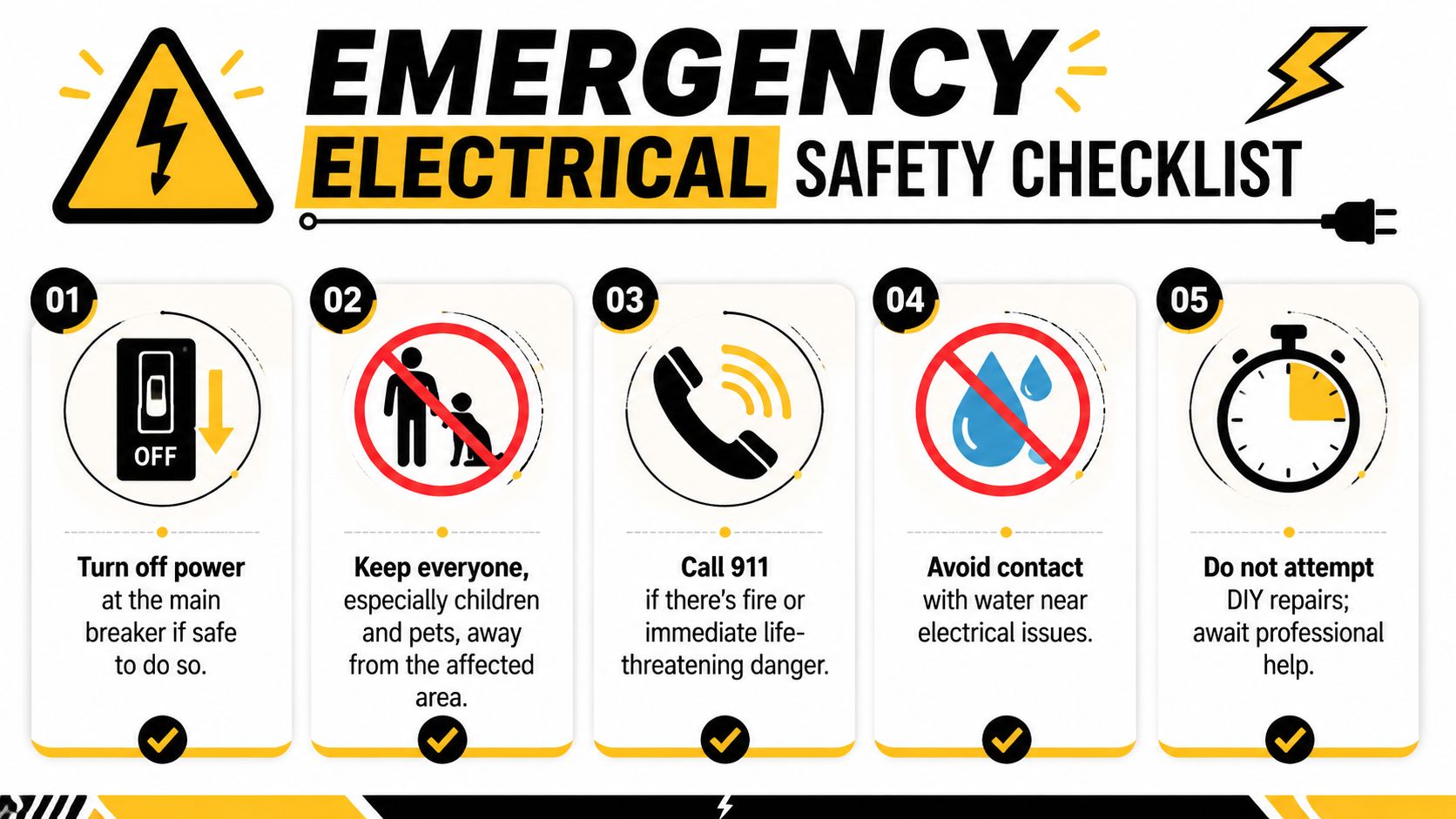
- Shut off power if it's safe to approach the panel: If the panel area is dry, clear, and free of smoke or visible damage, turning off the affected breaker or the main breaker can reduce risk.
- Keep people and pets out of the area: A damaged receptacle, panel, or cord path shouldn't become a traffic zone.
- Unplug sensitive electronics if it can be done safely: That helps protect devices from unstable power or surges when service is restored.
- Use flashlights instead of candles: It keeps a power-loss situation from becoming a fire situation too.
- Watch and report, don't experiment: Note what happened, what circuit lost power, and whether there were sounds, smells, or visible flashes.
What Should Be Left Alone
There are a few things that shouldn't be touched once a fault is suspected.
- Wet electrical equipment
- A scorched outlet or switch
- A buzzing or hot panel
- Loose or exposed conductors
- Anything that has already tripped repeatedly
Stay out of the “just one quick look” trap. Electrical faults can sit quietly for a minute and then flare again.
When the Main Breaker Makes Sense
If one device or branch circuit is obviously involved, switching off only that breaker can be enough. If the source isn't clear, or if the panel itself seems involved, shutting off the main breaker can be the safer move, provided the area is safe to access.
That's often the difference between a contained issue and one that keeps feeding itself. Anyone wanting a broader prevention checklist can also spot home electrical dangers before those warning signs show up at night.
When to Call Emergency Services First
If there's active fire, heavy smoke, someone has been shocked, or the area can't be approached safely, call emergency services first. An electrician handles diagnosis and repair. Immediate life safety comes before repair.
What to Expect During an After-Hours Service Call
A good after-hours visit starts before the truck arrives. The phone call is part triage, part preparation.
Professional emergency-call guidance emphasizes that answering staff should ask about smoke, arcing, sparks, water exposure, and exposed wiring so true hazards are identified quickly and the technician knows what conditions are waiting on site (emergency call triage questions).
The First Conversation
Expect direct questions, such as:
- What exactly happened first
- Whether there's smoke, smell, noise, or water
- If power is out in one area or the whole building
- Whether any breaker has been reset
- If the issue involves a panel, outlet, appliance connection, lighting circuit, or exterior equipment
Those questions aren't filler. They help determine whether the scene is stable, what tools may be needed, and whether the customer should stay clear of a particular area.
What Happens on Arrival
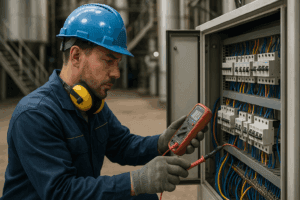
A competent electrician usually starts with safety before repair. That means checking the panel condition, verifying what's energized, and narrowing down whether the problem is on a single branch circuit, in a device box, at a panel component, or tied to damaged wiring.
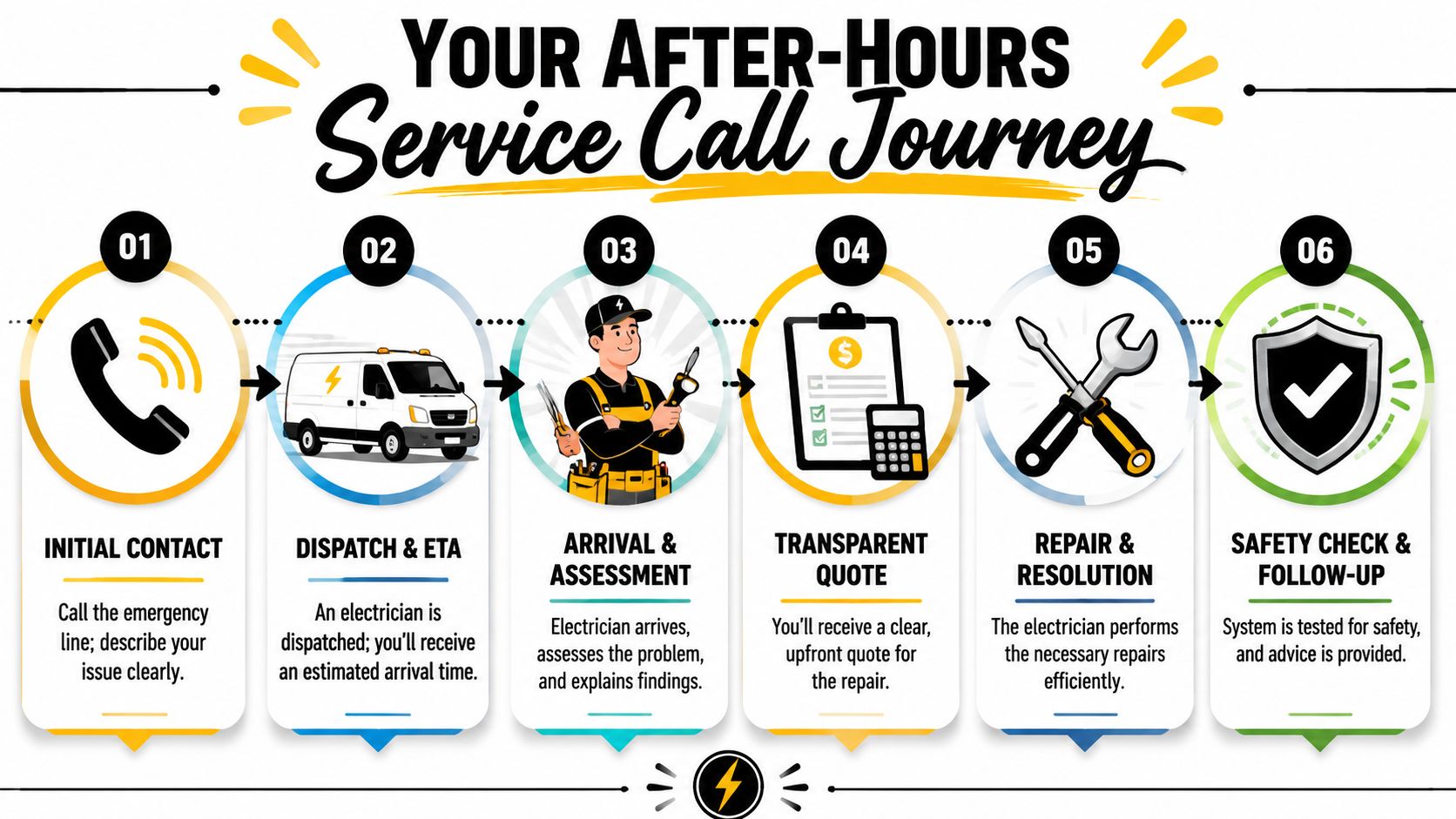
The work often moves in this order:
- Scene assessment to confirm immediate hazards
- Power isolation if needed
- Testing and diagnosis to separate symptoms from root cause
- Explanation of findings in plain language
- Repair options based on what's failed
- Final safety check before power is restored normally
A trustworthy service visit doesn't begin with guesses. It begins with making the area safe enough to test.
What a Clear Explanation Sounds Like
Homeowners should expect a plain answer, not a vague one. “The breaker tripped because the kitchen small-appliance circuit is overloaded” is useful. “Something weird is going on” is not.
If parts are damaged, there should also be a distinction between the immediate repair and any follow-up work that may still be needed later, such as panel evaluation, code corrections, dedicated circuits, or replacing worn devices.
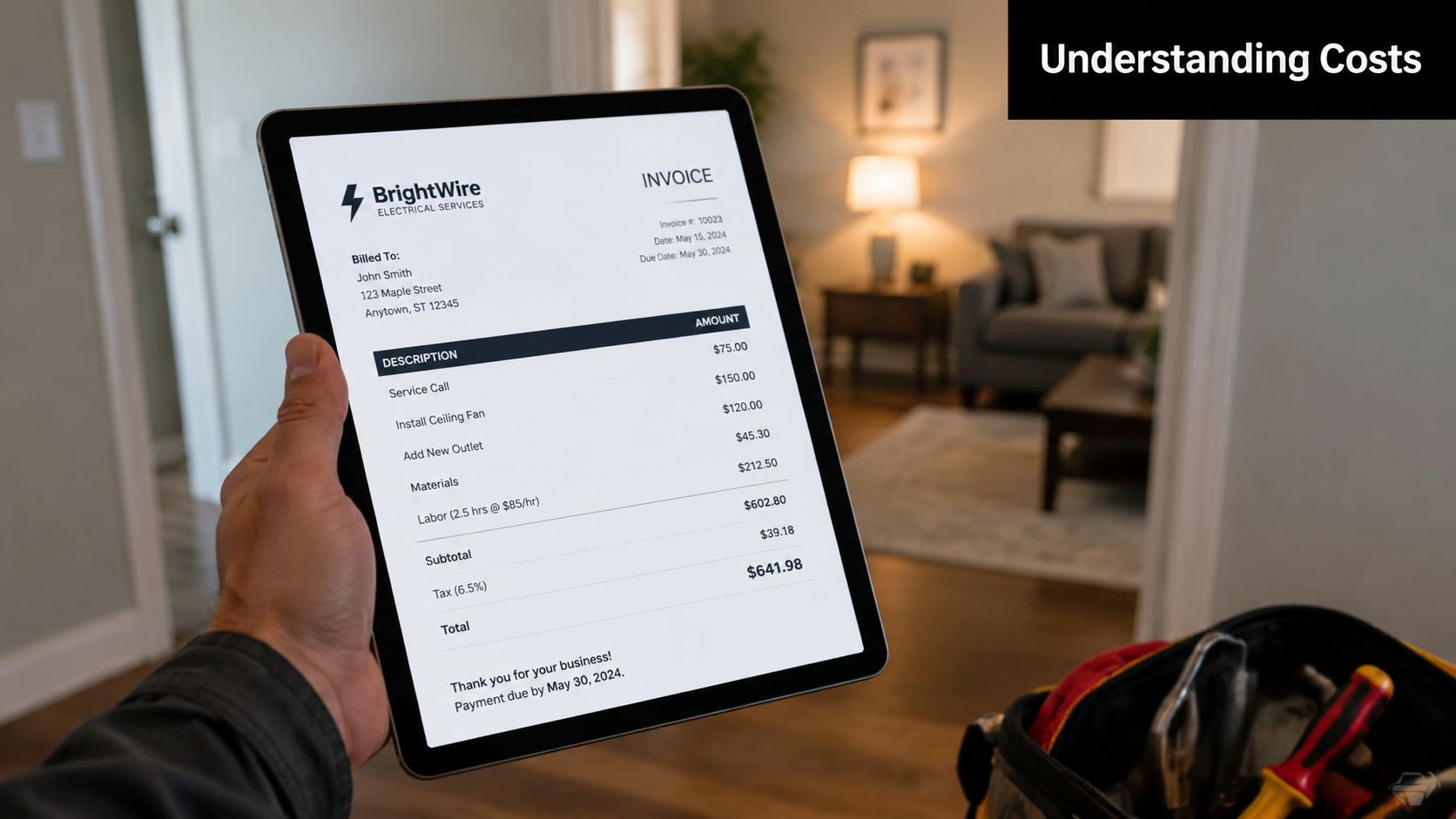
Understanding After-Hours Electrician Costs
After-hours electrical pricing is usually higher for a simple reason. The customer isn't just paying for a repair. The customer is paying for immediate availability, dispatch, and the ability to respond outside normal hours.
In North America, many firms price emergency calls with a flat emergency fee of $100 to $200 plus standard or premium hourly labor, and some companies pay technicians about 1.5 times the regular hourly rate for night, weekend, or holiday calls (after-hours pricing structure).
What Usually Affects the Final Cost
| Factor | Why it changes the bill |
|---|---|
| Time of call | Nights, weekends, and holidays usually carry premium labor |
| Type of fault | A failed breaker is different from damaged wiring hidden in walls |
| Parts needed | Standard devices are simpler than specialty breakers, meter components, or panel parts |
| Access and scope | Troubleshooting one outlet takes a different effort than tracing a fault across multiple circuits |
The useful question isn't “Why is after-hours service more expensive?” It's “What is being paid for?” In most cases, it's the cost of keeping trained labor available on short notice, plus the time needed to diagnose a safety issue instead of booking it days out.
What Helps Avoid Surprise Charges
Ask for the pricing structure before work starts. That doesn't mean demanding an exact total before diagnosis. It means understanding how the visit is billed, what counts as repair time, and whether materials are separate.
For homeowners also trying to reduce ongoing utility waste after an electrical issue is resolved, Airtight Spray Foam Insulation's advice is a useful non-electrical companion read because high bills sometimes involve building performance along with circuit loading and equipment use.
If the issue isn't immediate life safety and a homeowner wants to compare repair scope first, it may make sense to get an electrical estimate for the follow-up work.
How to Choose a Trustworthy Emergency Electrician
The wrong hire during an electrical emergency can leave the danger partially fixed and subtly waiting to return. Fast arrival matters, but diagnosis matters more.
Industry data and utility-based observations show that many emergency calls trace back to aging panels, outdated GFCI or AFCI protection, or overloaded circuits, yet homeowners often stop at a temporary fix instead of addressing the underlying problem.
Non-Negotiables to Look For
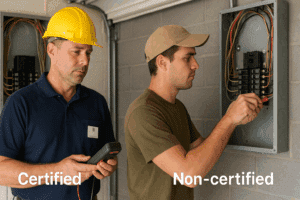
- Proper licensing and insurance: This is basic risk control, not a bonus. For a quick plain-English refresher, HomeProBadge contractor trust insights explain why insured and properly credentialed contractors matter when something goes wrong.
- A clear local presence: In Northern Utah, local familiarity helps with older homes, remodel additions, panel replacement needs, and commercial tenant spaces that often have layered electrical history.
- Plain-language diagnosis: A solid electrician should be able to explain whether the problem is the symptom, the protection device, or the wiring behind it.
- Transparent pricing before repair proceeds: The customer should know how the visit is being billed.
- A recommendation beyond the bandage: If a breaker is tripping because a panel is outdated or a circuit is overloaded, the answer can't stop at “it's back on.”
A Quick Filter Under Pressure
A short checklist helps when the problem happens late and decisions feel rushed.
| Ask this | Why it matters |
|---|---|
| What do you think this symptom could mean? | Reveals whether the company understands fault triage |
| Will you explain the cause before repairing? | Helps avoid vague upselling |
| If this is a temporary fix, what follow-up may still be needed? | Reduces repeat emergencies |
A homeowner who wants more detail on safety in choosing an electrician can use that as a screening tool before approving larger corrective work.
Your Go-To After-Hours Electrician in Northern Utah
In Weber County, Davis County, and Salt Lake County, after-hours electrical problems often come down to a few recurring categories. Tripping breakers, panel concerns, failed circuits, damaged outlets, EV charging issues, hot tub wiring faults, and unknown power loss all need a careful response, not guesswork.
For homeowners and property managers in Marriott-Slaterville, Ogden, Roy, Layton, Clearfield, Bountiful, Farmington, Kaysville, Salt Lake City, and nearby communities, a local Northern Utah electrician should be able to handle both the urgent repair and the follow-up work that keeps the same fault from returning. That can include troubleshooting, breaker and panel work, code violation corrections, rewiring, GFCI protection, lighting repairs, meter work, and commercial electrical service where needed.

Black Rhino Electric is one local option for residential and commercial electrical work in Northern Utah, including troubleshooting, panel and breaker work, EV charger installation, lighting, low-voltage wiring, remodel electrical, and urgent repair situations that need a licensed and insured contractor.
The safest late-night electrical decision is usually the one that reduces exposure, isolates the fault, and gets a qualified electrician involved before the problem spreads.
If an electrical issue in Northern Utah looks unsafe, don't keep resetting it and hoping it settles down. Contact Black Rhino Electric at 385-396-7048 or request service through the quote form.