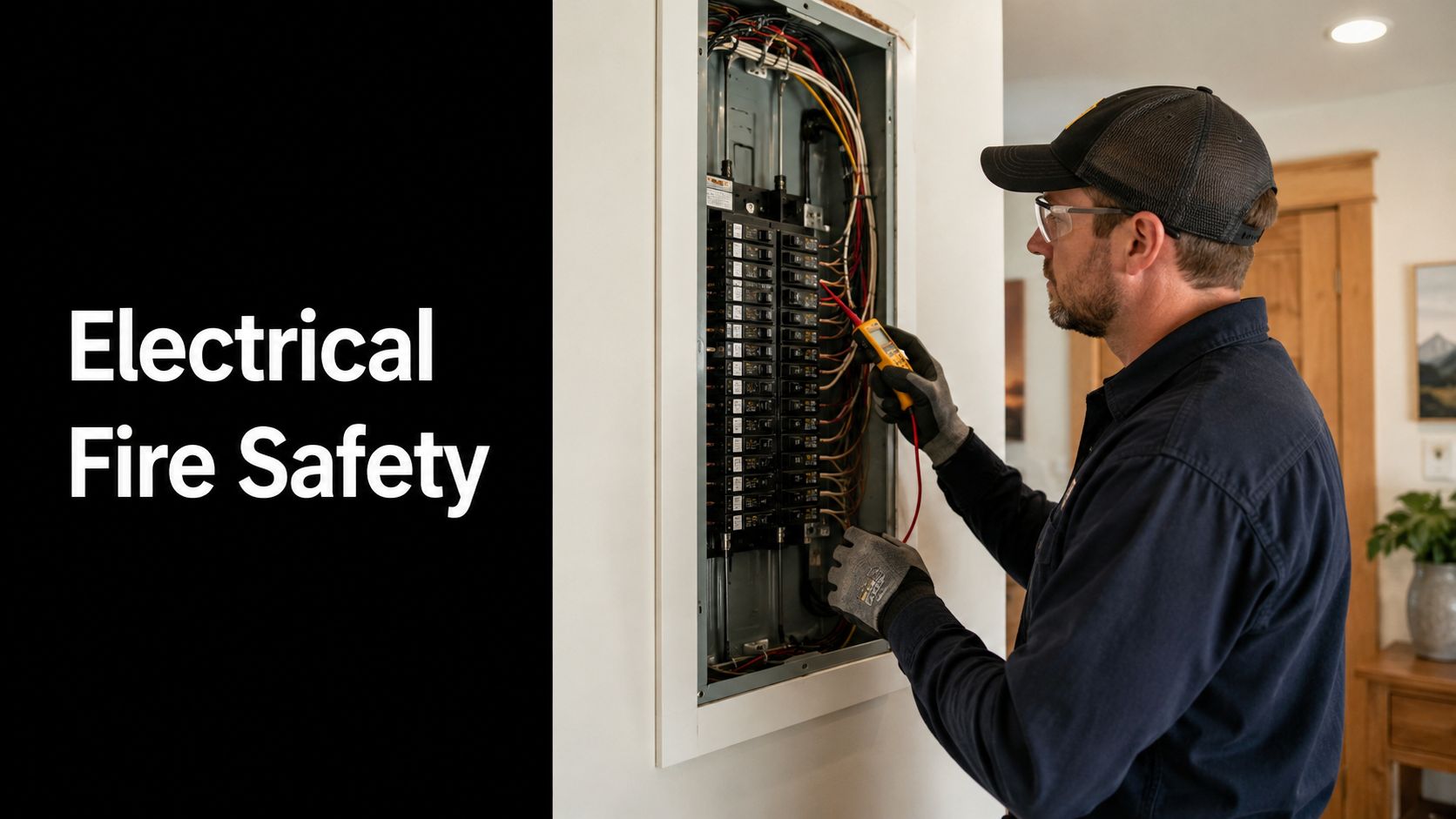
A lot of homeowners in Weber, Davis, and Salt Lake County assume the house is safe because nothing looks wrong. That's often the problem. Electrical fire prevention usually starts with issues you can't see, inside panels, behind outlets, and in aging wiring that's been carrying more load than it was designed for.
Table of Contents
- The Hidden Fire Risks in Your Electrical System
- Your Home Electrical Safety Checklist
- Critical Upgrades for Modern Electrical Fire Prevention
- Special Electrical Considerations for Your Home
- When to Call a Licensed Electrician Immediately
- Investing in Your Home's Safety with Black Rhino Electric
The Hidden Fire Risks in Your Electrical System
It's common to think of electrical fire risk as a lamp cord pinched under furniture or too many devices plugged into one strip. Those are real hazards, but they're not the whole story.
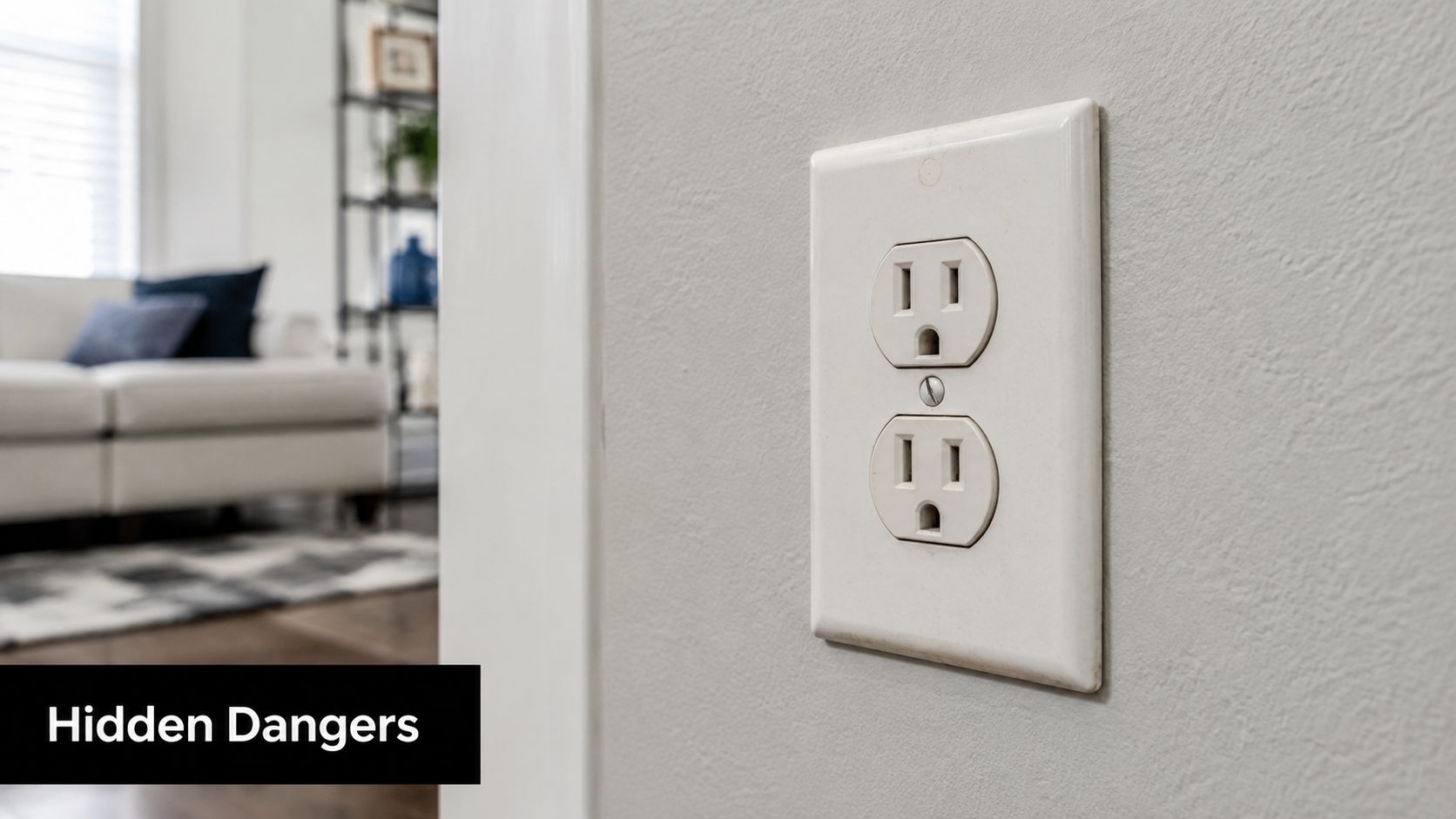
The bigger concern in many Northern Utah homes is hidden deterioration. Connections loosen over time. Breakers age. Conductors heat up under repeated load. Insulation dries out or gets damaged where no homeowner would ever see it. That matters because an estimated 24,200 residential building electrical fires occurred in the U.S. in a single year, leading to 295 deaths, 900 injuries, and $1.2 billion in property damage, according to the U.S. Fire Administration's electrical fire prevention guidance.
What makes electrical fires hard to spot
Electrical trouble often begins subtly. A loose termination inside a panel may only produce heat under heavier demand. A failing breaker may still reset, but it no longer responds the way it should. An overloaded circuit may not fail every day. It may only complain when the microwave, hair dryer, and space heater all run at once.
Practical rule: If a homeowner keeps saying the breaker keeps tripping, the breaker may not be the real problem. The circuit load, connection quality, or panel condition may be the issue.
A good comparison is a trailer hitch with one loose bolt. The trailer may still move down the road, but the connection isn't sound, and every bump makes the risk worse. Electrical systems behave the same way. They can keep working while becoming less safe.
Why older homes face different risks
Older housing stock in Weber County, Davis County, and parts of Salt Lake County often carries loads that didn't exist when the house was built. EV charging, larger kitchen appliances, added basement finishes, garage freezers, hot tubs, and work-from-home equipment all increase demand.
That doesn't automatically mean the home is unsafe. It does mean yesterday's wiring plan may not match today's usage. Electrical fire prevention isn't just about avoiding obvious misuse. It's about finding aging components, heat damage, poor past repairs, and undersized or outdated equipment before they turn into ignition sources.
Your Home Electrical Safety Checklist
A homeowner doesn't need to diagnose live electrical equipment to notice warning signs. Safe observation goes a long way.
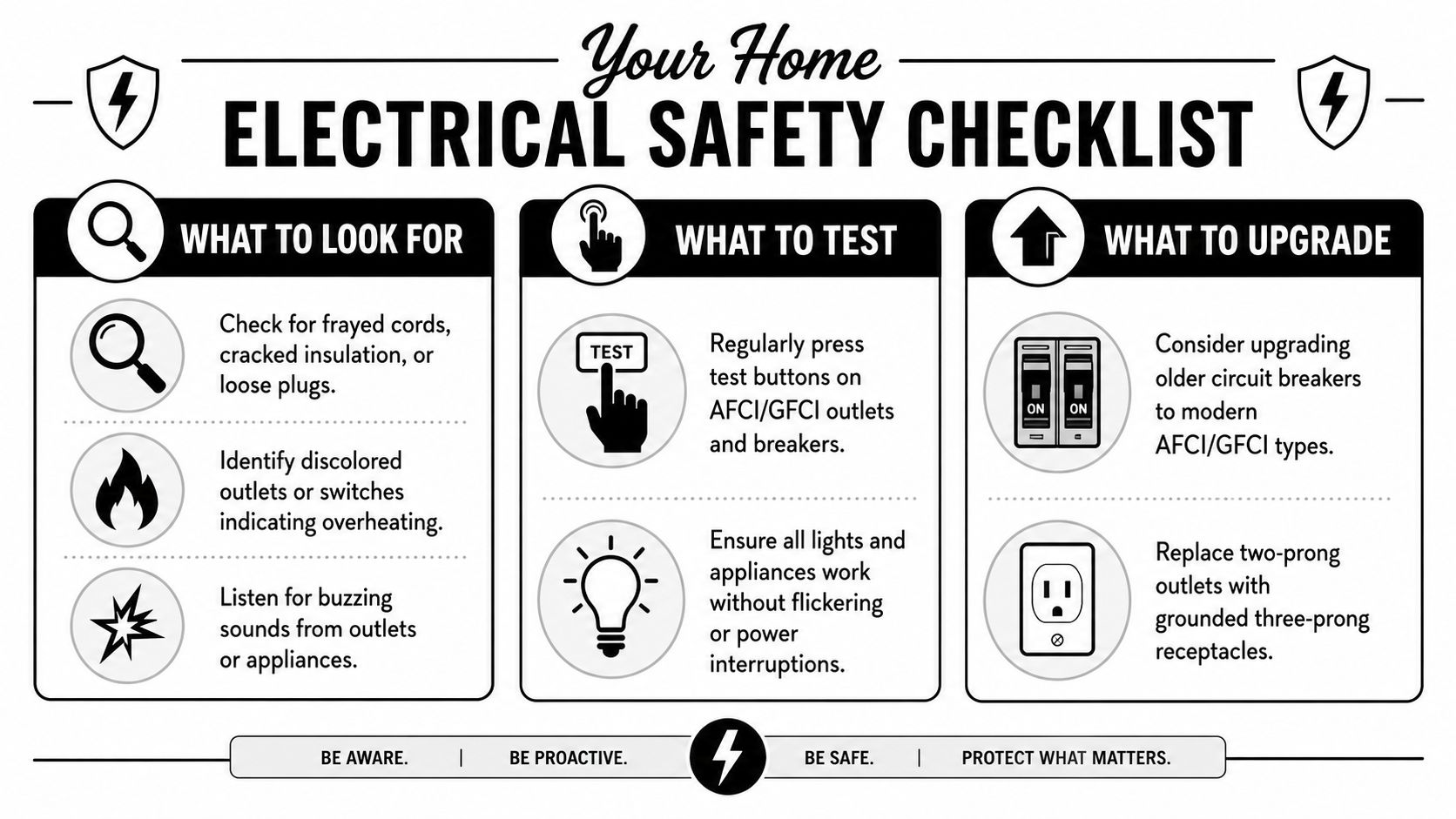
What you can safely watch for
Start with the parts of the system touched every day.
- Outlets that feel warm: A receptacle shouldn't feel hot during normal use. Warmth can point to a loose connection, a worn device, or a circuit carrying more than it should.
- Discoloration or scorch marks: Browning around a plug slot or switch plate usually means overheating happened at some point.
- Loose plugs: If a cord slips out easily, the receptacle may be worn and no longer gripping the blades correctly.
- Buzzing or crackling sounds: Electricity should be quiet. Sound often means arcing or a failing device.
- Lights that flicker under load: If lights dim when equipment starts, the system may have a loose connection, a shared overloaded circuit, or service capacity concerns.
Move next to cords and portable equipment.
- Frayed insulation: Damaged cord jackets expose conductors to wear, moisture, and accidental contact.
- Extension cords used as permanent wiring: A cord should solve a temporary reach problem, not replace a missing outlet.
- Power strips feeding other power strips: That setup doesn't create more capacity. It just concentrates load in one place.
- High-heat appliances on casual setups: Space heaters, toaster ovens, and similar loads should never be treated like phone chargers.
For rentals or multifamily properties, this kind of routine walkthrough pairs well with broader landlord fire safety advice that covers inspection habits and occupant safety expectations.
Electrical Warning Signs and What They Mean
| Warning Sign | What It Could Mean | Recommended Action |
|---|---|---|
| Warm outlet or switch | Loose connection, worn device, overload | Stop using it and schedule inspection |
| Repeated breaker trips | Overloaded circuit, short, failing breaker, hidden fault | Have the circuit and panel evaluated |
| Flickering lights | Loose connection, shared heavy load, service issue | Track when it happens and call an electrician |
| Buzzing at panel or outlet | Arcing or failing equipment | Treat as urgent and stop using affected circuits if possible |
| Burning smell | Overheating insulation or connection damage | Shut off power to the area if safely accessible and call immediately |
| Rust or corrosion near panel | Moisture exposure and possible equipment deterioration | Arrange professional inspection |
| Two-prong outlets in key living areas | Older ungrounded wiring | Ask about safe upgrade options |
What belongs on a professional inspection list
A licensed electrician checks what the homeowner shouldn't open or disturb. That includes panel terminations, breaker fit and condition, circuit loading patterns, grounding and bonding, device integrity, and signs of heat inside boxes and enclosures.
A useful homeowner mindset is simple. Observe, document, and report. Don't remove covers, don't reach into panels, and don't assume a reset solved the problem.
Anyone who wants a fuller walkthrough of what gets reviewed can use this guide to home electrical inspections as a reference point before scheduling a visit.
Critical Upgrades for Modern Electrical Fire Prevention
Observation catches symptoms. Upgrades address root causes.
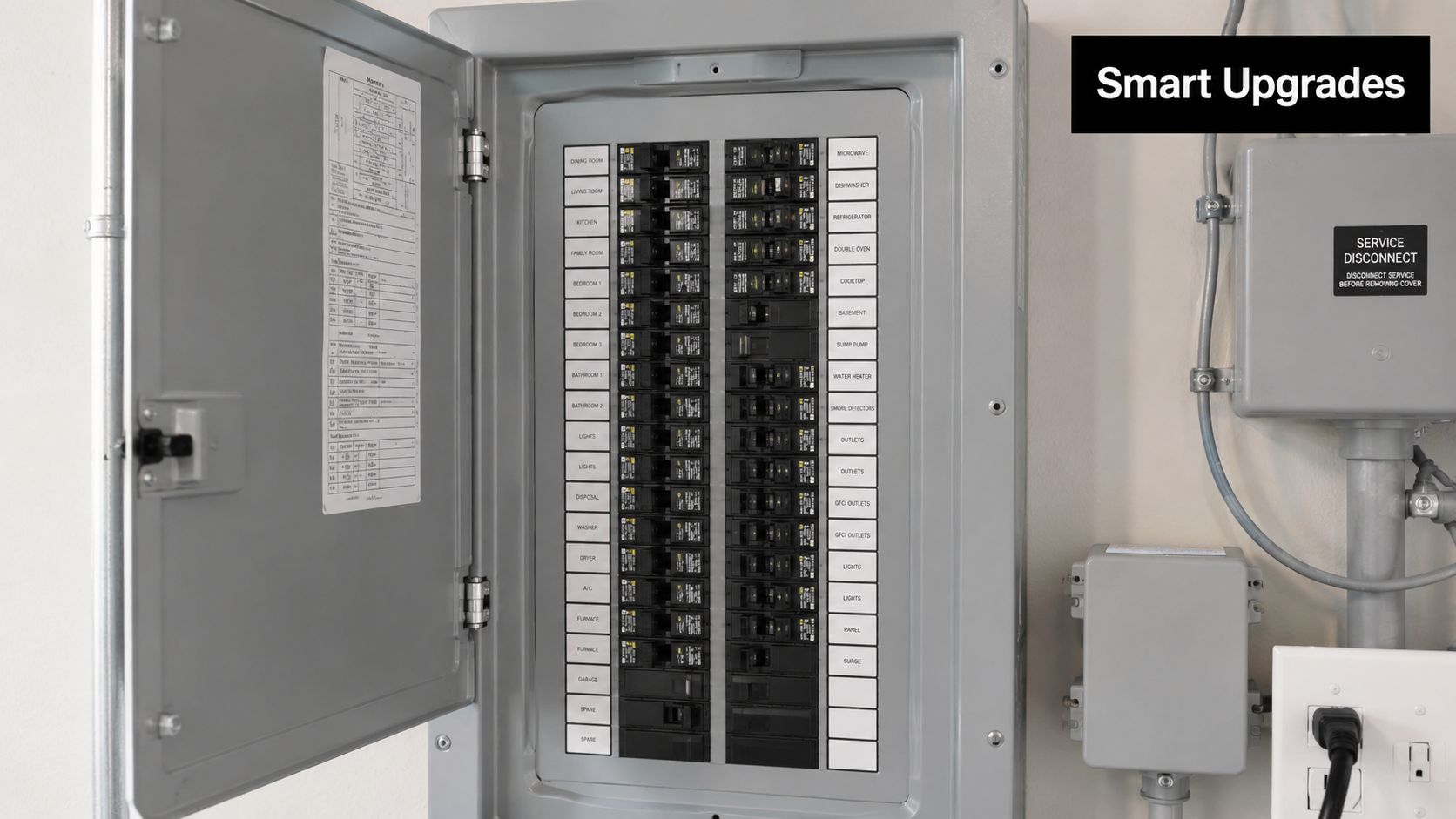
One of the biggest gaps in older homes is that standard overcurrent protection doesn't catch every dangerous condition. The NFPA residential electrical fire data review notes that a significant portion of electrical fires originate from defective or worn insulation and hidden installation issues like loose cabling or aging circuits, which standard overcurrent protection may not detect.
AFCI and GFCI protection do different jobs
These two safety devices are often grouped together, but they solve different problems.
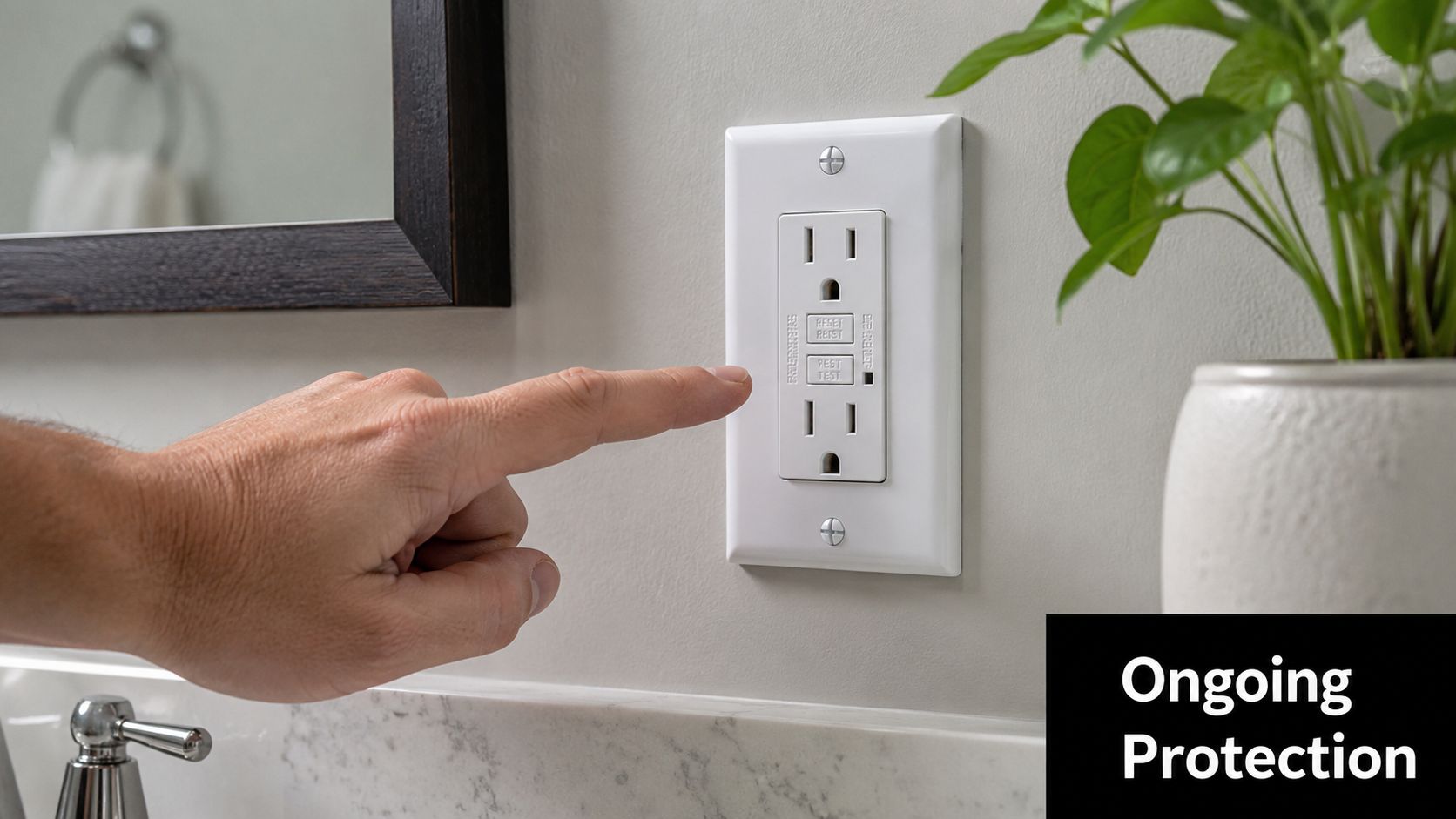
GFCI protection is aimed at shock risk. It watches for current going where it shouldn't, such as through water or a person. That's why it matters in bathrooms, kitchens, garages, laundry areas, exterior locations, and other damp or grounded environments.
AFCI protection is aimed at fire risk from arcing. It helps catch abnormal electrical signatures that can happen with damaged conductors, loose terminations, or deteriorating wiring.
Bottom line: A regular breaker is like a guard watching for traffic jams. An AFCI is watching for sparks. A GFCI is watching for current leaving the proper path.
Homes with older devices, missing protection in required areas, or remodeled spaces tied into older wiring often benefit from targeted upgrades instead of piecemeal patching.
Why panel capacity and breaker condition matter
The panel is the traffic director for the whole house. If it's undersized, overcrowded, improperly modified, or filled with aging breakers, every downstream circuit is affected.
Panel problems don't always announce themselves with complete outages. More often, the clues are nuisance trips, lights dimming when equipment starts, limited room for added circuits, signs of heat, or breakers that don't feel mechanically sound anymore.
A homeowner considering an electrical panel upgrade should think about current use, not just current problems. Added air conditioning, finished basements, workshop loads, EV charging, and spa equipment all change the demand profile.
When wiring itself becomes the hazard
Aluminum branch wiring, aging insulation, and old splices deserve careful evaluation. The concern isn't that every older system is automatically dangerous. The concern is that certain materials and connection methods demand the right devices, terminations, and correction methods.
In many homes, the trouble spot isn't visible at the receptacle face. It's behind it. That's why electrical fire prevention often depends less on replacing one outlet and more on identifying patterns across the system. Black Rhino Electric handles panel, breaker, wiring, and correction work when those system-level issues show up during inspection.
Special Electrical Considerations for Your Home
A house can operate safely for years, then usage changes overnight. That's common when a family adds an EV, installs a hot tub, or starts relying on portable heat through the winter.
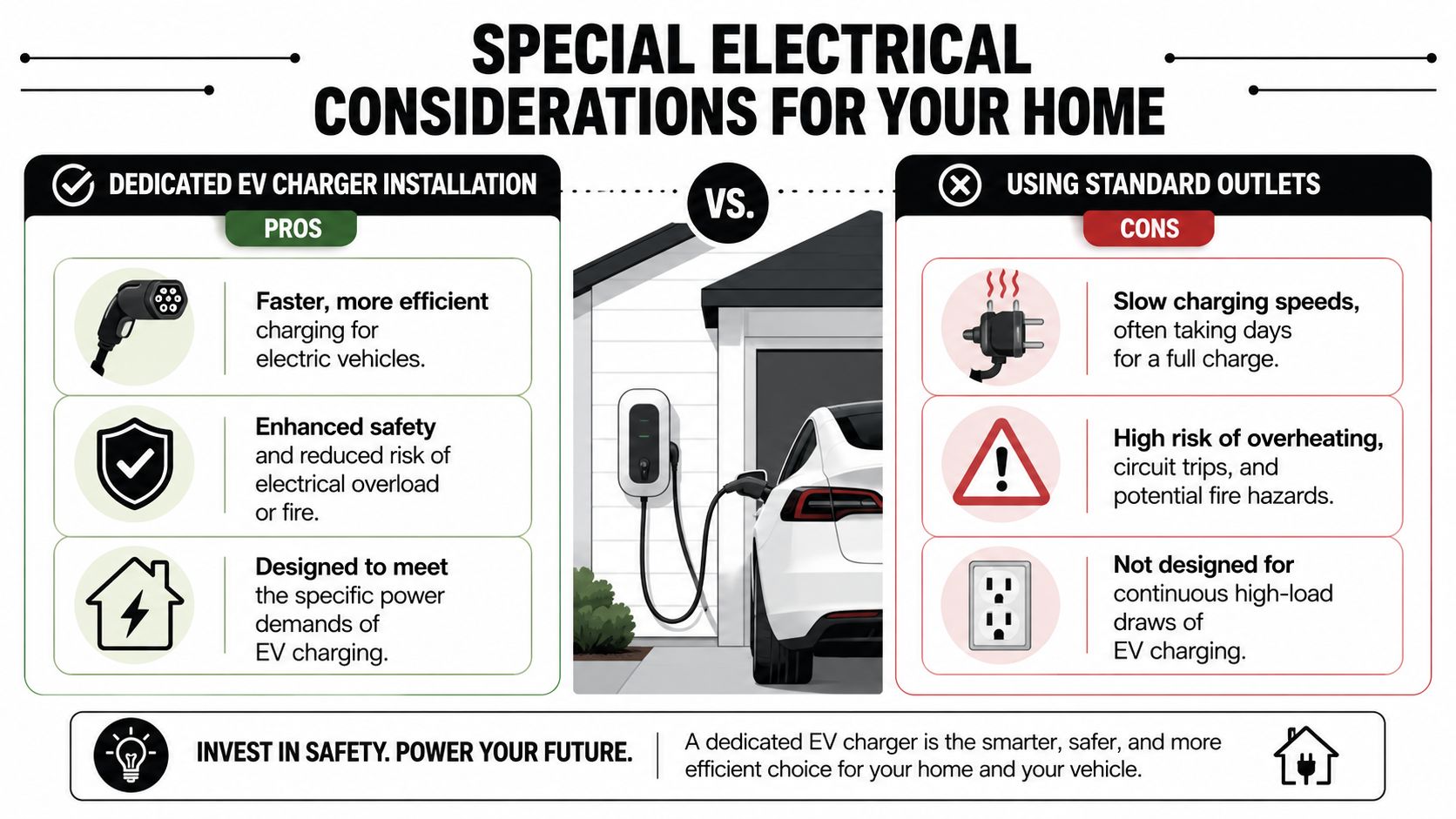
EV charging changes the load profile of a home
An electric vehicle charger isn't just another plug-in device. It places a sustained demand on the electrical system, often for long periods. That kind of load exposes weak points quickly. Marginal breaker connections, undersized feeders, limited panel space, and shared circuits become more than inconveniences.
A dedicated circuit is usually the safer path because it matches the equipment to the load instead of asking an older general-purpose circuit to do a job it wasn't built for. Homeowners looking at EV charger installation Northern Utah should expect an electrician to review panel capacity, circuit routing, breaker compatibility, and where the charger will be used day to day.
Hot tubs, heaters, and seasonal load spikes
Hot tubs and spas bring their own wiring and protection requirements. These aren't projects for extension cords, improvised disconnects, or “close enough” breaker choices. Water and electricity demand exacting work.
Seasonal loads create a different pattern. Winter in Northern Utah often means space heaters in bedrooms, garages, and home offices. Summer can mean air conditioning equipment running hard while freezers, kitchen appliances, and entertainment systems stay active. The risk rises when temporary habits become daily habits.
A common example is a bedroom circuit that was fine for lamps and a clock years ago. Add a heater, a treadmill, a desktop setup, and a portable AC unit, and the same circuit starts running hot. That's not carelessness. It's a sign the electrical system needs to catch up with the way the home is being used now.
When to Call a Licensed Electrician Immediately
Some symptoms can wait for a scheduled visit. Others shouldn't.
Red flags that shouldn't wait
Call a licensed electrician promptly if any of these show up:
- A burning smell near outlets, switches, or the panel: That can point to overheating insulation or a failing connection.
- Buzzing, crackling, or sizzling sounds: Electrical equipment should not make those noises during normal operation.
- Visible sparks: A small snap when plugging in a device can happen in limited cases, but repeated sparking or sparking from a fixed device is a warning sign.
- Repeated breaker trips: Resetting the same breaker over and over is not a fix.
- Warm or discolored wall plates: Heat at the device face often means trouble behind it.
- Lights that flicker across multiple areas: That may indicate a loose connection at the panel, service equipment, or a shared circuit problem.
If the system is producing heat, smell, noise, or visible damage, the goal is no longer convenience. It's risk control.
What happens during a service visit
A proper visit is focused on diagnosis, not guesswork. The electrician identifies the affected circuits, looks for heat or connection problems, checks panel conditions, evaluates breaker behavior, and traces whether the issue is isolated or part of a larger system pattern.
Homeowners should expect clear findings in plain language. That may mean a straightforward device replacement. It may also mean the problem points to older wiring, a panel issue, missing protection, or a load problem that needs a broader correction plan.
Investing in Your Home's Safety with Black Rhino Electric
Electrical fire prevention is rarely one big dramatic fix. It's usually a series of sound decisions. Replace the failing device. Correct the loose termination. Add the missing protection. Upgrade the panel when the house has outgrown it. Rework unsafe older wiring instead of continuing to patch around it.
What you're really paying for
Cost depends on scope. A single safety device replacement is different from rewiring part of a home. A panel change is different from adding protection to a few branch circuits. What matters is whether the work solves the underlying hazard or just quiets the symptom for a while.
For homeowners comparing project options, tools like Exayard electrical estimating software help explain why estimates can vary based on circuit access, service size, equipment selection, and correction scope.
Long-term safety beats repeated patch jobs
Quick fixes often cost more in the long run because they leave the system's weak points in place. A house with recurring nuisance trips, aging breakers, ungrounded receptacles, or questionable past additions usually needs a coordinated plan, not one more reset.
For homeowners in Marriott-Slaterville, Ogden, Layton, Bountiful, Salt Lake City, and nearby communities, the safer move is to have the system evaluated based on today's actual usage. Anyone ready to discuss panel work, troubleshooting, safety devices, rewiring, or dedicated circuits can request a free electrical quote.
If electrical warning signs are showing up in the home, contact Black Rhino Electric to schedule an inspection or discuss the next step. Call 385-396-7048 or use the online quote form to get started.