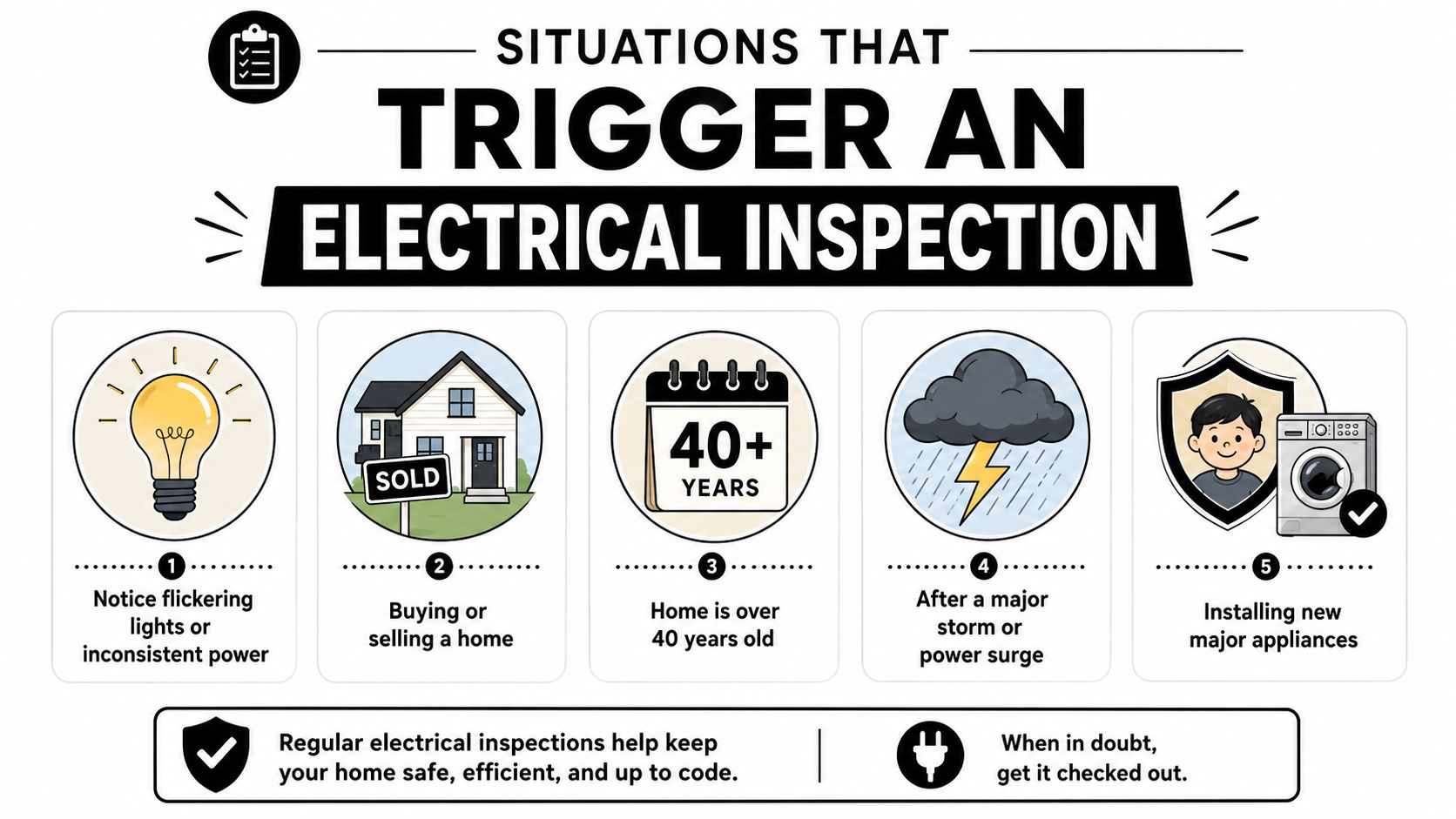
A house needs an electrical inspection during a real estate transaction, before or after a major remodel or addition, when adding high-draw loads such as an EV charger or hot tub, when the panel or service is upgraded, when wiring is older than 40 years or shows warning signs, and whenever local permits require it. A routine benchmark is inspection when more than 10 years have passed since the last check, with earlier attention for older homes, new loads, or electrical symptoms.
A flickering kitchen light before closing, a breaker that keeps tripping after a remodel, or a panel that has never been evaluated can leave a homeowner wondering whether to schedule a routine visit or call today. The answer depends less on guesswork than on what changed, what the wiring is showing, and what local permitting rules require.
Situations That Trigger an Electrical Inspection
A house can need an electrical inspection even when everything still appears to work. A buyer may want an independent review before purchasing, an insurer may request documentation, or a city may require an inspection after permitted electrical work. These checkpoints help identify hazards that aren't obvious from switches and receptacles.
Common reasons to schedule
- Buying or selling: A transaction may depend on finding unsafe wiring, outdated equipment, or uncorrected code issues before closing. France provides a useful example of how real estate policy can drive safety work. A law enacted in 2006 took effect on 1 January 2009, requiring inspections at sales when a dwelling's electrical installation was at least 15 years old. The framework expanded to qualifying rented dwellings on 1 July 2017. Between 2009 and 2013, 2.5 million residential wiring systems were inspected, leading directly to more than 1.5 million safety upgrades or renovations, while approximately 43% to 45% of existing-home sales each year were followed by corrective work triggered by inspection. The French electrical inspection case study illustrates why an inspection can affect a deal rather than merely document it.
- Insurance requests: Some carriers ask for electrical documentation during underwriting or renewal, particularly when a property has older equipment or a known hazard. A written report can clarify what was observed and what corrections remain.
- Permit-required work: New circuits, service changes, panel replacements, and concealed wiring commonly require a permit and inspection. The local authority, not the homeowner's assumption, determines which stages apply.
- Age and missing records: If the last inspection date is unknown, scheduling a baseline evaluation is sensible. In the UK and Ireland, the Institution of Engineering and Technology reported in 2026 that 79% of adults felt confident their homes were electrically safe, yet fewer than 30% had household electrics checked by a qualified electrician in more than a decade, and 20.1% didn't know such checks were required. The cited inspection-cycle reference supports treating the 10-year mark as a practical review point.
- Warning signs or major loads: Flickering, heat, odors, repeated trips, storm damage, an EV charger, a hot tub, or major appliance additions can move the appointment forward.
Practical rule: An inspection is a checkpoint whenever the home changes hands, the wiring becomes concealed, or the electrical demand changes substantially.
Northern Utah homeowners preparing a sale or planning a new circuit can also review this homeowner add on electric advice before deciding whether a broader inspection is appropriate.
Remodels Additions and New Electrical Work
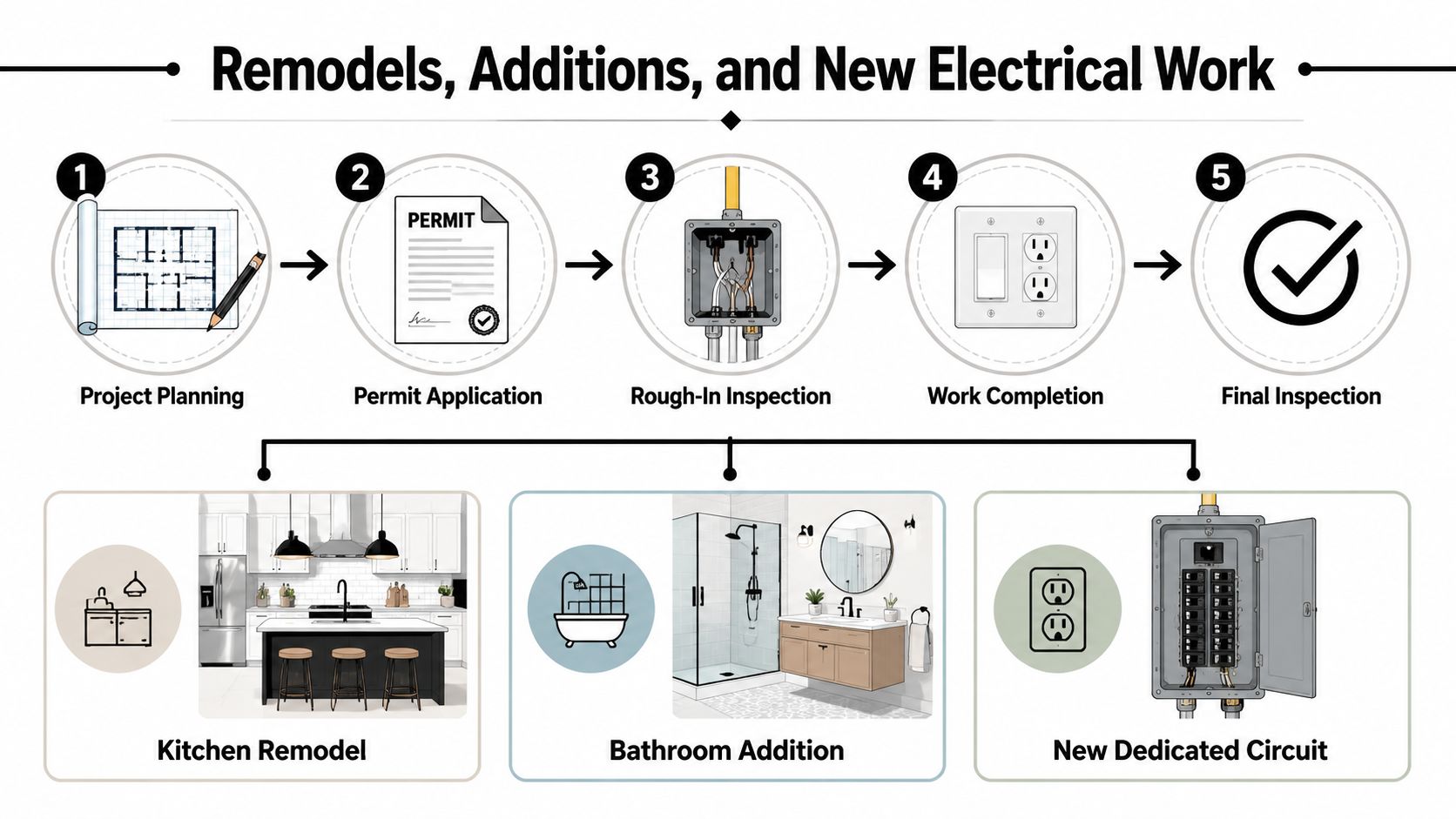
Electrical work hidden behind finished surfaces needs inspection while the work remains visible. After wiring, boxes, conduit, grounding conductors, and nail plates are installed, but before drywall or insulation covers them, an inspector can verify conductor sizing, box fill, circuit layout, and grounding continuity. The inspection-stage guidance explains why a final look at finished walls can't replace a rough-in inspection.
Work that usually calls for a review
A kitchen remodel may add countertop receptacles, dedicated circuits, lighting, and required protective devices. A bathroom project can change wiring near wet locations, where GFCI protection and proper installation matter. A finished basement often extends branch circuits and adds outlets, lighting, or equipment, while a room addition can alter the existing circuit layout and load.
A service or panel project deserves particular care. Replacing fuses with breakers, installing a new service panel, adding branch circuits, or modifying hard-wired equipment can trigger rough-in, service or panel, and final inspections in a code-based permitting system. Some jurisdictions require completion requests within three working days of concealed or completed electrical work. The permit and inspection timing reference shows why waiting until the project is finished can create avoidable complications.
A like-for-like replacement may be treated differently from work that adds capacity or changes wiring methods, but the distinction belongs to the local building department. Cosmetic work doesn't automatically make electrical work exempt, and using a handyman doesn't remove the obligation when the project falls under electrical permitting rules.
Why the sequence matters
The inspection isn't bureaucratic decoration. It gives the authority and electrician a chance to identify a loose connection, incorrect breaker, unsupported cable, missing box cover, or grounding problem before the defect is sealed away. Skipping the process can create trouble during resale, complicate insurance questions, and force walls or ceilings to be opened later.
For builders and remodelers planning larger projects, a practical overview of Pipeline On for electrical contractors can help organize scheduling and communication around new electrical work. For homeowners in Ogden, Roy, Layton, or surrounding communities, the first question should be whether the project changes wiring, capacity, or the service equipment. If it does, an electrical panel upgrade or inspection may need to be coordinated with the permit.
Warning Signs That Demand Immediate Attention
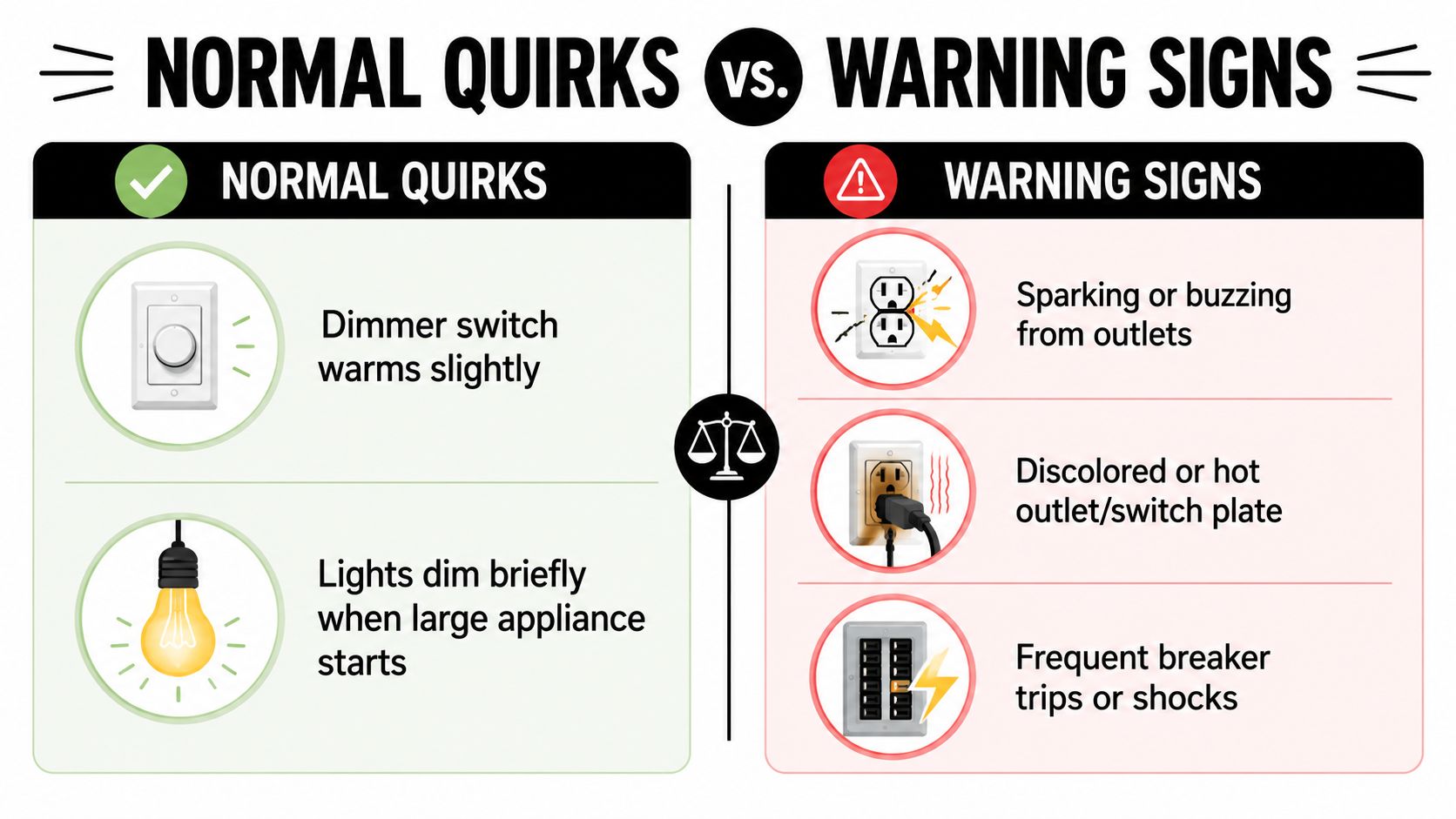
Not every electrical oddity means the house needs an emergency response. A dimmer can feel slightly warm under normal operation, and a breaker may trip once when several appliances run at the same time. The important distinction is whether the event is isolated and explainable, or whether it repeats, produces heat, or occurs without an obvious change in demand.
A simple comparison
| Usually monitor and mention | Stop treating it as a nuisance |
|---|---|
| A dimmer warms slightly while operating within its rated use. | An outlet, switch, or cover plate feels hot. |
| Lights dim briefly when a large appliance starts. | Lights flicker repeatedly, especially when an appliance runs. |
| One breaker trips after several loads operate together. | A breaker trips repeatedly without a clear overload. |
| A cosmetic issue with no heat, odor, sound, or damage. | Scorching, melted plastic, buzzing, arcing, or a burning smell. |
A repeated trip can point to an overloaded circuit, a failing breaker, a loose connection, or damaged wiring. Heat at an outlet may indicate resistance at a connection, while a burning odor or scorch mark can signal overheating or arcing. Buzzing from a panel, receptacle, or switch shouldn't be ignored because electrical components normally operate without sound.
If there is smoke, active sparking, a strong burning smell, or rapidly increasing heat, occupants should move away from the affected area and call for professional help. They shouldn't remove a panel cover, probe an outlet, or attempt to tighten live connections. The safest homeowner observations are location, timing, what equipment was operating, and whether the symptom stopped after a breaker tripped.
A breaker that trips once after an obvious overload may justify a scheduled conversation. A breaker that trips again under ordinary use deserves prompt evaluation.
Legacy equipment also changes the threshold. Aluminum wiring and Federal Pacific or Zinsco panels warrant inspection even when the homeowner hasn't noticed symptoms. A professional can determine the equipment's condition and whether correction, replacement, or further testing is appropriate.
For recurring flicker, unexplained trips, warm devices, or suspected legacy hazards, Black Rhino Electric's electrical troubleshooting service can help identify whether the issue is isolated or points to a wider system problem.
What a Licensed Electrician Checks During an Inspection
A professional inspection goes well beyond flipping breakers and pressing test buttons. The electrician evaluates how electricity enters the property, how protection is distributed, and whether the system can safely serve the loads connected to it.
The service and panel
The visit typically starts at the service entrance. The electrician examines the meter base, service equipment, service conductors, grounding electrodes, and bonding arrangements for visible damage, corrosion, improper connections, or capacity concerns.
Inside the main panel, the inspection focuses on bus bars, breaker condition, conductor sizing, overheating, melted insulation, scorch marks, and signs of double-tapped breakers. The electrician also looks for mismatched protection, crowded or improperly terminated conductors, and conditions that suggest unpermitted work.
Branch circuits and protection
Branch circuits are traced as far as practical. The electrician checks whether breakers protect the conductors they serve, whether junction boxes have covers and adequate capacity, and whether neutral and ground conductors are handled correctly in subpanels.
GFCI and AFCI protection is tested where applicable, including kitchens, bathrooms, garages, bedrooms, and other locations governed by the adopted code. The inspection can also identify ungrounded receptacles, missing protective devices, damaged switches, and unsafe extensions of existing wiring.
Capacity and documentation
The final question is whether the system fits the home's present use. A panel that functioned acceptably when installed may not have enough capacity for current appliances, an EV charger, a hot tub, office equipment, or a remodel. The electrician can compare the service and circuit arrangement with the home's actual demand and proposed additions.
A useful report should separate urgent safety corrections, permit or code issues, and planned upgrades. That distinction helps a homeowner address immediate hazards without treating every recommendation as an emergency.
How Added Loads Change Your Inspection Timeline
Calendar reminders matter, but load changes often matter more. A home can operate for years and still become unsuitable when a new circuit or high-demand device is added. The trigger is the change in demand, not the age of the last inspection.
An EV charger, hot tub, major kitchen equipment, backup power equipment, or an addition can expose weaknesses in an older panel, feeder, connection, or branch circuit. The same applies to a finished basement with new lighting and receptacles. These projects may require a load calculation, permit, and inspection before the equipment is placed into regular service.
Schedule before the new demand arrives
The most useful timing is usually before installation, because the electrician can assess service capacity, routing, protection, grounding, and panel space before the project is committed. An inspection immediately after installation still has value, particularly when work has already been completed or when symptoms appear.
Homeowners considering a Tesla Wall Connector or another dedicated charging circuit should schedule an EV charger installation assessment rather than assume an open breaker position means sufficient capacity. A spare space in a panel isn't the same as available service capacity.
The same reasoning applies to a hot tub or spa circuit. The electrician evaluates the circuit, disconnecting means, GFCI protection, bonding, routing, and the effect on the whole system. A service or panel upgrade may be appropriate, but it shouldn't be prescribed without evaluating the existing installation and the proposed load.
Load-based rule: If a project adds a dedicated circuit, changes service equipment, or introduces a substantial continuous demand, inspection planning belongs at the beginning of the project.
Scheduling Your Inspection in Northern Utah
A good appointment starts with clear questions. The homeowner should ask whether the electrician is properly qualified for the work, whether permits are required, who will coordinate them, and what the written report will include. The company should also explain which findings require immediate correction and which can be planned.
Ogden, Layton, Bountiful, Salt Lake City, and nearby jurisdictions can have different building department procedures. A homeowner shouldn't assume that a permit pulled in one city follows the same process in another. Ask whether the electrician handles permit coordination or whether the property owner must apply separately, especially for panel upgrades, service changes, new circuits, remodels, and work connected to a sale.
Prepare the property
Before the visit, provide clear access to:
- Main panels and subpanels: Move storage and furniture so the electrician can inspect safely.
- Meter and service equipment: Keep the exterior area reachable and report visible storm or water damage.
- Attic or basement junction areas: Identify access points and mention any concealed additions.
- Project records: Gather previous inspection reports, permits, renovation notes, and a list of symptoms.
The electrician may need to understand when a problem began, what was operating at the time, and whether a breaker or protective device has been resetting. Homeowners should observe these details without opening equipment or performing live testing.
A written scope with itemized costs is appropriate if the inspection reveals code violations, damaged equipment, or capacity limitations. That document should distinguish repair, replacement, permit, and follow-up inspection work. Electrical contractors and property managers can also review resources about how Mercateer handles electrician calls when organizing service communication for multiple properties.
For homeowners in Weber County, Davis County, or Salt Lake County, Black Rhino Electric can coordinate residential and commercial electrical inspections, troubleshooting, panel work, EV charging, hot tub wiring, lighting, GFCI and outlet corrections, and remodel-related electrical service. Homeowners can schedule an electrician when a closing date, new load, remodel, or warning sign makes an evaluation timely.
Black Rhino Electric serves Northern Utah from its Marriott-Slaterville headquarters, including Ogden, Roy, South Ogden, Layton, Clearfield, Kaysville, Bountiful, Salt Lake City, and surrounding communities. Call 385-396-7048 for inspection planning, electrical troubleshooting, panel and service work, EV charger or hot tub wiring, and code corrections, or visit Black Rhino Electric to request a quote.