If you're searching for riverdale electrical services, you're probably not looking for theory. You're looking for a fix, a safe upgrade, or straight answers about what your home or business needs in Riverdale, Utah.
Your Home's Electrical Heartbeat Comprehensive Residential Services
A home's electrical system works a lot like circulation. When it's healthy, you barely notice it. When something is off, flickering lights, warm outlets, nuisance breaker trips, or half-finished remodel wiring can make daily life feel stressful fast.
That usually starts with something small. A kitchen light dims when the microwave kicks on. A bathroom outlet won't reset. A basement remodel turns into a puzzle because the old wiring doesn't match what the new space needs. In Riverdale homes, those issues often point to the same root problem: the system was built for an earlier version of how people live.

What residential service really includes
Good residential electrical work isn't just "repairing a wire." It covers the full chain of safety, capacity, convenience, and code compliance. That can mean troubleshooting one dead circuit, or it can mean planning wiring for a whole-home remodel.
Common residential needs include:
- Safety inspections: Looking for loose terminations, aging breakers, missing protection devices, overloaded circuits, and signs of heat damage.
- Wiring and rewiring: Adding circuits for remodeled kitchens, home offices, garages, finished basements, and additions.
- Outlet and switch replacement: Especially when receptacles feel loose, show discoloration, or stop holding a plug firmly.
- GFCI protection: Important in kitchens, bathrooms, garages, laundry areas, and exterior locations where shock risk is higher.
- Lighting upgrades: Recessed cans, under-cabinet lighting, exterior lighting, dimmers, and fixture replacements.
- Panel and circuit corrections: Cleaning up unsafe or confusing panel layouts so future service is easier and safer.
For homeowners comparing options, it's worth reviewing what a dedicated residential electrician service in Northern Utah should cover before scheduling work.
Practical rule: If an electrical issue repeats, it usually isn't random. Breakers trip for a reason, lights flicker for a reason, and outlets fail for a reason.
What works and what doesn't
What works is diagnosing the cause before replacing parts. If a breaker trips because a neutral is loose, swapping the breaker alone won't solve much. If a remodel adds appliances without adding circuits, the problem isn't the toaster. It's the design load on the branch circuit.
What doesn't work is treating electrical symptoms like cosmetic problems. New devices on old wiring can look finished and still perform poorly. That's how homeowners end up paying twice.
A solid electrician approaches the house as a system, not a collection of isolated complaints. That matters whether you're updating one room or trying to make an older home feel dependable again.
Powering Riverdale Businesses Specialized Commercial Solutions
Commercial electrical work is less forgiving than residential work. In a home, a failed circuit is frustrating. In a store, office, warehouse, or multi-tenant property, it can interrupt revenue, tenant operations, refrigeration, security, or customer access.
That's why business owners shouldn't choose a contractor based on who can "squeeze it in." Reliability matters. According to Small Business Administration reporting on contractor reliability priorities, 65% of small businesses prioritize partnerships with contractors who offer reliable 24/7 service to minimize operational downtime.
What commercial clients actually need
Commercial jobs usually involve competing priorities. The space has to stay open. The work has to meet code. Future growth has to stay possible. And the installation has to make sense for the type of occupancy.
A capable commercial electrician handles jobs like:
- Ground-up electrical installations: Power distribution, lighting layouts, dedicated equipment circuits, and service coordination for new construction.
- Tenant improvements: Adapting an existing space for a new user without creating hidden code or capacity problems.
- Lighting retrofits: Replacing outdated fixtures with more efficient, better-performing systems for offices, retail floors, parking areas, and common spaces.
- Planned maintenance: Finding failing devices, damaged conductors, or overloaded panels before they shut down operations.
- After-hours repairs: Solving urgent issues when a daytime shutdown isn't practical.
Property managers and contractors looking at commercial electrical services for Utah projects should pay close attention to response planning, documentation, and code correction experience.
Where businesses lose money
The expensive part of electrical work usually isn't the repair itself. It's the disruption around it.
A retail space loses sales when lighting fails. An office loses productivity when circuits feeding workstations become unreliable. A restaurant or service business cannot "wait until next week" if part of the building is offline.
Commercial electrical planning should match how the building earns money. If the power layout ignores the business workflow, the installation may pass inspection and still create daily problems.
That's where experienced field judgment matters. A neat panel and a passing inspection are good. A system that supports staff, equipment, and future changes without constant callbacks is better.
Modern Electrical Upgrades for Your Utah Lifestyle
A lot of Riverdale homeowners aren't calling because something is broken. They're calling because the house needs to catch up with how they live now. Electric vehicles, hot tubs, smart devices, garage workshops, home offices, and larger HVAC loads all put new pressure on systems that may have been perfectly adequate years ago.
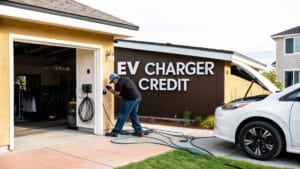
Utah's EV market is part of that shift. Utah EV demand data notes EV registrations surging 42% in 2025, along with a 180% year-over-year increase in "EV charger install Utah" queries. That tells you what many electricians already see on the ground. Homeowners want dependable Level 2 charging, and they want to know whether their panel can handle it.

EV chargers start with load, not with the charger
Out-of-state or generic content often falls short. People talk about charger brands first. In real practice, the first question is whether the home has the capacity and wiring path to support the installation safely.
A proper EV charger installation usually follows this order:
Load calculation
The electrician reviews what the home already supports, including HVAC, range, dryer, water heater, and any existing large loads.Panel review
Available breaker space matters, but so does overall service capacity, conductor condition, and panel age.Circuit planning
The route from panel to garage, driveway, or carport affects labor, wall access, conduit choices, and finish quality.Charger selection
Tesla Wall Connectors and other Level 2 units have different setup and mounting considerations, but they all depend on the earlier steps being done right.Permit and inspection
The final installation should be documented, tested, and inspection-ready.
Homeowners considering a charger can learn more from a local EV charger installation electrician in Utah rather than relying on generic national advice.
Panel upgrades and other future-proofing decisions
Some homes need more than one new circuit. If you're adding a charger, hot tub, or a heavy combination of modern appliances, your service may need to be upgraded. The question isn't just "Can we make it fit?" It's "Will this system perform safely under real daily use?"
Other worthwhile upgrades often include:
- Whole-home surge protection: Helpful for protecting electronics and appliance boards from damaging voltage events.
- Smart lighting controls: Useful in kitchens, exterior areas, and multi-use rooms where flexibility matters.
- Dedicated circuits for garages and workshops: Safer than relying on extension cords or shared receptacle circuits.
- High-efficiency fixture updates: LED lighting, motion controls, and better switching layouts improve usability without overcomplicating the home.
If you're also looking at comfort upgrades, this guide to energy-efficient ceiling fans is a useful companion resource because electrical planning works best when lighting, airflow, and everyday room use are considered together.
You know what? The best upgrade is usually the one that solves tomorrow's need without creating today's headache.
The Black Rhino Electric Process From First Call to Final Inspection
Most homeowners don't mind paying for skilled work. What they dislike is uncertainty. They don't want vague scheduling, surprise scope changes, or a technician who explains everything in shorthand.
A reliable process fixes that. The best electrical projects feel organized from the first conversation because each step has a purpose.

How a well-run project should unfold
The first call or message should clarify the actual problem. Is this troubleshooting, a planned upgrade, a remodel, or a safety concern? That distinction matters because the inspection approach changes with the job.
After that, the on-site visit should answer three questions:
- What is the condition of the system
- What work is required to do it safely
- What hidden issues could affect price or schedule
That middle step is where good electricians separate themselves. A fast estimate without a real inspection can sound convenient, but it often misses the things that create change orders later. Open splices, undersized circuits, crowded panels, inaccessible wiring paths, and existing code issues don't show up in a guess.
Why inspection comes before commitment
Let me explain. Electrical work is buried behind drywall, above ceilings, inside panels, and under cover plates. If someone skips the inspection and gives a too-clean answer too early, the customer usually pays for that shortcut later.
A dependable process usually includes:
- Initial problem review: Define the symptoms, goals, or project scope.
- Site inspection: Check panel condition, device locations, access, and existing wiring.
- Written estimate: Lay out what is included and flag any likely variables.
- Scheduling: Coordinate around homeowner availability, other trades, and permit timing if needed.
- Workday execution: Protect the space, complete the installation cleanly, and test the finished work.
- Final walkthrough: Show what changed, explain any new devices, and answer questions before closeout.
A final walkthrough isn't a formality. It's where the homeowner learns what was done, what to watch, and how to use the new equipment with confidence.
When that process is followed, the job feels calmer. That's not just good customer service. It's good electrical practice.
Our Ironclad Commitment to Safety Licensing and Transparency
A Riverdale homeowner usually calls us after something feels off. A breaker keeps tripping. Part of the house loses power. An outlet smells hot. An EV charger quote looks suspiciously cheap. It's important to note that electrical work is one of those trades where a clean-looking finish can hide bad decisions behind the wall or inside the panel.
Licensing, insurance, and clear paperwork matter because they give you a way to verify who is touching your home and whether the work is being done to code. In Utah, that matters even more on service upgrades, panel replacements, meter equipment, and EV charger installations, where permit and inspection requirements are not paperwork for its own sake. They catch unsafe shortcuts before those shortcuts become heat damage, nuisance tripping, or a failed inspection during a sale.
Why licensing matters to homeowners
A licensed and insured electrician gives you practical protection, not just a credential on a business card.
- Code-based work: Repairs and installations are done to accepted electrical standards and local requirements.
- Accountability: There is a real business behind the work, with traceable licensing and insurance.
- Permit awareness: Jobs that need permits are more likely to be identified early instead of being skipped to make a quote look cheaper.
- Risk control: Insurance matters if property damage or an on-site accident occurs.
That last point gets overlooked until something goes wrong.
Safety and code correction in the real world
Safe electrical work usually looks ordinary after the job is done. That's a good sign. It means the conductor size matches the load, terminals are torqued correctly, neutrals and grounds are landed where they belong, boxes are not overfilled, and circuits are tested before everything is closed up.
Riverdale homes also have some local patterns that generic articles gloss over. We see older panels that were never planned for hot tubs, basement finishes, or Level 2 EV charging. We see exterior equipment that has taken years of Utah sun, wind, and moisture. We also see DIY additions where a homeowner or handyman got power working, but not safely. A repair quote should say plainly whether the problem is a failed part, a worn-out system, or a code correction that needs to be fixed before new work can be added.
A trustworthy electrician should explain three things clearly. What is unsafe right now. What should be corrected soon. What can wait and be budgeted.
Transparent Pricing Examples for Common Services
| Service | Typical Price Range | What Usually Affects the Price |
|---|---|---|
| EV charger installation | $1,500 to $4,000 | Panel capacity, circuit length, charger amperage, wall access, permit and inspection requirements |
| Service panel upgrade | $4,500 to $7,000 | Existing service size, panel location, grounding and bonding updates, utility coordination, meter equipment condition |
| Energy audit and retrofit planning | $300 to $900 | Home size, number of circuits and devices reviewed, whether load calculations or written upgrade recommendations are included |
| Code violation correction | $250 to $2,500+ | Whether the issue is a single device or a panel-level problem, access to wiring, permit needs, and how much rework is required |
| Emergency troubleshooting | $150 to $350 typical call-out, plus labor and parts | Time of day, how long fault-finding takes, whether damage is isolated to one device or spread through a circuit, and replacement parts needed |
Those ranges are not one-price-fits-all promises. They are a realistic starting point so you know whether a quote is in the right neighborhood.
Good pricing is clear about what is included, what could change once the panel is opened, and whether permit or utility coordination is part of the job.
Common Electrical Questions and Troubleshooting Tips
You flip on the AC during a hot Riverdale afternoon, and the kitchen lights dip for a second. Maybe an outlet starts buzzing in the office, or a breaker trips every time the microwave and toaster run together. Such seemingly minor issues are often early warnings, especially in older Utah homes that were never designed for EV chargers, larger HVAC loads, or a garage full of modern equipment.
Homeowners in Riverdale usually ask the right questions. The hard part is knowing what is annoying, what is urgent, and what needs to be shut off until an electrician checks it.
Why do my lights flicker when the AC turns on
A quick dimming event can mean the AC startup is pulling a heavy load, but it can also point to a loose connection or a service that is already near its limit. If one light flickers, start at that fixture. If several rooms dip at once, the issue is usually farther upstream.
What you can do
- Check the bulb first: A loose LED lamp or failing bulb is the fastest thing to rule out.
- Track the pattern: Does it happen only when the AC, microwave, or another large appliance starts?
- Pay attention to scope: One fixture is a local problem. Several areas dropping together can mean panel, service, or connection issues.
When to call
- More than one circuit is affected
- The flicker is getting worse
- You notice buzzing, heat, or breaker trips at the same time
Is a buzzing outlet dangerous
Yes. A normal outlet or switch should not make noise. Buzzing often means a loose termination, a worn device, or arcing inside the box.
Stop using that outlet until it is checked.
That is one of those problems that can stay hidden behind the cover plate until you smell burnt plastic or see discoloration. By then, the repair is often bigger than it needed to be.
Why do breakers keep tripping
Breakers trip to protect the wire. That part is good. The problem is the reason behind the trip.
If the same breaker trips only when one appliance runs, there may be too much load on that circuit or the appliance may be failing. If it trips at random times, the cause is more concerning. That can mean a damaged wire, a loose connection, moisture intrusion, or a failing breaker. Resetting it once is reasonable. Resetting it over and over is like replacing a blown fuse in your car without fixing the short. You are ignoring the warning while the fault stays in place.
For larger diagnostics or property-wide electrical planning, some owners also compare approaches used by professional Electrical Contractors, especially when a simple nuisance trip starts pointing to a broader capacity or wiring issue.
Do I need a bigger panel
Sometimes, yes. The important question is not just how old the panel is. It is whether your electrical service still fits how you live in Riverdale now.
A home that once handled lights, a range, and a basic AC unit may now be expected to support an EV charger, updated HVAC equipment, garage tools, basement finishing, and more kitchen loads. Capacity problems often show up as everyday annoyances before they show up as a hard failure.
Signs the service may be undersized include:
- Frequent overload trips
- No space for new circuits
- Plans for EV charging, a hot tub, or major remodel work
- Older equipment with a history of loose breakers or inconsistent performance
Trying to squeeze more demand onto a full panel is like overloading a pickup bed. It may hold for a while, but the strain shows up somewhere. In electrical work, that strain can mean nuisance trips, overheated connections, failed breakers, or code corrections when you finally add the upgrade the right way.
Partner with Riverdale's Trusted Electricians Today
Choosing an electrician shouldn't feel like a gamble. You want someone who understands Riverdale homes, Utah code expectations, modern upgrades like EV charging, and the difference between a cosmetic fix and a lasting repair.
You also want someone who can respond when timing matters. Recent data shows a 120% year-over-year spike in searches for "electrical emergency response time Utah," which points to a clear need for dependable after-hours help when outages or dangerous faults happen. That urgency is part of why many property owners look for experienced professional Electrical Contractors who can handle both planned work and urgent electrical problems with the same level of discipline.
The right contractor protects more than wires and breakers. They protect your routine, your property, and your peace of mind. If the lights are flickering, the panel is overcrowded, the remodel is stalled, or the charger install has raised bigger capacity questions, it's worth getting the job assessed the right way the first time.
For safe, local help with riverdale electrical services, reach out to Black Rhino Electric. Call 385-396-7048 or request a free quote to schedule your service.