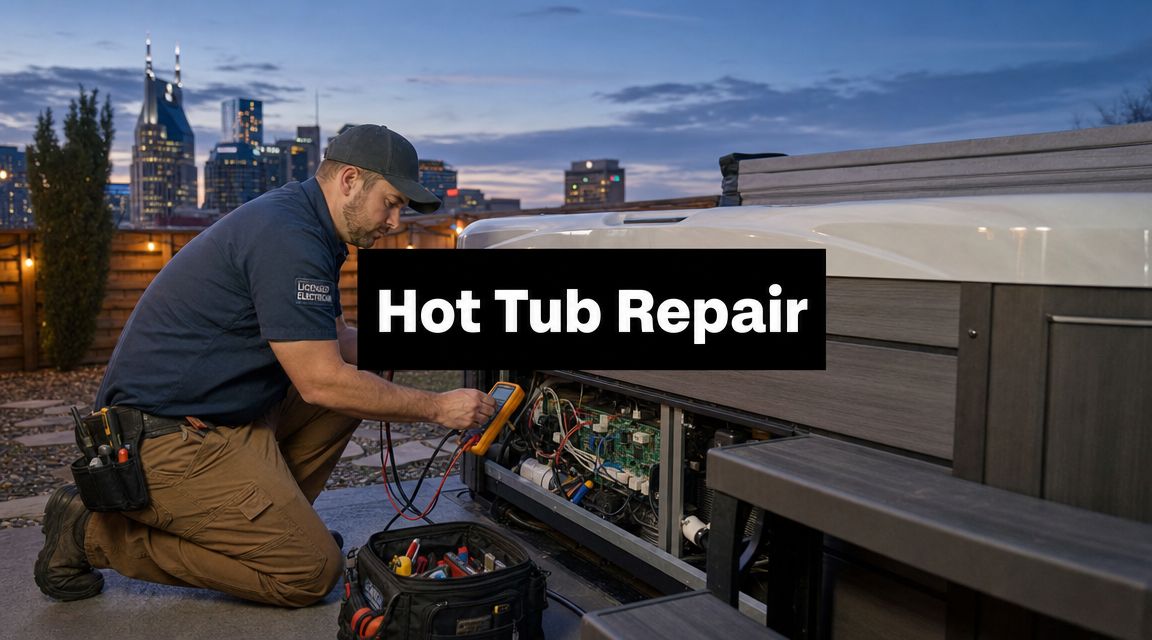
A cold spa on the one night you planned to use it is frustrating, especially when the panel is lit but nothing else seems right. Hot tub repair Nashville homeowners need often starts with one simple question. Is this really a spa problem, or is it an electrical problem wearing a spa costume?
Your Nashville Hot Tub Isn't Working Now What
Most homeowners hit the same moment. The cover comes off, the water is cool, the jets don't respond, or the whole tub is dead silent. That usually triggers a quick search for a heater, pump, or control board. Sometimes that's the right path. A lot of times, it isn't.
In Nashville, one of the least explained parts of hot tub repair is the electrical side. Local business listings show plenty of spa service providers, but they rarely answer the bigger safety question. Is the fault inside the tub, or is it tied to the feeding circuit, GFCI protection, bonding, or disconnect? That gap matters because a repair that ignores electrical safety and code compliance can leave the unit unsafe or noncompliant even after a mechanical part is replaced.
As a master electrician would tell you, a hot tub is not just a big bathtub with bubbles. It's a high-load appliance sitting next to water. That means a weak connection, a failing breaker, a bad circulation signal, or a bonding issue can look like a bad spa component.
Practical rule: If your spa has a power problem, intermittent heat, or a breaker that trips, don't assume the failed part is the part that looks guilty.
That's why smart diagnosis matters more than fast part swapping. Replacing a heater because the water is cold can waste time and money if the actual issue is poor flow, control logic, or unstable power feeding the tub.
Decoding the Problem Common Hot Tub Failures
A hot tub usually tells you what's wrong by the symptom pattern. The trick is reading the pattern correctly. You know what? Most failures fall into a few buckets, and each one points you in a different direction.
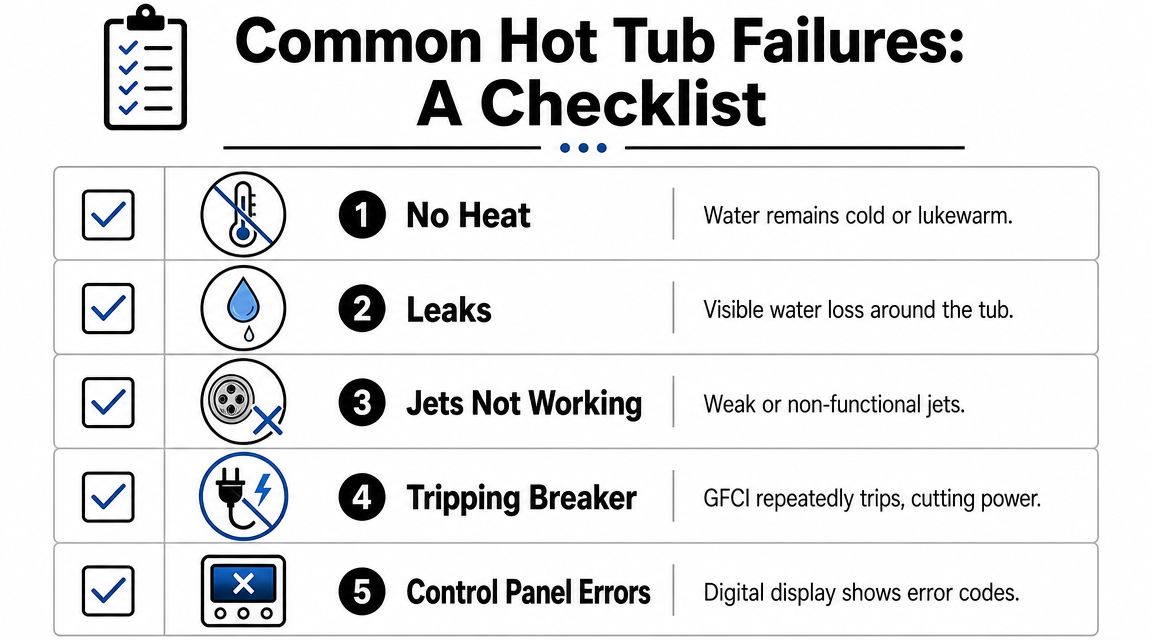
When the water won't heat
Cold or barely warm water doesn't automatically mean the heater is bad.
Safe checks a homeowner can make:
- Filter condition: A clogged filter can restrict water movement enough to interfere with heating.
- Water level: If the water is too low, the system may not circulate correctly.
- Obvious panel messages: If the display is showing an error, write it down before resetting anything.
- Recently changed settings: Confirm the set temperature didn't get lowered accidentally.
Signs the problem runs deeper:
- Heat comes and goes: That often points to inconsistent flow, sensor confusion, or control trouble.
- Tub runs but never reaches set temperature: The heater may not be energizing, or the system may be preventing it for safety.
- Breaker trips when heat should start: That raises concern about an electrical fault rather than simple wear.
When the jets are weak or dead
Weak jets can come from a mechanical restriction, but they can also point to a failing motor circuit.
A few practical things to look at:
- Dirty filter first: Reduced flow often starts there.
- Slice valves or shutoffs: After service, a valve may not have been fully reopened.
- Air controls: Some tubs have air adjustments that affect jet feel.
- Pump sound: A humming pump with poor output is a different clue than total silence.
What usually needs a pro:
- Motor hum with no movement: The pump may be seized, air-locked, or not getting proper starting power.
- Intermittent operation: Loose wiring, a weak capacitor, or board output issues can all create this symptom.
- Heat and jets failing together: That often points to a circulation-related chain reaction.
When the tub has no power at all
This is the symptom that makes homeowners think the spa is dead. Sometimes the spa is fine and the supply path is not.
Check only the basics:
- GFCI breaker position: If it's tripped, that matters. Don't keep resetting it over and over.
- Disconnect status: Outdoor disconnects can be overlooked.
- Panel display: No display can mean no incoming power, failed low-voltage control power, or a board issue.
A tripping breaker is information, not inconvenience. The device is telling you it saw something unsafe.
Maintenance plays into all of this more than people think. In the Nashville area, many hot tubs need a full drain and refill every 3 to 4 months because dissolved solids build up over time. Neglecting that routine can affect pumps, filters, heaters, and water quality, which means some “repair” calls really begin as maintenance problems that snowballed.
The Critical Role of Electrical Safety and Power
The most important system in a hot tub isn't the shell or even the jets. It's the power system that lets everything operate safely. When a homeowner says, “The breaker keeps tripping, but the spa guy says the pump is probably bad,” that's when an electrician slows the whole process down.
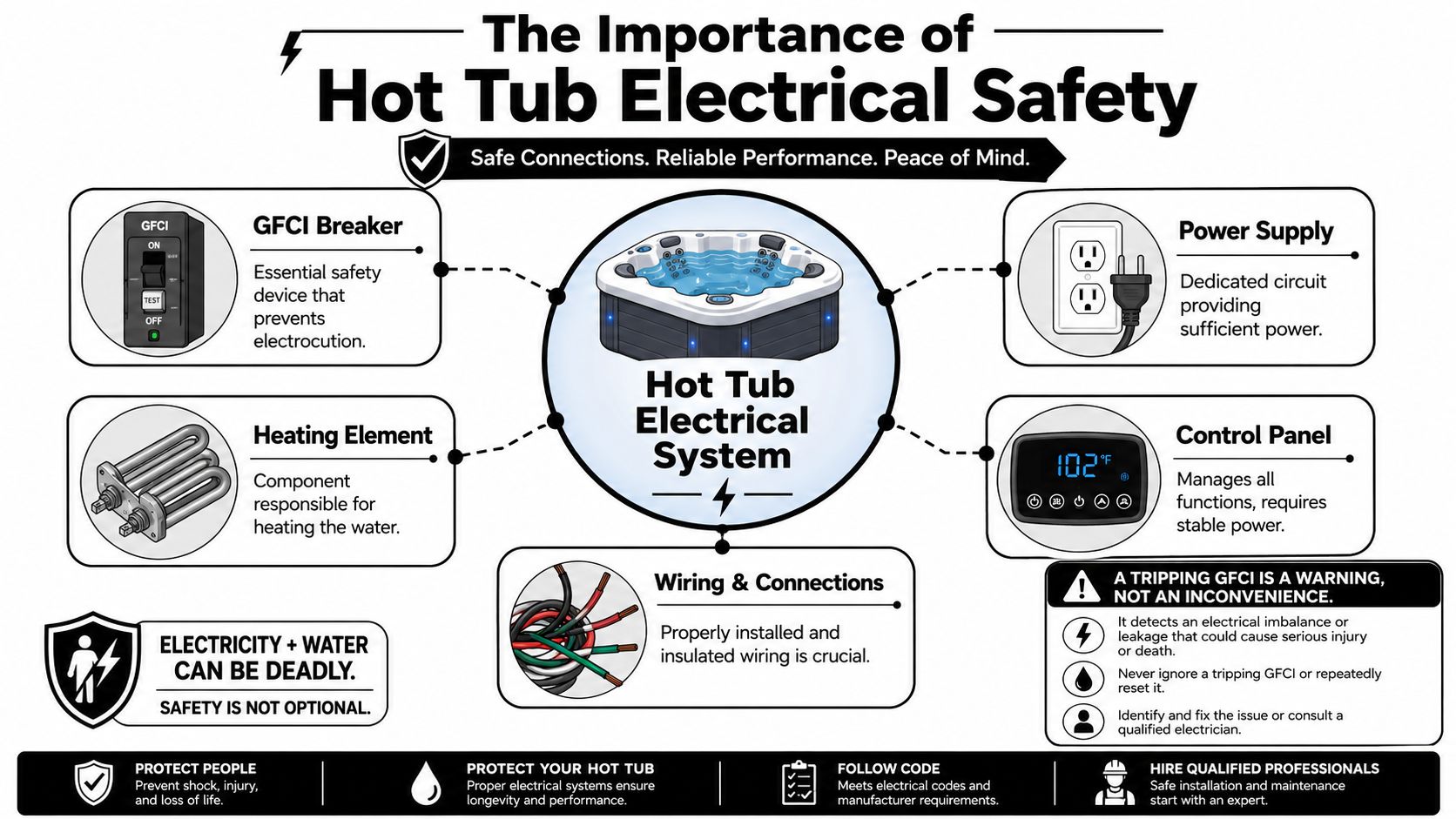
Why the GFCI matters
A GFCI is not there to annoy you. It is there to detect dangerous fault current and shut power off before someone gets hurt. Around a hot tub, that protection is critical because you're combining water, metal parts, heaters, pumps, and people with wet skin.
If the GFCI trips once after a storm or during a clear one-time event, that still deserves attention. If it trips repeatedly, the system is waving a red flag. The cause might be moisture intrusion, damaged wiring, a leaking heater element, a failing pump motor, or a ground fault in a control component.
What doesn't work:
- Repeatedly resetting the breaker: That can mask the fault while the danger remains.
- Replacing parts by guess: You might install a new heater and still have the same unsafe condition.
- Ignoring nuisance trips: In wet equipment, “nuisance” is often misread.
Why diagnosis starts upstream
A good hot tub repair process begins with the whole system, not the loudest symptom. That's standard trade logic. Full-system service coverage means a heater complaint may actually come from circulation trouble, a flow switch issue, or pressure loss, so proper diagnosis starts with flow, pump operation, and control logic before parts are replaced.
That approach matters because many of those checks touch electrical function:
| Electrical checkpoint | Why it matters |
|---|---|
| Incoming power | The spa can't run correctly on unstable or incomplete supply |
| GFCI behavior | Trip patterns help isolate fault conditions |
| Pump operation | Poor circulation can block heating even if the heater is intact |
| Control output | The board must actually send power when the spa calls for heat or jets |
| Wiring condition | Corrosion, loose lugs, and damaged insulation create intermittent faults |
A hot tub is a lot like a kitchen oven with a bad door switch, weak supply, and a clogged vent all happening at once. If you only replace the heating element, you miss the true failure chain.
If the tub is near water and the fault involves heat, pumps, or repeated trips, the safest assumption is that the repair needs electrical testing, not guessing.
If you want a deeper look at the safety side, this guide on hot tub GFCI wiring from breaker to bliss walks through the protection concepts homeowners should understand before anyone starts changing components.
In practical terms, a company like Black Rhino Electric distinguishes itself from a spa-only service. Hot tub work can involve heaters, pumps, wiring, dedicated circuits, GFCI devices, and outdoor safety hardware, so electrical troubleshooting is often part of the actual fix.
What Will Hot Tub Repair Cost in Nashville
Repair cost is one of the first questions homeowners ask, and that's fair. A hot tub is already an expensive appliance to own, so nobody wants to throw money at the wrong problem.
Nationally, hot tub owners typically spend $500 to $1,000 per year on maintenance, with repairs as part of that ownership picture, and electricity often adds $10 to $50 per month. The same source notes that hot tubs can cost from $330 to more than $25,000 before installation or maintenance, which puts repairs in context. You're not dealing with a disposable appliance.
Why quotes vary so much
Two tubs can have the same symptom and very different repair bills.
Main cost drivers include:
- The failed part itself: A small sensor issue is different from a major motor or control failure.
- How long diagnosis takes: Intermittent electrical faults often take longer to isolate than obvious leaks.
- Accessibility: Tight equipment bays and crowded wiring compartments slow down labor.
- Whether multiple faults are tied together: One failure often stresses another component.
- Emergency timing: After-hours work usually costs more than scheduled service.
A practical pricing view
The exact repair can't be priced without testing, and precise local component pricing varies by model and availability. So the better way to think about cost is by category.
| Typical Hot Tub Repair Costs in Nashville (2026 Estimates) | Typical Cost Range (Parts & Labor) |
|---|---|
| Basic diagnostic visit | Varies by provider and trip conditions |
| Filter or minor maintenance correction | Usually lower than major electrical or pump repairs |
| Heater-related repair | Can range from moderate to high depending on cause |
| Pump or circulation repair | Often moderate to high because diagnosis and parts both matter |
| Control board or electrical troubleshooting | Often variable because symptom overlap is common |
| Leak repair or shell-related work | Highly variable based on access and structural condition |
That's also why it helps to compare the logic behind different equipment repairs. A useful reference on understanding pool heater repair prices gives homeowners a good framework for how technicians think about labor, parts, and diagnostic complexity on water-heating systems.
Cost reality: The cheapest repair is the one that fixes the real fault the first time.
If you're trying to budget before booking service, this breakdown of hot tub repair cost factors is worth reading. It helps separate routine service expenses from the bigger decisions that come with motors, heaters, wiring faults, and aging equipment.
How to Choose the Right Nashville Repair Professional
The person you hire matters as much as the part that gets replaced. A hot tub can fail mechanically, electrically, or both. If the technician only sees one side of that equation, you can end up paying twice.
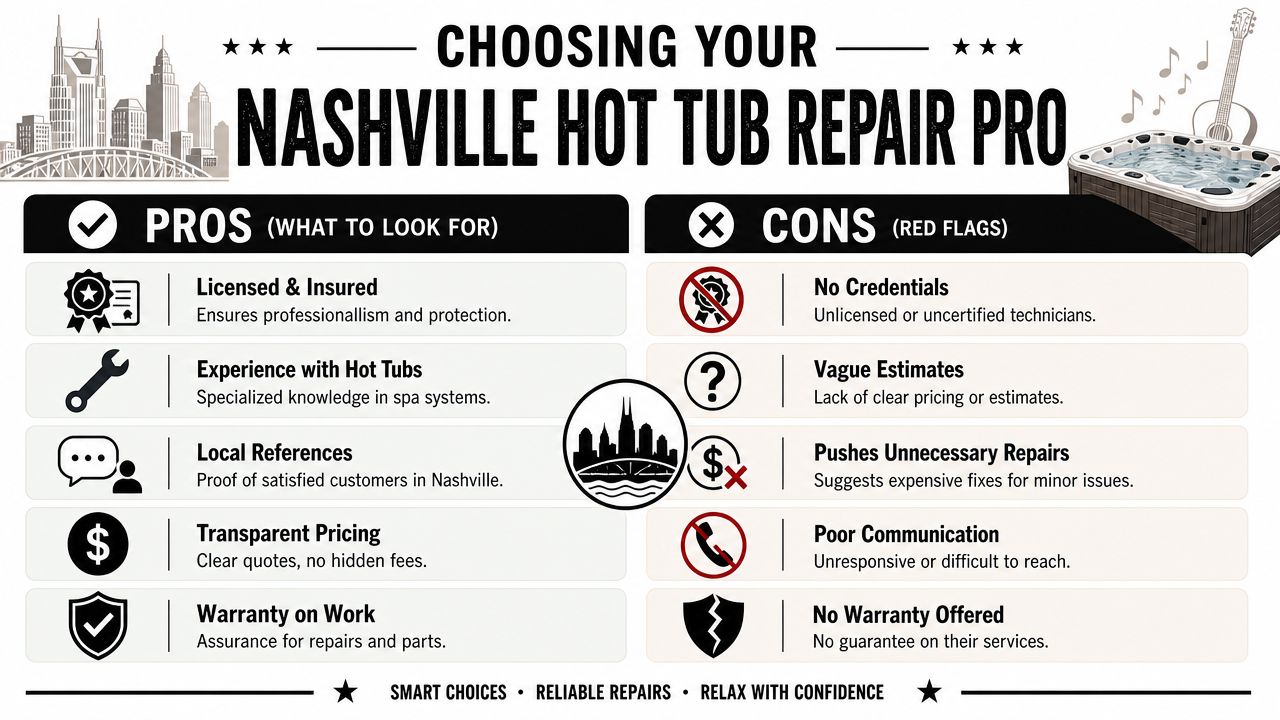
What to look for first
Start with the basics that protect you:
- Licensed and insured: If wiring, disconnects, breakers, or code-related corrections are involved, credentials matter.
- Comfort with electrical diagnostics: Not every spa service tech handles supply-side faults well.
- Clear scope of work: The pro should tell you what was tested, not just what might be wrong.
- Willingness to explain safety issues: Good tradespeople don't dodge the hard conversation when a setup is unsafe.
A helpful outside resource for finding local contractors is VerticalRent's service pros directory in Tennessee. It's one way to build a shortlist before you start calling.
Questions worth asking before you hire
Ask direct questions. The answers tell you a lot.
- Are you licensed to handle the electrical side if the issue isn't just inside the spa pack?
- Will you test the GFCI, supply, and control outputs before recommending part replacement?
- Do you document what failed and why?
- If this turns out to be a repair-versus-replacement situation, will you tell me plainly?
- Do you warranty your work or the installed parts?
If a contractor gets irritated by those questions, keep looking.
Repair or replace for an older tub
When considering hot tub repair, honesty is paramount. Some older acrylic or fiberglass tubs can justify repair. Others become money pits because every fix uncovers another issue.
A good professional should weigh:
| Decision factor | Why it matters |
|---|---|
| Shell condition | Cosmetic wear is different from structural cracking |
| Leak history | Recurring leaks often signal bigger underlying trouble |
| Electrical reliability | Repeated faults can point to aging components throughout the system |
| Part availability | Hard-to-source components can turn a repair into a long gamble |
| Ongoing operating cost | Older tubs may cost more to keep running efficiently |
A solid technician doesn't sell repair at all costs. They help you decide when the tub is still worth saving.
If you want a tighter checklist for screening electricians specifically, this guide on how to choose the best hot tub electrician near you gives homeowners a practical way to separate real troubleshooting experience from general handyman talk.
Nashville Hot Tub Repair FAQ and Your Next Steps
A few questions tend to come up at the end of a repair call, especially when the problem involves both water and electricity.
Can I repair my hot tub myself
Basic homeowner tasks are fine. Changing a filter, checking water level, and confirming whether a breaker has tripped are reasonable. Once the issue involves heaters, pumps, control packs, wiring, or GFCI protection, it crosses into a much riskier category. Water and high-voltage equipment don't leave much room for guesswork.
How long should a hot tub last
A quality tub can last a long time with steady care and timely repairs. Neglect shortens life fast. The tubs that age well usually get routine cleaning, proper water care, and early attention when a pump, heater, or electrical symptom starts acting up.
Is it normal for my electric bill to rise
Yes. A hot tub uses real power, so some increase is normal. If usage suddenly feels out of character, that's when it's worth having the heater circuit, controls, and operating condition inspected.
What's the smartest first step when the tub stops working
Start simple and stay safe:
- Confirm the symptom: No heat, weak jets, no power, or breaker trips.
- Check the obvious: Water level, filter condition, and breaker position.
- Stop if the breaker keeps tripping: Don't keep forcing it back on.
- Write down error codes: That helps the diagnostic process.
- Call a qualified pro when power or safety is part of the issue: That's the point where testing matters more than trial and error.
The bigger takeaway is simple. A hot tub problem that looks mechanical often has an electrical layer underneath it. If that layer gets missed, the tub may still be unreliable, unsafe, or both.
If your spa is tripping a breaker, losing heat, or acting unpredictably, contact Black Rhino Electric for a safe diagnosis. You can call 385-396-7048 or request a free quote to get the problem checked properly.