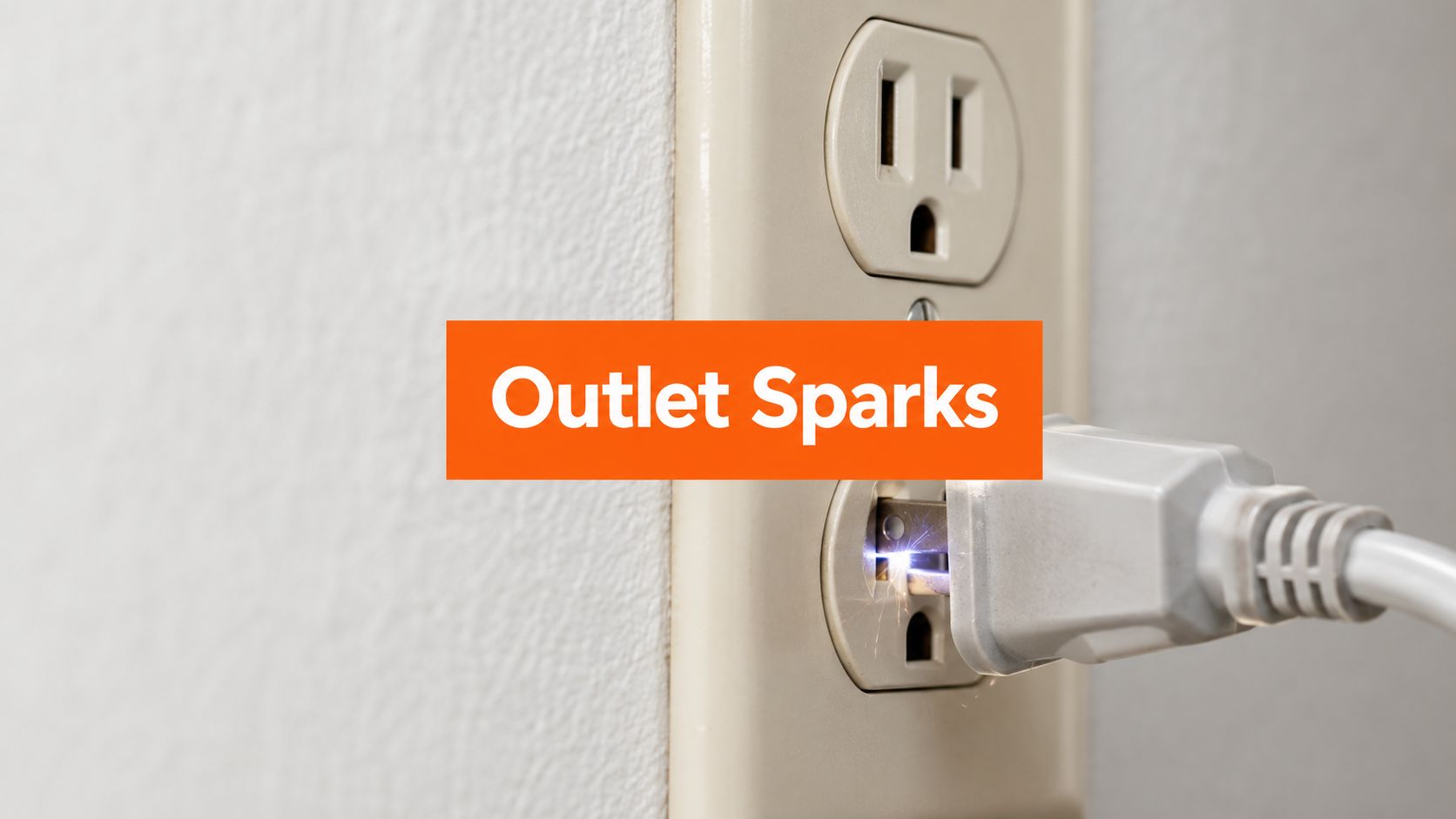
You plug in a vacuum and see a tiny blue flash at the receptacle. A brief spark can be normal, especially with a higher-demand appliance, but repeated, bright, noisy, hot, or foul-smelling sparking can signal a failing connection. The difference matters because an outlet sparks when plugging in for several possible reasons, and only some are harmless.
Why Your Outlet Sparks When Plugging In
A plug's metal prongs don't always meet the receptacle contacts at precisely the same instant. As a prong approaches an energized contact, electricity can jump across the small air gap before the plug is fully seated. That brief jump is called electrical arcing.
A small blue or bluish-white flash that disappears as the plug enters the outlet can occur with devices such as vacuums, hair dryers, window air conditioners, and power tools. These appliances can draw a stronger initial current when they start. A quick flash by itself doesn't prove that the outlet is failing.
The concern starts when the spark becomes a pattern or brings other symptoms with it. A spark that lingers, repeats every time, changes to orange or yellow, produces a loud pop or buzzing sound, or leaves the outlet warm deserves attention. The same applies when a small-load device, such as a phone charger, triggers the event repeatedly.
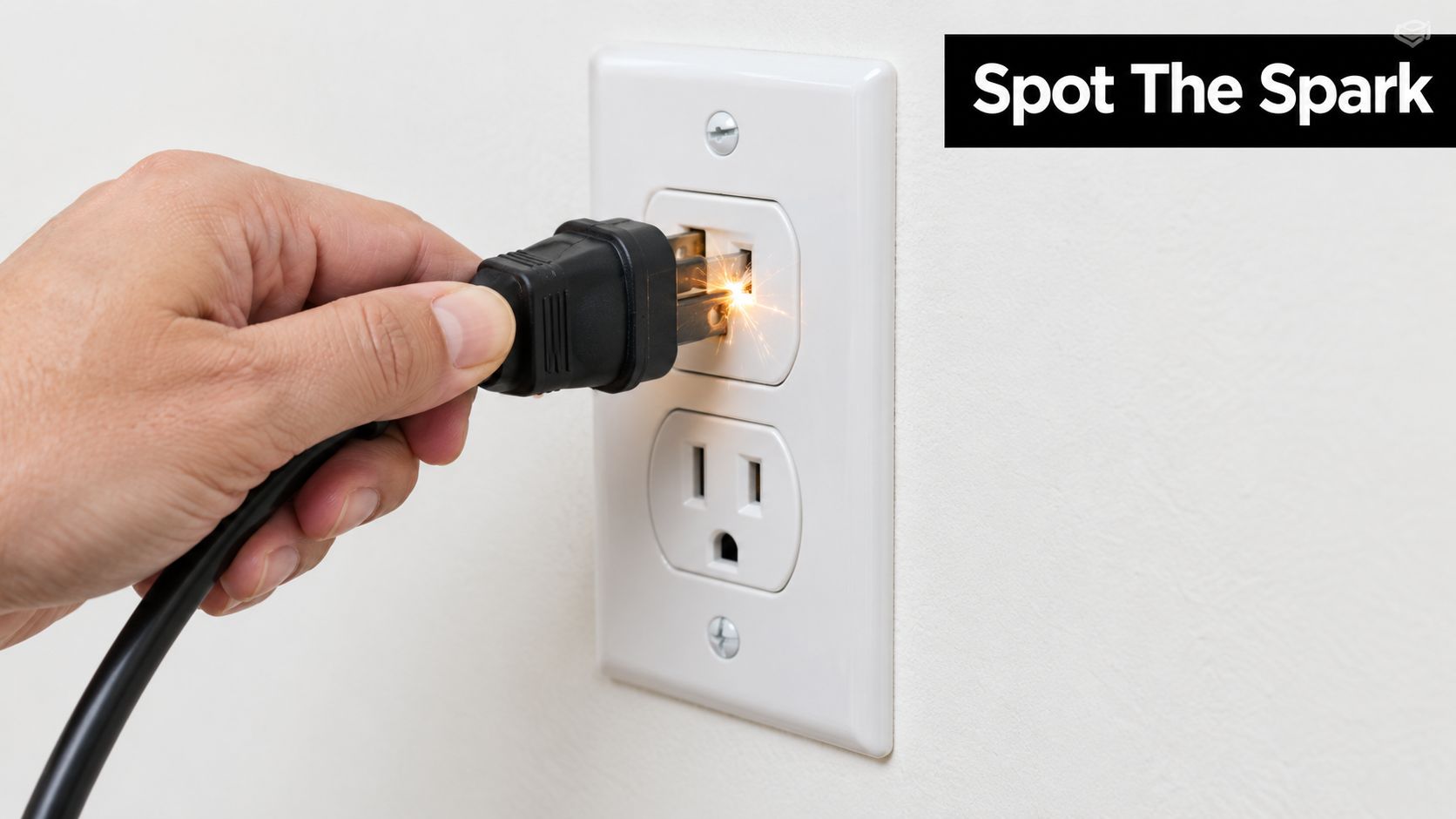
Normal arcing versus a warning sign
The practical distinction is not whether a flash occurred. It's how the spark behaves and what happens afterward.
A one-time, momentary blue-white flash with no heat, smell, sound, or visible damage is usually less concerning. A recurring spark suggests that the plug, outlet, or wiring isn't establishing a stable connection. High resistance at a loose or worn contact can create heat while current passes through a small gap.
Practical rule: A spark that changes the outlet's temperature, appearance, smell, or sound should be treated as a fault symptom, not normal plug-in behavior.
Arcing deserves respect because it can ignite nearby material. Electrical troubleshooting can identify whether the appliance, cord, receptacle, circuit, or panel is contributing to the problem without asking a homeowner to open an energized outlet box.
The wider risk explains why repeated sparking shouldn't be dismissed. The National Fire Protection Association reports an annual average of 46,652 home structure fires involving electrical failure or malfunction from 2020–2024, with about 527 civilian deaths, 1,580 injuries, and $2.4 billion in direct property damage each year. Those figures cover electrical failures broadly, not outlet sparks alone, but they reinforce the need to investigate warning signs promptly. (Home electrical fire guidance)
Spark Characteristic Urgency Matrix
Homeowners can make a safer first decision by observing six characteristics: duration, color, frequency, sound, heat, and odor. No test requires removing a cover, touching a conductor, or probing the receptacle.
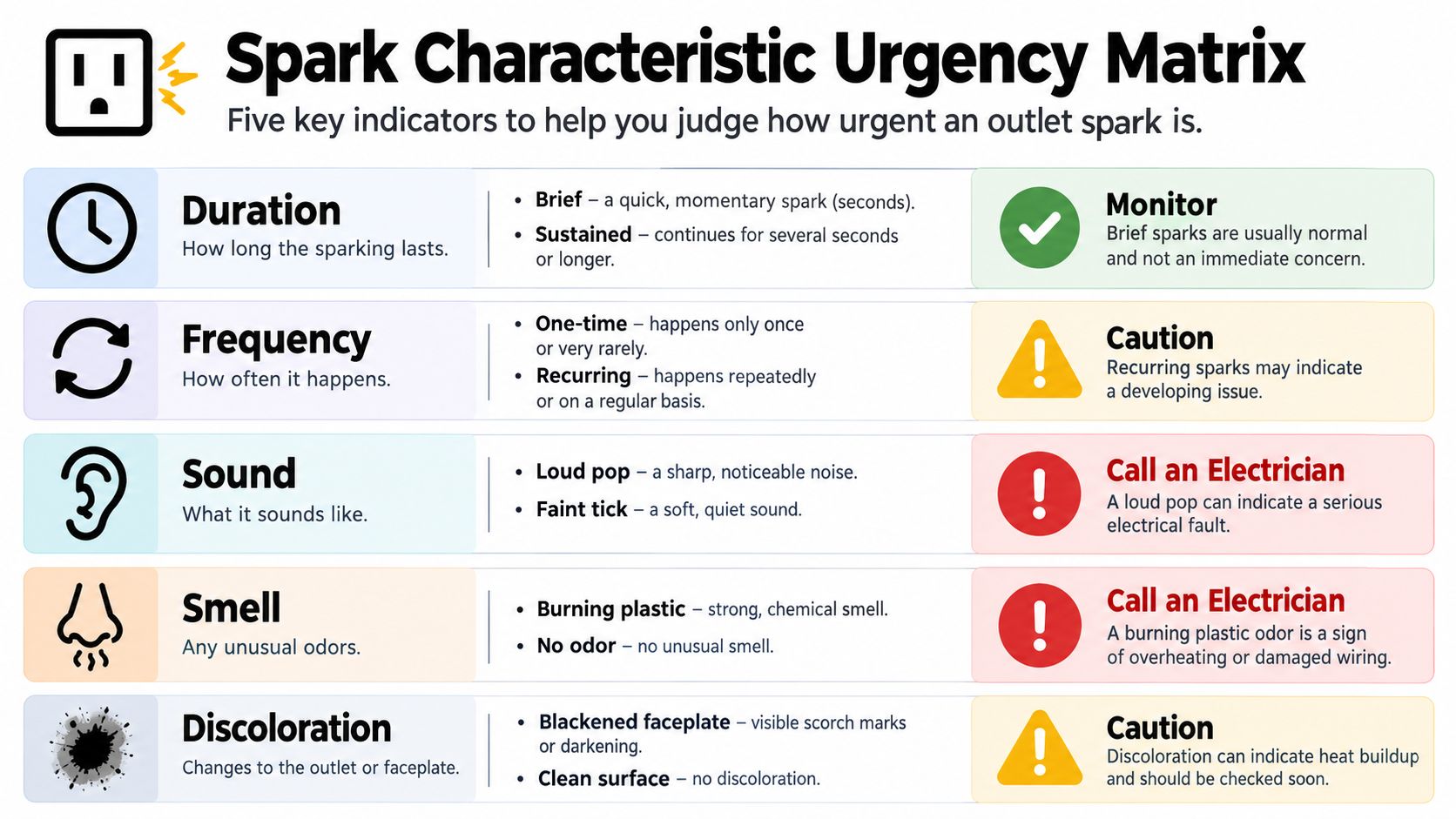
| Observation | Lower concern | Higher concern | Practical response |
|---|---|---|---|
| Duration | A tiny flash that vanishes as the plug seats | A spark that continues, lingers, or appears after connection | Stop using the outlet if the arc persists |
| Color | Brief blue or bluish-white flash | Orange, yellow, or unusually bright spark | Disconnect safely and arrange inspection |
| Frequency | Rare event tied to one higher-demand appliance | Spark repeats with multiple plugs or every use | Treat the pattern as a fault |
| Sound | Little or no sound | Buzzing, hissing, crackling, or a loud pop | Stop testing the outlet |
| Heat | Faceplate remains at normal room temperature | Receptacle or faceplate feels warm | Stop use and call an electrician |
| Odor | No unusual smell | Burning plastic, scorched, or electrical odor | Shut off power if it can be done safely and seek professional help |
Color alone isn't a complete diagnosis. A blue flash can still occur at a worn receptacle, while an orange or yellow appearance may indicate that material is overheating or burning. The combination of characteristics gives a more useful signal than any single detail.
Buzzing or hissing is especially important because it can indicate arcing at a loose connection. The United Fire Authorities electrical safety guidance identifies buzzing or hissing, discoloration, blackened marks, melted plastic, and burning smells as warning signs of overheating or electrical damage.
An AFCI breaker is designed to recognize the electrical signature of arcing and interrupt power before a fire starts. It can provide valuable protection, but it doesn't make a visibly sparking outlet safe to keep using. Repeated sparking, crackling, or buzzing still warrants inspection.
If smoke, warmth, a burning odor, repeated flashes, or breaker trips accompany the spark, stop using the receptacle. The safest boundary is to disconnect the appliance only if it can be done without reaching through smoke or touching damaged material, then keep away from the outlet and contact an electrician. (Immediate response to outlet sparking)
For homeowners needing urgent guidance outside ordinary scheduling, Black Rhino Electric after hours provides a route to discuss electrical conditions that shouldn't wait.
Safe Homeowner Inspection Checklist
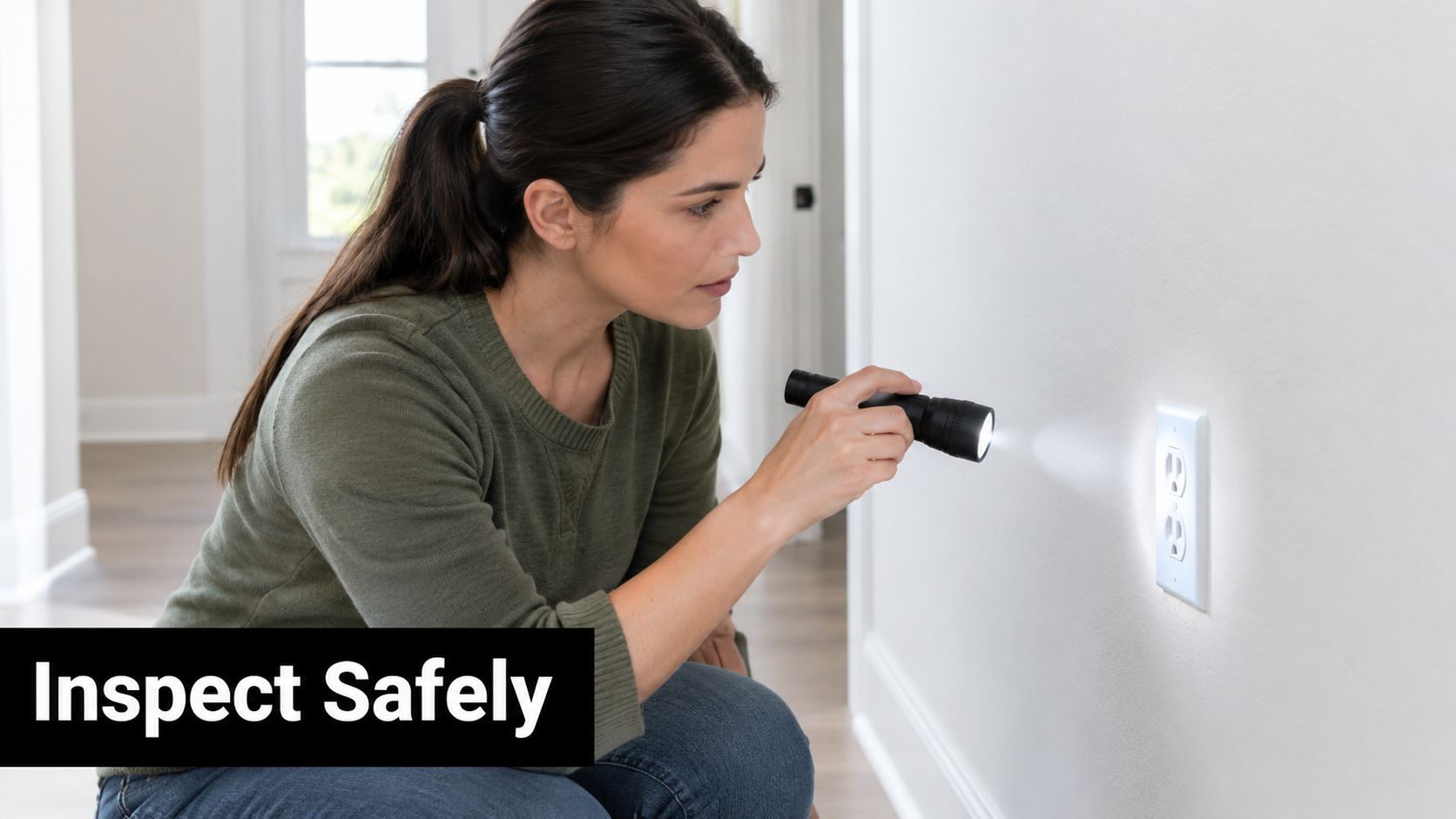
Homeowners can gather useful information without performing electrical work. The safe inspection is visual and observational, not an attempt to diagnose live conductors.
What can be observed safely
First, stop using the receptacle if the spark was repeated, bright, noisy, hot, or odorous. If the plug is still connected and there's no smoke, heat, or visible damage, disconnect it by gripping the plug body, not the cord. Don't pull on a damaged cord or handle a plug with exposed metal.
With power disconnected from the device, look at the outside of the outlet and plug:
- Faceplate condition: Check for cracks, brown or black marks, melted plastic, bubbling, or discoloration.
- Plug condition: Look for bent, corroded, dirty, or damaged prongs and cuts or fraying near the cord.
- Fit: Notice whether the plug sits securely or slips out easily. A loose fit can indicate worn internal contact tension.
- Environment: Check for visible moisture, condensation, dampness, or residue around the receptacle.
- Pattern: Record which appliance was connected, whether the flash came from the plug or outlet opening, and whether the same event occurs elsewhere.
A homeowner may compare the same appliance with another known-safe receptacle only when the appliance and cord appear undamaged, there is no heat or odor, and the original outlet shows no warning signs. The purpose is limited to observing whether the behavior follows the appliance or stays with the wall receptacle. Don't keep testing a device that sparks repeatedly.
What should remain professional work
Don't remove the faceplate, open the outlet box, tighten terminals, insert objects, or test energized conductors. A non-contact voltage tester isn't a substitute for training, and using one on an unknown live circuit can create false confidence.
A warm faceplate is not a condition to monitor casually. If an outlet is warm, discolored, loose, wet, buzzing, or visibly damaged, the inspection should stop. A short Safety Space Take 5 checklist can help organize observations before contacting a professional, but it doesn't replace electrical diagnosis.
For broader preventive guidance, homeowners can use a residential inspection checklist to prevent home electrical hazards and identify patterns worth reporting to an electrician.
Common Causes of Outlet Sparks
The visible flash may come from the appliance, the plug, the receptacle, the wiring, or the circuit feeding it. The symptom's location and pattern help narrow the possibilities, but they don't prove the cause.
Worn contacts are common in heavily used receptacles. Repeated plug insertion can reduce the spring tension that holds the prongs firmly. A loose mechanical connection creates a gap where current can arc, and that resistance can produce heat. Builder-grade hardware, age, thermal cycling, dust, and corrosion can all contribute.
Loose wiring creates a different risk. A conductor that isn't securely connected behind the receptacle can arc inside the electrical box or wall. The homeowner may see only an occasional flash at the face, while the underlying connection continues heating.
A damaged plug or cord can prevent full contact. Bent or dirty prongs may not enter evenly, and damage near the cord can affect the appliance's connection. If the same appliance sparks at more than one receptacle, the plug or appliance becomes more suspect. If several appliances spark at one receptacle, the receptacle or its wiring deserves professional attention.
Environment and load matter
Moisture can accelerate corrosion and increase shock risk, particularly around kitchens, bathrooms, garages, damp foundations, and other areas exposed to humidity or water. A receptacle can look acceptable externally while its internal contacts deteriorate.
Overloading also changes the picture. A circuit carrying several high-demand devices can develop excess heat at its weakest connection, which may be the receptacle, a plug, a splice, or a breaker termination. Extension cords and adapters can add more connection points, increasing the opportunities for poor contact.
Electrical receptacles are involved in about 5,300 U.S. fires each year, causing 40 deaths and more than 100 consumer injuries, according to the Electrical Safety Foundation International. The same ESFI material notes that arcing faults start more than 28,000 home fires annually, with hundreds of deaths and injuries and more than $700 million in property damage. These figures describe national electrical-fire patterns, not the outcome of every sparking outlet, but they show why a recurring arc deserves prompt attention. (ESFI receptacle and arcing fire data)
In Northern Utah homes, moisture exposure, older components, past DIY repairs, and changing electrical loads can all be relevant. A professional can determine whether the answer is outlet replacement, wiring repair, circuit correction, or a broader electrical panel repair review. For homeowners dealing with the aftermath of an electrical fire, information about insurance and restoration from Restore Heroes may help with the recovery process, but prevention and electrical correction should come first.
When to Call a Licensed Electrician
A licensed electrician should inspect the receptacle when any warning sign appears, especially:
- Burning odor or smoke: These indicate possible overheating or damaged insulation.
- Warmth: A warm faceplate or plug means the connection shouldn't continue carrying load.
- Discoloration or melting: Black marks, brown areas, melted plastic, or cracks show prior damage.
- Repeated sparking: Recurrence with one or several devices points beyond a single harmless inrush event.
- Unusual sound: Buzzing, hissing, crackling, or repeated popping needs professional evaluation.
- Breaker trips: A breaker that trips in connection with the outlet may be responding to an electrical fault.
The electrician normally begins with an external assessment and asks what happened, which device was involved, and whether the behavior repeats. After making the circuit safe, the professional can inspect the receptacle, wiring connections, grounding, circuit protection, and related panel components. The decision may be a receptacle replacement, wiring repair, circuit correction, or additional work if the outlet is part of a larger problem.
Replacement isn't just a cosmetic change. The electrician needs to determine why the old device failed and whether heat has damaged the conductors or box. In older homes in Weber or Davis County, the evaluation may also need to account for legacy wiring or outdated grounding arrangements. Work should follow the applicable electrical requirements for the property and installation.
Homeowners should ask:
- What caused the spark, and how was that determined?
- Did the heat damage the receptacle, plug, wiring, or box?
- Does another outlet, circuit, breaker, or panel component need inspection?
- Is replacement sufficient, or does the underlying connection need repair?
- What should remain out of service until the work is complete?
For a documented evaluation and repair plan, homeowners can request a free electrical quote. Black Rhino Electric serves residential and commercial properties from its Marriott-Slaterville base across Northern Utah, including Weber, Davis, and Salt Lake counties.
Preventing Future Outlet Issues
Prevention starts with small observations. Check high-use receptacles in kitchens, bedrooms, home offices, garages, and areas where heaters, tools, hair dryers, or other demanding devices are connected. Look for loose plugs, damaged cords, discoloration, cracked faceplates, and warmth. Any change from normal should be addressed before the outlet becomes a failure point.
Use plugs that fit fully and securely. Avoid forcing a bent prong into a receptacle, and don't use adapters that place strain on the outlet or defeat the grounding connection. Keep electrical equipment away from moisture, and don't continue using a cord or plug with damaged insulation.
Load management matters during colder Northern Utah months, when portable heaters, seasonal lighting, and other devices may operate in the same areas. A circuit that handles one appliance normally may behave differently when several demanding loads share it. An electrician can determine whether the home needs circuit changes, upgraded protection, or panel work rather than relying on repeated resets.
AFCI protection can detect electrical arcing on a circuit and shut off power before a fire starts, but the specific protection required depends on the installation and applicable code. A qualified electrician can evaluate whether existing protection is appropriate and whether receptacles, GFCI devices, wiring, or panel equipment need updating.
The quietest electrical system is one that doesn't produce unexplained flashes, sounds, smells, or heat. If those signs appear, observation should give way to professional troubleshooting rather than repeated plug-in tests.
Black Rhino Electric handles residential and commercial electrical troubleshooting, outlet and GFCI work, wiring repairs, breaker and panel service, and safety inspections in Northern Utah. Homeowners in Weber, Davis, and Salt Lake counties can visit Black Rhino Electric to discuss a sparking receptacle, arrange an evaluation, or request a quote.