Your home’s electrical system is only as strong as its central hub, yet many homeowners overlook the aging hardware behind their walls. If you’ve noticed flickering lights or breakers that trip every time you run the microwave, it is likely time for an electrical panel upgrade Davis to ensure your property remains safe and efficient.
Introduction
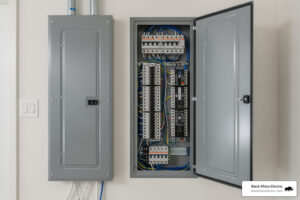
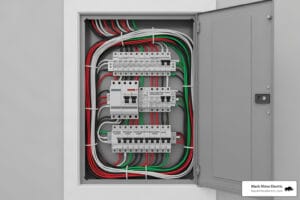
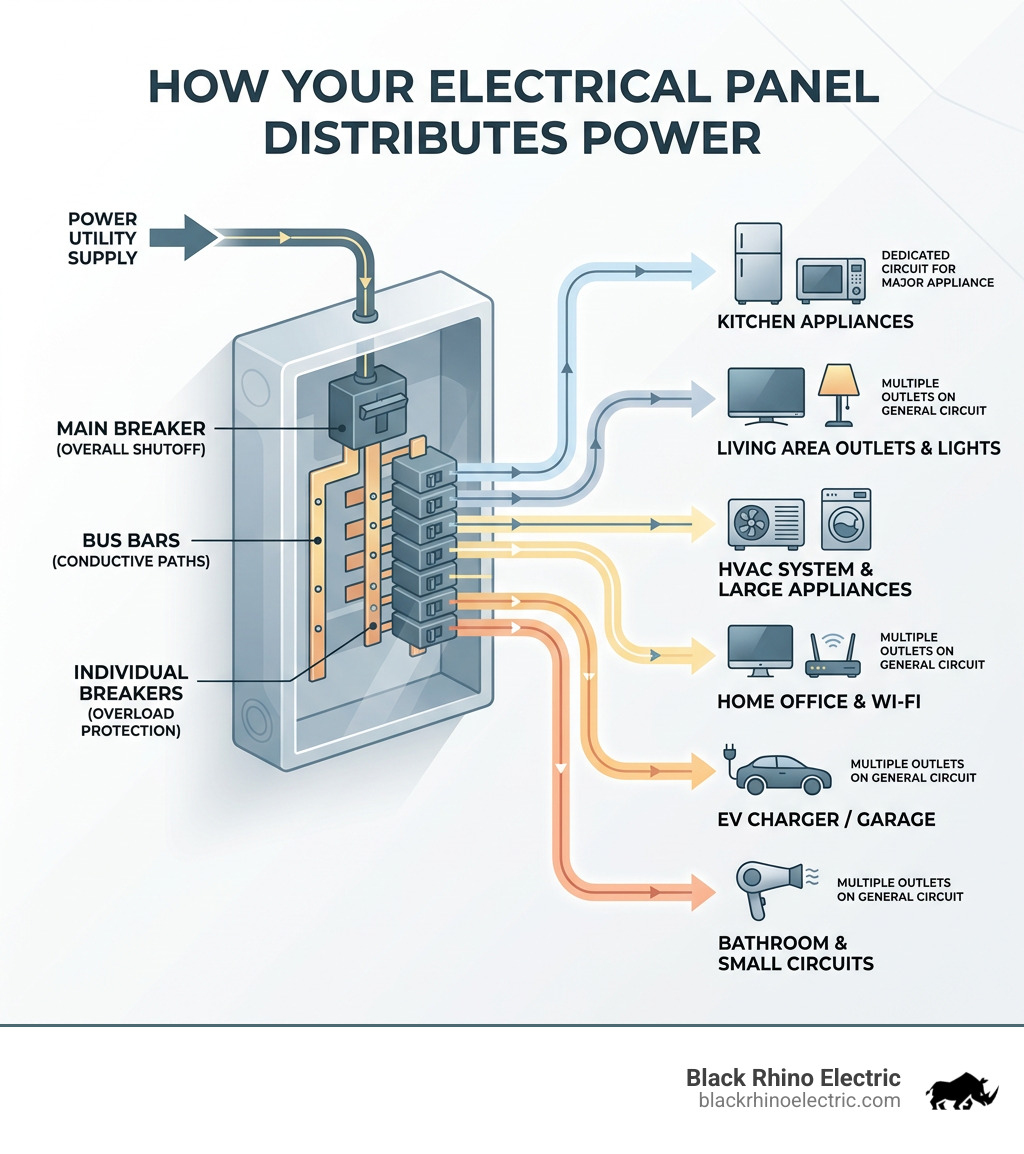
Your electrical panel is the heart of your home’s power system, acting as the central distribution point that safely sends electricity to every light switch, outlet, and appliance. However, as our lives become increasingly digital and energy-dependent, many Davis County homes are struggling to keep up. According to the National Fire Protection Agency, faulty electrical wiring remains the leading cause of house fires in the United States. This is a sobering statistic that highlights why your home’s electrical infrastructure is not the place to cut corners.
Modern power demands have skyrocketed over the last decade. Consider the typical household today compared to thirty years ago. We now juggle:
- High-speed mesh Wi-Fi systems and smart home hubs.
- Electric vehicle (EV) chargers that pull massive amounts of current.
- Energy-efficient heat pumps and induction cooktops.
- Home offices with multiple monitors and high-powered computers.
- Backyard amenities like hot tubs or ADUs (Accessory Dwelling Units).
The Critical Signs You Need an Electrical Panel Upgrade in Davis
How do you know if your “heart” is failing? Honestly, your home will give you warning signs before a total failure occurs. Ignoring these signals can lead to expensive appliance damage or, worse, a fire hazard.
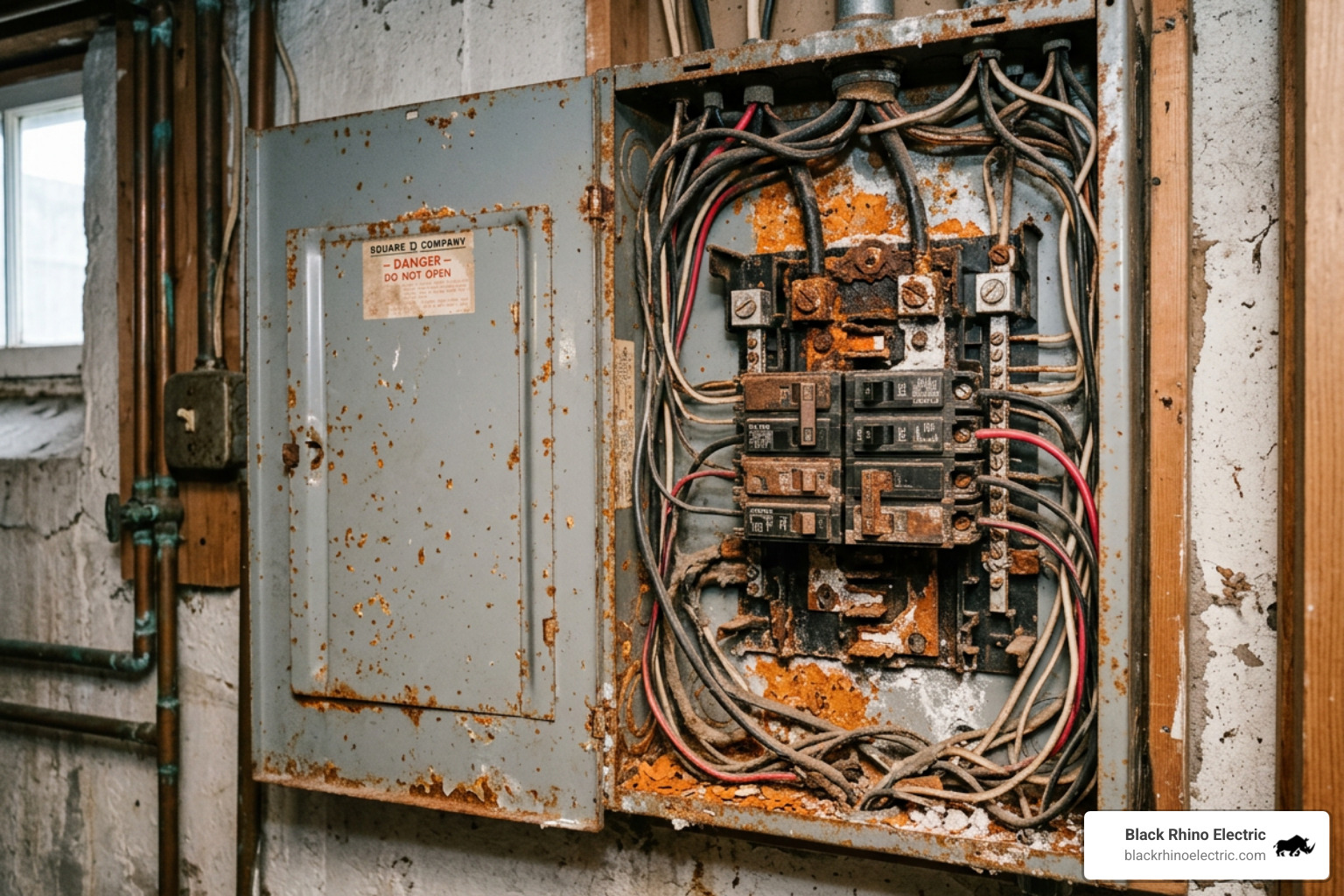
One of the most obvious signs is rust and corrosion. If you open your panel door and see orange flakes or white powdery residue, moisture has compromised the system. Corrosion increases electrical resistance, which generates heat—a recipe for disaster. You might also notice flickering lights when the refrigerator kicks on or a burning smell near the breaker box. If the panel cover feels warm to the touch, that is an emergency; it means wires are likely melting inside.
Frequent breaker trips are another red flag. If you can’t run the vacuum and the space heater at the same time without a “pop” and a dark room, your panel is overloaded. For more detailed information, check out this Scientific research on electrical fire risks. If you’re wondering about the financial side, you can find More info about cost to upgrade electrical panel to help you plan your budget.
Why Age Matters: The 25-40 Year Rule
Let’s be honest: we expect our roofs to last 20 years and our HVAC systems to last 15, but we often assume electrical panels last forever. They don’t. The general rule of thumb is that electrical panels need replacement every 25 to 40 years.
If your Davis County home was built between the 1950s and the 1980s, you might have an outdated brand like Zinsco or Federal Pacific Electric (FPE). These specific brands are notorious among electricians because their breakers often fail to trip during an overload, leading to melted wires and fires. Furthermore, if your home still uses a fuse box instead of modern circuit breakers, you are significantly undersized for modern life. To learn the technical steps of the transition, see More info about how to upgrade electrical panel.
Supporting Modern Tech with an Electrical Panel Upgrade in Davis
Are you planning to go green? An electrical panel upgrade Davis is often the mandatory first step for sustainable home improvements.
- EV Chargers: Most Level 2 chargers require a dedicated 40-amp or 50-amp circuit. If your panel is only 100 amps, adding that load could exceed your total capacity.
- Solar Integration: To back-feed power from solar panels into the grid, your bus bars must be rated to handle the combined current.
- Hot Tubs: These luxury additions require significant power and specialized GFCI protection.
- Smart Homes: Modern “smart” breakers allow you to monitor energy usage per circuit from your phone, but they require a modern panel housing to fit.
Upgrading to a 200A service provides the “headroom” needed so you don’t have to choose between charging your car and doing the laundry. For a complete list of what to look for, see More info about the ultimate electrical panel installation checklist.
Safety First: AFCI Protection and Copper Bus Bars
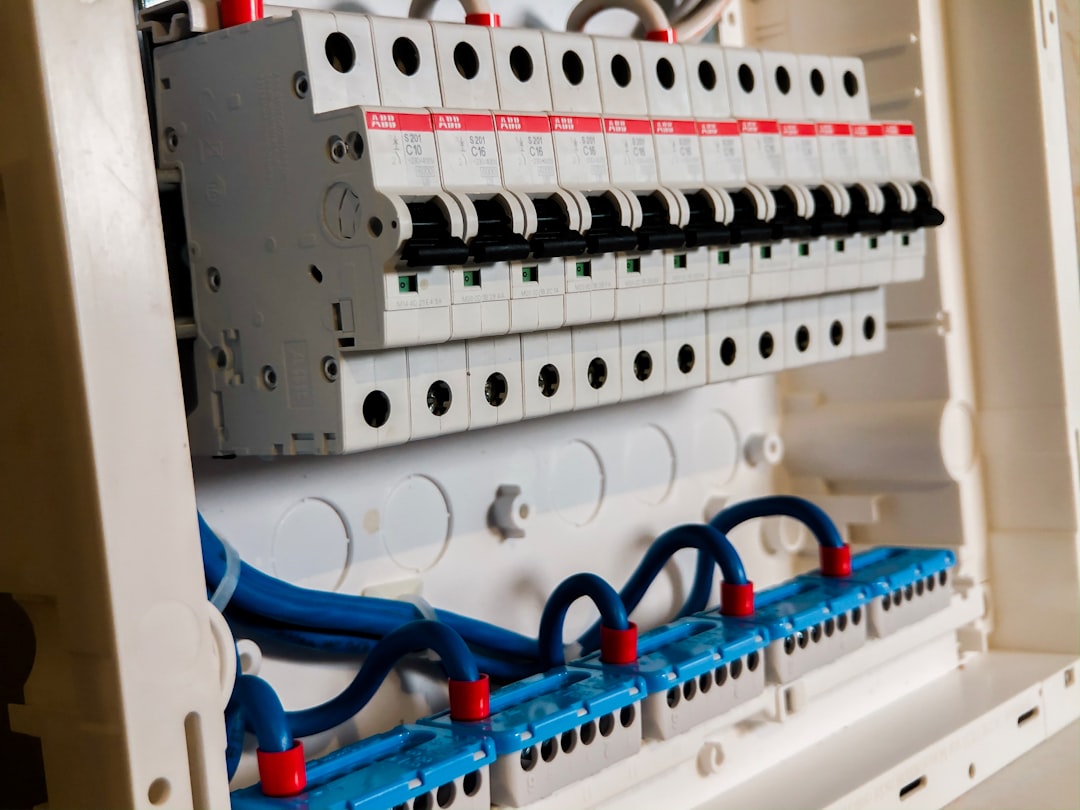
Modern panels aren’t just bigger; they are significantly smarter and safer. Today’s building codes require Arc Fault Circuit Interrupters (AFCI). These breakers use advanced electronics to “listen” to the electricity. If they detect the specific signature of a dangerous spark (an arc) caused by a frayed lamp cord or a nail driven through a wire in the wall, they shut off the power instantly—long before a fire starts.
We also prioritize copper bus bars over aluminum. While aluminum is a fine conductor, it expands and contracts more than copper when it heats up, which can lead to loose connections over time. Copper is more stable, durable, and provides better long-term reliability.
Honestly, attempting a DIY electrical panel upgrade is one of the most dangerous things a homeowner can do. You are working with “live” power from the utility company that cannot be turned off with a simple switch. One mistake can be fatal. For a better grasp of the components involved, read More info about understanding electrical panel installation basics.
In Davis County, you cannot simply swap a panel and call it a day. Local building departments require a permit for all panel work. This ensures that a third-party inspector verifies the work meets the National Electrical Code (NEC).
The process involves:
- Permit Acquisition: Filing the necessary paperwork with the city.
- Utility Coordination: Scheduling with the utility company (like Rocky Mountain Power) to disconnect the power from the street.
- The Install: Swapping the hardware and ensuring proper grounding and bonding.
- Inspection: A city inspector signs off on the safety of the unit.
Working with a professional ensures that all these logistical hurdles are handled for you. To understand the full scope of professional responsibilities, see More info about what a panel electrician does.
What to Expect During Your Electrical Panel Upgrade in Davis
You know what? Most homeowners are surprised to learn that a standard electrical panel upgrade Davis usually takes only one day. Here is the typical timeline:
- 8:00 AM: The crew arrives and sets up. Power is disconnected by the utility provider.
- Morning: The old panel is removed. New wires are organized, and the new housing is mounted.
- Afternoon: The new breakers are installed. Every circuit is meticulously traced and labeled so you actually know which breaker controls the “upstairs hallway” versus the “kitchen island.”
- 4:00 PM: Power is restored. The crew tests every outlet and appliance to ensure functionality.
We take pride in professional workmanship, leaving your utility room cleaner than we found it. For a deeper dive into the process, check out More info about step-by-step electrical panel installation for beginners.
Boosting Home Value and Insurance Eligibility
An upgraded panel isn’t just a safety expense; it’s an investment. If you ever decide to sell your home, a 200-amp panel with AFCI protection is a major selling point. It tells buyers the home is “EV ready” and “solar ready.”
Furthermore, many insurance companies now require a 4-point inspection for older homes. If they see a Federal Pacific panel or a 60-amp fuse box, they may deny coverage or significantly raise your premiums. Upgrading your panel can lead to insurance discounts and ensures you won’t have any hiccups during a property resale. To see how this fits into broader home maintenance, read More info about breakers and panels electrician services.
The Process and Cost of Modernizing Your Home’s Power
Pricing for an electrical panel replacement in Davis County generally ranges from $1,500 to $3,500. Why the wide range? Several factors influence the final quote:
- Amperage: Moving from 100A to 200A requires heavier gauge wire and more expensive hardware.
- Location: If the panel needs to be moved to meet current clearance codes, labor costs increase.
- Condition of Wiring: If the existing wires are too short or damaged, they may need to be extended or replaced.
- Code Requirements: Adding whole-home surge protection or new grounding rods adds to the material cost but vastly improves safety.
| Panel Capacity | Typical Use Case | Estimated Cost Range |
|---|---|---|
| 100 Amps | Small homes, no AC, minimal electronics | $1,200 – $1,800 |
| 150 Amps | Medium homes, standard appliances, central air | $1,800 – $2,500 |
| 200 Amps | Modern standard, EV chargers, solar, hot tubs | $2,500 – $3,800 |
| 400 Amps | Large luxury homes, workshops, multiple ADUs | $4,500+ |
At Black Rhino Electric, we specialize in essential EV charger installations, hot tub wiring, panel replacements, and comprehensive whole home or business wiring services throughout Weber County, with expert coverage in Ogden and surrounding Utah areas. Whether you’re a homeowner in Ogden preparing for electric vehicle ownership with seamless EV charger setups, a family in North Ogden wiring up a backyard hot tub for safe enjoyment, a business manager in Roy needing urgent panel replacements to prevent outages, or a property owner in Ogden undertaking full rewiring for modern efficiency, our expert team delivers tailored solutions with precision and care.
As fully licensed electricians and insured electrical contractors, we prioritize your safety and satisfaction with every project—from strategic EV charger installations that future-proof your driveway to reliable panel replacements that upgrade capacity and reliability. For more technical details on the components we use, see More info about electrical panels and meters.
Honestly, waiting for a total power failure or a localized fire is a risk no homeowner should take. You know what? Upgrading your system today is the best way to ensure your home is ready for the next generation of smart technology and green energy. If you are ready to secure your home’s future, contact our expert team at 801-810-4292 or Request a Free Quote today.