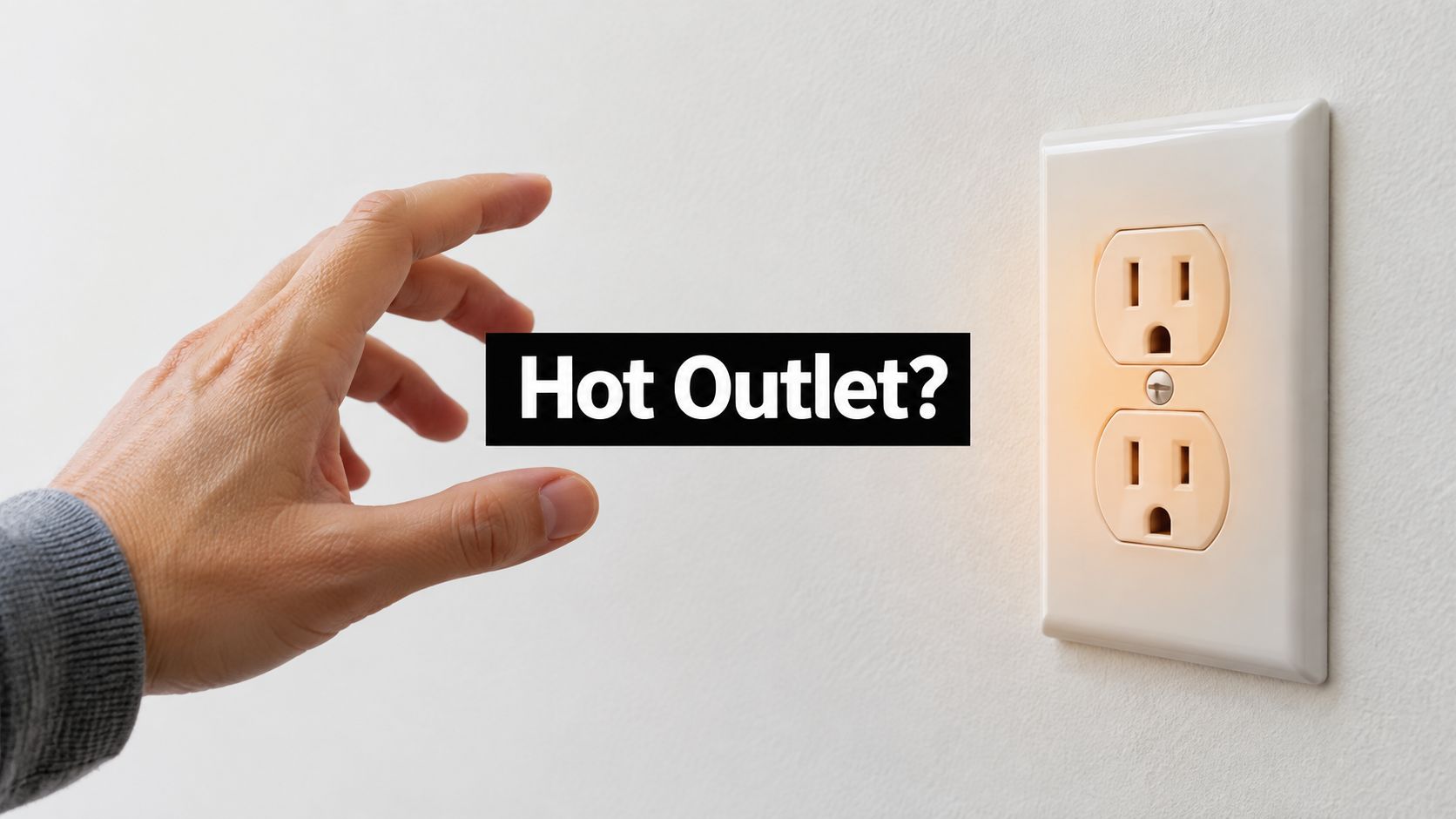
A warm faceplate can be normal for some devices, but an electrical outlet hot to touch is not something to shrug off. If the outlet is very hot, discolored, buzzing, or giving off a burnt smell, treat it like a warning sign, not a nuisance.
A receptacle that feels hot can point to a loose connection, worn contacts, overload, damaged wiring, or heat building inside the circuit. In a Northern Utah home, that means it's time to stop guessing and look at the symptoms with a clear head.
What It Means When An Electrical Outlet Is Hot To Touch
The first thing to separate is warm from hot. The U.S. Consumer Product Safety Commission says receptacle covers and related parts may feel warm, but they should never be hot or painful to touch, and loose wire terminals or poor internal contacts can overheat and create sparks (CPSC receptacle safety guidance).
That difference matters because heat is often the first sign of resistance at a bad connection. The outlet itself may look ordinary, but inside the box, a loose terminal, a failing receptacle contact, or an overloaded circuit can be turning electricity into heat instead of moving it cleanly.
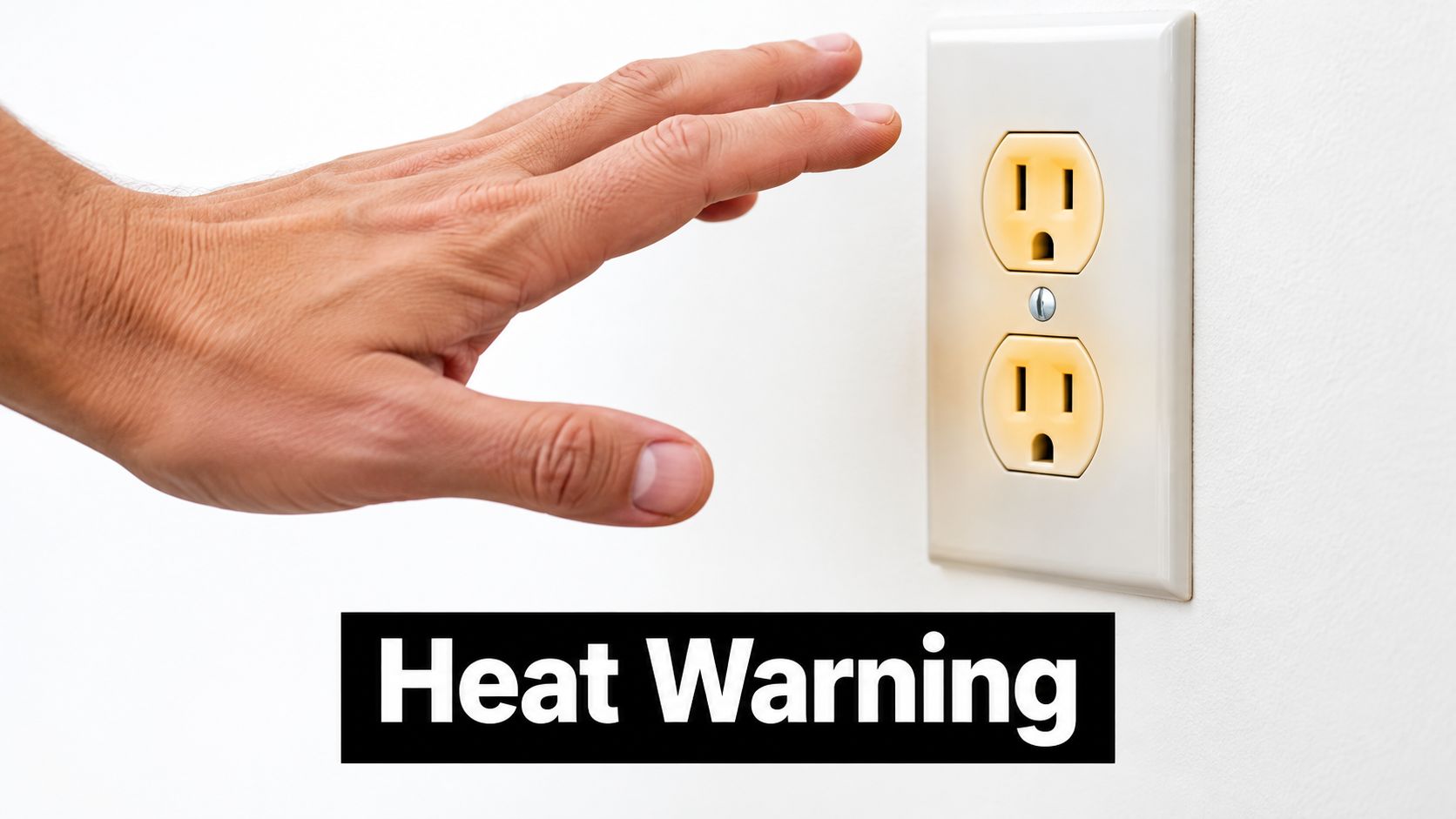
What a homeowner should notice first
A painful-hot outlet is not the same as a slightly warm charger brick or the face of some electronics. The concern rises fast when the heat is at the receptacle, the plug, or the wall plate, especially if the warmth doesn't go away after the load is removed.
Practical rule: if the outlet is hot enough that a hand wants to pull away, that isn't normal household warmth.
The clearest signs to watch for are simple. A hot faceplate, a plug that sits loosely, or visible discoloration are all reasons to stop using the receptacle and get it checked.
Why the heat matters
Heat at the outlet can damage insulation behind the wall long before a homeowner sees smoke or flame. That's why a small symptom deserves a serious response. A warm outlet may be only a comfort issue. A hot outlet is a safety issue.
For a broader walkthrough of related home electrical risks, Black Rhino Electric's panel and wiring safety tips fit this problem well.
Real Fire Risk Behind Overheating Outlets
A hot outlet is a warning sign with a hard fire history behind it. Electrical failure and malfunction show up in home fire reports often enough that the heat at a receptacle deserves real attention, especially when the outlet, plate, or plug feels hot enough to be painful.
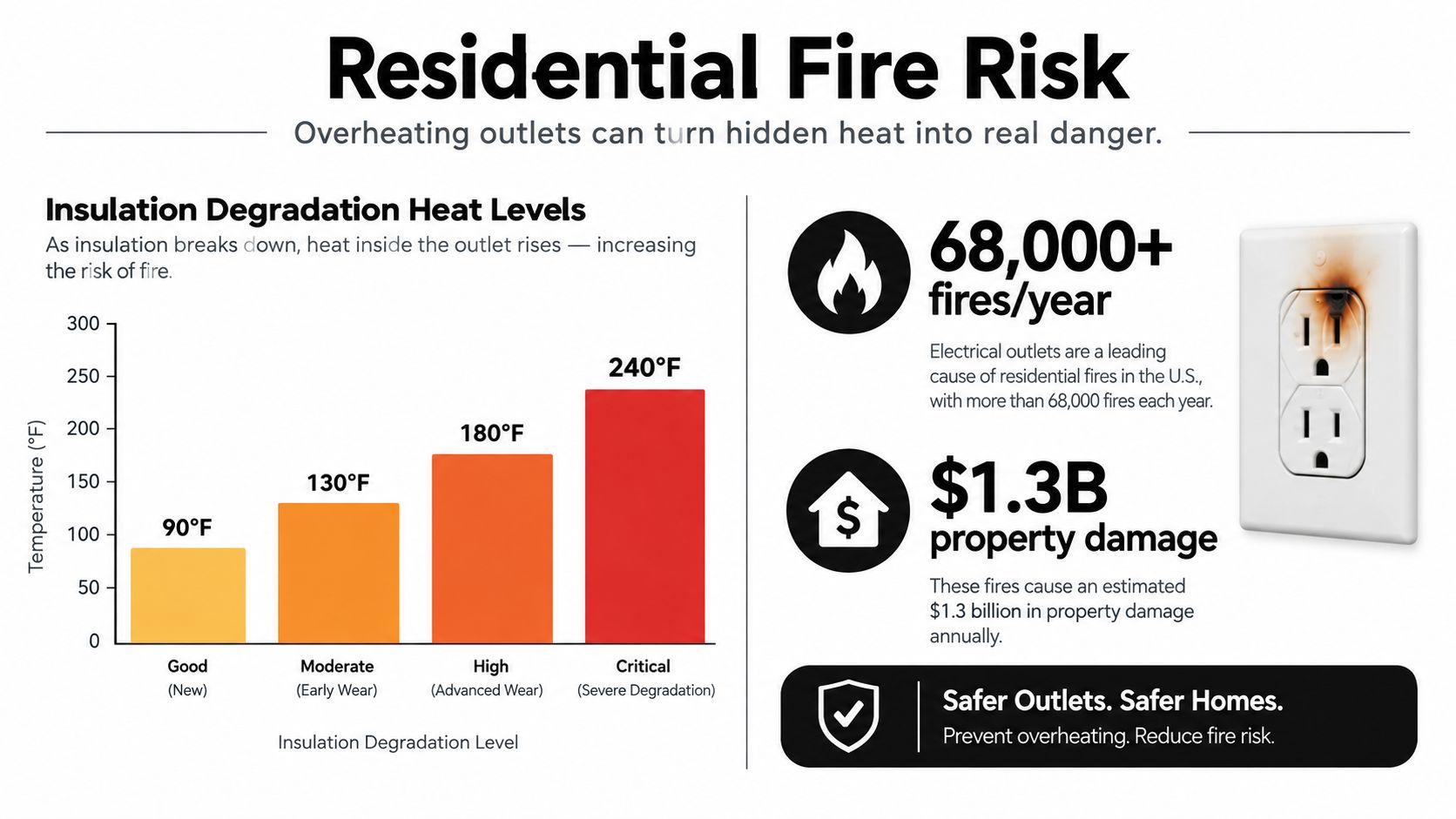
NFPA reporting shows that residential electrical fires are not rare events, and outlets are part of that picture. Their home electrical safety page also ties electrical failures to a meaningful share of home structure fires and fire deaths, which is why a hot receptacle should never be shrugged off (NFPA electrical safety in the home).
Those numbers do not mean every warm outlet is about to fail. They do show why heat at a receptacle deserves prompt attention instead of a wait-and-see approach.
What fails before the fire
Overheating usually starts with a bad electrical path, not a dramatic event. A loose terminal, worn receptacle contact, or overloaded circuit can turn current into heat, and that heat can damage the outlet body or the insulation tucked behind the wall. Once the contact surface starts to degrade, the problem often gets worse each time the circuit is used.
A hot unused outlet deserves extra suspicion because the problem may be upstream or downstream, not in the empty faceplate itself. That is the part many homeowners miss. If the heat is still there with nothing plugged in, the fault can sit in the circuit feeding that box, another device on the same run, or a connection farther along. The DigiDevice 20 amp wiring guide is a useful technical reference for understanding how load and circuit matching affect receptacle stress.
For a broader look at home electrical hazards, panel and wiring safety tips fit this problem well.
Fire risk grows when the symptom is ignored.
Symptom Urgency Matrix For Homeowners
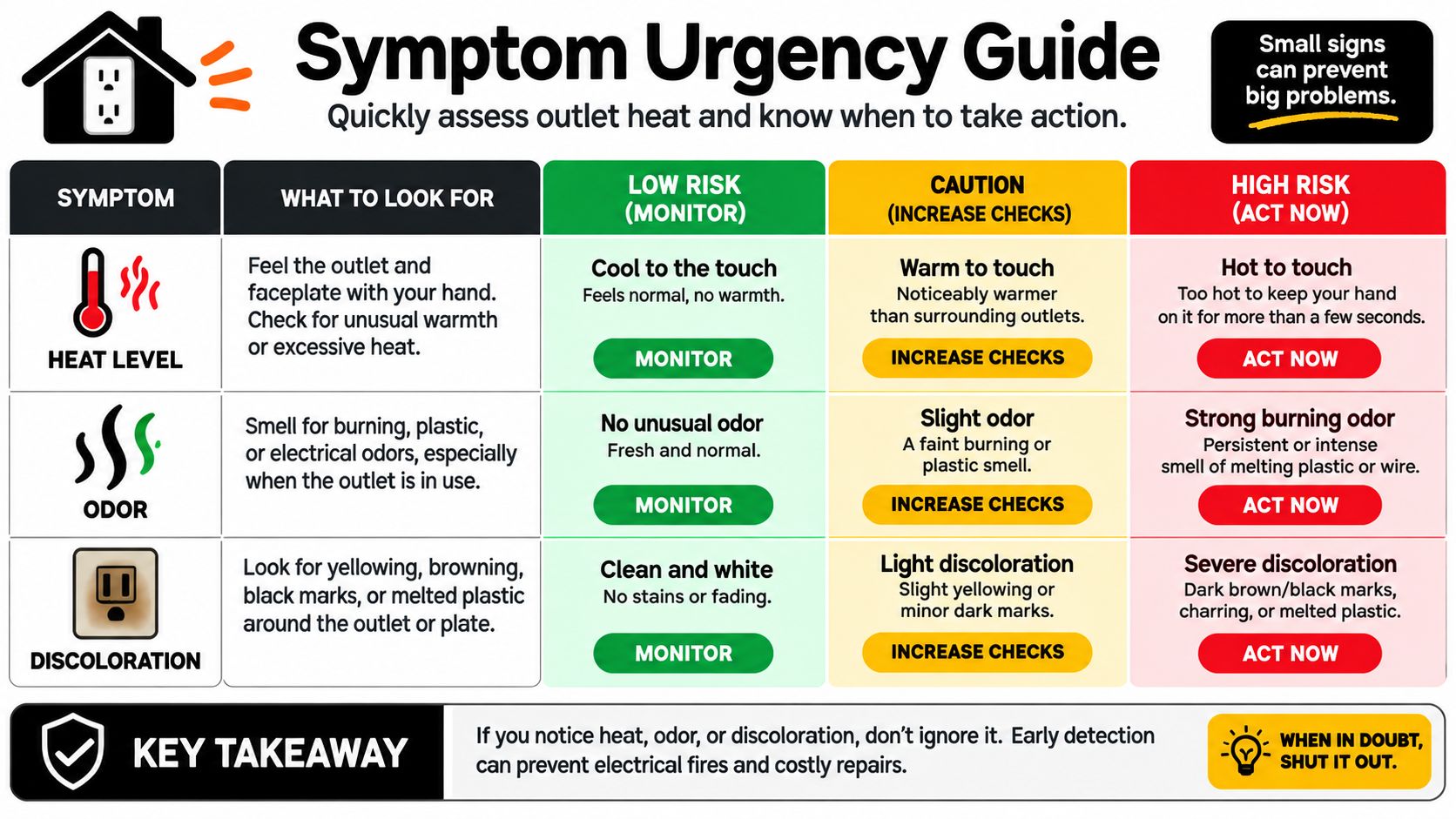
A hot outlet becomes easier to judge when the symptoms are lined up against the load state. Heat by itself matters. Heat plus smell, discoloration, or buzzing changes the urgency fast.
| Symptom | Likely Cause | Action |
|---|---|---|
| Warm to the touch during heavy use | Normal warmth from load or device electronics | Monitor closely, and watch whether the warmth disappears when the load is removed |
| Hot to the touch, especially painful | Loose connection, failing receptacle, overload, or damaged wiring | Stop using the outlet and arrange prompt inspection |
| Burning odor | Heat damage, insulation breakdown, or arcing | Stop using it immediately and call a licensed electrician |
| Discoloration or melting | Past overheating at the receptacle or plug | Stop using it, do not cover it, and have it replaced after inspection |
| Buzzing or crackling | Loose internal contact or fault in the circuit | Treat as urgent and shut the load down if safe |
Reading the load state correctly
An outlet that's warm only while a high-demand device is running may point to load stress. An outlet that stays hot with nothing connected points somewhere else in the circuit. That's the important part homeowners miss.
For a nearby warning sign that often travels with heat, Black Rhino Electric's Northern Utah electrical troubleshooting page gives good context on burning odors without smoke.
The short version
- Warm only, no smell, no discoloration: monitor and note what was running.
- Hot, painful, or persistent: stop using the outlet.
- Any odor, buzzing, or melting: treat it as urgent.
Why An Unused Outlet Can Still Get Hot
An empty receptacle can still heat up because power may be traveling through its internal connections to downstream outlets. That means the problem may be upstream, downstream, or inside the receptacle itself, not necessarily the device that was last plugged in (CPSC receptacle safety guidance).
That's the diagnostic nuance most homeowners don't get told. A warm unused outlet can point to a loose connection in the box, a problem at another receptacle on the same circuit, or concealed wiring damage that's feeding the line through that point.
What that means in plain terms
If an outlet is hot with nothing plugged in, replacing the faceplate won't solve the actual fault. The heat may be coming from a connection hidden in the box, or from another device tied into the same run.
Older homes, remodels, and circuits carrying modern loads can make this more likely. For homes where aging conductors are part of the picture, Black Rhino Electric's Black Rhino Electric on older home wiring is a relevant read.
Good information to save for the electrician
- Which outlet was hot: the exact receptacle location matters.
- Whether the outlet was empty: that helps separate load heat from circuit heat.
- What else was running: nearby lights, heaters, chargers, or kitchen appliances can matter.
- Whether other outlets acted up: flicker, dropouts, or warmth on the same circuit are useful clues.
That kind of observation helps a licensed electrician trace the fault without making unsafe guesses.
What Homeowners Should And Should Not Do
A homeowner can safely observe, document, and shut things down when needed. The line gets crossed when the outlet is treated like a repair project while it's still live.
A simple safe response is to unplug the load if that can be done without touching a painful-hot or damaged receptacle. After that, note whether the heat goes away, whether other outlets on the same circuit behave oddly, and whether the faceplate is discolored or loose.
Safe observations
- Check the symptoms from a distance: smell, sound, discoloration, and whether the heat stays after the load is removed.
- Note the circuit behavior: lights dimming, intermittent power, or tripped protection devices are relevant.
- Keep combustibles away: fabric, furniture, and paper should stay clear of the hot area.
What not to do
Do not keep pressing the outlet by touch to see if it's “still warm.” Do not cover it with a rug, curtain, or furniture. Do not keep resetting a breaker over and over just to see if the problem goes away.
For homeowners looking for the right kind of help rather than a guess, Black Rhino Electric's troubleshooting home electrical problems page is the clean handoff.
Stop rule: repeated testing by touch isn't troubleshooting, it's exposure.
When To Call A Licensed Electrician
Persistent heat, burning odor, discoloration, buzzing, smoke, sparking, or intermittent power all justify a professional visit. The same is true when the outlet is hot even with nothing plugged in, because that points to hidden wiring or connection problems rather than a single appliance.
A licensed electrician typically checks the receptacle, the box, conductor terminations, circuit load, and protective devices. On a service call, the goal is to find whether the issue is a worn receptacle, a loose connection, an overloaded branch circuit, or damage farther upstream.
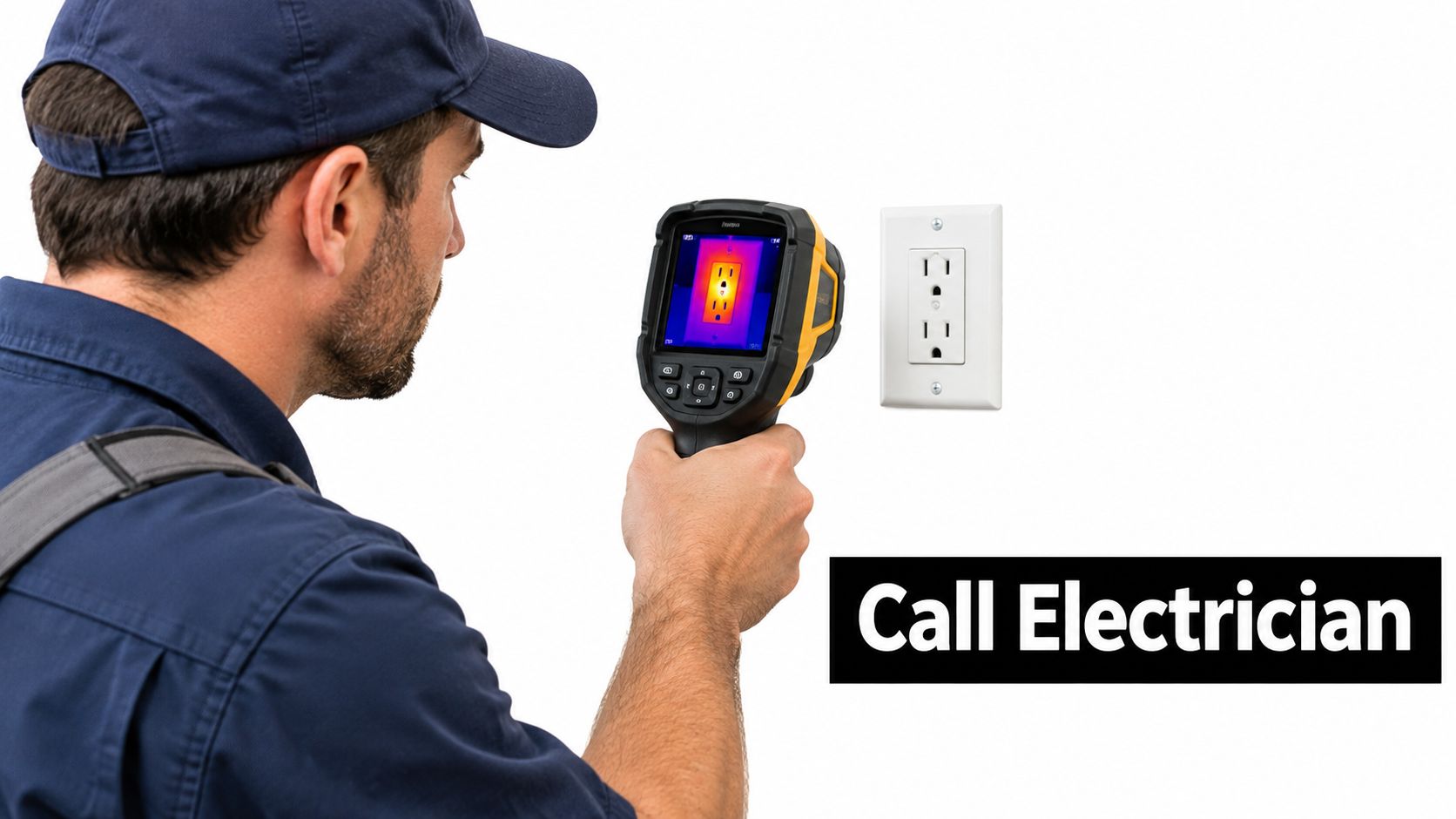
That matters because a hot faceplate is often only the visible symptom. A good diagnosis focuses on what's behind the wall, not just the part the homeowner can see.
For contractors trying to explain this kind of risk clearly to customers, the article on paid campaigns for electrical contractors is a practical marketing-side reference. The technical side still comes down to the same thing, accurate diagnosis and safe repair.
What a proper service visit should answer
- Is the receptacle itself failing?
- Is the problem in the plug, cord, or load?
- Is another outlet feeding the heat through the circuit?
- Does the circuit need repair, derating, or replacement parts?
If the answer isn't clear without opening energized equipment, the job belongs with a pro.
Prevention Tips And When To Upgrade
The best prevention is giving high-load devices their own proper circuit and not asking a weak receptacle to do more than it should. Space heaters, kitchen gear, EV charging, hot tub loads, and similar equipment deserve special attention because they can expose a tired circuit fast.
Older Northern Utah homes sometimes need more than a new outlet. A panel check, wiring assessment, or dedicated circuit work may be the actual fix, especially when the same circuit keeps acting up. For wet areas and safety-sensitive spaces, GFCI protection also belongs in the conversation.
For organizations that care about documented safety practices, the framework in health and safety compliance services is a useful reminder that electrical risks should be managed with procedures, not assumptions. The same logic applies at home.
Black Rhino Electric handles outlet and GFCI work, troubleshooting, breaker and panel work, and electrical panel upgrade services across Northern Utah, including Weber, Davis, and Salt Lake counties. If a receptacle is hot to the touch, the right next step is a real inspection, not another adapter.
Black Rhino Electric handles outlet troubleshooting, wiring repair, panel checks, and replacement work for homes and businesses across Northern Utah. If an outlet is hot to the touch, discolored, buzzing, or still warm when nothing is plugged in, call 385-396-7048 or request a quote through Black Rhino Electric for a licensed inspection.