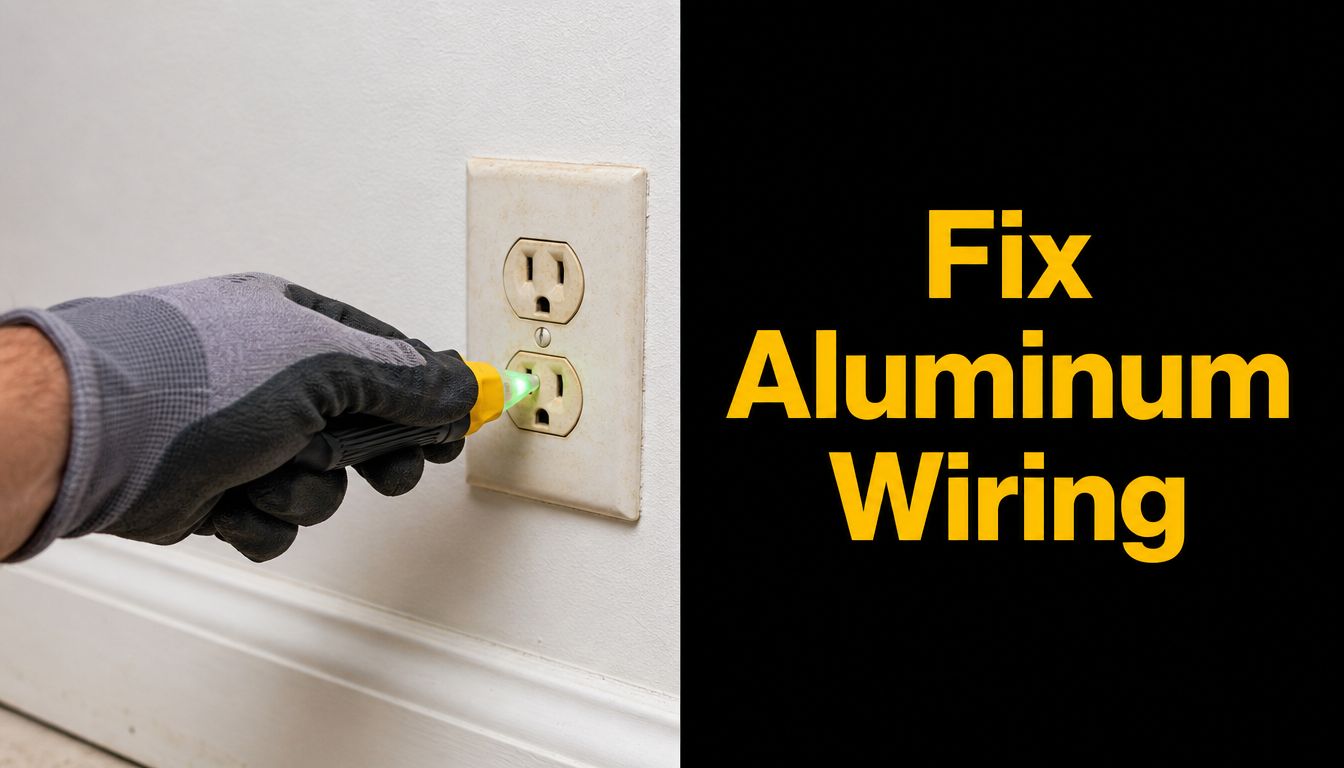
A homeowner notices a warm outlet, a faint burning-plastic smell, or lights that flicker when a large load starts. Those can be signs aluminum wiring needs repair, but older aluminum branch wiring can also become hazardous without any visible symptom.
Why Aluminum Wiring in Older Homes Still Matters Today
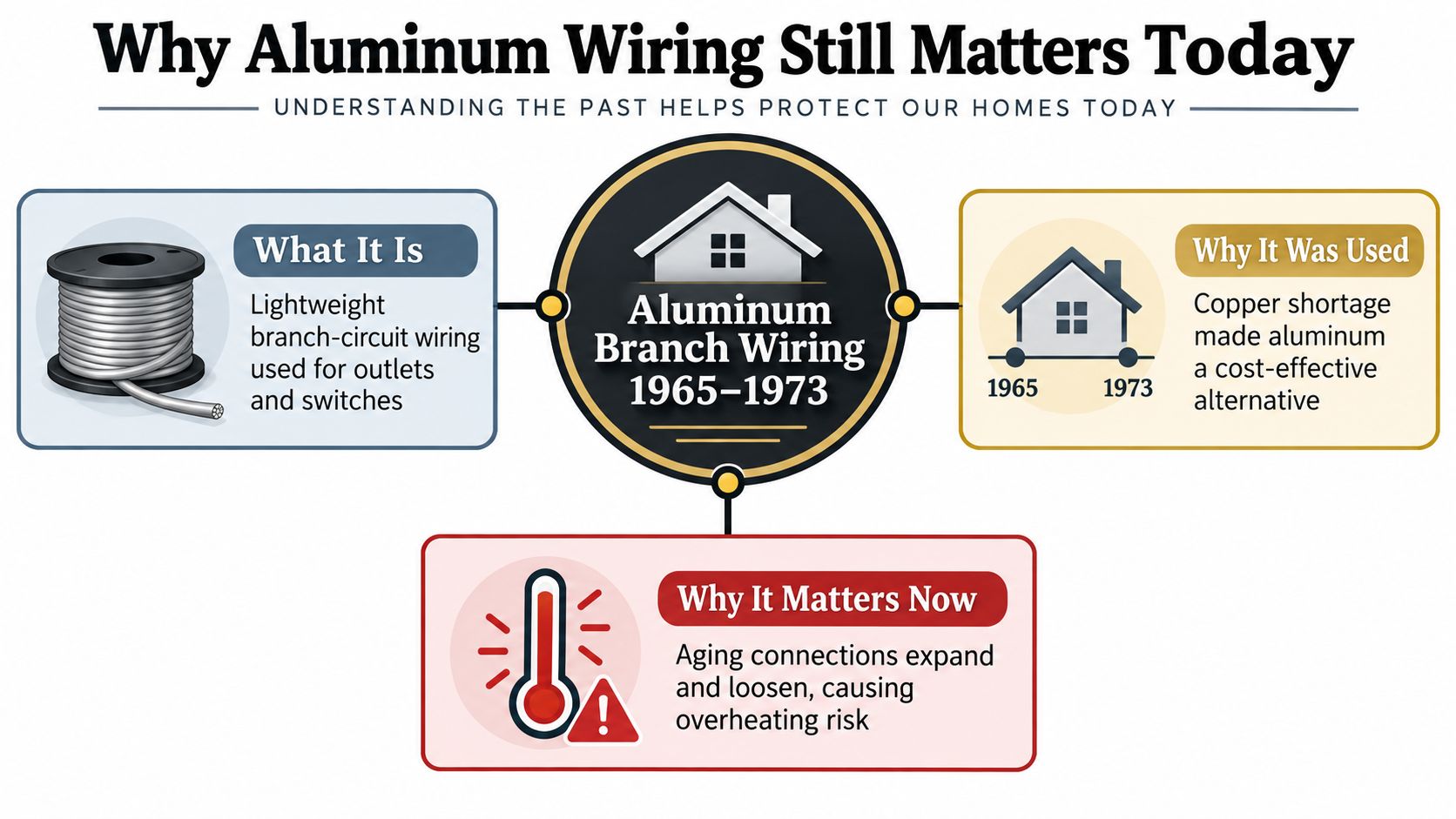
Aluminum branch-circuit wiring carries electricity from a panel to outlets, switches, and other everyday devices. It was widely installed in U.S. homes built during the late 1960s and early 1970s. Roughly 1.5 million homes built between 1965 and 1973 used aluminum wiring, according to historical safety information summarized by aluminum wiring guidance for inspectors.
That construction period matters in Northern Utah. Older neighborhoods around Ogden, South Ogden, Roy, Layton, Bountiful, and nearby communities can include homes from the same era. A house's age doesn't prove that it has aluminum conductors, but it makes professional identification worthwhile, particularly before a remodel, panel project, or added electrical load.
Why the connection matters more than the wire
The main concern usually isn't a length of aluminum wire hidden in a wall. The vulnerable point is where that conductor terminates at an outlet, switch, panel, or splice.
Aluminum expands and contracts more than copper as temperatures change. It also forms an oxide layer that conducts poorly. Over time, thermal movement, oxidation, and the softer nature of aluminum can loosen a termination. The electrical resistance then rises at that joint, producing heat and sometimes arcing. The CPSC safety recommendations for residential aluminum wiring describe this connection-related failure mechanism.
A useful comparison is a door hinge. The hinge itself may look intact, but repeated movement can loosen the screws. The trouble starts at the attachment point. Aluminum wiring presents a similar issue, except a loose electrical termination can become a hot spot.
Homeowners considering Northern Utah electrical rewiring should first determine whether the problem is limited to connection points or involves broader conductor and circuit concerns.
The Hidden Risk When There Are No Obvious Warning Signs
A normal-looking home isn't proof that aluminum branch wiring is safe. The U.S. Consumer Product Safety Commission says failing aluminum connections seldom provide easily detected warning signs, and a connection may overheat before a homeowner sees or smells anything unusual. The CPSC publication on aluminum wiring hazards identifies hot faceplates, flickering lights, failed circuits, and burning-plastic odors as clues that may appear after a problem has progressed.
That distinction changes the decision. Visible symptoms are warning signs. The home's age, the presence of aluminum branch circuits, the condition of devices, and the quality of terminations are risk factors, even when every outlet appears normal.
When a proactive inspection makes sense
A professional evaluation is sensible when:
- The home falls within the historical era: Houses built or renovated from 1965 to 1973 deserve closer attention if aluminum branch wiring may be present.
- A remodel is planned: New outlets, lighting, appliances, hot tubs, or an EV charger can change circuit demands and expose existing connection problems.
- Seasonal loads are high: Winter heating equipment and summer cooling equipment can place sustained demand on marginal terminations.
- A property is changing hands: Hidden wiring conditions can matter during an inspection, code review, or correction project.
Practical rule: Waiting for a flicker or odor is a response to a symptom, not a verification of safety.
Homeowners in Weber, Davis, and Salt Lake counties don't need to panic when aluminum wiring is discovered. They do need a qualified electrician to assess the connection points rather than relying on the absence of symptoms.
Visible and Electrical Signs Aluminum Wiring Needs Repair
The following signs can indicate resistance and heat at an aluminum termination. The urgency depends on what the homeowner observes and whether heat, smoke, arcing, or loss of power is involved. The CPSC consumer warning on residential aluminum wiring specifically identifies warm plates, smoke, sparks, burning odors, flickering lights, and failed outlets or circuits as warning signs.
Warning Signs Ranked by Severity and Urgency
| Warning Sign | What It Indicates | Severity and Next Step |
|---|---|---|
| Smoke, visible arcing, or sparks | A connection may be overheating or actively arcing | Immediate concern. Stop using the affected device, keep clear of the area, and contact an electrician. If smoke or fire is present, leave the property and contact emergency services. |
| Burning-plastic odor | Insulation or a device connection may be heating beyond normal operation | Urgent. Avoid the affected outlet or switch and arrange prompt professional attention. |
| Hot or unusually warm cover plate | Resistance at a termination may be creating heat | Urgent. Stop using that device until it's evaluated. |
| Charring, blackening, or discoloration | Heat damage has already affected the device, plate, or terminal area | Urgent. Don't remove the cover plate. Have the circuit inspected. |
| Melted or bubbling insulation | Heat may be damaging conductor insulation near a termination | Urgent. Keep the circuit out of service if it can be done safely without opening equipment, and call a professional. |
| Flickering or dimming lights | An intermittent connection may be raising resistance or losing continuity | Prompt evaluation. Note which fixtures and loads are involved. |
| An outlet, light, or circuit stops working | A connection or device may have failed | Prompt evaluation. Don't assume a simple device replacement solves the underlying issue. |
| Frequent breaker trips | The circuit may be overloaded, faulting, or affected by a deteriorating connection | Prompt evaluation. Record what was operating when the breaker opened. |
| Buzzing or crackling at an outlet or switch | Electrical arcing or vibration may be occurring at the device | Urgent. Avoid using the device and arrange an inspection. |
A faint flicker that appears only when a large load starts may have a different cause from a receptacle that flickers, buzzes, and feels warm. That's why the pattern matters. A licensed electrician evaluates the symptom alongside the circuit, device, termination, and panel condition.
Homeowners should also watch for abnormal tarnishing or corrosion, loose-looking device plates, and outlets that use push-in backwire connections. These physical conditions can indicate that a closer professional assessment is needed, even before a dramatic symptom appears.
Safe Homeowner Checks and What to Leave to a Licensed Electrician
Homeowners can gather useful information without touching energized wiring. The safest approach is observation, documentation, and prompt communication with a qualified electrician.
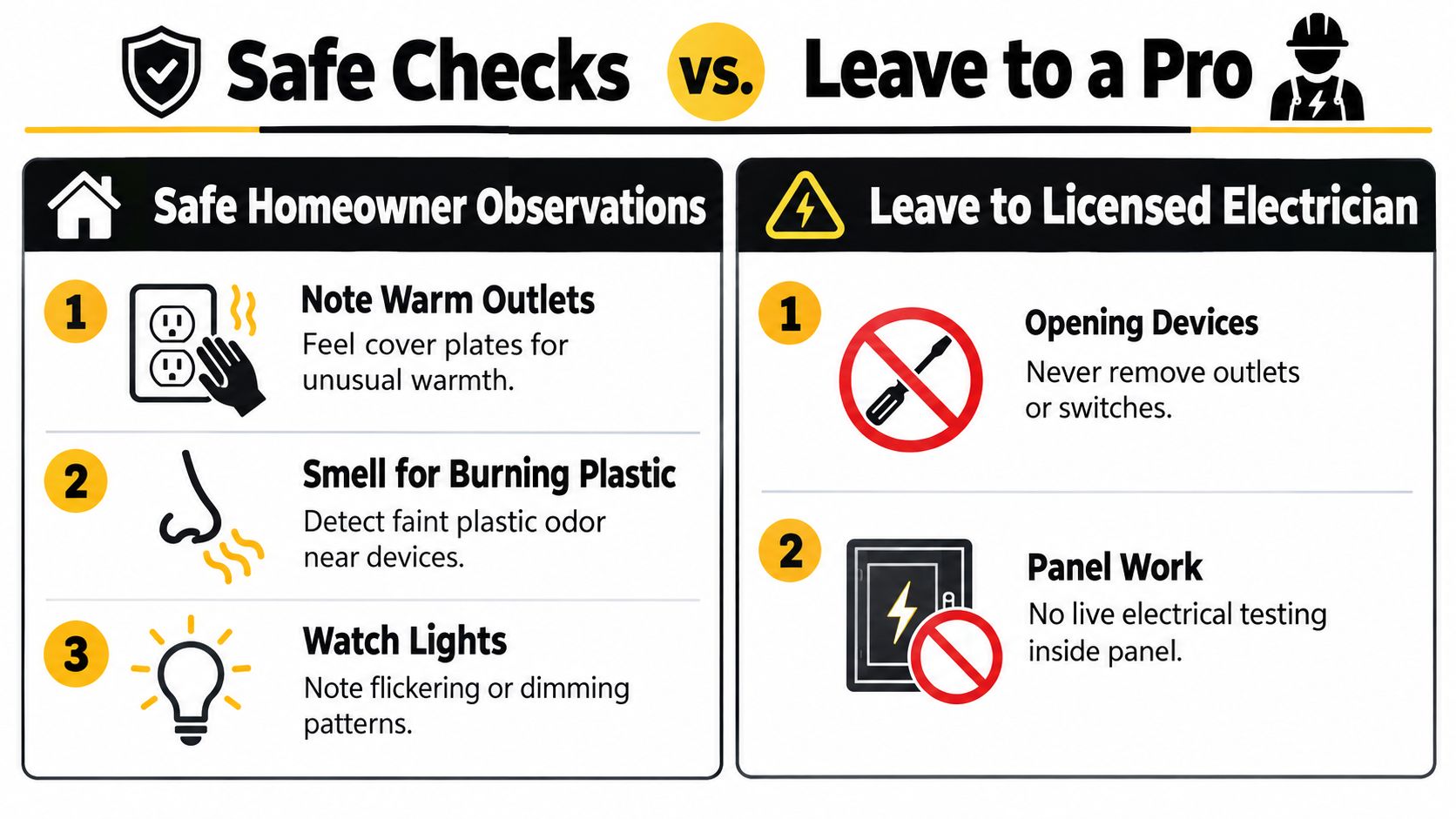
What can be observed safely
- Note unusual warmth: A cover plate that feels warmer than nearby plates deserves attention. Don't keep testing it by touch if it's hot.
- Watch the lights: Record whether flickering happens during heating, cooling, motor startup, or use of a particular outlet.
- Notice odors: A burning-plastic smell near an outlet, switch, or panel isn't normal.
- Look without removing anything: Discoloration, charring, bubbling, or melted plastic visible from outside the device should be treated seriously. Cover plates and devices should stay in place.
- Document breaker trips: Record which breaker opens, what was operating, and whether the problem repeats.
The CPSC guidance on repairing aluminum wiring tells consumers not to attempt repairs themselves. That includes opening outlets or switches, pulling devices from boxes, opening the panel, tightening terminals, or making aluminum-to-copper splices.
What the electrician checks
A professional examines representative outlets, switches, splices, and panel terminations. The inspection may look for heat damage, corrosion, unsuitable device connections, damaged insulation, and signs that a termination has loosened. The electrician also determines whether the issue is isolated or spread across multiple circuits.
Until an affected circuit is evaluated, reducing the load and avoiding the suspect outlet or switch is prudent. If smoke, active sparking, or a strong burning odor is present, occupants should leave the area and seek urgent help rather than attempting an inspection.
For broader home electrical troubleshooting, the same principle applies: observations help define the problem, but energized equipment requires professional handling.
Repair Options Compared From Connection Fixes to Full Rewiring
Aluminum wiring repair isn't automatically the same as replacing every conductor in the building. Because the hazard commonly develops at terminations, a targeted repair may address the actual failure point. The appropriate scope depends on damage, circuit coverage, conductor condition, future electrical plans, and local inspection requirements.
Three practical paths
| Remediation path | When it may fit | Important limitation |
|---|---|---|
| Approved connector systems | Connection-point remediation on suitable 15- and 20-amp aluminum circuits | The electrician must use an approved method and address every applicable termination, not just the visibly damaged device. |
| Device replacement only | Rarely sufficient as a standalone response | Installing a new outlet or switch without correcting the aluminum termination risk doesn't solve the underlying connection problem. |
| Full rewiring | Extensive damage, broad circuit concerns, major remodeling, or a long-term copper replacement plan | It's the most comprehensive option, but access, wall repairs, circuit routing, permitting, and project disruption affect the scope. |
Recognized approaches include COPALUM-style crimp connectors and AlumiConn-style connector systems, which connect aluminum conductors to copper pigtails through approved remediation methods. The CPSC repair publication emphasizes that the repair must correct the connection defect, not merely swap a device.
Some projects also involve routing or extending wires for outlets. That work still requires compatible materials, proper terminations, and compliance with the applicable electrical requirements.
What affects the decision
An electrician considers the number of affected circuits, visible heat damage, access to junction boxes, panel condition, planned remodels, and future additions such as an EV charger or hot tub circuit. In Northern Utah, permits and inspections may apply depending on the work and local jurisdiction. The electrician should identify that requirement before work begins.
Homeowners should ask:
- Which circuits contain aluminum branch conductors?
- Is the proposed method approved for this application?
- Will damaged devices, insulation, and splices be replaced or repaired?
- What permitting and inspection steps apply?
- What documentation and workmanship coverage accompany the work?
- Would planned remodeling make rewiring more practical now?
For a broader financial comparison, homeowners can compare electrician quotes for rewiring after the inspection defines the actual scope.
What to Expect During a Professional Inspection in Northern Utah
A service visit typically begins with a discussion of the home's age, symptoms, recent electrical work, and circuits that serve heavy loads. The electrician then assesses the panel and representative devices without assuming that one normal-looking outlet represents the entire system.
The inspection focus
The electrician may examine:
- Panel terminations: Aluminum conductors, breaker connections, labeling, and visible signs of heat or corrosion.
- Devices and boxes: Receptacles, switches, junction boxes, and splices for charring, tarnishing, melting, bubbling insulation, or unsuitable connection methods.
- Connection quality: Termination condition, evidence of looseness, and signs of overheating at the points where aluminum meets devices or other conductors.
- Circuit behavior: Flickering, nuisance trips, dead devices, and load-related symptoms reported by the occupants.
Older housing in Ogden, Layton, and Salt Lake City can require careful circuit mapping because additions and renovations may have changed parts of the electrical system over time. Seasonal demand matters too. Winter heating and summer cooling can keep marginal connections under sustained electrical load.
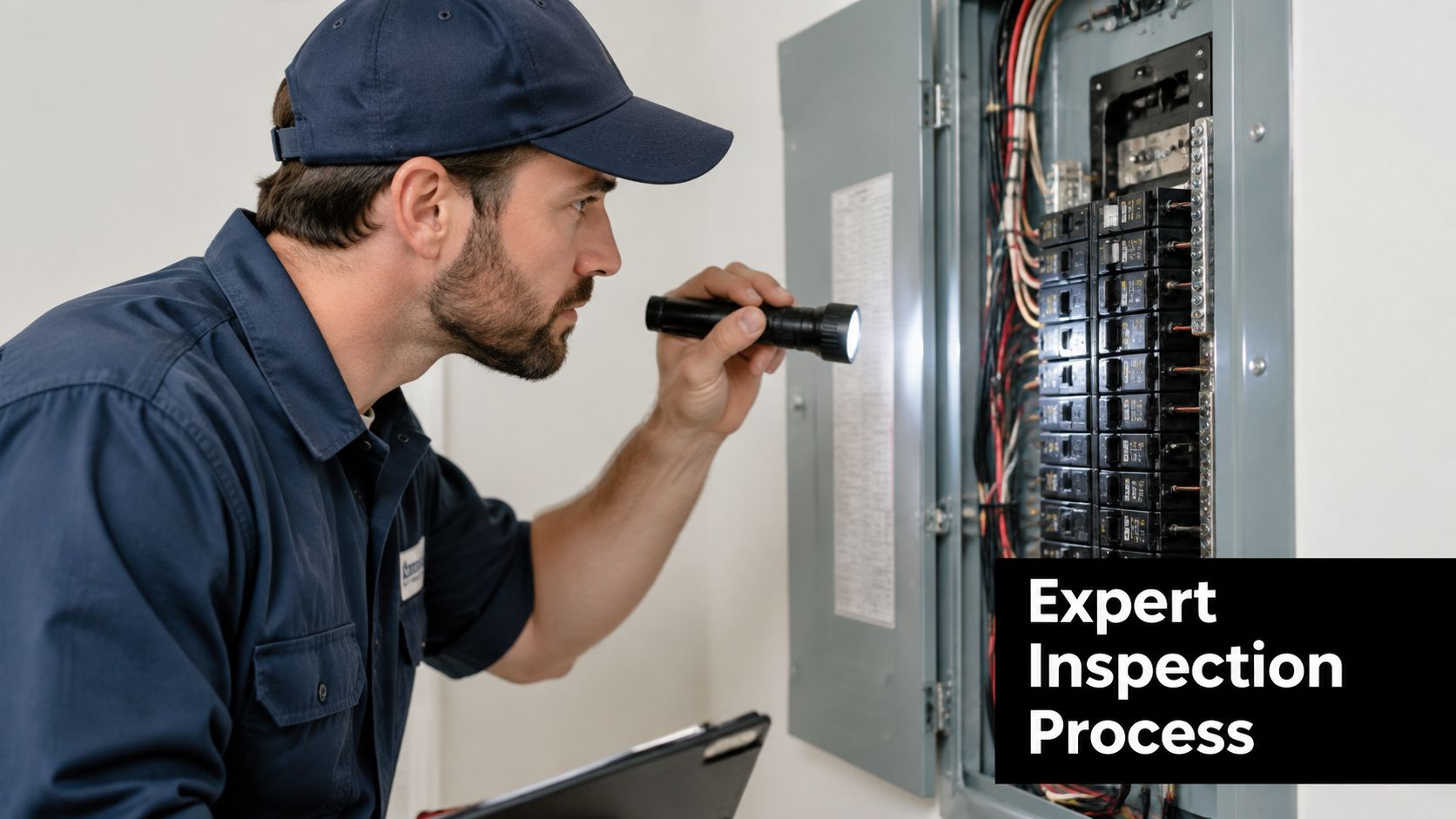
A formal electrical assessment can also be useful when a property owner wants organized documentation, similar in purpose to an EICR for London properties, although local Utah requirements and terminology differ.
How the visit ends
The electrician should separate urgent hazards from recommended improvements and explain which circuits should remain unused until repaired. If work changes wiring, devices, panels, or other regulated elements, local permitting and inspection requirements may apply. The homeowner should receive a clear explanation of the proposed repair method, affected areas, and next decisions.
A home electrical inspection Northern Utah can help property owners plan repairs before a remodel, sale, or seasonal load increase.
Next Steps and When to Call Black Rhino Electric
The decision becomes clearer when three factors are considered together: symptom severity, building era, and connection risk.
- Smoke, sparks, arcing, a strong burning odor, or a hot plate calls for urgent action.
- Flickering, intermittent power, repeated breaker trips, or discoloration calls for prompt evaluation.
- A home from the aluminum-wiring era may deserve a scheduled inspection even when everything appears normal, because the absence of symptoms doesn't prove safe connections.
- A planned remodel, EV charger, hot tub, panel upgrade, or added circuit is a good time to identify legacy wiring before increasing demand.
Black Rhino Electric serves residential and commercial properties from its Marriott-Slaterville headquarters across Weber, Davis, and Salt Lake counties. Property owners can request a free electrical quote for inspection, troubleshooting, connection repair, rewiring, panel work, and related electrical corrections.
Black Rhino Electric can inspect suspected aluminum branch wiring, identify overheated or unsuitable connection points, and explain whether targeted remediation or rewiring fits the property. Homeowners and small businesses can call 385-396-7048 or visit Black Rhino Electric to schedule the next step.