
A home or shop owner usually starts thinking about an electrical maintenance contract after a breaker trips too often, lights flicker at the wrong time, or a property manager gets tired of surprise calls. In Northern Utah, that conversation usually turns into one simple question, how do you keep the system safe without paying for the same problem twice?
A good contract answers that with scheduled care, clear limits, and written expectations. It protects the homeowner, and it protects the electrician from scope creep.
Understanding Key Concepts of electrical maintenance contracts
An electrical maintenance contract is not a one-off repair ticket. It's a written agreement that defines what gets checked, how often it gets checked, and how long the arrangement lasts, with commercial agreements often running for 36 months and using quarterly, semi-annual, or annual visits, according to industry guidance on preventive maintenance contracts.
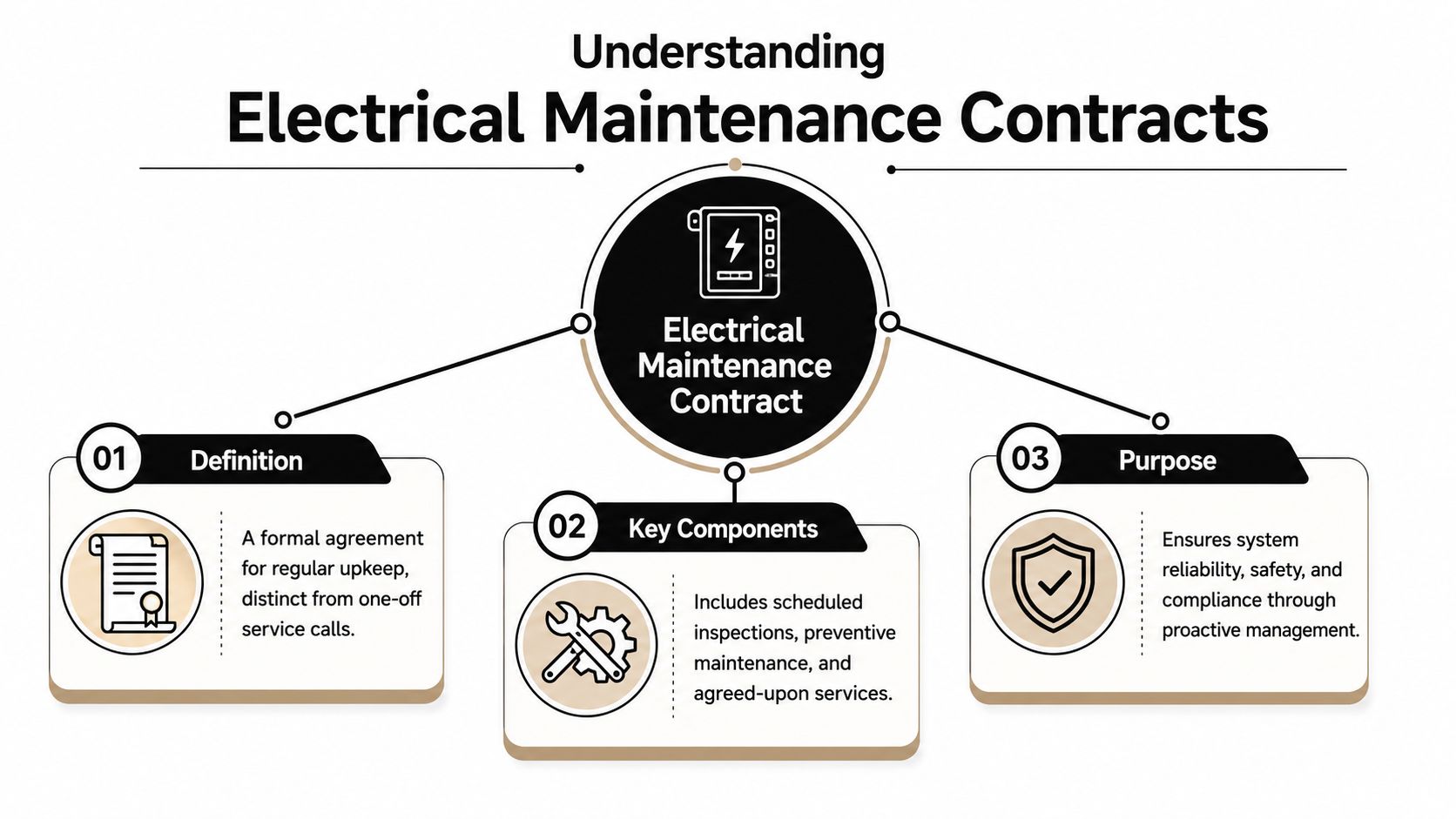
For a Northern Utah homeowner, that distinction matters. A service call fixes what's broken today, while a contract is built to catch loose terminations, thermal wear, contamination, and insulation problems before they turn into a bigger outage. That's why routine inspections are used to reduce unexpected downtime and unplanned maintenance costs, and why the contract has to name the actual equipment, not just say “electrical system.”
What belongs in the agreement
A practical contract should spell out the scope of work, service-term length, and documentation. It should also list response-time SLAs, billing terms, and asset-specific exclusions so the price reflects the property's real electrical inventory rather than a generic checklist.
Practical rule: if the panel, subpanels, service entrance, or other critical gear isn't listed, it shouldn't be assumed to be covered.
For landlords and property owners who want a broader safety lens, expert advice for landlord electrical safety is useful context because maintenance planning and rental turnover often overlap.
For readers who want a simple baseline on inspections and upkeep, what to know about electrical upkeep is a helpful companion read.
Benefits and Common Inclusions and Exclusions
A solid electrical maintenance contract pays off in three ways. It reduces the odds of a late-night call, helps budgeting stay predictable, and creates a paper trail that makes it easier to prove upkeep was completed. For homes, that can mean fewer “mystery” outages. For small businesses, it can mean less disruption when equipment is loaded heavily.
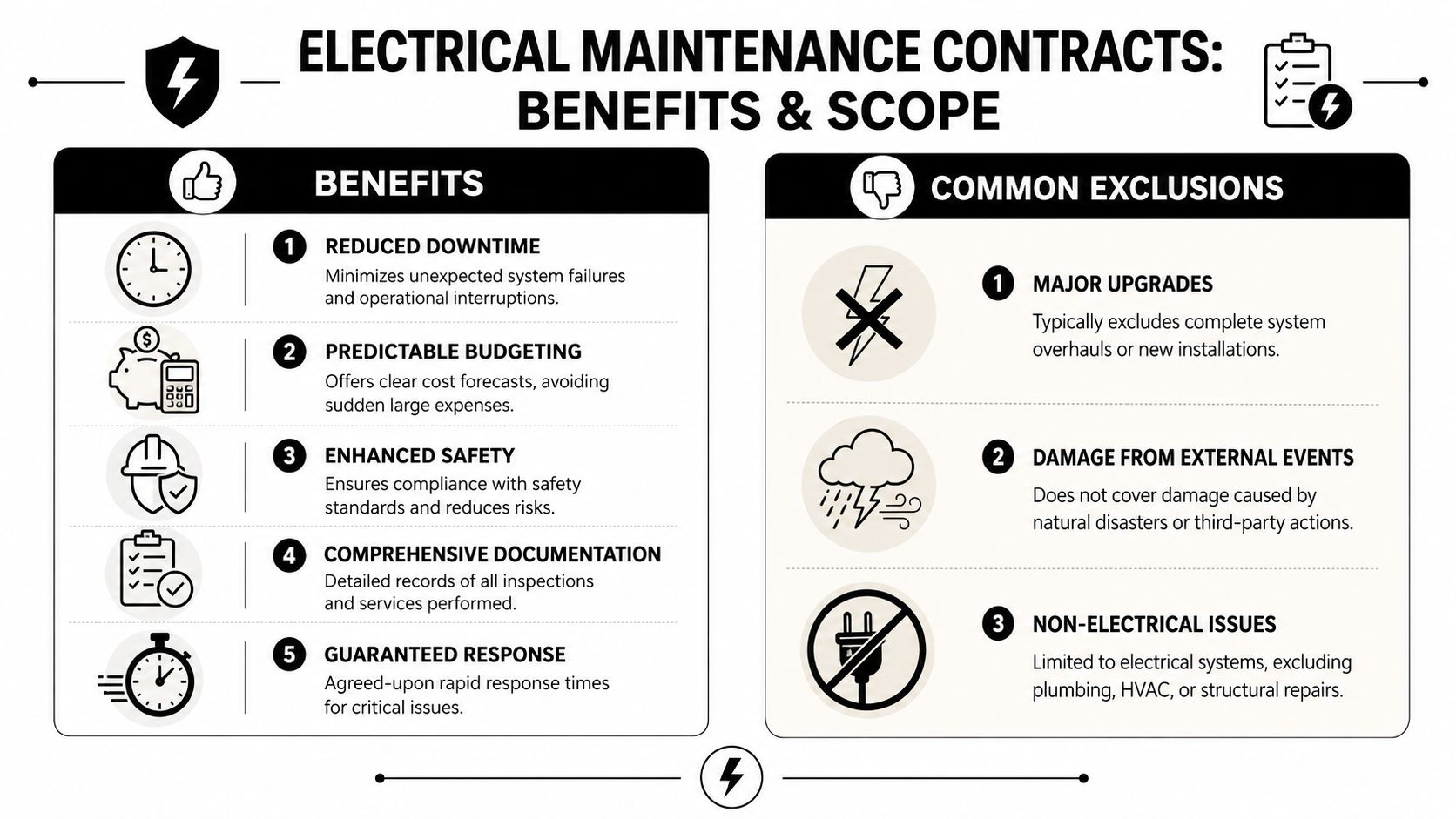
The strongest agreements don't just promise service. They name the covered assets, define the inspection cadence, and separate routine maintenance from remedial repairs. That separation matters because issues found during an inspection shouldn't quietly get rolled into the base fee if they were never part of the planned scope.
Inclusions that actually help
A good contract usually includes maintenance documentation, agreed service windows, and recurring tasks tied to the equipment that needs them most. A practical model recommends task frequencies such as annual infrared surveys, semi-annual switchgear cleaning, quarterly inspections of critical equipment, and annual UPS battery testing, according to electrical maintenance contract guidance from ELECTRI.
It should also say what happens when something new shows up mid-term. If a homeowner adds a hot tub, EV charger, or extra panel work after signing, that new load should trigger a written scope update, not a surprise invoice at the end of the visit.
Clear exclusions save arguments later. If a device, circuit, or accessory isn't listed, the contract should say it's outside the base fee.
That's the same reason a careful contract will exclude major upgrades, non-listed equipment, and unrelated work. A maintenance contract is for planned upkeep and risk reduction, not a blank check for every electrical issue on the property. For a practical example of how panels and breakers often become part of broader maintenance conversations, see electrical panel repair.
Service Levels and Pricing Models
Pricing depends on what's included and how fast the contractor has to respond. Scheduled inspections cost less than preventive work with more depth, and emergency repairs cost more because they interrupt the day and usually need immediate dispatch. One pricing guide lists hourly ranges of $50 to $100 for inspections, $75 to $125 for preventive tasks, and $125 to $200 for emergency repairs, with flat-fee plans ranging from $200 to $500 per month depending on scope, as reported in this pricing explainer.
A homeowner doesn't need to memorize every pricing model. The useful takeaway is that frequency, response rights, and the amount of reactive work built into the agreement all affect the final number. A plan with more frequent visits and faster response usually costs more because the contractor is reserving labor and availability for that account.
| Service Level | Inspection Frequency | Estimated Fee Range |
|---|---|---|
| Scheduled inspection focus | Periodic, as agreed | $50 to $100 hourly for inspections |
| Preventive maintenance focus | Periodic, as agreed | $75 to $125 hourly for preventive tasks |
| Emergency repair support | As needed | $125 to $200 hourly for emergency repairs |
| Flat-fee recurring plan | Set by contract | $200 to $500 per month |
How to read a proposal
The cheapest option isn't always the best deal. A low monthly price can hide limited visit time, weak reporting, or little help when a panel issue shows up between planned visits. On the other hand, a well-structured recurring plan usually states exactly what's covered so the contractor can budget labor correctly and the homeowner can compare bids fairly.
For anyone trying to narrow down a proposal, it helps to get an electrical estimate that spells out the scope instead of quoting a vague hourly range with no visit schedule attached.
Sample Contract Language and Maintenance Checklist
A contract gets much stronger when the language is concrete. The cleanest versions identify the covered assets by category and location, define the service intervals, and say how out-of-scope work gets approved before anyone starts. One agreement template also points to the parties, technical definitions, services included, and termination rules, which is the kind of detail that keeps a later dispute from becoming messy.
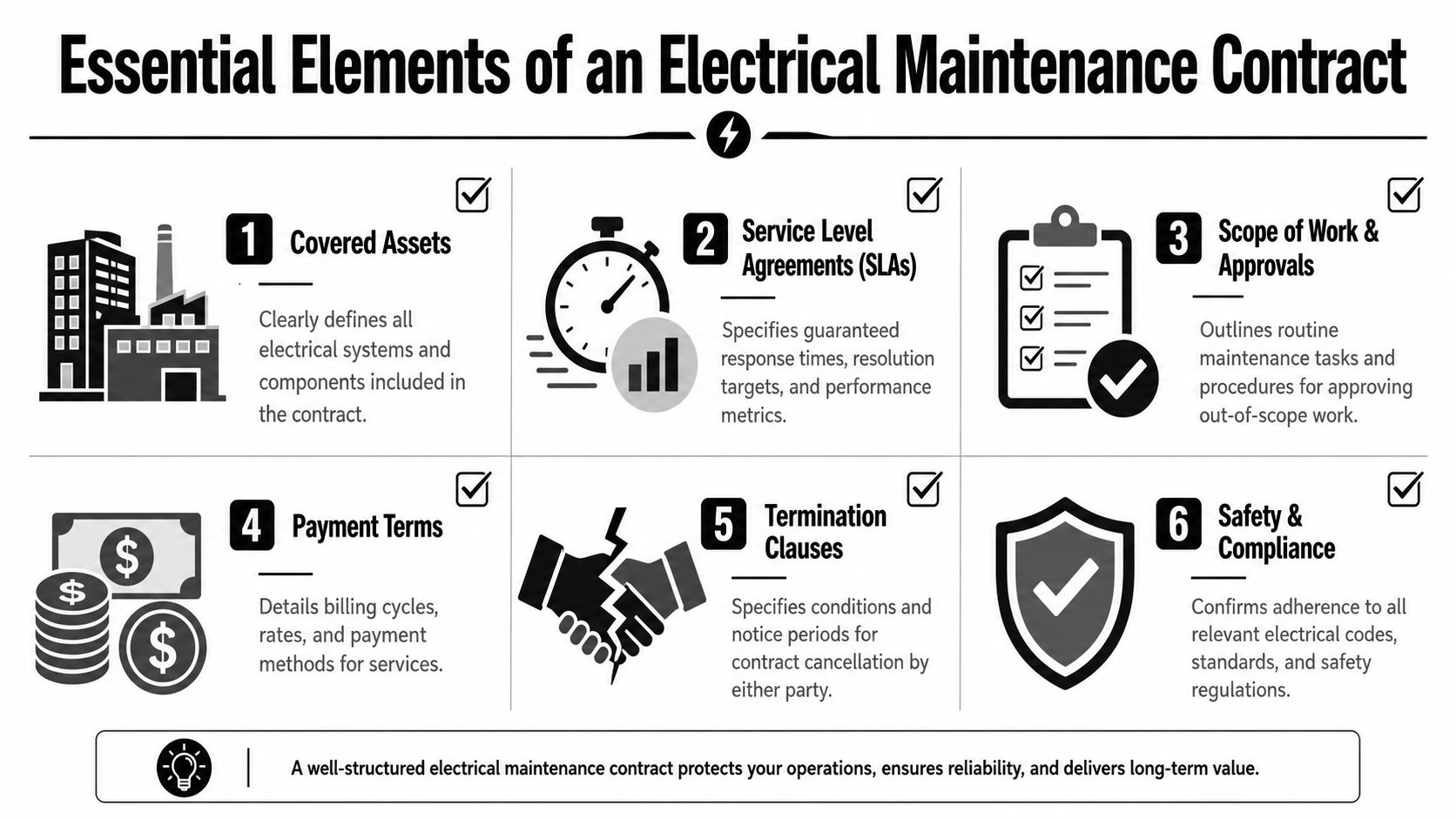
A useful contract can read something like this in plain English:
- Covered assets: “Contract applies only to the panels, circuits, and equipment listed in the attached register.”
- Approvals: “Any equipment not listed requires written approval before work begins.”
- Reporting: “Each visit includes a dated report of findings, measurements, and deficiencies.”
- Separate billing: “Repairs discovered during maintenance are billed separately unless specifically included.”
- Schedule: “Maintenance occurs at the frequency listed in the schedule, and missed visits are rescheduled in writing.”
- Termination: “Either party may end the agreement under the notice terms stated in the contract.”
What to verify before signing
Before a homeowner signs, the checklist should confirm that the asset list is accurate, the visit interval is realistic, and the report format is spelled out. A good companion reference is the home electrical inspection checklist, because the same mindset, looking for completeness and documentation, applies to contract review.
For larger meter-related facilities, it's also worth reviewing the official Axis Meter Solutions agreement as a reminder that service terms, scope boundaries, and reporting language should be written down clearly.
How to Choose the Right Contractor
The contractor matters as much as the paper. A homeowner in Weber, Davis, or Salt Lake County should start by checking whether the electrician can explain the agreement in plain language and tie the scope to the actual property, not a generic list. That's especially important for older homes, finished basements, hot tubs, EV charging, and panel work where the electrical load changes over time.

A strong contractor should also be able to describe what the visit looks like. That usually means inspecting the panel, checking for signs of heat or loose connections, verifying equipment operation, documenting deficiencies, and explaining whether a finding belongs inside the contract or as separate repair work. Black Rhino Electric handles residential and commercial electrical work in Northern Utah, including breaker and panel work, panel upgrades, EV charger installation, lighting, troubleshooting, code corrections, and commercial maintenance support.
A homeowner should ask one direct question, what gets maintained under the contract, and what requires a separate approval before work starts.
Questions worth asking
The most useful questions are simple:
- What equipment is covered? Ask for the register, not a verbal summary.
- How are add-ons handled? New circuits, chargers, or panels should trigger a written update.
- What's included in the report? Look for dates, findings, and measurements.
- How are repairs billed? Planned maintenance and remedial work should stay separate.
- Who responds locally? For Northern Utah properties, local familiarity saves time when service issues show up.
For readers comparing providers, the expert guide for Utah homeowners offers practical context on what a good electrical contractor should be able to explain before work begins.
Common Questions and Next Steps
A maintenance contract should be reviewed before it expires, not after the property is already dealing with a repeat problem. If new equipment gets added mid-term, the scope needs a written update so the contract doesn't drift into vague promise territory. During a normal service visit, the electrician checks the listed equipment, documents findings, and flags any repair that falls outside the base agreement.
For a homeowner in Northern Utah, the next step is straightforward. Review the property's current electrical load, make sure the contract names the actual equipment, and ask for a proposal that separates routine maintenance from extra work.
If an electrical maintenance contract designed for your property makes sense, call 385-396-7048 or use the request quote form to start a conversation with Black Rhino Electric.
A CTA for Black Rhino Electric.