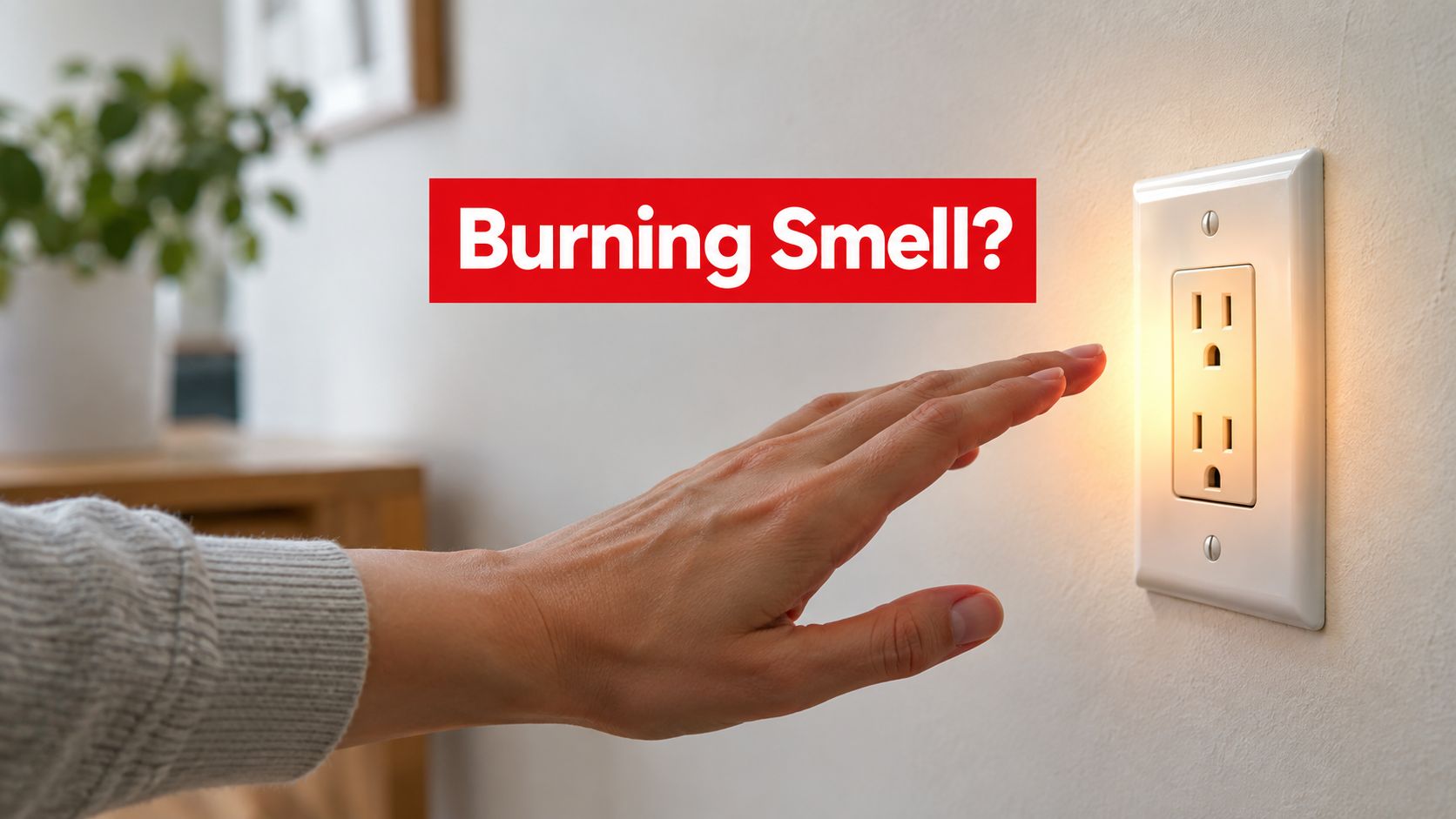
A sharp hot-plastic or fishy odor appears near an outlet, but there's no smoke and nothing looks visibly wrong. A burning electrical smell with no smoke still deserves immediate attention because overheating, damaged insulation, or arcing may be developing out of sight.
What to Do Right Now If You Smell Burning But See No Smoke
Start by treating the odor as a possible electrical hazard, not as something that must wait for visible smoke. Stop using the suspected outlet, switch, appliance, charger, or circuit. Don't touch a warm cover plate, plug, cord, panel, or wall surface, and don't remove an outlet cover or open the electrical panel.
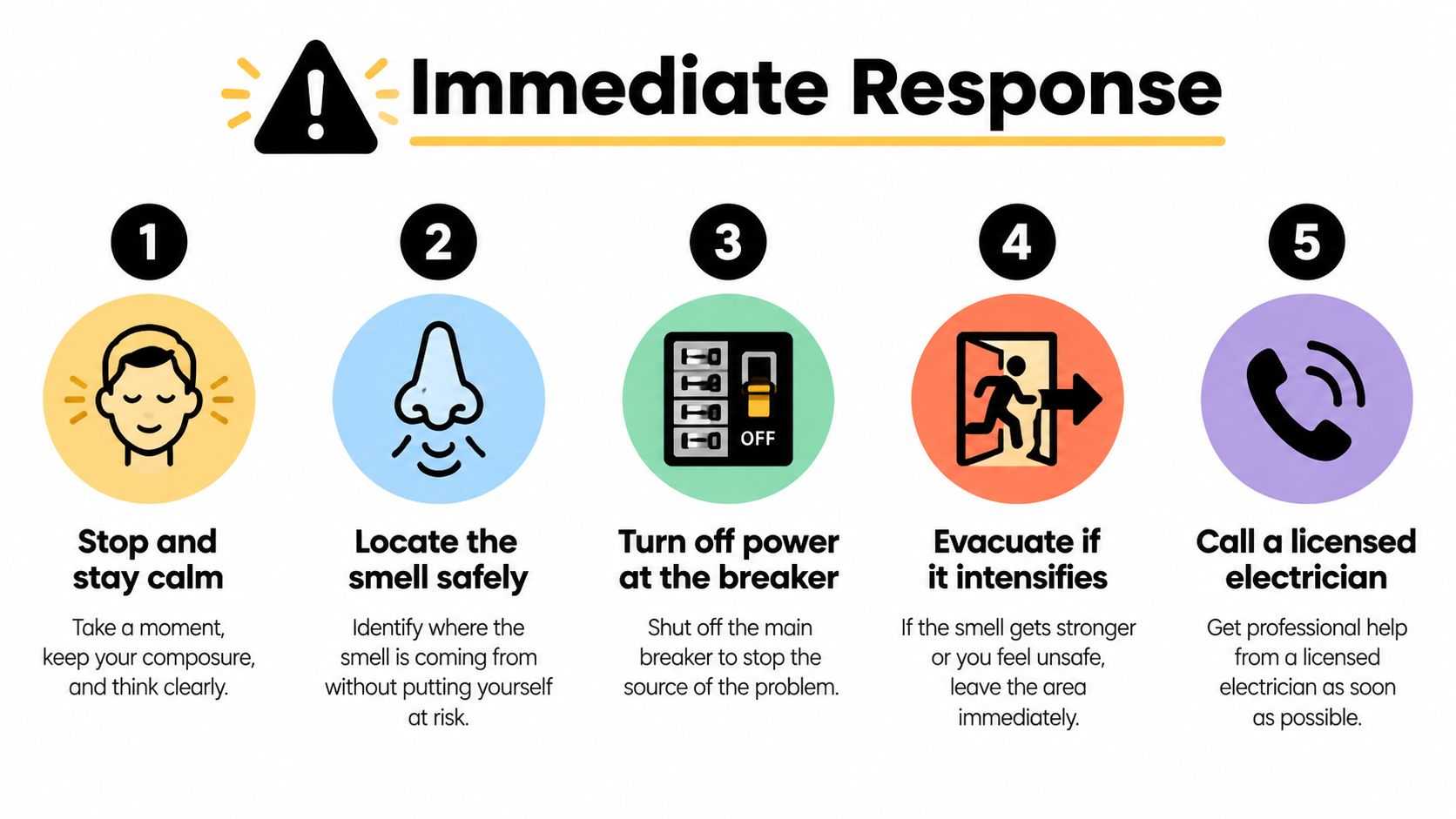
A safe priority order
- Stop the load. Turn off and unplug a device only if the plug, cord, outlet, and surrounding area are cool and there's no smoke, sparking, or visible damage.
- Locate the odor without contact. Notice whether it's strongest at a wall outlet, switch, ceiling fixture, breaker panel, or plugged-in device. Don't pull furniture away from a hot wall or reach behind equipment.
- De-energize only when access is safe. If the suspected circuit can be switched off at the breaker without approaching heat, smoke, or visible arcing, turn it off. If the source isn't clear, shutting off the main may be appropriate only when the panel is cool and accessible.
- Leave if conditions worsen. A strengthening smell, smoke, crackling, buzzing, visible arcing, heat, or flames calls for evacuation and a 911 call. Nobody should stay inside to investigate.
- Arrange urgent professional inspection. Keep the affected circuit off and request emergency electrical repair rather than restoring power to see whether the odor returns.
Ventilation is secondary. Opening a door or window may help only when it can be done without moving toward the suspected fault. Don't spray water, repeatedly reset a breaker, or continue using an appliance because the smell faded. Electrical guidance explains that an odor can stop when heating stops, while the underlying fault remains a potential source of electrical danger.
Why a Burning Electrical Smell Can Happen Without Smoke
Electrical materials often release an odor before they produce visible smoke. Wire insulation and plastic device housings act like protective jackets around energized components. Excess heat can soften or chemically degrade those materials first, releasing a hot-plastic, rubber, scorched, fishy, or acrid smell while the damaged area remains enclosed.
That heat commonly concentrates at a small fault. A loose terminal, damaged connection, or corroded contact creates resistance at a limited contact area. Current passing through that resistance produces localized heating, which can deform thermoplastic parts or weaken insulation before the surrounding air contains enough heat and oxygen for open flame.
Practical rule: No smoke means no visible smoke. It doesn't prove that the circuit is cool, intact, or safe to re-energize.
Why the breaker may stay on
A breaker responds to particular electrical conditions, but a small arcing fault or high-resistance connection may not create enough current to trip it promptly. Arcing can occur inside a wall, outlet box, panel, or breaker enclosure and still generate a burning odor. Some AFCI protection is designed to detect patterns associated with arcing faults, but protection devices don't eliminate the need to investigate a smell.
The absence of smoke can also result from a fault smoldering inside an enclosed space where oxygen is limited. Re-energizing the circuit increases the chance that the same connection will heat again and worsen the damage. For broader background on steps homeowners can take to prevent electrical fires, focus on reducing ignition sources and having questionable wiring inspected.
If the odor is strongest at a panel or breaker area, the homeowner should avoid opening the enclosure. A licensed electrician can perform electrical panel repair after making the area safe.
Is It Really Electrical or Something Else That Smells Similar
Not every burning odor comes from fixed wiring. A motor-driven appliance can produce a hot varnish or rubber smell, while dust warming on equipment can smell scorched. A charger brick, power adapter, lighting component, or electronic control can also overheat and create an odor that resembles a wall fault.
The first useful distinction is where the smell is strongest. This doesn't prove the cause, but it helps a professional narrow the investigation.
| Strongest odor location | More likely area to investigate | Safe observation |
|---|---|---|
| Wall outlet, switch, or dimmer | Fixed wiring, terminal, or device connection | Look for discoloration without removing the cover |
| Breaker panel or meter area | Panel connection, breaker, or service equipment | Stay away if the enclosure is warm, buzzing, or damaged |
| Plugged-in device or charger | Cord, plug, adapter, or internal component | Stop using it if it's hot, swollen, discolored, or odorous |
| Ceiling fixture or light | Lamp, socket, driver, or fixture wiring | Turn it off and avoid handling it while warm |
| Mechanical equipment | Motor, belt, dust, or internal electrical parts | Stop operation and arrange the appropriate service |
Fishy or ammonia-like odors can still indicate electrical degradation, particularly near a connection or plastic device. Moisture intrusion and corrosion can create confusing smells too, especially where wiring or terminals have been exposed to damp conditions.
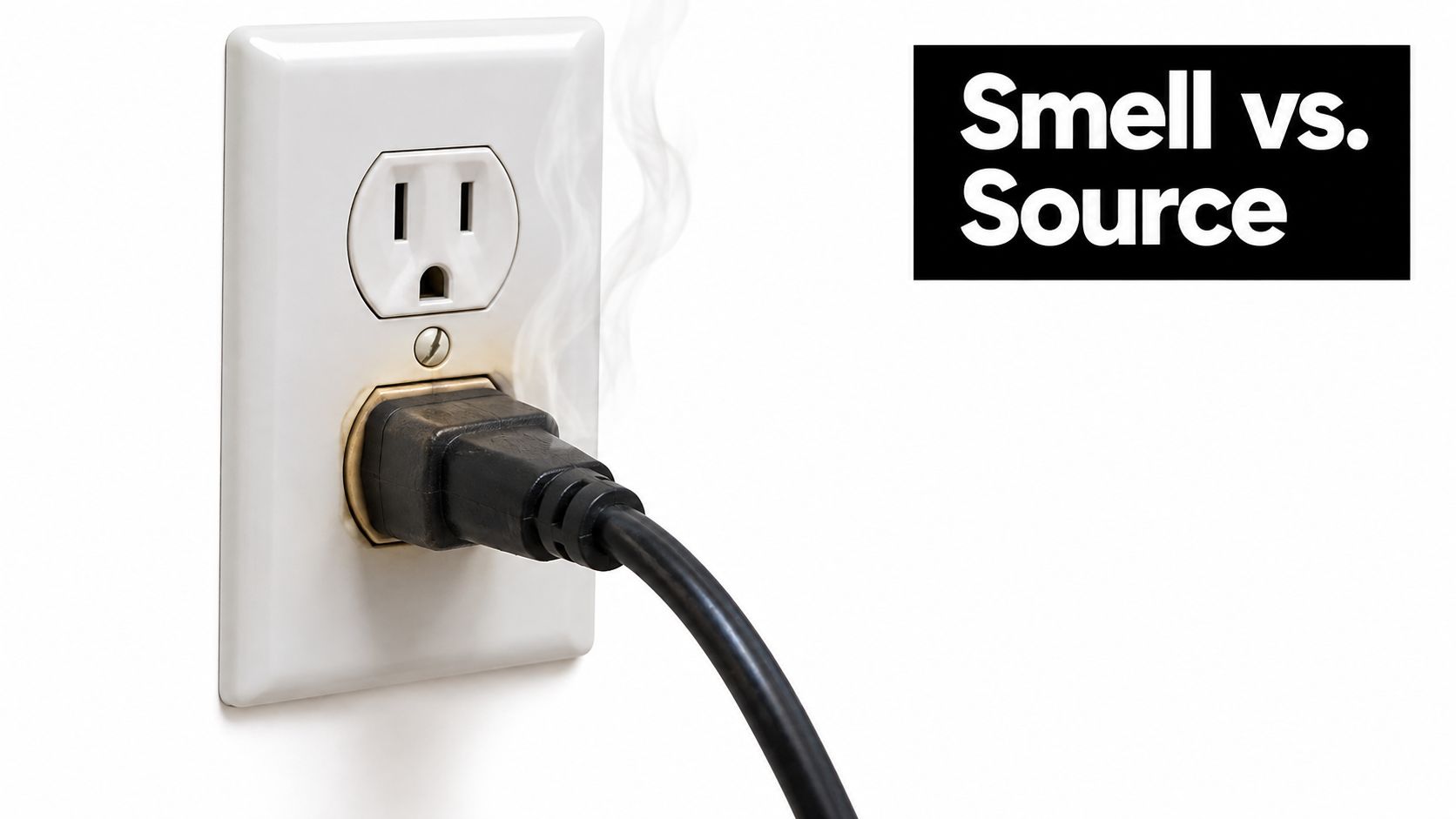
Air cleaning may reduce an odor after the electrical source has been made safe, but a smoke air purifier can't diagnose or correct an overheating connection. For a smell associated with heating equipment, homeowners can use a qualified electrician or HVAC professional to diagnose and fix HVAC issues, depending on where the odor originates.
Common Electrical Causes Behind the Smell in Homes and Businesses
The fault may be small, but its location can sit anywhere from a plug connection to the main service equipment. Loose or high-resistance connections at outlets, switches, dimmers, light fixtures, and panel terminals are common places for heat to concentrate. An overloaded branch circuit or power strip can also stress wiring and connections, particularly when several high-demand loads operate at once.
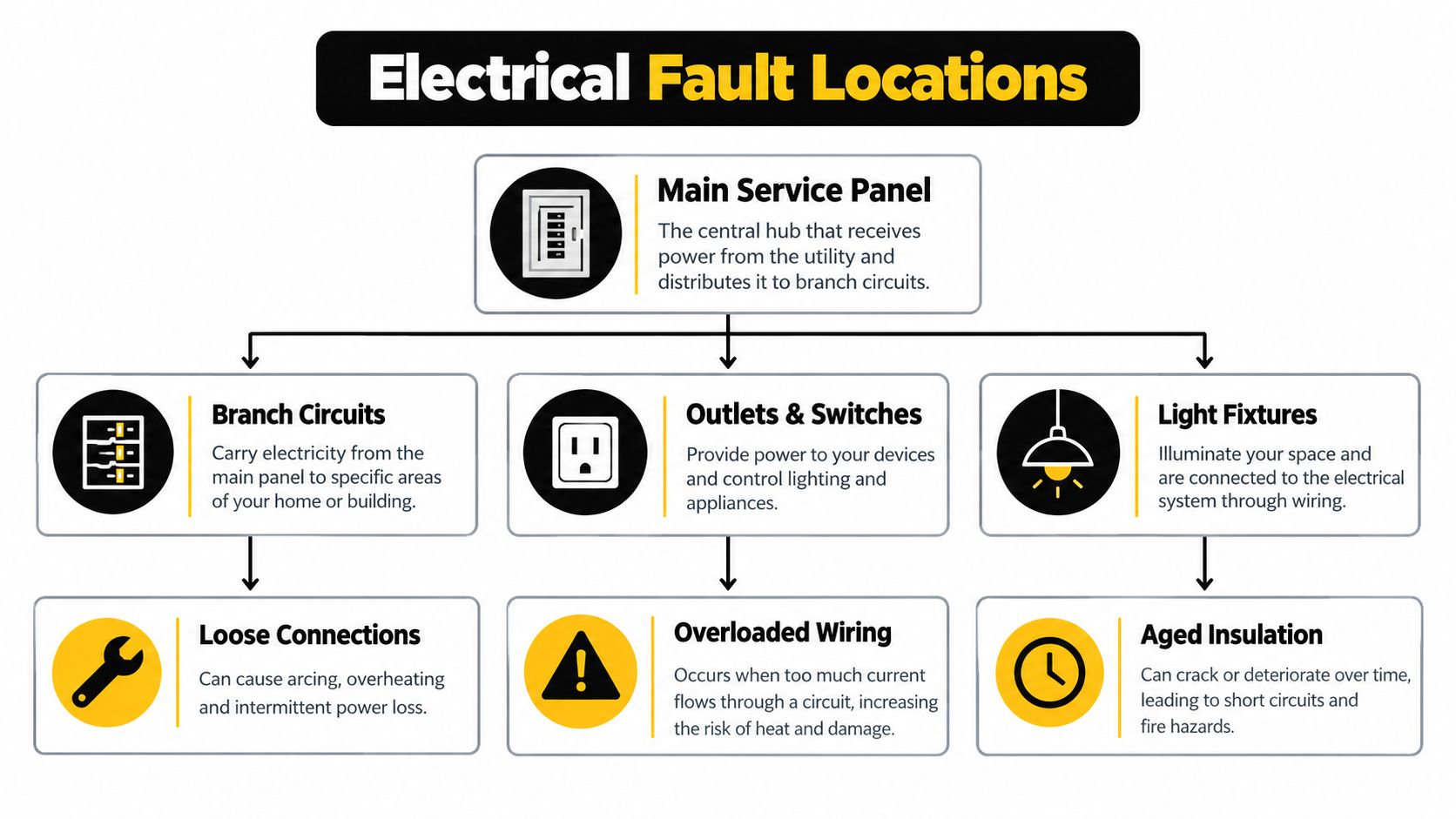
A fault map from device to service
- Outlets and switches: A loose terminal, worn receptacle, failing dimmer, or damaged plug can heat the device housing. A warm cover plate or discoloration is a warning, not a cosmetic issue.
- Cords and connected equipment: A damaged cord, loose plug blade, charger, or appliance connection can create heat at the contact point. The odor usually follows the device rather than the wall wiring.
- Branch circuits: Overloaded wiring, loose junctions, damaged insulation, or arcing inside a wall can produce an odor without a visible source. The smell may appear only when a particular load runs.
- Panels and breakers: A failing breaker or loose connection inside an enclosure can generate heat near the panel. Homeowners shouldn't remove the cover to investigate.
- Moisture and corrosion: Water intrusion can degrade connections and insulation, creating odor and increasing resistance.
Northern Utah homes and commercial buildings can experience changing electrical demand across the year. Winter heating equipment can place sustained demand on circuits, while summer cooling loads and additional equipment can expose weak connections. Older housing stock may also contain aging insulation, altered wiring, or connections that no longer match modern use.
A smell that strengthens after the circuit is switched off, a warm wall, or a warm device area increases concern because stored heat or concealed damage may still be present. Homeowners looking into related symptoms such as flickering lights and burnt outlets should treat those signs as useful information for troubleshooting, not as permission to test the circuit again.
Safe Checks You Can Make and What Your Electrician Will Do Next
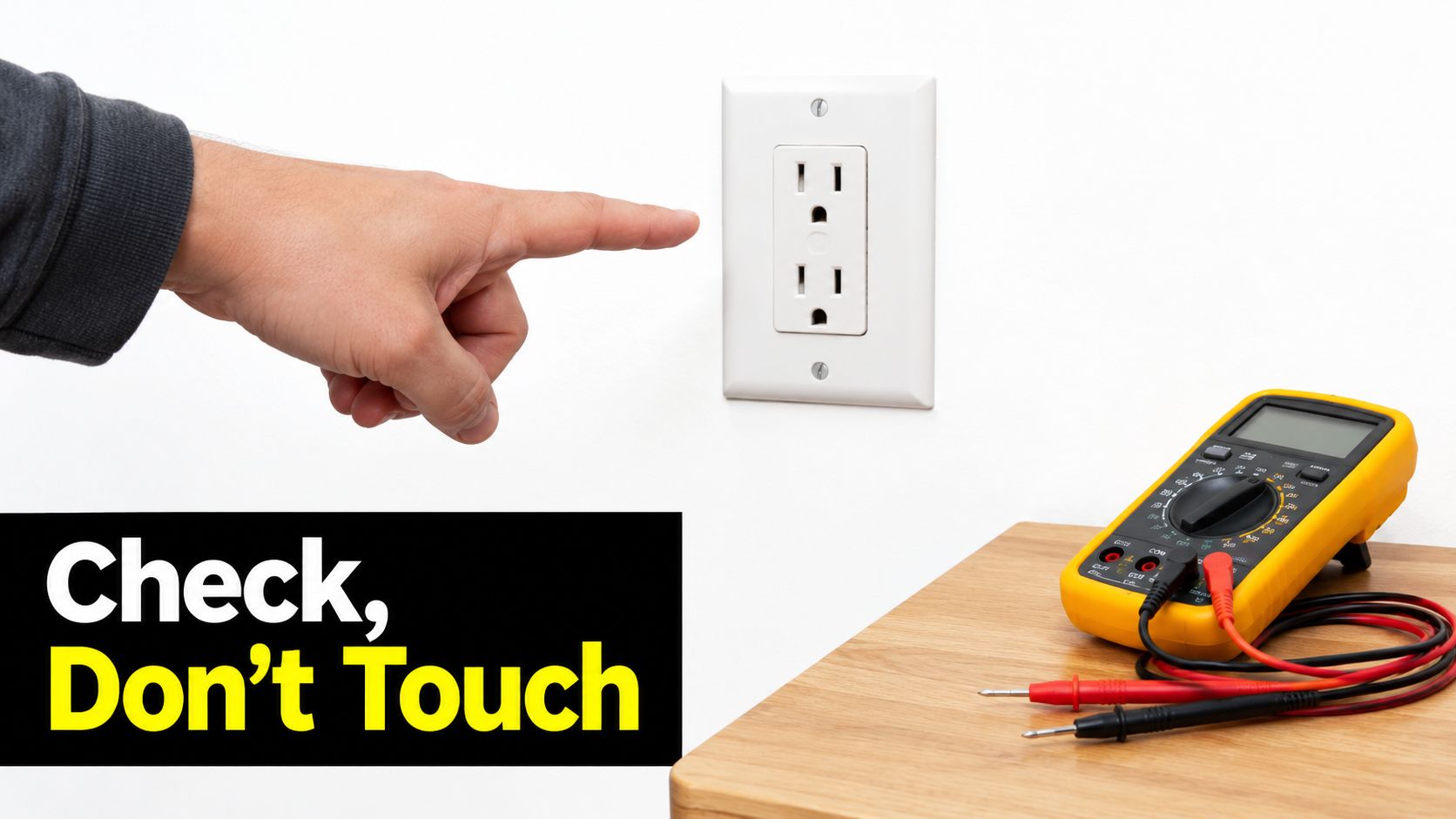
Homeowners can gather useful observations without touching energized components. The safest checks are visual, odor-based, and location-based. They should stop immediately if any surface is hot, the smell intensifies, smoke appears, or buzzing and crackling can be heard.
What can be observed safely
- Record the location. Note whether the odor is strongest at an outlet, switch, fixture, appliance cord, charger, wall, or panel.
- Look without removing anything. Discoloration, melted plastic, scorch marks, looseness, or a warped cover plate should be reported.
- Identify the controlling breaker. If the panel is cool and there's no smoke or arcing, note which breaker appears to control the area. Don't open the panel or reach inside.
- Disconnect only cool equipment. A device may be unplugged only when its plug, cord, and receptacle are cool and undamaged. If anything feels warm, leave it alone.
- Preserve useful details. Note what was operating, whether lights flickered, whether a breaker tripped, and whether the smell returned under a particular load.
What a service visit may include
A licensed electrician can de-energize the area, inspect devices and terminations, and use appropriate testing equipment, including thermal inspection when conditions support it. The evaluation may include connection integrity, breaker operation, branch-circuit loading, conductor condition, device replacement, and evidence of arcing or heat damage.
The electrician may also review GFCI and AFCI protection, panel capacity, grounding and bonding, and whether the existing installation suits added loads such as an EV charger, hot tub, or major appliance. In Weber, Davis, and Salt Lake counties, permit and inspection requirements can depend on the scope and jurisdiction. The service provider should explain whether permitting or code corrections apply before work proceeds.
Useful questions include:
- What failed, and where is the heat damage?
- Is the affected circuit safe to restore?
- Does any wiring or device need replacement?
- Are GFCI, AFCI, grounding, or panel-capacity corrections needed?
- Will the repair or upgrade require a permit or inspection?
Emergency or Next Day Service How to Decide Quickly
The decision changes when the odor is paired with heat, sound, visible damage, or a panel location. A faint odor tied clearly to a cool, disconnected device still needs prompt attention, but a smell from inside a wall or electrical panel carries greater urgency because the source may be concealed and difficult to isolate.
If the smell is intensifying, smoke is visible, or there's sparking, crackling, or flame, occupants should leave and call 911. If the source can be isolated safely, the affected circuit should remain off. Don't reset a breaker or restore power to confirm the diagnosis.
| Where smell is strongest | Warning signs present | Recommended action |
|---|---|---|
| Outlet, switch, or fixture | Warm cover, discoloration, buzzing, or recurring odor | Stop using it, shut off the circuit only if safe, and request urgent inspection |
| Wall or ceiling | Odor has no clear device source, or it persists after shutdown | Leave the area if it worsens, keep power off if safely isolated, and arrange urgent service |
| Breaker panel or meter area | Heat, crackling, melted material, or a stronger smell | Don't touch or open the panel. Evacuate for smoke or worsening conditions and call emergency help |
| Plugged-in device | Odor follows the device, with a hot cord, adapter, or plug | Stop using the device. Disconnect only if cool and safe, then arrange evaluation |
| Any location | Smoke, flames, visible arcing, or rapidly worsening odor | Leave immediately and call 911 from a safe location |
A smell that disappears isn't automatically resolved. The heating may have stopped because the load stopped, while the connection or component remains damaged. For situations requiring rapid local response, Black Rhino Electric provides 24/7 electrical services Northern Utah.
Preventing Future Burning Smells With Simple Maintenance
Prevention starts with reducing avoidable heat and recognizing changes early. Power strips shouldn't be daisy-chained, and high-demand equipment shouldn't share an unsuitable circuit. Discolored, loose, warm, or damaged outlets should be removed from service and evaluated rather than covered up or repeatedly reset.
Homeowners can also test installed GFCI and AFCI protection according to the device instructions, keeping hands dry and stopping if a device won't reset correctly. Older homes and buildings benefit from an electrical inspection before remodels, new equipment, or substantial changes in occupancy. A professional can identify outdated wiring, overloaded circuits, poor connections, and code issues without asking the homeowner to open energized equipment.
New electrical loads need planning. EV chargers, Tesla Wall Connectors, hot tubs, spas, major appliances, and commercial equipment may require dedicated circuits, panel-capacity review, and permits through the applicable local authority in Weber, Davis, or Salt Lake County. Additional homeowner guidance on essential home electrical fire tips can support routine safety awareness.
Black Rhino Electric is headquartered in Marriott-Slaterville and handles residential and commercial troubleshooting, outlet and GFCI work, breaker and panel repairs, wiring, EV charger installations, lighting, and code-related corrections across Northern Utah.
For a burning odor near an outlet, wall, device, or panel, Black Rhino Electric can troubleshoot the circuit, identify overheated connections or damaged components, and complete the electrical repair or safety upgrade. Call 385-396-7048 or visit Black Rhino Electric to request a quote.