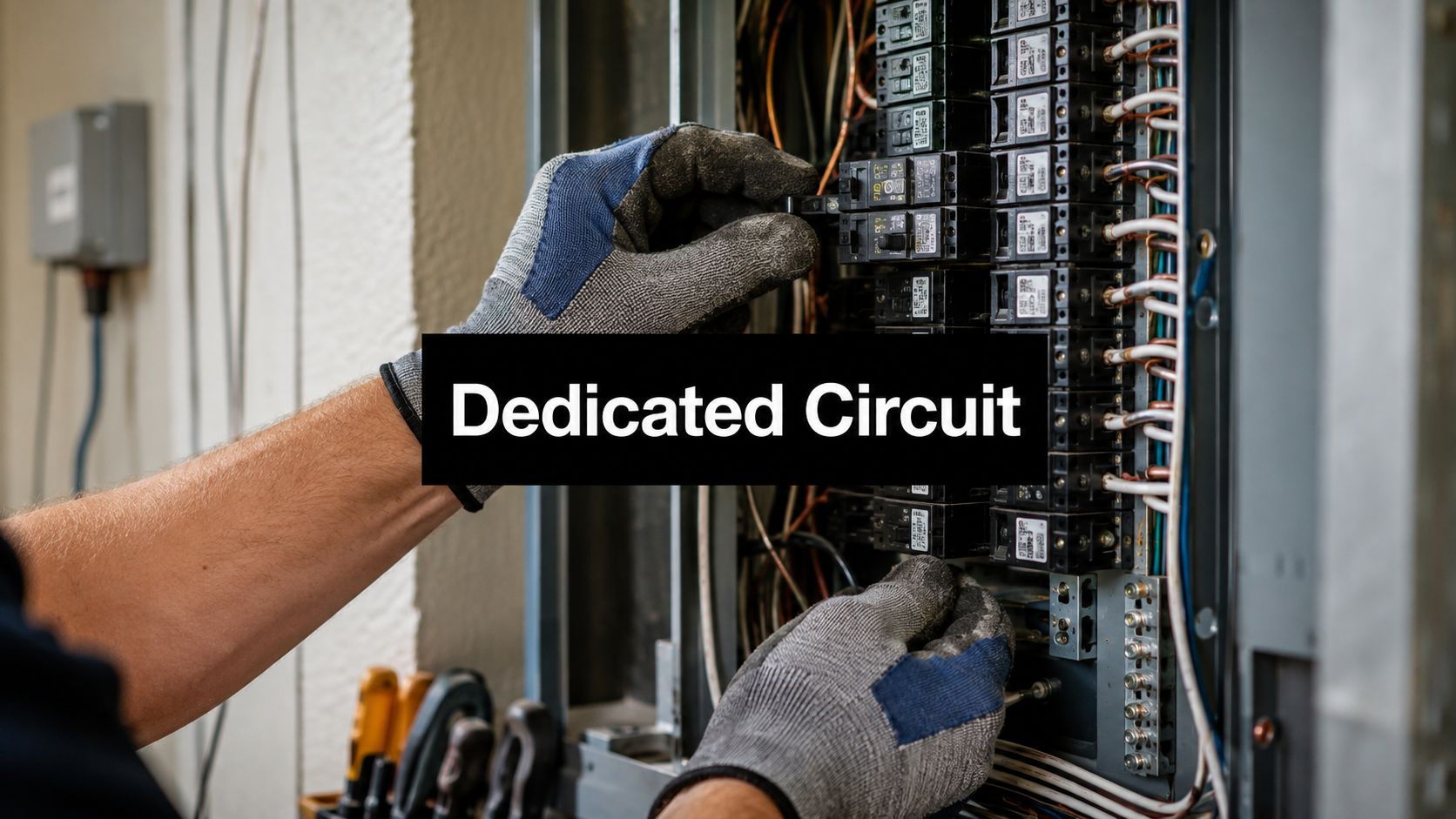
The usual call starts with a hot tub, an EV charger, or a kitchen remodel that keeps tripping a breaker. That's when dedicated circuit installation stops sounding like a nice-to-have and starts sounding like the fix that makes the whole system behave.
For homeowners and property managers in Northern Utah, the core question isn't just whether a new outlet can be added. It's whether the panel, the circuit path, and the load all make sense together.
What a Dedicated Circuit Actually Is
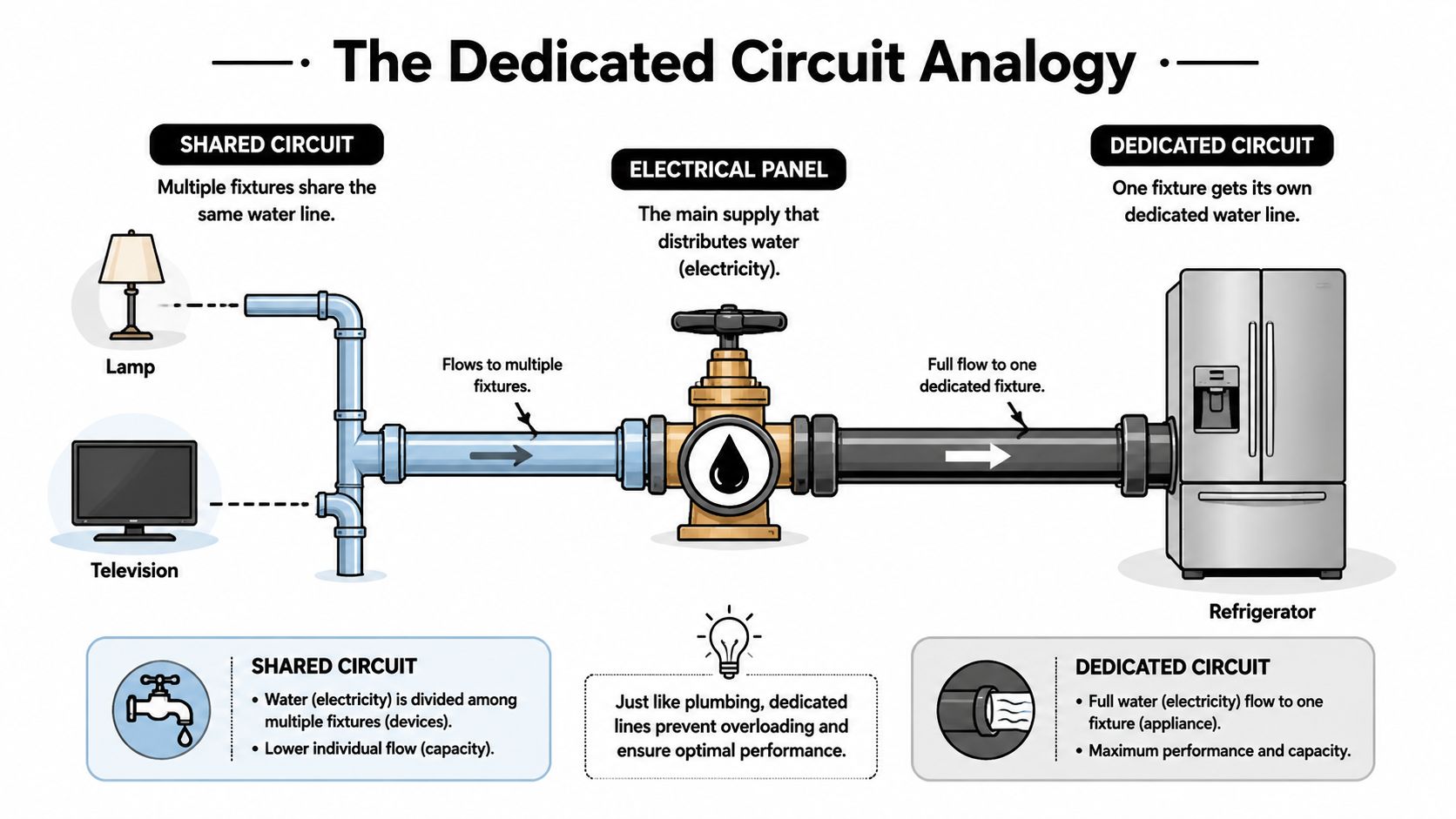
Think of the electrical panel like a water main and each circuit like a pipe leaving it. A dedicated circuit is a pipe that feeds only one appliance or one piece of equipment, with its own breaker and its own wire run.
That separation matters because shared circuits can run out of capacity fast. If a microwave, disposal, and countertop loads all share the same branch circuit, the breaker has to protect the whole group, not just one device. A dedicated circuit gives one load its own protected path, which is why electricians use it for equipment that draws heavily, runs for long stretches, or needs stable voltage.
The code history behind that idea isn't random. The modern dedicated-circuit concept grew out of electrical-code standardization in the late 19th century, when installation rules began moving from informal practices toward recognized wiring methods and load separation. By 1899, armored cable was first recognized as a wiring method in the National Electrical Code, and that same code evolution created the framework for branch circuits serving individual loads. That's why this is a safety and reliability issue, not a marketing term. History of electrical installation standards
Practical rule: if one appliance can overwhelm a shared circuit by itself, it usually belongs on its own breaker and wire run.
A shared branch circuit can serve several outlets or fixtures. A dedicated one serves one utilization equipment load. That distinction becomes especially important for continuous load, which is equipment expected to draw power for a long stretch. EV charging is the clearest example, because the branch circuit has to be sized for the charger's continuous demand, not just the receptacle style or breaker size.
For a homeowner, the benefit is simple. The right circuit keeps nuisance tripping down, protects the wiring, and lets the appliance run the way it was designed to run. That's the whole point of a dedicated line.
Common Appliances and Equipment That Need Dedicated Circuits
Some loads need their own circuit because of code. Others need one because they're hard on the system even when the circuit technically “works.” In practice, homeowners in Weber County, Davis County, and Salt Lake County usually run into the same handful of requests.
The usual suspects in homes and garages
EV charging is one of the clearest examples. A dedicated branch circuit for EV charging should be sized at 125% of the EVSE's maximum continuous load, which means a 48A charger needs a 60A circuit and a 40A charger needs a 50A circuit. That sizing rule keeps the breaker and conductors aligned with a load that may run for hours. If someone is planning a home charger, a helpful consumer guide is the guide to home EV charging, and the local circuit sizing details belong with the installer, not the charger box. Black Rhino Electric also handles EV charger circuit requirements.
Hot tubs and spas are another common dedicated-circuit job. They're large, permanently installed loads, and they don't mix well with general-purpose receptacle circuits. Kitchen equipment often needs separate treatment too. NEC-based kitchen design requires at least two 20A small-appliance branch circuits for countertop and related receptacle loads, while fixed appliances such as dishwashers are typically assigned their own dedicated circuits. Kitchen electrical requirements under the NEC
Large hardwired appliances fall into the same category. A source summarizing NEC 210.23(A) states that if a fastened-in-place appliance uses more than 50% of a branch-circuit rating, the circuit must be dedicated, and it notes that many over-the-range microwaves land on a dedicated 20-amp circuit. NEC 210.23(A) summary for fastened-in-place appliances That's why the “just tie it into an existing outlet” approach usually fails once the load gets real.
| Appliance | Typical Amp Draw | Required Circuit Size | Wire Gauge |
|---|---|---|---|
| EV charger | Continuous load varies by unit | 125% of maximum continuous load | Sized to breaker and load |
| Hot tub or spa | Varies by model | Dedicated circuit required | Sized to equipment and run |
| Dishwasher | Varies by model | Dedicated circuit commonly used | Sized to appliance listing |
| Over-the-range microwave | Often around 12.5A or more | Often 20A | Sized to appliance and breaker |
| Kitchen countertop loads | Shared small-appliance load | At least two 20A circuits in NEC-based design | Sized for branch circuit |
| Garage workshop equipment | Varies by tool | Often dedicated for heavy loads | Sized to equipment demand |
Garage loads deserve special attention. In multi-bay garages, neutral code-oriented sources note at least one dedicated 20-amp receptacle circuit separate from lighting, and garage receptacles must be GFCI-protected. Exposed, buried, or vehicle-reach wiring often needs conduit protection, which changes the install plan and the cost. Garage electrical installation requirements
If the question is whether a new appliance needs its own circuit, the honest answer is usually determined by the appliance's actual nameplate load, the room it's in, and what else the circuit already serves.
Electrical Code and Permit Requirements in Northern Utah
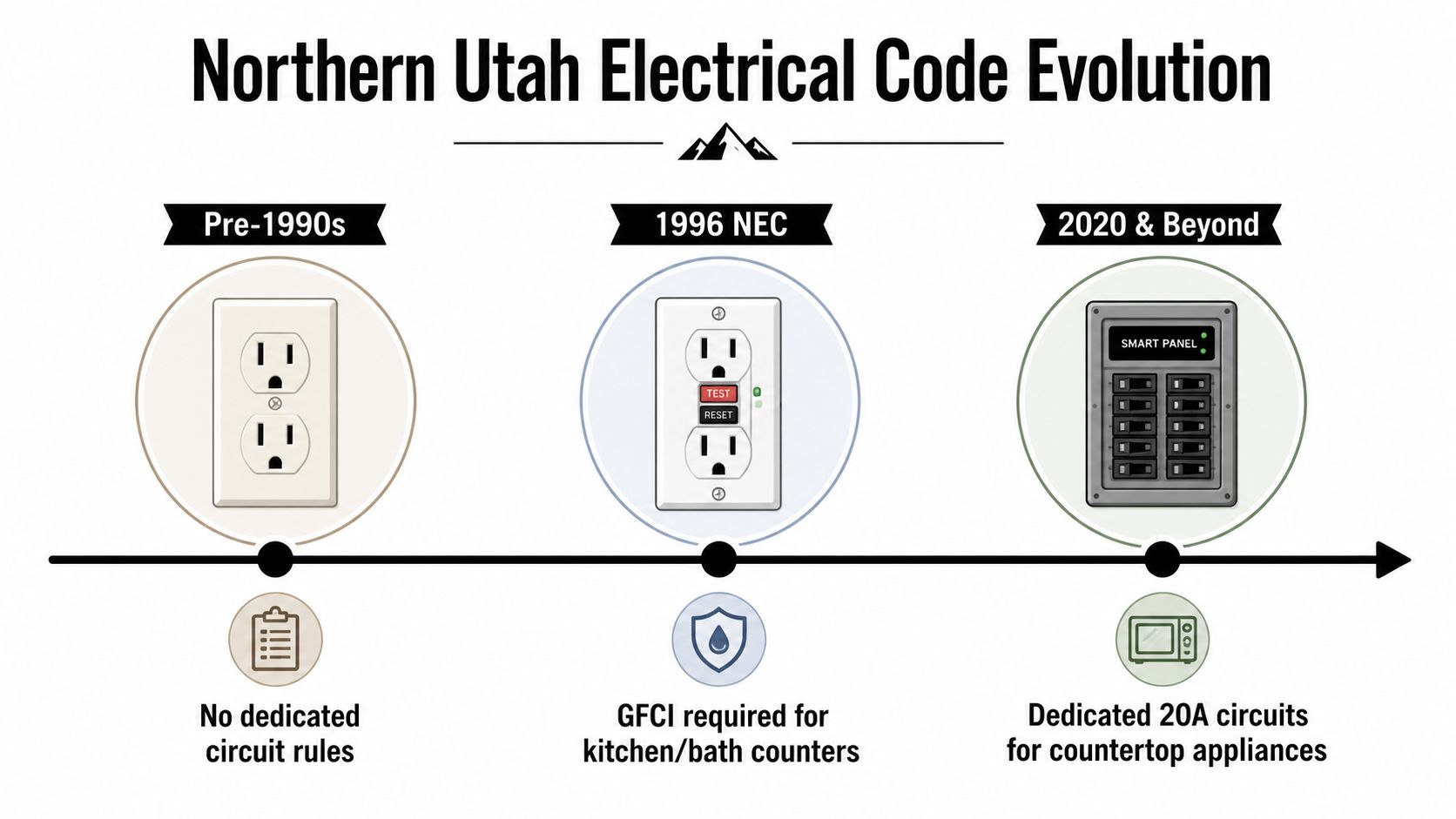
Electrical code has been moving toward more targeted protection for a long time. The milestones tell the story clearly. In the 1971 NEC, receptacles within 20 feet of swimming pools required protection. By the 1975 NEC, bathroom receptacles needed GFCI protection. In 1978, garage receptacles were added. In 1981, spas and hot tubs were added. In 2014, the NEC clarified that all receptacles within 6 feet of dwelling-unit sinks required GFCI protection while extending that protection to bathroom, shower-stall, laundry, and dishwasher areas. History of GFCI protection in the NEC
That history matters because Northern Utah homes often blend old wiring with newer loads. Kitchens get remodeled, garages become workshops, and basements pick up freezers or EV chargers. The code response has been to separate those higher-risk or higher-demand loads from general circuits so one fault doesn't drag down the rest of the system.
Code isn't there to make the job harder. It's there because electrical failures taught electricians what not to repeat.
Permits are part of that same system. For a job that touches the panel, adds a new branch circuit, or changes how a protected load is fed, a permit is usually part of the process in Weber County, Davis County, and Salt Lake County. A homeowner can ask an electrician exactly what documentation will be pulled, what the inspector will check, and whether the final paperwork will be left on site. For a plain-English rundown on project scope, Black Rhino Electric has a guide on what needs an electrical permit.
An inspector usually wants to see the basics done correctly. That means the breaker rating matches the conductor and load, GFCI protection is present where required, and the installation method matches the location. In garages, exposed or vulnerable wiring often needs conduit, and that can change the run layout before the first wire is pulled.
Skipping the permit can create trouble later. It can complicate a sale, invite questions from an insurer, and leave no clean paper trail showing that the work was inspected. For a homeowner, the smart move is to treat the permit as part of the installation, not an optional add-on.
The Installation Process From Start to Finish
A proper dedicated-circuit installation starts at the panel, not at the outlet box. The first decision is whether the panel has room and whether it has capacity. That is why Black Rhino Electric may recommend electrical panel installation work before the circuit is added.
What happens during a professional install
The electrician checks the panel, the load, and the route. If the panel is already crowded or near capacity, the job may stop there until a larger system decision is made. If the panel has room, the installer plans the wire path, selects the correct breaker and conductor size, and decides whether the run stays in open framing, goes through finished walls, or needs conduit.
Then the wire gets pulled, terminated, and tested. For a hardwired appliance, the connection point may include an approved disconnecting means, which is a detail generic “add a line” advice often misses. A standard electrical text reference notes that most large appliances and permanently installed appliances need dedicated circuits and that appliance circuits need an approved disconnecting means. Dedicated circuit and disconnecting means reference
The homeowner should expect some temporary power interruption while the panel is opened and the new breaker is installed. That part is normal. What isn't normal is live panel work by a homeowner. Panel work is where small mistakes turn expensive fast.
Here's what a clean service visit usually includes:
- Panel assessment to confirm breaker space and capacity.
- Route planning so the run is code-compliant and minimally invasive.
- Proper breaker and conductor sizing based on the actual load.
- Termination at the equipment or receptacle with the right protection method.
- Final test and inspection so the circuit performs the way it should.
Hardwired installs and plug-in installs are not the same thing. A plug-in appliance may use a receptacle, but it still needs the correct circuit behind it. A hardwired appliance may also need a disconnect, especially when the unit is fastened in place and served by a dedicated line.
A neat-looking outlet doesn't prove the circuit is right. The panel, breaker, conductor, and load all have to match.
For homeowners, the safest role is to clear access, identify where the appliance will sit, and let the electrician handle the energized equipment, the terminations, and the testing.
Realistic Costs and What Drives the Price
Dedicated circuit pricing in Northern Utah usually depends on the system behind the walls, not just the device at the end of the wire. HomeGuide says installation commonly runs $250 to $900+, and Angi reports an average of about $700, with garage installs averaging around $650. Dedicated circuit installation cost guide For a related local benchmark, Black Rhino Electric also publishes the average cost per outlet in Utah.
The four cost drivers that move the quote
The first driver is panel capacity. If the panel has no open space or not enough service capacity, the job stops being a simple circuit add and starts looking like broader electrical work. That is the point where a panel upgrade or a load-balancing solution can become the answer.
The second driver is distance. A short run from the panel to a nearby appliance is much faster than a long run through a basement, crawlspace, or finished wall. The third is finish condition. Open framing is usually easier than cutting and patching drywall. The fourth is protection method, especially in garages or exposed locations where conduit can be required.
Budget rule: the cleanest quote is the one that spells out the circuit path, the breaker size, the protection method, and whether panel work is included.
A homeowner comparing quotes should ask a few direct questions:
- Does the quote include a new breaker, or only the wire run?
- Is the panel capacity already confirmed?
- Will the work need conduit, drywall repair, or a permit?
- If the panel is full, what's the next step?
- Is this a new circuit, or does the whole service need attention?
That last question matters. Many homeowners think they need a dedicated outlet when the bottleneck is the panel. The underserved decision is usually between a new circuit and broader electrical work. In some homes, load balancing can help. In others, the panel is already the limiting factor and no amount of circuit shuffling will fix that.
For quote comparison, a good outside reference on negotiation strategy is tips for negotiating contractor quotes, especially when the bids differ because one electrician included panel work and another did not. The lowest number isn't always the simplest or safest scope.
Homeowner Preparation Checklist and Safety Tips
A smooth dedicated-circuit visit starts before the electrician arrives. The panel needs clear access, and so does the appliance location. If the job involves a garage, unfinished basement, or hot tub area, pets should be secured and stored items moved away from the run path.
What to have ready
- Clear a 3-foot working area in front of the electrical panel.
- Identify the appliance location so the new circuit can be routed correctly.
- Gather specification sheets for the appliance, EV charger, or spa equipment.
- List every load that may share the area so the electrician can check overlap.
- Plan for temporary power loss during breaker work or final testing.
A homeowner should also watch for warning signs that a circuit problem is bigger than a single new install. Repeated breaker trips, dimming lights when an appliance starts, warm outlets, or a panel that's already crowded all point to a system that needs a closer look. In those cases, troubleshooting may come first.
Black Rhino Electric offers inspection tips from Black Rhino Electric for homeowners who want to spot obvious hazards before scheduling work. That kind of review is useful when the issue might be a worn receptacle, a damaged run, or a panel that's past its comfortable limit.
Never try to work inside a live panel. The job looks simple from the outside and gets dangerous fast once the cover comes off.
Homeowners can safely do the prep, the planning, and the observation. They shouldn't do the energized work, the breaker changes, or the terminations. If the breaker keeps tripping, if there's heat or buzzing at the panel, or if the existing circuit already looks overloaded, the smarter first call is troubleshooting, not a new install.
Frequently Asked Questions About Dedicated Circuits
Do all high-demand appliances need a dedicated circuit? Not always, but many do. EV chargers, hot tubs, and several fixed appliances either require one by code or perform far better on one.
How can a homeowner tell if a circuit is already dedicated? If one breaker serves only one piece of equipment and nothing else on that branch, it's likely dedicated. An electrician can verify that by tracing the run and checking the panel.
What happens if a large appliance is plugged into a shared circuit? The usual result is nuisance tripping, heat buildup, or poor performance. That's the point where a dedicated line or broader electrical correction is the safer move.
Do older Northern Utah homes usually need panel upgrades first? Sometimes. If the panel is full or the service is already near its limit, adding one more circuit won't solve the underlying issue.
For a quote on dedicated circuit installation, breaker and panel work, EV charging, hot tub wiring, or troubleshooting in Weber, Davis, or Salt Lake County, call 385-396-7048 or send a request through the Black Rhino Electric quote form. A licensed electrician can look at the panel, the load, and the location, then tell you whether a new circuit is enough or whether the whole system needs a better plan.
Black Rhino Electric handles dedicated circuit installation, panel and breaker work, EV charger wiring, hot tub circuits, and electrical troubleshooting across Northern Utah. If the breaker keeps tripping or the new appliance needs a safer path from the panel, visit Black Rhino Electric or use the quote form to get the job scoped the right way.