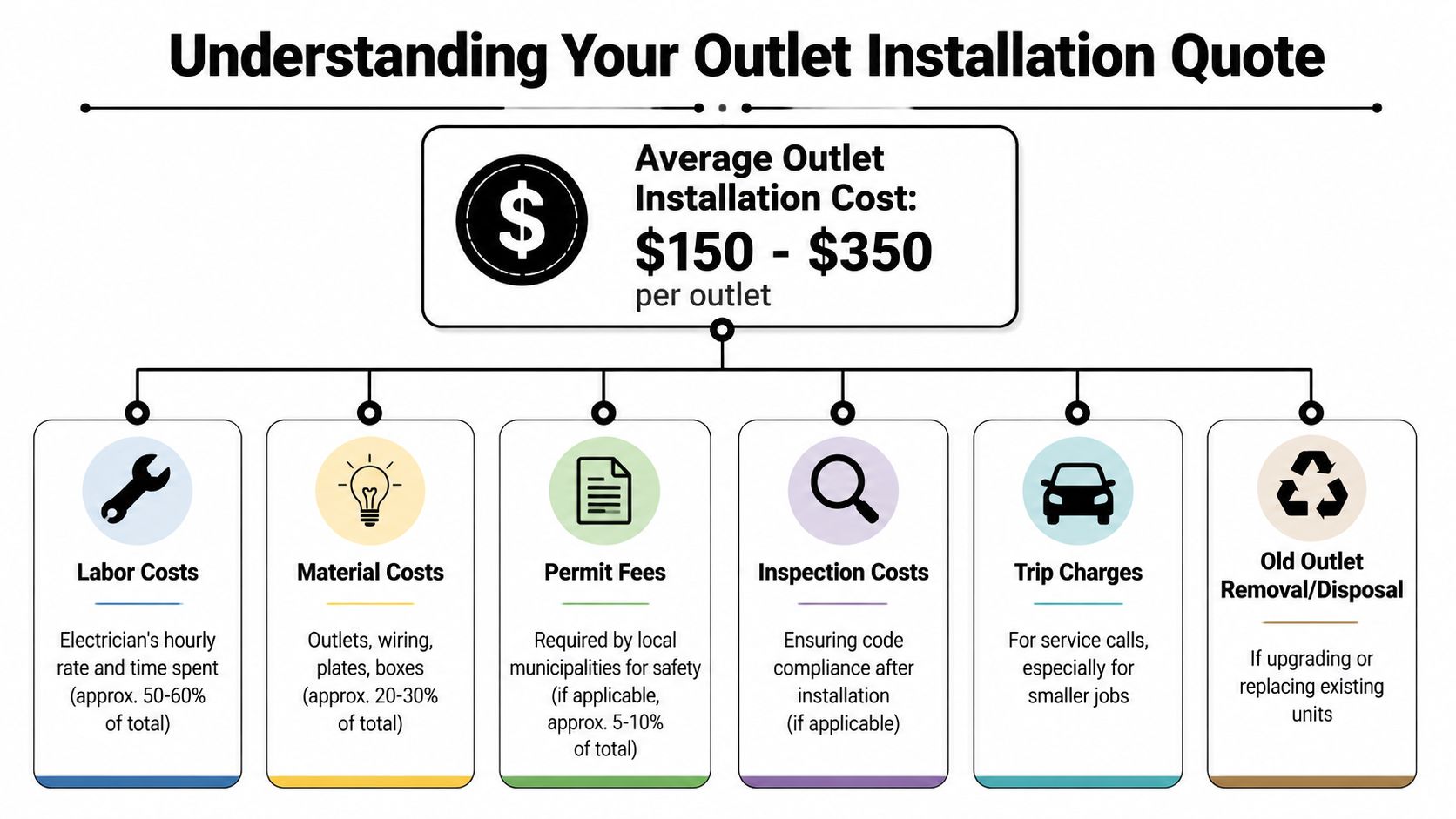
A new outlet installation usually runs $130 to $300 per outlet on average, with a broader typical range of $100 to $450 for a complete professional job, not just the part itself. If the job is more complex, especially outdoors where trenching and a new line run are needed, the price can climb much higher.
That's the part many homeowners in Northern Utah don't see at first. The receptacle on the wall may only be a small piece of the bill, but the primary cost comes from safely getting power there, making sure the circuit can handle the load, and bringing the work up to code in a finished home.
Table of Contents
- What Is Included in an Outlet Installation Quote
- Key Factors That Influence Your Final Cost
- Sample Outlet Installation Scenarios in Northern Utah
- The Hidden Dangers of DIY Outlet Installation
- How to Get an Accurate Quote for Your Project
- Frequently Asked Questions About Outlet Installation
What Is Included in an Outlet Installation Quote
A homeowner in Ogden might call about adding one outlet behind a TV and assume the price should be close to the cost of the receptacle. In a newer Layton home with open access, that may be a straightforward job. In an older bungalow with plaster walls, short box depth, and a crowded existing circuit, the quote covers much more than the part you see on the wall.
National averages give a rough starting point, but they do not reflect how much house construction changes the work. A quote in Northern Utah usually includes the electrician's time to inspect the location, verify a safe power source, run or extend wiring, install or replace the box, make up the device, test polarity and grounding, and confirm the installation fits code for that room or exterior area, as noted in Angi's outlet installation cost breakdown.
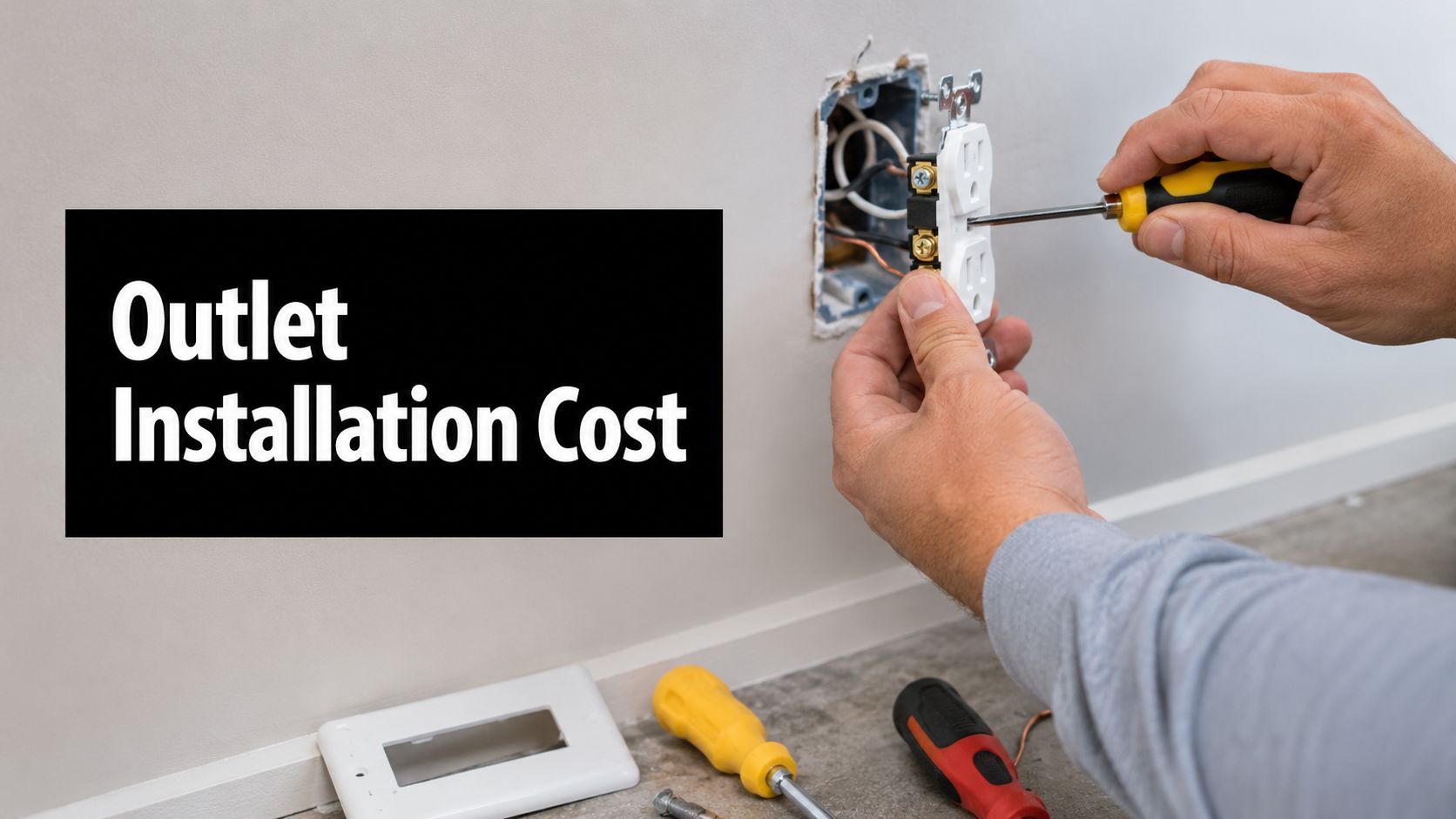
The outlet device is a small part of the job
The receptacle itself is often one of the cheaper pieces. Labor, access, wiring path, wall repair, and code-required protection usually make up the larger share of the quote.
A good comparison is faucet work. The trim piece may be inexpensive, but the cost changes fast if the plumber has to open a wall, reroute piping, or correct an older installation. Outlet work follows the same pattern. The faceplate is simple. Getting power there safely is the skilled part.
Practical rule: If someone talks about outlet cost as if the device itself is the whole job, that quote probably isn't accounting for the full scope of work.
What a professional quote usually covers
A clear outlet installation quote usually includes these items:
- Material for the full installation: Receptacle, box, cover plate, cable, connectors, staples, and any required protection device for that location.
- Labor for access and installation: Cutting in the box, fishing wire, working through attic or crawlspace areas, and dealing with finished surfaces like plaster, tile, or paneling.
- Circuit check: The electrician should verify that the circuit can handle the added load. Circuits work like lanes on a road. If too many appliances are already using that lane, adding another outlet can create nuisance trips or overheating.
- Testing and verification: That includes checking grounding, polarity, device operation, and protection functions where required.
- Permit or inspection steps when needed: Some jobs stay simple. Others, especially new circuits, exterior work, or remodel work, can trigger permit and inspection requirements.
Local house style matters here. In Layton or Syracuse new construction, access is often easier and the path for cable is more predictable. In older parts of Ogden or Salt Lake, electricians run into plaster over lath, tight crawlspaces, older wiring methods, and boxes that do not leave enough room for a safe extension. Those conditions affect labor time and sometimes change the recommended solution.
Protection requirements also change the quote. Kitchens, bathrooms, garages, unfinished areas, exterior locations, and many remodel situations may require GFCI protection or other location-specific upgrades. Homeowners who want a plain-English explanation can read this GFCI outlet guide for Utah homeowners.
Key Factors That Influence Your Final Cost
Outlet pricing usually comes down to one question first. Are you replacing a device that is already there, or are you creating a new outlet location from scratch?
In Northern Utah, that difference shows up fast. Replacing a worn receptacle in a newer Layton home is often straightforward if the box, wiring, and breaker are all in good shape. Adding an outlet in an older Ogden bungalow can take much longer because the wall finish, framing, and existing wiring method may all work against a simple install.
The biggest mistake homeowners make is assuming the nearest source of power is automatically the best one. It often is not. A nearby receptacle may sit on a circuit that is already carrying too much, may be part of older wiring that should not be extended, or may be in a location with protection rules that change the whole approach.
The biggest cost drivers
A few variables have the strongest effect on price.
- Existing versus new location: Replacing a receptacle in an existing box is usually the lower-cost job. A new location adds cutting, fishing wire, securing cable, and patch considerations.
- Wall and ceiling access: Drywall is usually simpler to work with than plaster, tile, brick, or heavy paneling. In older Ogden and South Ogden homes, plaster and tight stud bays can add real labor.
- Distance to a suitable power source: A short run can be simple. A longer run through attic space, crawlspace, garage walls, or finished rooms takes more time and material.
- Type of outlet being installed: A standard 120V receptacle costs less than a weather-resistant exterior outlet or a 240V receptacle for equipment.
- Need for a dedicated circuit: Some loads should not share power with general-use outlets. Air compressors, garage equipment, microwaves in some remodels, and certain EV charging setups often push the job into new-circuit territory.
- Panel capacity and condition: If there is no room for another breaker, or if the panel has age or safety concerns, the project may expand into an electrical panel upgrade.
Circuit load works like traffic in one lane. A lamp and a phone charger barely affect it. Add space heaters, garage tools, or kitchen appliances to that same lane and you start getting trips, heat, and unreliable performance.
That is why two outlet jobs that look similar from the room can price very differently.
How local code and house type affect the number
Northern Utah homes are not all built the same, and the quote should reflect that. In newer subdivisions around Layton, Syracuse, and Farmington, the framing layout is often more predictable and access is usually better. In older neighborhoods around Ogden, walls may hide plaster over lath, crowded boxes, older branch wiring, and framing details that slow everything down.
Code requirements also change cost in ways online calculators miss. A garage outlet, exterior receptacle, unfinished basement outlet, kitchen receptacle, or bathroom outlet may need specific protection, box type, cover type, or placement rules. If the circuit does not meet current safety requirements for the work being done, part of the quote may be bringing that portion of the installation up to a safe standard.
Typical cost patterns by project type
Flat per-outlet pricing sounds simple, but it breaks down once the job involves access problems, specialty devices, or a new circuit. These are better viewed as common cost patterns than fixed prices.
| Outlet Type | Typical Use Case | Cost Pattern |
|---|---|---|
| Standard 120V outlet replacement | Replacing a worn or damaged receptacle in an existing box | Usually the lowest-cost type of call if wiring, box fill, and grounding are all acceptable |
| Standard 120V new outlet | Living room, bedroom, office, garage wall | Cost depends heavily on wire path, wall finish, and whether an existing circuit can legally and safely serve it |
| GFCI outlet | Bathrooms, kitchens, garages, unfinished areas, exterior locations | Usually costs more than a standard outlet because protection requirements and testing are stricter |
| 240V outlet | Dryers, ranges, shop equipment, some EV setups | Often requires heavier wire, the correct breaker, and sometimes a dedicated run back to the panel |
| Outdoor outlet with long run or trenching | Patio, yard, detached structure, hot tub area | Usually one of the more expensive outlet projects because weather-rated materials, protection rules, and labor increase quickly |
One detail matters more than homeowners expect. The wall location is only the visible part of the job. The primary cost is usually driven by what it takes to feed that outlet safely and legally behind the surface.
Sample Outlet Installation Scenarios in Northern Utah
Local housing stock changes the conversation fast. Older homes around Ogden and South Ogden often hide surprises in walls. Newer homes in Layton, Farmington, and Kaysville may have better access but still need careful load calculations when homeowners add hot tubs, garage equipment, or EV charging.
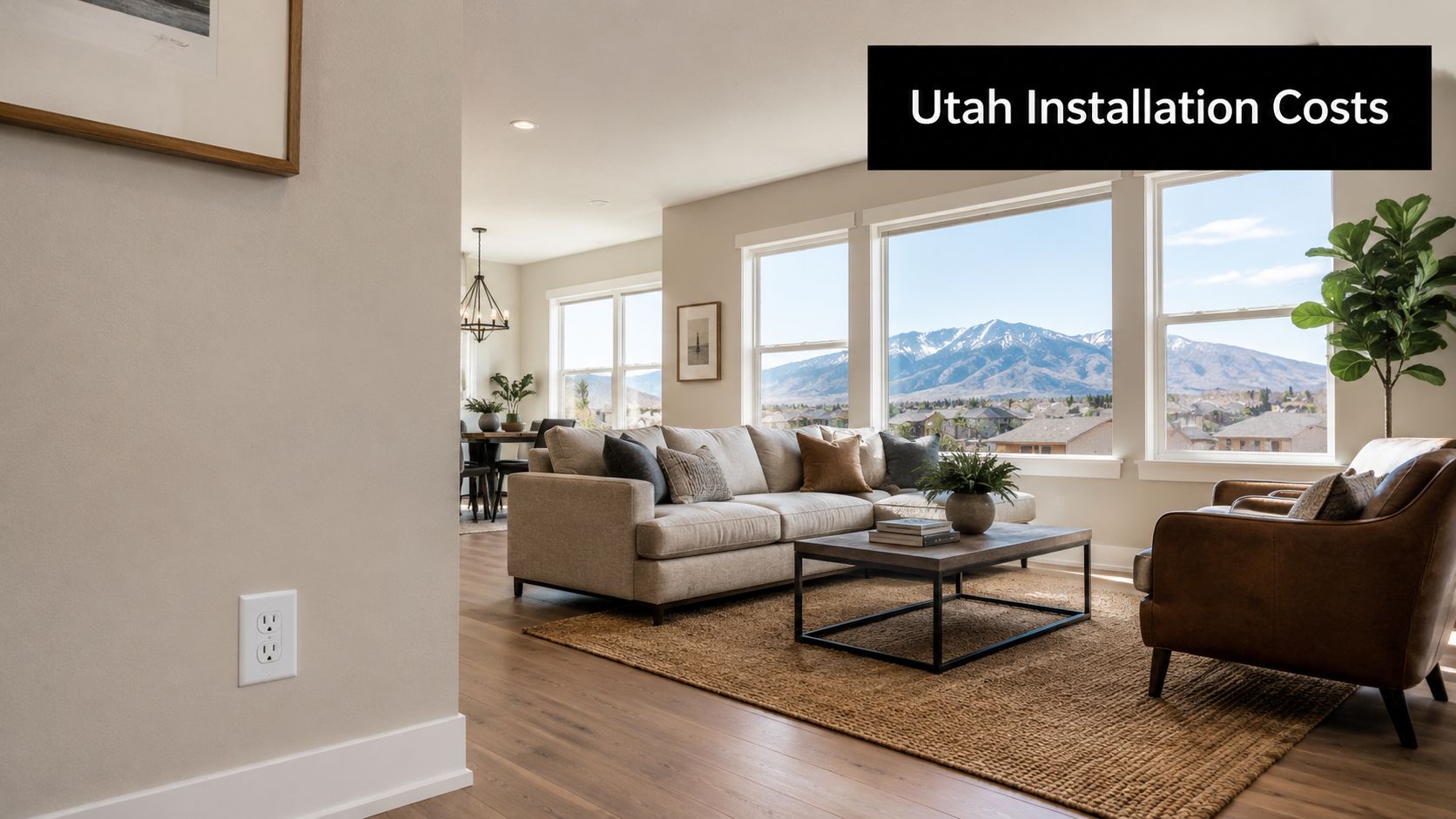
Older home living room outlet
A common call is a homeowner tired of extension cords in an older living room. The wall looks simple from the outside, but older plaster, shallow cavities, and unpredictable existing wiring can turn a basic addition into a careful fishing job.
In that setting, cost often follows access more than outlet type. The electrician has to protect finished surfaces, inspect what kind of wiring is present, and decide whether the existing circuit is appropriate for another receptacle. In many older homes, the hidden condition of the electrical system matters more than the visible wall location.
Outdoor outlet near a patio or hot tub area
Exterior work is where homeowners most often underestimate the job. A weather-resistant outlet near a patio may be fairly straightforward if power is close and the mounting location is accessible. A hot tub area is different.
That kind of project often needs GFCI protection, a careful location review, and sometimes trenching or a dedicated feed. If the run crosses the yard or reaches a detached area, the work starts to look less like adding one outlet and more like building a small branch circuit system outdoors.
Outdoor electrical work has to survive water, sun, freezing temperatures, physical damage, and inspection. That's why the price can jump.
Garage outlet for higher power equipment
Garages in Northern Utah now carry more electrical demand than they did years ago. Freezers, air compressors, shop tools, and vehicle charging all compete for space. A homeowner asking for a “garage outlet” may need a 240V receptacle on a dedicated circuit.
That's also why many garage projects tie into broader planning. If the goal is future vehicle charging, it's smarter to think through the breaker space, wire path, and charger location now instead of paying twice later. For homeowners considering that type of project, this page on EV charger installation Northern Utah gives the bigger picture.
Kitchen remodel outlet updates
Kitchen projects are less about adding one more plug and more about code-driven layout and protection. Remodel work often uncovers old ungrounded receptacles, misplaced devices, and circuits that don't match modern use.
In those cases, several outlet changes happen together. Counter areas, islands, backsplashes, appliance locations, and wet-zone protection all affect the final scope. What looked like “swap a few outlets” can become targeted rewiring once the walls are open and the electrical layout gets reviewed properly.
The Hidden Dangers of DIY Outlet Installation
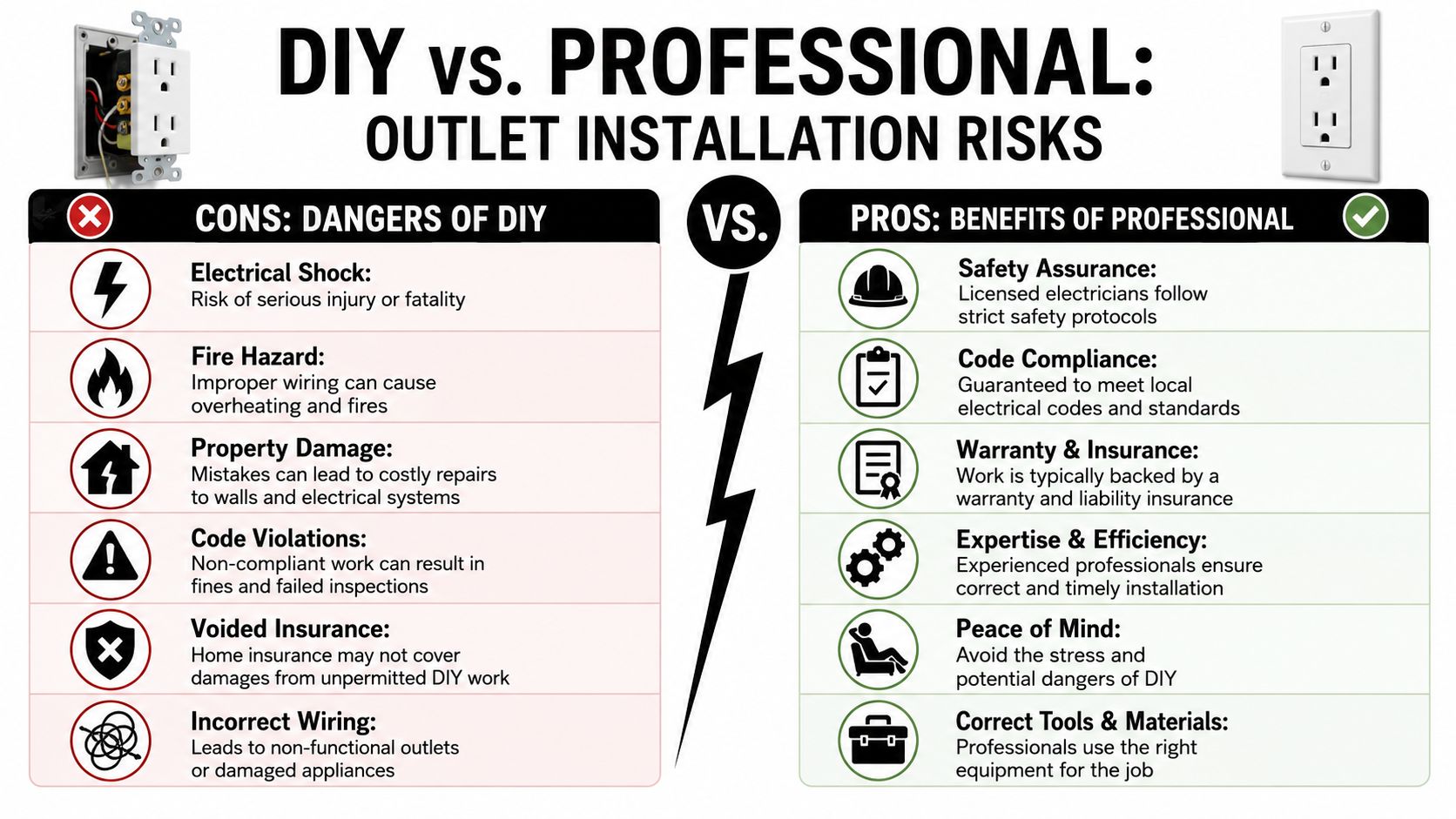
Outlet work looks simple because the finished product looks simple. That's the trap. Homeowners see two screws, a box, and a faceplate, then assume the job is low risk.
Danger sits behind the wall. A loose connection can arc. An undersized wire on the wrong breaker can overheat. A missing ground can leave a metal appliance housing energized. None of those problems announce themselves clearly at first.
What homeowners can safely notice
There are signs a receptacle needs professional attention:
- Warm cover plate: Heat at the outlet face can mean a poor connection or overload.
- Loose plug fit: If cords fall out easily, the internal contacts may be worn.
- Buzzing, crackling, or burnt smell: Those are warning signs, not annoyances.
- Dead outlets or partial power loss: The problem may be the receptacle, but it could also involve upstream wiring or protection devices.
- Repeated breaker trips: The issue may not be the outlet itself. The circuit may be carrying more than it should.
A homeowner can observe those symptoms safely. What shouldn't happen is opening energized equipment and guessing.
What a licensed electrician checks
A proper service visit goes beyond replacing the visible device.
- Wire size versus breaker size: The conductors have to match the circuit protection. That's basic safety.
- Grounding and polarity: The outlet has to be wired correctly, not just powered on.
- Box fill and connection quality: Crowded boxes and weak terminations create heat points.
- Circuit suitability for the intended use: A vacuum cleaner, microwave, freezer, and space heater don't ask the same thing from a circuit.
- Location-based code requirements: Kitchens, bathrooms, garages, exterior walls, unfinished spaces, and commercial occupancies all have their own rules.
Field reality: Many outlet problems aren't outlet problems. The receptacle is just where the symptom shows up.
Unpermitted or poorly documented work can also become a headache during a remodel, inspection, or sale. If an outlet has stopped working, is intermittently live, or shows signs of damage, an outlet not working electrician is usually the right next call before the issue spreads to something bigger.
How to Get an Accurate Quote for Your Project
A homeowner in Ogden might ask for one new outlet in a bedroom and a homeowner in Layton might ask for the same thing. The quotes can still come out very different. In an older bungalow, the wall may have limited box space, older wiring methods, or no grounding where you expect it. In newer construction, access is often easier, but AFCI or GFCI requirements, garage rules, and dedicated-load questions still affect the price.
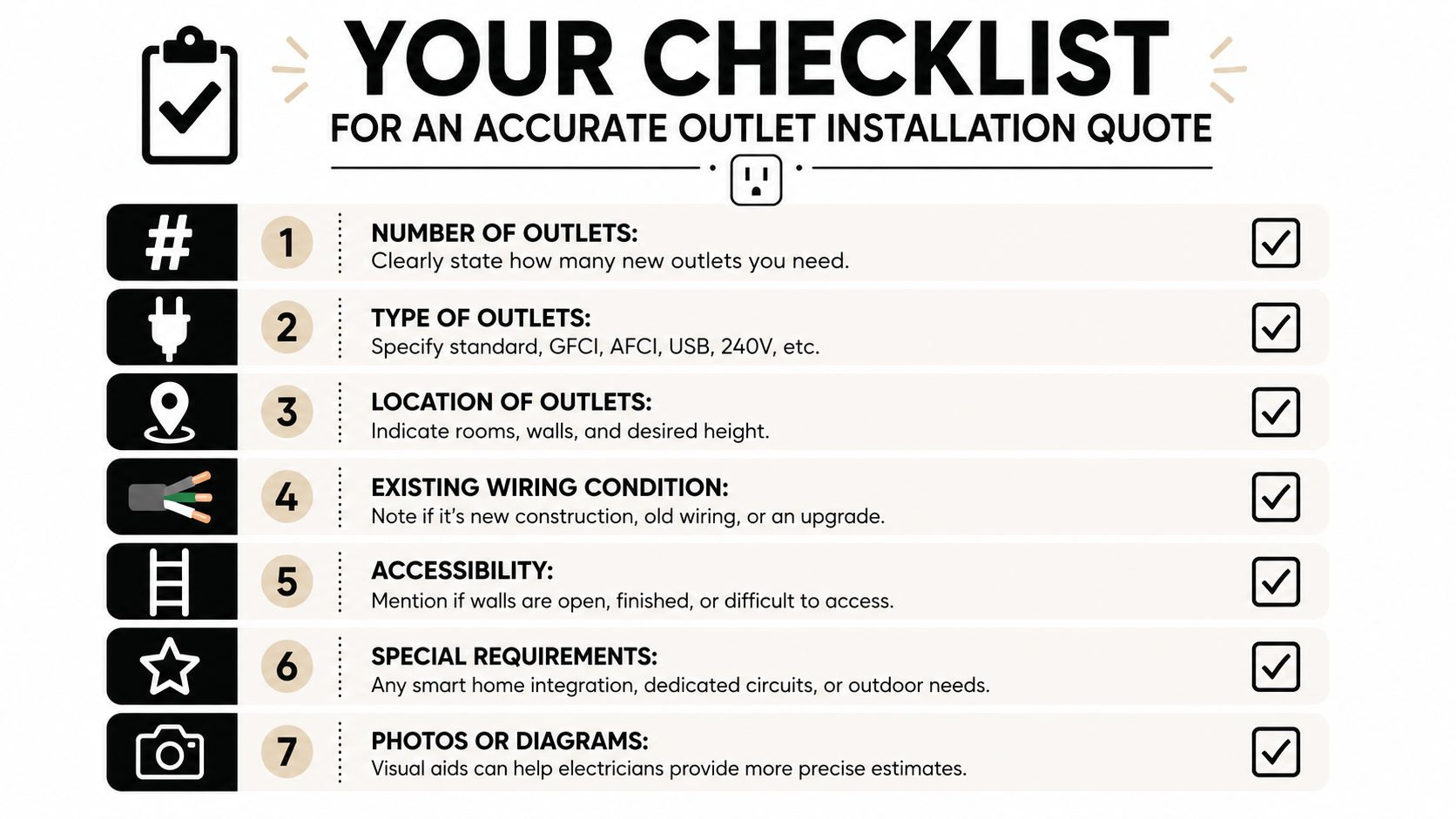
The best quote starts with clear job details. “Add an outlet” is too broad to price well because the labor usually depends on access, circuit capacity, and what you plan to plug in.
What to have ready before calling
- Exact location: Say which room and wall, and whether it is on an exterior wall, in a garage, basement, crawl-adjacent area, or outside.
- Intended use: A phone charger and lamp are light loads. A freezer, microwave, treadmill, air compressor, or garage heater can change the circuit requirements.
- Photos of the work area and panel: Good pictures often show finish type, access limits, panel labeling, and whether the route looks straightforward or time-consuming.
- Whether the wall is finished or open: Fishing wire through finished plaster in an older Ogden home is a different job than wiring an open wall during a remodel in Layton.
- Any known history: Mention tripping breakers, warm outlets, two-prong receptacles, aluminum wiring, or anything else that suggests the quote needs troubleshooting time built in.
If you want a rough planning number before scheduling, you can estimate your service rates. Use that only as a starting point. Outlet pricing in Northern Utah often changes once the electrician sees the panel, wall access, and the age of the home.
What a solid quote should include
A useful quote spells out the actual scope. That means whether the job is a simple device replacement, a brand-new receptacle in a finished wall, or a new dedicated circuit from the panel. It should also say who is supplying materials, whether permit handling is included when required, and what site conditions could change the price after inspection.
Ask one more practical question. What assumptions is the quote based on? If the price assumes an open stud bay, an available breaker space, or existing grounding, that should be stated up front. That protects both sides and cuts down on surprise charges.
For homeowners in Weber, Davis, and Salt Lake counties who want a direct project review, the cleanest next step is to request a free electrical quote. Black Rhino Electric handles outlet installations, troubleshooting, panel work, remodel wiring, and related electrical upgrades across Northern Utah.
Frequently Asked Questions About Outlet Installation
A lot of Northern Utah outlet jobs start the same way. A homeowner in an older Ogden house wants to swap a two-prong receptacle for a safer three-prong outlet, or someone in Layton needs garage power for a freezer, tools, or an EV charger accessory. The questions sound simple, but the price and scope often depend on what is behind the wall, what the panel can handle, and what local code requires.
Some businesses also use FAQ pages to cut down on repeat customer questions. This guide on how to reduce support tickets with FAQs explains why that format helps people get quick answers before they call.
How long does outlet installation usually take
A basic replacement in an existing, properly wired box is usually a short job. Adding a brand-new outlet is different, especially in finished walls with insulation, fire blocking, brick veneer, or limited crawlspace and attic access.
Older homes around Ogden and parts of Salt Lake County can add time fast. I often find shallow metal boxes, missing grounds, brittle insulation, or circuits that were extended several times over the years. In that case, the work is part installation and part correction.
If the outlet has no power, trips a breaker, or shows signs of heat damage, diagnosis comes first. That is when it makes sense to call an outlet not working electrician instead of pricing it like a simple swap.
Do permits matter for outlet work
Yes, sometimes.
A straight device replacement may be treated differently than adding a new receptacle, running a dedicated circuit, installing exterior outlets, or doing work as part of a remodel. City requirements can vary across Weber County, Davis County, Salt Lake County, and nearby communities, so assumptions get homeowners in trouble.
Code also affects the final scope even when a permit is not the main issue. Kitchens, bathrooms, garages, unfinished basements, exteriors, and laundry areas often require GFCI protection. Bedrooms and many living areas may involve AFCI protection depending on the work being done. In older homes, that can mean the quoted job changes once the electrician confirms grounding, box fill, and breaker compatibility.
Why do older homes often cost more for outlet work
Older homes usually cost more because the visible outlet is only one part of the job.
A bungalow in Ogden may have plaster walls that are harder to open and patch cleanly. The existing wiring may be ungrounded, the box may be undersized, or the panel may not support the protection the new work calls for. Even a small upgrade can turn into a safety correction once the wall is opened and the circuit is tested.
That does not mean every older home becomes an expensive project. It means the quote needs room for real site conditions instead of a national average that assumes modern wiring and easy access.
Why commercial outlet projects are different
Commercial outlet work has a different set of requirements. The space may need specific mounting heights, dedicated circuits for equipment, weather-rated devices, tamper-resistant receptacles, labeling, and coordination with tenant improvement rules or inspections.
Downtime matters too. If one receptacle feeds checkout equipment, office systems, refrigeration support, or production tools, the lowest upfront price may not be the lowest real cost if the fix causes repeat shutdowns or code corrections later.
If a home or commercial property in Northern Utah needs a clear answer on outlet installation cost, the simplest next step is to contact Black Rhino Electric at 385-396-7048 or use the online form to request a quote. A good quote should match the electrical load, wall access, and code requirements of the space.