If you're hearing rushing water in the wall, under a floor, or around the water heater, panic is normal. Knowing where to find main water shut off can be the one move that turns a bad leak from a major disaster into a controlled repair.
That Awful Sound Why You Need a Shut-Off Plan
A plumbing emergency doesn't give you time to think clearly. You hear the rush, see water spreading, and your first instinct is usually to grab towels, buckets, or a phone. The better first move is finding the valve that stops water to the whole house.
That matters because the main water shut-off valve controls water to the entire structure. In many homes, it's located where the service line enters the building, often near the front foundation wall, in a basement, crawl space, or close to the water heater, according to Forsyth County water shut-off guidance. If you know that location before an emergency, you stop the leak faster. If you don't, water keeps moving until someone finds it or a plumber arrives.
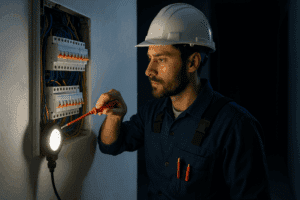
From an electrician's standpoint, water emergencies are never just plumbing problems. Water and energized equipment are a dangerous mix. If the leak is near an electric water heater, a panel, a receptacle, or a junction box, the risk changes immediately.
Practical rule: Treat the main water shut-off the same way you treat your breaker panel. You should know where it is before you need it.
A simple home emergency plan should include:
- Valve location: Know where the house main is, not just a sink or toilet shutoff.
- Access check: Make sure boxes, storage bins, and shelving aren't blocking it.
- Water heater awareness: Know whether your water heater is electric or gas so you can respond safely after the water is off.
- Household communication: Make sure everyone in the home knows the basic shut-off location.
If a pipe has already burst, it also helps to have a clear cleanup sequence. AMPM Restoration's emergency guide is a useful reference for the next steps after you've stopped the flow.
Your Search Plan Finding the Valve in Any Home
A pipe lets go, water is spreading, and the clock starts immediately. The fastest search is usually the right one. The house main is normally installed where the service line enters the home, so start by tracing that path from the street side or meter location toward the structure.
If I am helping a homeowner during an emergency, I tell them to ignore random shutoffs at sinks and toilets and hunt for the first valve on the incoming line before it branches through the house. That is the control that stops the problem at the source. From an electrical safety standpoint, this matters even more if the leak is near an electric water heater, a garage subpanel, or receptacles in a utility area. The sooner you find the main, the sooner you can stop water from reaching energized equipment.
The search pattern changes with the way the house was built.
Homes With Basements
Basement homes are often the easiest to read because the incoming pipe is more exposed. Start at the front foundation wall or the wall that faces the street and look for the water line as it enters the basement.
Check these spots first:
- Front foundation wall: A common entry point for the main water line.
- Utility area: Look near the pressure regulator, exposed supply piping, or other service equipment.
- Laundry or mechanical space: Installers often group core utilities in one area.
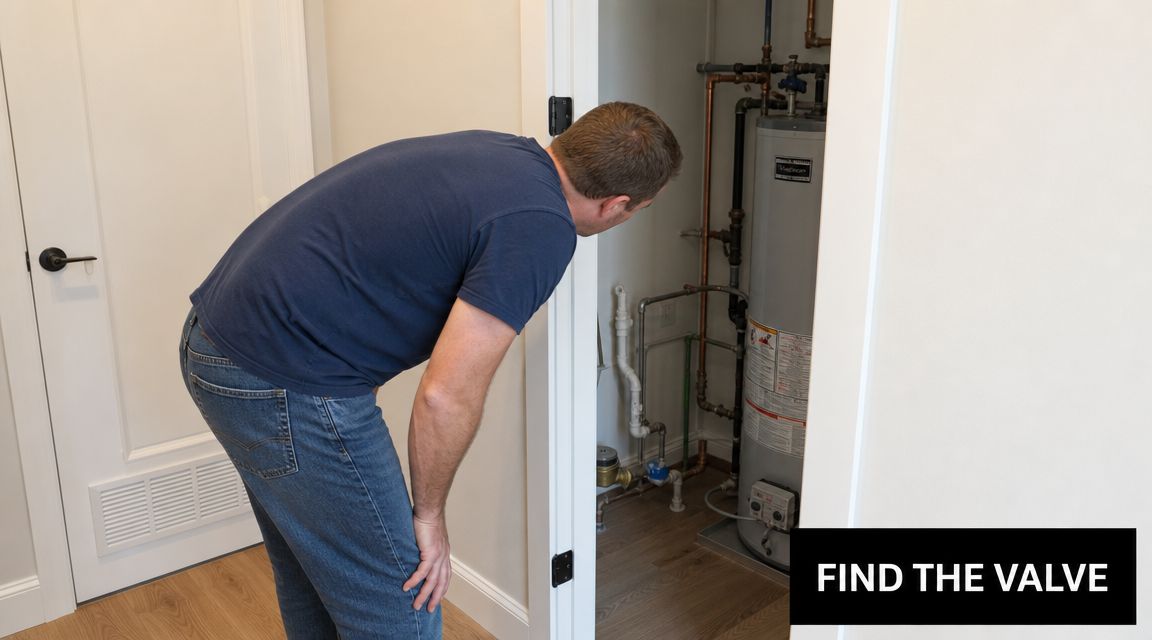
- Near the water heater: In some homes, the main lands close to the heater before feeding the rest of the system.
If there are several valves in view, slow down. A branch shutoff may serve only one bathroom, an outdoor spigot, or the water heater itself.
Homes With Crawl Spaces
Crawl spaces take more patience. Visibility is worse, access is tighter, and homeowners often stop searching too early.
Start near the side of the home that faces the street or meter. Then check these areas:
- Crawl space entry side: Especially near the wall where the service line would enter.
- Garage wall facing the street: Some lines enter through the garage before turning into the house.
- Laundry room or utility closet: Builders sometimes bring the valve into a more reachable indoor spot.
- Near the water heater: This is worth checking in compact floor plans where plumbing runs are concentrated.
Bring a flashlight. Look for the pipe before you look for the handle.
Slab Homes and Newer Layouts
Slab homes usually hide the clues that make basement homes easier. In these houses, the main shutoff is often in a garage, utility closet, mechanical cabinet, or near the water heater.
That water heater location deserves extra attention. In many slab homes, the water heater sits close to the main shutoff because it is a central plumbing point. If the heater is electric and water is pooling around it, finding the house main quickly helps limit both water damage and the risk of water reaching live components before you shut off power.
A quick comparison helps:
| Home type | Most likely places to check first | What slows the search down |
|---|---|---|
| Basement home | Front foundation wall, utility room, exposed incoming pipe | Confusing branch valves with the main |
| Crawl space home | Entry-side wall, garage, laundry, utility closet | Tight access and poor lighting |
| Slab home | Water heater area, garage, mechanical closet, utility cabinet | Hidden piping and fewer visual clues |
If the layout still does not add up, this article on why your water may be off and how to narrow down the cause can help you separate a whole-house shutoff issue from a fixture problem or utility interruption.
What the Valve Usually Looks Like
The main shutoff is usually one of three types:
- Ball valve: Lever handle. Common in newer work and easy to identify.
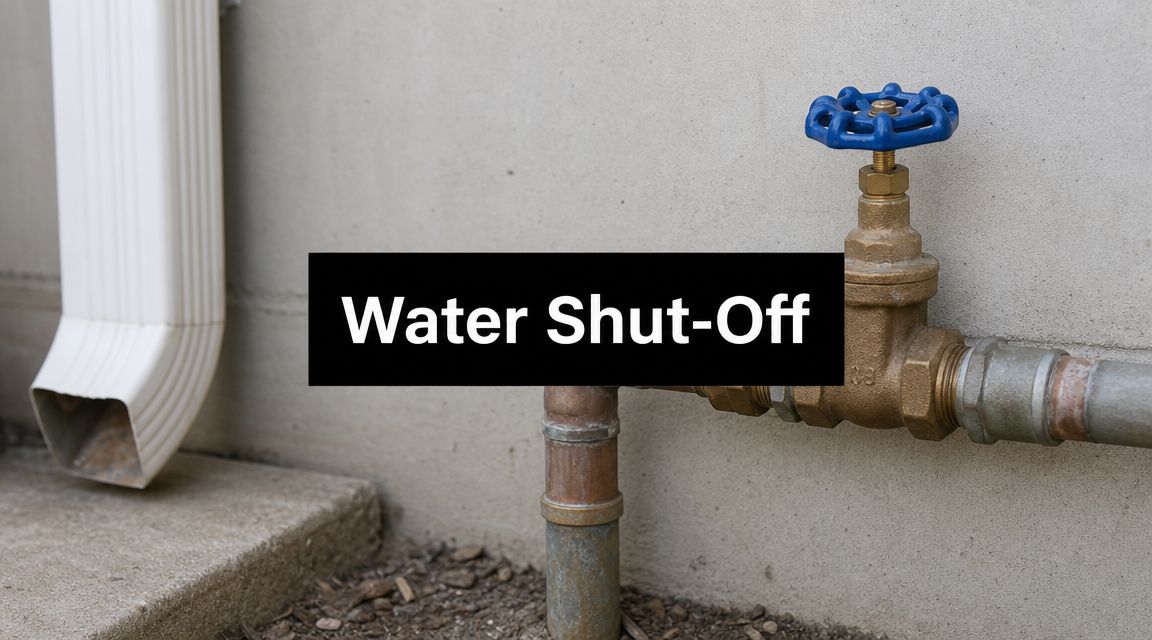
- Gate valve: Round wheel handle. More common in older homes.
- Meter-area shutoff: Sometimes the only practical shutoff is outside rather than inside.
The safest approach is simple. Follow the incoming line, check the utility areas that make sense for your house type, and identify the valve that sits before the plumbing branches off. That is the one you want in an emergency.
How to Operate the Shut-Off Valve Safely
Finding the valve is only half the job. Operating it the wrong way can leave you with a broken handle, a damaged stem, or a shutoff that never fully closes.
The safest emergency workflow is straightforward. Locate the curb box if needed, open it, identify the house-side shutoff, rotate a gate valve clockwise or turn a ball valve a quarter-turn, then test a faucet to confirm flow has stopped, as described in Mr. Pipey's water main shut-off guide. That same guidance also notes an important electrical step: shut off power at the breaker for an electric water heater, and set a gas heater to pilot to avoid dry-firing once the main supply is closed.
How to Tell Ball and Gate Valves Apart
The valve shape tells you how it operates.
| Feature | Ball Valve (Modern) | Gate Valve (Older) |
|---|---|---|
| Handle style | Lever handle | Round wheel handle |
| How it closes | Quarter-turn until handle is perpendicular to pipe | Multiple clockwise turns |
| Speed in an emergency | Fast | Slower |
| Common issue | Usually obvious position | Can seize with age |
| Best use case | Quick shutoff | Older plumbing systems |
A ball valve is simple. If the handle is in line with the pipe, it's usually open. Turn it until the handle is perpendicular to the pipe to close it.
A gate valve takes more patience. Turn it clockwise until it stops. Don't rush it.
What Works and What Doesn't
These habits help:
- Use steady pressure: Turn the valve firmly, not violently.
- Watch the valve body: If it starts twisting with the pipe, stop.
- Confirm with a faucet: Open a nearby faucet after closing the valve. That tells you whether you've isolated the house supply.
- Use the right tool for exterior boxes: If the shutoff is in a curb or meter box, use the proper wrench or key rather than improvising.
These habits cause trouble:
- Forcing an old gate valve: Stiff valves can fail internally or shear.
- Using pliers alone on everything: That often slips, rounds parts, or damages the handle.
- Stopping halfway: A partially closed valve can fool you into thinking the house is isolated.
- Assuming the meter lid is the valve: It isn't.
If a valve won't move with reasonable force, don't keep pushing. A stuck shutoff is safer than a broken shutoff in the middle of an emergency.
The Electrical Safety Angle Most Guides Miss
Electrical experience matters. If the leak is near an electric water heater, merely shutting off the water isn't the end of the hazard. Once the supply is cut, the heater can be left in a condition that risks equipment damage if power remains on.
The same caution applies if water is approaching a panel, disconnect, outlet, or appliance circuit. In that situation, the safest response may involve both the water shutoff and targeted electrical isolation.
The best homeowners are the ones who don't try to prove they can muscle through a seized valve. They know when to stop before a plumbing emergency becomes a plumbing-and-electrical emergency.
The Job Is Not Done Post-Shutoff Safety Checks
The house can still be unsafe after the main valve is closed. Water trapped in the lines, pressure left in the system, and live electrical equipment near the leak are what cause the second round of damage.
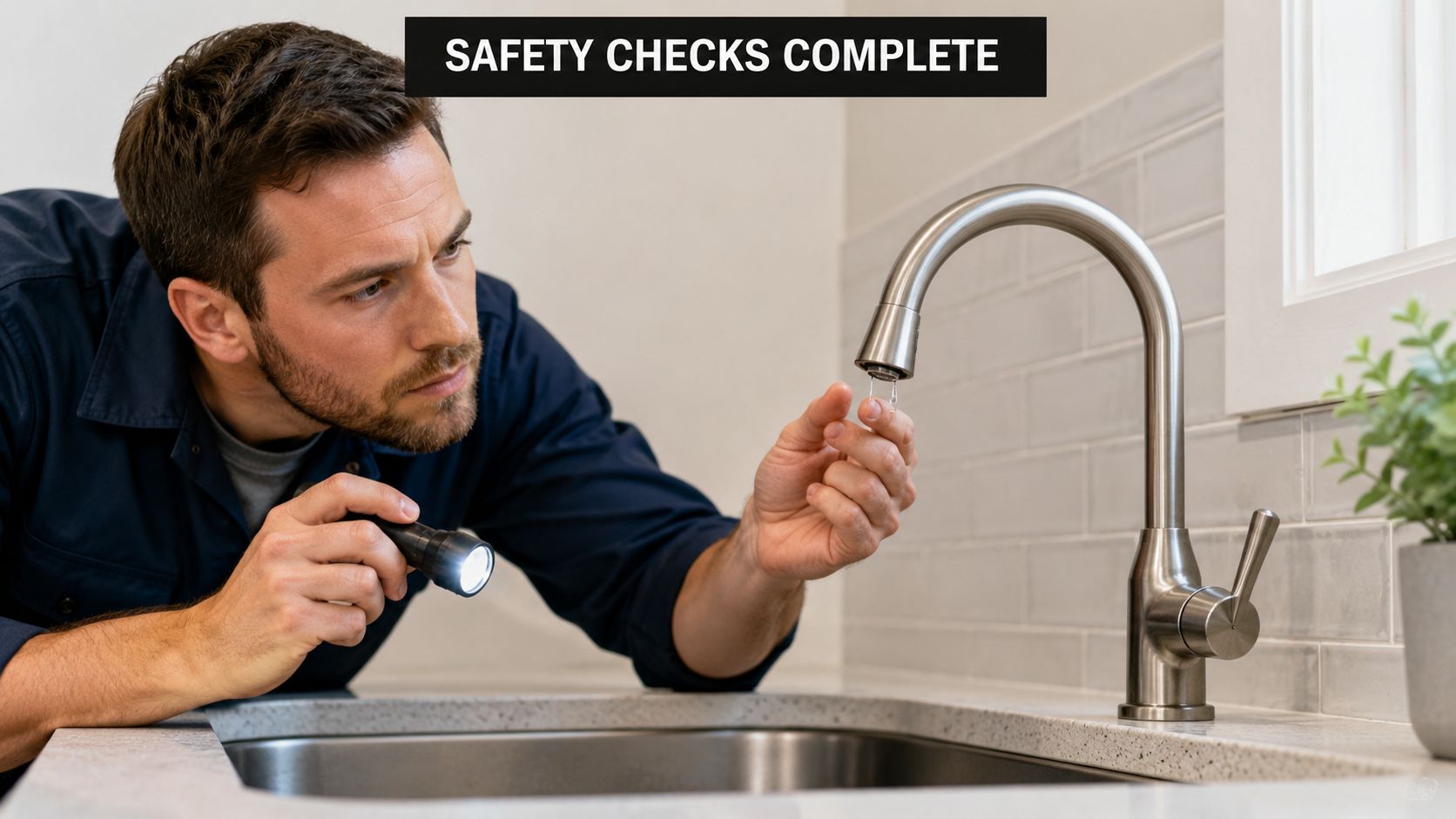
Start by proving the shutoff worked. Open a cold-water faucet and watch what happens. A brief flow that fades out is normal as the line drains. Steady flow means you likely closed the wrong valve or the main is not fully shut.
Check the Water Heater Next
An electric water heater deserves immediate attention after a shutoff, especially if the leak is nearby or the tank may not stay full. Shut off the breaker serving the heater once the water supply is secured. That simple step can prevent burned elements and a much more expensive repair.
Homeowners often handle the plumbing side and leave the heater energized because it still looks normal from the outside. I see that mistake around garages, utility closets, and finished basements where a leak starts small and the breaker panel is only a few steps away. If you want a clearer picture of why breaker control matters, this guide to electric water heater wiring basics shows how the unit stays energized even after the water is off.
For gas water heaters, set the control to pilot if the manufacturer instructions allow it and conditions are safe. The goal is the same. Stop normal heating during an abnormal water event.
Water off is only part of the job. An electric water heater may still be live, hot, and vulnerable to damage.
Relieve Pressure and Limit Spread
With the main shut, drain pressure out of the system in a controlled way. Open a faucet at the lowest safe fixture first, then crack open one upstairs faucet to let air in. That helps the lines empty faster and reduces the push behind the leak.
Keep an eye on the water that comes out. Dirty or sputtering flow is common during depressurization. Strong, continuous pressure is not.
Then check the areas water likes to hide:
- Inside sink cabinets
- Behind the water heater
- At the base of drywall or trim
- Around flooring transitions
- Near appliance connections
A shutoff stops new water from entering. It does not remove the water already in the wall, pan, or floor cavity.
Check for Electrical Exposure Before You Touch Anything
Electrical experience is essential. Water near energized equipment changes the risk immediately, and it is easy to make things worse by flipping a switch or unplugging something while standing on a damp floor.
Look carefully before touching any device or control:
- Water near the electrical panel or subpanel
- Wet outlets, power strips, or extension cords
- Moisture around the water heater junction box or whip
- Water under laundry equipment, dishwashers, or disposals
- Damp garage or basement receptacles
If any of those conditions are present, leave the equipment alone until the affected circuit can be evaluated and isolated safely. In a real water emergency, the right sequence matters. Stop the incoming water, protect the water heater, then treat nearby electrical equipment with caution instead of assumptions.
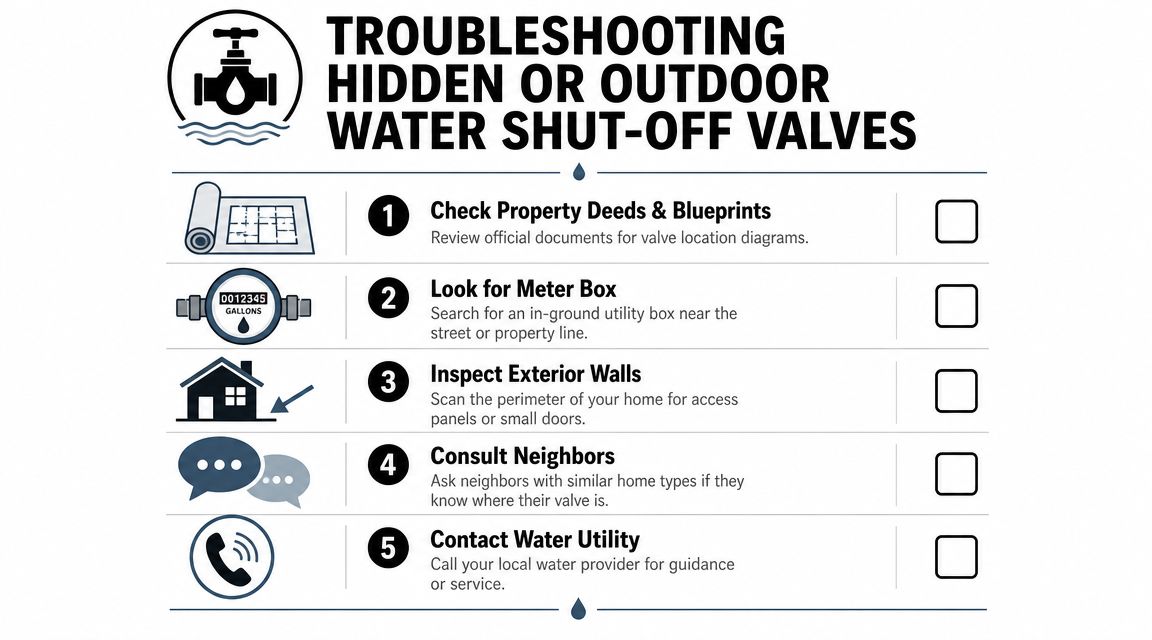
Troubleshooting When the Valve Is Hidden or Outside
A bad leak gets worse fast when the shutoff is not where the house "should" have it. I see the same kind of confusion during electrical service calls after water damage. The homeowner checks the garage, checks by the water heater, then loses time while water keeps spreading toward outlets, appliance wiring, or the heater's electrical connection.
Hidden shutoffs are common in slab homes, condos, and townhouses. The valve may be outside, behind an access panel, inside a utility closet, or in a shared service area. Paul Davis's guide to main water shutoff locations points out how often the valve location changes with the home layout, and that matches what shows up in the field.
Outdoor Meter Box Problems
Outdoor shutoffs can be harder than they sound. The box may be buried under mulch, packed with dirt, hidden by shrubs, or placed near the curb where every lid looks the same.
Slow down before you turn anything. Some hardware in that box belongs to the utility, and some belongs to the homeowner. Forcing the wrong valve can damage equipment or leave you with a bigger problem than the leak.
If you find a meter or curb box, check for these conditions first:
- A lid that is stuck, cracked, or unsafe to lift
- Standing water inside the box
- A lock, tag, or utility marking
- Heavy corrosion on the valve head
- No clear way to tell customer-side hardware from utility-side hardware
If access is blocked or ownership is unclear, call for help instead of improvising.
Multi-Unit and Nonstandard Homes
Shared buildings add another layer. A condo may have a unit shutoff in a mechanical closet, while the building also has a larger shared shutoff in a common room or meter bank. HOA rules can matter as much as pipe layout.
Private well homes can be just as confusing. The main shutoff may be placed near pressure equipment, storage components, or a service entry that does not follow the usual city-water pattern.
When water is running near an electric water heater, speed matters, but so does sequence. If you cannot quickly confirm the plumbing shutoff, protect the electrical side next. A wet water heater area can turn into an electrical hazard fast, and this is a good point to use a guide on finding a licensed electrician in your area if water is close to energized equipment.
A Practical Troubleshooting Checklist
Work the search in a clean order:
- Start at the street side or known meter location
- Check exterior walls near the water heater or garage
- Open utility closets, laundry access panels, and mechanical cabinets
- Ask the HOA, landlord, or building manager for the unit shutoff location
- Look for labeling that refers to domestic water, building main, or unit isolation
- Use Stultz Plumbing emergency services if the valve is inaccessible, damaged, or still not identifiable
A hidden shutoff is frustrating, but guessing is what causes broken valves, damaged meter hardware, and avoidable electrical exposure.
Knowing When to Call a Professional
A stuck shutoff valve can turn a plumbing leak into an electrical emergency fast. If water is pooling near an electric water heater, the job is no longer just about stopping the leak. You also need to prevent the heater from staying energized while water is where it should not be.
Stop DIY work if the valve will not turn with normal hand pressure, the stem is leaking, the handle is badly corroded, or the shutoff sits in a locked meter box or other restricted area. Those are the points where homeowners crack old valves, damage meter hardware, or lose time while water keeps spreading.
I tell homeowners to make one decision early. If the plumbing shutoff is not clear and water is approaching electrical equipment, treat the electrical hazard as urgent too. Shut off the water heater circuit only if you can do it without standing in water or reaching through a wet area. If that cannot be done safely, bring in help.
For the plumbing side, Stultz Plumbing emergency services is the right call when a valve fails, access is blocked, or the leak continues after shutoff attempts. For the electrical side, if water has reached the panel, branch wiring, receptacles, or the water heater's electrical compartment, use a qualified pro. This guide on how to find a licensed electrician in your area is a practical place to start.
If water has affected your electric water heater, panel, outlets, or any energized part of the home, Black Rhino Electric can help you make the system safe again. Call 385-396-7048 or request a free quote.