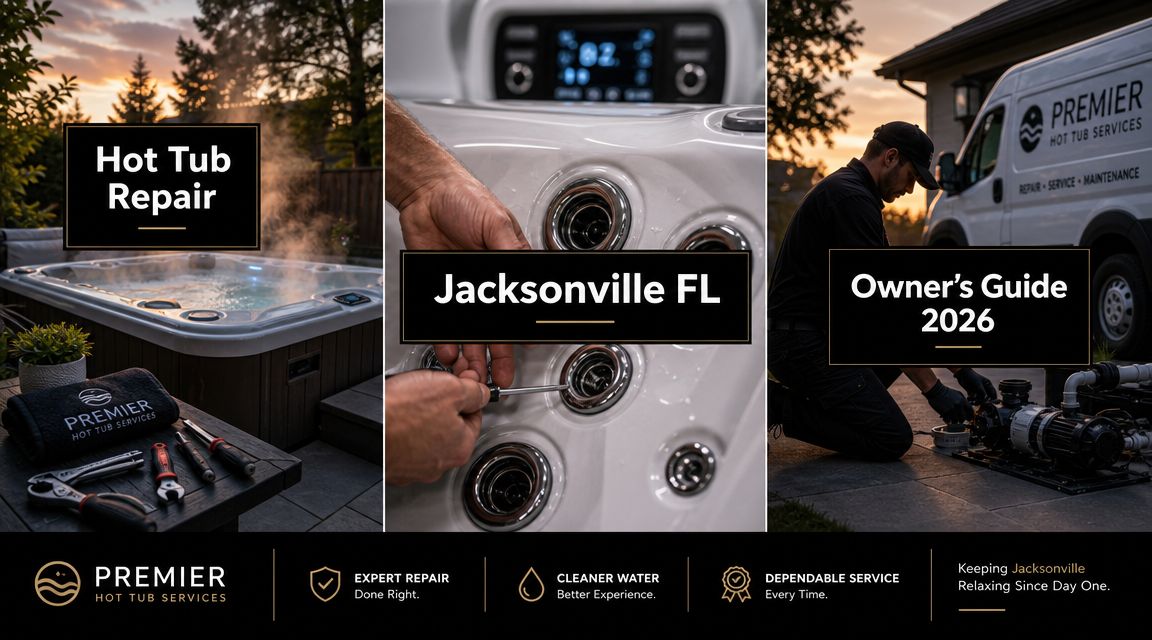
A quiet evening, the cover comes off, and the water is cold, cloudy, or dead still. When seeking hot tub repair jacksonville fl, you're probably not looking for theory. You want to know what failed, what you can safely check yourself, and when the problem stops being a spa repair and becomes an electrical hazard.
Is Your Hot Tub Trying to Tell You Something?
You lift the cover after a long day, tap the controls, and wait for the usual hum. Instead, the water is cool, the jets barely stir, or the breaker snaps off again. That is usually the hot tub's first clear message that something is wrong.
Small symptoms get ignored all the time. A reset gets it running for a day. The heat comes back once, then disappears. The panel lights up, so it feels like the tub still has life in it. In practice, those half-working conditions are often the point where a simple service call stays simple, or turns into a larger repair with an electrical safety issue attached.

Common signs you should not ignore
Water won't heat properly
If the temperature setting looks correct but the water stays lukewarm or cold, the problem may be the heater itself, restricted flow, or a control issue that is not sending power where it should.Jets are weak, sputtering, or not moving water well
This often starts as a circulation problem. A dirty filter, low water level, trapped air, or a tired pump can all create the same symptom.The breaker trips when the hot tub starts or tries to heat
Treat this as a warning, not an annoyance. Breaker trips can point to a shorted heater, moisture inside electrical compartments, failing pump windings, damaged wiring, or a supply issue that needs a licensed electrician to sort out safely.The control panel lights up, but nothing runs
Part of the system may have power while the load side does not. It works like having a porch light on while one room inside is dead. Something farther down the circuit still is not right.Water looks foamy, cloudy, or smells off
Some Jacksonville service companies note these common water-quality complaints on their Jacksonville hot tub repair service page. Poor water condition is more than a cosmetic problem. It can clog filters, reduce flow, and create heating complaints that look like equipment failure.You hear humming, grinding, or repeated clicking
A humming motor may be trying to start and failing. Repeated clicking often points to a relay or control component trying to engage without getting the expected response.
Practical rule: A hot tub that powers up can still be unsafe. A lit control panel does not confirm that the heater, pump, wiring, and protection devices are operating safely.
Why these symptoms matter
Homeowners in Jacksonville usually are not dealing with a rare mystery. Hot tubs tend to fail in familiar patterns. The benefit for homeowners is that the pattern often tells you whether you are dealing with a water-flow problem, a worn mechanical part, or an electrical fault that should not be handled like ordinary spa maintenance.
That distinction gets missed all the time. A clogged filter or stuck pump impeller is one kind of repair. A breaker that trips under load, signs of heat damage, or voltage reaching the wrong part of the pack is a different category entirely. One is a service problem. The other can become a shock or fire risk if someone keeps resetting and hoping for the best.
Decoding the Problem Electrical vs Mechanical Failures
A hot tub is really two systems working together. One moves water. The other controls and powers what happens.
When people say, "My hot tub isn't working," the primary question is whether the failure is mechanical, electrical, or a mix of both. Let me explain. A pump problem is like a blocked heart in a plumbing loop. An electrical problem is more like the control signal never reaching the muscle that needs to move.
The systems that fail most often
Reputable Jacksonville spa service providers consistently focus diagnosis on pumps, heaters, jets, and electrical components, because that component-level approach is the fastest route to an accurate repair on this Jacksonville maintenance reference.
That approach works because symptoms overlap. No heat does not always mean a bad heater. Weak jets do not always mean a bad pump. A dead spa can be a tripped protective device, a failed control issue, or a seized motor.
Common Hot Tub Problems DIY Check or Call a Pro
| Symptom | Likely Cause (Mechanical/Electrical) | Safe DIY Check | Next Step |
|---|---|---|---|
| No heat but jets run | Both | Confirm set temperature and make sure water is circulating normally | Call a pro if water flow is normal but heating still doesn't happen |
| Weak jets | Mechanical | Check water level and inspect the filter for clogging | Clean or reinstall filter. If flow stays weak, schedule service |
| Breaker trips when spa starts | Electrical or Both | Reset once only if safe and note when it trips | Stop resetting and call a qualified technician |
| Humming from equipment area | Mechanical or Electrical | Turn system off and listen for repeated start attempts | Service call recommended before motor damage worsens |
| Panel works but pump won't start | Both | Look for error codes and verify water level | Professional diagnosis is usually needed |
| Water cloudy or foamy | Mechanical support issue and maintenance issue | Inspect filter and basic water condition | Clean filter and service water care if problem continues |
| Tub loses power intermittently | Electrical | Note whether failure happens during heating or jet use | Call an electrician or spa tech who can test under load |
| Leaking water near equipment | Mechanical, with possible electrical risk | Shut off power if water is reaching electrical parts | Professional repair should be the next move |
What works and what doesn't
What works is narrowing the problem by symptom plus timing. Does it fail only when heat kicks on? Only when high-speed jets start? Only after rain or after sitting unused?
What doesn't work is replacing parts by guesswork. People often change a heater because the water is cold, then discover the actual issue was poor flow, a relay problem, or a power fault that never let the heater run correctly in the first place.
If the symptom changes when the pump changes speed, or when the heater should engage, that timing clue tells a technician a lot.
Safe DIY Troubleshooting Before You Call
You can do a few checks safely before scheduling service. The goal is not to diagnose every failure. It's to rule out the obvious, document the symptom, and avoid opening anything that could expose live electrical parts.
A careful five-minute check can save an unnecessary service call. It can also help you describe the problem much more clearly if you do need one.

Safe checks most homeowners can do
Check the GFCI and breaker
If the breaker tripped, reset it once. If it trips again, stop there. Repeated resetting is not troubleshooting. It's ignoring a safety device that's doing its job.Verify water level
Water that's too low can interrupt circulation and create heater or pump complaints that aren't really equipment failure.Inspect the filter
A dirty filter can choke flow badly enough to create weak jets, poor heating, or protection shutdowns. Remove it, inspect it, and clean it if needed.Read the control panel carefully
Error messages matter. Even a vague code helps narrow whether the tub is seeing low flow, overheat conditions, or a communication issue.Confirm temperature settings and mode
Make sure the spa is set to the temperature you expect and is in the proper operating mode.
What you should not do
Don't open the equipment compartment to poke around live wiring
Water and electricity are a bad pairing even in dry conditions. In a spa environment, guessing can become dangerous fast.Don't keep resetting a tripping breaker
A nuisance trip and a fault trip are not the same thing. If protection opens repeatedly, there is a reason.Don't bypass safety devices
Pressure switches, sensors, and GFCI protection are there to prevent damage and injury.
For broader household power issues, this guide on residential electrical troubleshooting gives a useful baseline for recognizing when a symptom is likely electrical rather than appliance-specific.
The best information to have before you call
A technician can usually work faster if you can answer a few plain questions:
When did it fail
After a storm, after a refill, after sitting unused, or during normal use?What still works
Lights, panel, circulation, jets, heat?When does the breaker trip
Immediately, when jets start, or when the heater should turn on?
Write down the exact symptom before you touch anything. Memory gets fuzzy fast once breakers are reset and settings are changed.
The Critical Electrical Dangers Most People Miss
A lot of hot tub content talks about pumps, leaks, and heater replacement. Those matter. But the overlooked issue is whether the tub is suffering from an electrical supply or safety problem, not just a failed spa part.
That's the line homeowners need to take seriously.
Why a spa can be dangerous even when it mostly works
The U.S. Consumer Product Safety Commission warns that improperly maintained hot tubs can create shock and electrocution risks, and many local pages still leave a gap between basic spa repair and the electrical supply issues that may require a licensed electrician, as noted in this hot tub electrical safety discussion.
You know what? Many people lose time and money when they focus on the symptom inside the tub and ignore the power feeding it.
The failures that hide in plain sight
Tripping GFCI protection
A GFCI doesn't trip because it's annoying. It trips because it detects a fault condition that could become dangerous. Moisture intrusion, damaged heating elements, compromised wiring, and faulty connections can all trigger it.Loose or corroded electrical connections
A loose connection acts like a bottleneck. The component may receive partial power, heat up abnormally, fail intermittently, or damage nearby terminals.Bonding and grounding issues
These are not cosmetic code details. They are part of how shock protection works around wet equipment.Wrong breaker or supply issue
If the protection device, wire size, disconnect, or feeder setup isn't right, the tub may act unreliable even when the spa components themselves are fine.
A homeowner sees "no heat." An electrician may see a relay issue, voltage drop, damaged connection, or a fault in the supply path.
When the job needs electrical expertise
If the breaker trips under load, if the tub loses power intermittently, or if heating cuts in and out, the problem may sit outside the spa pack itself. In that situation, a specialist who understands wet-location protection, disconnects, and fault isolation is the safer choice. Guidance on GFCI power outlets and protection helps explain why that protection matters so much anywhere water and electricity meet.
A bad pump can stop comfort. A bad electrical fault can threaten safety. They are not the same category of problem.
For homeowners evaluating options, Black Rhino Electric handles hot tub electrical work such as wiring, GFCI protection, and safety checks. That kind of scope is relevant when the problem goes beyond a simple mechanical repair and into power delivery or code-related concerns.
What to Expect From a Professional Repair Visit
A good service call should feel organized, not mysterious. The technician isn't there to start swapping parts. They should first narrow the failure, confirm it, and only then recommend repair.
That process matters because hot tubs fail in ways that overlap. The symptom is easy to notice. The cause is not always obvious.

What a solid technician usually does first
In Jacksonville, many spa repair companies perform service on-site at the customer's home and keep common parts stocked so repairs can be completed in a timely visit, which helps reduce downtime and prevent added damage from leaks or thermal-control issues on this Jacksonville spa service page.
That on-site approach is important because a hot tub has to be tested in real operating conditions. A technician may need to check whether the spa trips only during heating, whether flow changes under load, or whether voltage remains stable while components are running.
The visit usually follows this sequence
| Stage | What happens |
|---|---|
| Arrival and conversation | You describe the symptom, when it started, and what you've already checked |
| Visual inspection | The technician looks for obvious leaks, burnt terminals, dirty filters, and equipment condition |
| Live testing | They verify operation of pumps, heater behavior, controls, and power response |
| Diagnosis | The likely cause is narrowed to a specific subsystem or electrical path |
| Repair plan | You get a plain-language explanation of what's wrong and what should be done |
| Confirmation | After repair, the tub is tested again to make sure the symptom is actually gone |
Routine service versus urgent repair
A routine visit often focuses on maintenance items that keep problems from stacking up. Filters, water condition, circulation, and early wear points all matter.
An urgent visit is different. The first priority is safe operation. If the tub leaks near electrical parts, trips protection devices, or loses power unpredictably, the technician should treat safety as the first outcome and comfort as the second.
If you're dealing with a separate household hot-water issue at the same time, this practical guide on how to get your hot water back today is useful because it shows the same core idea. Good repair starts with diagnosis, not guesswork.
Ask one direct question before authorizing work: "What test confirmed that this part is the failure?" A qualified tech should be able to answer clearly.
How to Hire a Qualified Technician in Jacksonville
A common Jacksonville call goes like this. The tub keeps tripping the breaker, the topside panel flickers, and one company says you need a new pump before anyone has tested the power feeding the spa. That is how homeowners end up paying for parts that never had a chance to fix the problem.
Hiring well starts with one simple distinction. Some technicians are strong on pumps, seals, jets, and control packs inside the tub. Others are trained to diagnose the supply side, including the disconnect, GFCI protection, bonding, and feeder wiring. If your symptom involves lost power, breaker trips, intermittent heating, or signs of scorching around electrical parts, ask for someone who can handle spa repair and licensed electrical diagnosis instead of assuming one service company does both.
Questions worth asking before you book
Ask these before anyone comes out:
Do you repair the tub itself, the electrical supply, or both?
This tells you whether they can trace the fault all the way from the house panel to the spa equipment bay.What tests do you perform before recommending parts?
Good answers mention voltage checks, continuity testing, amp draw, GFCI behavior, or control signal testing.Have you worked on my spa brand and control system before?
Older packs and brand-specific boards can change the repair path and the parts lead time.If the problem is in the disconnect, breaker, bonding, or feeder wiring, are you licensed to correct it?
This question matters because a spa tech may identify the problem but still need an electrician to fix it legally and safely.Will you explain what failed and why?
You should hear a clear cause, not a vague pitch for replacing multiple parts.
One more practical filter helps. Ask what they do if they find both a mechanical problem and an electrical defect on the same visit. The right answer is usually to make the tub safe first, then separate what must be repaired now from what can wait.
If you want a broader framework for vetting contractors, the Ofir Engineering contractor guide is helpful because the same hiring basics apply here. Verify qualifications, confirm scope, and get the diagnosis in plain language.
For power loss, nuisance tripping, or supply-side concerns, start with a provider who specifically handles hot tub electrical service in Jacksonville. That saves time when the actual fault is outside the spa cabinet.
If your hot tub problem looks electrical, or you are not sure whether the fault is in the tub or the power feeding it, contact Black Rhino Electric for a safety-focused assessment. You can call 385-396-7048 or request a free quote.