
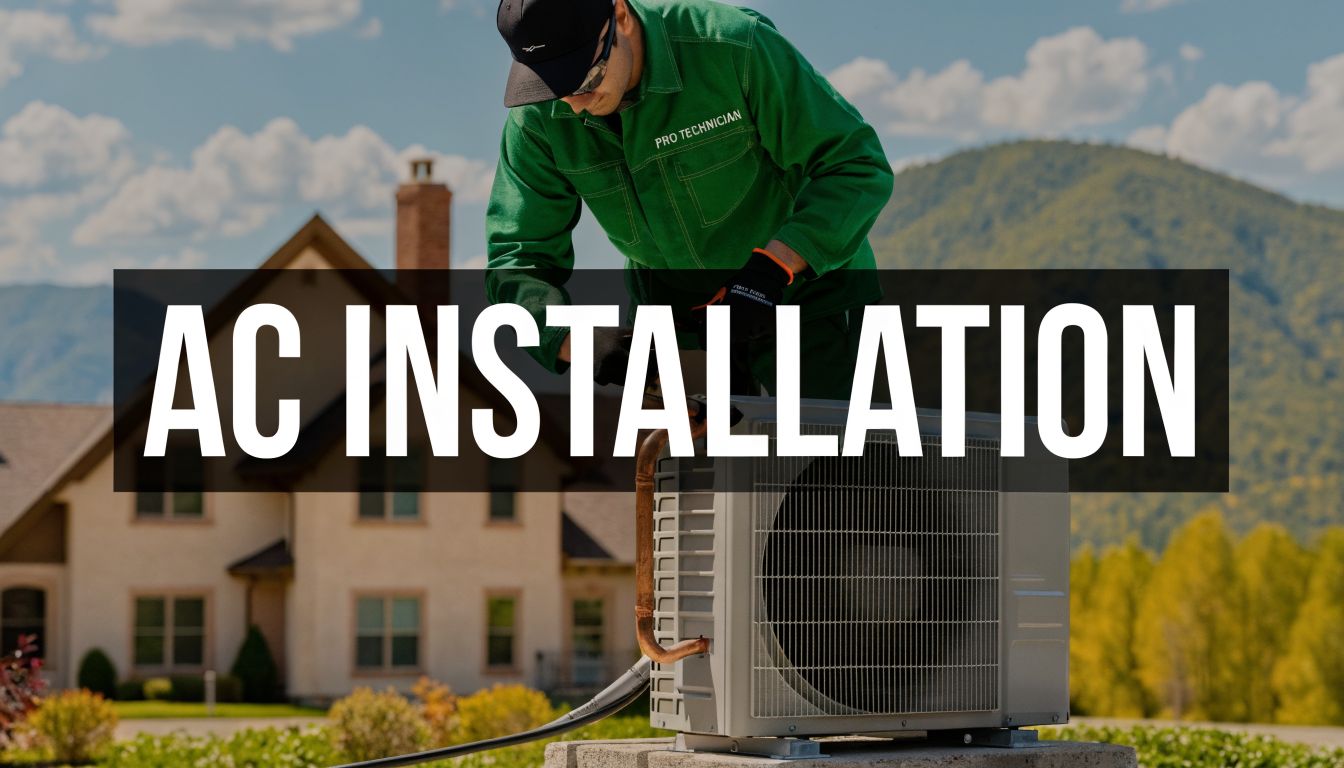
If you're shopping for air conditioner installation salt lake city services, you're probably already feeling that familiar valley heat build long before July peaks. A good install isn't just about the condenser outside. In Salt Lake City, the electrical side, site planning, and final startup checks often decide whether your new system runs cleanly or becomes a callback machine.
Your Guide to a Cool and Comfortable SLC Summer
A Salt Lake summer exposes bad installations fast. The house heats up in the afternoon, the thermostat keeps calling, and a brand-new system still struggles because the project was treated like a simple equipment swap instead of a full mechanical and electrical installation.
That matters here because local conditions aren't generic. Dry air, strong sun, older housing stock in many neighborhoods, and mixed remodel quality across the valley all change how an AC system should be planned and powered. A proper air conditioner installation salt lake city job starts with the house, the panel, and the placement, not with a brand sticker.
A new unit can still perform like an old one if the circuit, airflow, and startup process are handled poorly.
Planning Your AC Installation for Salt Lake's Climate
Salt Lake City's environment changes the install math. One local source notes that Salt Lake City's elevation is 4,226 feet, and that the city's low humidity and temperature extremes create unique HVAC and electrical demands. It also points out that many guides miss how altitude affects cooling calculations, why condenser placement matters in Utah sun, and why electrical service sizing differs from lower-elevation markets (Utah-specific AC installation considerations).

Why square footage alone gets people in trouble
A lot of homeowners still ask one question first: “How many square feet will this unit cover?” That's understandable, but it isn't enough.
At altitude, with intense afternoon exposure on west-facing walls and windows, two homes with the same floor area can need very different solutions. Add attic insulation quality, duct condition, ceiling height, and room layout, and the equipment decision gets more nuanced fast.
Look for planning that considers:
- Window exposure: South and west glazing can load a house heavily in late afternoon.
- Insulation reality: The listing sheet may say “updated,” but the attic and wall performance tell the truth.
- Remodel history: Older homes with additions often have awkward duct runs and mixed electrical work.
- Outdoor placement: Condensers need sensible placement for airflow, service access, and seasonal conditions.
Placement matters more in Utah than many guides admit
Condenser location isn't cosmetic. It affects serviceability, airflow, and long-term reliability. In Salt Lake, the right spot should account for sun exposure, drifting debris, roof runoff, and winter snow conditions. A unit tucked into a tight side yard can look neat and still be a poor install if the technician can't access electrical disconnects or the coil can't breathe.
Let me explain the practical trade-off. A location close to the panel or existing mechanical path can reduce installation complexity, but that convenience shouldn't override airflow and service access. The best location balances electrical routing, refrigerant line path, drainage, and realistic maintenance access.
Practical rule: If the outdoor unit is difficult to reach on installation day, it will be worse during a service call in peak summer.
Think about code before equipment arrives
The cleanest projects are planned around both mechanical and electrical requirements before a unit is ordered. That includes confirming whether your existing service, panel layout, and breaker capacity support the equipment selected for your home.
In Salt Lake area homes, especially older ones, the installation isn't just “set the unit and hook it up.” It may involve coordinating disconnect placement, conductor routing, panel space, grounding, and permit inspection. That planning work isn't glamorous, but it's what prevents mid-project surprises.
The Critical Electrical Check Before You Buy Anything
Most AC content talks about SEER ratings, thermostats, and brand comparisons. That's fine, but it skips the part that stops projects cold: electrical infrastructure.
One source focused on installation gaps notes that homeowners often don't realize modern central air systems may require panel upgrades and dedicated 240V circuits, with residential units commonly drawing 15 to 60 amps. It also points out that poor coordination between HVAC and electrical work creates surprise costs and delays (electrical requirements often missed in AC installation planning).
Your panel decides what is actually possible
A central AC system needs a proper dedicated 240V circuit. That means the air conditioner isn't sharing power with other major loads, and the circuit is sized and protected for that equipment. This isn't a luxury upgrade. It's baseline safety and code-minded installation practice.
If your home has an older panel, limited breaker space, past DIY additions, or unclear labeling, the AC proposal may look simple on paper and complicated in the field. Electricians run into this all the time in older Salt Lake neighborhoods where the home has seen piecemeal upgrades over the years.
Common warning signs include:
- Crowded panel interiors: Little room for a new two-pole breaker
- Double-tapped or messy circuits: A clue that prior work may not have been planned well
- Heat marks or aging breakers: Signs the panel needs closer evaluation
- No clear disconnect strategy: The outdoor unit still needs a serviceable, code-appropriate means of shutoff
For homeowners who want to understand what inspectors and electricians tend to look for, these Northpoint property maintenance electrical insights are a useful primer.
Typical Electrical Requirements for Central AC Units
| AC Unit Size (Tons) | Typical Amperage Required | Common in Salt Lake City Homes |
|---|---|---|
| Smaller residential central AC | 15 amps | Yes, in some smaller or lighter-load applications |
| Mid-range residential central AC | Varies within the common 15 to 60 amps range | Yes |
| Larger residential central AC | Up to 60 amps | Yes, depending on home and system design |
The table stays broad for a reason. Actual circuit sizing depends on the equipment nameplate, conductor requirements, overcurrent protection, and the rest of the home's load profile. That's why a real panel review matters more than guessing from online sizing charts.
Sometimes the electrical work is the project that reshapes the budget. The HVAC contractor may be ready to set equipment, then the electrician opens the panel and finds that the service capacity, breaker space, or feeder condition doesn't support the plan. Now the schedule changes, permits may expand, and equipment sits waiting.
If you're comparing bids, ask one direct question: Who is verifying the panel and dedicated circuit before the install date is locked in? If the answer is vague, the quote is incomplete.
A deeper review of panel and service issues is worth reading if your home is older or you've added major loads over time, especially this guide to breaker and panel upgrade services.
Budgeting Timelines and Salt Lake City Permits
The cleanest AC projects usually feel calm because the hard parts were handled before installation day. The quote accounted for electrical scope. The permit path was understood. The equipment choice matched the house. Then the work could move in sequence instead of as a scramble.

What affects the budget
For many homeowners, the biggest mistake is budgeting only for the box outside and the air handler or coil inside. The total project can also include permit work, electrical modifications, circuit installation, disconnect placement, and site-prep adjustments.
One Salt Lake City HVAC provider says new air conditioning systems are expected to cost homeowners 20 to 25 percent more starting in 2025 because of EPA-driven efficiency and refrigerant changes (projected 2025 Salt Lake AC pricing shift). If you're deciding whether to replace a struggling system, that projected increase is worth factoring into your planning timeline.
What installation day should look like
You know what? Homeowners usually judge the job by the loudest part, when the old unit is removed and the new one lands in place. That isn't the correct benchmark.
A professional project usually follows a more disciplined flow:
- Site access is protected. Crews establish a path, check panel access, and confirm equipment locations.
- Old equipment is removed. This includes making the electrical side safe before disconnection.
- New equipment is set and connected. Mechanical and electrical trades should coordinate, not overlap chaotically.
- Permit and inspection requirements are respected. That protects you if the property is sold later or if warranty questions come up.
- Final verification is scheduled into the job. Good teams don't treat testing as optional.
Some homeowners prefer to get the paperwork moving before the equipment decision is final. Others want the equipment selected first and then permit coordination. Either can work, as long as the process is clear and the electrical scope isn't floating. If you're at the comparison stage, use a detailed request quote process for electrical coordination to make sure the panel and circuit side are included early.
Your Homeowner Prep Checklist for Installation Day
A smooth install day starts with homeowner prep. Not because you need to do the contractor's job, but because access issues, blocked work areas, and last-minute obstacles can slow down good crews and increase the chance of avoidable damage.
A technical installation guide recommends 12 to 18 inches of clearance around the indoor unit and about 2 feet of clearance around the outdoor unit. The same guidance says refrigerant lines should be installed as a new, single piece and commonly secured every four to six feet to reduce kinks and leak risk (clearance and line-set installation standards).
What to do before the crew arrives
Use this checklist the day before or the morning of the job:
- Clear the panel area: Move shelves, bins, paint cans, and storage away from the electrical panel so technicians can work safely.
- Open the equipment path: Remove rugs, furniture, and fragile items along the route to the furnace room, utility area, attic access, or basement mechanical space.
- Trim around the condenser location: The outdoor unit needs room for airflow and safe working access.
- Protect pets and kids: Install day involves open doors, tools, and repeated trips in and out.
- Ask where the disconnect and conduit will go: It's better to approve routing before installation than react to it afterward.
What to verify while work is underway
You don't need to supervise every tool movement, but it's smart to stay engaged.
Check for these details:
- Indoor working clearance: The air handler or indoor equipment area shouldn't be boxed in by storage after the install.
- Outdoor breathing room: If shrubs, fencing, or stacked items crowd the unit, performance and service access suffer.
- New line-set discipline: If the refrigerant lines look kinked, patched together unnecessarily, or loosely hanging, ask about it.
- Drainage awareness: Water management around the indoor unit should be deliberate, not improvised.
If something looks rushed, ask the question while the crew is still on site. It is much easier to correct line routing or access issues before startup than after sign-off.
What not to do
Don't stack patio gear around the new condenser because “there's still a little room.” Don't rebuild storage in front of the indoor equipment. And don't assume the electrical area can go back to being a cramped utility closet. Service access is part of the installation, not leftover space.
What a Professional AC Startup Process Looks Like
The system turns on. Cold air comes out. That's not enough.

Carrier's installation guidance emphasizes a 7-step process that includes site evaluation, equipment positioning, and a formal startup phase. It also notes that a large share of install defects are caught during final testing, where technicians check refrigerant charge, system vacuum, airflow, static pressure, thermostat calibration, and safety controls (Carrier AC installation and startup guidance).
The difference between running and running correctly
A sloppy install can cool on day one and still be wrong. Improper airflow, weak vacuum practices, off-spec refrigerant charge, or thermostat issues may not be obvious immediately. They show up later as short cycling, poor comfort, nuisance trips, or performance complaints.
Ask whether the contractor documents startup readings and verifies:
- Charge and vacuum
- Airflow and static pressure
- Thermostat operation
- Safety control function
- Electrical connections and disconnect operation
What homeowners should expect at the end
The final hour says a lot about the quality of the whole job. A serious installer doesn't just stand at the thermostat and say, “Feels cold.”
You should expect a closeout that includes a walkthrough of equipment location, operating basics, clearances, and confirmation that the system was measured and verified. That is what separates installation from equipment delivery.
Final check: The successful handoff is measured performance, not just a humming condenser.
Protecting Your Investment and Hiring the Right Contractor
Once the install is done, the basics still matter. Change filters on schedule. Keep debris and vegetation away from the outdoor unit. Leave service access open at the panel and around the equipment. Those simple habits give technicians a fair shot at maintaining the system properly.
The bigger protection happens before the first wire is landed. Hire a contractor who understands that the AC system is one connected installation, not two separate jobs awkwardly stitched together. That means the refrigerant path, disconnect, breaker, grounding, clearances, and startup process all have to make sense together.
What to look for in the contractor
Not every company approaches this with the same depth. Ask direct questions.
- Licensing and insurance: Basic, but absolutely essential.
- Electrical coordination: Who owns the panel review, circuit sizing, and disconnect plan?
- Permit clarity: Who pulls what, and what inspections are expected?
- Startup discipline: Will the final testing be documented?
- Local familiarity: Salt Lake area homes have recurring quirks. Older panels, additions, finished basements, tight side yards, and remodel shortcuts all affect the job.
If you're comparing local companies, their online visibility can help you find them, but it shouldn't be the reason you trust them. This overview of mastering local SEO for service businesses explains why some contractors show up prominently online. Visibility matters, but field execution matters more.
For homeowners who want to verify the company behind the estimate, review the contractor's background, service footprint, and licensing posture through its Black Rhino Electric company information.
If you want the electrical side of your AC project handled with the same seriousness as the equipment selection, contact Black Rhino Electric by calling 385-396-7048 or request a free quote.