If you own an older home in Ogden, Bountiful, Salt Lake City, or the surrounding areas, you may be living with knob and tube wiring dangers without realizing how much risk is hidden above the ceiling or behind the plaster. The system may still “work,” but working and safe are not the same thing.
What Exactly Is Knob and Tube Wiring
Think of knob-and-tube wiring like old cast-iron plumbing. It was a solid solution for its era, but it wasn't built for the way people live now.
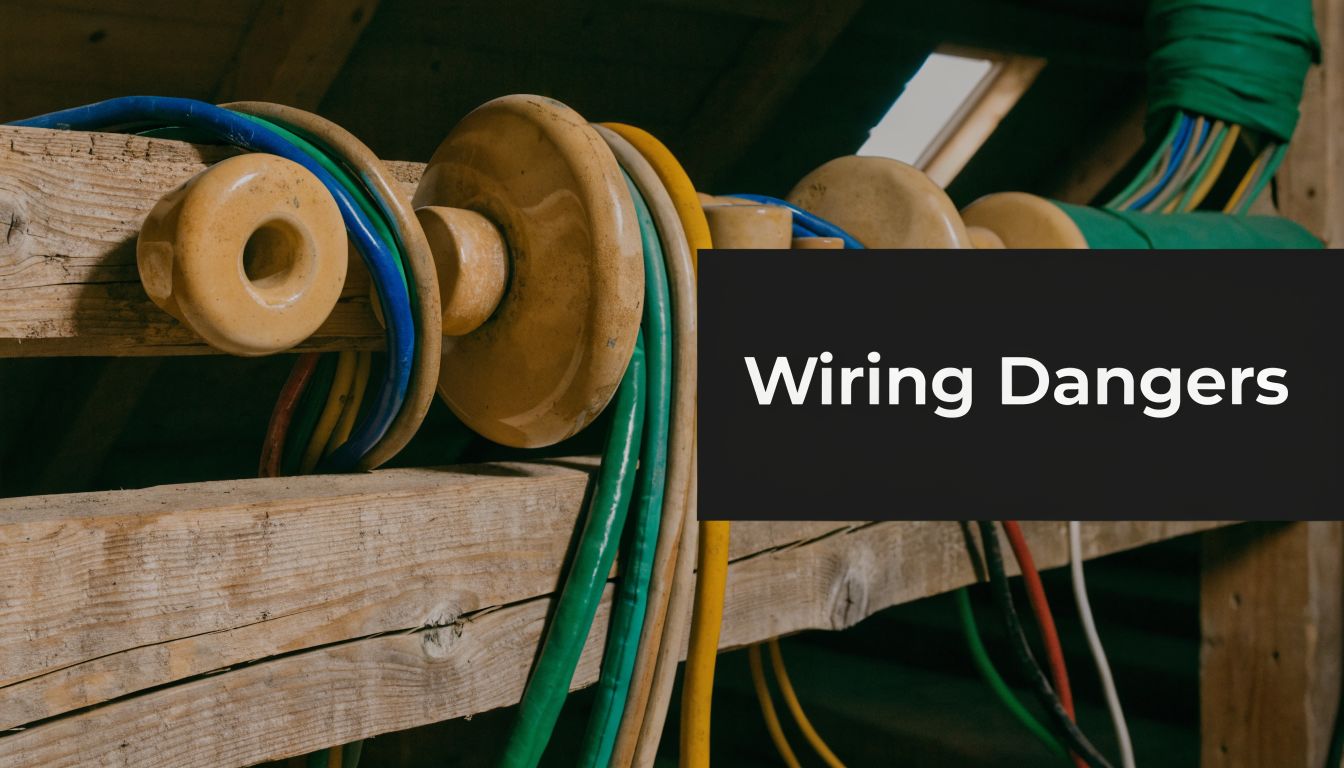
Homes built from the late 1800s into the pre-1950 era often used this method because it was the standard of the day. Electricians ran single insulated conductors through open framing, holding them in place with ceramic knobs and protecting wood penetrations with ceramic tubes.

What it looks like in the field
If you open an unfinished attic or basement and see wires stretched apart instead of bundled together, that’s often the first clue. The hot and neutral conductors are run separately, not inside a modern cable jacket.
Look for these signs:
- Ceramic knobs nailed to framing: These hold the wire off the wood.
- Ceramic tubes through joists or studs: These protect the conductor where it passes through framing.
- Cloth or rubber-insulated conductors: The outer covering usually looks aged, dusty, and dry.
- Wide-open wire routing: The conductors often travel through air spaces rather than inside modern sheathing.
Why it was used
At the time, homes had fewer electrical demands. Lighting and a small number of outlets were the main load.
That matters because knob-and-tube wiring in homes built before the 1950s was designed for about 10 amps per circuit, while modern residential systems typically run 20 to 30 amps on many circuits, according to Best Version Media’s discussion of knob-and-tube capacity limits. That gap is one reason older wiring struggles with today’s appliances.
Practical rule: If a system was designed for lamps and light-duty use, don’t expect it to safely support space heaters, window AC units, kitchen loads, and device charging the way a modern home does.
Why it’s so different from modern wiring
Modern cable systems package conductors together, include grounding, and are designed around current code requirements and modern protection devices. Knob-and-tube does none of that.
Its design depended on open air around the conductors so heat could dissipate. Once later homeowners added insulation, remodeled walls, or tied new wiring into old runs, the original design assumptions changed. That’s when an old system stops being just “old” and starts becoming a safety problem.
The Five Critical Knob and Tube Wiring Dangers
A common Utah call goes like this. A homeowner in Ogden or Bountiful plugs in a space heater, the lights dim, and a breaker trips or an old fuse runs hot. A few months later, they want a panel upgrade, a new kitchen circuit, or an EV charger in the garage, and the old wiring becomes the issue holding the whole job up.

Overheating from modern electrical demand
This is usually the first real failure point. Knob-and-tube was installed for a house that used far less power than a home in Weber, Davis, or Salt Lake County uses now.
The consequence is that old wiring can sometimes limp along under light use, then overheat when a circuit starts carrying heaters, kitchen appliances, home office equipment, or garage loads it was never meant to support. The CPSC's guidance on older wiring hazards notes that outdated residential wiring systems can present fire and shock risks, especially when age and modern usage are part of the picture.
In the field, the pattern is familiar:
- Winter loads spike: Bedrooms and living areas pick up space heaters, heated blankets, and chargers.
- Weak points heat first: Loose splices and tired terminations get hot before the rest of the run.
- Fire risk stays hidden: The trouble is usually inside walls, attics, or floor cavities where no one sees it developing.
No ground wire means no safety backup
Knob-and-tube has no equipment grounding conductor. That leaves modern appliances and metal fixtures without the fault path current is supposed to take during a problem.
If a fault energizes the case of a toaster, washing machine, or microwave, a person touching it can become the path to ground. That is a direct shock hazard. It also creates problems during upgrades, because three-prong receptacles, surge protection, and many modern safety devices are designed around grounded systems.
A lot of older Utah homes have had cosmetic electrical updates without a full rewire. New receptacles and new cover plates can make the system look current when the protection behind the wall is not.
Brittle insulation exposes live conductors
The insulation on old conductors does not improve with time. It dries out, cracks, flakes off, and leaves energized wire where it should never be exposed.
That matters most in attics, basements, and crawlspaces, which is exactly where I find active knob-and-tube in many older homes along the Wasatch Front. Utah’s dry climate does not preserve old insulation forever. Heat in attics, decades of dust, and simple age all work against it.
Once insulation fails, arcing becomes more likely. So does contact with framing, metal, stored items, or other wiring added later.
Rodents make it worse. They do not care that the system is historic.
Improper modifications create the worst failures
Age alone is one problem. Bad alterations are usually worse.
The most dangerous knob-and-tube jobs I inspect are not untouched originals. They are patched systems with decades of mixed workmanship, hidden splices, overfused circuits, and new wiring tied into old runs without proper junction boxes or load planning. The National Fire Protection Association explains in its consumer guidance on electrical distribution systems that damaged and outdated wiring, along with unsafe modifications, can increase fire risk.
The trouble spots usually include:
- Buried splices: Old-to-new connections hidden behind finishes or insulation
- Oversized fuses or incorrect breakers: Protection changed to stop tripping instead of fixing the cause
- Unsupported repairs: Loose conductors, taped joints, and makeshift extensions
- Partial remodel tie-ins: One updated room fed by a branch circuit that should have been retired
These are the jobs that fail unpredictably. A circuit can test passably one day and overheat the next time someone adds a heavy load.
Insurance and resale trouble
This wiring can also block practical goals long before it causes a visible failure. Insurers often ask whether active knob-and-tube is still present, and that question matters in real estate transactions across Weber, Davis, and Salt Lake counties.
Some carriers will write a policy with conditions. Others want an inspection, repairs, or full replacement before binding coverage. Buyers get cautious. Lenders ask questions. Remodel plans get more expensive once the electrical scope becomes clear.
I see this come up often when homeowners want service upgrades for air conditioning, kitchen remodels, or EV chargers. You can install a new panel, but if active knob-and-tube still feeds parts of the house, the upgrade usually stops short of solving the underlying problem.
How to Spot Knob and Tube in Your Utah Home
You don’t need to tear into walls to spot the obvious signs. A careful visual check in accessible areas can tell you a lot.
Historic homes in Weber County, older neighborhoods in Davis County, and long-standing parts of Salt Lake County are the places where this shows up most often. Attics, basements, and crawlspaces are usually the easiest places to confirm it.

Where to look first
Start where framing is exposed. That usually means unfinished areas, not finished living spaces.
Check these locations:
- Attics: Look along rafters and ceiling joists for separated conductors on porcelain knobs.
- Basements: Open floor framing often reveals older branch wiring.
- Crawlspaces: Older runs may still be active below the house.
- Utility areas: Near older panels or legacy fuse equipment, you may find transition points.
What visual clues matter most
You’re not looking for “old-looking wire” in general. You’re looking for a specific installation style.
The giveaway signs are:
| Sign | What it suggests | Why it matters |
|---|---|---|
| Ceramic knobs | Conductors are supported off framing | Classic K&T installation method |
| Ceramic tubes | Wires pass through wood framing | Another strong identifier |
| Two-prong outlets | No obvious equipment ground at receptacles | May point to older branch circuits |
| Mixed old and new wiring | Past alterations or partial upgrades | Needs closer evaluation |
What not to do
If you find what looks like knob-and-tube, don’t start tugging on it, moving insulation off it aggressively, or opening random splices. Old insulation can break apart with very little force.
If the wiring looks brittle, dusty, cracked, or loosely supported, leave it alone and document what you see with photos.
That quick check can help you ask better questions when an electrician arrives, but it won’t tell you whether the wiring is still active, overloaded, modified, or safe enough to remain temporarily in service.
What a Professional Inspection Reveals
In Northern Utah, I see the same mistake over and over. A homeowner spots ceramic knobs in the attic, assumes the old wiring is either fine or obviously bad, and makes a decision before anyone tests the system. That shortcut gets expensive in Weber, Davis, and Salt Lake County homes, especially when a remodel, service upgrade, or EV charger is already on the plan.
A homeowner can identify the wiring style. A licensed electrician determines whether it is still active, whether it has been altered poorly, and whether it can safely stay in place for any length of time.
A lot of the trouble is hidden. I find failed splices buried under insulation, old branch circuits tied into newer cable without proper junctions, and brittle conductor insulation that falls apart as soon as the box is opened. From the floor below, none of that is obvious.
What a real inspection checks
A proper inspection answers practical questions that affect safety, insurance, and upgrade planning.
- Is the knob-and-tube still energized?
- Has anyone extended it with newer wiring or improper splices?
- Is the insulation still intact enough to remain in service temporarily?
- Are the circuits overloaded by modern use?
- Will the existing system support planned work like a panel change, kitchen remodel, or EV charger installation?
Those last two matter a lot in Utah. Even if the old wiring has not failed yet, many older branch circuits were never intended to carry the kind of load that comes with space heaters, countertop appliances, garage equipment, or car charging.
The tools that give straight answers
Visual inspection is only part of the job. Testing tells you what the house is doing.
Electricians often use:
- Thermal imaging to spot hot terminations, overloaded conductors, and hidden heat at connections
- Insulation resistance testing to check whether old conductor insulation is breaking down
- Circuit tracing to confirm what is live, what is abandoned, and what has been mixed together over the years
- Load evaluation to compare present-day use with what the existing wiring can reasonably handle
For buyers and sellers, an independent professional home inspection can also help identify broader house conditions that affect electrical planning, including attic access, moisture issues, and structural limitations around rewiring.
Why inspection matters in real life
An ungrounded fault on an old circuit can leave the metal case of an appliance energized. A breaker may not trip the way it should on a modern grounded system. That turns a hidden wiring defect into a shock hazard at the washer, refrigerator, or shop tool.
Inspection also helps set priorities. Some homes need full replacement right away. Others need a staged plan, starting with the most heavily used or most hazardous circuits. That distinction matters if you are trying to keep a project on budget while still meeting permit and safety requirements.
If lights flicker, breakers trip, or you are planning any upgrade that adds load, get a licensed electrician involved before making assumptions. A qualified electrical troubleshooting electrician can identify what is active, what is unsafe, and what needs to be corrected first.
Many homeowners are often blindsided. The electrical issue starts in the attic, but the headache shows up when you call your insurance company or pull a permit for a remodel.
In Northern Utah, the answer is rarely as simple as “all knob-and-tube must be removed immediately.” Real life is more specific than that.
What insurers may do
In Utah, insurers may increase premiums or refuse coverage for homes with active knob-and-tube unless a licensed electrician provides certification. Branch Investigations notes that carriers may apply 20% to 50% surcharges or deny coverage entirely, and local codes often require replacement in areas being renovated rather than mandating universal proactive removal across the whole house in every case, as outlined in their Utah-focused discussion of K&T insurance and code treatment.
That means two homes with similar wiring can get very different responses depending on the insurer, the condition of the system, and whether any upgrades have already been documented.
Common insurer responses to knob-and-tube wiring
| Insurer Action | Typical Reason | What It Means for You |
|---|---|---|
| Policy denial | Active K&T seen as elevated fire risk | You may need repairs or certification before coverage |
| Premium surcharge | Carrier accepts the home but prices in additional risk | Your ownership cost goes up until the issue is resolved |
| Conditional approval | Insurer wants electrician documentation | You’ll need an inspection report and possibly corrective work |
| Renovation-triggered review | Remodel exposes outdated wiring | Electrical upgrades may become part of permit compliance |
What local code reality usually looks like
Weber, Davis, and Salt Lake county homeowners often run into the same practical rule. If you leave untouched areas alone, you may not be forced into a whole-house rewire on day one. But once you remodel a kitchen, finish a basement, open walls, or add new circuits, the old wiring becomes part of the conversation.
That’s why homeowners get frustrated. They plan a straightforward renovation and discover the electrical system is now the gating item.
A few practical points help:
- Get documentation early: Before shopping policies or listing the home, know exactly what remains active.
- Separate active from abandoned wiring: Old visible wiring isn’t always live, and that distinction matters.
- Expect questions during sale transactions: Buyers, lenders, and insurers all want clarity.
- Treat remodels as decision points: Once walls are open, that’s often the smartest time to upgrade.
The cheapest time to address old wiring is usually when the house is already being opened for other work.
Replacement Costs and Modern Wiring Benefits
A homeowner in Ogden or Sugar House often reaches this point the same way. The house has worked well enough for years, then a panel change, kitchen remodel, or EV purchase forces an honest look at the wiring behind the walls.
A rewire is a major project. It also removes the guesswork from an old electrical system that was never designed for today’s loads.

What replacement may cost
Cost depends on access more than homeowners expect. A house with open walls during a remodel is one job. An occupied home with plaster walls, finished ceilings, and limited crawlspace access is another.
For rough budgeting, national homeowner cost guides such as Angi’s house rewiring cost overview show a wide price range for rewiring work. In Northern Utah, the actual number usually comes down to five things: how much knob-and-tube is still active, whether the service and panel also need work, how difficult it is to fish new cable, what wall repair is required, and whether you are replacing the system in phases or all at once.
A partial rewire can make sense if the active knob-and-tube is limited to a few circuits and the rest of the house has already been updated. A full rewire usually makes more financial sense when multiple rooms are still on old wiring, the panel is undersized, or a remodel already has walls open.
Why modern wiring pays off
The benefit is not just "safer wiring." The house starts functioning like a modern house.
That usually means:
- Proper grounding and protection: New circuits support AFCI, GFCI, and other protections expected in current installations.
- Capacity where people use it: Kitchens, home offices, garage tools, and basement finishes stop competing for a small number of old circuits.
- Cleaner future upgrades: It is far easier to add lighting, receptacles, appliances, and dedicated circuits once the backbone of the system is current.
- Fewer surprises during permits and remodels: Work tends to go faster when electricians are building from a system that matches current practice.
In Weber, Davis, and Salt Lake counties, that last point matters more than homeowners expect. If a house still has active knob-and-tube, even a simple remodel can turn into patchwork unless the wiring is addressed in a deliberate way. If walls are already being opened, it often makes sense to coordinate the electrical scope with a remodeling electrician so the rewire, panel planning, and room upgrades happen in the right order.
The EV charger issue that changes the math
This is one of the biggest reasons homeowners stop postponing the upgrade.
Older homes with knob-and-tube were built for a different pattern of use. They were not built for a Level 2 EV charger, added air conditioning, induction cooking, a finished basement, and a garage full of battery-powered tools charging at night. Even when a charger could technically be fed from the property after a service upgrade, the branch circuits and grounding in the house still may not support the rest of the system the way a modern home should.
That is why replacement often delivers value beyond risk reduction. It gives the house the electrical capacity to handle how people in Northern Utah live now.
Your Safe Path Forward with Black Rhino Electric
A lot of Northern Utah homeowners find out they have knob-and-tube wiring the same way. They open a wall for a kitchen update in Ogden, check the attic before adding insulation in Bountiful, or start planning an EV charger in Salt Lake County and realize the house still has parts of its original electrical system in service. At that point, the question is not just whether the wiring is old. The primary question is what is still active, what is unsafe today, and how to fix it without creating a bigger mess during the remodel.
The path forward needs to be orderly.
Black Rhino Electric handles these projects in a way that fits how older homes in Weber, Davis, and Salt Lake counties get updated. The first step is a conversation about the home’s age, known problem areas, prior remodel work, and whether you are also planning a panel upgrade, basement finish, air conditioning, or EV charging. That early screening matters because a house with isolated knob-and-tube in a lighting circuit is a different job than a house where old wiring is mixed with newer additions and ungrounded receptacles.
The next step is an on-site assessment. That means tracing what is active, checking the panel, identifying circuits that were extended improperly over the years, and looking for the trouble spots we routinely see in older Utah homes, including attic splices, buried conductors, and overloaded areas where modern use outgrew the original design. If permits or insurance questions are likely to come into play, that gets addressed up front so the homeowner is not blindsided halfway through the job.
Then the scope gets built around the house, not around a generic template. Some homes need full replacement. Some are better served by a phased plan tied to a remodel schedule. In a few cases, the immediate priority is making the system safe, then coordinating the larger rewire after walls are already being opened for other work. That approach usually saves money and avoids tearing into finished areas twice.
It also helps with the practical headaches homeowners run into in this part of Utah. Insurance carriers may want clarification on active knob-and-tube before writing or renewing a policy. City inspections can get more complicated once old wiring is exposed during permitted work. New electrical loads, especially EV chargers, often push homeowners to address the branch wiring and panel strategy at the same time instead of patching one piece now and another piece later.
If you want a local electrician to assess the house and lay out the next steps in plain terms, start with Black Rhino Electric through the request a quote form for older-home wiring and upgrade planning.