What You Need to Know Before Installing Spa Electrical
Thinking about adding a hot tub to your backyard oasis? Proper spa electrical installation is the most critical step to ensure your new retreat is both relaxing and safe for your family. Honestly, getting the wiring right isn’t just about power; it’s about peace of mind and protecting your investment.
Spa electrical installation is one of those projects where getting it right the first time isn’t optional — it’s essential. Water and high-voltage electricity are a dangerous combination, and a mistake here can cost far more than a rewire.

Here’s a quick snapshot of what spa electrical installation requires, so you have the essentials at a glance:
| Requirement | Standard Specification |
|---|---|
| Voltage | 120V (plug-and-play) or 240V (hardwired) |
| Amperage | 50–60 amp dedicated circuit (240V models) |
| Wire Type | 6 AWG copper, THHN insulation |
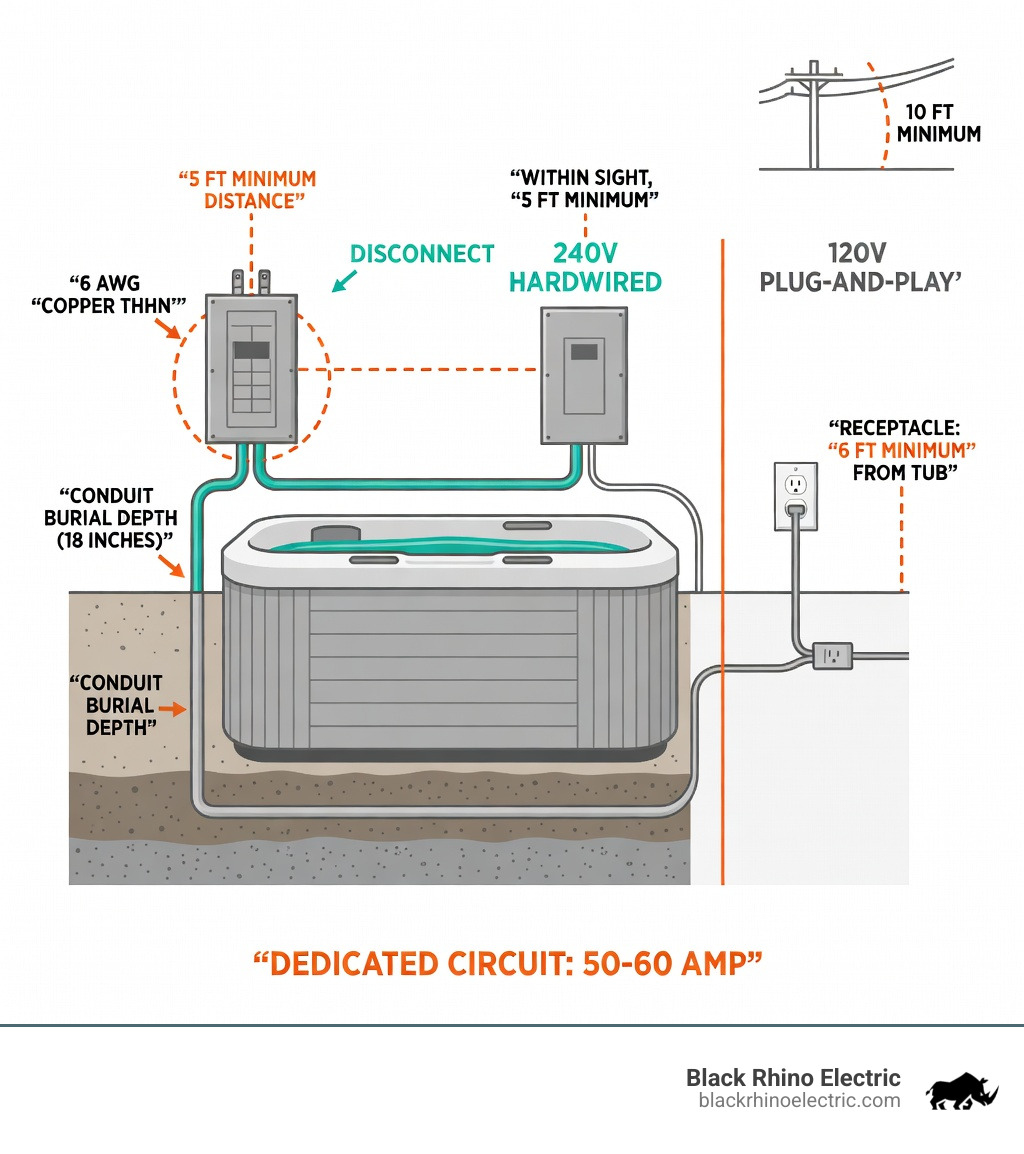
| GFCI Breaker | Required — must be installed at least 5 ft from spa |
| Disconnect Panel | Must be within sight, minimum 5 ft from spa |
| Receptacles | Minimum 6 ft from inside wall of hot tub |
| Overhead Power Lines | Minimum 10 ft clearance |
| Conduit Burial Depth | 18 inches minimum |
You know what surprises most homeowners? It’s not the cost of the hot tub — it’s realizing how much goes into wiring it safely. A 240V hardwired spa isn’t something you can connect to an existing outlet. It needs its own dedicated circuit, a GFCI-protected breaker, a separate disconnect panel, proper grounding, and bonding of all nearby metal components. And that’s before you even think about trench depth or wire gauge.
Here’s the thing: the National Electrical Code (NEC) has strict rules for all of this — and local Utah codes can add even more requirements on top. Skipping steps or cutting corners doesn’t just risk a failed inspection. It risks electrocution.
This guide walks you through everything — from planning your electrical supply to the final inspection — so your spa installation is safe, code-compliant, and built to last.
Glossary for spa electrical installation:
Planning Your Spa Electrical Installation
Planning is the most important phase of any spa electrical installation. Before you even pick out the perfect spot on your patio in Ogden or Layton, you need to know if your home’s electrical system can handle the load. Most modern homes in Weber County have a 200-amp main service panel, which is usually plenty. However, if you live in an older home with a 100-amp panel, adding a 50-amp hot tub could push your system to its limit.
When we perform a load calculation, we look at your existing appliances—like your AC, electric range, and dryer—to ensure adding a spa won’t cause frequent trips or fire hazards. Honestly, it’s better to find out you need a panel upgrade now rather than after the hot tub is sitting in your backyard!
Understanding Voltage and Amperage Needs
There are two main “flavors” of hot tubs when it comes to power.
- 120V Plug-and-Play: These are convenient because they plug into a standard outdoor outlet. However, they have limitations. The heater and the jets usually can’t run at the same time, and they take much longer to heat up—especially during our chilly Utah winters.
- 240V Hardwired: This is the standard for most permanent installations. These units require a dedicated 240V circuit, typically using a 50 or 60-amp breaker. This allows the heater and high-speed pumps to run simultaneously, keeping your water at a steady 104°F even when it’s snowing in North Ogden.
If you are looking at more advanced options, like a swim spa, the power needs increase. Many swim spas require dual 50-amp connections because they use massive pumps to create a swimming current. For more details on these heavy-duty units, check out this Guide to Swim Spa Electrical Requirements. For local specifics, we’ve put together a resource on Hot Tub Electrical Requirements for Utah Homeowners.
NEC Safety Standards and Placement Rules
The National Electrical Code (NEC) isn’t just a set of “suggestions”—it’s the law designed to keep you alive. Here are the big rules we follow for every spa electrical installation:
- The 5-Foot Disconnect Rule: You must have a manual disconnect switch (often called a spa panel) located at least 5 feet away from the water’s edge but within clear sight of the tub. This ensures that if someone is in trouble, the power can be cut quickly, but it’s far enough away that a person in the water can’t touch it.
- The 6-Foot Receptacle Rule: Any general-purpose outlets must be at least 6 feet away from the tub and must be GFCI protected.
- Overhead Clearance: Your spa must be at least 10 feet away from any overhead power lines.
- Indoor Considerations: If you’re installing a spa indoors, you’ll need to account for massive amounts of humidity. Proper ventilation and vapor barriers are required to prevent mold and structural damage.
For those interested in the deep technical details of these codes, you can reference the Digital Codes for Portable Spas.
Step-by-Step Guide to a Safe Spa Electrical Installation
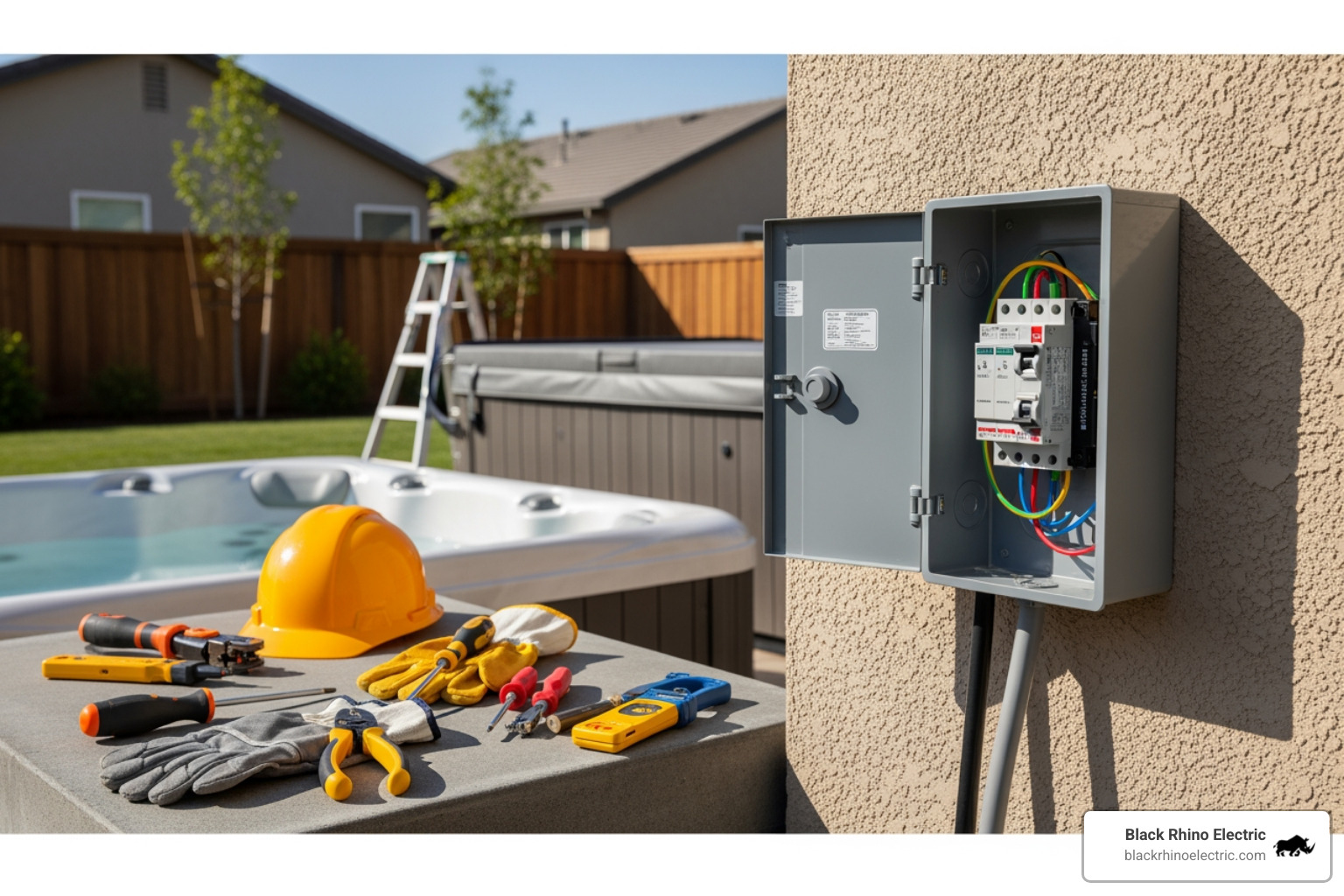
Once the planning is done, the physical work begins. This isn’t just about “running some wires.” It’s a precise process involving heavy-gauge materials and careful trenching.
Essential Tools and Materials for the Job
To do this right, you need more than just a screwdriver. We use professional-grade tools like:
- Voltage Testers: To ensure every wire is truly “dead” before we touch it.
- Fish Tape: For pulling those thick #6 wires through long runs of conduit.
- Conduit Cutters and Reamers: To ensure smooth edges that won’t nick the wire insulation.
- 6 AWG Copper Wire: We strictly use copper (never aluminum) with THHN insulation for hot tubs. Aluminum is prone to corrosion in wet environments and can lead to loose connections.
| Component | Recommended Specification |
|---|---|
| Main Breaker | 50A or 60A Double-Pole |
| Spa Panel | GFCI Protected Sub-panel |
| Wire Gauge | #6 AWG Copper (for most 50A runs) |
| Conduit | 1″ Rigid PVC (Schedule 40 or 80) |
If you’re curious about the mechanics of the wiring itself, you can read more on How to Wire a Spa for 120V or 240V. However, we can’t stress enough Why You Need a Hot Tub Electrician for Safe Installations—dealing with 240V near water is high-stakes work.
Wiring, Grounding, and Bonding Procedures
This is where most DIY projects go wrong. Grounding and Bonding are two different but equally important things.
- Grounding: This provides a safe path for electricity to return to the panel if there is a fault. We use a dedicated green ground wire that connects the spa frame back to the main service ground.
- Bonding: This is the process of connecting all metal parts within 5 feet of the spa (like metal fences, handrails, or even the reinforcement bar in your concrete pad) together. This creates an “equipotential plane,” ensuring that there is no voltage difference between these objects. Without proper bonding, you could get a shock just by touching a metal rail while stepping out of the water.
A critical component in this safety web is the GFCI (Ground Fault Circuit Interrupter). This device monitors the flow of electricity and snaps the power off in as little as 1/40th of a second if it detects a leak. You can learn More info on GFCI protection to understand why it’s your best friend in a hot tub. For more pro-tips, check out our Top Tips from a Certified Hot Tub Electrician.
Common Pitfalls and Troubleshooting Tips
Even “pros” who don’t specialize in spas make mistakes. One of the most common is neutral miswiring. In a 4-wire system, the white neutral wire must go directly to the neutral lug on the GFCI breaker, not the grounded bus bar in the sub-panel. If it’s hooked up wrong, the breaker will trip the second you turn on the jets.
Other common issues include:
- Loose Terminal Screws: High-vibration pumps can loosen screws over time, leading to arcing and melted wires.
- Improper Trench Depth: In Utah, your conduit needs to be buried 18 inches deep. If it’s too shallow, garden tools or shifting soil can damage the line.
- Moisture Corrosion: Using the wrong type of connectors or failing to seal the conduit can let moisture in, which eventually rots the copper.
Knowing these risks is key when you’re looking to Choose the Best Hot Tub Electrician Near You.
Conclusion: Ensuring Long-Term Safety and Performance
Once your spa electrical installation is complete and has passed inspection, your job isn’t quite over. To keep your retreat safe, you should test your GFCI breaker once a month by pressing the “test” button. If it doesn’t snap off immediately, call us right away.
Also, keep an eye on your energy bills. If they spike unexpectedly, it could be a sign that your heater is struggling or there’s a leak in your system. Regular maintenance, like cleaning filters and ensuring your cover is airtight, will keep your operating costs between $20 and $30 a month for most modern tubs, though swim spas can run higher depending on usage.
Why Professional Spa Electrical Installation Matters
At Black Rhino Electric, we specialize in essential hot tub wiring throughout Weber County, with expert coverage in Ogden, Roy, and surrounding Utah areas. Whether you’re a family in North Ogden wiring up a backyard hot tub for safe enjoyment or a homeowner in West Haven needing a panel upgrade to support your new spa, our expert team delivers tailored solutions with precision and care.
As fully licensed electricians and insured electrical contractors, we prioritize your safety with every project. We understand the specific climate challenges in Northern Utah—from frost expansion joints for your conduit to ensuring your panel can handle the winter heating load. Our customer-centric approach means transparent pricing and minimal disruption to your backyard oasis.
You know what? Taking a shortcut on your electrical setup is never worth the risk of a “shocking” surprise later on. Let me explain: when water and high-voltage electricity meet, only professional precision can guarantee your safety. If you’re ready to get your backyard retreat up and running without the stress, give us a call at 801-810-4292 or Request a Free Quote today.