
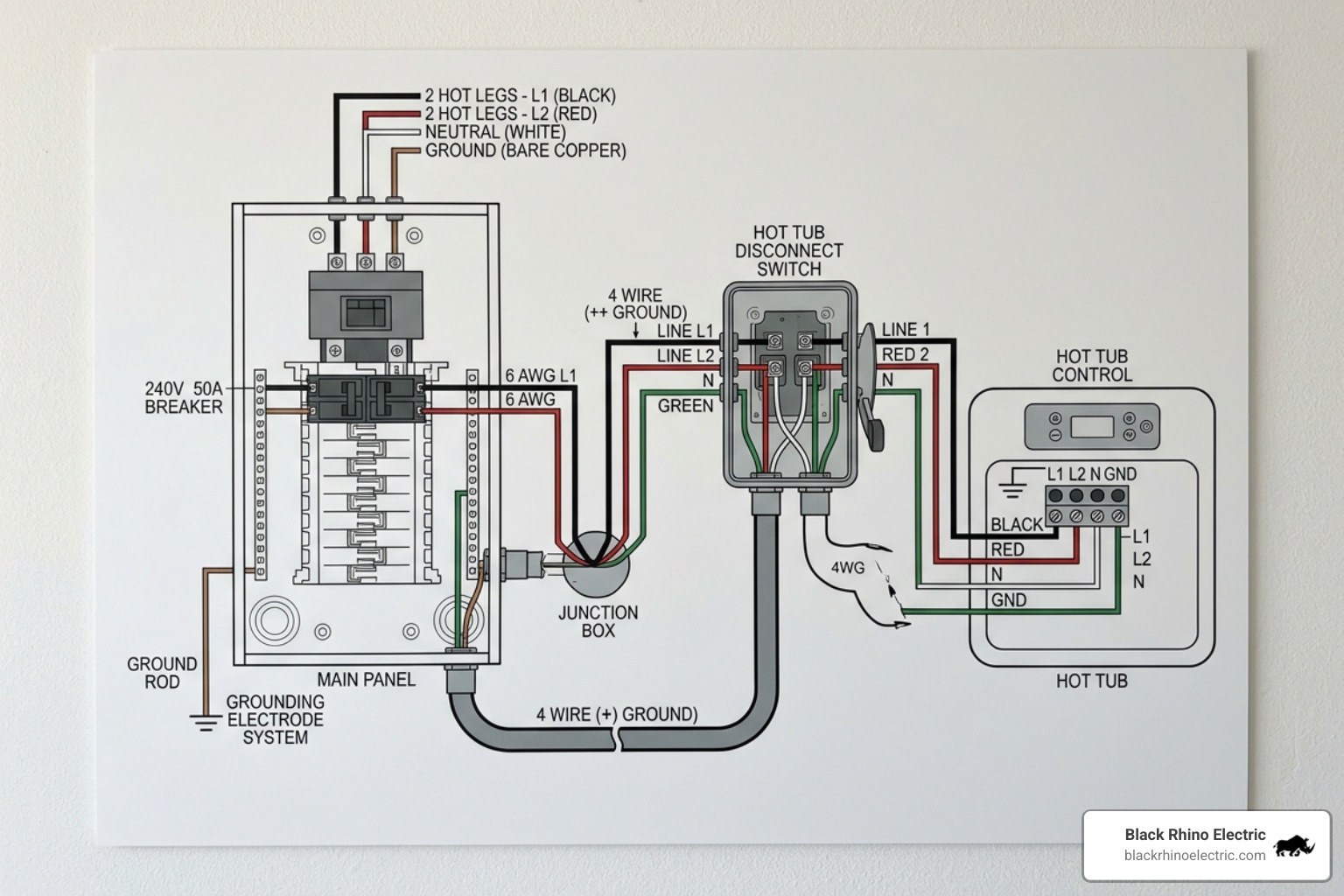
Honestly, finding the right hot tub wiring diagram is the first step toward enjoying a safe, stress-free soak without any dangerous electrical surprises. You know what? When you’re dealing with high voltage near water, getting the wiring right is not just helpful — it’s essential for safety, performance, and peace of mind.
Understanding Your Hot Tub Wiring Diagram and Electrical Layout
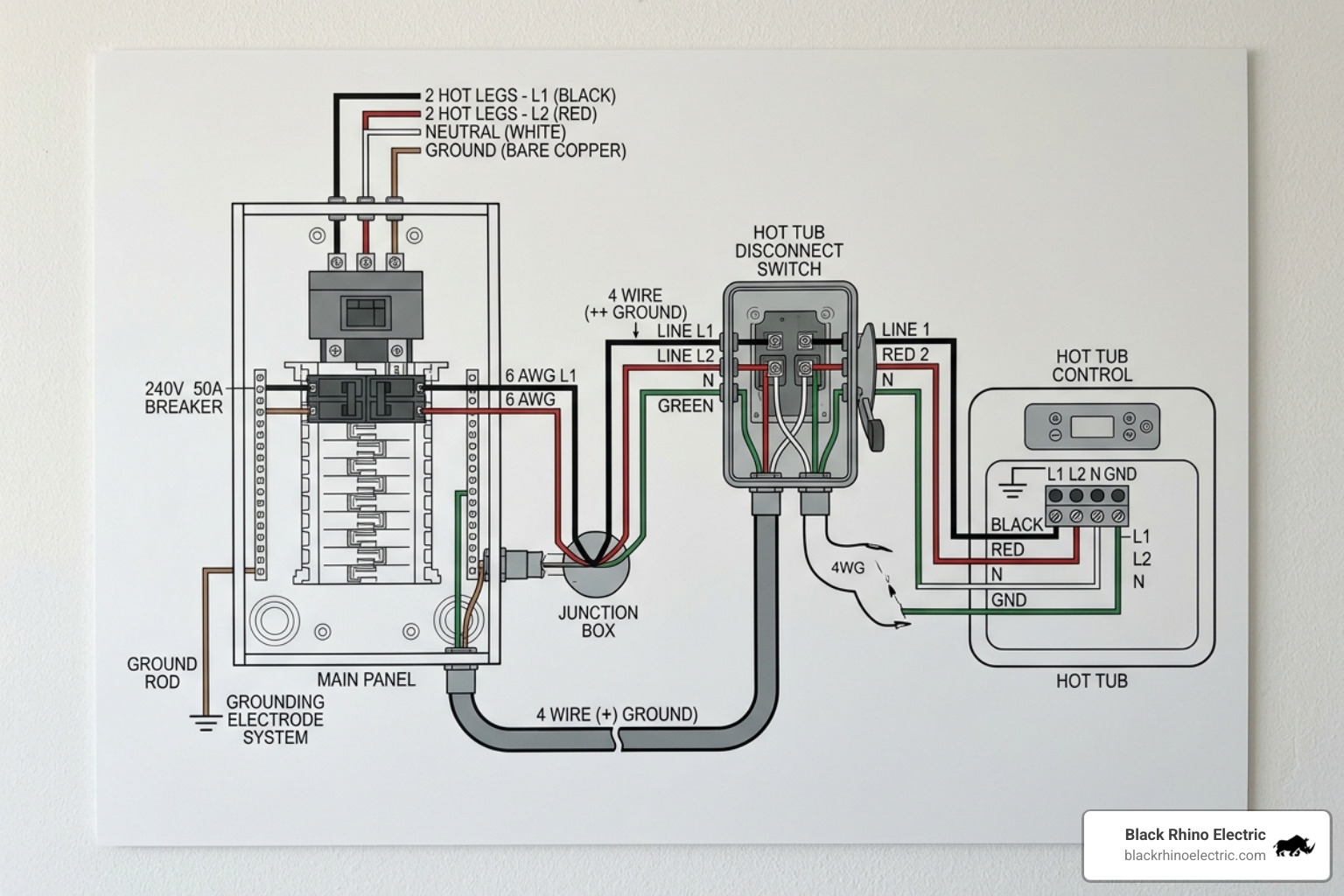
Here is a quick overview of what a standard 240V hot tub wiring diagram includes:
| Component | Specification |
|---|---|
| Circuit voltage | 240V (two hot legs) |
| Breaker size | 50-amp 2-pole GFCI |
| Wire gauge | #6 AWG copper THHN |
| Wiring system | 4-wire (L1, L2, neutral, ground) |
| Disconnect location | 5-10 ft from tub, within line of sight |
| Conduit burial depth | 18 inches (PVC Schedule 40) |
| GFCI trip threshold | 5 milliamperes |
| Governing code | NEC Article 680 |
The detailed wiring diagram for your specific spa is located inside the spa’s control box. It shows exactly how power flows from your main panel, through the GFCI disconnect, and into the spa pack that controls your pumps, heater, and accessories.
Here is the thing – most full-size hot tubs need a dedicated 240V circuit with a 50-amp GFCI breaker. That is a significant electrical load, roughly comparable to a central air conditioner or an electric oven. Using the wrong wire size, skipping the GFCI, or misconnecting the neutral wire are among the most common mistakes that cause nuisance tripping, voided warranties, and genuine safety hazards.
This guide walks you through everything: how to read the diagram, what each wire does, NEC code requirements, and the most common pitfalls to avoid.
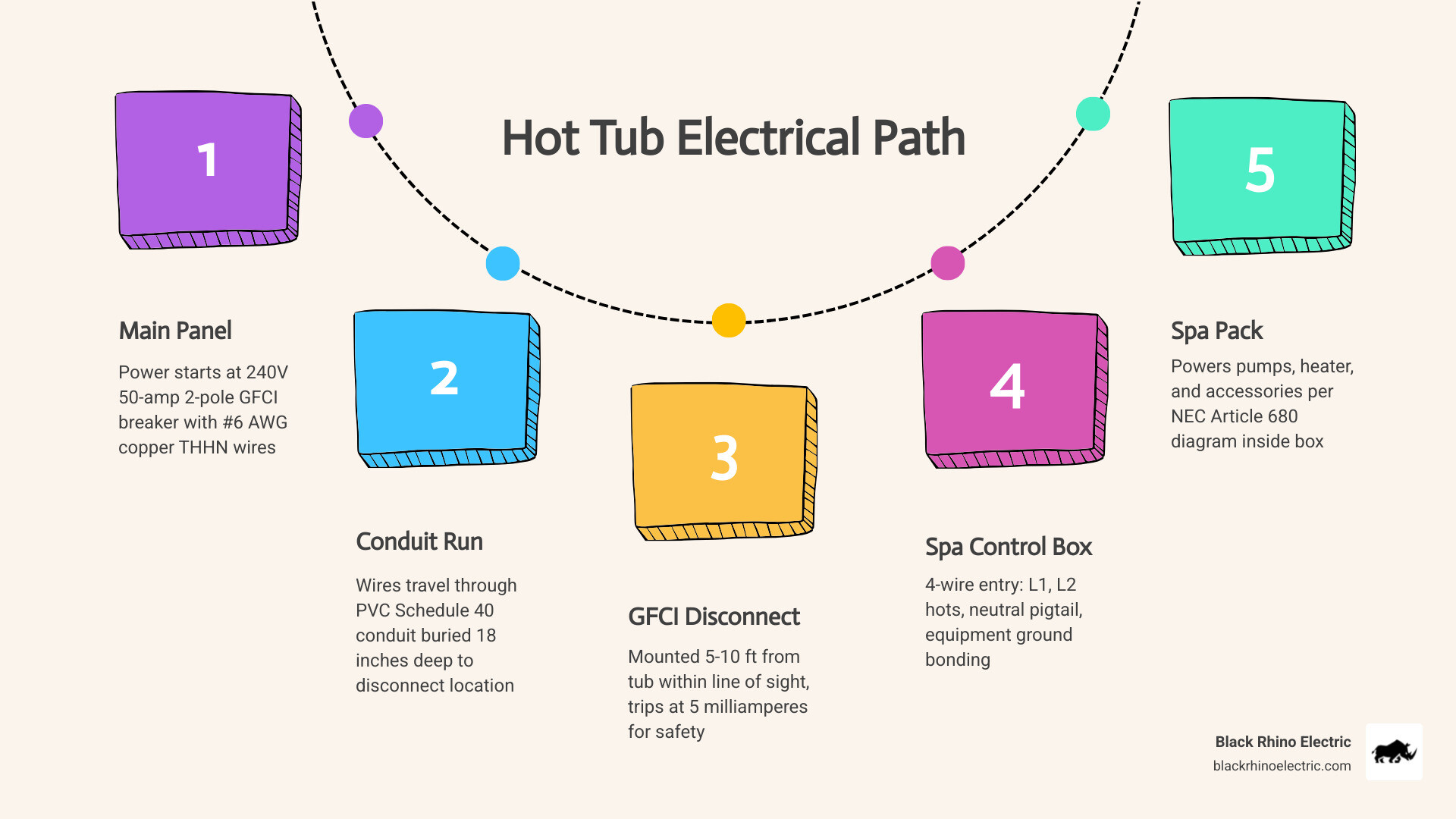
Hot tub wiring diagram vocab explained:
When we talk about a hot tub wiring diagram, we aren’t just looking at a few lines on a page. We are looking at a roadmap for high-voltage electricity in a wet environment. In the United States, all of this is governed by NEC Article 680, which sets the gold standard for swimming pools and spas.
Before we even touch a screwdriver, we have to perform load calculations. You see, a full-size Jacuzzi can weigh 5,000+ pounds when filled and occupied, but its electrical weight is just as heavy. Most modern homes in Ogden or Layton have 100 to 200-amp service, but adding a 50-amp spa requires ensuring your main panel won’t be overloaded when the heater and jets kick on at the same time.
120V Plug-and-Play vs. 240V Hardwired Systems
You know what? Many people start with a 120V “plug-and-play” model because it sounds easy. You just plug it into a standard outlet, right? Well, not exactly. These still require a dedicated circuit to prevent tripping the breaker every time the toaster runs.
However, the real magic happens with 240V hardwired systems. Here is why:
- Faster Heating: A 240V system typically uses a 4kW to 5.5kW heater, compared to the measly 1kW found in 120V models.
- Better Performance: On 120V, the heater often shuts off when you turn the jets on high. On 240V, you can enjoy the bubbles and the heat simultaneously.
- Efficiency: 240V systems are generally more efficient at maintaining temperature in our chilly Utah winters.
For more details on these differences, check out the Hot Tub Wiring & Electrical Hookup Guide – Jacuzzi or our guide on Hot Tub Electrical Requirements for Utah Homeowners.
Deciphering the Hot Tub Wiring Diagram: 3-Wire vs. 4-Wire Requirements
If you look at an old hot tub wiring diagram, you might see a 3-wire setup. Honestly, those are obsolete and dangerous for modern equipment. Today, a 4-wire system is mandatory for most spas manufactured in the last 25 years.
A 4-wire system includes:
- L1 (Black): Hot leg 1
- L2 (Red): Hot leg 2
- Neutral (White): Essential for 120V components like your ozonator or control board.
- Ground (Green/Bare): Your safety lifeline that bonds the system.
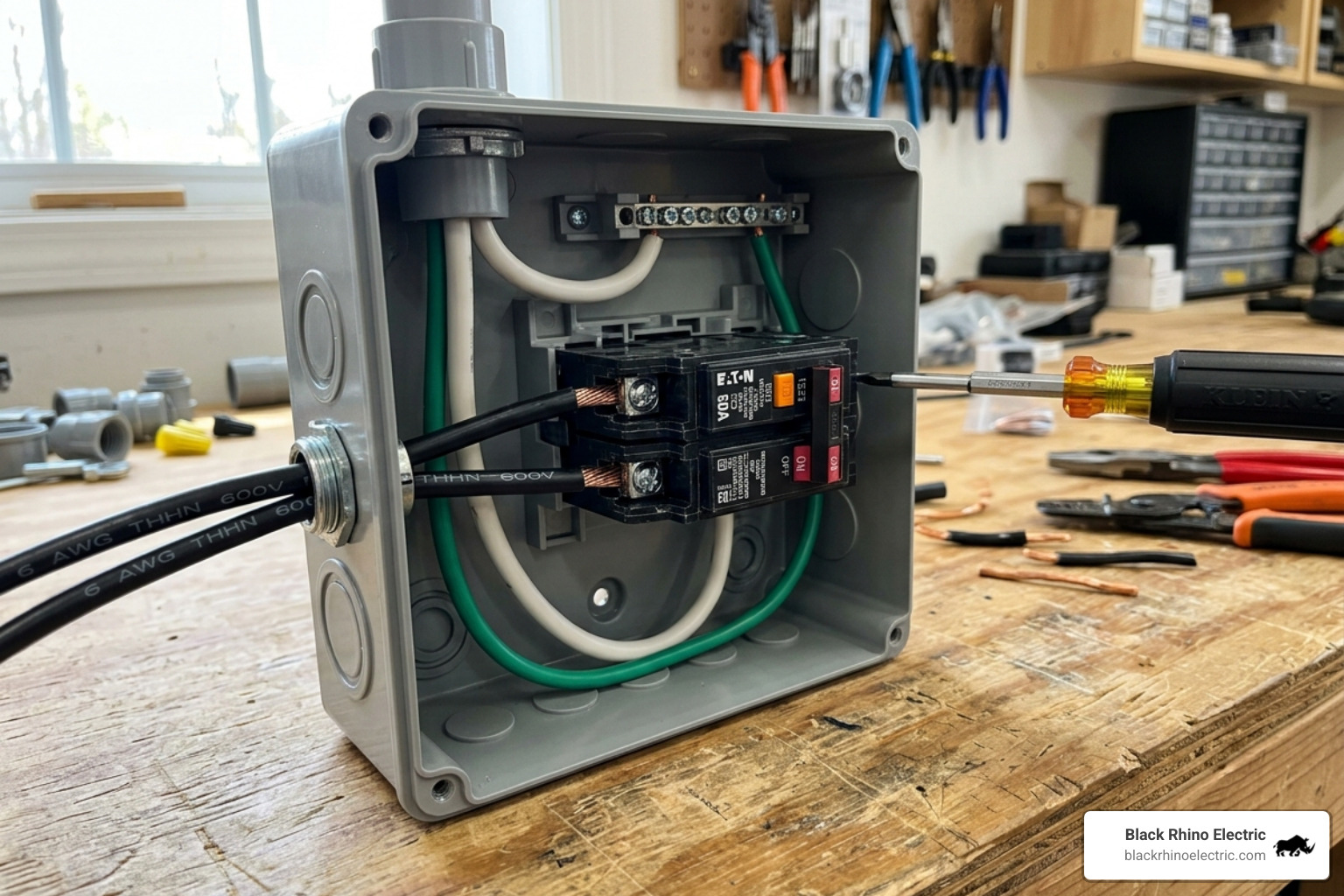
The neutral wire is where most DIYers get confused. In a GFCI disconnect, the white neutral pigtail from the breaker must go to the neutral bar, while the white load neutral from the tub must go directly to the breaker itself. Get this wrong, and the GFCI will trip every single time. Learn more about this in Wire a Hot Tub 240v or this Hot Tub Wiring Diagram resource.
NEC Article 680 and Safety Clearances
Safety isn’t just about the wires; it’s about where things are placed. The NEC is very specific:
- The 5-Foot Rule: Your GFCI disconnect panel must be at least 5 feet from the water’s edge but no further than 50 feet. It must be within “line of sight” so someone can cut power in an emergency.
- Overhead Clearances: You need at least 16 feet of clearance from any overhead power lines.
- Receptacle Distance: You are required to have a 120V convenience outlet located between 10 and 20 feet from the spa for accessories.
Ensuring you have the right Hot Tub Disconnect Switches is vital for staying code-compliant.
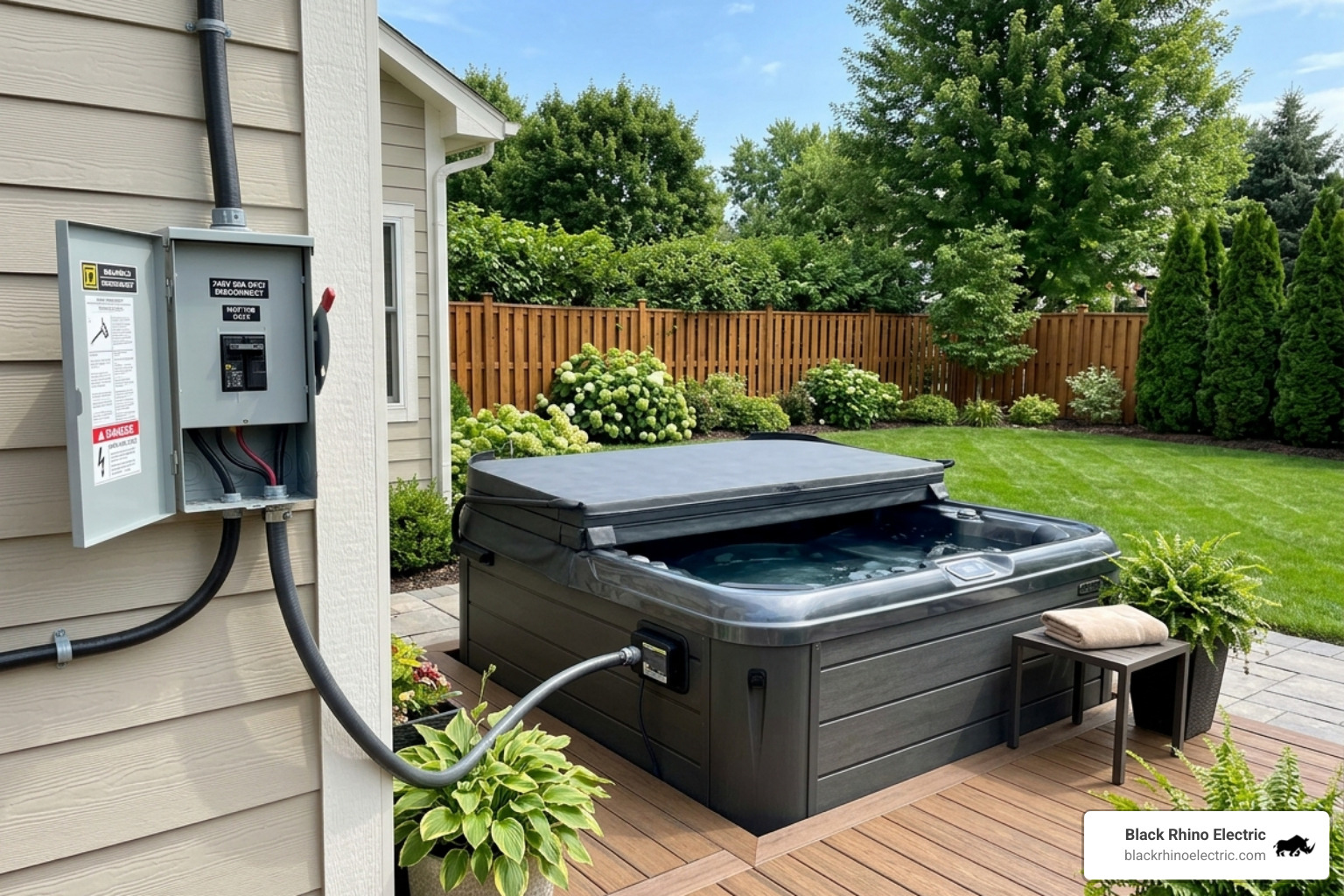
Step-by-Step Installation and Common Pitfalls
Wiring a hot tub is a specialized task. It is one of the few home projects where “close enough” can be lethal. From North Ogden to Bountiful, we see the same mistakes over and over. Here is the right way to do it.
Wiring the 50-Amp GFCI Breaker and Disconnect Panel
The heart of your safety system is the GFCI (Ground Fault Circuit Interrupter). This device monitors the current balance between the hot legs and the neutral. If it detects an imbalance as small as 5 milliamperes — about the amount of energy it takes to power a tiny LED — it trips in milliseconds.
The most common “sparky surprise” is nuisance tripping. This usually happens because the neutral wire was routed to the ground bar instead of the breaker. To avoid this, follow The Ultimate Hot Tub GFCI Wiring Handbook and our deep dive into How to Wire a 50 Amp Spa Panel.
Conduit, Burial Depths, and Wire Gauge Specifications
You cannot simply bury Romex in the ground. For a 50-amp circuit, you need #6 AWG THHN copper wire. Aluminum is generally a big no-no because it expands and contracts, leading to loose connections and fire hazards.
| Conduit Type | Burial Depth | Notes |
|---|---|---|
| PVC (Schedule 40/80) | 18 Inches | Most common for residential backyards |
| Rigid Metal Conduit | 6 Inches | Used when deep trenching isn’t possible |
| Under a Slab | 4 Inches | Must be inside approved conduit |
We always recommend PVC Schedule 40 for the underground run and Schedule 80 for any conduit exposed above ground to protect against lawnmowers and “oops” moments. For more on this, see SpaDepot’s Wiring Guide or our Hot Tub Wiring overview.
Avoiding Nuisance Tripping and Warranty-Voiding Mistakes
Here is the thing: if you use undersized wire (like #8 or #10 for a 50-amp load), the wire will heat up, the voltage will drop, and your pumps will eventually burn out. Even worse, manufacturers like Jacuzzi or Hot Spring will void your warranty the moment they see an improper installation.
Common mistakes include:
- Loose Terminals: Arcing at the terminals can melt your control board.
- Moisture Corrosion: Not using liquid-tight flexible conduit for the final connection allows steam and water to enter the electronics.
- No Bonding: Failing to bond metal parts within 5 feet of the tub can lead to “tingles” or shocks when touching the water and a metal rail simultaneously.
If you find your Hot Tub has No Power, it’s often due to one of these preventable issues. Check out these Top Tips from a Certified Hot Tub Electrician to stay ahead of the game.
Conclusion: Ensuring a Lifetime of Safe Soaking
You know what? While a hot tub wiring diagram provides the roadmap, the actual execution requires precision to protect your family and your investment. At Black Rhino Electric, we specialize in code-compliant hot tub installations throughout Ogden and Weber County, ensuring your spa is a source of bliss rather than a hazard.
Whether you are in Roy, Syracuse, or Farmington, we understand the specific challenges of Utah’s climate and local codes. We don’t just pull wires; we future-proof your relaxation. We ensure every connection is torqued to spec, every trench is the right depth, and every GFCI is tested and ready for action.
If you want experienced help from a team that puts safety and code compliance first, Request a Free Quote and let us help you get your hot tub installation done right.