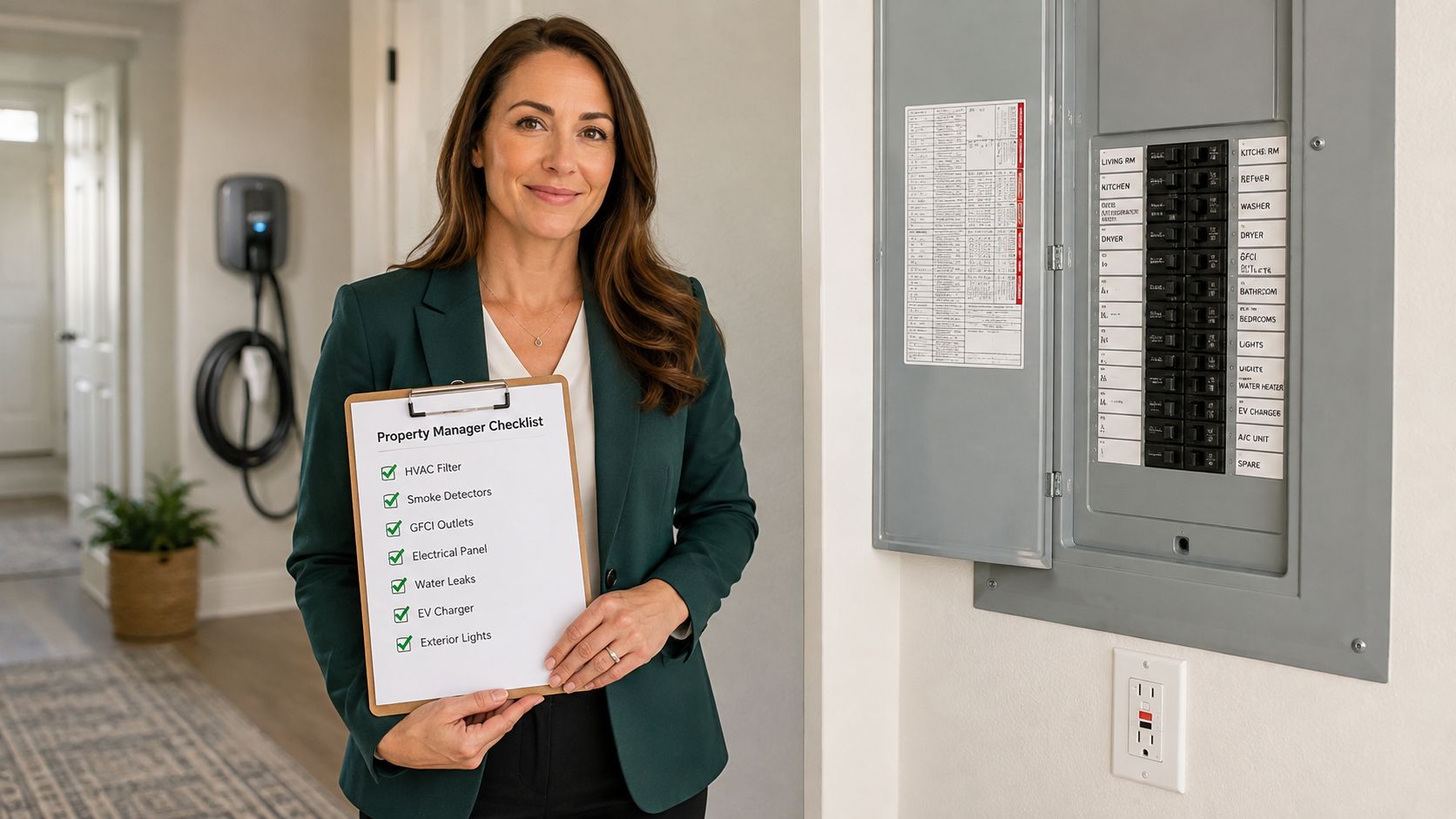
A useful electrical maintenance checklist for property managers combines routine visual checks, documented monthly safety testing, annual professional inspection, and clear escalation rules for hazards. A strong program also uses recurring review intervals, with some property-management guidance recommending electrical walkthroughs twice yearly and facilities guidance calling for quarterly checks of panels, outlets, and lighting, plus annual professional inspections. Property electrical maintenance guidance supports that scheduled approach.
A tenant reports another breaker trip in an Ogden apartment, while a common-area light has gone dark and nobody can confirm when the panel was last inspected. That's the point where a checklist becomes more than paperwork. It gives managers of rentals, apartment communities, offices, and commercial properties a repeatable way to observe conditions, document defects, arrange qualified testing, and escalate hazards before a small symptom becomes an outage, fire risk, or code problem.
Property staff can safely note visible damage, unusual odors, missing covers, dark areas, and repeated complaints. They shouldn't remove panel covers, tighten energized connections, test unknown wiring, or repair faults. A licensed electrician handles technical inspection, measurements, repairs, panel work, grounding verification, and code corrections. The workflow below follows practical property decisions, daily or weekly observation, monthly safety testing, quarterly commercial checks, annual professional service, and post-incident review. For backup power planning, property teams can also review standby generator maintenance advice.
1. Panel and Breaker Inspection
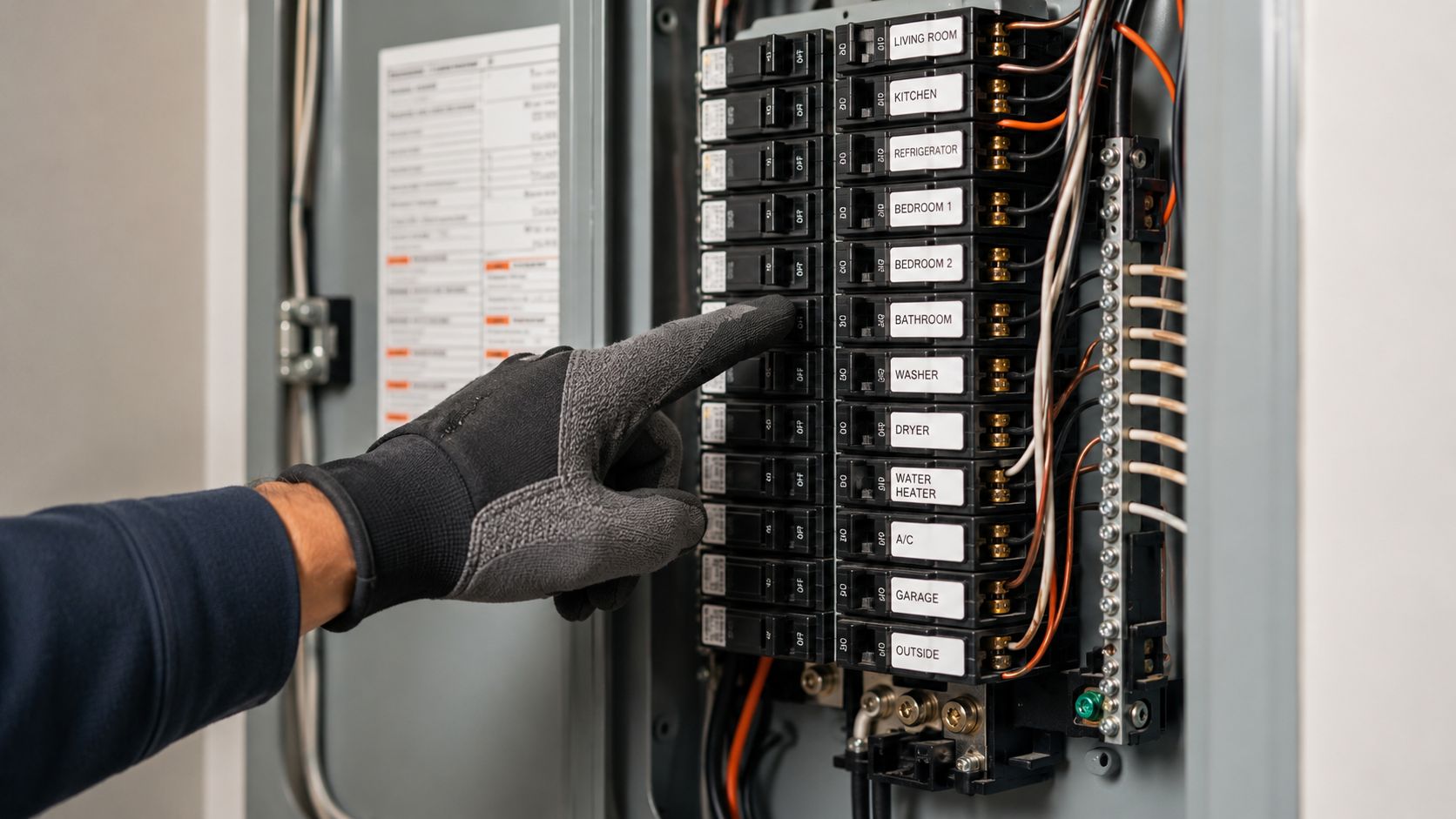
The electrical panel is where recurring tenant complaints often become diagnosable maintenance findings. Property managers should record tripped breakers, unexplained outages, buzzing, visible discoloration, corrosion, missing labels, blocked access, and any odor resembling overheated plastic. A breaker that trips repeatedly isn't only an inconvenience. It may indicate overload, a failing device, damaged wiring, or a connection problem that requires professional evaluation.
A licensed electrician can inspect conductor terminations, breaker condition, amperage compatibility, grounding and bonding, panel labeling, corrosion, and signs of arcing or heat damage. The electrician may also identify double-tapped breakers, where two conductors share a terminal not designed for that arrangement. That condition can create a poor connection and should be corrected by a qualified professional, not by building staff.
What managers should document
A useful panel record identifies the building, panel location, affected circuit, date, symptom, tenant or staff report, and temporary action taken. The record should also show whether the issue was isolated, whether occupancy was affected, and whether a contractor received the work order.
Property-management guidance describes recurring inspections rather than ad hoc repairs. NFPA 70B-style maintenance programming guidance organizes work around monthly, quarterly, annual, and longer-cycle maintenance for major equipment. Residential properties may use a longer major-equipment interval, while commercial and multi-tenant buildings commonly need more frequent documented review because more occupants and loads depend on shared distribution equipment.
A written report is more useful than a verbal “everything looks fine.” Managers should request:
- Finding details: Ask for each defect, its location, severity, and recommended action.
- Panel photographs: Keep images with the property record so later contractors can compare conditions.
- Separate estimates: Distinguish urgent repairs from panel upgrades or future capacity work.
- Reinspection notes: Schedule a review after renovations, service upgrades, or major breaker work.
Black Rhino Electric's breaker panel electrician service can help property managers address breaker, panel, labeling, and upgrade concerns across Northern Utah.
2. GFCI and AFCI Outlet Testing and Replacement
Ground-fault and arc-fault protection deserve a place on the recurring calendar, not just the turnover punch list. A GFCI protects against current traveling along an unintended path, while an AFCI is designed to respond to hazardous arcing conditions. The manager's role is to confirm that scheduled testing occurred, record failures, and keep occupants away from a device or circuit that won't operate safely.
A property-maintenance source recommends monthly GFCI testing by using the TEST and RESET controls, with visual checks of outlets, exterior lighting, and panel covers on monthly or quarterly cycles. GFCI preventive-maintenance guidance supports separating observable checks from electrician-level diagnostics. Staff should only use accessible controls as directed by the device and property procedure. They shouldn't open boxes, bypass protection, or repeatedly reset a device that trips again.
The 2023 NEC requires AFCI protection for certain new or extended dwelling-unit circuits, including specified 120-volt, single-phase, 10-, 15-, and 20-amp branch circuits in rooms such as kitchens, bedrooms, living areas, hallways, closets, and laundry rooms. The 2023 NEC residential requirements summary explains that the requirement applies to new circuits and to extensions of existing circuits beyond the stated distance. An electrician should verify whether turnover or renovation work affects protected areas.
Escalate failed protection
A failed device can be more important than a visible cosmetic defect. If a GFCI won't reset, an AFCI trips repeatedly, a receptacle shows heat damage, or a circuit loses power without a clear cause, the circuit should be taken out of normal use and referred to a licensed electrician. Property managers dealing with troubleshooting home electrical problems can provide the contractor with the device location, test result, trip history, and any recent water intrusion.
After flooding, leaks, or other water intrusion near electrical equipment, the record should identify affected rooms and devices. The electrician may need to inspect receptacles, wiring, boxes, panels, and protective devices before the area returns to service.
3. Outlet and Switch Safety Inspection
Outlets and switches tell a property manager how a system is aging at the point of use. A loose wall plate, cracked receptacle, warm cover, burn mark, buzzing switch, or unexplained discoloration should be photographed and entered into the maintenance system. The same applies to switches that don't control the fixture listed on the panel directory or room label.
Managers can observe condition without opening the electrical box. A gently moving cover plate may indicate a loose box or mounting problem behind the wall. Missing or broken plates should be treated as safety defects because they leave wiring components less protected. Staff should never remove the plate to investigate further unless that work is assigned to a qualified electrician.
A practical turnover record
Move-in and move-out inspections are valuable because they establish when visible damage appeared. The record can group devices by room, but it should identify unusual conditions precisely enough for a contractor to find the outlet without guessing.
Useful observations include:
- Physical condition: Record cracks, melted plastic, scorch marks, loose plates, and broken switches.
- Operating behavior: Note buzzing, heat, intermittent power, or a switch that controls the wrong fixture.
- Location and use: Identify whether the device serves a kitchen, bathroom, exterior area, office equipment, or common space.
- Recent events: Add renovation, water intrusion, tenant reports, or repeated breaker trips.
A plug-in receptacle tester may help identify certain wiring indications on compatible outlets, but it doesn't replace professional testing and can't prove that an entire circuit is safe. The electrician determines whether the receptacle is properly grounded, correctly wired, appropriately rated, and supported by suitable overcurrent protection. Older Northern Utah buildings may also need broader review when individual outlet defects point to deteriorated wiring or outdated alterations.
4. Lighting Inspection and Maintenance
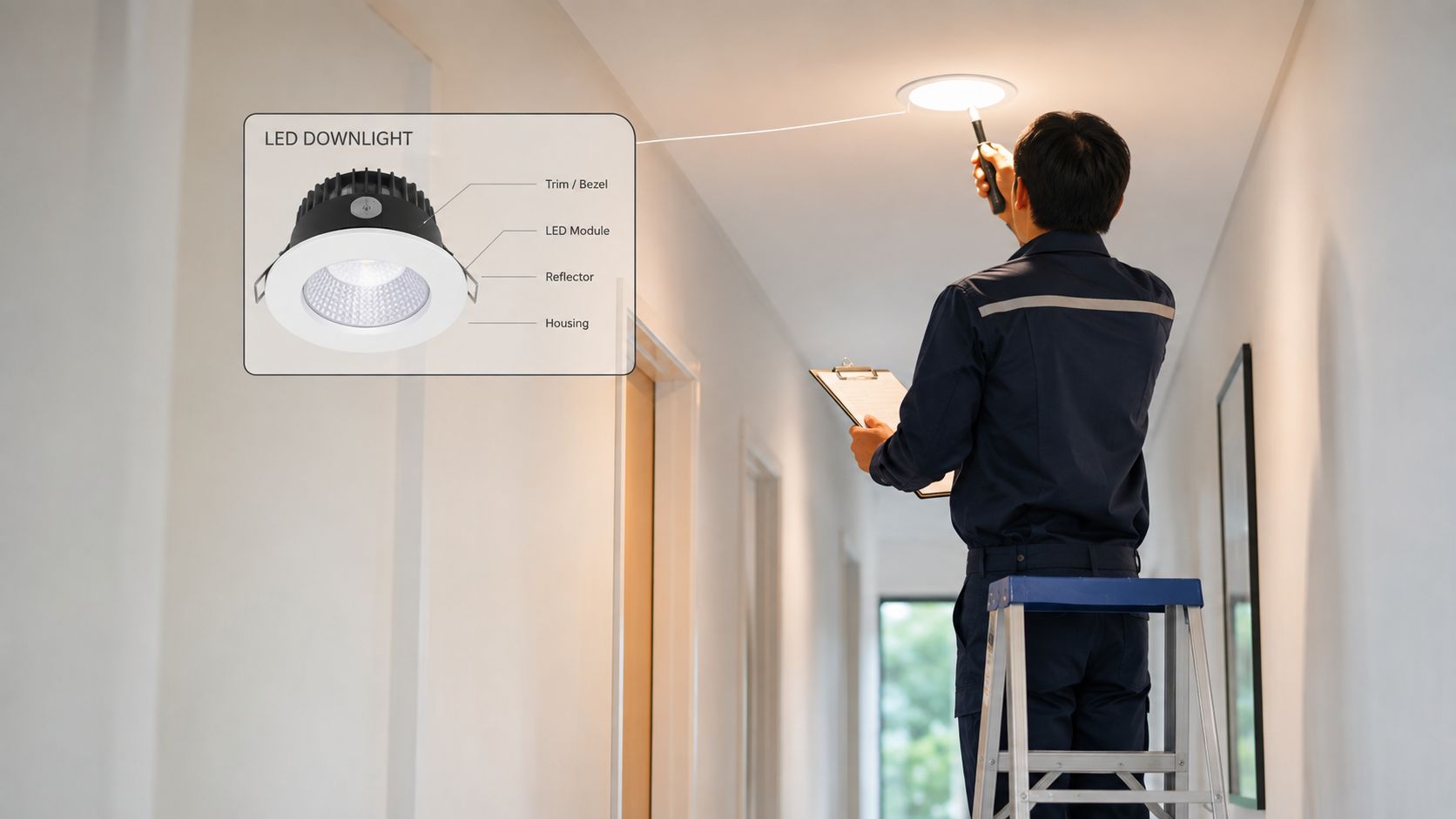
A dark stairwell, parking path, hallway, or entry can turn a minor lamp failure into a tenant-safety complaint. A monthly walk should cover interior fixtures, exterior lighting, common areas, service rooms, signs, and accessible emergency-lighting equipment. The record should distinguish a burned-out lamp from flicker, heat, a damaged socket, a loose cover, or a fixture that repeatedly fails.
Flickering after a bulb replacement deserves escalation. The cause may involve a dimmer, ballast, driver, loose connection, or wiring issue, and replacing lamps repeatedly doesn't correct those conditions. Exterior fixtures also need the correct environmental rating, especially where moisture can reach the enclosure.
Separate appearance from life safety
Property staff can identify dark areas and damaged lenses. A licensed electrician evaluates connections, fixture suitability, switching, circuit loading, emergency operation, and installation quality. Commercial property managers should place emergency lighting and exit-sign checks on a documented quarterly schedule, while annual professional reviews can address protective devices and broader electrical conditions. Emergency-lighting testing information can help managers understand why functional testing needs a record rather than a casual visual glance.
LED upgrades can reduce recurring lamp work and improve consistency, but the right product still depends on the location, controls, enclosure, and existing wiring. Managers should compare fixture compatibility, installation labor, access equipment, tenant disruption, and disposal of old equipment instead of selecting replacement lamps by appearance alone. Black Rhino Electric provides recessed lighting installation and broader residential and commercial lighting support for properties in communities including Ogden, Layton, and surrounding Northern Utah areas.
5. Surge Protection and Power Quality Assessment
Power-quality complaints usually arrive as symptoms, not measurements. Tenants may report flickering lights, computers restarting, security equipment dropping offline, or repeated failures of sensitive electronics. A property manager should capture the time, location, affected equipment, weather conditions, and whether neighboring suites experienced the same issue.
Surges can originate from lightning, utility switching, or large equipment starting and stopping. A licensed electrician can evaluate the service, distribution equipment, grounding, connections, and surge-protection strategy using appropriate test instruments. Thermal scanning can also reveal abnormal heat at electrical equipment, although a scan is a diagnostic tool, not a substitute for correcting the underlying condition.
Practical rule: A surge protector is part of a protection plan, not proof that the electrical system is healthy.
Whole-property surge protection may be appropriate at the service equipment, with additional point-of-use protection for identified critical loads such as computers, networking, alarms, and control systems. The electrician should explain what each device protects, how its status is monitored, and what replacement record the property should retain. Managers shouldn't treat a power strip as equivalent to a professionally evaluated building-wide strategy.
A useful service request includes:
- Affected load: Identify servers, office equipment, access controls, lighting, or tenant equipment.
- Pattern: Record whether failures are isolated, intermittent, or property-wide.
- Weather context: Note thunderstorms or other events near the reported problem.
- Operational impact: Document outages, resets, security interruptions, and tenant locations.
- Requested deliverable: Ask whether the visit will include a written power-quality assessment and recommendations.
Northern Utah properties in Marriott-Slaterville, Roy, and other communities can benefit from having surge-protection status, panel condition, and grounding findings stored in the same maintenance record.
6. Grounding and Bonding System Verification
Grounding and bonding are easy to overlook because much of the system is concealed, yet they influence how fault current travels during an abnormal event. Grounding connects the electrical system to an intentional grounding path. Bonding connects applicable metal parts so they don't sit at hazardous differences in voltage. The electrician verifies the actual arrangement, continuity, connections, and condition rather than relying on a label or an old inspection note.
This work becomes especially important after panel changes, remodeling, service work, or construction that may have affected metal piping, service equipment, or other bonded components. Corrosion, missing conductors, damaged connections, and improper alterations can leave a property with a safety issue that isn't visible at outlets or switches.
When to request verification
A manager should add grounding concerns to the urgent contractor queue when occupants report shocks, equipment behaves unpredictably after storms, or electrical equipment shows unexplained damage. Water intrusion and renovation work also justify review, particularly in older homes and mixed-use buildings where past alterations may not be fully documented.
A licensed electrician may perform continuity and grounding tests appropriate to the property and provide written findings. The report should identify the tested equipment, observed deficiencies, corrective work, and any code follow-up. It should also note whether other trades' work appears to have disturbed bonding connections, so the property owner can coordinate correction without assigning electrical responsibility to unqualified staff.
Farmington, Kaysville, and other Davis County properties often include older homes, additions, converted spaces, or remodels completed at different times. A checklist that only records whether outlets work can miss grounding and bonding conditions. A better record links the inspection to service equipment, renovation history, visible metal systems, and any prior electrical repair.
7. Electrical Load Analysis and Capacity Planning
Repeated breaker trips can be a maintenance defect, but they can also be a capacity-planning problem. Before a property adds an EV charger, hot tub, electric heating equipment, new kitchen load, commercial machinery, or expanded tenant space, the manager should request a load analysis rather than assuming the existing service has room.
The electrician reviews service size, equipment demand, circuit distribution, operating patterns, and planned additions. The result should explain whether the current arrangement can support the proposed work, whether circuits need redistribution, and whether a panel or service upgrade is necessary. It may also identify an overloaded branch circuit that routine breaker resets have concealed.
Plan before purchasing equipment
An EV charger purchase should trigger electrical review before installation is scheduled. The same applies to Tesla Wall Connector projects, hot tub wiring, remodels, new construction, backup-power equipment, and commercial tenant improvements. A property manager should give the electrician a complete equipment list, including future additions that may affect capacity.
The written calculation or planning report should address:
- Existing service: Record the service rating, main overcurrent protection, and panel condition.
- Current demand: Identify major electrical loads and known operating conflicts.
- New demand: Describe the charger, spa, equipment, tenant space, or planned expansion.
- Distribution: Note whether existing circuits are properly allocated and labeled.
- Upgrade path: Separate immediate requirements from future capacity recommendations.
Black Rhino Electric's EV charger electrical load guide can help managers prepare for an electrical conversation before equipment arrives. For broader planning, the contractor can also evaluate sizing electrical circuits, while final calculations, installation, and code decisions remain the electrician's responsibility.
8. Wiring and Cable Inspection for Damage or Deterioration
Visible wiring should be treated as evidence, not as a complete picture of the system. Managers can note cuts, exposed conductors, melted insulation, damaged conduit, water staining, pest activity, unsupported cable, and signs that a renovation disturbed wiring. Attics, crawlspaces, basements, garages, exterior walls, and mechanical or service spaces deserve attention because cables in those areas may face moisture, pests, impact, or temperature changes.
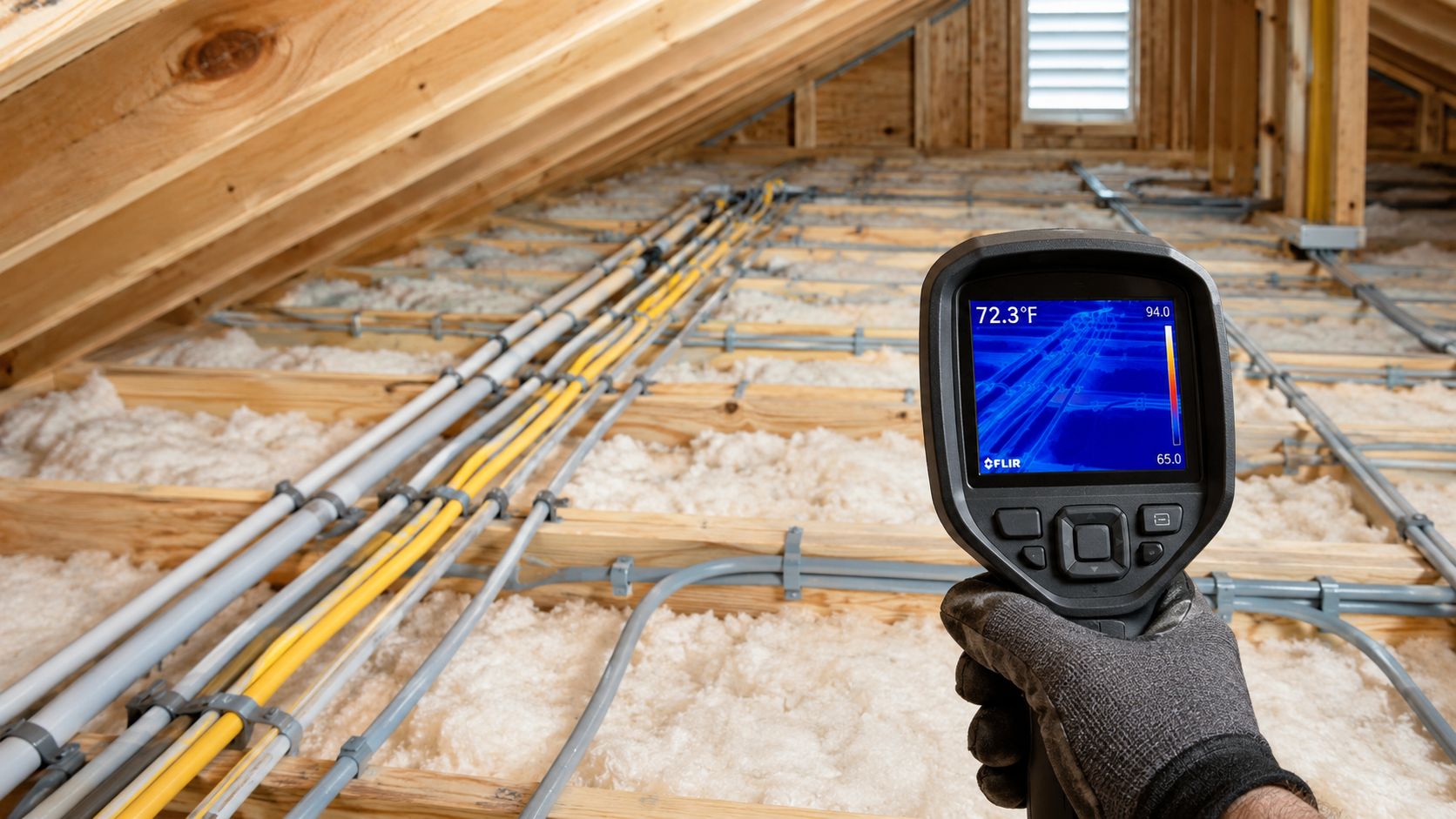
A licensed electrician determines whether conductors need repair, rerouting, replacement, protection, or a larger corrective project. Thermal imaging can help identify hot connections or overloaded areas during a professional inspection, but it doesn't authorize staff to touch or open equipment. Any suspected damaged conductor should be left alone and reported with its location.
Water and pests change the priority
Water intrusion near wiring, outlets, panels, or junction boxes deserves more than cosmetic drying. The property record should include the source area, date discovered, affected rooms, photos, and whether power was isolated by an authorized professional. Managers should also document rodent evidence, construction debris, and any exposed cable found during tenant improvements.
The signs of faulty electrical wiring article can help staff recognize warning signs such as flickering lights and burnt outlets. Recognition is the safe limit. Repairs, splices, conduit changes, insulation assessment, and energized testing belong to a licensed electrician.
For multi-tenant buildings, the work order should identify the suite, floor, panel, and circuit if known. That precision prevents a contractor from searching an entire building and helps reveal patterns when several units report similar symptoms. A recurring defect across apartments may indicate shared equipment, common-area distribution, or a building-wide wiring condition rather than isolated tenant misuse.
8-Point Electrical Maintenance Comparison
| Item | Implementation complexity | Resource requirements | Expected outcomes | Ideal use cases | Key advantages |
|---|---|---|---|---|---|
| Panel and Breaker Inspection | Medium, internal panel testing and visual checks; electrician required | Licensed electrician, multimeter/torque tools, inspection time, photos | Identify loose connections, tripped/incorrect breakers, grounding issues; compliance report | Annual inspections, older buildings, after major electrical work | Early fire-hazard detection; prevents outages; documents compliance |
| GFCI and AFCI Outlet Testing and Replacement | Low–Medium, push-button testing easy; breaker replacement more complex | Outlet tester, replacement outlets/breakers; electrician for breaker work | Verify protective devices function; reduce shock and arc-fire risk | Bathrooms, kitchens, bedrooms, monthly testing, failed units | Rapid protection from ground faults/arcing; inexpensive outlet fixes; code compliance |
| Outlet and Switch Safety Inspection | Low, visual and tester-based checks; simple repairs or electrician for wiring | Plug-in tester/multimeter, time for systematic checks, electrician for repairs | Find loose or damaged outlets/switches; prevent arcing and shocks | Move-in/out checks, rental inspections, properties with frequent complaints | Low-cost repairs avoid major hazards; improves tenant safety and satisfaction |
| Lighting Inspection and Maintenance | Low–Medium, bulb/fixture checks; recessed/ballast issues may need pros | Ladders, bulbs/fixtures, electrician for wiring or LED retrofits | Restore proper lighting, detect damaged sockets/ballasts, improve energy use | Dark common areas, scheduled maintenance, LED upgrade projects | Reduces liability; improves visibility; significant energy savings with LEDs |
| Surge Protection and Power Quality Assessment | Medium–High, specialized measurement and analysis | Power quality meters, surge monitors/protectors, licensed electrician, possible whole-house device | Detect voltage fluctuations/surges; recommend/install surge protection | Properties with sensitive electronics, after storms, frequent equipment failures | Protects expensive equipment; extends device life; supports warranty/insurance claims |
| Grounding and Bonding System Verification | High, specialized tests and potentially invasive corrections | Megohmmeter/clamp meter, bonding materials, licensed electrician; possible trenching | Confirm grounding continuity and bonding; ensure safe fault paths | Older buildings, after remodels, suspected shocks or corrosion | Critical safety function; reduces shock/fire risk; required for code compliance |
| Electrical Load Analysis and Capacity Planning | High, NEC calculations and coordinated planning | Load-calculation tools, electrician, possible utility coordination and upgrade costs | Determine service adequacy, plan upgrades, avoid overloads | Adding EV chargers, hot tubs, major renovations, future-proofing | Prevents nuisance trips/overloads; informs upgrade budgeting and safe installations |
| Wiring and Cable Inspection for Damage or Deterioration | Medium, visual inspections plus thermal imaging for hidden issues | Thermal camera, inspection access (attics/crawlspaces), licensed electrician for repairs | Identify damaged insulation, water/pest damage, overheating conductors | After water/pest incidents, older homes, pre-renovation checks | Early detection of hidden hazards; avoids costly rewiring or emergency failures |
Turn Findings Into a Safer Maintenance Plan
A checklist works only when each finding becomes an assigned action. Property managers should schedule daily or weekly visual walks according to occupancy, risk, and building operations. Those walks can cover dark common areas, damaged outlets, missing covers, panel access, unusual odors, visible wiring damage, and tenant reports. Staff should record observations without opening electrical equipment or attempting repairs.
Monthly work should include documented GFCI and AFCI functional testing where the property procedure permits safe use of the device controls. Quarterly commercial reviews should include lighting condition, emergency lighting, exit signs, panels, outlets, and other designated distribution points. Annual licensed inspections should address panels, protective devices, grounding and bonding, wiring condition, emergency power where applicable, and corrective work that staff can't verify safely. A facilities-maintenance source describes six-monthly inspection intervals for switchboards, wiring, and site sheds, reinforcing the value of a fixed documented cadence rather than complaint-driven service alone. Electrical-installations inspection guidance offers a useful reference for structuring that review.
Each record should include:
- Property and circuit location: Identify the building, unit, suite, floor, panel, and device when known.
- Date and observed symptom: Record when the condition was found and what staff or occupants experienced.
- Temporary safety action: Note whether a room, device, or circuit was removed from normal use by authorized personnel.
- Photos and attachments: Preserve visual evidence with the work order and inspection record.
- Contractor recommendation: Capture the diagnosis, proposed repair, urgency, and any access requirements.
- Estimate and approval: Keep the estimate separate from the inspection result and note the decision.
- Permit or code follow-up: Track required inspections, corrections, and documentation.
- Completion date: Close the issue only after the repair and any required recheck are complete.
Escalation should be immediate for smoke, sparks, burning odors, exposed conductors, shocks, water intrusion near electrical equipment, severe heat or discoloration, or repeated breaker trips. Staff should keep occupants away from the hazard, avoid touching suspect equipment, and contact the appropriate electrical professional or emergency service when conditions threaten life or property. A breaker that trips once may need documentation. A breaker that keeps tripping needs diagnosis, not repeated resets.
For residential rentals, the manager can combine turnover observations with monthly device testing and annual professional inspection. Apartment communities and mixed-use properties benefit from asset-level records that distinguish unit circuits from shared panels, lighting, meters, emergency systems, and tenant improvements. Commercial managers should also keep contractor reports available for insurance, lender, compliance, and internal review.
Black Rhino Electric serves residential and commercial customers from its Marriott-Slaterville headquarters across Weber, Davis, and Salt Lake counties, including Ogden, South Ogden, Roy, Layton, Clearfield, Bountiful, Farmington, Kaysville, Salt Lake City, and nearby communities. Property managers can call 385-396-7048 or submit a quote request for panel and breaker work, troubleshooting, lighting, EV chargers, Tesla Wall Connectors, hot tub wiring, GFCI and outlet service, commercial electrical work, generator transfer-switch projects, and code-correction support.
Black Rhino Electric helps Northern Utah property managers turn inspection findings into organized electrical repairs, upgrades, troubleshooting, lighting work, EV charger installations, GFCI service, commercial maintenance, and code corrections. Visit Black Rhino Electric to review electrical services and request support for a safer, better-documented property maintenance plan.