
Hiring the right electrical contractor utah is about so much more than just fixing a problem; it's a critical investment in the safety and functionality of your property. Honestly, with so much at stake, you need a guide to help you make a smart, confident decision. Let me explain how to find a trusted professional who gets the job done right, the first time.
Contents
- 1 Why Choosing The Right Utah Electrical Contractor Matters
- 2 Decoding Utah Electrician Licenses and Insurance
- 3 Typical Electrical Services and Utah Pricing
- 4 How To Vet Contractors and Compare Quotes
- 5 Preparing For Your Electrical Project
- 6 The Final Walkthrough and Project Sign Off
- 7 A Few Common Questions We Hear
Why Choosing The Right Utah Electrical Contractor Matters
You know what? With Utah's construction scene absolutely booming, finding a truly qualified professional has never been more critical. From new subdivisions popping up all over Weber and Davis counties to the high-tech demands of commercial projects down in the Silicon Slopes, the need for skilled electricians has just skyrocketed. This rapid growth has created a high-stakes environment for property owners.
The state's expansion is undeniable. In fact, Utah added roughly 5,000 construction jobs over the past year alone, cranking up the demand for certified electrical contractors to handle all the new development and infrastructure upgrades.
Making the right choice protects you from some serious headaches. What kind of headaches?
- Safety Hazards: Improper wiring is a leading cause of residential fires, plain and simple. A licensed professional lives and breathes the strict National Electrical Code (NEC) standards. It's not optional.
- Costly Rework: A job done wrong the first time often costs double to fix. Hiring a vetted contractor from the get-go saves you from future pain and surprise expenses.
- Failed Inspections: Professional contractors know the local permitting and inspection game inside and out. They ensure your project is fully compliant, keeping you clear of any legal trouble.
Here’s the thing: picking an electrical contractor isn't just a transaction. It’s a real investment in your property’s safety and function. At Black Rhino Electric, our experience has shown us that homeowners deserve total peace of mind. This guide will walk you through verifying credentials, understanding costs, and ultimately selecting a partner who will get the job done right the first time.
Decoding Utah Electrician Licenses and Insurance
Let's talk about the single most important thing you can do to protect your home when hiring an electrician: making sure they're properly licensed and insured.
Navigating electrician credentials can feel like wading through alphabet soup, but these pieces of paper are your primary assurance of safety, skill, and accountability. Honestly, the stakes are way too high to just take someone's word for it. Hiring an unlicensed person could leave you with faulty wiring that’s a genuine fire hazard, not to mention a project that won't pass a city inspection. It’s a risk that’s just not worth taking.

Understanding Utah Licensing Tiers
In Utah, not all electrician licenses are created equal. The state has a tiered system that reflects an electrician's experience and the complexity of work they're legally allowed to perform. Knowing the difference helps you ensure the right professional is on your job.
The number of licensed electricians in Utah is projected to grow by 12% over the next few years, reflecting our state's boom in construction and tech. This growth means more options for you, but it also makes verifying credentials more important than ever. You can read more about Utah's electrician job market findings to see what's driving this trend.
To cut through the confusion, here’s a quick reference guide to what those license levels actually mean for you.
Utah Electrician Licensing Tiers Explained
| License Type | What It Means | Can They Work On Your Project? |
|---|---|---|
| Apprentice Electrician | An entry-level electrician who is learning the trade. | No. They must work under the direct supervision of a Journeyman or Master Electrician at all times. |
| Journeyman Electrician | A fully licensed professional who has completed thousands of hours of training and passed a state exam. | Yes. They can perform most residential and commercial work and supervise apprentices. |
| Master Electrician | The highest level of certification, requiring extensive experience beyond the Journeyman level and a more rigorous exam. | Yes. They can handle any project, pull permits, and are often the ones who own and operate an electrical contracting business. |
As you can see, there’s a clear hierarchy based on proven experience and knowledge.
The bottom line is this: The electrician working in your home should, at a minimum, be a licensed Journeyman. The company you hire, like Black Rhino Electric, must be a licensed Electrical Contractor, which means they are legally registered to run the business and employ these qualified professionals.
The Non-Negotiable Need for Insurance
What happens if an electrician accidentally drills into a water pipe, causing thousands in damages? Or what if a worker gets injured on your property? If your contractor isn’t properly insured, the financial responsibility could fall squarely on you. It’s a nightmare scenario.
Here’s the thing: a legitimate electrical contractor will always carry two key types of insurance, and they should provide proof without hesitation.
- General Liability Insurance: This protects your property. It covers the costs of any accidental damage that occurs during the project.
- Worker's Compensation: This protects the workers. It covers medical costs and lost wages if an employee is injured on your job site, shielding you from liability.
Asking for a "Certificate of Insurance" is a standard and expected part of the hiring process. It's the ultimate safety net that ensures you are fully protected from the unexpected. If a contractor hesitates or makes excuses when you ask, consider it a major red flag and walk away.
Typical Electrical Services and Utah Pricing
So, you know you need some electrical work done, but what does that really involve, and what’s a fair price to pay here in Northern Utah?
Let's be honest, this is the part that stresses homeowners out the most. You want to make sure you’re hiring a pro who can handle your specific job, whether it's a simple repair or a major upgrade. And you definitely want to avoid getting overcharged. Knowing the landscape of common services and typical costs is the best way to feel confident when you start collecting bids.
Common Residential Electrical Services
Our homes are asking more from their electrical systems than ever before. Think about it: we're charging cars, powering home offices, and integrating smart technology that didn't exist a decade ago. Here are some of the most common jobs we handle for homeowners from Salt Lake City up to Ogden:
- Electrical Panel Upgrades: This is a big one, especially in older homes. If you're constantly tripping breakers or planning to add a major appliance like an EV charger or hot tub, a panel upgrade is often the first, most critical step. It’s about safety and capacity.
- EV Charger Installations: With so many electric vehicles on Utah roads, installing a dedicated Level 2 charger has become a standard request. It’s the difference between a frustratingly slow trickle charge and waking up to a full "tank" every morning.
- Hot Tub and Spa Wiring: Getting a hot tub is the fun part; powering it safely is our job. It needs a dedicated, high-power circuit with proper GFCI protection to meet code and keep everyone safe while they relax.
- Smart Home Integrations: This isn't just about fancy gadgets. It can be as simple as installing smart switches that you can control from your phone or as complex as a fully integrated system for your lights, security, and thermostat. It’s about making your home work better for you.
- General Wiring and Outlet Installation: This covers all the basics. Maybe you need an outlet on your back patio for holiday lights, or you're finishing your basement and need the whole space wired. It's the bread-and-butter work that makes a home functional.
A Look at Typical Project Costs in Utah
Alright, let's talk numbers. The question on everyone's mind is, "How much is this going to cost?" While every project has its own quirks, I can give you some realistic ballpark figures for common jobs in Weber, Davis, and Salt Lake counties. This isn't a formal quote, but it's a solid starting point for your budget.
A quick piece of advice: the cheapest bid is almost never the best deal. A suspiciously low price often means corners are being cut—no permit, subpar materials, or inadequate insurance. A fair price reflects quality work that's safe and built to last.
Here’s a breakdown to help you set some realistic expectations.
Typical Costs for Electrical Projects in Northern Utah
This table gives you an idea of what to budget for common residential projects. Remember, the final cost will always depend on the specifics of your home and the scope of the work.
| Service | Estimated Cost Range | Key Factors Influencing Price |
|---|---|---|
| Install New Outlet (Standard) | $150 – $350 | Depends on how easy it is to access existing wiring. The cost goes up if a whole new circuit is needed. |
| Electrical Panel Upgrade | $2,000 – $4,500+ | Varies based on the amperage of the new panel (100A vs. 200A) and the complexity of your home's current wiring. |
| Level 2 EV Charger Installation | $800 – $2,000+ | The biggest factors are the distance from the electrical panel to the garage and whether your panel can handle the new load. |
| Hot Tub Wiring & Connection | $900 – $2,500+ | The length of the wire run from the panel to the hot tub is the primary driver, along with the required GFCI disconnect. |
| Install Ceiling Fan | $200 – $500 | It's cheaper if you're just swapping out an old light fixture. The price increases if we need to install a new, fan-rated box and run wiring. |
Armed with these numbers, you're in a much better position to evaluate the quotes you receive. Knowing what services you need and what they generally cost is the first step toward hiring the right contractor for the job. Now, let’s get into how you can properly vet them.
How To Vet Contractors and Compare Quotes
You've got a few quotes in hand from different companies. Now what? Honestly, this is where the real work begins, and it’s about so much more than just picking the lowest number.
A professional quote is a window into how an electrical contractor operates—their thoroughness, their professionalism, and their transparency. Comparing quotes isn't just about the final price; it's about comparing the value, safety, and quality you’re being offered. A vague, one-line estimate is a massive red flag. A truly professional bid gives you a clear and complete picture of the project, start to finish.
This flow chart shows some common projects we handle, from foundational panel upgrades to modern EV charger and smart home installations.
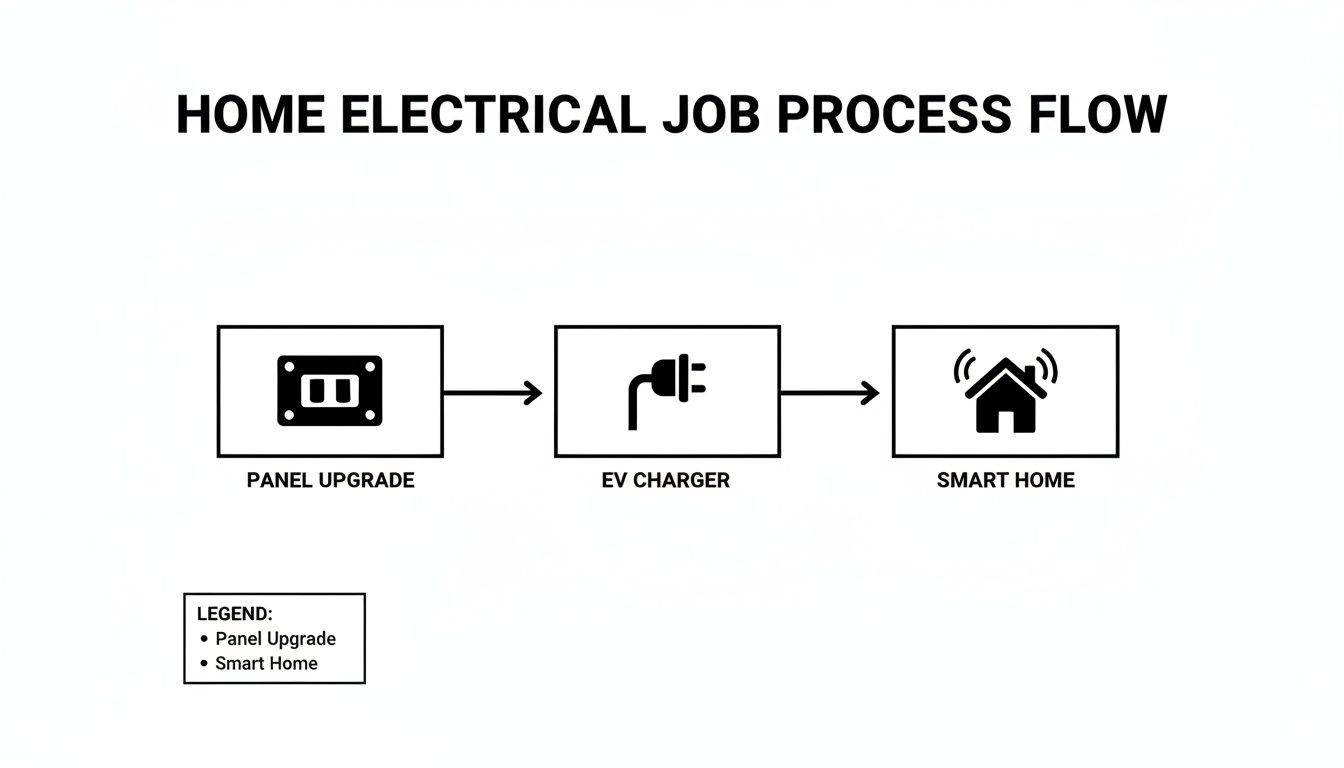
Each of these jobs requires a detailed plan and a quote that reflects the specific steps involved. That's exactly why a detailed bid is non-negotiable.
What a Professional Quote Must Include
When you’re looking at bids, they should be detailed enough for an "apples-to-apples" comparison. If one quote is missing key details, you can't properly evaluate it against another.
Here’s a practical checklist of what to look for:
- Detailed Scope of Work: The quote has to clearly describe exactly what work will be performed. Vague terms like "install EV charger" aren't enough. It should specify things like, "run new 50-amp circuit from panel to garage using 6-gauge copper wire."
- Material and Labor Breakdown: You should see a clear separation of costs. What are you paying for the parts (breaker, wire, outlet) versus the skilled labor to install them?
- Permit Fees: Does the price include the cost of the city or county permit? A professional contractor handles this for you, and the cost should be explicitly listed.
- Payment Terms: The quote should state when payment is due. A common structure is a deposit to start and the final balance upon completion and your satisfaction.
- Company Information: It must include the contractor's full business name, address, phone number, and their Utah contractor license number.
Here's the thing: Utah's construction industry is facing some serious manpower shortages. A staggering 82% of construction firms report having trouble finding qualified electricians and other skilled workers. This high demand makes it even more crucial to secure a detailed, professional bid from a reliable company. It helps ensure your project is prioritized and completed correctly.
Red Flags to Watch For
While you’re comparing quotes, keep an eye out for warning signs that might indicate a less-than-reputable operator. Trust your gut—if something feels off, it probably is.
Be wary of any contractor who gives you a quote over the phone without seeing the job site. A true professional needs to assess the specifics of your home's electrical system to provide an accurate and fair price.
Watch for these common red flags:
- Extreme Pressure Tactics: A contractor who pressures you to "sign now before the price goes up" is using a sales gimmick, not a professional approach.
- Requests for Large Upfront Payments in Cash: Demanding most or all of the payment upfront, especially in cash, is a major warning sign. This can leave you with little recourse if the work isn't completed.
- Vague or "Too Good to Be True" Bids: A suspiciously low bid often means the contractor is cutting corners by using cheap materials, skipping permits, or is uninsured. You can see what a proper estimate looks like when you request a professional quote from us.
Preparing For Your Electrical Project
Once you’ve picked your electrical contractor, a little prep work on your end can make a world of difference. Seriously. Setting the stage for a smooth project isn’t just about helping the electricians out; it’s about reducing the stress and disruption for you and your family.
You know what? Simply understanding the flow of a typical project removes a ton of anxiety. Most professional jobs, whether it's installing a new circuit or a full panel upgrade, follow a predictable, organized path. This ensures nothing gets missed and all the work is done safely and to code.
The Typical Project Workflow
Knowing what to expect from day one helps manage expectations and keeps communication crystal clear. Let me explain. While every project has its own quirks, the core process stays pretty consistent.
- Initial Consultation and Final Plan: The first thing that happens on day one is a final review of the plan with the lead electrician. This is your chance to ask any last-minute questions and confirm the exact placement of new outlets, switches, or light fixtures before any holes are cut.
- Permitting and Approvals: Your contractor will have already submitted the necessary plans to your local city or county. They’ll make sure the permit is approved and posted on-site before any work begins. This isn't just red tape; it's a critical safety step.
- The Work Phase: This is when the tools come out. The electricians will run wires, install boxes, connect devices, and perform all the core tasks of the project.
- Inspections: For any permitted work, a city or county inspector will visit at specific milestones—like a "rough-in" inspection before the drywall goes up—and again at the very end. Your contractor handles all the scheduling for this.
- Final Connections and Testing: After passing inspection, the crew makes the final connections, installs the faceplates, and then thoroughly tests every single component they've touched.
- Final Walkthrough: The job isn't done until you've walked through the entire project with the contractor and confirmed you are 100% satisfied with the work.
Setting Expectations For The Work Itself
Having contractors in your home can feel a bit disruptive, but knowing what's normal helps a lot. Electrical work, by its nature, involves some noise and a temporary mess. Drills, saws, and other tools are just part of the job.
Here’s the thing: a professional team does more than just electrical work; they respect your home. This means laying down drop cloths to protect your floors, cleaning up debris at the end of each day, and communicating clearly about any planned power outages.
Be prepared for short, scheduled power cuts. For safety, electricians often need to kill the power to the circuits they're working on. A good contractor will always give you a heads-up before they do, giving you time to save your work on the computer and plan around it. Their goal is always to minimize the inconvenience while keeping everyone safe.
Finally, at the end of each day, the work area should be left tidy and safe. Even if the project is ongoing, you shouldn't have to navigate a hazardous obstacle course in your own home. This daily cleanup is a hallmark of a professional, respectful crew. It's about delivering a great final product and a positive experience along the way.
The Final Walkthrough and Project Sign Off
The tools are packed up and the truck is warm, but the job isn't quite finished. Before you write that final check, you’ll want to do a thorough walkthrough with your electrician. Honestly, this is your last—and most important—chance to make sure every single detail is perfect.
Don't be shy here. This is your time to kick the tires.
Start by testing everything. Flip every new switch. Plug a small lamp or a simple outlet tester into every new receptacle. Run the new EV charger for a minute. Check any new fixtures. But don't just look—listen. Can you hear any odd buzzing sounds? Does anything feel loose when you touch it? These are the small things a true professional wants to know about so they can make it right.
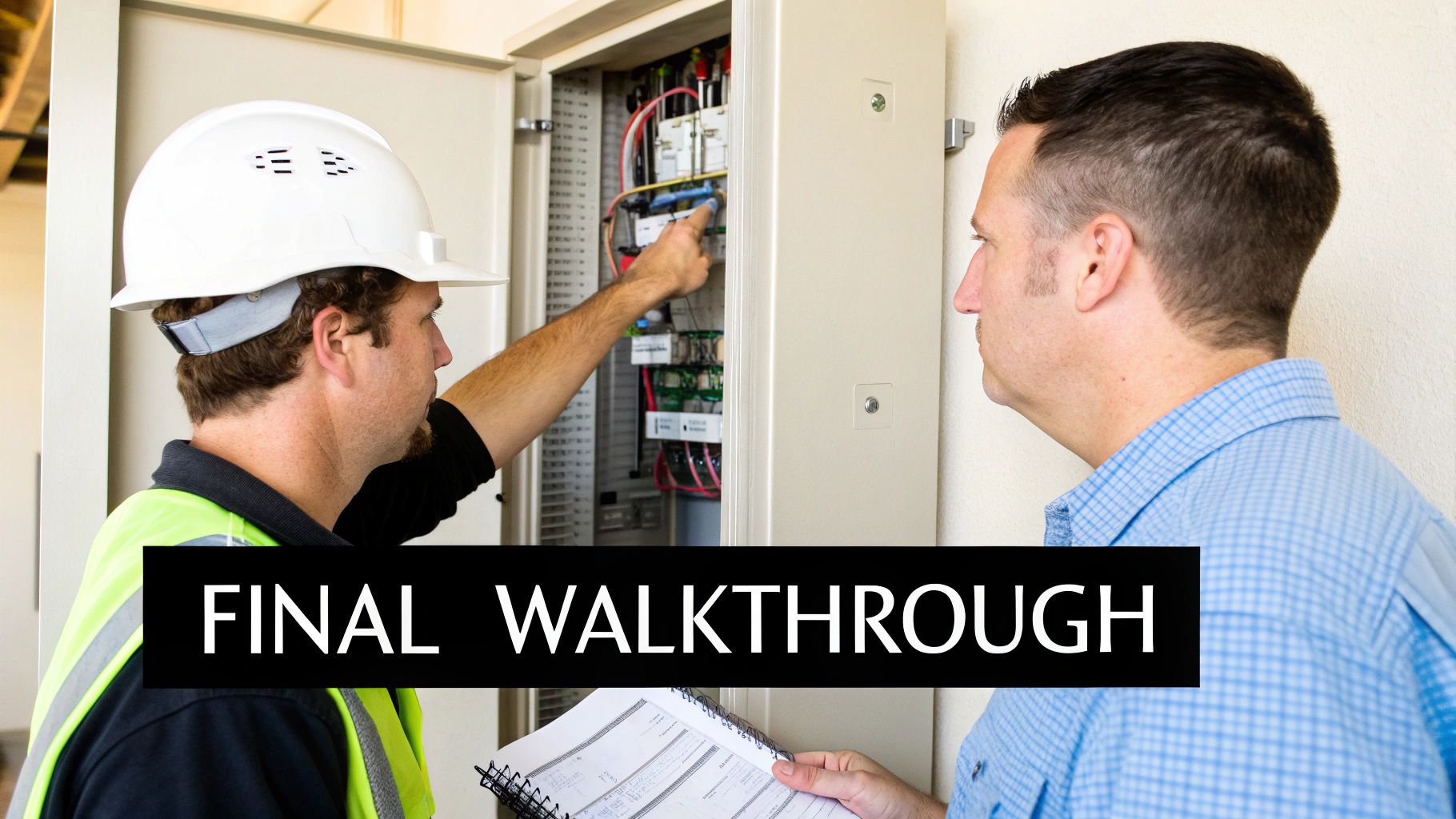
Your Essential Sign-Off Checklist
Let me walk you through what to confirm before signing off. This isn't just about making sure the lights turn on; it's about getting the documentation you need for your own peace of mind.
Here’s what I always tell clients to look for:
- Functionality Test: First and foremost, did you test all the new outlets, switches, and lights?
- Panel Labels: Open the electrical panel. Are the new circuits clearly and accurately labeled? This is absolutely critical for future safety and makes troubleshooting a breeze instead of a guessing game.
- Cleanliness: Did they clean up after themselves? A pro leaves the space cleaner than they found it, with no debris, wire scraps, or dust left behind.
- Final Paperwork: This is huge. You should have the final itemized invoice, any warranties for parts and labor, and—most importantly—the passed inspection certificate from your city or county.
This final check is all about partnership and quality control. Any contractor who takes pride in their work will be happy to walk through it with you and answer every question you have. It’s the final handshake on a job well done.
Once you’ve gone through the list and are completely satisfied, you can confidently sign off on the work.
A Few Common Questions We Hear
Let’s be honest, navigating electrical work can feel a little confusing, especially if you’re hiring an electrician for the first time. Getting straight answers can save you a ton of time, money, and stress. Here are a few of the questions we get asked most often by homeowners here in Utah.
How Do I Know If My Electrical Issue Is An Emergency?
An electrical emergency is any problem that puts your safety or your property at immediate risk. If you notice any of these red flags, don't wait to call a professional. It's just not worth the risk.
- Sparks or Arcing: Any visible sparks from an outlet, switch, or your electrical panel is a serious problem that needs immediate attention.
- Burning Smells: A distinct smell of burning plastic or ozone around your electrical outlets or panel is a huge warning sign. Unplug anything you can and call for help.
- Buzzing Sounds: Your electrical system should run silently. If you hear loud buzzing coming from your walls, outlets, or breaker box, it often points to a dangerous wiring problem.
Do I Need A Permit For A Small Electrical Job?
This is a great question, and the answer really depends on what you're doing and the specific rules in your city.
Simple fixes, like replacing a single faulty light switch or swapping out a standard outlet, usually do not require a permit. But anything more involved almost always will.
| Project Type | Permit Usually Required? | Why It Matters |
|---|---|---|
| New Circuit Installation | Yes | Ensures the new wiring is safely installed and properly connected to the panel. |
| Panel Upgrade | Yes | This is a major system overhaul that absolutely must meet strict safety codes. |
| EV Charger Installation | Yes | Verifies the high-power circuit is safe enough for continuous, heavy use. |
A professional, licensed contractor will handle the entire permitting process for you, making sure your project is 100% compliant and passes inspection. We get into more detail on topics like this on our main FAQ page, so feel free to explore our full list of frequently asked electrical questions.
When you're ready for safe, reliable electrical work from a team that puts clear communication and quality first, trust Black Rhino Electric. Give us a call at 385-396-7048 or request a free quote online to get your project started.