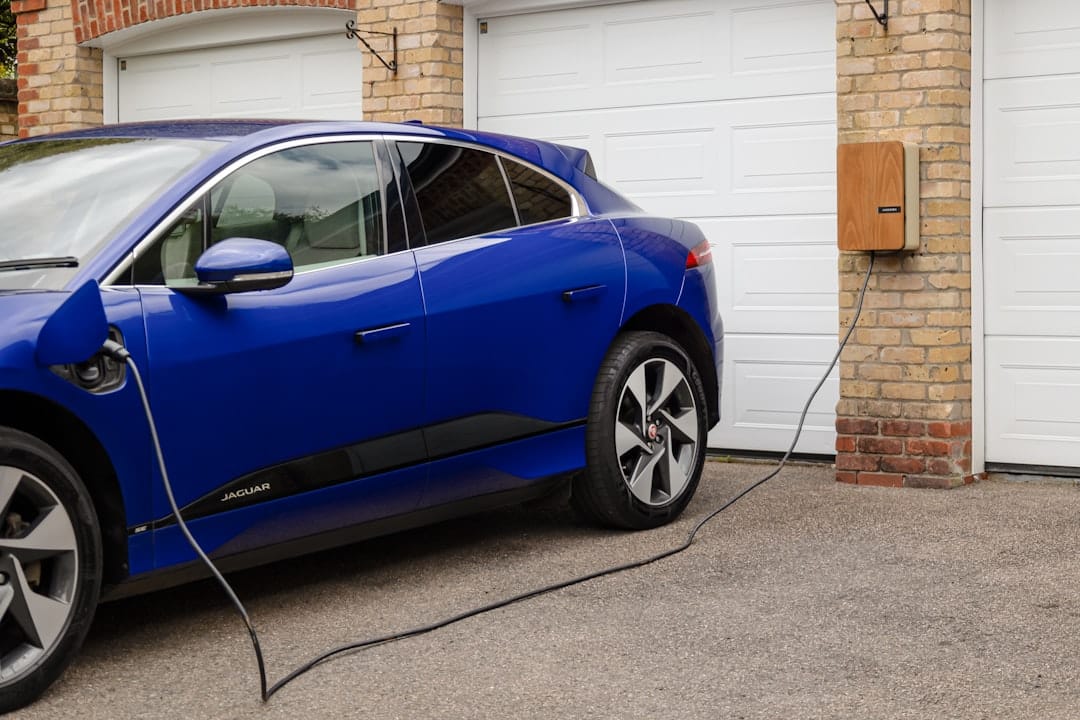
Why Understanding the True Cost Matters
If you’re making the switch to an electric vehicle, understanding the home charging station for electric cars cost is one of your first big questions. The honest answer? It depends on your home’s electrical setup, the charger you choose, and how much installation work is needed. Let’s break down the real numbers so you can budget with confidence.
Quick Answer: What Does a Home EV Charger Really Cost?
The total cost to install a home EV charging station typically ranges from $800 to $2,500 for most homeowners. However, if your electrical panel needs an upgrade or your installation is more complex, you could be looking at $3,000 to $5,000 or more. Here’s what makes up that cost:
- Charger Unit: $400 – $2,000 (depending on features)
- Installation Labor: $500 – $1,500 (2-8 hours at $50-$130/hour)
- Electrical Panel Upgrade (if needed): $1,500 – $3,500
- Permits & Inspections: $50 – $300
- Additional Wiring/Materials: $75 – $150 per meter
Good news: Federal tax credits can cover up to 30% of installation costs (up to $1,000), and many states and utilities offer additional rebates.
Here’s the thing: most EV owners assume they can just plug in their new car and call it a day. But a standard 120V outlet charges your vehicle at a snail’s pace—we’re talking 3-5 miles of range per hour. For real convenience, you’ll want a Level 2 charger that runs on 240V, just like your electric dryer.
The catch? Your home might not be ready for it.
You know what surprises most homeowners? It’s not the charger itself—it’s everything around the installation. That 20-foot wire run from your electrical panel to your garage? That’s $300-$500 in materials and labor. An electrical panel that’s already maxed out? That’s a $2,000+ upgrade. Outdoor installation in Utah’s weather? Add another $100-$200 for weatherproofing.
But honestly, the investment is worth it. Home charging costs roughly $0.05 per mile compared to $0.12-$0.15 per mile at public stations. Over a year of average driving (13,500 miles), that’s about $693 at home versus $1,600+ in public fees. The charger pays for itself.
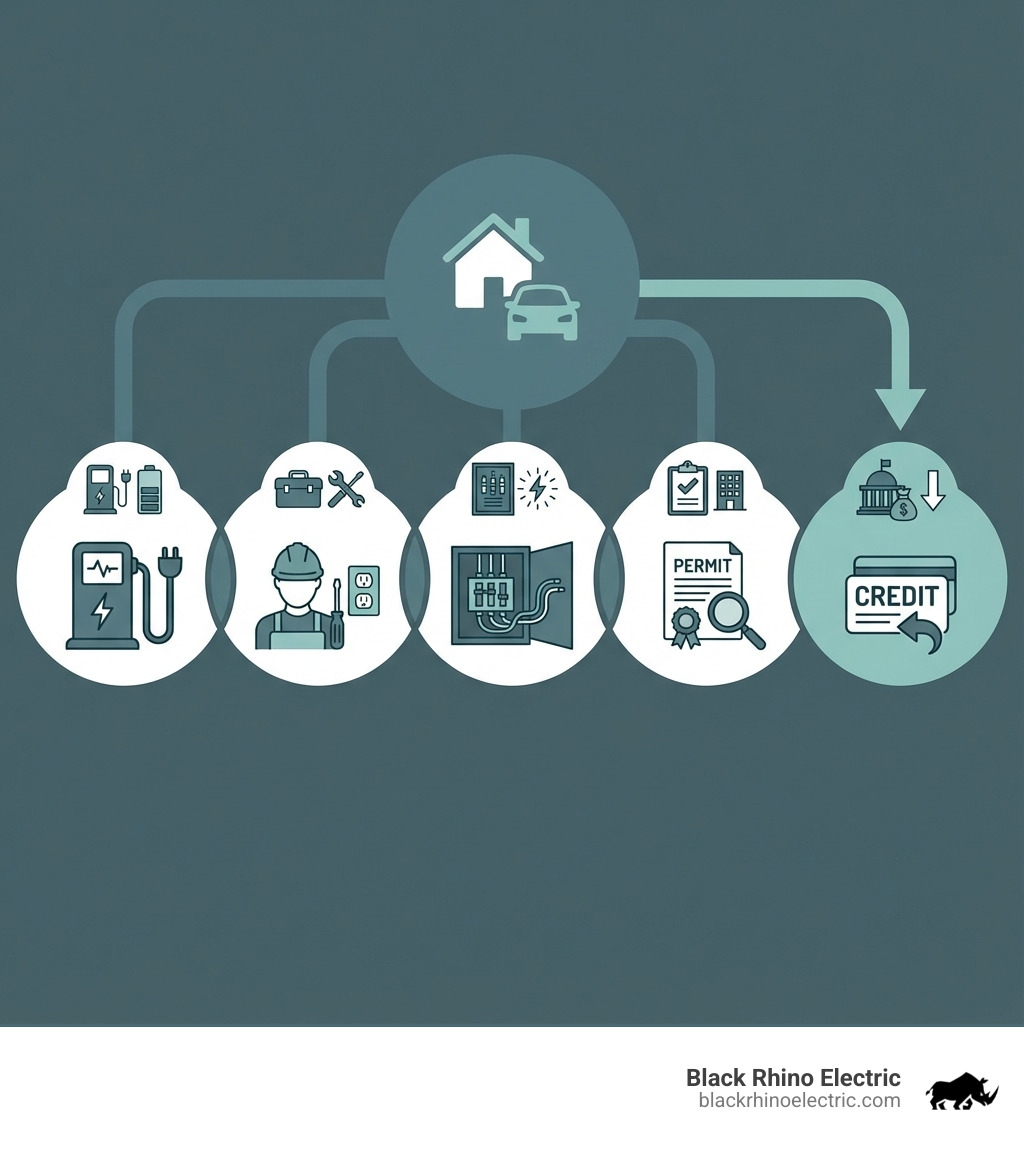
Understanding the Total Home Charging Station for Electric Cars Cost
The national average cost for a Level 2 EV charger installation typically falls between $800 and $2,500. However, this is just a ballpark. Honestly, the final price can swing from a few hundred dollars for a simple setup to over $5,000 if significant electrical upgrades are needed. For example, a basic installation for a 50-amp, 240-volt outlet or a 60-amp wall connector might hover around $1,000. But if your system needs a major overhaul, like upgrading from a 100-amp to a 200-amp panel, you could reach that $5,000 mark. Here’s the thing: investing in a home charger is almost always cheaper in the long run compared to relying on public stations, where costs can be nearly three times higher. Let’s break down what goes into that final number.
The Charger Unit Itself: Level 1 vs. Level 2
The charger you choose is your starting point. Most EVs come with a Level 1 charger that plugs into a standard 120V wall outlet, but it’s painfully slow. Level 1 chargers add about 3-5 miles of range per hour, which might be sufficient if you drive very little or have ample time to charge. For real convenience, though, you’ll want a Level 2 charger. These units require a 240V outlet, similar to what a large appliance like a clothes dryer uses, and can charge your EV significantly faster—typically adding 25-40 miles of range per hour.
The unit cost for a basic Level 2 charger can range from $400 to $1,500. However, if you’re looking for more advanced features, you might consider a “smart” charger. These connected devices offer Wi-Fi connectivity, app control for scheduling, and usage tracking, potentially costing $600 to $2,000 or more. While a Level 1 charger has virtually no installation cost, as it plugs into an existing outlet, Level 2 units require professional installation.
Here’s a quick comparison:
| Charger Type | Outlet/Voltage | Charging Speed (miles/hour) | Typical Unit Cost | Key Features |
|---|---|---|---|---|
| Level 1 | 120V Standard | 3-5 | Often Included | Basic; Plugs into any standard outlet; Slowest charging |
| Basic Level 2 | 240V Dedicated | 25-40 | $400 – $1,500 | Faster charging; Requires professional installation |
| Smart Level 2 | 240V Dedicated | 25-40 | $600 – $2,000+ | Wi-Fi, app control, scheduling, usage tracking; Professional install |
Choosing the right charger depends on your daily driving habits and budget. We can help you pick the Best Level 2 EV Charger for Home that fits your needs and budget here in Ogden, Roy, or anywhere in Weber County.
Key Factors That Influence Installation Costs
Beyond the charger itself, several variables can dramatically affect your final bill. You know what’s the biggest surprise for most homeowners? It’s often the cost of running the wire.
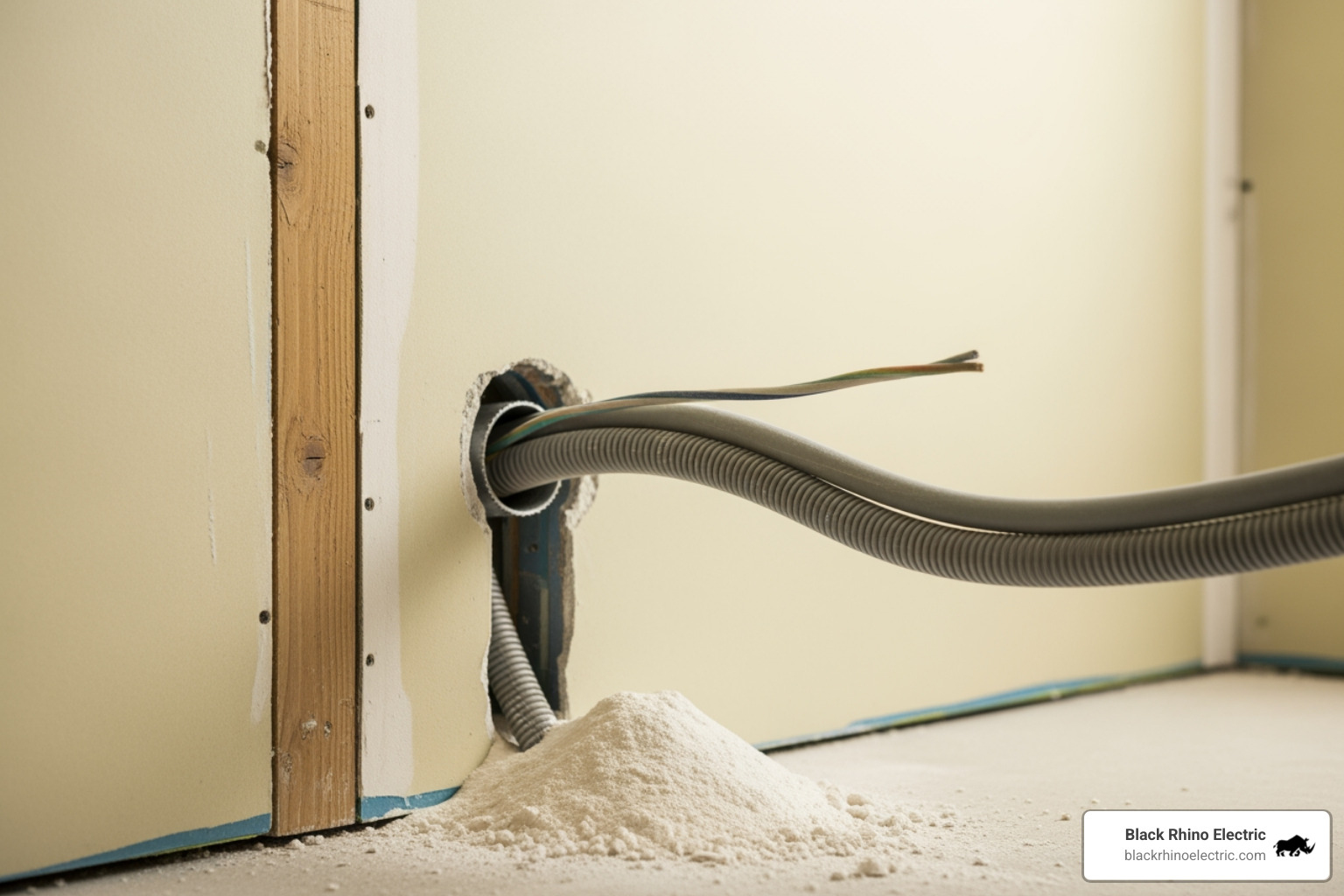
- Labor Costs: The hourly rate for a licensed electrician in Utah generally ranges from $50 to $130 per hour. Most EV charger installations take between two to eight hours, depending on complexity. A straightforward installation might take four hours, while a more complex one involving longer wire runs or panel adjustments could take eight hours or more.
- Wiring Distance: The distance between your electrical panel and the desired charging location is a major cost driver. Electrical cable for EV charging can cost anywhere from $6 to $25 per foot ($75-$150 per meter) for materials and labor. If your panel is far from your garage or driveway, this can significantly increase costs.
- Permits & Inspections: Don’t skip this step! Most municipalities in Utah, including Ogden, require permits and inspections for electrical work to ensure safety and compliance with local codes. Permit fees typically range from $50 to $300, but can sometimes be higher. We always ensure our installations are fully permitted and inspected.
- Installation Location: Installing your charger outdoors can add $100-$200 to the cost due to the need for weatherproof electrical materials and a robust, outdoor-rated charger. This is particularly important for our climate in Weber County, where we experience a range of weather conditions.
- Home Type: While most of our installations are in single-family homes, multi-unit dwellings (like condos or apartments) can present additional challenges. If you live in an HOA, you’ll need to secure approval, which can sometimes add administrative steps and costs. We can assist with navigating these conversations for residents in Ogden, Layton, or surrounding areas.
Honestly, the expertise of a professional electrician isn’t just about getting the job done; it’s about ensuring safety and compliance. That’s why we always recommend hiring a certified professional. Learn more about Why You Need a Certified Electrician for EV Charger Installation.
Potential Electrical Upgrades and Their Impact on the Home Charging Station for Electric Cars Cost
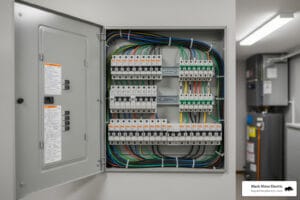
This is where costs can really climb. If your home’s electrical panel is old or already at capacity, you’ll need an upgrade to safely handle the new load from an EV charger. A qualified electrician is essential to assess this.
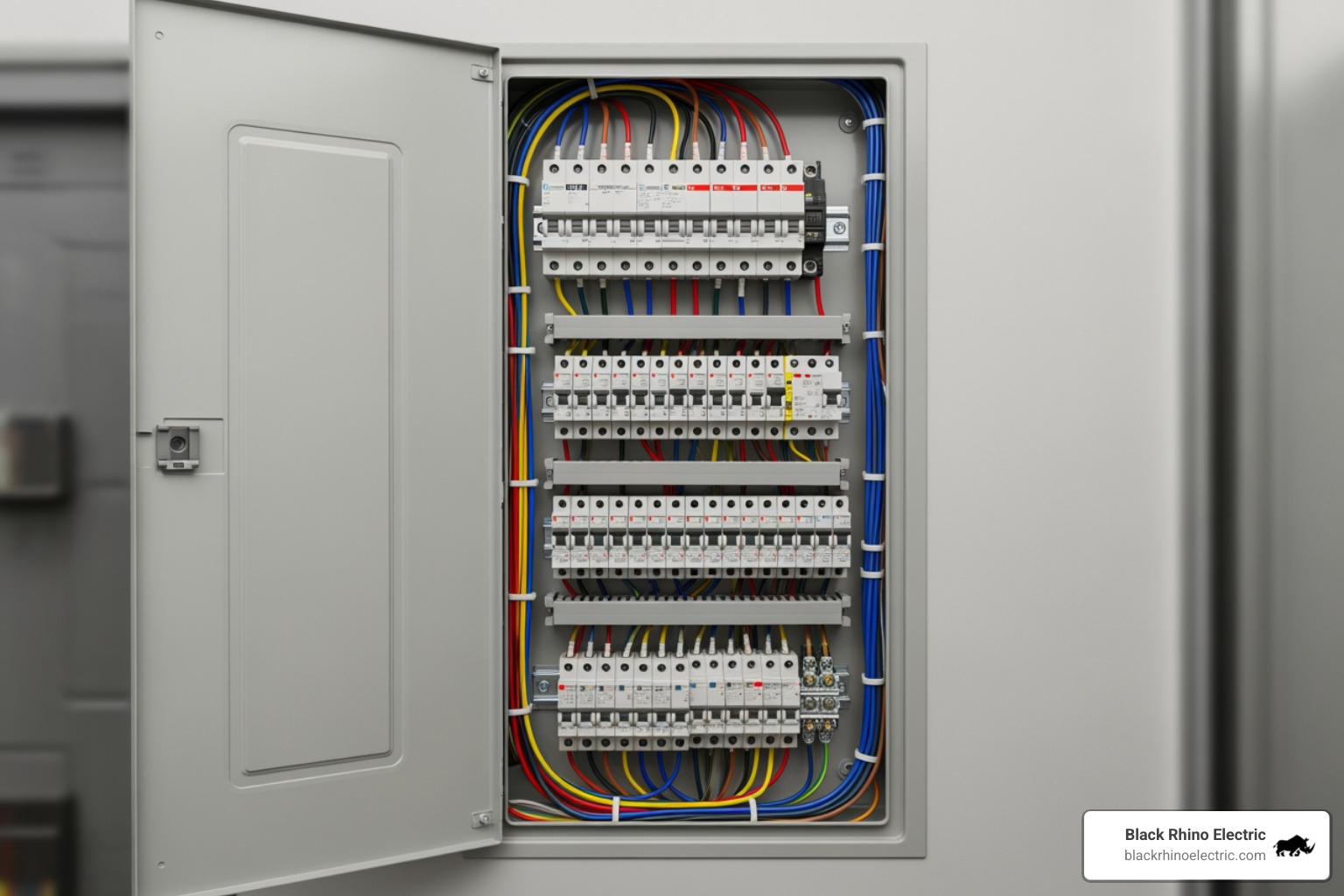
- Panel Capacity Check: Your home’s electrical service is typically 100-amp or 200-amp. A 200-amp service usually has plenty of capacity for an EV charger, even alongside other major appliances. However, a 100-amp service may struggle, especially if you have an electric dryer, water heater, or HVAC system. We always perform a load calculation to determine if your existing panel can handle the additional demand.
- Panel Upgrade: If your panel is at capacity or outdated, a full panel upgrade might be necessary. This involves replacing your entire electrical panel to increase its amperage and add more circuit breakers. Panel upgrades can cost anywhere from $1,500 to $3,500 or more. While it’s a significant upfront cost, it’s a smart investment that future-proofs your home for additional electrical demands, like solar panels or other major appliances.
- Subpanel Addition: In some cases, instead of a full panel upgrade, we can install a subpanel. This is a smaller electrical panel that branches off your main panel, providing dedicated circuits for specific high-draw appliances like your EV charger. Adding a subpanel typically costs between $400 and $2,000. It’s often a more economical solution than a full panel replacement if your main panel has enough capacity to feed the subpanel.
Whether you need a simple dedicated circuit or a complete service upgrade, our licensed electricians in Weber County are experts in ensuring your home’s electrical system can safely support your new EV charger. For Tesla owners, we understand the specific requirements and can provide certified installation. Find more about Certified Electricians for Tesla Charger Installation: What to Look For.
Don’t Forget Rebates and Tax Credits
Here’s some good news! You can often get some of your money back. Various government and utility programs exist to make home charging more affordable.
- Federal Tax Credit: The federal EV charger tax credit can cover up to 30% of costs up to $1,000. This credit is available for charging equipment placed in service after December 31, 2022, and before January 1, 2033. It’s an excellent way to offset a significant portion of your installation expenses. It’s worth noting that roughly two-thirds of Americans live in qualifying areas for this federal tax credit.
- State & Local Rebates: Beyond federal incentives, many states, municipalities, and even local utility companies offer their own rebates or tax credits. These can vary significantly by location. For our customers in Ogden, Layton, and across Weber County, we encourage you to check with your specific utility provider (like Rocky Mountain Power) and the Utah state energy office for any available programs.
Here’s a simple list of steps to find local EV charger incentives:
- Check the Database of State Incentives for Renewables & Efficiency (DSIRE) website for a comprehensive list of programs in Utah.
- Visit your local utility company’s website (e.g., Rocky Mountain Power) for specific EV charging incentives they might offer.
- Consult with your EV charger installer – we’re often aware of current local programs and can help guide you.
Is a Home Charger Worth It? Your Final Checklist
So, is the investment worth it? For the vast majority of EV owners in Utah, the answer is a resounding yes. The convenience of waking up to a full “tank” every morning combined with the long-term savings over public charging makes it a smart financial move. Imagine never having to stop at a gas station again, or waiting in line for a public charger in the cold. That’s the luxury a home charging station provides. Over the lifespan of your EV, you could save an estimated $6,000 to $10,000 in fuel costs compared to a gasoline vehicle, and EVs also typically have lower maintenance costs.
Before you get started, here’s a quick checklist:
- Assess Your Driving Habits: Determine your daily mileage needs. If you drive extensively, a Level 2 charger is a must. If your commutes are short, a Level 1 might suffice, though most prefer the speed of Level 2.
- Evaluate Your Electrical System: This is critical. Understand if your electrical panel has sufficient capacity or if upgrades (panel upgrade, subpanel, load management system) will be necessary. This directly impacts your overall home charging station for electric cars cost.
- Choose the Right Charger: Balance features (like smart connectivity) with your budget. Remember to consider the connector type (NACS for Tesla, J1772 for most others, or a universal option).
- Get a Professional Quote: Always obtain a detailed quote from a licensed and insured electrician. This ensures a safe, code-compliant installation and helps avoid unexpected costs.
At Black Rhino Electric, we specialize in essential EV charger installations throughout Weber County, with expert coverage in Ogden, Roy, North Ogden, and surrounding Utah areas. We’re your local experts, ready to help you steer the process from assessment to installation. Ready to power up your EV journey with a safe and reliable home charging station? Contact our team of certified electricians for a professional consultation and estimate. We’re committed to quality workmanship, code-compliant installations, and sustainable upgrades that make your EV ownership seamless and worry-free. Get Your EV Charger Installed today!