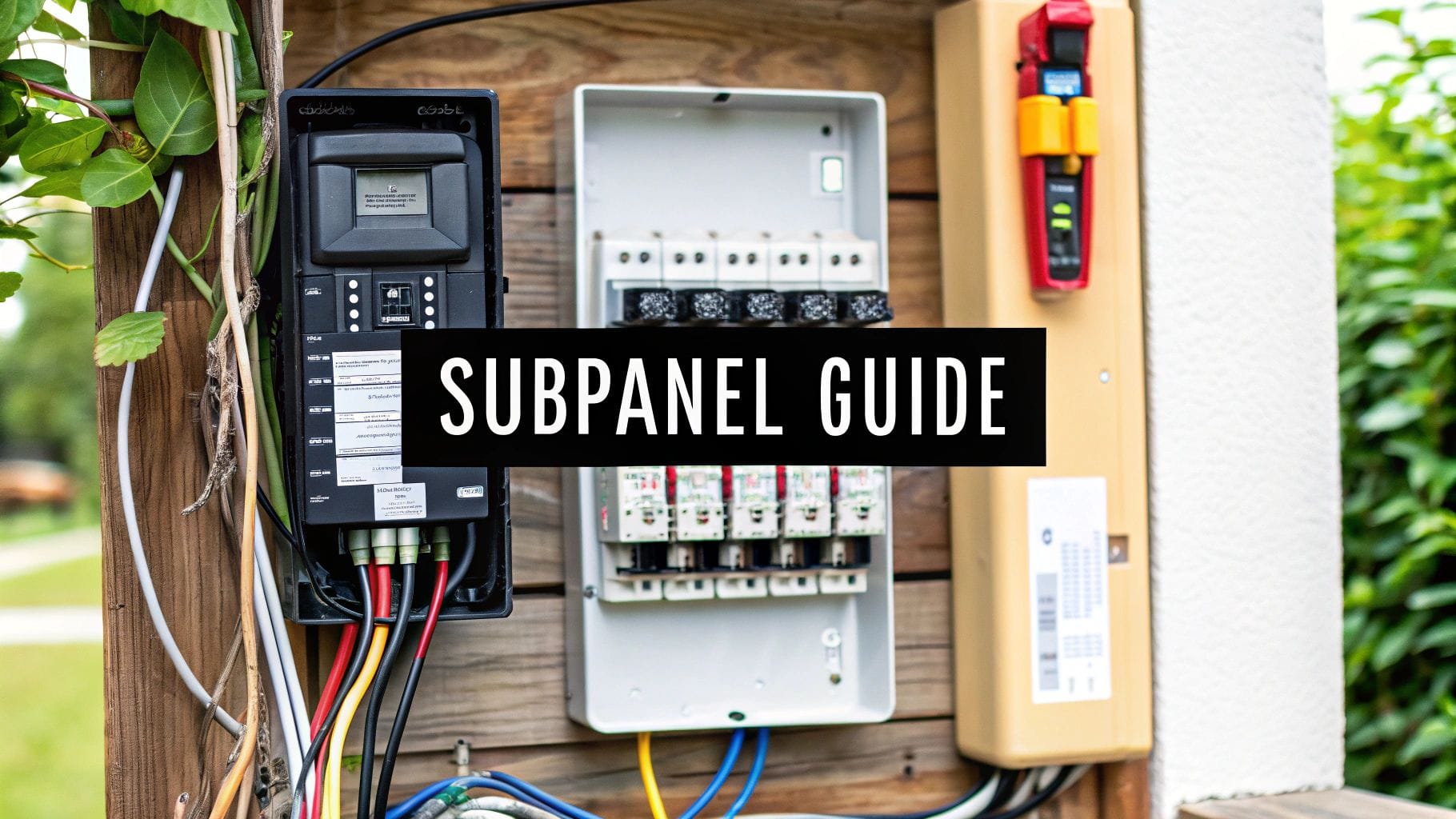
Feeling like your main electrical panel is bursting at the seams and wondering what is a subpanel? You’re not alone, especially when planning a big project like a kitchen remodel, a new workshop, or adding that hot tub you've always wanted. Think of it as a mini-breaker box—a smart, safe way to extend your home’s electrical capacity exactly where you need it.
Contents
- 1 Understanding the Electrical Subpanel
- 2 Main Panel vs. Subpanel: A Clear Comparison
- 3 Common Scenarios Where You Need a Subpanel
- 4 So, What’s the Real Payoff of a Subpanel?
- 5 Why Professional Installation and Safety Codes Matter
- 6 Planning Your Subpanel Installation Project
- 7 A Few Common Questions We Hear About Subpanels
Understanding the Electrical Subpanel
Let me explain. A subpanel is essentially a smaller, secondary electrical panel that branches off from your main service panel. Your main panel is the big hub where power enters your home directly from the utility company. A subpanel, on the other hand, acts as a local distribution point for a specific area.
It gets its power from the main panel through a single, heavy-duty feeder cable. From there, it distributes that power to nearby lights, outlets, and appliances through its own set of circuit breakers.
This setup is perfect for managing new electrical loads cleanly and safely. Say you’re finishing a basement with new lights, a home theater, and a wet bar. Instead of running a tangled mess of individual wires all the way back to an already crowded main panel, a subpanel in the basement gives you a tidy, organized, and safe solution right where the action is.
How a Subpanel Organizes Power
Here’s the thing. Your main electrical panel is like the city's central post office, handling all the power coming into your home. A subpanel is the smaller, local post office branch in your neighborhood.
It receives a big batch of power from the central hub, then sorts and delivers it to individual circuits in that specific area—your workshop, your kitchen, or your new addition. This decentralization makes the whole system more efficient and a lot easier to manage.
This organization delivers some serious benefits:
- Localized Control: You can shut off power to the entire workshop or garage without turning off the lights in the rest of the house.
- Reduced Wire Clutter: It saves you from running a dozen long, expensive wires back to the main panel. One feeder cable does the heavy lifting.
- Improved Safety: By isolating high-demand areas, a subpanel helps prevent you from overloading the main panel. This is a big deal, especially in older homes. Some outdated panels, like the notorious Federal Pacific Electric (FPE) type, can fail to trip during an overload more than 25% of the time, which highlights why modern, well-distributed systems are so important.
The key takeaway is that a subpanel doesn't magically create more power for your home. What it does is provide the right infrastructure to use the power you already have more effectively and, most importantly, more safely. It’s a foundational upgrade for any significant home expansion.
Main Panel vs. Subpanel: A Clear Comparison
Walk up to a main electrical panel and a subpanel, and you might think you're seeing double. They're both gray metal boxes full of breakers. But behind that door, they play fundamentally different roles in your home's electrical system.
Think of it this way: your main panel is the front door for all the electricity coming into your house from the utility. It's the big boss. A subpanel is more like a department manager, taking a large feed of power from the main panel and neatly distributing it to a specific area—like a new workshop, a finished basement, or a detached garage.
So, What's the Real Difference?
The main panel is where the buck stops. It contains the main disconnect breaker, the one big switch that can shut down power to your entire home in an emergency. It's wired directly to your electric meter, making it the first point of contact for every single volt entering your property.
A subpanel, on the other hand, is always downstream. It gets its power from a dedicated, high-amperage circuit breaker located inside the main panel. This creates a safe and logical hierarchy, preventing you from having to run a dozen individual wires all the way from your main panel to a new addition across the house.
This diagram shows that top-down flow perfectly. Power comes into the main panel, which then sends a single, large feed to a subpanel, which in turn powers the circuits in a specific zone.
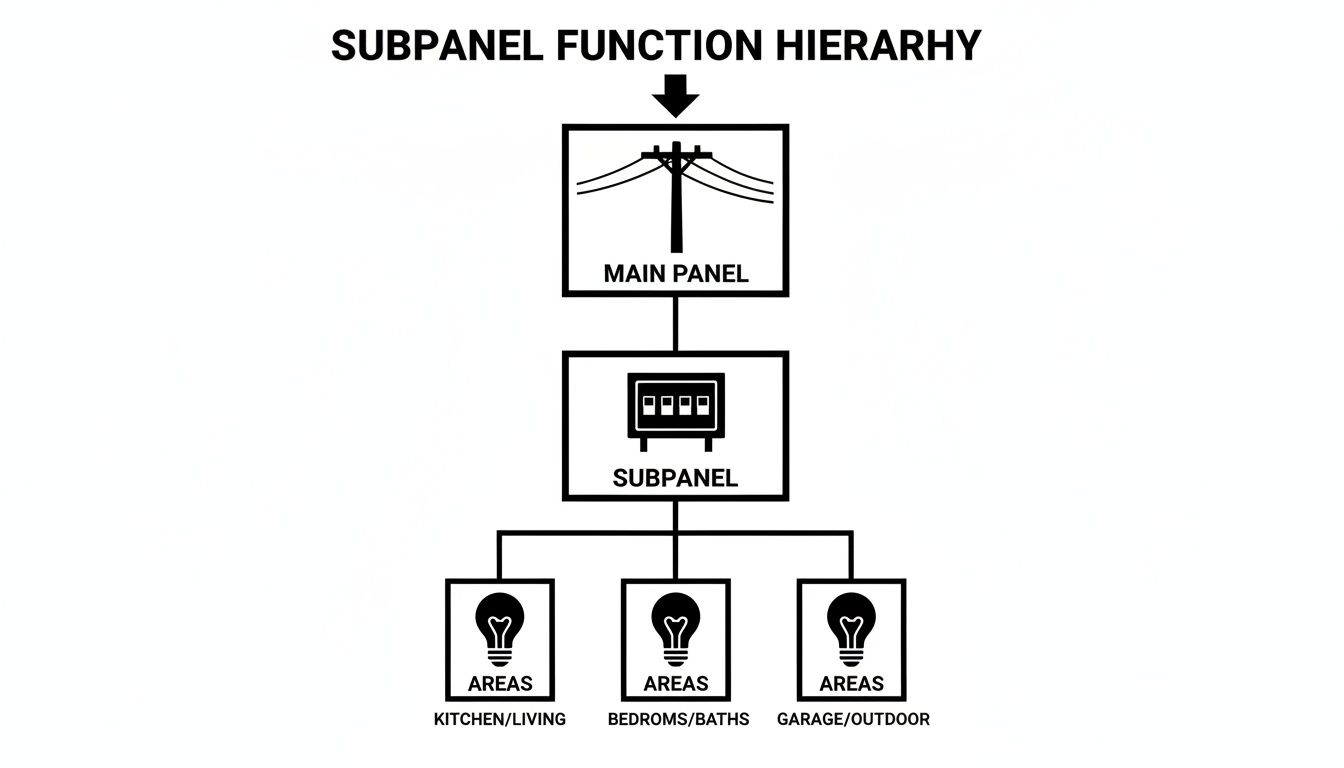
As you can see, the subpanel acts as that essential middle manager, keeping things organized and efficient without cluttering up the main source.
The Critical Difference: Grounding and Neutrals
Here's where things get really important from a safety standpoint. It all comes down to how the ground wires (the safety wires) and the neutral wires (the return path for electricity) are handled.
In a main panel, the neutral and ground wires are "bonded," or connected together on the same metal bar. This is a critical step that establishes the primary safety ground for your entire home's electrical system, right at the source.
But in a subpanel, those neutral and ground wires must be kept separate. They land on their own isolated bus bars. This separation is a non-negotiable safety rule in the National Electrical Code (NEC). It prevents dangerous stray electricity from traveling on the neutral wires, which could energize metal appliance frames or other components. Getting this wrong is a serious hazard.
A subpanel is essentially an extension of your main panel, giving you the power you need in a distant area without the hassle and expense of running multiple long wires. The need for subpanels really took off in the 1980s as new homes started getting 150- to 200-amp main panels to keep up with power-hungry appliances like microwaves and early computers. You can learn more about the history of electrical panels over at ElectElectric.com.
To make it even clearer, let's break down the key distinctions in a simple table.
Main Panel vs. Subpanel Key Differences
This table puts the fundamental differences side-by-side, making it easy to see how each component fits into your home's electrical ecosystem.
| Feature | Main Electrical Panel | Subpanel |
|---|---|---|
| Power Source | Connected directly to the utility power lines and meter. | Receives its power from a circuit breaker inside the main panel. |
| Main Disconnect | Contains the main breaker to shut off all power to the house. | Does not have a main disconnect for the entire home. |
| Grounding | Neutral and ground wires are bonded together on a single bar. | Neutral and ground wires are isolated on separate bus bars. |
| Primary Role | Acts as the central hub for all electricity entering the home. | Manages and distributes power to a specific, localized area. |
Understanding these roles shows exactly why these panels aren't interchangeable. Proper installation that respects these differences is absolutely vital for a safe, functional, and code-compliant electrical system.
Common Scenarios Where You Need a Subpanel
Honestly, knowing when you might need a subpanel is just as important as understanding what it does. Many homeowners in Utah get to a point where their main electrical panel simply can’t keep up with their ambitions for their home.
So, how do you know if you've reached that point? Certain projects are almost guaranteed to require the addition of a subpanel to ensure everything runs safely and reliably.
Major Renovations and Additions
Planning a big kitchen remodel or finally finishing the basement? These projects almost always mean adding a whole bunch of new circuits for power-hungry appliances, new lighting, and plenty of outlets. Instead of trying to cram everything into an already-full main panel, a subpanel gives you a clean, localized power source.
Imagine you're tackling a kitchen remodel in your Salt Lake County home. Your main panel is a 100-amp model from the 1960s and it's completely maxed out, but you need dedicated circuits for a new range, a double oven, and a modern dishwasher. A subpanel, fed from the main panel, can provide a dedicated 60-125 amps just for the kitchen, making your project possible.
Other common scenarios include:
- Home Additions: Building a new room or a second story requires its own set of circuits. A subpanel is the logical and professional way to distribute that new power.
- Basement Finishing: Turning a basement into a home theater, gym, or in-law suite introduces significant new electrical demands that a subpanel can manage safely and efficiently.
Powering Detached Structures
If you're adding a workshop, a detached garage, or even a tricked-out shed to your property, is running a tangle of individual circuits from the house a good idea? It's clunky, expensive, and often against code. A subpanel is the correct—and safest—solution.
A single, heavy-duty feeder cable runs underground from the main panel to the subpanel in the outbuilding. This gives you all the power you need for lights, tools, and outlets in one organized, safe, and easily accessible location.
High-Demand Appliances and Hobbies
Some of the best home upgrades are also the most power-hungry. Installing one of these often pushes a main panel past its limits, making a subpanel a flat-out necessity.
- Hot Tubs and Pools: These require dedicated, high-amperage, GFCI-protected circuits. A subpanel is the perfect way to manage this and keep it isolated from your home's main circuits.
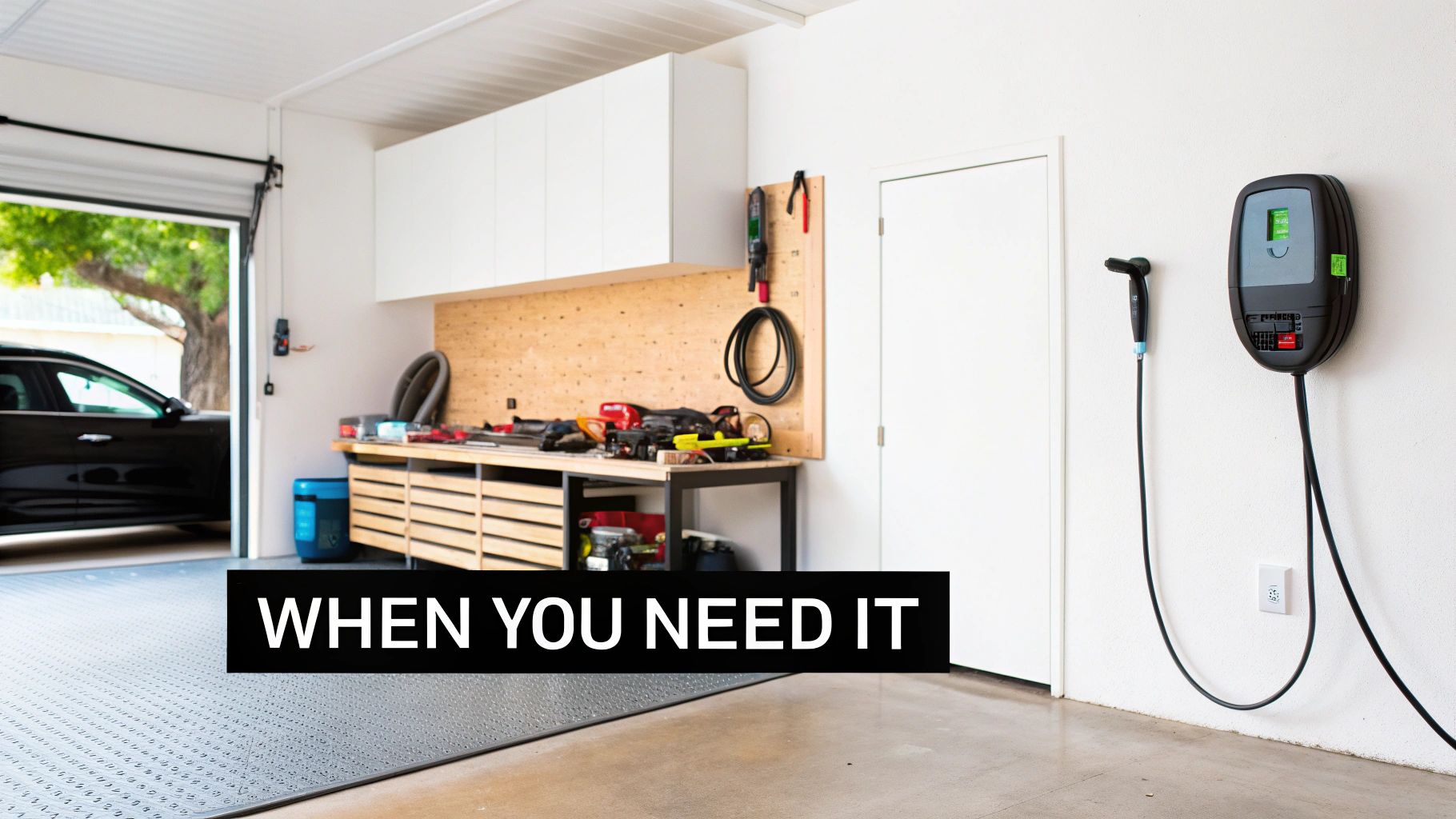
- EV Chargers: A Level 2 electric vehicle charger is a major electrical load. Adding a subpanel ensures your charger gets the consistent power it needs without dimming the lights in the house every time you plug in. Black Rhino Electric offers specialized EV charger installation electrician services to handle this exact scenario.
- Workshops: Power tools like table saws, air compressors, and welders draw an immense amount of current. A dedicated subpanel in your workshop prevents you from tripping breakers in the main house every time you fire up your equipment.
In each of these cases, a subpanel isn't just a suggestion—it’s the professional standard for a safe, code-compliant, and functional electrical system.
So, What’s the Real Payoff of a Subpanel?
Adding a subpanel is more than just a quick fix for a full breaker box; it’s a strategic upgrade for your home's safety, function, and future value. A well-planned installation brings a host of advantages that make your electrical system more robust and convenient.
You know what? One of the biggest perks is simply making life easier. Let me explain. With a dedicated subpanel in your workshop or basement, you gain localized control. If a breaker trips because you're running a power-hungry saw, you can reset it right there instead of trekking back to the main panel, which might be on the other side of the house.
This separation also makes troubleshooting a breeze. When an electrical issue arises, having a subpanel for a specific area helps an electrician isolate the problem much faster, saving time and diagnostic costs.
A Serious Boost in Electrical Safety
A primary benefit of a subpanel is a significant boost in electrical safety. By creating a separate distribution point for a high-demand area, you prevent dangerous overloads on your home's main panel.
This is especially critical for circuits powering workshops, hot tubs, or kitchens loaded with modern appliances. Isolating these heavy loads ensures they don't strain the rest of your home's electrical system, which dramatically reduces the risk of overheating and potential electrical fires.
A properly installed subpanel helps distribute the electrical load more efficiently. This not only prevents dangerous circuit overloads but also protects your valuable electronics and appliances from damage caused by inconsistent power.
Future-Proofing and Added Value
Installing a subpanel now is a smart investment for the future. It provides the extra circuit capacity you'll inevitably need for new technologies, whether it's an EV charger, a smart home system, or that home theater you're planning for next year.
This foresight adds tangible value to your property. It demonstrates that your electrical system is modern, code-compliant, and ready for future demands—something potential buyers notice.
The benefits extend beyond single-family homes. For property managers, adding subpanels can reduce electrical downtime by 50% by isolating issues to a single unit instead of blacking out an entire building. Similarly, for businesses, a subpanel can improve energy use by 20-30% in NEC-compliant retrofits. If you're curious about how panels have evolved, Benchmark Seattle offers a great overview. This forward-thinking approach shows your home is prepared for anything.
Why Professional Installation and Safety Codes Matter
Here’s the thing about electrical work: there is absolutely zero room for error. When it comes to adding a subpanel, this isn’t another weekend DIY project—it’s a complex task where one mistake can lead to an electrical fire or serious injury. That's why subpanel installation is a job reserved for licensed, experienced pros.
A certified electrician doesn't just connect wires; they make sure every part of the system works together safely and by the book. It involves precise load calculations and a deep understanding of how power actually works. Honestly, the risks of getting it wrong are just too high.
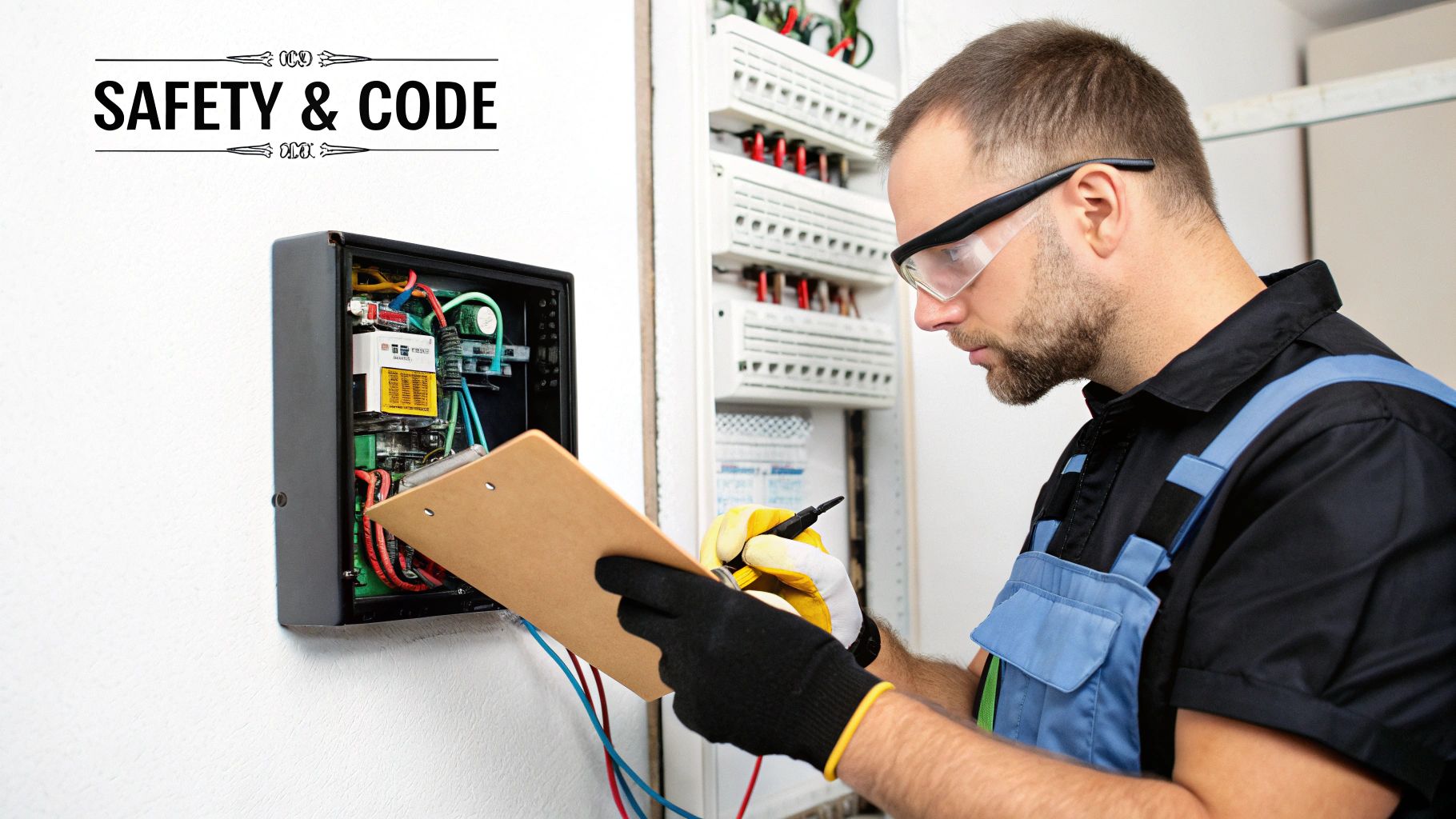
The National Electrical Code (NEC) is the benchmark for safe electrical design and installation. It’s not a set of recommendations; it’s a legally enforceable standard that professionals must follow to the letter. When installing a subpanel, a few key NEC rules are non-negotiable.
- Proper Feeder Wire Sizing: The wire running from the main panel to the subpanel has to be thick enough to handle the maximum load without overheating. An undersized wire is a major fire hazard, plain and simple.
- Correct Breaker Sizing: The breaker in the main panel protecting that feeder wire must be matched perfectly to the wire's rating. A mismatched breaker can fail to trip during an overload, and that’s when things get dangerous.
- Separating Neutrals and Grounds: As we mentioned earlier, the neutral and ground wires in a subpanel must be kept on separate bus bars. This is a critical safety step that prevents stray voltage from energizing metal parts of your home.
Adhering to these codes isn't optional. Professional electricians are trained to navigate these complex requirements, ensuring your installation is not only functional but fundamentally safe. This is especially important for businesses, where understanding the nuances of commercial electrical panels and meters is key to compliance and safety.
A failed inspection not only delays your project but can also lead to fines and orders to tear out and redo the work. More importantly, unpermitted electrical work can void your homeowner's insurance, leaving you financially responsible for any damages.
The Importance of Local Permits and Inspections
Here in Northern Utah—including Weber, Davis, and Salt Lake counties—installing a subpanel requires pulling a permit from your local building department. This isn't just red tape; it’s a crucial consumer protection mechanism.
The permitting process triggers a mandatory inspection by a city or county official. This inspector acts as a neutral third party, verifying that the work meets all NEC and local code requirements. Passing this inspection is the final seal of approval, confirming your subpanel is installed correctly and safely.
At Black Rhino Electric, we handle the entire permitting and inspection process, giving you peace of mind that your project is done right from start to finish.
Planning Your Subpanel Installation Project
So, you're thinking about a subpanel? Good. Knowing what to expect turns a big electrical upgrade from a source of stress into a clear, manageable project. This process is more than just hooking up a few wires; it’s a careful, step-by-step approach to make sure everything is safe, up to code, and built to last.
It all starts with a professional consultation. An experienced electrician will perform a load calculation—which is a detailed look at your home's current power use and what you plan to add. This isn't just guesswork. It's a precise analysis that tells us exactly what size subpanel you need to safely run that new workshop, finished basement, or EV charger without putting a strain on your system.
Selecting the Right Equipment
Once we know your power needs, we can pick out the right hardware. This decision is driven entirely by that load calculation and the scope of your project.
- Panel Amperage: For most home projects, we're looking at 60-amp or 100-amp subpanels. A 60-amp panel is often perfect for a home office or a couple of new circuits, while a 100-amp panel gives you the headroom for a workshop with heavy-duty tools.
- Physical Location: The subpanel has to be installed in a clean, dry, and easily accessible spot. Think garages or utility rooms. It can never be tucked away in a closet or bathroom where access is tight and moisture is a concern.
- Wiring and Breakers: Your electrician will run the correct gauge of feeder wire from your main panel and install the right breakers to protect each new circuit. To get a better handle on how these parts work together, check out our guide on breakers and panels.
Installation and Inspection Process
With the plan and equipment sorted out, the physical installation can begin. After the work is done, there's one final, crucial step: the official inspection. A local inspector comes out to verify that all the work meets the National Electrical Code (NEC) standards, giving you the ultimate seal of approval that the job was done safely and correctly.
There's a reason the electrical panel market is growing and projected to hit USD 14.7 million by 2033. Our modern electrical needs are simply outpacing the older systems in our homes. Obsolete panels from the 1950s-1980s, which can fail over 25% of the time, often make a subpanel a necessary safety upgrade just to stay compliant with today's codes. You can find more insights on the evolution of electrical panels on ElectElectric.com.
A Few Common Questions We Hear About Subpanels
Even after explaining what a subpanel does, most homeowners have a few more specific questions. It's only natural. Here are the answers to some of the most common things our electricians at Black Rhino Electric get asked on the job.
How Many Subpanels Can a House Have?
That’s a great question, and the answer might surprise you. The National Electrical Code (NEC) doesn't actually put a hard number on it. The real limit is the total electrical capacity of your main service panel.
Think of your main panel as the primary water main coming into your house. Each subpanel is like a smaller pipe branching off to feed a specific bathroom or the sprinkler system. You can add more pipes, but you can't draw more water than the main line can supply. An electrician has to run a load calculation to make sure adding a new subpanel won't overload the whole system. As long as the math works and your main panel has the capacity, you can add what you need to power your home safely.
Does a Subpanel Give Me More Power?
This is probably the biggest misconception we run into. A subpanel does not increase the total amount of power coming into your home from the utility company. It’s all about distribution.
Imagine you have a single, massive toolbox in your garage, but you’re working on a project in the basement. A subpanel is like adding a smaller, well-organized toolbox right where you need it. You don't get more tools, but you get easier, safer access to the ones you already have. It gives you more slots for breakers and a local hub to manage power for a specific area, which is incredibly useful.
Where Should a Subpanel Be Installed?
Location is key, both for convenience and for safety. The ideal spot is clean, dry, and easy to get to, preferably close to the area it’s serving. We often install them in garages, utility rooms, and unfinished basements.
There are also places they absolutely cannot go. Bathrooms and clothes closets are strictly off-limits due to moisture and fire-hazard risks. Code also requires specific clearances to ensure an electrician can work on it safely—typically 3 feet of clear space in front and 30 inches of width. That isn't just a suggestion; it's a critical safety rule for maintenance and emergencies.
At Black Rhino Electric, we believe a safe and reliable electrical system is the foundation of every great home. If you're considering a subpanel or have any other electrical concerns, trust the local experts who prioritize safety and quality. Call us today at 385-396-7048 or request a free quote to schedule your consultation.