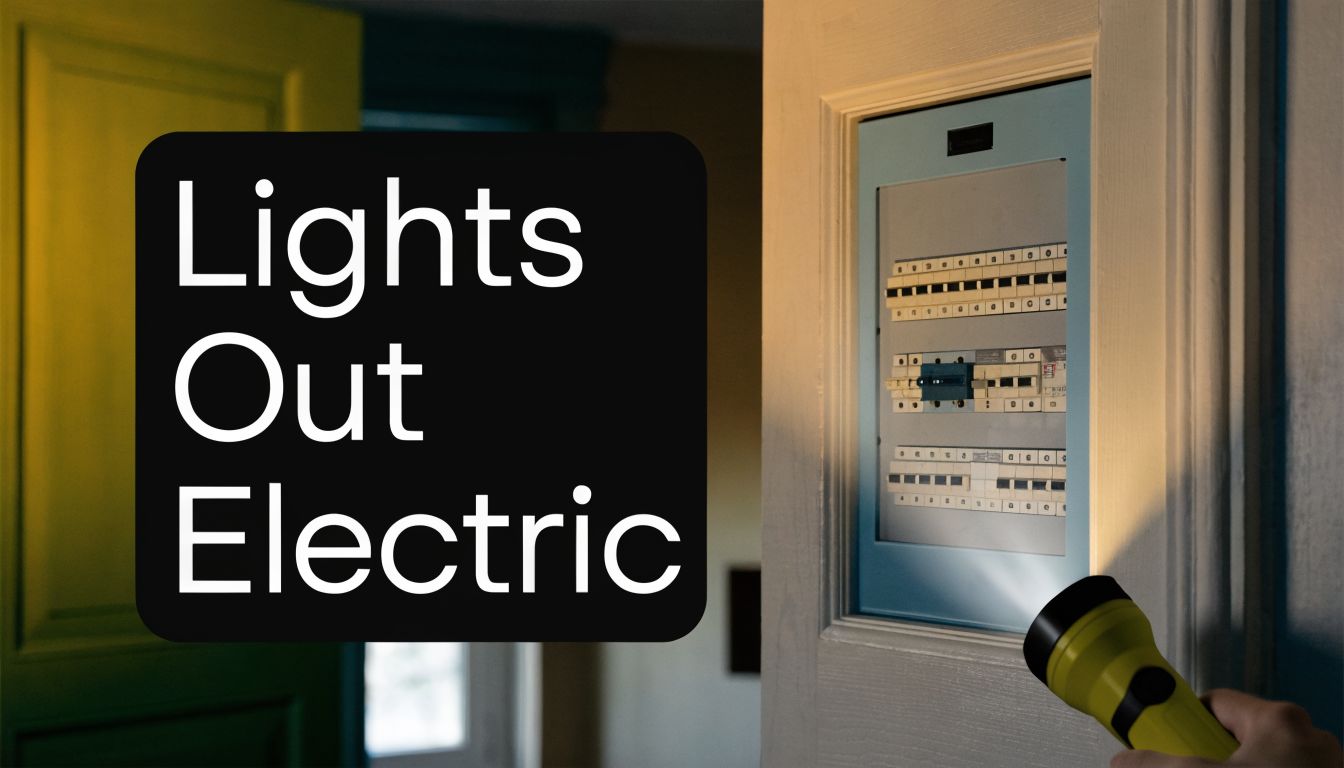
When the house goes quiet and everything drops to black, it's easy to assume the worst. Lights out electric problems feel urgent because they are, but the right first steps can keep a stressful outage from turning into a dangerous one.
Your First Safety Steps in the Dark
That first minute matters more than is commonly realized. In Utah homes, especially during winter evenings or summer heat, people often move too fast, grab the wrong light source, or start opening the panel before they know what failed.

Start with safety, not troubleshooting
Do these steps in order:
- Stand still for a moment: If you were walking through a hallway, garage, or basement when the power cut out, stop moving until your eyes adjust. Falls happen fast in dark stairwells and cluttered utility spaces.
- Use a flashlight, not candles: Candles create a second emergency. They're easy to tip, especially around kids, pets, blankets, and rushed movement.
- Unplug sensitive electronics: If the outage affects only your house, power can return with a surge. Unplug desktop computers, gaming systems, televisions, and anything expensive or delicate.
- Look for immediate danger: If you smell something burning, hear sizzling, or see smoke near an outlet or the panel, stay clear of that area.
- Check medically necessary equipment: If someone in the home depends on powered equipment, move to your backup plan immediately.
Practical rule: If you smell burning plastic or hot metal, skip DIY troubleshooting and treat it as a hazard.
Figure out whether it's your house or the neighborhood
Before you touch a breaker, answer one question. Is the outage inside your home only?
A safe way to tell:
- Look outside from a window: Are streetlights on. Do nearby homes still have porch lights or lit windows.
- Check your phone for local utility alerts: Don't assume, verify.
- Text or call a neighbor: In Weber, Davis, and Salt Lake counties, a quick check with the house next door often tells you more than staring at your panel.
- If it's nighttime, glance at garage door openers and exterior lights nearby: They can reveal a block-wide outage quickly.
If the whole area is dark, your job shifts from fixing to protecting. Keep refrigerator and freezer doors closed, use flashlights, and wait for utility updates. If only your house is out, then the problem may be a tripped breaker, a failed GFCI, a service issue, or a panel problem.
A Simple In-Home Troubleshooting Guide
If your neighbors still have power and you don't, now you can troubleshoot. The key is to stay in the safe lane. Homeowners can check a breaker panel and reset a GFCI. Homeowners should not remove panel covers, test live wires, or keep forcing a breaker that won't hold.
Nationally, 29% of Americans have faced three or more major power outages in the past five years, and 31% of those affected said the longest outage reduced trust in their utility's response, according to this outage preparedness analysis. That's one reason a dependable home electrical system matters even when the wider grid is unstable.
Check the breaker panel once
Go to the main electrical panel with a flashlight. Open the door and look for a breaker handle that sits in the middle position or slightly off from the others.
Reset it like this:
- Turn the suspect breaker fully off first.
- Push it back to on firmly.
- Listen and watch. If it clicks on and stays on, monitor that circuit.
- Stop after one reset if it trips again right away.
If a breaker won't stay on, that usually points to an active fault, overloaded circuit, short, or equipment problem. Repeated resets don't solve that. They just add risk.
Don't forget the GFCI outlets
Kitchens, bathrooms, garages, laundry rooms, unfinished basements, and exterior outlets often use GFCI outlets. These are the ones with TEST and RESET buttons.
If one room or a group of outlets died, press the reset button on nearby GFCIs. Sometimes one tripped outlet protects several downstream receptacles, which is why a bathroom GFCI can affect a garage wall plug or an exterior outlet.
A dead outlet doesn't always mean bad wiring. In many homes, one tripped GFCI quietly shuts off several outlets that seem unrelated.
If you want a deeper look at common residential issues, this home electrical troubleshooting resource is a useful next step.
Electrical issue troubleshooting
| Symptom | Possible Cause | Next Step |
|---|---|---|
| One room has no power | Tripped breaker or GFCI | Check panel, then nearby GFCIs |
| Kitchen counter outlets are dead | Tripped GFCI outlet | Press reset on kitchen or nearby GFCI |
| Half the house is out | Main breaker issue, service leg problem, or panel fault | Stop basic DIY and call an electrician |
| Breaker trips right after reset | Short circuit, overload, or failed device | Leave it off and unplug devices on that circuit |
| Lights work but outlets don't | GFCI trip, loose connection, or damaged receptacle | Test GFCIs, then stop if issue remains |
| Only one appliance causes outage | Appliance fault | Unplug it and try circuit again without that device |
What works and what doesn't
What works:
- Reducing the load: Unplug space heaters, portable AC units, microwaves, hair dryers, or garage tools from the affected circuit before retrying once.
- Testing one thing at a time: If the breaker holds after unplugging devices, reconnect items slowly.
- Paying attention to patterns: If outages happen every time the toaster, air fryer, or treadmill runs, the circuit may be overloaded.
What doesn't work:
- Resetting the same breaker over and over
- Using extension cords as a long-term fix
- Ignoring flicker or warmth because power came back
Red Flags That Demand a Professional Electrician
Some symptoms are not gray-area problems. They are stop signs.
People often encounter trouble in these situations. They believe, "The lights came back, so it must be fine." That logic fails frequently in electrical work because damaged parts can continue operating right until they overheat, arc, or fail completely.

Stop immediately if you notice these signs
- Burning odor near the panel or outlets: A sharp plastic or acrid smell is never normal.
- Buzzing, crackling, or sizzling: Electricity should be quiet. Noise from a wall, breaker, switch, or meter area means something may be loose or arcing.
- Scorch marks or discoloration: Brown, black, or melted areas around receptacles and switches point to heat damage.
- A breaker that trips instantly after one reset: That's not stubborn equipment. It's often a fault that needs diagnosis.
- Hot wall plates or warm breakers: Slight warmth from some dimmers can happen, but noticeable heat from outlets, switches, or panel components deserves immediate attention.
- Sparks when plugging in normal loads: A tiny static pop can happen occasionally. Repeated or visible sparking is different.
- Water around electrical equipment: A wet basement, soaked exterior disconnect, or water-damaged panel changes the risk level immediately.
Your safety line is simple. If the problem involves heat, smell, noise, visible damage, or water, stop touching it.
Why homeowners should back away at this point
These problems usually require more than a reset. A licensed electrician may need to isolate a failed circuit, inspect for loose conductors, test the panel, replace a damaged breaker, repair a burned receptacle, or evaluate whether the service equipment has been compromised.
In older Utah homes, I've seen outages traced back to loose terminations, worn receptacles, aging panels, remodel wiring done poorly, and overloaded additions like garages or basement finishes. None of those improve with trial and error.
If your concern centers on the panel itself, this breaker and panel service page gives a clear picture of the kinds of issues that belong in professional hands.
A quick rule for deciding
Call a professional now if any of these are true:
- You lost power to multiple unrelated areas
- The main breaker appears involved
- You saw smoke, sparks, or charring
- The outage happened after water exposure
- You don't feel fully confident standing in front of the panel
You know what? Caution is not overreacting when electricity is involved.
Making the Call What to Expect from Emergency Service
Once you've decided to call, the process feels easier if you know what to have ready. The goal is to help the electrician understand whether this is an immediate hazard, an urgent outage, or a problem that can safely wait until standard hours.

Know the difference between emergency and urgent
A true emergency usually involves active danger. Think sparking at the panel, burning smells, smoke, water contacting energized equipment, or partial service failure affecting critical systems.
An urgent but stable issue might be a dead circuit, a failed breaker, or a room without power where there's no smell, heat, or visible damage. Those still matter, but they may not require the same response window.
Some service companies are improving communication with tools that streamline customer interactions through Google Chat, which can help people explain symptoms clearly when they're stressed and trying to get help fast.
What to tell the electrician
Have this information ready before you call:
- What went out: One room, half the house, the whole house, garage only, panel only
- What you noticed: Burning smell, buzzing, water, flickering, spark, tripped breaker
- What you already tried: Reset one breaker, checked GFCIs, unplugged appliances
- When it started: During a storm, after plugging in equipment, after a remodel, randomly overnight
- Any special concerns: Medical equipment, sump pump, refrigerator load, tenants, children, elderly occupants
A service team can usually prioritize better when the description is specific.
What to expect on pricing and timing
Emergency service often costs more than scheduled daytime work. That's normal because it may involve after-hours dispatch, nighttime troubleshooting, temporary safety measures, and return visits if specialized parts are needed.
Let me explain the trade-off. A late-night visit can stabilize a dangerous condition fast, but not every job gets fully rebuilt on the first trip. Sometimes the immediate goal is to make the system safe, restore essential power if possible, and schedule follow-up repairs in daylight.
If you need a direct line for scheduling or dispatch details, use the electrical contact page to reach the right team quickly.
How to Prevent Future Electrical Outages
A stressful outage often reveals a bigger issue that had been building for months or years. Prevention is usually less dramatic than emergency repair, but it's where homeowners gain the most reliability.

Upgrades that actually reduce repeat problems
The most useful preventive steps are usually straightforward:
- Schedule a full electrical inspection: Especially important for older homes in places like Ogden, Salt Lake City, and established neighborhoods with remodel history.
- Upgrade an outdated panel: A panel upgrade doesn't just add space. It can improve reliability, reduce nuisance trips, and address aging components.
- Install whole-home surge protection: This helps shield electronics and appliances when power returns after an outage or fluctuates unexpectedly.
- Add dedicated circuits where needed: Garages, workshops, home offices, EV chargers, and hot tubs shouldn't compete with general-use circuits.
- Replace worn receptacles and loose switches: Small connection issues can lead to intermittent failures that look random until they become serious.
Think beyond today's load
Homes use power differently than they did even a decade ago. More devices, more home office equipment, more garage charging, and more high-draw appliances create pressure on systems that may not have been designed for current use.
For homeowners comparing energy upgrades with broader home electrification plans, it helps to understand the sales and evaluation side too. Resources covering solar sales pitch scripts and KPIs can give useful context on how contractors frame value, what questions to ask, and how to compare recommendations without getting lost in marketing language.
Prevention works best when it matches the real load in the home, not the load the house had when it was built.
What doesn't count as prevention
These habits create repeat service calls:
- Living with a known weak circuit
- Using power strips to compensate for poor outlet placement
- Adding major loads without checking panel capacity
- Ignoring occasional flicker because it seems minor
Your Partner for Safe and Reliable Power
Power loss can be simple, or it can be a warning sign. The hard part for most homeowners isn't flipping a breaker. It's knowing when the situation has crossed the line from manageable to unsafe.
That's where a dependable local electrician matters. For homeowners, property managers, and businesses across Weber, Davis, and Salt Lake counties, Black Rhino Electric handles emergency response, troubleshooting, panel upgrades, inspections, repairs, rewiring, lighting, EV charger installations, and long-term reliability improvements with clear communication and safety-first workmanship.
If your lights out electric issue needs professional help, or you want to prevent the next outage before it happens, getting an experienced set of eyes on the system is the smart move.
If you need help from Black Rhino Electric, call 385-396-7048 or request a free quote.