
Choosing the right lighting is one of the most powerful decisions you can make for your business, but where do you even start? Getting the best lighting for retail stores is about much more than just brightness; it’s a strategic tool that guides customer behavior, enhances product appeal, and ultimately drives sales. At Black Rhino Electric, we've seen firsthand how a well-executed lighting plan can completely transform a retail space from bland to brilliant.
Contents
- 1 How Strategic Lighting Transforms the Customer Experience
- 2 Understanding the Language of Light: Kelvin, CRI, and Lumens
- 3 Choosing the Right Lighting Fixtures for Every Zone
- 4 Smart Lighting That Boosts Your Bottom Line
- 5 Your Zone-by-Zone Guide to a Winning Lighting Strategy
- 6 Why Professional Installation Is Your Most Critical Step
- 7 Common Retail Lighting Questions Answered
How Strategic Lighting Transforms the Customer Experience
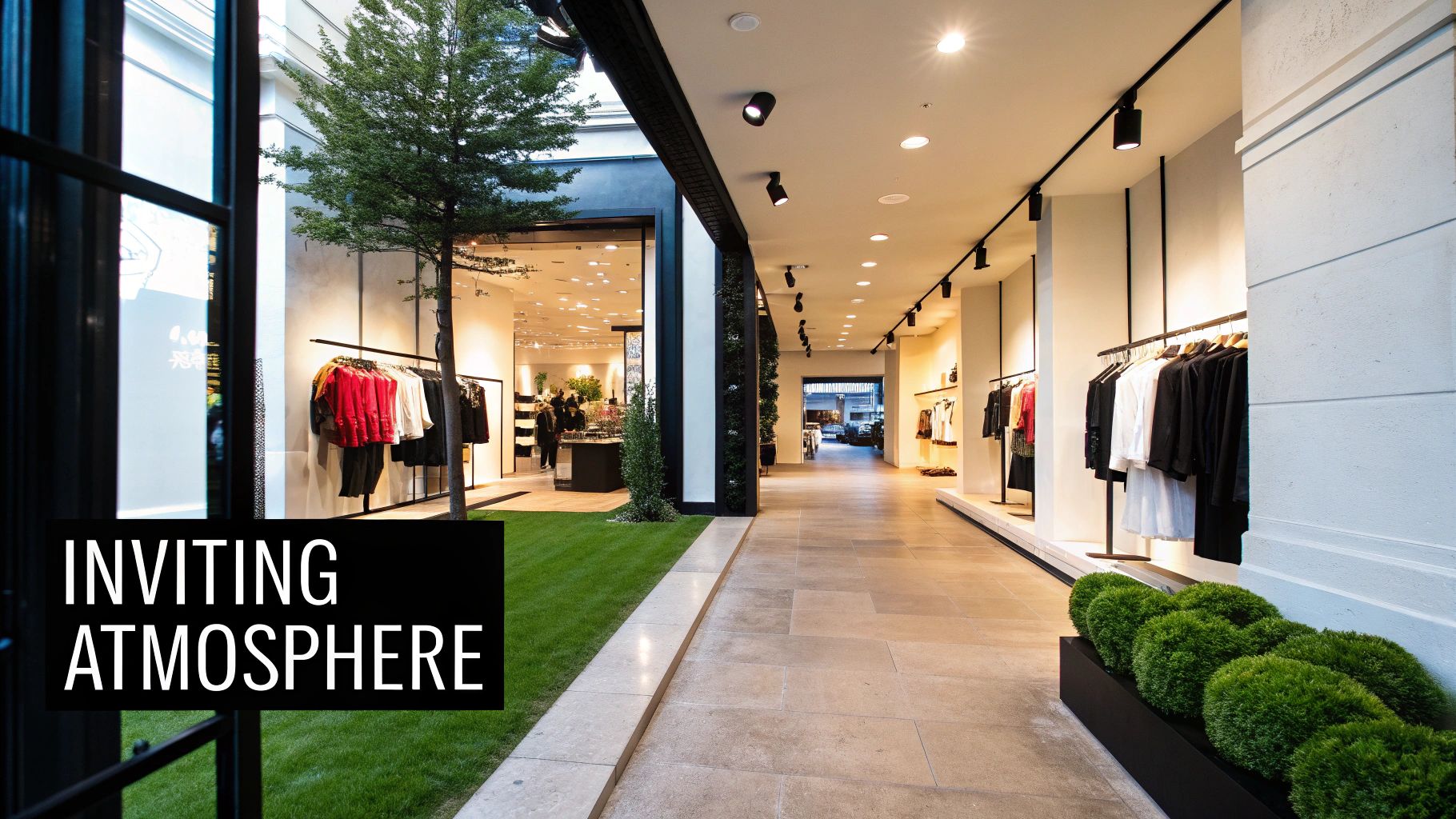
Honestly, great lighting is one of the most powerful tools in a retailer’s arsenal. It's the unspoken difference between a customer who glances around and one who stays, engages, and ultimately buys. Have you ever walked into a store and just felt instantly drawn in? The right light can turn a simple item on a shelf into a must-have piece.
Let me explain. Strategic lighting works on a psychological level, subtly influencing how customers feel and act. A warm, soft glow can create a sense of comfort and luxury in a high-end boutique, while bright, crisp light energizes shoppers in a sporting goods store. It’s all about crafting an intentional journey with light, and as experienced commercial electricians, we know how to build that journey.
The Financial Impact of Great Lighting
You know what? The effect isn't just about feelings; it’s about sales. Studies show that a well-designed lighting plan can boost retail sales by as much as 40%. Brighter, color-accurate LEDs make products look irresistible, and specific choices—like warm white LEDs at 3000K—have been linked to a 20-30% jump in impulse buys in clothing stores. You can read the full research about commercial lighting market trends to see the data for yourself.
This direct impact on your bottom line makes lighting a critical investment, not just another utility bill. It’s a core part of your merchandising and marketing strategy.
The Three Essential Layers of Retail Light
To build a lighting scheme that actually works, you need to think in layers. Each layer serves a distinct purpose, and when they work together, they create a dynamic and compelling environment.
Here’s the thing, mastering these three layers is the key:
- Ambient Lighting: This is your foundation, the overall illumination that makes the store navigable and safe. It sets the general mood, like the background music of your lighting design.
- Task Lighting: Focused and functional, this layer shines bright on specific areas where activities happen. Think of the clear, helpful light over a checkout counter or the flattering light inside a fitting room.
- Accent Lighting: This is where the drama happens. Accent lights, like spotlights, create focal points, drawing a customer’s eye exactly where you want it—to a new collection, a special display, or a key architectural feature.
Understanding the Language of Light: Kelvin, CRI, and Lumens
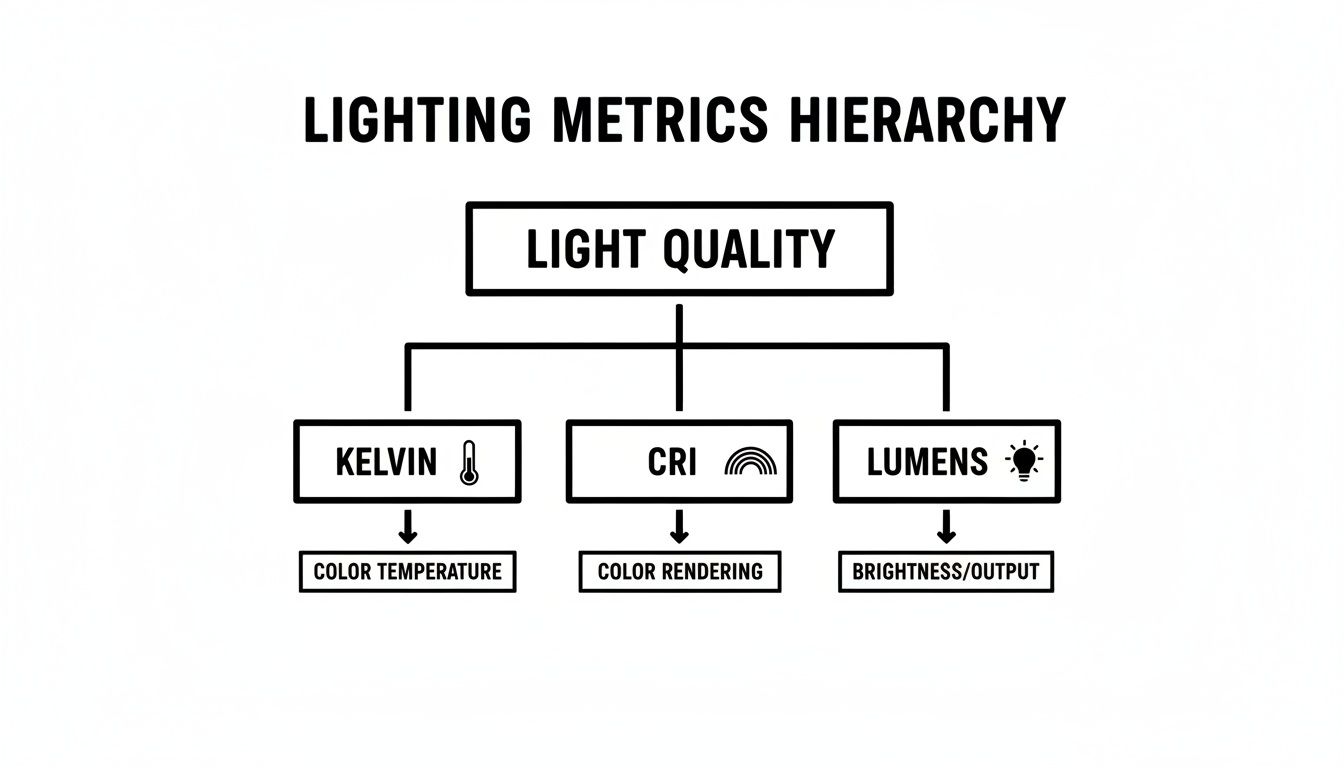
Navigating the world of commercial lighting can feel like you're learning a new language, with terms like Kelvin, CRI, and Lumens getting thrown around. But you don’t need to be an engineer to get this right. Let’s break down these key metrics in simple terms so you can make smart decisions that directly impact your store's atmosphere and sales.
Kelvin: The Mood of Your Light
First up is Color Correlated Temperature (CCT), measured in Kelvin (K). Honestly, this is the simplest one to grasp: Kelvin defines the color or "mood" of the light. Is it warm and cozy like a candle, or is it cool and crisp like a bright, sunny day?
- Warm White (2700K – 3000K): This range creates a comfortable, intimate, and relaxing atmosphere. It’s perfect for luxury boutiques, high-end furniture stores, or any space where you want customers to feel at ease and take their time.
- Neutral White (3500K – 4000K): This is your versatile middle ground. It provides a clean, inviting light that renders colors accurately without feeling too sterile or clinical. It’s a popular choice for clothing stores, showrooms, and general retail where clarity is key.
- Cool White (5000K+): This bright, energizing light mimics natural daylight. It’s ideal for environments where customers need to examine product details closely, like electronics stores, sporting goods shops, or jewelry counters where diamonds need to sparkle.
CRI: The Truthfulness of Your Light
Next, let's talk about the Color Rendering Index (CRI). You know what? This might be the most important—and most overlooked—metric for any retailer. CRI measures how accurately a light source reveals the true colors of an object compared to natural sunlight. The scale runs from 0 to 100, with 100 being a perfect match.
Have you ever bought a piece of clothing that looked one color in the store but completely different once you got it outside? That’s the result of poor CRI. For retail, a low CRI is a deal-breaker because it misrepresents your products. A high CRI is non-negotiable. It ensures that the vibrant red dress on the mannequin looks just as vibrant when the customer tries it on at home. This simple factor reduces returns and builds trust.
Lumens and Foot-Candles: The Brightness of Your Space
Finally, we have lumens, which is simply the measurement of the total amount of visible light a bulb produces. But how do you know how many lumens you actually need? That’s where foot-candles come in. A foot-candle is a measurement of light intensity, telling you how much light (lumens) is actually reaching a specific surface.
Here’s a simple table to guide you:
| Retail Zone | Recommended Foot-Candles (fc) | Lighting Goal |
|---|---|---|
| General Circulation Areas | 20 – 30 fc | Ensures safe and easy navigation throughout the store. |
| Sales Floor / Merchandise | 50 – 70 fc | Makes products easy to see and evaluate. |
| Accent / Display Areas | 100 – 200 fc | Creates high-contrast focal points to draw shopper attention. |
| Fitting Rooms | 70 – 80 fc | Provides bright, flattering light for trying on items. |
By balancing Kelvin, CRI, and Lumens, you move from just lighting a space to strategically designing an experience. This thoughtful approach not only makes your store more attractive but also directly supports your sales goals.
Choosing the Right Lighting Fixtures for Every Zone
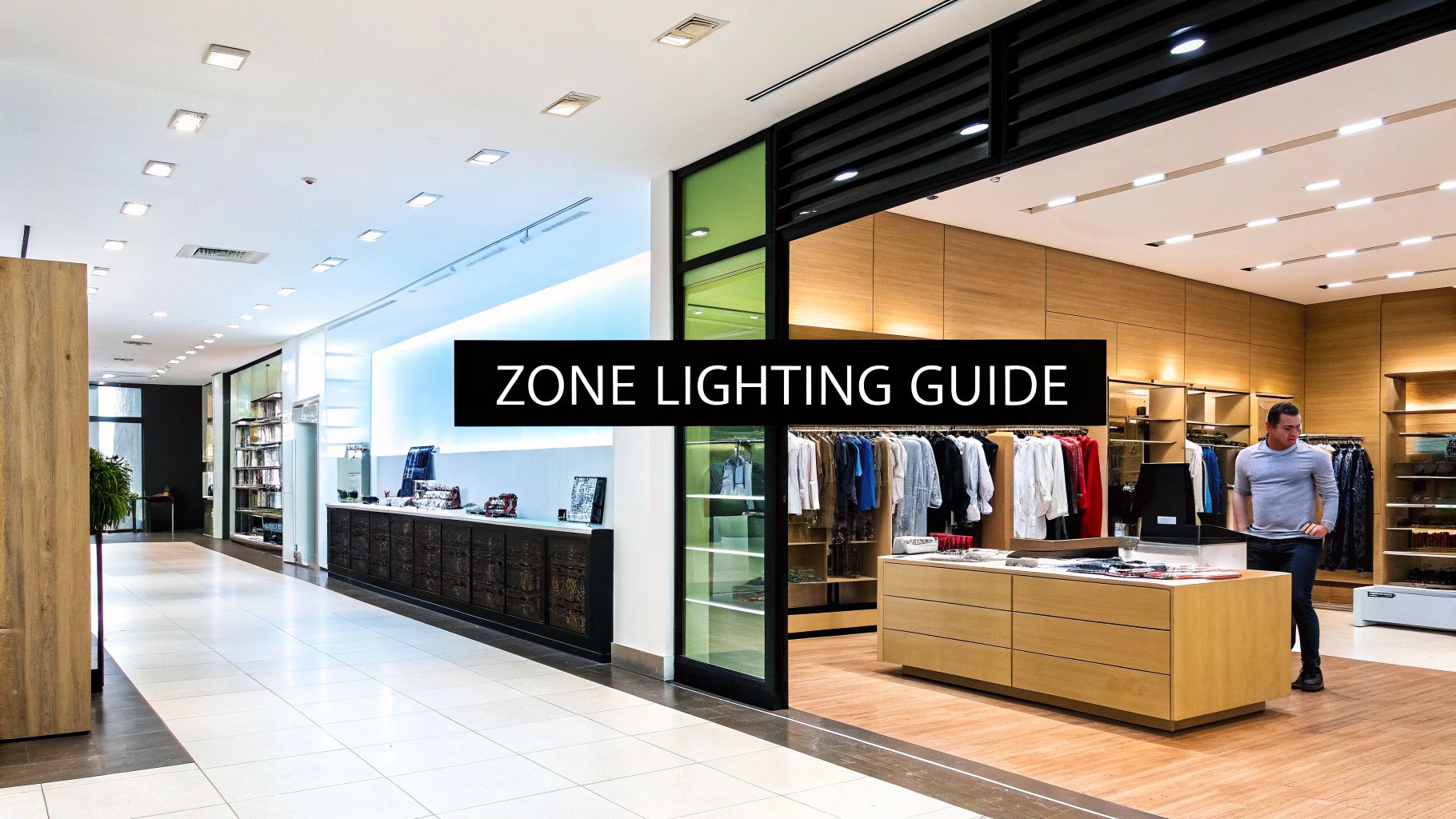
Once you have a handle on why certain light qualities matter, it's time to shift to the what. Picking the right hardware is where your lighting strategy really comes to life. You wouldn’t just install a single, harsh overhead light and expect it to create a welcoming, dynamic space, would you? The key is to build a versatile toolkit of fixtures that layer light together, creating depth, focus, and function throughout your store.
The Workhorses of Retail Lighting
Honestly, just a few types of fixtures do most of the heavy lifting in retail. If you understand their main jobs, you can build a solid, effective lighting plan. Let’s break down the most common and versatile options our team at Black Rhino Electric installs every day.
- Track Lighting: This is the undisputed champion of flexibility. Track lights are perfect for accent lighting because you can aim, move, and even swap out the heads with zero fuss. This is a game-changer for highlighting new arrivals or seasonal displays.
- Recessed Downlights: These are the quiet heroes of ambient lighting. Tucked flush into the ceiling, they provide clean, widespread light without adding any visual clutter, letting your products take center stage.
- Pendant Lights: A pendant is more than just a light source; it’s a powerful piece of your brand. Hung over a checkout counter or a central table, these fixtures act as decorative focal points.
- Wall Washers & Cove Lighting: These are the secret weapons for getting rid of shadowy corners and making a space feel bigger and more open. They cast smooth, even light across vertical surfaces, adding a touch of elegance.
Retail Lighting Fixture Comparison
You know what? Sometimes just seeing it all laid out makes the choice much clearer. This table is a quick-reference guide to help you match the right fixture to the right job.
| Fixture Type | Primary Use (Ambient, Task, Accent) | Best For | Pros | Cons |
|---|---|---|---|---|
| Track Lighting | Accent, Task | Seasonal displays, featured products, art walls | Highly flexible and adjustable | Can look cluttered if overused |
| Recessed Lights | Ambient | General sales floors, walkways, minimalist designs | Unobtrusive, clean look | Fixed position, less flexible |
| Pendant Lights | Ambient, Decorative, Task | Checkout counters, entryways, high-ceiling areas | Adds style, creates a focal point | Can obstruct views if hung too low |
| Strip Lights | Task, Accent | Under-shelf lighting, cove lighting, display cases | Versatile, easy to hide, uniform glow | Requires careful installation for a clean look |
| Wall Washers | Ambient, Accent | Highlighting textured walls, eliminating shadows | Makes spaces feel brighter and larger | Can create glare if aimed improperly |
Of course, choosing the right fixtures is just one part of the puzzle. The installation itself is a critical step that demands real expertise to ensure everything is safe and performs correctly. Learning more about professional commercial lighting services can clarify how to execute your vision perfectly.
Smart Lighting That Boosts Your Bottom Line
A beautiful lighting design is a must-have, but let's be honest—it can't come with an outrageous energy bill. Modern lighting isn't about choosing between aesthetics and performance. The best lighting for retail stores today is a powerful tool for boosting your bottom line through sheer efficiency. This is where LED technology completely changes the game.
The Unbeatable ROI of LED Lighting
So why the big push for LEDs? The numbers don't lie. Compared to old-school systems, LEDs use up to 75% less energy. But the savings don't stop there. Think about the incredible lifespan of commercial-grade LEDs, many of which are rated for 50,000 hours or more. Imagine slashing your maintenance budget by pretty much eliminating the constant cycle of buying and replacing bulbs.
More Than Just Energy Savings
You know what? The financial upside gets even better. Legacy lighting, especially halogen bulbs, kicks out a tremendous amount of heat, forcing your HVAC system to work overtime. LEDs, on the other hand, run significantly cooler. This simple fact can lead to a noticeable drop in your air conditioning costs, adding another layer of savings that many retailers overlook. You can discover more insights about the LED lighting market to see the full scope of these benefits.
Taking Control with Smart Systems
Upgrading to LEDs is the foundation, but smart lighting controls are what really unlock maximum efficiency. These are practical, easy-to-use tools that automate savings.
Let me explain a few of the most impactful options:
- Dimmers: This is the simplest form of control. It lets you adjust brightness levels to match the time of day, store traffic, or specific promotions.
- Occupancy Sensors: Why light an empty stockroom? Occupancy sensors automatically turn lights on when someone enters a space and off when they leave.
- Daylight Harvesting: These intelligent sensors detect natural light coming in through your windows and automatically dim your interior lights to maintain a consistent level.
- Timers and Scheduling: A centralized scheduling system allows you to program your entire store’s lighting, ensuring everything is perfectly set before the first employee even arrives.
These technologies create an intelligent lighting ecosystem that adapts to your needs in real time, delivering a fast and compelling return on investment.
Your Zone-by-Zone Guide to a Winning Lighting Strategy
Alright, we’ve covered the principles and the tools. Now, let’s put it all together into a practical plan. The best lighting for retail stores isn't about one magic bullet; it's about applying the right strategy to each distinct zone to create a seamless and persuasive customer journey.
The Window Display: Your First Impression
Let's be blunt: your window display is your 24/7 billboard. Its sole purpose is to stop people in their tracks and pull them inside. This is where you go big on contrast and drama.
- Strategy: Use high-intensity, narrow-beam spotlights to create powerful focal points on key products. This area should be at least five times brighter than the general sales floor to stand out.
- Specs: A neutral to cool color temperature (around 4000K) with a high CRI of 90+ will make colors pop.
The Main Sales Floor: Guiding the Journey
Once a customer is inside, the main sales floor takes over. Your goal here is to create a clear, comfortable, and inviting path. This is where the art of layering lighting truly comes into play.
- Strategy: Start with a base layer of clean, uniform ambient light from recessed downlights. Then, use adjustable track lighting to spotlight end caps, feature walls, and high-margin products.
- Impact: A recent survey found that 68% of shoppers prefer well-lit stores, which correlates directly to a 12% average revenue growth. You can read more about these general lighting market findings to see the full impact.
The Fitting Rooms: Where Decisions Are Made
Let me explain a critical point: the fitting room is arguably the most important zone in any apparel store. This is the moment of truth where a "maybe" turns into a "yes."
- Strategy: Install vertical lights on both sides of the mirror. This illuminates the customer evenly and eliminates harsh, unflattering shadows.
- Specs: Use a warm-to-neutral CCT (3000K-3500K) with an exceptional CRI of 95+ to ensure skin tones look natural and clothing colors are rendered perfectly.
The Checkout Counter: Your Final Impression
The final stop is the checkout counter. Here, the priority shifts from atmosphere to function.
- Strategy: Use task lighting, like stylish pendants or focused downlights, directly over the counter. This ensures employees can easily see screens and scanners, and customers can clearly view their items.
Why Professional Installation Is Your Most Critical Step
You could have the most brilliant, sales-driving lighting plan in the world, but honestly, it’s only as good as its installation. The final, and arguably most critical, step in achieving the best lighting for retail stores is partnering with a licensed professional like Black Rhino Electric. This isn't just about flipping a switch; it's about safeguarding your entire investment, your property, and your people.
The Dangers of a DIY Approach
You know what? Attempting a complex commercial installation yourself to save a few dollars can backfire spectacularly. It’s a gamble with serious consequences.
Here’s the thing, the risks are very real:
- System Overloads: Professionals calculate the total electrical load of your new lighting system. A DIY job can easily overload a circuit, leading to tripping breakers and a very real risk of fire.
- Performance Issues: Flickering lights, inconsistent brightness, and premature fixture failure are classic signs of poor installation. These issues create a terrible customer experience.
- Serious Safety Hazards: The risk of electrical shock or creating a fire hazard is dangerously high without the proper training and tools.
The Value of Expertise and Peace of Mind
Partnering with a licensed electrical contractor isn't just an expense; it’s a crucial investment in your business’s safety, performance, and longevity. We bring the experience and authority needed to execute your vision flawlessly, ensuring every component is up to code and works as intended from day one. It’s about the peace of mind that comes from knowing the job was done right by a team you can trust.
Common Retail Lighting Questions Answered
We get a lot of questions from retailers trying to get their lighting just right. Honestly, nailing the best lighting for retail stores often comes down to a few key decisions. Let's dive into some practical answers pulled from our years of hands-on commercial electrical experience.
What Is the Best Color Temperature for a Clothing Store?
For most clothing retail, the sweet spot is a neutral to slightly warm white light between 3000K and 4000K. You know what? This range is fantastic for color rendering, so fabrics look true-to-life while the space still feels comfortable. Just as important, always aim for a CRI of 90 or higher.
How Often Will I Need to Replace LED Lights?
Here’s the thing: one of the biggest wins with commercial-grade LEDs is their incredible lifespan. Most are rated for 50,000 hours of operation or even more. For a store open 12 hours a day, that translates to over 11 years before a replacement is even on the radar. You can check out more topics on our frequently asked questions page.
Can I Install New Retail Lighting Myself?
While a DIY approach might seem like a way to cut costs, commercial electrical work is strictly a job for licensed professionals. It's often illegal to perform without the proper credentials and poses serious risks—including electrical shock and fire hazards. A licensed electrician ensures your installation is safe, compliant with all local codes, and optimized for performance.
At Black Rhino Electric, our licensed electricians make sure your lighting installation is done right—safely, efficiently, and up to code. Ready to transform your retail space with professional lighting that drives sales and saves money? Give our team a call at 385-396-7048 or request a free quote online to get started on your project today.