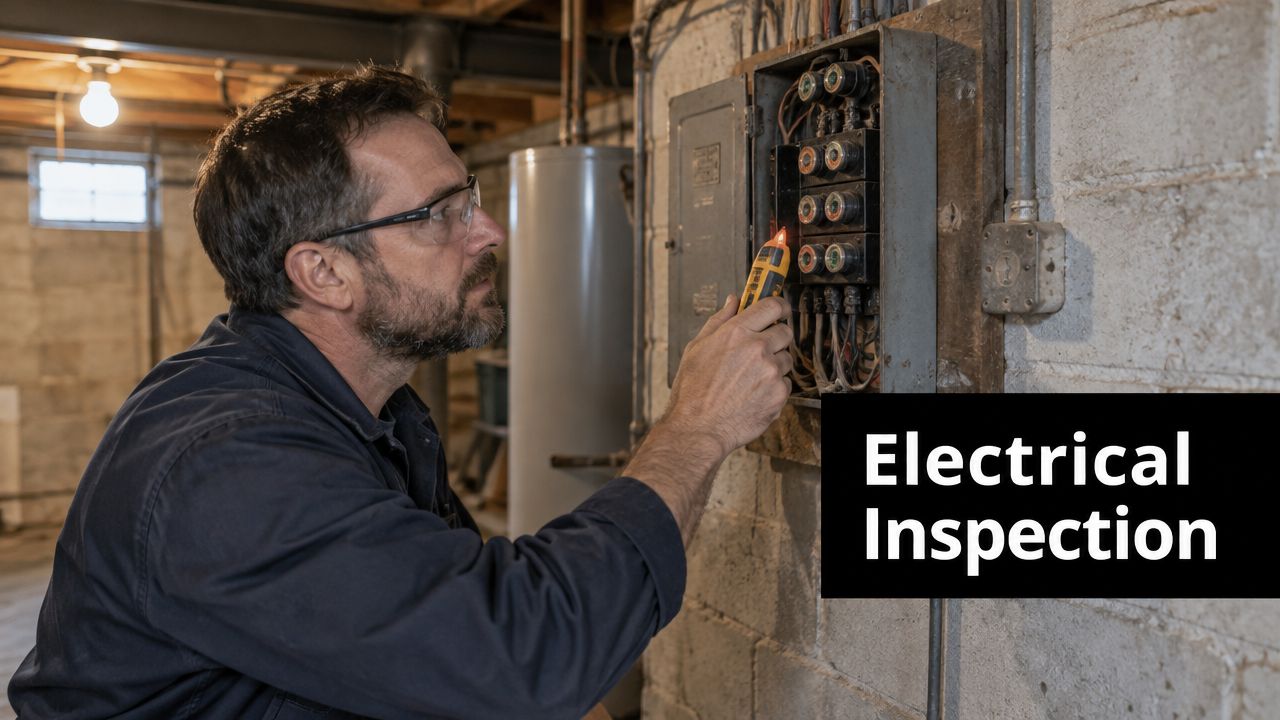
A buyer touring an older home in Ogden, Layton, or Salt Lake City may notice charming trim, a remodeled kitchen, and fresh paint while wondering what's hidden behind the walls. An electrical inspection before buying an older home helps answer a more important question: can the system protect the household today and support the upgrades planned for the years ahead?
Introduction to Electrical Inspection Before Buying an Older Home
Age alone doesn't mean a home is unsafe, but it does change the level of attention the electrical system deserves. The U.S. Consumer Product Safety Commission reported 42,000 home fires involving electrical wiring in 1990, resulting in 340 deaths, 1,370 injuries, and $569 million in property losses, with a total societal cost of about $1.3 billion. The same guidance noted that electrical-system fires occurred disproportionately in homes more than 40 years old, while about one-third of U.S. homes were already older than that at the time. The CPSC's electrical-fire safety guidance explains why an age-based inspection remains a sensible due-diligence step.
That concern matters in Northern Utah, where older homes across Weber, Davis, and Salt Lake counties may face changing seasonal demands, from winter heating equipment to summer cooling, workshop tools, hot tubs, and vehicle charging. Buyers should review the broader key investor inspection steps while also scheduling an electrical safety check with a qualified professional. The practical goal isn't a pass-or-fail label. It's a clear decision about safety, repair scope, and capacity for the next 5–10 years.
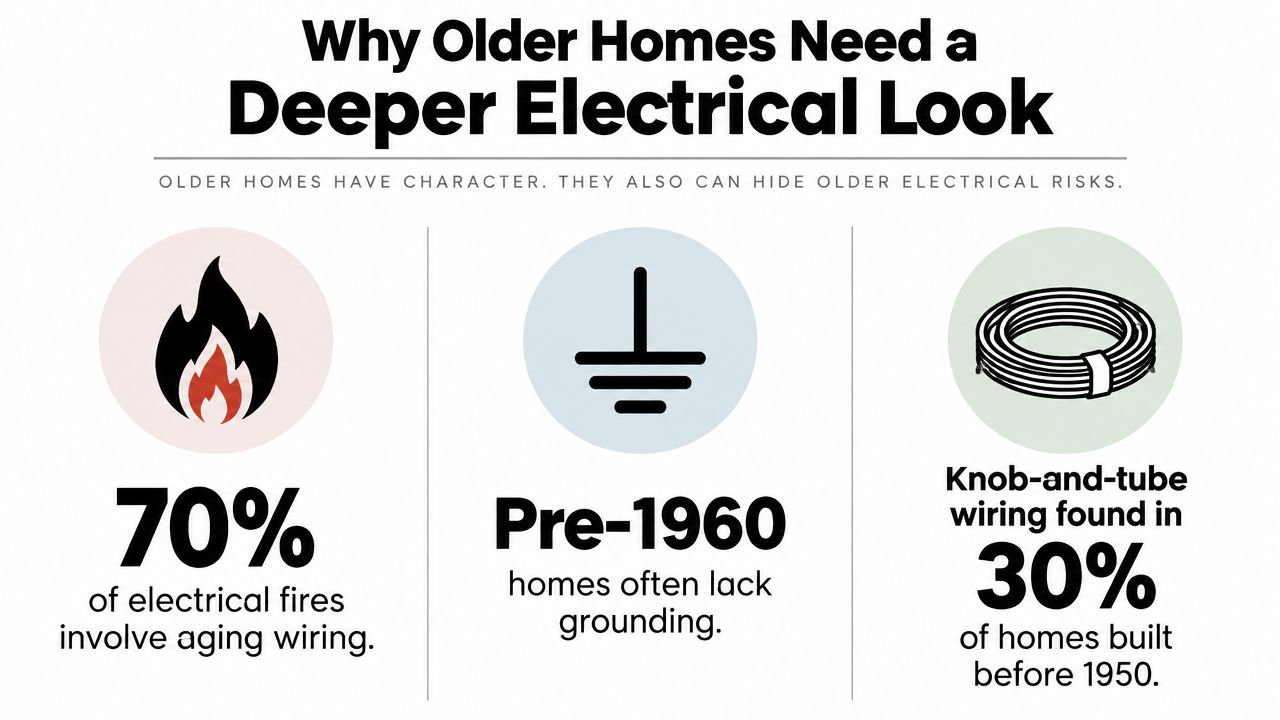
Why Older Homes Need a Deeper Electrical Look
Electrical systems age in layers. A house may have started with wiring and panel capacity designed for modest lighting and a few appliances, then accumulated additions such as dishwashers, air conditioning, basement circuits, garage equipment, and electronic devices. Each change can be acceptable on its own, yet the combined system may have weak connections, limited capacity, outdated protection, or undocumented modifications.
A useful comparison is an older water line. A faucet may still produce water, but that doesn't prove the pipe has enough capacity for every future fixture or that hidden corrosion isn't present. Electrical systems work similarly. Lights turning on only confirm that electricity is reaching the fixture. They don't confirm proper grounding, sound connections, adequate service, or protection against shock and arc faults.
The 40-year inspection threshold has been part of historical CPSC home-wiring guidance. That guide states that a system last inspected 40 or more years ago is overdue, while inspection is advisable when the last inspection occurred 10–40 years ago, particularly when major electrical loads or warning signs exist. It also identifies aluminum branch-circuit wiring introduced during 1965–1973, estimated to exist in about 2 million U.S. homes, as a legacy condition associated with loosening connections and overheating risks. The CPSC home-wiring guide provides that historical context.
Practical rule: A working electrical system isn't automatically a suitable electrical system.
A general inspection can identify visible concerns, but buyers shouldn't assume it replaces an electrician-led evaluation in an older property. The deeper review helps buyers underwrite old home risks by identifying conditions that may affect safety, insurability, remodeling plans, or future electrical demand.
Home Inspector Versus Licensed Electrician and When to Choose Each
A general home inspector and a licensed electrician serve different purposes. The home inspector typically performs a visual review of accessible components and records visible defects. That review is useful, but it may not determine wiring type throughout the home, evaluate load capacity in detail, verify grounding and bonding, or assess permit history.
A licensed electrician can examine the service entrance, main panel, breakers, accessible wiring, grounding, bonding, protective devices, outlets, and planned loads. The electrician can also identify whether the system needs troubleshooting, targeted repairs, a panel change, additional circuits, or broader rewiring. Buyers can find more practical guidance on hiring electrical service pros with confidence before scheduling the visit.
The decision rule is straightforward:
- Choose the electrician review: The home is older than 30 years, the panel or wiring appears dated, the report identifies an electrical concern, or the buyer plans an EV charger, hot tub, finished basement, workshop, or major remodel.
- Ask for load planning: The property may handle current use but lack room for future demand. A load calculation can show whether planned additions fit the service.
- Use both inspections when appropriate: The general inspection covers the property broadly, while the electrician concentrates on electrical safety, function, capacity, and correction options.
Panel capacity works like a water line feeding several rooms. A larger pipe offers more flow, but the actual demand still matters. An electrician evaluates both the available electrical service and the loads the buyer expects to add, rather than treating the panel label as the whole answer.
What a Qualified Electrical Inspection Covers Inside an Older Home
A qualified inspection follows the system from the utility connection to the individual devices. The electrician isn't counting outlets. The review looks for the reason a component exists, whether it operates correctly, and whether the system can support the household's intended use.
Service entrance and main panel
Panelboards are rated by amperage and breaker spaces. Many older homes have 60A or 100A systems, while modern additions can create more demand. A practical benchmark is that code requires at least 100 amperes of service. A 200-amp panel with about 40 breaker spaces is commonly adequate for most homes under roughly 3,500 square feet that aren't electrically heated, with room for additions such as EV charging or major appliances. The panelboard inspection guidance from InterNACHI explains these service and space considerations.
The electrician checks the panel's condition, breaker fit, signs of overheating, labeling, service conductors, and available capacity. A panel that looks orderly may still need a load calculation before an EV charger or spa circuit is added.
Wiring, grounding, and bonding
Accessible areas such as basements, crawl spaces, attics, and garages can reveal wiring materials and alterations. The inspection may identify older systems, including knob-and-tube wiring, or aluminum branch-circuit wiring from the 1965–1973 period. It also evaluates grounding and bonding so fault current has a safe path rather than relying on a person or building component.
Homeowners can safely observe two-prong outlets, damaged covers, exposed conductors, unusual wiring in unfinished areas, and scorch marks. They shouldn't remove panel covers, handle conductors, or test live components.
Outlets, fixtures, and protective devices
The electrician checks outlet polarity, grounding, secure installation, switch condition, fixture connections, and dedicated circuits for major loads. GFCI protection deserves functional testing, not just visual confirmation. Guidance for inspectors calls for testing observed GFCI receptacles and breaker-protected GFCIs with a tester where possible, along with representative AFCI-protected receptacles or breakers using the AFCI test button where possible. The InterNACHI GFCI and AFCI inspection guide describes that testing approach.
A useful planning reference is this home electrical safety checklist for 2025, especially for buyers preparing questions before the appointment. A written scope also makes it easier to request an accurate electrical work estimate when findings require correction.
How to Read the Report and Prioritize Safety Risks
An electrical report can contain several types of findings, and not every item deserves the same response. Buyers should separate immediate hazards, code or protection gaps, and future-capacity limitations. That distinction helps prevent a minor labeling issue from receiving the same urgency as overheating evidence or an unsafe connection.
GFCI and AFCI coverage often falls into the second category, but missing protection can still create meaningful safety exposure. GFCIs are expected in wet or grounded locations such as bathrooms, kitchens, garages, exteriors, crawl spaces, and unfinished basements. AFCI protection has been required progressively since 1999 and now covers many living areas. Under the 2023 NEC, AFCI protection is required for all 120-volt, 15-ampere and 20-ampere branch circuits in dwelling units, while GFCI requirements extend to kitchens, bathrooms, garages, crawl spaces, unfinished basements, and all outdoor locations. This older-home code-compliance review provides that current-code context.
| Finding Category | Example in Older Home | Risk Level and Next Step |
|---|---|---|
| Immediate safety hazard | Burn marks, overheating, damaged wiring, loose or unsafe connections | High priority. Obtain electrician direction promptly and resolve before relying on the system. |
| Protective-device gap | Missing or nonfunctional GFCI or AFCI coverage in a required location | Safety priority. Have devices and circuit coverage tested, then correct the deficient protection. |
| Legacy wiring condition | Aluminum branch wiring or active outdated wiring in accessible areas | Requires evaluation. The electrician should identify the material, connection condition, and suitable correction. |
| Capacity limitation | Limited panel spaces or service capacity for an EV charger, hot tub, or remodel | Plan before closing. Request load planning and understand whether a panel or service project is needed. |
| Documentation concern | Unclear alterations or unavailable permit history | Investigate. Ask the seller and local authority what records exist before assuming the work is acceptable. |
| Minor maintenance item | Damaged cover plate or incomplete labeling without evidence of active hazard | Lower priority. Correct during planned electrical service, while keeping it in the repair record. |
The report should state what was observed, what was tested, and what requires further evaluation. Buyers should ask the electrician to distinguish a condition that is unsafe now from one that isn't ideal for a planned upgrade.
Repair Scope Cost Factors and Negotiating With the Seller
Electrical repair scope depends on the condition found, the accessibility of the wiring, the service capacity, and the buyer's plans. Replacing a defective breaker is a different project from correcting a panel that lacks capacity. Addressing a localized connection issue differs from replacing branch wiring throughout a home. Grounding corrections, circuit additions, wall access, material selection, inspection requirements, and permit procedures can all affect the final scope.
A 1960s Ogden rambler with 100A service may function adequately for its present occupants but require load planning before an EV charger, spa, or major addition. A 1970s Layton home with aluminum branch wiring needs a qualified evaluation of the wiring and connections rather than a casual conclusion based only on whether the lights work. Neither example produces an automatic yes or no. The inspection findings and the buyer's intended use determine the next move.
Turning findings into negotiation points
Buyers can ask for one of several practical outcomes:
- Seller-completed work: Request correction by a qualified electrician, with permits and documentation where required.
- Closing credit: Use a documented repair scope to support a credit rather than accepting an unspecified allowance.
- Price adjustment: Reflect substantial work in the offer when the buyer will manage the project after closing.
- Additional evaluation: Request more information when the report identifies a condition but doesn't establish its full extent.
Local requirements can vary among Marriott-Slaterville, Ogden, Roy, Layton, Bountiful, and other Northern Utah communities. The electrician and the applicable local authority can clarify whether a proposed panel change, rewiring project, EV charger, hot tub circuit, or code correction needs a permit or inspection.
Buyers should ask for the inspection report, repair invoices, permit records, panel information, and any documentation for previous electrical work. Before closing, a written scope for an electrical panel upgrade can help compare the home's purchase value with the work still required.
Hiring a Qualified Electrician in Northern Utah and Next Steps
A sound pre-purchase process starts with the home's age, visible warning signs, and the buyer's future plans. A home older than 30 years, a dated panel, legacy wiring, unexplained modifications, or plans for EV charging, a hot tub, or a finished basement all support bringing in a licensed electrician rather than relying only on a visual inspection.
Useful questions include:
- What wiring types are present and where were they observed?
- Is the service adequate for the planned loads?
- Which findings are immediate hazards, and which are upgrade planning items?
- Were GFCI and AFCI devices tested?
- Is permit or correction documentation available?
- What work should happen before closing?
During a service visit, the electrician reviews accessible electrical equipment, tests appropriate protective devices, evaluates panel and branch-circuit conditions, discusses future loads, and explains whether troubleshooting, breaker work, rewiring, or a panel project is appropriate. A buyer can prepare by clearing access to the panel, attic, basement, crawl-space entrances, garages, and visible outlets without opening electrical equipment.
Black Rhino Electric serves Northern Utah from Marriott-Slaterville, including nearby communities in Weber, Davis, and Salt Lake counties. Buyers seeking a licensed electrician in Northern Utah can use the inspection findings to plan repairs, panel work, EV charger installation, hot tub wiring, GFCI corrections, or other electrical improvements.
Black Rhino Electric provides residential electrical inspections, troubleshooting, breaker and panel work, rewiring, GFCI and outlet service, EV charger installation, and hot tub wiring for Northern Utah properties. Call 385-396-7048 or visit Black Rhino Electric to discuss an older-home inspection and request a quote.