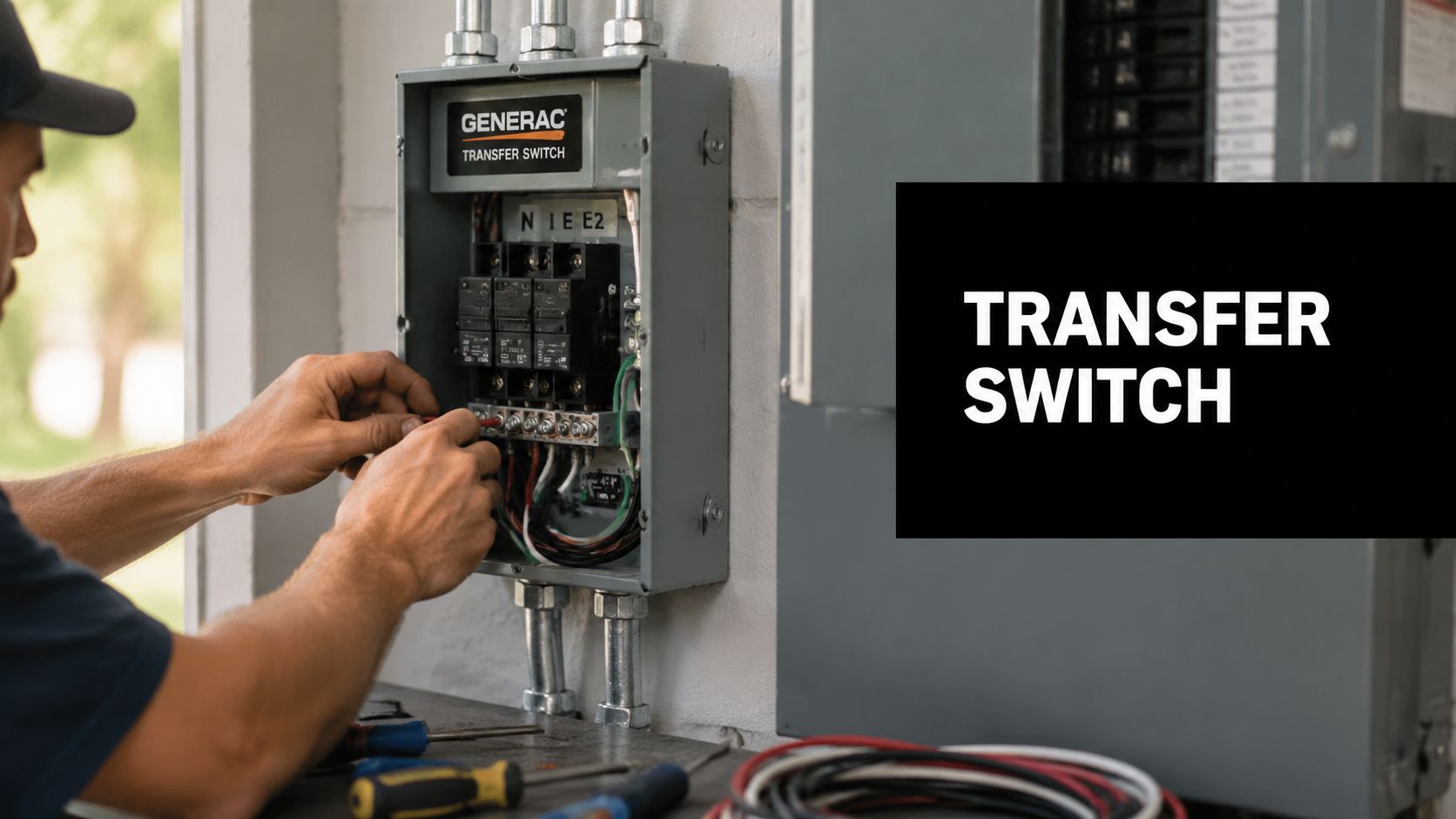
Power flickers have a way of turning a normal evening into a hard reset. For homeowners looking at generator transfer switch installation, the core question isn't just how to keep the lights on, it's whether the house can accept backup power safely at all.
In Northern Utah, that matters more than many realize. Older panels, tight breaker layouts, and bonding issues can turn a simple backup plan into a panel project, and that's where a licensed electrician earns the call.
Why a Transfer Switch Matters Before the Storm Hits
A transfer switch isn't a convenience add-on, it's the safety device that keeps a generator from energizing the utility side at the same time as the house. That separation prevents backfeed, which is exactly why Consumer Reports warns against directly connecting a portable generator to household wiring, and why industry guidance treats the switch as mandatory for a generator connection, with the switch rated at least as high as the larger of the utility or generator source Optim-Elec.
In practical terms, the switch is what lets a home run on either utility power or generator power, but never both. That's the line between a controlled backup setup and a dangerous mistake that can put lineworkers, neighbors, and the home's own wiring at risk.
Northern Utah homeowners usually start thinking about this after a storm, but that's the worst time to learn the panel can't support the load. Ice, wind, and winter outages in Weber, Davis, and Salt Lake counties are the moments when well pumps, furnaces, sump pumps, and refrigeration suddenly matter more than convenience.
Practical rule: if the backup plan depends on extension cords, guesswork, or a direct tie-in to a household outlet, the setup isn't safe enough to trust during an outage.
For homeowners who are already dealing with equipment fallout after a shutdown, post-outage AC reset tips can help with one common post-storm frustration. For the electrical side of the larger picture, backup power safety in Utah is the right foundation to understand before any installation starts.
What a homeowner can safely observe is straightforward. Panel labeling, generator placement, and whether the system has obvious space issues are all visible from the outside. What belongs to a licensed electrician is everything that involves panel terminations, neutral and ground separation, load selection, and final testing.
Manual vs Automatic Transfer Switches
Homeowners choosing between manual and automatic transfer switches should start with the outage scenario, not brand names or price. Before starting a generator transfer switch installation, the key question is how the house will be used during a shutdown, who will be there to manage it, and which circuits need backup. Manual transfer switches fit portable-generator setups where a homeowner is present, starts the generator, and switches the selected circuits by hand. Automatic transfer switches sense the outage, start the generator, and move the load without someone standing at the panel.
A lot of homeowners decide faster when they look at the two side by side.
| Feature | Manual Transfer Switch | Automatic Transfer Switch |
|---|---|---|
| Main use | Portable generator and selected circuits | Standby-style backup and unattended operation |
| Operation | Homeowner switches circuits by hand | Detects outage and transfers automatically |
| Cost profile | Usually lower | Usually higher |
| Best fit | A few critical loads, someone is home | Vacant properties, travel, medically sensitive loads |
| Generator interaction | Usually a portable unit with a corded inlet | Typically paired with a compatible standby setup |
The practical trade-off is straightforward. Manual systems keep the hardware simpler and are usually easier on the budget. Automatic systems add convenience and continuity, which matters when someone is away, asleep, or unable to manage the changeover during an outage. For a home that needs power to stay on without attention, automatic equipment usually makes more sense.
Load count can also change the decision. A well pump or similar 240-volt load takes more planning than a standard lighting circuit, and the available switch positions can disappear quickly once the critical loads are mapped out. That is one reason a visible breaker count does not tell the full story.
A homeowner who wants whole-home coverage should ask a direct question, can the generator and the switch actually carry the intended load, or is the setup only realistic for a handful of essential circuits?
For a typical house in Ogden, Layton, Roy, or Bountiful, manual systems often make sense when the goal is to keep a few critical circuits alive. Automatic systems fit better when the house needs unattended continuity and the budget supports the hardware and commissioning that come with it.
Pre-Install Planning That Decides Whether You Can Proceed
The switch itself is rarely the barrier. The panel is. Older services, crowded breaker rows, and awkward neutral and ground arrangements often determine whether generator transfer switch installation can happen as a clean add-on or whether the house needs a panel upgrade first.
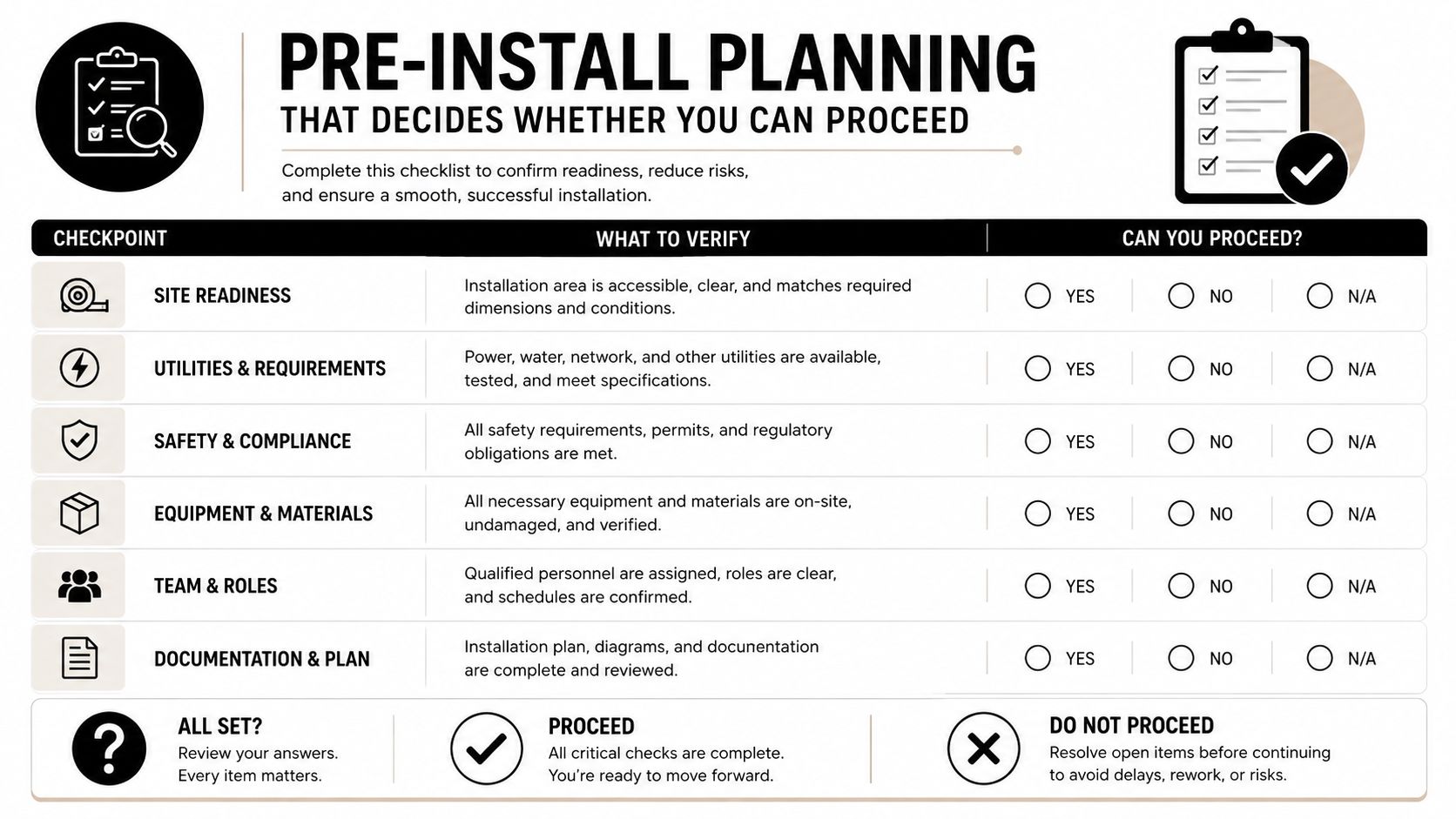
A homeowner can help with the early checklist, but not with the calculations that matter most.
- Panel space: Look for obvious open breaker positions and a panel layout that isn't already maxed out.
- Panel labeling: Note which circuits serve refrigeration, furnace equipment, lighting, or a well pump.
- Main service clues: Identify whether the panel has a main breaker and whether the labeling is legible.
- Equipment records: Gather generator model information and any existing panel or permit paperwork.
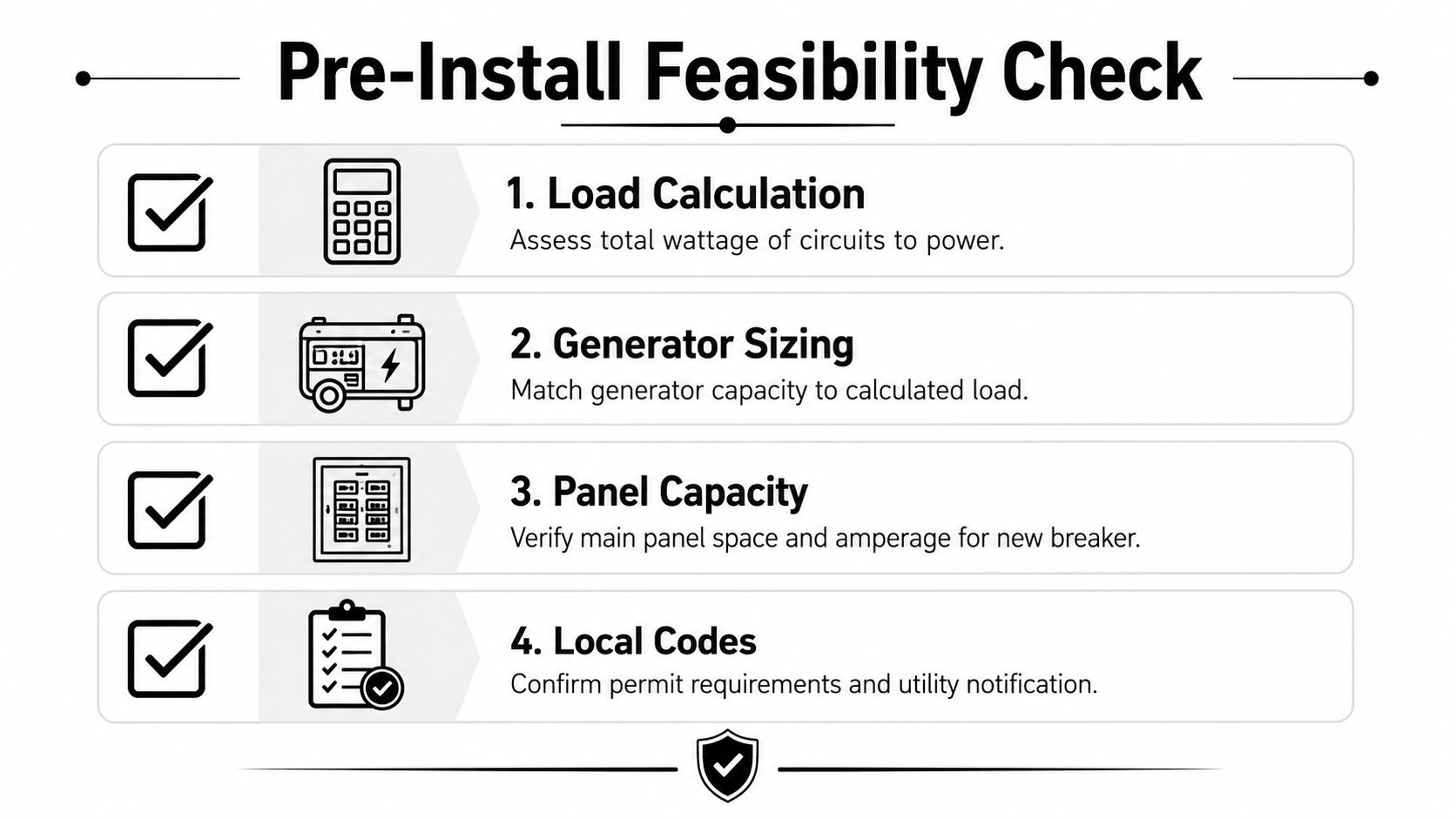
What needs a licensed electrician is the actual load calculation, the generator sizing match, and the neutral and ground review. Those items decide whether the new switch can be installed safely, and they're also where an older 100-amp service may need a larger conversation about capacity before anything gets mounted.
Permit and inspection work also matter in Weber, Davis, and Salt Lake counties. A contractor should be prepared to document the equipment, the wiring path, and the load selection before the job starts, because local review often depends on whether the work is clearly code-compliant and tied to a sensible service layout.
Useful checkpoint: if the panel is already full, the homeowner should treat that as a design problem, not a scheduling problem.
For homes that need a broader electrical conversation, the right first step is often an electrical panel upgrade. That's especially true when the panel doesn't have the space or architecture to support the transfer equipment without forcing a risky compromise.
What a Licensed Electrician Does on Install Day
Install day starts with the panel de-energized and verified dead, then the electrician builds the transfer equipment around the service layout the house can support. The switch is mounted next to the main panel, usually close enough to keep the wiring orderly and accessible, but the key question is still whether the panel has room for it, whether the breaker spaces make sense, and whether the neutral and grounding arrangement can support the change without creating a bonding problem.
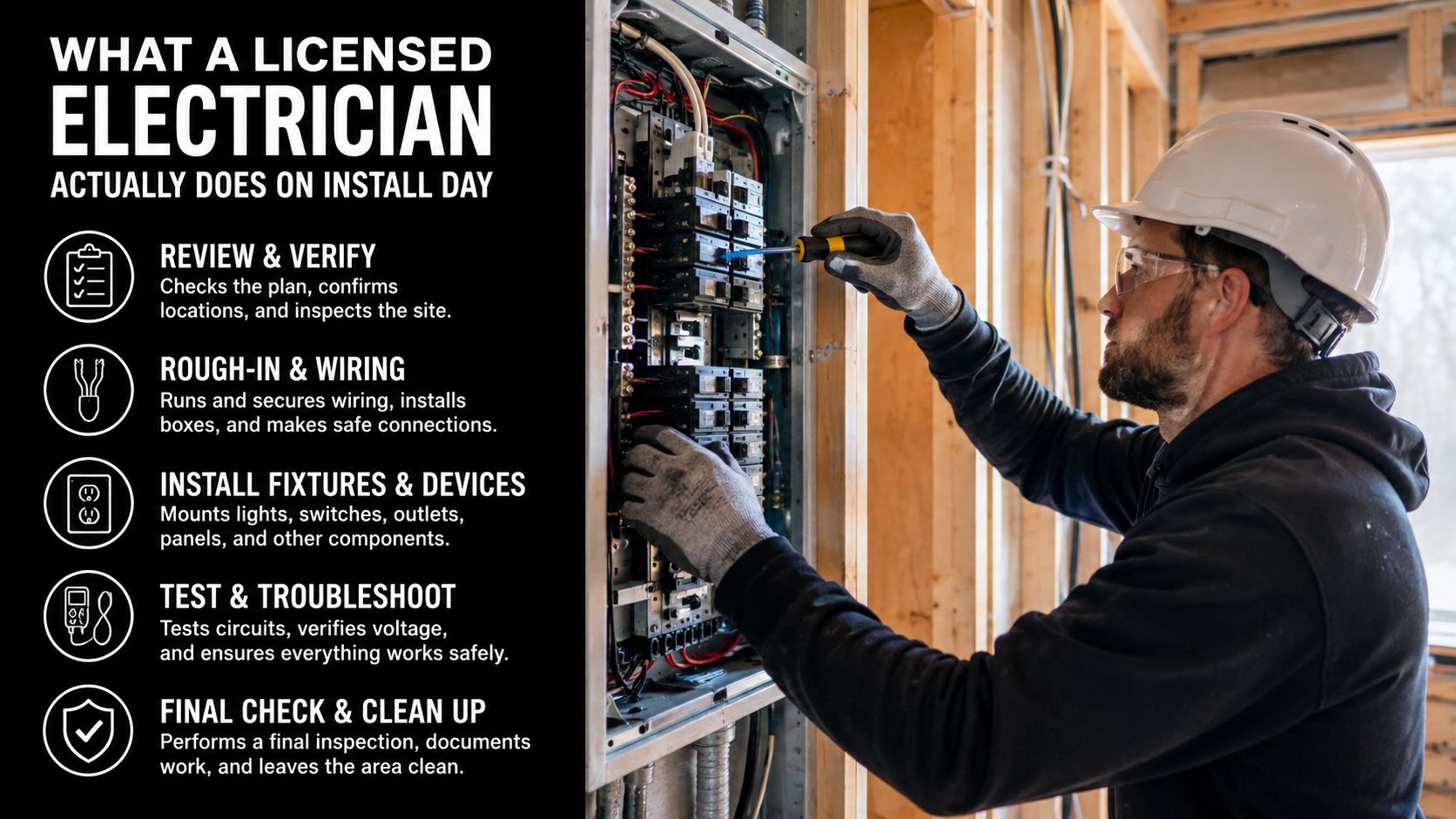
After that, the work turns into careful retermination. The feeder conduit or whip is routed through a knockout, the neutral lands on the neutral bus, the ground lands on the grounding bar, and only the selected branch circuits get moved to the transfer switch. A clear circuit map keeps the process organized, because one mislabeled conductor can send the wrong circuit into backup mode or leave a critical load out of service when the utility drops.
For portable-generator setups, the inlet box and cord route are part of the same job. The generator still needs to sit at least 20 feet from the house to limit carbon monoxide exposure, and that spacing is a safety requirement, not a preference. A homeowner can see the placement and cord path, but the wiring and termination work belong to the electrician.
A homeowner can watch for a few signs that the job is being handled correctly without opening a panel or touching any conductors:
- Clear circuit labeling: Each backed-up circuit should be identified before the cover goes back on.
- Secure conduit and inlet mounting: The path from inlet to switch should look mechanically solid, with no loose fittings or obvious patchwork.
- Clean conductor layout: Wires should be routed deliberately, without crowding that suggests guessing during retermination.
- Functional transfer test: The electrician should confirm the switch changes source correctly and that the backed-up circuits behave as expected under no-load and load conditions.
For a homeowner in Marriott-Slaterville, Kaysville, or Salt Lake City, the most useful part of the visit is usually the final test and reset. That is when the electrician confirms that utility power returns cleanly, the chosen circuits transfer as intended, and the panel still makes sense for day-to-day service after the backup equipment is in place.
A homeowner who wants a local point of contact can start with a licensed electrician in Northern Utah. This is panel work with a backup source attached, not a plug-in appliance task.
Managing Loads After the Switch Is Installed
Once the switch is in, the job turns from wiring to load control. The key question is whether the generator can carry the circuits the home needs without forcing ugly trade-offs, and that starts with a realistic circuit plan. A 50-amp setup will not support the same household mix as a 100-amp service, so a homeowner has to decide whether the goal is basic continuity, like heat, water, and refrigeration, or a wider set of comfort loads that will push runtime and capacity harder.
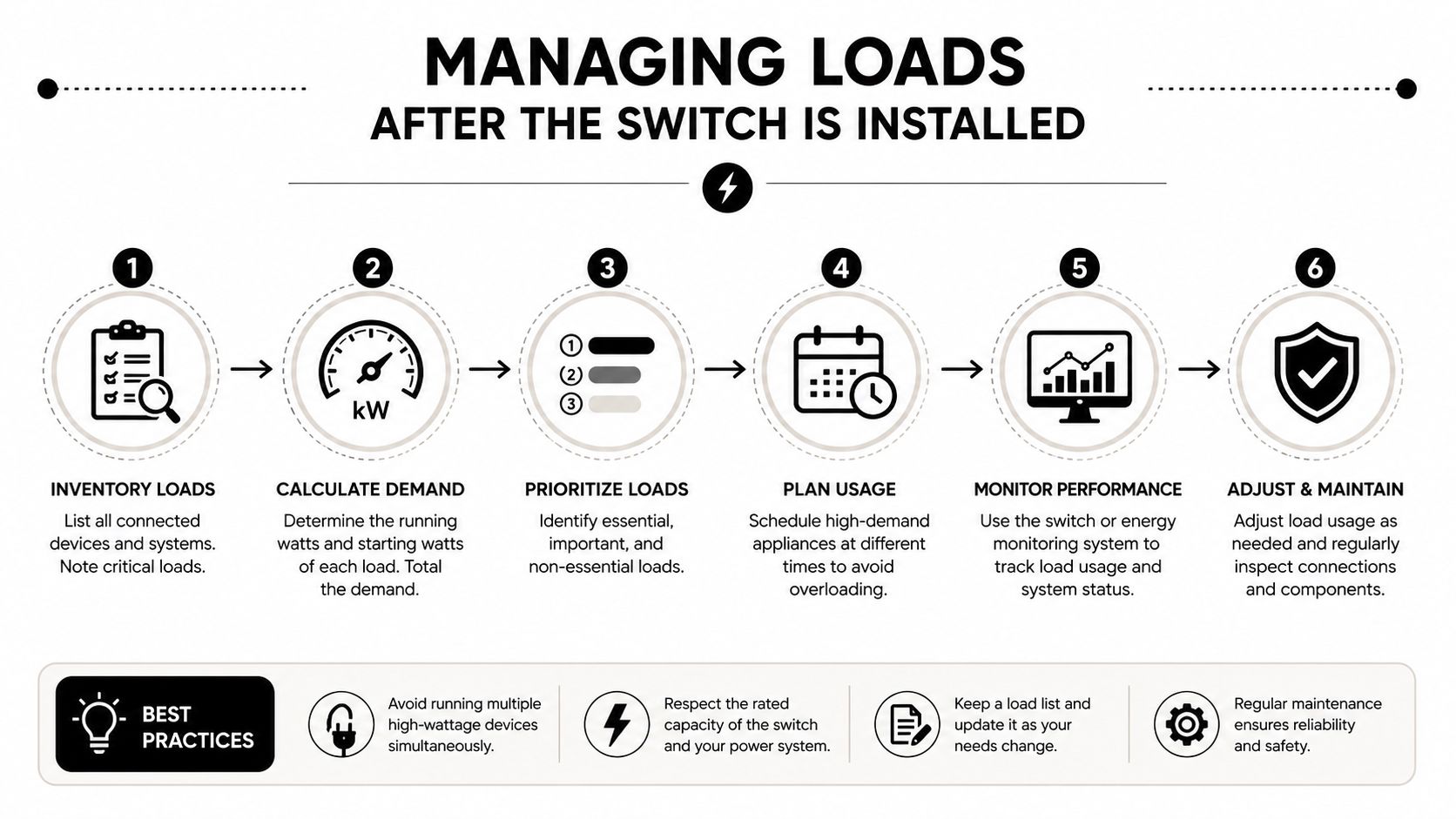
For a typical Northern Utah home, the priority order usually starts with the loads that protect the building first. A well pump comes before convenience lighting, a furnace or blower comes before rarely used outlets, and refrigeration usually outranks comfort loads that can wait.
The safe habit is to bring loads on one at a time. Motors and compressors have starting surge, and when too many circuits come online together, the generator can trip, sag, or fail to carry the combined demand cleanly. That sequence protects both runtime and equipment life.
A practical order often looks like this:
- Critical water or heat load first. That may be a well pump or furnace-related circuit.
- Food preservation next. Refrigeration usually deserves the next slot.
- Secondary safety loads. Sump pump or lighting circuits can follow if capacity remains.
- Comfort loads last. Anything nonessential should wait until the house is stable.
A 50-amp generator setup usually means the homeowner has to be selective. It can cover a few high-priority circuits, but it will not carry every room, appliance, and convenience load at once without forcing shutdowns or voltage problems. A 100-amp service gives more room for separate circuits, yet it still needs restraint if a well pump, furnace blower, and refrigerator all start near the same time. That is why the load list has to match the generator, not the wish list.
The system also has to respect 240-volt loads. A range, large pump, or similar circuit can consume a large share of the available capacity very quickly, so the transfer switch layout has to be built around the actual outage plan rather than the number of breakers in the panel.
For a more technical planning lens, expert load calculation in Utah is the right internal reference point. Good load planning happens before the first conductor gets moved, because that is the point where the electrician can tell whether the house can support the backup plan at all.
Testing, Maintenance, Troubleshooting, and What It Costs
A transfer switch job is not finished just because the box is mounted and the wires are landed. The check happens during the function test, when utility power is restored, the generator starts, and each selected circuit is moved from Line to Gen one at a time. That test should expose nuisance trips, undervoltage behavior, or a dead branch that points to a wiring mistake. A licensed electrician also verifies the transfer operation against the installation requirements in MTS Power Products and the safety expectations laid out for equipment and transfer means in the NEC and UL standards. If the system passes, the circuit map gets labeled clearly and the homeowner gets a setup that makes sense under outage conditions.
Pricing is easier to judge once the scope is clear. Current pricing guides put typical automatic transfer switch installations between $600 and $2,500, while manual versions often fall between $400 and $1,300 latest U.S. pricing guide. The same guide places switch cost around $200 to $2,000, labor around $200 to $500, and permit costs commonly around $50 to $350. Straightforward installs often take about 2 to 4 hours, while more complex jobs take about 2 to 6 hours. Those numbers are useful because they show this is usually a licensed-electrician project with a defined scope, not a full remodel. They also make it easier to tell whether a quote is separating hardware, labor, and permit handling, or just burying everything in one lump sum.
Maintenance stays simple when the installation is sound. The inlet box should stay dry and secure, the cord should be inspected before storm season, and the generator should be exercised often enough that the transfer system does not sit idle for a full year. For homeowners who also rely on backup power in recreational equipment, the 2026 RV generator tips are a good reminder that readiness depends on habit as much as equipment. Regular use also gives you a better chance of catching a weak battery, sticky switch, or damaged cord before an outage exposes it.
A homeowner can use a basic symptom check after install:
| Symptom | Likely concern | What to do |
|---|---|---|
| Generator won't start | Fuel, battery, or generator-side issue | Check the generator itself first, then call for service if it still won't start |
| Switch won't transfer | Wiring, interlock, or source issue | Do not force it, get a licensed electrician to inspect it |
| One circuit is dead | Mislabeling, loose termination, or lost map | Verify the panel label, then schedule electrical troubleshooting if it stays dead |
A homeowner can safely check obvious external issues, but panel-side diagnosis belongs to a pro. Loose locknuts, mixed neutral and ground terminations, and a lost circuit map are the kinds of problems that look minor until they become outage-day failures.
Warning Signs, Local Code, and When to Call Black Rhino Electric
A burning smell from the panel, warm breakers, aluminum branch wiring, double-lugged neutrals, or a panel with no available breaker spaces are all signs to stop and call a licensed electrician. In Weber, Davis, and Salt Lake counties, transfer switch work typically needs permit and inspection handling, so the safest decision is to step back before a small issue turns into a code problem or a service panel replacement.
That's especially true in older homes, where the barrier is often not the generator or the switch, it's the panel architecture. If the system can't support clean neutral handling, proper grounding, or the extra circuit space, the right answer may be an upgrade path rather than trying to squeeze backup power into a crowded box.
Homeowners in Ogden, Layton, Clearfield, Roy, Kaysville, Bountiful, Farmington, Salt Lake City, and nearby communities can use the quote process to get a real answer before buying equipment. Black Rhino Electric handles residential and commercial electrical work, panel and breaker projects, troubleshooting, and backup power work when the job needs a licensed set of hands.
Black Rhino Electric can evaluate whether your home or business panel can safely accept a transfer switch, handle the permit side, and install the backup power equipment the right way. If you're in Northern Utah and want a clear answer on your setup, call 385-396-7048 or request a quote through Black Rhino Electric and get the project looked at before the next outage does the testing for you.