It’s a familiar scene: the family’s settling in for the evening, the TV's on, dinner's cooking, and then flick—a whole section of the house goes dark. If that sounds a little too close to home, you already understand the real-world benefits of upgrading your electrical panel. It’s about turning a weak link into the reliable core of your modern home.
Your Home’s Power Grid and Why It Needs an Upgrade

Think of your home's electrical panel as its heart. That unassuming metal box takes the main power feed from the utility line and safely pumps electricity to every outlet, switch, and appliance in your house. It’s the command center for your entire electrical system.
Here's the thing: for decades, a standard 100-amp panel was more than enough. But the way we live has completely changed. Our homes are packed with tech, and the electrical demands have skyrocketed. Frankly, many older panels in Utah homes just weren't built for this.
The Problem With Outdated Panels
The real issue comes down to capacity. A lot of homes built before the 1990s have panels with 60-amp or 100-amp service. That worked just fine when the biggest power draws were a refrigerator and a stove. Today, that’s a completely different story.
Just think about what a modern household runs all at once:
- High-efficiency HVAC systems keeping you comfortable year-round.
- Multiple large-screen TVs streaming in high-definition.
- Home offices with computers, big monitors, and printers running all day.
- Kitchens loaded with gadgets like air fryers, instant pots, and powerful blenders.
Each one of these devices adds to the total electrical load. Forcing an old panel to juggle all that is like asking a quiet country road to handle rush-hour freeway traffic. It gets overwhelmed, causing bottlenecks and, eventually, breakdowns.
As experienced electricians at Black Rhino Electric, we've seen firsthand how a weak electrical panel can undermine a home's entire power system. If the foundation is weak, everything you build on top of it—from a new kitchen to an EV charger—is at risk of failure.
Powering the Future of Your Home
This strain on older systems becomes glaringly obvious when you introduce major electrical additions. Things like a new hot tub, a big kitchen remodel, or especially a Level 2 EV charger demand a serious amount of dedicated power. An old panel often just can’t provide it safely.
And this isn't just about the annoyance of tripping breakers. It's about being able to live the way you want while knowing your home is a safe place for your family. An electrical panel upgrade isn’t just a simple repair; it’s a foundational investment in your home's safety, capacity, and future. It's the critical first step to supporting the energy you need today—and whatever comes next.
Boosting Home Safety and Preventing Electrical Fires
Could your home's electrical system be a silent hazard, lurking behind your walls? It's an unsettling thought, but for a lot of homeowners, it’s a reality. An outdated electrical panel is one of the biggest, yet most overlooked, fire risks in any house. Making sure your property and, more importantly, your family are protected is one of the most critical benefits of upgrading your electrical panel.
Let me explain. Old panels, especially those still using archaic fuses or worn-out breakers, simply weren't built for modern life. When you push them past their limits with today's appliances, the components can overheat. That creates a serious risk of arcing—a dangerous electrical discharge that can easily ignite the surrounding wood and insulation in your walls.
Honestly, it's a danger that’s easy to ignore until it's far too late. Those flickering lights you’ve noticed or that faint burning smell you occasionally catch might not just be quirks. They could be warning signs of a system on the verge of failure.
Modern Panels Are Your First Line of Defense
A new panel isn't just about getting more power; it's about getting smarter, faster protection. Modern electrical panels are engineered to use life-saving technologies that can stop an electrical hazard cold, long before it has a chance to escalate into a fire. Think of them as intelligent smoke detectors for your home's wiring.
Two of the most important advancements are:
- Arc Fault Circuit Interrupters (AFCIs): These breakers are designed to detect the unique electrical signature of a dangerous arc fault. They can tell the difference between a normal spark (like flipping a light switch) and a hazardous one, shutting down the circuit in milliseconds to prevent a fire from starting.
- Ground Fault Circuit Interrupters (GFCIs): You’ve probably seen these in your kitchen or bathroom—the outlets with the little "test" and "reset" buttons. GFCIs monitor the electricity flowing through a circuit and immediately cut power if they sense an imbalance. That imbalance could mean electricity is dangerously flowing through a person, so they prevent a severe electrical shock.
Upgrading your panel allows for the system-wide integration of these modern safety devices. It transforms your electrical system from a passive network into an active, intelligent shield that constantly monitors for and neutralizes threats.
The Alarming Reality of Electrical Fires
This isn't just a hypothetical risk. Imagine the horror of coming home to find your house engulfed in flames, all because an old panel couldn't handle the load from your everyday appliances. This nightmare scenario plays out far too often. Electrical issues spark thousands of fires every year, leading to tragic losses and billions in property damage.
The data makes it clear why a panel upgrade is a lifesaver. Older panels, especially those under 100 amps common in homes built before 2000, are a primary cause of overloading, heat buildup, and ignition. By upgrading, you dramatically cut that risk.
Here in Northern Utah, where our harsh winters put a heavy strain on heating systems and modern additions like hot tubs are popular, the risk is even more pronounced. If you're noticing frequent issues with your power, you can learn more about how our expert troubleshooting electrician can diagnose the problem. A new panel with modern safety features gives you peace of mind, knowing your home is actively protected from these terrible statistics.
Powering Your Modern Lifestyle and Future Technology
Beyond just keeping things safe, one of the biggest reasons to upgrade your electrical panel is to actually support the life you want to live. That old 100-amp panel in your garage simply wasn't built for the world we live in today. Your home should be a place of comfort and convenience, not a place where you're constantly playing a game of "which appliance can I turn on now?"
Think about a typical evening. The AC is humming, someone's streaming a 4K movie, the hot tub is heating up, and your EV is plugged in and charging for the morning commute. An old, tired electrical system sees that as a crisis waiting to happen. A modern panel just calls it Tuesday.
Understanding Amperage and Your Home's Capacity
To really get why this matters, it helps to understand a little bit about amperage. Think of amperage (amps) as the total amount of electricity your home can pull at any single moment. It’s like the main water pipe coming into your house—a bigger pipe lets you run the shower, the dishwasher, and the sprinkler all at the same time without losing pressure.
A lot of older homes in Utah are still running on 100-amp service. That used to be plenty, but now it's the bare minimum. Today, a 200-amp panel is the new standard for most single-family homes, and for good reason. It gives you the headroom to run all of today's power-hungry devices without constantly tripping breakers. For bigger homes or those with serious power needs—like multiple EV chargers or a full smart home setup—even a 400-amp panel might be the right call.
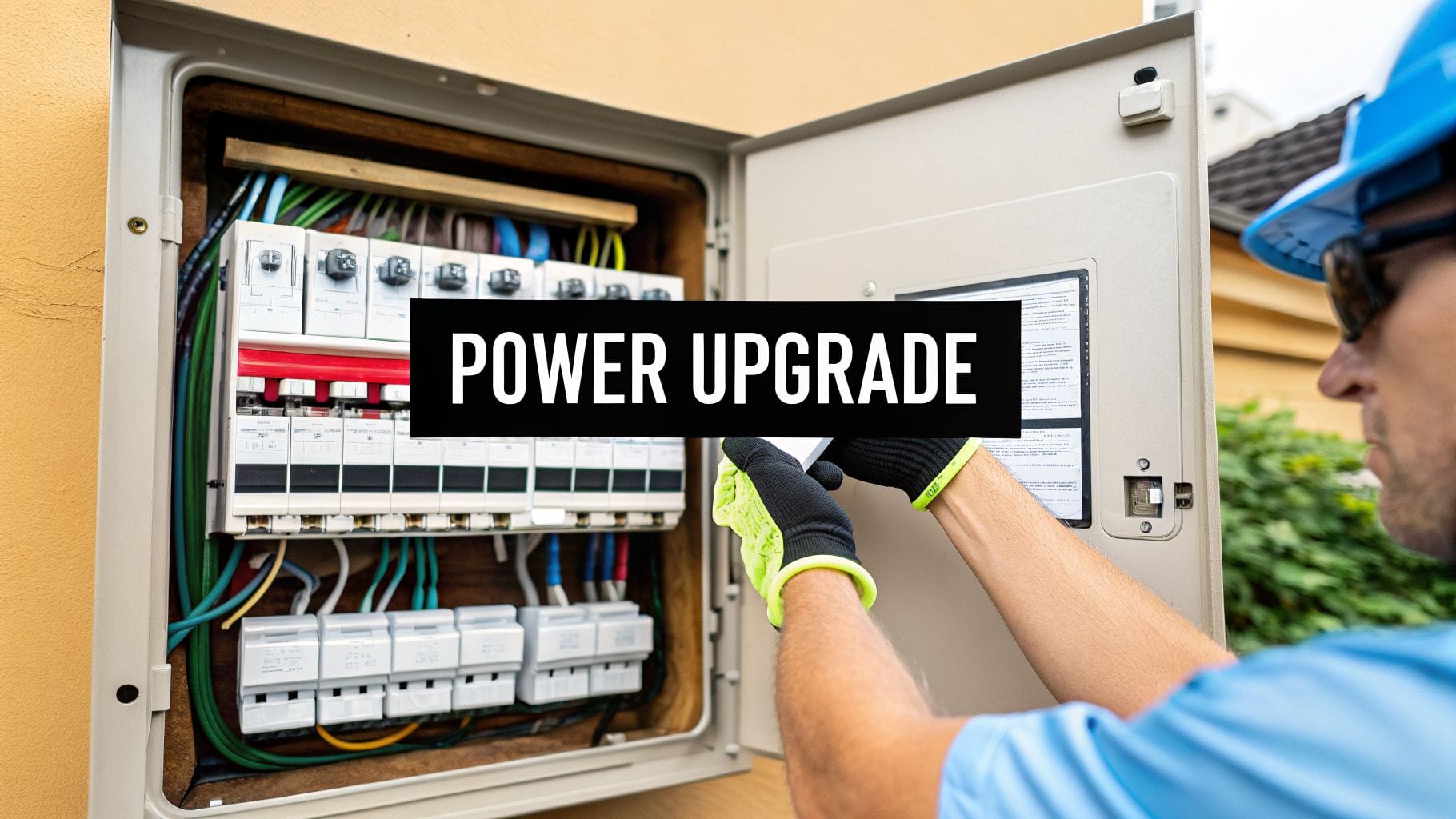
The journey from an old, risky setup to a safe, modern one is pretty straightforward, as this image shows.

It really highlights how swapping out an old fuse box for a modern circuit breaker panel directly cuts down the risk of electrical fires and system meltdowns.
Powering Your Electric Vehicle and Home Renovations
The boom in electric vehicles is a perfect example of why panel capacity is so critical now. Plugging your EV into a standard wall outlet (Level 1 charging) can take days to get a full charge. For the fast, overnight charging speeds you actually need, a Level 2 charger is non-negotiable.
Here’s the catch: those chargers need their own dedicated, high-amperage circuit, often pulling between 40 and 60 amps all by themselves. If you have a 100-amp panel already juggling the rest of your house, adding that kind of load is usually a non-starter without a major upgrade. As more of us install electric car home chargers, a beefier panel becomes essential to do it safely. You can get the full rundown on what it takes in our guide to professional EV charger installation.
But it’s not just about EVs. A panel upgrade is the foundation for almost any big home improvement project you can think of.
- Kitchen Remodels: Modern kitchens are packed with powerful appliances. Induction cooktops, double ovens, and high-speed microwaves all need their own dedicated circuits.
- Home Additions: Adding a new bedroom, office, or living space means you’re also extending your electrical system and increasing the total demand.
- Large Appliance Additions: Thinking about installing central air, a hot tub, or a tankless water heater? Each one puts a significant new load on your panel.
An upgraded electrical panel doesn’t just support your home as it is today. It unlocks its full potential, giving you the freedom to renovate, expand, and adopt new technology without being held back by an outdated electrical system.
Increasing Your Home’s Value and Market Appeal
Thinking an electrical panel upgrade is just about keeping the lights on misses the bigger picture. It's more than a simple repair; it's a smart financial move that pays you back when you decide to sell. One of the biggest benefits of upgrading your electrical panel isn't just safety or capacity—it's how much it can boost your home's value and its appeal to today's buyers.
In competitive real estate markets like Weber, Davis, and Salt Lake counties, buyers are savvier than ever. They’re looking past the new paint and granite countertops to the home’s core systems. An old, undersized, or outdated electrical panel isn't a minor flaw anymore. It's a huge red flag.
To a buyer, that old panel screams two things: potential fire risk and a guaranteed future expense. They see a house that isn't ready for their life—their home theater, their smart devices, their future EV. It’s an immediate, costly project they’ll have to deal with, and it’s enough to make a lot of them walk away.
Turning a Liability Into a Major Selling Point
Now, let's flip that. A house with a new, modern 200-amp panel tells a completely different story. It instantly becomes a powerful selling point, advertising your property as safe, modern, and ready for anything.
A new panel sends a clear message that the home has been cared for and is prepared for:
- Modern Technology: Buyers know they can plug in their high-end kitchen gadgets, home office setup, or smart home systems without worrying about tripping a breaker.
- Future Additions: The house is primed for a hot tub, a workshop in the garage, or an EV charger without needing another major, disruptive electrical project.
- Safety and Peace of Mind: A new panel with modern AFCI/GFCI breakers gives buyers confidence that the electrical system is up to current codes and won't be a source of problems.
In a market where buyers are comparing their options, a home with a modernized electrical system simply stands out. It removes a major point of hesitation and replaces it with a solid reason to put in an offer.
The Financial Return on Your Investment
This isn’t just about making your home look good on paper; it has a real, measurable impact on your bottom line. Moving from an old, tired system to a modern 200-amp or even 400-amp panel is a strategic investment. It future-proofs the property for the growing demands of electrification and adds tangible value.
Data from real estate experts shows that a modernized electrical system can significantly increase a property's value and help it sell faster. Why? Because it signals a low-risk, move-in-ready home. Beyond the immediate convenience, an electrical panel upgrade is considered one of the Home Improvements That Get A Higher Roi, improving both safety and your final sale price.
You might also see a return through your homeowner's insurance. Many providers offer discounts for homes with updated panels and the latest safety features.
A Smart Move for Property Managers and Developers
These financial benefits aren't just for homeowners. For property managers, HOAs, and developers, upgraded electrical systems are a powerful asset.
| Benefit for Property Managers/Developers | Why It Matters for Your Portfolio |
|---|---|
| Justify Higher Rent | Modern units with robust power can command premium rental rates. |
| Attract Quality Tenants | Renters are looking for safe, reliable homes that can handle their tech and even EVs. |
| Reduce Liability & Maintenance | A new panel means fewer calls for tripped breakers and a lower risk of electrical fires. |
| Improve Property Value | Upgraded infrastructure is a key asset when it’s time to refinance or sell the building. |
Whether you're a homeowner planning your next move or a developer building for the future, a panel upgrade is more than just a repair. It's a key investment that flips your electrical system from a potential deal-breaker into one of your home's most valuable assets.
What to Expect During Your Panel Upgrade

So, you’re on board with the benefits of a panel upgrade. That’s the first step. But what does the process actually look like on the ground? A lot of homeowners imagine it's a huge, messy ordeal, but with a professional team like Black Rhino Electric leading the way, it’s more straightforward than you might think.
This isn't just about swapping out a metal box. It's a carefully planned system overhaul done by licensed electricians to keep your home safe and your life on track with minimal disruption.
Initial Consultation and System Assessment
It all kicks off with a thorough on-site visit. A licensed electrician from Black Rhino Electric won’t just peek at your panel. We'll roll up our sleeves and perform a real load calculation to understand exactly what your home needs, now and in the future.
We’ll talk through things like:
- Your current power use and any nagging issues, like breakers that trip when the microwave runs.
- What’s on the horizon for you—adding an EV charger, a hot tub, or finally doing that big kitchen remodel?
- The age and condition of your existing panel, wiring, and the meter base outside.
This conversation is how we figure out the right size for your new system—whether that's a standard 200-amp upgrade or a more muscular 400-amp service for bigger power demands.
A Transparent Quote and Permit Process
After we’ve done our homework, you'll get a clear, detailed quote. No vague estimates here. It’s an itemized breakdown of all the costs: the new panel, breakers, labor, and those all-important permit fees. We want you to feel completely confident and informed before a single tool comes out of the truck.
Once you give us the green light, we take care of the red tape. A panel upgrade is significant work, and it requires a permit from your local city or county office in Weber, Davis, or Salt Lake. Our team manages that entire process, ensuring your project is fully compliant with local electrical codes from day one.
The Installation Day Procedure
On the day of the upgrade, our electricians show up on time and ready to go. The biggest thing to plan for is a scheduled power outage. For a typical panel replacement, you should expect the power to be off for about 8 to 10 hours. We'll work with you to find a day that causes the least disruption for your family.
Our process is built on a foundation of safety and communication. Our electricians will walk you through the day’s plan, establish a safe work zone, and keep you updated on our progress throughout the installation.
The installation itself follows a precise, methodical sequence:
- Safety Shutdown: We coordinate with the utility company to safely cut the power to your home at the meter.
- Removal of Old Panel: Your old electrical panel, breakers, and sometimes the meter box are carefully dismantled and removed.
- Installation of New Panel: The new, higher-capacity panel is securely mounted, and if needed, a new meter base is installed.
- Rewiring and Connection: Each circuit is meticulously reconnected to the correct new breaker in the new panel, ensuring everything is tight and terminated properly.
- Final Inspection and Power-Up: After a triple-check of our own work, we coordinate with the utility to restore power. Then, we test every single circuit to make sure your lights, outlets, and appliances are all working perfectly.
Finally, we'll schedule the final inspection with the city or county inspector. This third-party verification gives you the ultimate peace of mind, confirming your new panel is 100% safe and up to code. For a deeper dive into our panel and breaker work, check out our guide on professional breakers and panels electrician services.
A Few Common Questions About Panel Upgrades
Deciding to upgrade your electrical panel is a big step, and it’s smart to have questions. To help out, we’ve put together some of the most common questions our electricians at Black Rhino Electric hear from homeowners right here in Weber, Davis, and Salt Lake counties.
Think of this as a quick guide to clear up the details and reinforce why a panel upgrade is one of the smartest moves you can make for your home.
How Do I Know What Size Panel I Need?
This is a frequent one: "Do I need a 100, 200, or 400-amp panel?" The right choice depends on a few things:
- Your Home’s Size: Larger homes just have more circuits and need more power, which usually points toward a larger panel.
- Your Appliances: Are you adding an EV charger, a hot tub, a tankless water heater, or a new double oven? Those are all power-hungry and demand serious amperage.
- Planned Renovations: Any big remodel or home addition is going to bump up your power needs.
You can't just guess. The only way to know for sure is to have a professional electrician perform a load calculation. It’s a detailed assessment that totals up your home's potential electrical demand to pinpoint the exact panel size that will keep you safe and powered up for years to come.
How Long Does a Panel Upgrade Take?
Homeowners often worry about how disruptive a panel upgrade will be. The good news? A standard residential panel upgrade is almost always done in a single workday. You can expect the entire job to take between 8 to 10 hours. That timeline covers everything from safely disconnecting power and pulling out the old panel to carefully installing the new one and methodically reconnecting and testing every single circuit.
Will an Upgraded Panel Save Me Money?
You know what? This is a great question. While the new panel itself doesn't use less electricity, it absolutely helps you save money in other important ways by making your entire electrical system more efficient and stable.
By replacing old, faulty wiring and breakers, a new panel can prevent "power leakage" and operate more efficiently, which supports the performance of modern, energy-saving appliances.
This improved stability ensures your high-efficiency HVAC system, ENERGY STAR appliances, and smart devices can run at their best. Over time, that peak performance can definitely help lower your monthly electricity bills.
Is a Permit Required for a Panel Upgrade in Utah?
Yes, absolutely. Here in Utah—including Weber, Davis, and Salt Lake counties—upgrading an electrical panel is considered major electrical work, and it legally requires a permit. This isn't just red tape; it's a process designed to protect you. The permit guarantees that the work is inspected and signed off by a city or county inspector. At Black Rhino Electric, we handle the entire permitting and inspection process for you, ensuring your upgrade is safe, fully compliant, and done right the first time.
If you’re seeing any of the red flags we’ve talked about, or you're just planning for a more power-hungry future, it's time to make sure your home's electrical backbone is up to the task. The expert electricians at Black Rhino Electric are ready to help. Take the first step toward a safer, more capable home by calling us at 385-396-7048 or request a free quote online to schedule a thorough electrical inspection today.