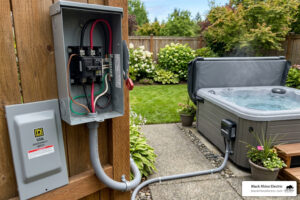

Whether you’re moving, upgrading, or simply reclaiming your backyard space, removing a hot tub involves more than just heavy lifting. Safely handling the high-voltage electrical system is a critical step, which is why many homeowners wisely search for a professional electrician to disconnect hot tub wiring. This guide walks you through the essential safety measures and professional process, proving why trusting an expert is the smartest move for this task.
What You Need to Know About Hot Tub Disconnection
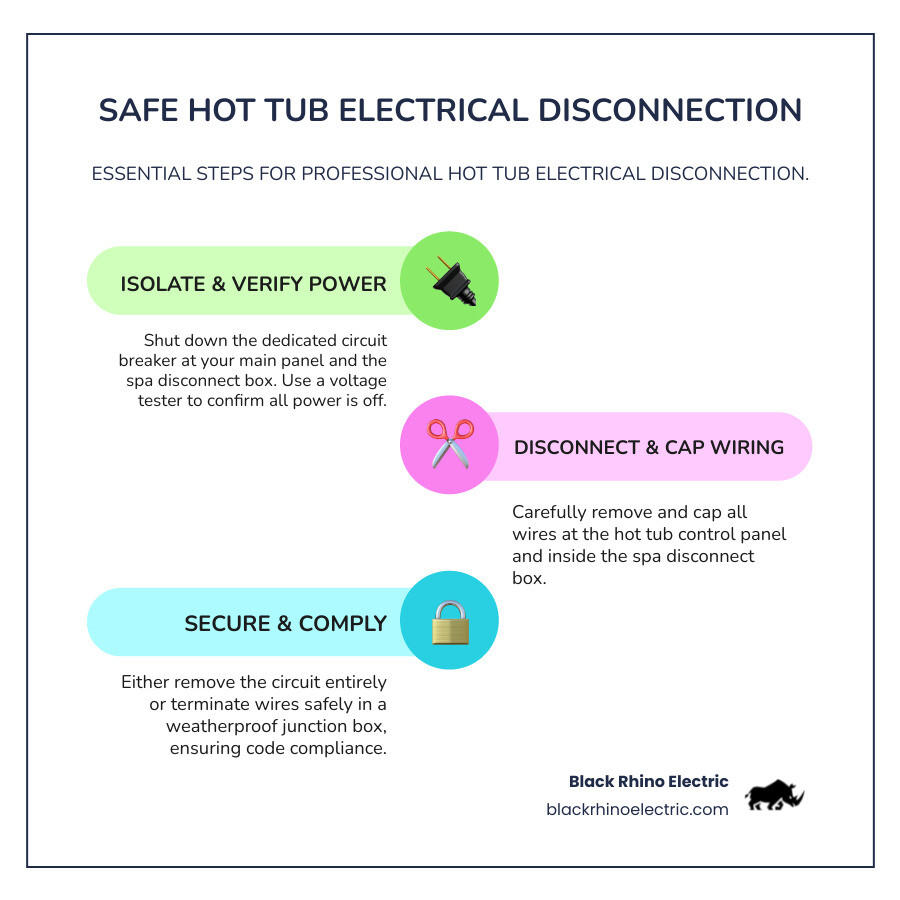
If you’re looking for an electrician to disconnect hot tub wiring, here’s what the process typically involves:
Quick Answer for Hot Tub Disconnection:
- Turn Off Power – Shut down the dedicated circuit breaker at your main panel and the spa disconnect box
- Verify No Power – Use a voltage tester to confirm all power is off before touching any wires
- Disconnect Wiring – Remove and cap all wires at the hot tub control panel and disconnect box
- Secure the Circuit – Either remove the circuit entirely or terminate wires safely in a junction box per code
Key Safety Points:
- Most hot tubs run on 240-volt dedicated circuits with 50-60 amp breakers
- The spa disconnect must be located within sight but at least 5 feet from the hot tub
- Never attempt this without proper electrical knowledge – water and electricity create serious electrocution risks
- Improper disconnection can violate electrical codes and create fire hazards
Hot tubs draw significant power, typically requiring a dedicated 240-volt circuit with #6 AWG copper wiring and GFCI protection—far beyond a standard outlet. The stakes are high; one wrong move with this level of voltage, especially outdoors, can lead to severe electric shock, fire, or property damage. While turning off a breaker seems simple, safely disconnecting a 240V system involves verifying power is off, properly terminating wires, and meeting National Electrical Code requirements, which is why this work is best left to licensed professionals.
That said, if you have a simple 120V plug-and-play model, disconnection might be as easy as unplugging it from a standard GFCI outlet—though you’ll still want to verify your specific model’s requirements.
The typical cost to hire an electrician for hot tub disconnection ranges from $200 to $500, depending on your location and the complexity of your setup. This investment buys you safety, code compliance, and peace of mind.
Why You Need an Electrician to Disconnect a Hot Tub
You know what’s not relaxing? An electrical shock or a house fire. That’s why safety is paramount with hot tub electrical systems. Most hot tubs run on a dedicated 240-volt circuit—high voltage that poses a serious electrocution risk when combined with water. The National Electrical Code (NEC) has strict guidelines for this reason. While a GFCI breaker offers protection, it’s not foolproof. Hiring an electrician to disconnect hot tub wiring isn’t just a service; it’s an investment in safety. Simply flipping a breaker and cutting wires can lead to electrocution, fire, or a damaged electrical panel. For more on why professional work is vital, see our guide on Why You Need a Hot Tub Electrician for Safe Installations.
The Critical Safety Precautions and Potential Hazards
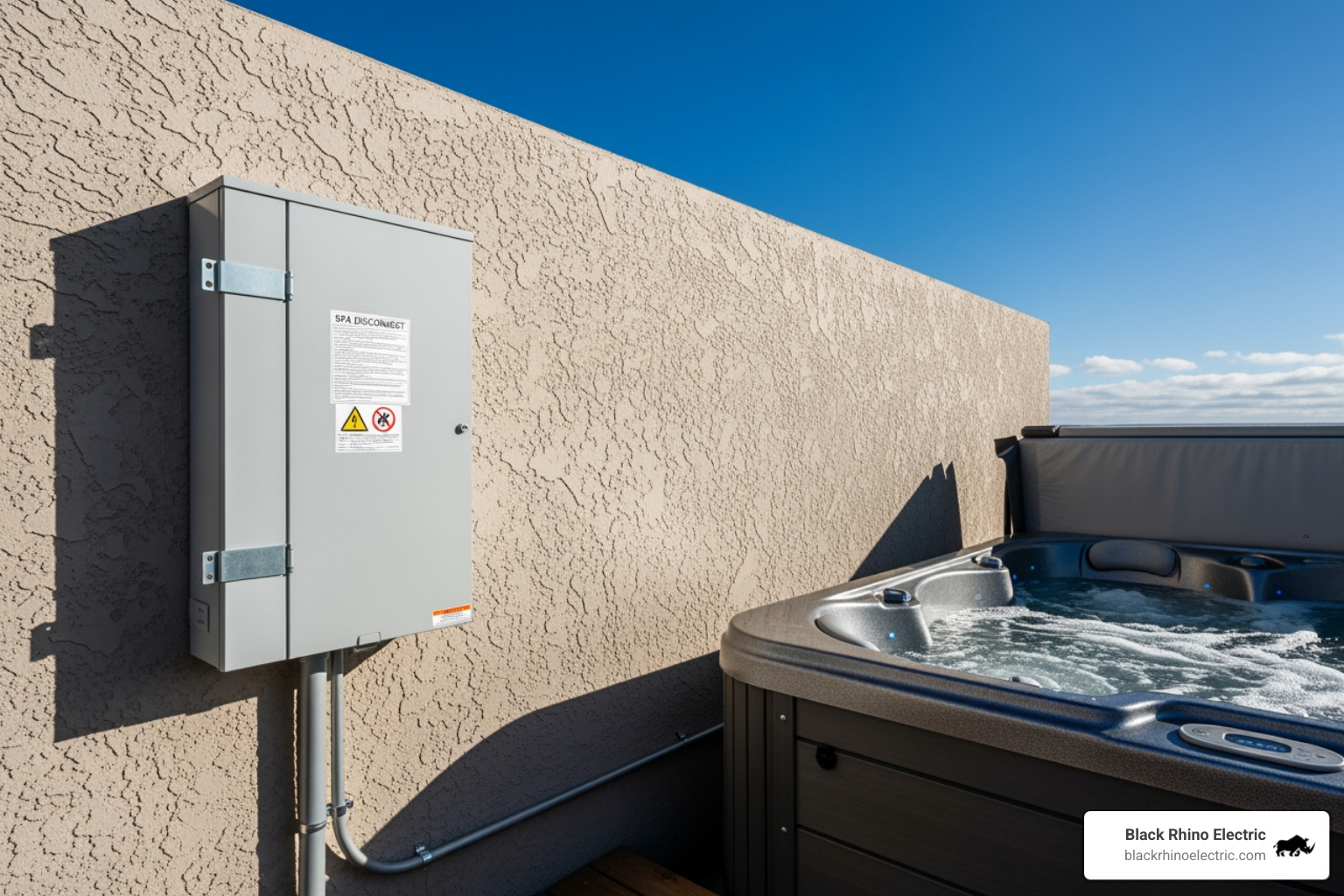
An electrician follows strict safety protocols to prevent accidents. The main hazard is electrocution from the high-voltage circuit. Improperly capped or terminated wires also create a significant fire risk, especially in outdoor environments where corrosion is a factor. Other dangers include damaging your home’s electrical panel or compromising the grounding system. A professional ensures the entire system, including the crucial GFCI safety device, is handled correctly to eliminate these risks. For more on GFCI, see this guide on A ground fault circuit interrupter.
When to Hire a Professional vs. When It Might Be a DIY Task
The decision to DIY or hire a pro depends entirely on your hot tub’s power source.
| Feature | Hardwired 240V Hot Tubs (Professional Recommended) | Plug-and-Play 120V Models (Potential DIY) |
|---|---|---|
| Power Supply | Dedicated 240-volt circuit, 50-60 amp breaker | Standard 120-volt outlet, 15-20 amp |
| Wiring | Hardwired, #6 AWG copper wiring, conduit | Plug-in cord |
| Disconnection Point | Main panel, spa disconnect, hot tub control panel | Standard outlet |
| Complexity | High – involves high voltage, multiple connections | Low – unplugging |
| Safety Risk | Very High – electrocution, fire | Low – if GFCI protected |
| Code Compliance | Strict NEC requirements for wiring & termination | Standard outlet safety |
| Tools Needed | Multimeter, wire cutters, screwdrivers, specialized tools | Just hands (to unplug) |
| Professional Expertise | Essential | Optional, but still good to verify power |
Hardwired 240V Hot Tubs: These systems are complex and dangerous. Disconnection involves multiple high-voltage steps that must meet strict NEC standards. This is not a DIY task; the risk of injury, damage, and code violations requires a licensed electrician.
Plug-and-Play 120V Models: These models usually just need to be unplugged from a GFCI-protected outlet. While simpler, always verify the outlet’s protection and check the manufacturer’s instructions. For homeowners in Weber County, including Ogden and Layton, with hardwired tubs, hiring a professional is essential for safety and peace of mind. Learn more with our guide on How to Choose the Best Hot Tub Electrician Near You.
The Professional Disconnection Process: A Step-by-Step Guide
When you call on our team at Black Rhino Electric, you’re getting a methodical, code-compliant approach that prioritizes safety. Here’s a look at the step-by-step process our electricians follow to ensure your property remains safe long after the hot tub is gone.
Step 1: Disconnecting Power at the Main Panel and Spa Disconnect
This first step is the most critical for safety. Our electricians follow a precise power-down sequence:
- Locate the Main Panel: We find your home’s main electrical panel in the garage, basement, or utility room.
- Identify the Breaker: We locate the dedicated 50 or 60 amp double-pole breaker for the hot tub.
- Shut Down Power: The breaker is switched to “OFF,” and we apply a lockout-tagout device to prevent it from being turned back on accidentally.
- Access the Spa Disconnect: We then open the weatherproof disconnect box located near the hot tub (at least 5 feet away, per NEC rules in Utah).
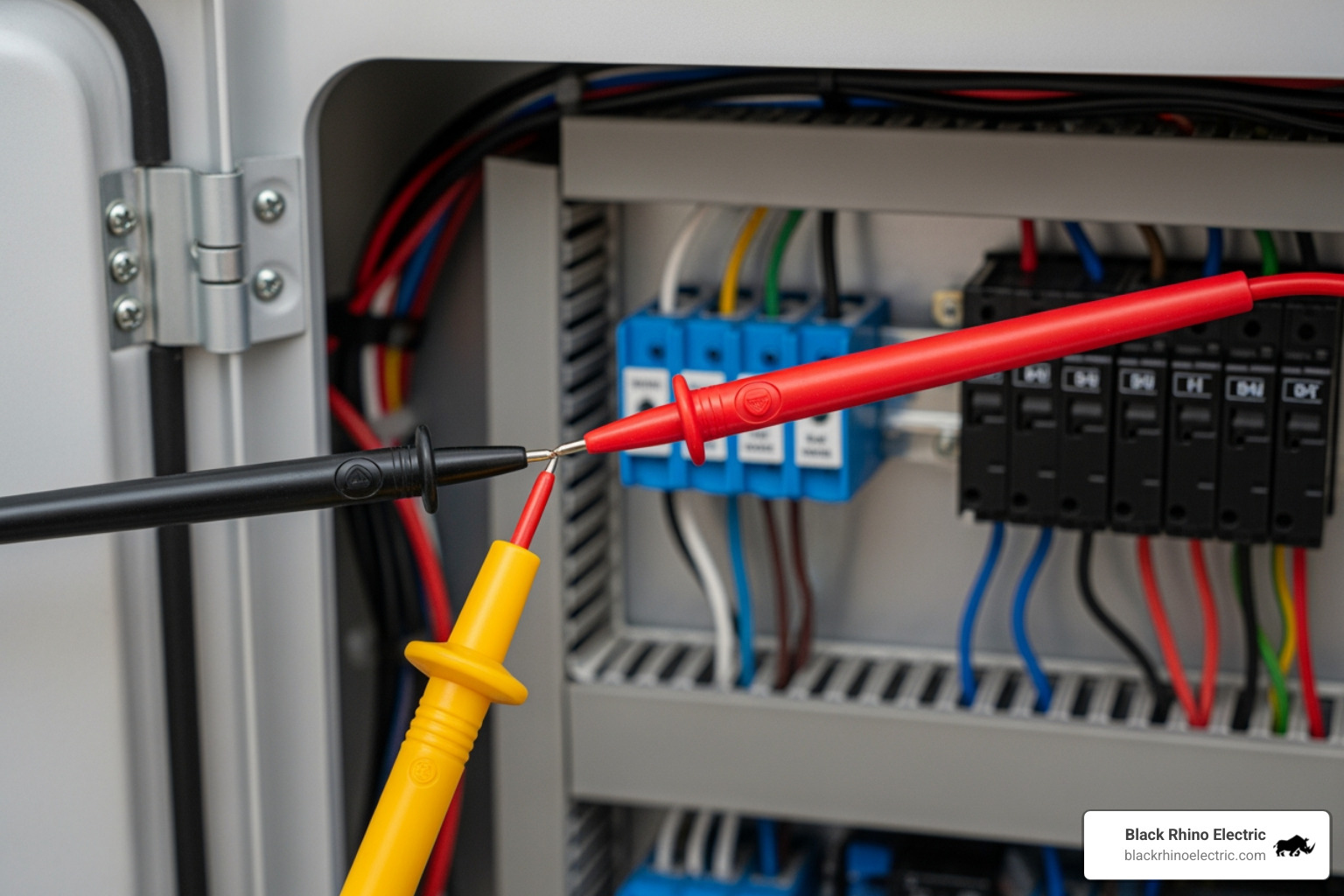
- Verify Zero Power: Using a multimeter, we test all terminals in the disconnect box to confirm a zero-volt reading. This step is non-negotiable and ensures the circuit is completely de-energized before any wires are touched.
Tools needed for safe disconnection:
- Multimeter (voltage tester)
- Insulated screwdrivers
- Wire cutters/strippers
- Pliers
- Wire nuts/connectors
- Safety gloves and glasses
- Lockout/tagout kit
For more information on the electrical requirements that hot tub owners in our service areas like West Haven and South Ogden need to know, check out our guide on Hot Tub Electrical Requirements for Utah Homeowners.
Step 2: How an electrician to disconnect hot tub handles the wiring
With the power confirmed off, we begin disconnecting the wiring:
- Access the Hot Tub Control Panel: We open the access panel on the hot tub to reach the main electrical connections.
- Disconnect Wires: The main power wires (hots, neutral, and ground) are carefully disconnected from the terminals.
- Remove Conduit Whip: The flexible conduit running from the disconnect box to the tub is detached.
- Secure Wires at Disconnect: Back at the spa disconnect box, the wires that ran to the hot tub are disconnected and individually capped with wire nuts. This prevents any accidental contact.
Properly terminating the heavy-gauge (#6 AWG) wire used in 240V systems is crucial. Leaving wires exposed, even with the breaker off, is a serious code violation and fire hazard.
Step 3: Ensuring the Disconnected Wiring is Safe and Compliant
The final step is to ensure the circuit is left in a safe, code-compliant state. Depending on your plans, there are two options:
Permanent Disconnection:
If the circuit is no longer needed, the best practice is to remove it completely. This involves pulling the wiring back to the main panel and removing the dedicated breaker. The outdoor disconnect box is also removed and the opening sealed.
Temporary Disconnection:
If you might install another hot tub later, or if wiring removal isn’t feasible, the circuit must be safely terminated. The disconnected wires are secured inside a weatherproof junction box with a sealed cover. The breaker at the main panel is left in the “OFF” position and clearly labeled.
Code Compliance:
Simply taping up wires is a major code violation. The National Electrical Code (NEC) has strict rules for terminating circuits to prevent fire and shock hazards. Our electricians in Utah communities like Clinton and Farmington ensure all work meets these standards, including local rules like the 5-foot distance for disconnects (unlike some other regions, such as Canada with its Disconnect location rules). At Black Rhino Electric, we guarantee a safe, compliant job. For all your hot tub electrical needs, contact our Hot Tub Electrician team.
Conclusion
Disconnecting a hot tub involves significant electrical risks and requires specialized knowledge of high-voltage wiring and safety codes. Ignoring proper procedures can lead to electrocution, fire, or costly damage. For homeowners in Weber County and surrounding areas like Riverdale and Washington Terrace, hiring a licensed professional for a 240-volt hot tub is a necessity. Our team at Black Rhino Electric ensures your disconnection is handled safely, efficiently, and in full compliance with the National Electrical Code.
Don’t take chances with your safety. When you need a professional electrician to disconnect hot tub wiring, we’re here to help. You can reach us directly at 801-810-4292 or Request a Free Quote online for a free consultation.