
Installing a new hot tub is an exciting upgrade for your home, promising countless hours of relaxation. However, before you can soak, you need to tackle the electrical setup, and learning how to wire a hot tub 240v is a project that demands precision, safety, and a clear understanding of electrical codes. This guide will walk you through the essential steps, but remember, working with 240-volt electricity is dangerous, and this job is often best left to a professional.
Contents
Why 240V Hot Tub Wiring Demands Professional Attention
Quick Answer: Key Steps to Wire a 240V Hot Tub
- Shut off power at your main breaker panel.
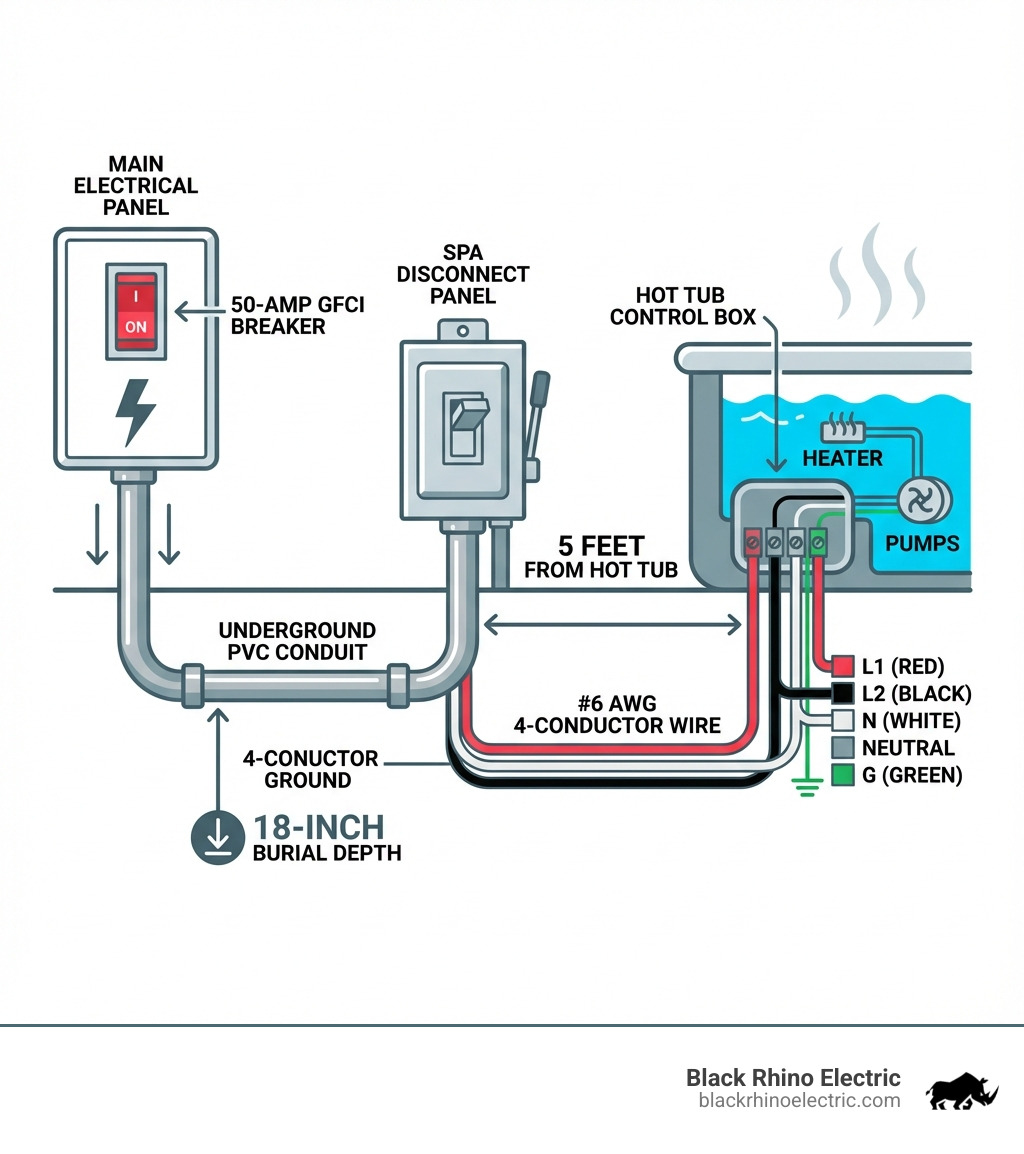
- Install a 50-amp GFCI breaker in your main electrical panel.
- Mount a spa disconnect panel at least 5 feet from the hot tub, within line of sight.
- Run PVC conduit from the main panel to the spa panel, then to the hot tub (buried 18 inches deep).
- Pull #6 AWG copper wire (4-conductor: 2 hot, 1 neutral, 1 ground) through the conduit.
- Connect wires at the main panel, spa panel, and hot tub control box.
- Have the installation inspected by a licensed electrician and local inspector before use.
Important: Most hot tubs require a dedicated 240V/50A circuit with GFCI protection. The National Electrical Code requires specific clearances from structures and overhead power lines. Always consult a licensed electrician—water and electricity are a lethal combination, and improper wiring can void warranties, damage equipment, or worse, cause serious injury.
Let me explain why this isn’t a typical DIY project. Hot tubs pull serious power—240 volts at 50 amps, which is more than most household appliances. This requires a dedicated circuit that can handle a sustained high load. The combination of high-voltage electricity and water is incredibly dangerous. The National Electrical Code (NEC) mandates GFCI-protected circuits for outdoor spas to prevent electrical shock. A single mistake can lead to electrocution, fire, a voided warranty, or a failed inspection.
Honestly, even experienced DIYers hire licensed electricians for 240V hot tub installations. The job involves complex load calculations, selecting the right wire gauge, running buried conduit, and ensuring compliance with all national and local codes. For homeowners in Ogden, Layton, and throughout Weber County, Black Rhino Electric specializes in hot tub wiring that meets all safety standards, giving you complete peace of mind. Understanding the process helps you make informed decisions and appreciate the work involved.
Understanding the Electrical Requirements
Wiring a 240V hot tub involves significant electrical demand. Most models require a dedicated 240-volt, 50-amp circuit. This isn’t a suggestion; it’s a critical requirement to ensure the hot tub runs efficiently and safely without tripping breakers.
Central to the installation is the A ground fault circuit interrupter (GFCI). This is a life-saving device that shuts off power instantly if it detects a ground fault, protecting users from electric shock. The National Electrical Code (NEC) explicitly requires GFCI protection for all outdoor spas.
Another key component is the spa panel, or manual disconnect. The NEC requires this to be installed between your main panel and the hot tub. It provides a quick way to cut power for maintenance or emergencies. Our team at Black Rhino Electric ensures all components are correctly integrated, following all local and NEC guidelines. You can learn more about specific local rules in our guide on Hot Tub Electrical Requirements for Utah Homeowners.
For a standard 50-amp installation, we use No. 6 gauge, 4-conductor copper wire (two hot, one neutral, one ground) with THHN insulation. Placement is also regulated: receptacles must be at least 6 feet from the tub’s inside wall, and the tub itself must be at least 10 feet from overhead power lines.
What are the differences between 120V and 240V hot tubs?
Hot tubs come in two main electrical configurations: 120V “plug-and-play” and 240V “hard-wired.” While 120V models are easier to set up, 240V models offer far superior performance, especially for frequent use or in colder climates like Utah.
| Feature | 120V Plug-and-Play Hot Tubs | 240V Hard-Wired Hot Tubs |
|---|---|---|
| Voltage | 120V (standard outlet) | 240V (dedicated circuit) |
| Amperage | 15A-20A | 30A-60A |
| Heating Power | 1kW to 1.5kW | 4kW to 6kW |
| Heat-Up Time | Slow (12-24 hours) | Fast (4-8 hours) |
| Jet Performance | Less powerful, single-speed pumps | Stronger, multi-pump systems |
| Installation | Simple plug-in | Professional electrical installation required |
| Efficiency | Less efficient in cold climates | More efficient for heating and maintaining temp |
| Best For | Occasional use, mild climates, renters | Frequent use, cold climates, homeowners |
What tools and materials are necessary for the installation?
While we strongly recommend professional installation, it’s helpful to know what’s involved. A safe and compliant installation requires a specific set of tools and materials.
- Safety & Testing: Voltage tester, safety glasses, work gloves.
- Wiring Tools: Wire strippers, screwdrivers, pliers, fish tape.
- Conduit Tools: Conduit bender, PVC cement and primer, trenching tools.
- Electrical Components:
- 240V 50A GFCI Breaker
- Spa Disconnect Panel (GFCI Load Center)
- #6 AWG Copper Wire (4-conductor, stranded recommended)
- Schedule 40 or 80 PVC Conduit and fittings (sweeps, LBs)
- Miscellaneous: Wire lubricant, measuring tape.
How does location affect complexity and cost?
The hot tub’s location relative to your main electrical panel is a major cost factor. Here’s what we consider during the planning phase with our clients in Ogden and Roy:
- Distance: The farther the tub, the more wire and conduit are needed, increasing material costs. Long runs may also require a larger wire gauge to avoid voltage drop.
- Trenching: Digging an 18-inch-deep trench (a common NEC requirement) through rocky soil, concrete, or around landscaping is more labor-intensive and costly than digging in soft dirt.
- Panel Capacity: If your main panel lacks the space or amperage for a new 50A breaker, a panel upgrade or sub-panel may be necessary, adding to the project cost.
- Permits: Most municipalities in Weber County require a permit and inspection for this type of electrical work, which includes a fee.
A slightly closer location can sometimes save you a significant amount on installation. That’s why you need a hot tub electrician for safe installations—we help you find the most efficient, code-compliant, and cost-effective solution.
Safely Turning Off Power and Preparing for Wiring
Before any work begins, safety is the top priority. The first, non-negotiable step is to turn off the power. Working with live 240V electricity can be fatal.
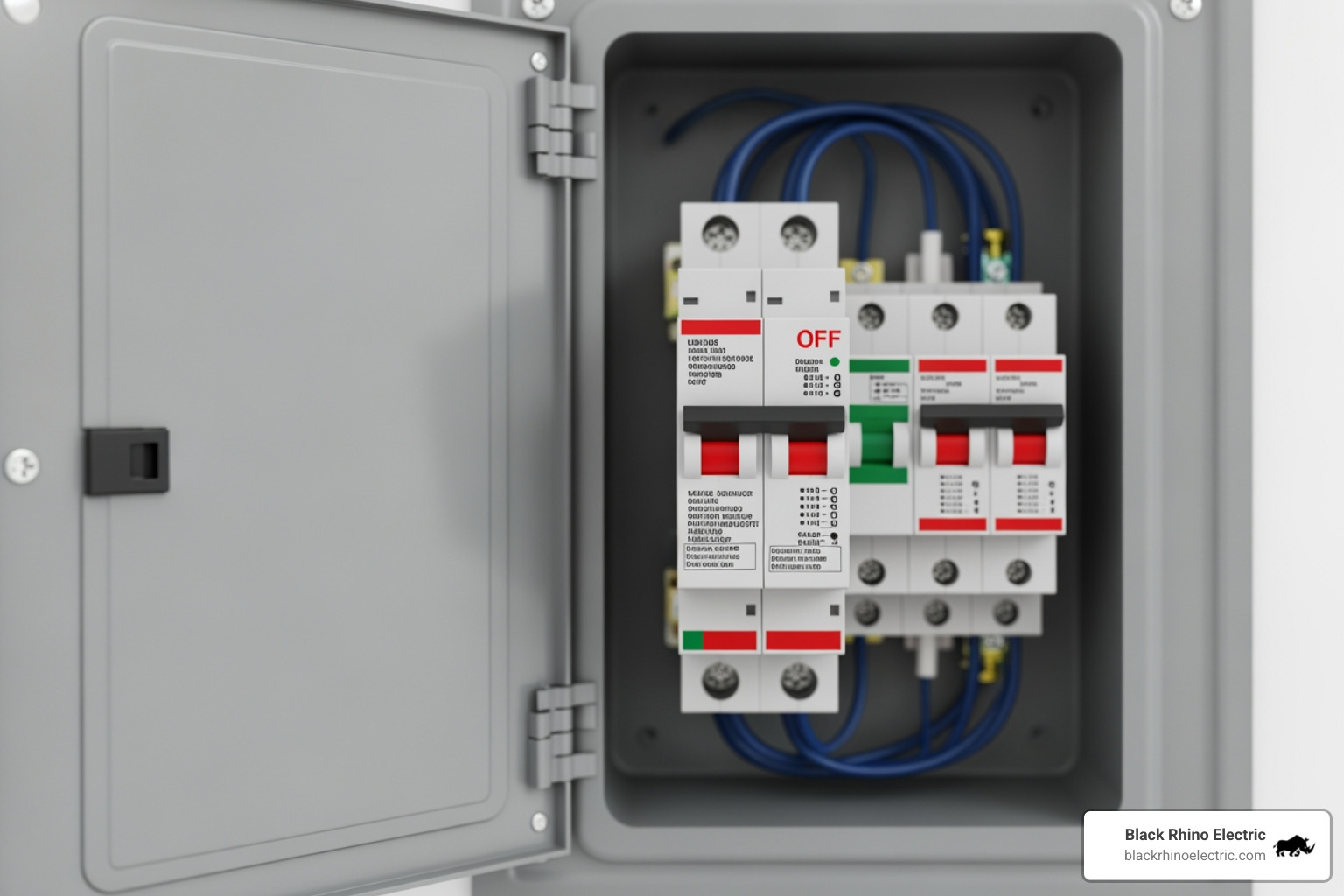
Go to your main electrical panel and flip the main breaker to the “OFF” position. This should cut power to the entire house. Once the breaker is off, always use a voltage tester on the circuit you plan to work on to confirm the power is truly dead. Never assume a flipped breaker means the power is off. This safety check is standard practice for our Breakers & Panels Electrician team.
How do you mount the spa panel and run conduit?
With the power off, the physical installation can begin. This involves mounting the spa disconnect panel and running conduit to protect the wiring.
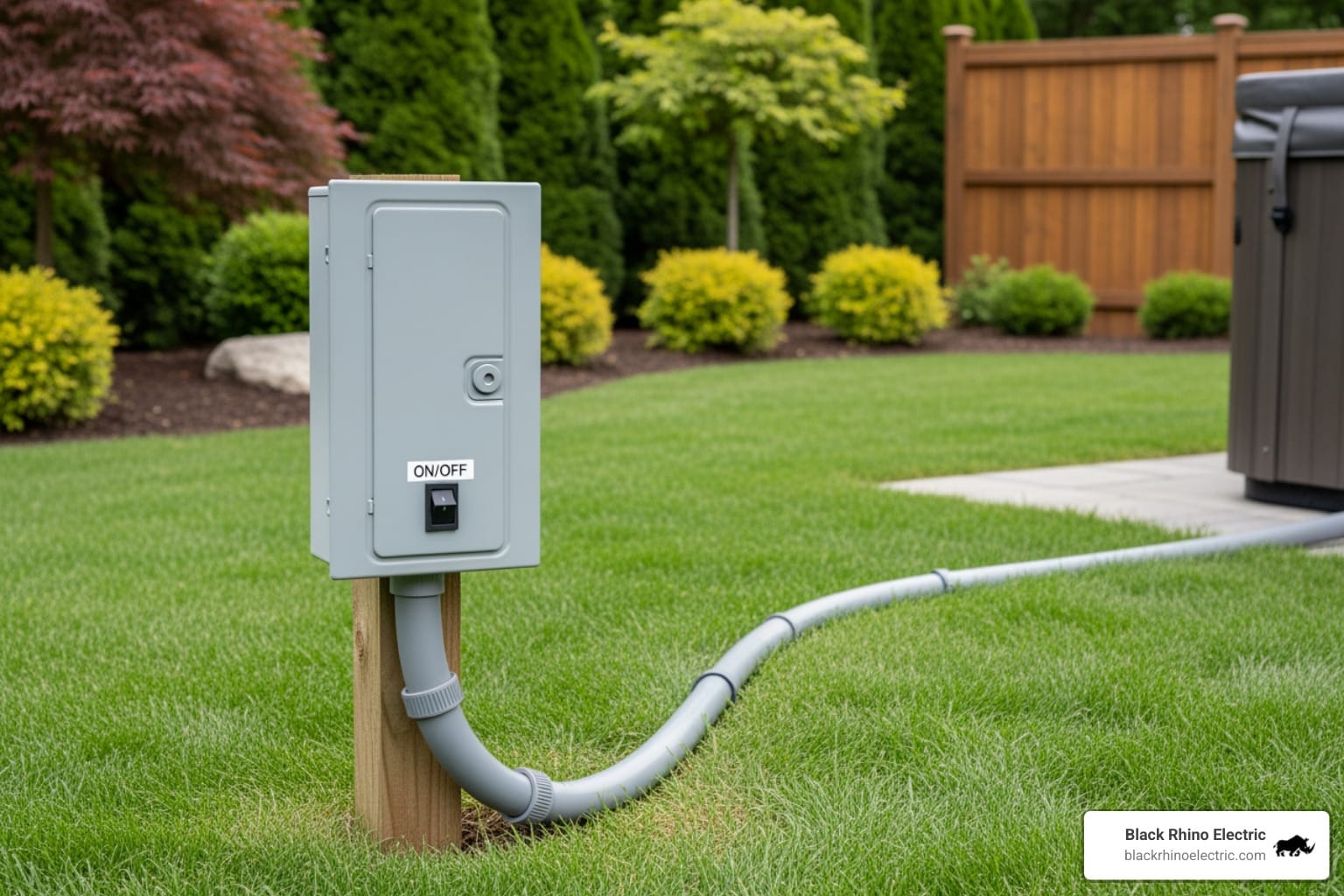
1. Mount the Spa Panel: The NEC requires the spa disconnect to be located at least 5 feet from the hot tub but still within its line of sight. This allows for a quick power shutoff in an emergency. We typically mount the weatherproof box on an exterior wall or a sturdy post, ensuring it’s secure and accessible.
2. Run the Conduit: Conduit protects the wires from damage and moisture. For underground runs, you’ll need to dig a trench from your house to the spa panel, and then to the hot tub. The NEC generally requires this trench to be 18 inches deep. Always use sweep elbows instead of sharp 90-degree bends to make pulling the wire easier. All PVC conduit sections must be joined with PVC primer and cement to create a watertight seal. This process is a key part of extending new circuits, similar to what’s covered in our guide on Step-by-Step Electrical Panel Installation for Beginners.
How do you properly connect the wires to wire a hot tub 240v?
This is where precision is critical and why professional help is strongly recommended. Connections are made at the main panel, the spa disconnect, and the hot tub’s control box.
Pull the Wires: Using fish tape and wire lubricant, pull the four #6 AWG copper wires (black and red for hot, white for neutral, green for ground) through the assembled conduit.
Connect at the Spa Disconnect: This is the most important connection for GFCI protection.
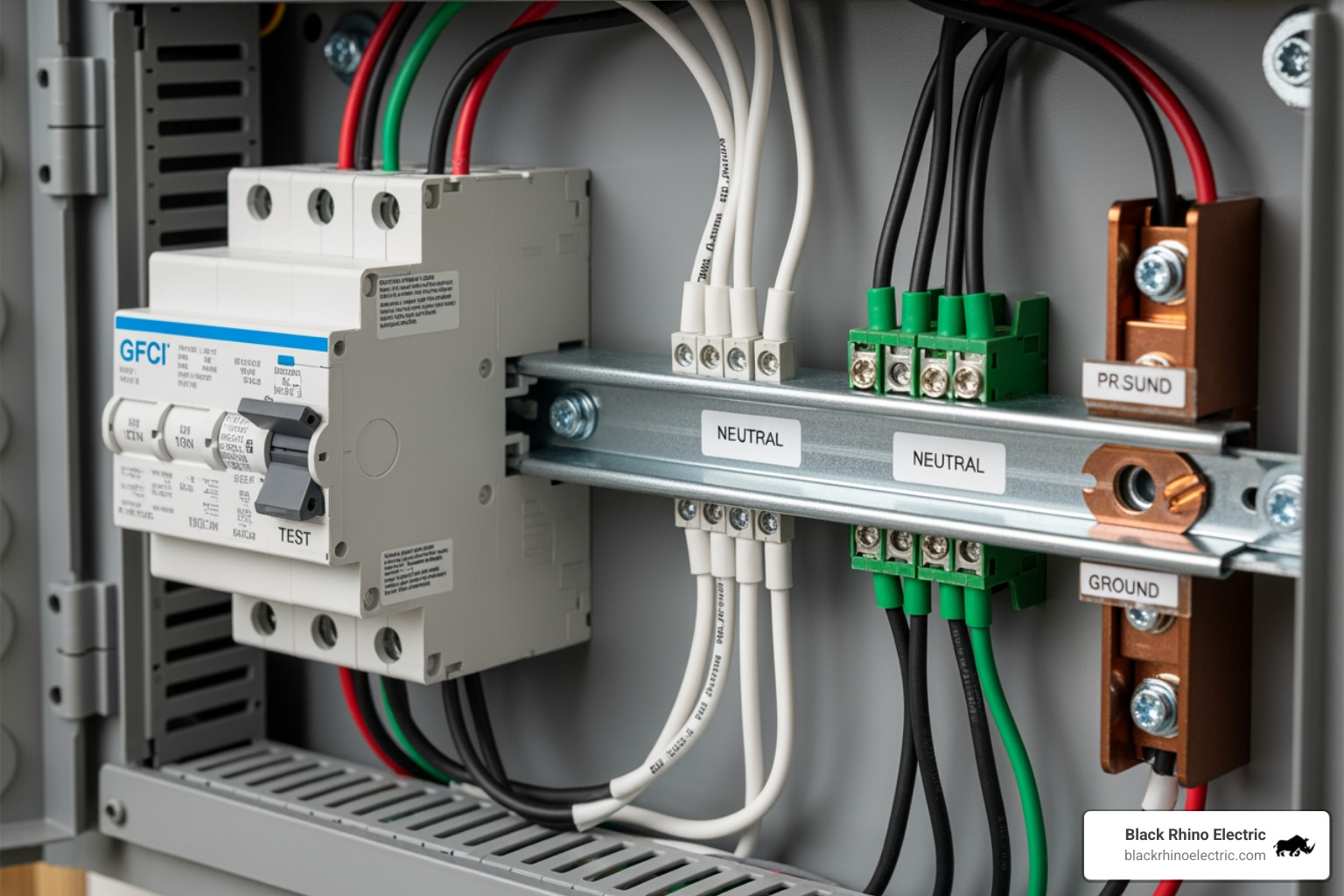
- The incoming hot wires (black, red) and neutral wire (white) from the main panel connect to the “LINE” side of the GFCI breaker.
- The outgoing hot wires (black, red) and neutral wire (white) going to the hot tub connect to the “LOAD” side of the GFCI breaker.
- The incoming ground wire connects to the ground bar.
- Crucial Step: The GFCI breaker has a white “pigtail” wire. This MUST connect to the neutral bus bar in the panel. Connecting it to the ground bar is a common mistake that will cause the GFCI to trip instantly.
Connect at the Main Panel:
- Inside your home’s main panel, install the new 2-pole 50A breaker.
- Connect the two hot wires (black, red) to the new breaker.
- Connect the neutral wire to the main neutral bus bar.
- Connect the ground wire to the main ground bus bar.
- Tighten all connections securely and label the new breaker “Hot Tub.”
A 4-wire system is essential for modern 240V hot tubs, as the neutral is required for the GFCI to function correctly. For guidance on any wiring issues, our team can provide Essential Tips for Electrical Wiring Repair at Home.
Ensuring a Safe and Lasting Installation
Once the wiring is complete, there’s one final, crucial step before you can enjoy your spa: professional inspection. A licensed electrician or a local electrical inspector must verify that the work complies with the National Electrical Code and any local Utah codes. They will check everything from wire gauge and conduit depth to GFCI function. This inspection is your ultimate assurance of a safe installation and is often required for insurance and warranty purposes.
If your hot tub breaker keeps tripping, it’s a sign of an electrical problem that needs immediate attention. Common causes include:
- A faulty GFCI breaker
- Improper wiring (like a mixed-up neutral and ground)
- Loose connections
- An internal fault in the hot tub’s heater or pump
Don’t ignore a tripping breaker. It’s a safety feature doing its job, and the underlying issue needs to be resolved. As we always say, you Shouldn’t Ignore Electrical Emergencies.
A common question is whether a hot tub can run on a generator. The answer is yes, but it requires a powerful generator capable of supplying 240V and at least 50 amps. For most short power outages, a well-insulated tub will maintain its temperature surprisingly well.
Finally, a note on materials: we always use #6 AWG stranded copper wire for hot tub installations. It is the safest and most reliable choice for handling the high amperage in a wet environment.
Honestly, while this guide provides a detailed overview, the complexity and risks involved with 240V wiring mean that hiring a professional is the safest bet. For homeowners in Ogden and Weber County, the expert team at Black Rhino Electric ensures your installation is done right the first time, giving you peace of mind. Contact a professional hot tub electrician today to get started.