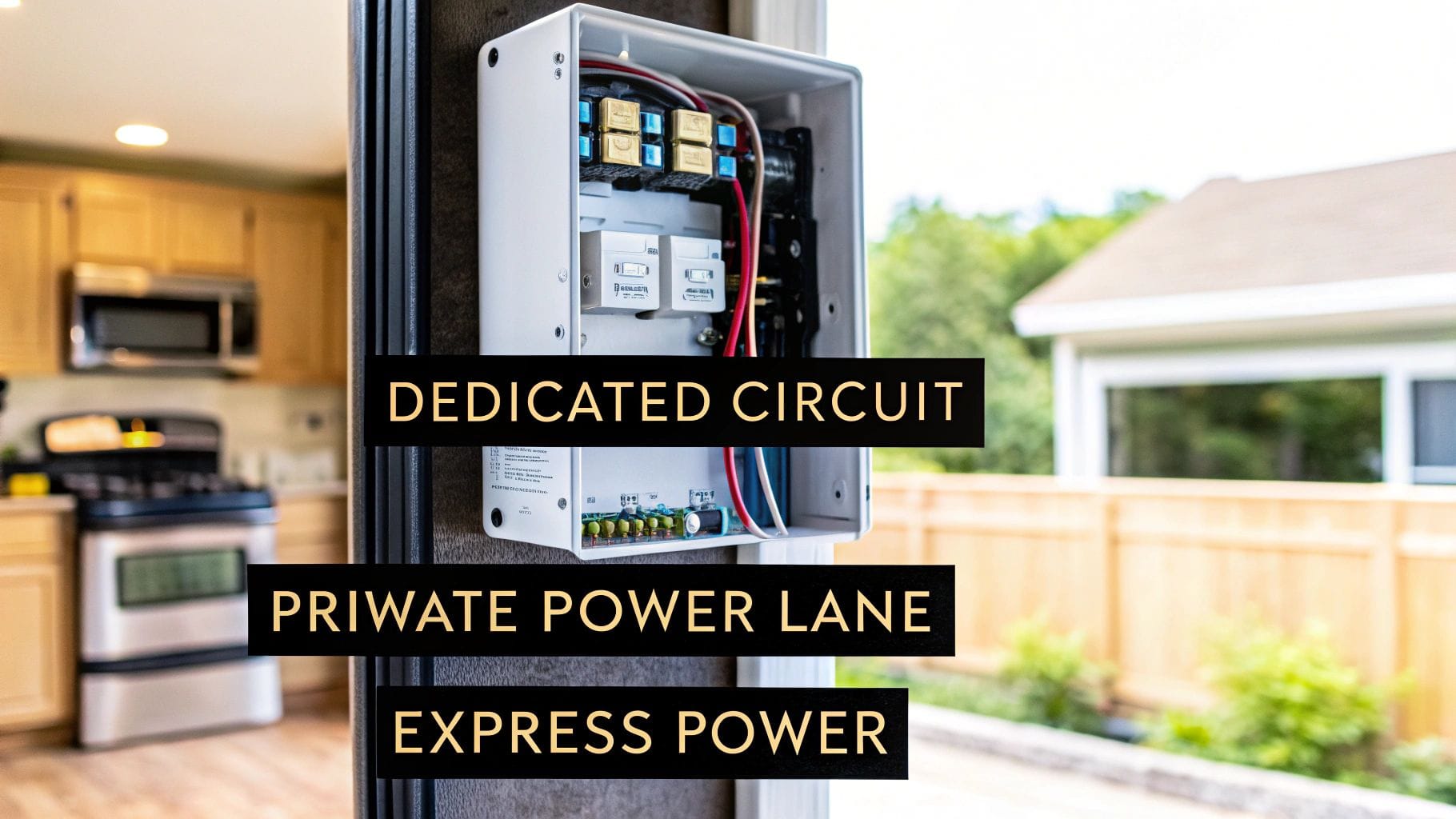
Ever wondered why your microwave has its own special outlet or why the air conditioner kicking on sometimes makes the lights flicker? The answer often comes down to understanding what is a dedicated circuit. In simple terms, it’s a private electrical line that runs directly from your breaker panel to a single, high-power appliance, ensuring it gets all the electricity it needs without sharing.
Contents
So, What Exactly Is a Dedicated Circuit?
Think of your home's electrical system like a highway. Most of your outlets are on shared lanes, where smaller things like lamps, TVs, and phone chargers can coexist peacefully. This works perfectly fine for low-power devices.
But when a major appliance like an electric oven or an EV charger needs a huge gulp of power, it’s like a semi-truck trying to merge into rush-hour traffic. It can cause a major jam, leading to a tripped breaker that shuts everything down.
Let me explain it this way: a dedicated circuit is like building a private express lane for that semi-truck.
This exclusive connection ensures a power-hungry device has a direct, uninterrupted supply of electricity. By isolating its power draw, you prevent overloads, protect sensitive electronics from voltage drops, and honestly, just keep your whole electrical system safer and more reliable.
For a straightforward answer, check out this quick table.
Quick Answer: What Is a Dedicated Circuit?
| Attribute | Description |
|---|---|
| Definition | An electrical circuit that serves a single appliance or outlet. |
| Components | It has its own circuit breaker, wiring, and receptacle. |
| Purpose | To provide a consistent, safe power supply to high-draw appliances. |
| Key Benefit | Prevents overloaded circuits, tripped breakers, and potential fire hazards. |
In short, it’s a non-negotiable for keeping big-ticket appliances running smoothly without putting stress on the rest of your home's wiring.
Core Purpose and Function
The whole point of a dedicated circuit is to serve a single appliance or outlet, guaranteeing it receives the full amperage it needs to operate safely and efficiently. This is especially critical for anything with a motor or heating element, which can cause a big power surge when it first turns on.
Here’s what that looks like in practice:
- Exclusive Use: The circuit breaker, wiring, and outlet are all reserved for one specific appliance. No sharing allowed.
- Safety Compliance: For many large appliances, the National Electrical Code (NEC) actually mandates a dedicated circuit to prevent electrical fires. It's not just a good idea; it's the law.
- Appliance Protection: It provides a stable power supply, protecting your expensive electronics from damage caused by voltage fluctuations when other devices kick on.
Ultimately, installing dedicated circuits where they’re needed is a fundamental part of modern home safety. It ensures your electrical panel can handle the demands of today’s technology without risking overloads or damage.
Dedicated Circuits vs. General-Purpose Circuits
So, you get the basic idea. But let's put it into real-world terms by comparing a dedicated circuit to the standard outlets you use every day. Think about your bedroom outlets—they effortlessly power a lamp, a clock, and a phone charger all at once, right? Those are general-purpose circuits, the jacks-of-all-trades in your home’s electrical system.
A general-purpose circuit is designed to be a shared resource, powering multiple low-draw items in a single room, like a living room or office. In contrast, a dedicated circuit is a specialist, built for one specific, power-hungry job and nothing else. Let's break down why that difference matters so much.
Core Differences in Function and Design
The biggest distinction is their purpose. General-purpose circuits are all about convenience and flexibility, letting you plug in various small electronics wherever you need them. A dedicated circuit is purely about safety and performance for a single, demanding appliance.
Think of it this way: A dedicated circuit is a private, direct freeway from your breaker panel to a single appliance. A general-purpose circuit is more like a local road with multiple stops, sharing its capacity among all the houses (outlets) along the way.
This design difference has a massive impact on safety. The evolution of modern circuits, especially safety standards like the mandated use of dedicated ground wires in the 1960s, slashed shock incidents by 85% in updated homes. Here at Black Rhino Electric, we see the flip side of this all the time—a staggering 40% of our service calls in Northern Utah are for older homes struggling to power today's high-draw devices on outdated, shared circuits. You can dig deeper into our nation's electrical history to see how far safety has come.
Dedicated Circuit vs. General-Purpose Circuit at a Glance
To make it even clearer, here’s a responsive table that puts these two circuit types head-to-head. It’s a quick way to see why you can't just plug that new appliance in anywhere.
| Feature | Dedicated Circuit | General-Purpose Circuit |
|---|---|---|
| Primary Use | Powers a single, high-draw appliance (e.g., oven, EV charger). | Powers multiple, low-draw devices (e.g., lamps, TVs). |
| Wiring Path | A direct, uninterrupted line from the panel to one outlet. | A single line from the panel that connects to several outlets. |
| Load Capacity | The entire circuit's amperage is available for one device. | The amperage is shared among all devices plugged into the circuit. |
| Safety Focus | Prevents overloads and fire hazards from high-power equipment. | Provides general power distribution for everyday electronics. |
| Common Locations | Kitchen, laundry room, garage, HVAC closet. | Bedrooms, living rooms, hallways. |
Understanding this distinction is the key to knowing why your new electric range can't just plug into any old outlet. That direct, unshared power line isn’t a suggestion; it's a non-negotiable safety feature. It's the only way to guarantee the appliance gets the consistent power it needs without constantly tripping a breaker or, worse, creating a fire hazard.
Appliances That Need Their Own Circuit
You know what? Many of the most powerful and essential appliances humming away in your home simply can't share power with anything else. Think of them as the VIPs of your electrical system—they require their own private, exclusive connection to work safely and effectively. Here's the thing: this separation is critical.
Certain devices, either by the manufacturer's specs or the electrical code, must have a dedicated circuit. This isn't just a friendly suggestion; it’s a hard rule designed to prevent overloads, protect your investments, and stop electrical hazards before they start. The reason is simple: these appliances draw a massive amount of electricity, especially when they first kick on.
This quick diagram shows the fundamental difference. One line, one job. It’s that straightforward.
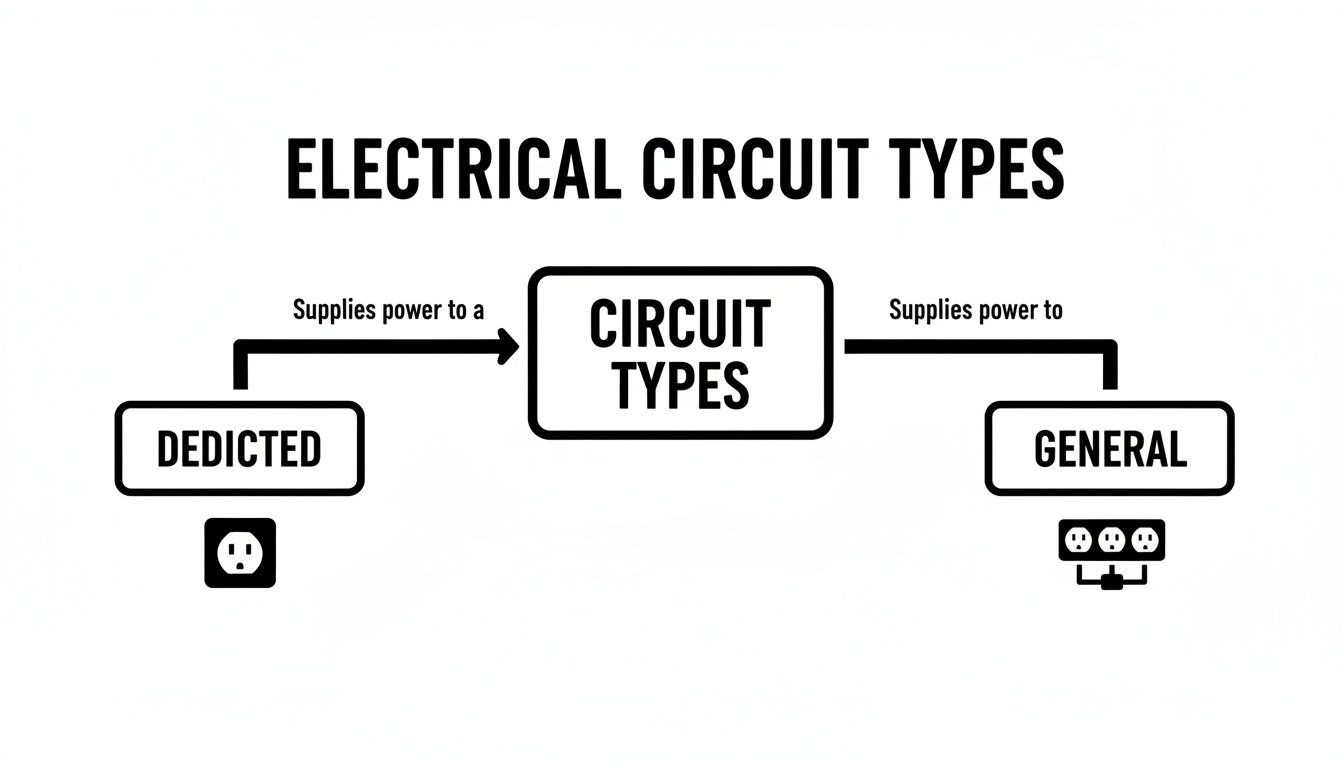
As you can see, the setup is clean and direct. A dedicated circuit serves one purpose, while a general circuit splits its attention, which is a recipe for trouble with power-hungry machines.
Major Appliances Requiring Dedication
So, which appliances are on this VIP list? Some are obvious, while others might surprise you. Each one needs its own circuit because of a high, sustained power draw or a massive startup surge that would trip a shared breaker in a heartbeat.
Here’s a practical checklist of common household workhorses that need their own electrical lane:
- Refrigerator & Freezer: These guys are always on, and their compressors cycle frequently. A dedicated circuit ensures they have consistent power, preventing food spoilage from a tripped breaker caused by you making toast.
- Electric Range or Oven: With powerful heating elements, electric stoves are among the biggest energy users in any home. They demand a heavy-duty, high-amperage, 240-volt circuit.
- Microwave Oven: It might seem small, but a microwave requires a surprising amount of juice (often 1,000 to 2,000 watts) and needs its own 20-amp circuit to avoid issues.
- Dishwasher & Garbage Disposal: Both have powerful motors. In most modern homes, they each require their own circuit to keep the breaker from tripping when you run them at the same time.
High-Demand Specialty Equipment
Beyond the kitchen, other powerful systems and luxury items absolutely require a dedicated line. These devices often have the highest power demands in the entire house. Trying to run them on a shared circuit is just asking for constant electrical problems.
A dedicated circuit isn't just about preventing tripped breakers; it's a foundational safety measure. It ensures a high-power appliance can operate as its manufacturer intended, without the risk of overheating wires or damaging its own sensitive components.
Let's look at some other common examples:
- HVAC Systems: Your furnace, heat pump, or central air conditioner has a powerful motor and fan. The compressor's startup surge alone is massive, making a dedicated circuit a non-negotiable requirement.
- Electric Water Heater: Continuously heating and maintaining dozens of gallons of water requires a significant and steady supply of high-voltage power. No sharing allowed.
- Clothes Dryer: Just like an electric range, an electric dryer uses immense power for its heating element and needs its own 30-amp, 240-volt circuit.
- Sump Pump: This is a critical safety device. You need it on its own circuit to ensure it will always have power during a storm, even if another appliance on a shared line causes a trip.
- Hot Tubs & Saunas: These are the definition of a high-demand load, often requiring 50-amp or 60-amp GFCI-protected circuits.
- EV Chargers: A Level 2 electric vehicle charger can draw as much power as an entire small home. As you can learn in our guide to EV charger installation, they always need a dedicated circuit to handle that massive, sustained power draw safely.
Understanding Amps and Electrical Code Rules
Let's get into the technical side, but I'll keep it straightforward. Here’s the deal: not all dedicated circuits are built the same. Their power capacity, measured in amperage (amps) and voltage, has to be matched perfectly to the appliance it serves. This is where safety and performance really connect.
A circuit’s amperage rating tells you how much electrical current it can safely carry. Think of it like a water pipe—a wider pipe lets more water flow through. In the same way, a higher amp rating allows more electricity to flow, which is a must for those power-hungry appliances.
Take a modern microwave, for example. That thing needs its own 20-amp circuit to handle the intense power it draws when you hit "start." If you try to run it on a standard 15-amp circuit that’s also powering your coffee maker and toaster, you've got a recipe for a constantly tripped breaker. It’s a perfect example of why matching the circuit to the appliance is so critical.
The National Electrical Code and You
So who makes up these rules? The standards are set by the National Electrical Code (NEC), which is the gold standard for safe electrical design and installation across the country. The NEC isn't just a book of good ideas; it's a legally enforced code designed to stop electrical fires before they start and keep people safe.
The NEC spells out the exact amperage, voltage, and wire size needed for dedicated circuits feeding major appliances. Following these rules isn’t optional—it’s a non-negotiable safety requirement that ensures your home's wiring can handle the load without dangerously overheating.
This code has changed a lot over the years. Dedicated circuits really became a big deal in the mid-20th century, as homes went from having a simple fuse box to powering a whole new wave of appliances. By the 1980s, homes built around here in Weber, Davis, and Salt Lake counties were required by code to have modern panels with dedicated circuits for things like ranges and dryers, which dramatically cut down on fire risks from overloaded wiring.
Advanced Safety: Meet GFCI and AFCI
Beyond just raw power, modern electrical codes demand extra layers of protection on many dedicated circuits, especially in areas where things can get a little risky. You’ve probably seen them—they're the outlets with the little "test" and "reset" buttons.
GFCI (Ground Fault Circuit Interrupter): This little device is a true lifesaver. It constantly monitors the flow of electricity and will instantly shut off power if it senses an imbalance—like when current finds a path to ground through a person instead of the wire. GFCIs are required on dedicated circuits where water is nearby, like in kitchens (for the dishwasher), bathrooms, garages, and for outdoor outlets powering a hot tub.
AFCI (Arc Fault Circuit Interrupter): This protector acts like a smoke detector for your wiring. It "listens" for dangerous electrical arcs, which are the tiny, sporadic sparks that can happen in damaged or loose wires and are a top cause of electrical fires. AFCI protection is now required on circuits in most living areas, including the laundry room where your dryer’s dedicated circuit lives.
Understanding how breakers and electrical panels work is the key to appreciating why these safety features are so important. And it's not just about what's inside your home; the same principles of matching power to the load apply to big-ticket items like building out electric vehicle charging infrastructure. Both GFCI and AFCI devices are fundamental parts of a safe, modern electrical system.
Warning Signs Your Home Needs a New Circuit
Your home's electrical system is a lot like its nervous system—it usually works quietly in the background, but when it’s under stress, it sends out some pretty clear signals. Learning to spot these hints is the key to stopping bigger, more dangerous problems before they start.
Most of these issues are direct symptoms of an overloaded circuit. It's your house's way of telling you it’s time to give a power-hungry appliance its own dedicated line.
Have you ever seen the lights dip for a second when the air conditioner kicks on or someone starts the microwave? That’s not just a quirky feature of an older home. It’s a classic sign that a big appliance is drawing so much power it's temporarily starving the rest of the circuit. That little flicker is a voltage drop, and it means the circuit is struggling to keep up.
Telltale Signs of an Overloaded Circuit
Flickering lights are just one of the red flags. An overloaded circuit isn't just an inconvenience; it's a serious safety hazard that’s trying to get your attention.
Here are the most common signs you should never, ever ignore:
- Frequently Tripped Breakers: If a circuit breaker keeps tripping, it’s actually doing its job—shutting down before the wires overheat. This is the clearest sign you have too many things pulling power from that one circuit.
- Warm or Discolored Outlets: Go ahead and touch an outlet or switch plate. If it feels warm, that’s a major warning sign. It means too much heat is building up in the wiring, creating a genuine fire risk that needs immediate attention.
- A Faint Burning Smell: A strange, plasticky burning odor coming from an outlet or your electrical panel is a true emergency. It means wire insulation is overheating to a dangerous degree.
- Buzzing or Crackling Sounds: Electricity should be silent. If you hear buzzing, sizzling, or cracking from an outlet or switch, it could be a loose wire or a dangerous arc fault. You can learn more in our guide to electrical troubleshooting.
Sometimes, the need for a new circuit isn't about fixing an existing problem—it's about planning for a new addition. Certain home upgrades or appliance purchases automatically demand their own dedicated power line to work safely and meet code.
Safety statistics really drive home why dedicated circuits are non-negotiable for high-power appliances. Improper circuit sharing is a factor in 24% of the 48,000 U.S. home electrical fires that happen each year. You can read the full research about electrical fire causes to learn more.
You'll almost certainly need to call an electrician if you're planning any of these projects:
- A Major Kitchen Remodel: Putting in powerful new appliances like a double oven, an induction cooktop, or a high-wattage microwave means you'll need new dedicated circuits.
- Installing a Hot Tub or Sauna: These luxury items are massive power hogs. They absolutely must have their own high-amperage, GFCI-protected dedicated circuit. No exceptions.
- Adding an EV Charger: A Level 2 EV charger is one of the single biggest electrical loads in a modern home. It always requires a new dedicated circuit.
- Finishing a Basement or Building an Addition: Any new living space with its own appliances—think a second fridge, a home theater system, or a workshop—will need new circuits to support the added load safely.
If any of these signs sound familiar, or if you're planning a big upgrade, it's time to take action. Don't wait for a small annoyance to turn into a dangerous failure. Addressing the need for a dedicated circuit proactively is one of the smartest things you can do to keep your home and family safe.
Why Professional Installation Is Not Negotiable

When it comes to your home's electrical system, some jobs are just plain off-limits for DIY. Installing a dedicated circuit is right at the top of that list. This isn't a weekend project you can figure out from a quick video. Honestly, the risks of getting it wrong are just too high, from frying a brand-new appliance to creating a serious fire hazard.
Working inside your main electrical panel is complex, and without proper training, it's downright dangerous. A licensed electrician does more than just run a new wire. They perform a series of critical calculations and safety checks to make sure the job is done right—and safely.
The Professional Process for Safety and Compliance
A professional installation follows a precise playbook to guarantee safety and meet the standards of the National Electrical Code (NEC). Let me walk you through what that actually involves.
It all starts with a load calculation on your existing electrical panel. This is a crucial first step. It tells the electrician if your panel has enough capacity to handle the new circuit without being dangerously overloaded. Skipping this can lead to system-wide electrical failures and persistent breaker trips.
Next, they select the exact components for the job:
- The Right Breaker: The circuit breaker's amperage has to be a perfect match for the appliance's needs and the wire's capacity. Using the wrong size is a major fire risk.
- Correct Wire Gauge: A wire that’s too thin for the load will overheat, and one that’s too thick is a waste of money and can be difficult to work with. A pro chooses the exact gauge specified by the NEC for the circuit's amperage and length.
- Proper Connections: Every connection, both inside the panel and at the outlet, must be tightened to precise specifications. This prevents hazardous electrical arcing, which is a common cause of electrical fires.
The peace of mind that comes from knowing the job was done safely and to code is invaluable. An expert ensures every detail, from the breaker installation to the final outlet, is flawless.
For homeowners in Weber, Davis, and Salt Lake counties, if you're planning on a new appliance or you're seeing any of the warning signs we've covered, don't take a chance. To get your dedicated circuit installed correctly and safely, call Black Rhino Electric at 385-396-7048 or request a free quote online. We'll give you a safe, reliable solution you can count on.
Frequently Asked Questions
Still have a few questions about dedicated circuits? You're not alone. Let me walk you through some of the most common things our electricians hear from homeowners just like you.
How Much Does It Cost to Install a Dedicated Circuit?
Honestly, the cost can vary quite a bit. A straightforward installation for a simple 20-amp circuit right next to the panel might only run you a few hundred dollars. But the price tag goes up as things get more complicated.
Here’s what typically influences the final cost:
- Circuit Power: Higher-power circuits for an EV charger or a hot tub need more expensive breakers and thicker, costlier wire.
- Distance from the Panel: The farther the new outlet is from your main electrical panel, the more materials and labor it takes to run the wiring. A short run in an unfinished basement is one thing; snaking wire through three floors of finished walls is another.
- Your Home’s Construction: Running wires through finished drywall and ceilings is just plain more labor-intensive than working in an open basement or garage.
Because every home is different, the only way to know for sure is to get a precise quote.
Can I Install a Dedicated Circuit Myself?
We strongly, strongly advise against it. Of all the DIY projects a homeowner can tackle, electrical work is one of the most dangerous. It’s not just about connecting a few wires; it requires a deep understanding of the National Electrical Code (NEC), load calculations, and how to work safely inside a live electrical panel.
One small mistake can lead to some truly catastrophic results, including electrical shock, fried appliances, or even a house fire. Always hire a qualified, licensed electrician for this job. It’s just not worth the risk to your home or your family.
Does Every Single Room Need a Dedicated Circuit?
Nope, not every room needs one. Dedicated circuits are reserved for individual, high-power appliances. Your living room or bedroom, filled with low-draw items like lamps, chargers, and a TV, works perfectly fine on a shared, general-purpose circuit.
That said, certain rooms almost always need multiple dedicated circuits because of the heavy hitters they contain. Think about your kitchen (refrigerator, microwave, oven, dishwasher), laundry room (washer and dryer), and garage (deep freezer, power tools, or an EV charger). It's all about matching the power supply to the demand.
Still have questions, or are you ready to make sure your home is safe and up to code? The licensed professionals at Black Rhino Electric are here to help. Call us at 385-396-7048 or request a free quote online for reliable, clean service in Weber, Davis, and Salt Lake counties.