That flicker in the corner of your eye can be unsettling, can't it? One minute your home feels normal, and the next, your lights pulse erratically, leaving you to wonder what causes flickering lights in house. Is it just a simple bulb issue, or could it be a warning sign of a more serious electrical problem lurking beneath the surface?
Contents
- 1 Common Culprits Behind Flickering Lights
- 2 Is Your Home's Electrical System Overloaded?
- 3 The Hidden Danger Of Loose And Outdated Wiring
- 4 Warning Signs That Demand An Immediate Electrician Visit
- 5 Your Trusted Solution For Flickering Lights In Northern Utah
- 6 Answering Your Questions About Flickering Lights
Your Guide To Flickering Lights In Your Home
Here’s the thing: that little flicker can be your home's electrical system sending you a message. Sometimes it’s a whisper, like a loose bulb that needs a quick twist. Other times, it's a blaring alarm bell signaling a hidden danger that needs a professional’s attention right away.
This guide is here to help you decode those signals. We'll walk through the common culprits, from simple fixes you can safely handle yourself to the tricky issues that absolutely require a licensed electrician. Our goal is to give you the confidence to know the difference, keeping your Northern Utah home safe, sound, and brightly lit.
Common Culprits Behind Flickering Lights
Before we get into the heavy diagnostics, let’s talk about the usual suspects behind that annoying flicker. Think of your home’s electrical system like its plumbing; you want a steady, uninterrupted flow. When something disrupts that current—like a loose connection acting as a tiny leak—you see a flicker.
The key to figuring out what causes flickering lights in your house is to notice where and when it’s happening. Is it just one lamp acting up? That’s often a simple bulb issue. But if lights dim across multiple rooms every time the AC kicks on, you're probably looking at a bigger, system-wide problem.
This flowchart can help you quickly tell the difference between a minor annoyance and a potential hazard.
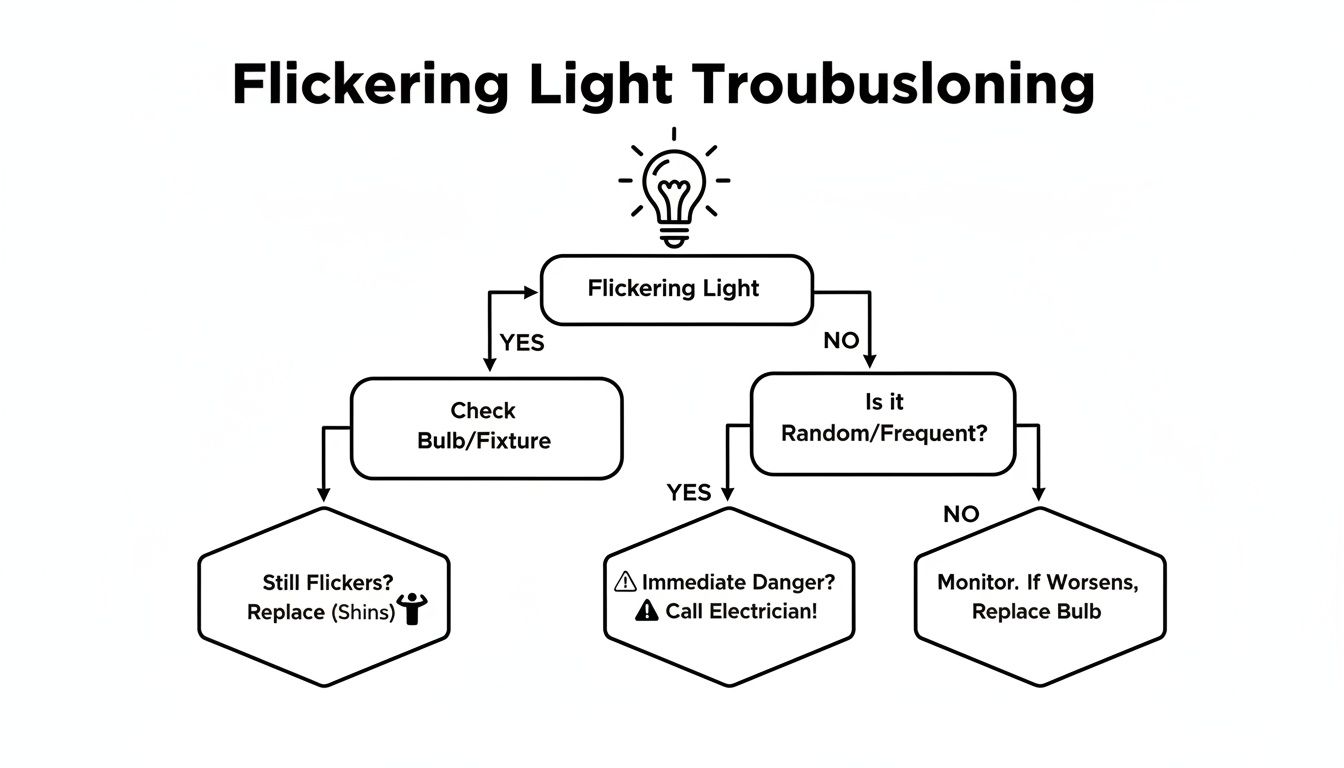
As you can see, the path from noticing a flicker to calling a pro really depends on how widespread and consistent the issue is.
Faulty Bulbs and Fixtures
Honestly, the most common cause is also the easiest one to fix. It might just be the bulb itself. This is especially true for older fluorescent lights as they age, or if you’re using an old-school dimmer switch with modern LED bulbs.
Here’s why that happens: traditional dimmers were built for high-wattage incandescent bulbs. LEDs work differently and can flicker like crazy when they’re paired with an incompatible dimmer that can’t regulate the voltage correctly.
Other simple causes include:
- A loose bulb: Sometimes all it needs is a gentle twist to be screwed in tighter for a solid connection.
- A worn-out light fixture: Over time, the internal wiring or the socket of the lamp itself can degrade.
- Poor quality bulbs: Let’s face it, a cheap LED bulb might not have the right internal components to handle minor power fluctuations, which leads directly to flickering.
Loose Wiring and Overloaded Circuits
Now we’re getting into more serious territory. If the flickering isn’t just in one fixture, it often points to an issue inside your walls or at the electrical panel. A loose wire anywhere in the circuit—at a switch, an outlet, or a junction box—can create an inconsistent connection that makes lights flicker randomly.
You know what’s even more common? An overloaded circuit. When a big appliance like a microwave or a vacuum cleaner starts up, it demands a huge surge of power. If it’s sharing a circuit with your lights, it can cause a temporary voltage drop, resulting in that noticeable dimming or flickering. That’s a classic sign your home’s electrical system is straining to keep up with modern life.
Key Takeaway: An isolated flicker often means a bulb or fixture issue. Widespread or appliance-related flickering points toward more significant circuit or wiring problems that need a professional look.
Flickering Lights Symptom Checker
To help you get a better handle on what you're seeing, use this quick diagnostic table. Match your symptoms to find the most likely cause and understand the urgency.
| Symptom | Most Likely Cause | Urgency Level |
|---|---|---|
| One light flickers randomly. | Faulty bulb or loose connection in the fixture. | Low – Try a new bulb first. |
| Lights flicker when a large appliance turns on. | Overloaded circuit or large inrush current. | Medium – Avoid using too many devices on one circuit. |
| Lights flicker throughout the house. | Loose connection in the panel or a utility issue. | High – Potential fire hazard. Call a professional. |
| Lights flicker and there's a buzzing sound. | Arcing from a loose wire or faulty breaker. | URGENT – Turn off the circuit and call an electrician immediately. |
This table isn't a substitute for a professional diagnosis, but it's a great starting point. If you're seeing anything in the "High" or "Urgent" categories, don't wait to get it checked out.
Is Your Home's Electrical System Overloaded?
If your lights take a dip every time you fire up the microwave or turn on a hair dryer, your home's electrical system is screaming for help. This is a classic symptom of an overloaded circuit, and honestly, it’s one of the top culprits behind that annoying flicker, especially in older Northern Utah homes trying to keep up with modern power demands.
Let me explain it this way: think of a single circuit in your home as one lane on a highway. When you plug in and turn on a high-power appliance, it's like a flood of cars suddenly trying to merge into that one lane. The system gets jammed, causing a temporary voltage drop that shows up as a noticeable dimming or flickering of the lights.
The Modern Power Problem in Older Homes
Here’s the thing—many homes in Weber and Davis County were built when families had far fewer electronic devices. Today, we're juggling everything from big-screen TVs and gaming consoles to air fryers and electric vehicles, often on an electrical framework that was never designed for such a heavy load.
When too many of these high-draw devices pull power from the same circuit, the system is pushed to its limits. This isn't just an inconvenience; it’s a significant safety risk. The National Fire Protection Association (NFPA) reported that electrical failures, often linked to overloads, were behind over 32,000 home fires annually from 2015-2019. These incidents resulted in more than $1.3 billion in property damage each year.
Crucial Insight: An overloaded circuit is more than a nuisance that causes flickering lights. It’s a direct warning that your system is under stress, leading to tripped breakers, overheating wires, and a serious risk of an electrical fire.
Recognizing the Signs of an Overload
So, how can you tell if an overload is what's causing the flickering lights in your house? The signs are usually quite clear and often tied to specific actions.
Watch for these common red flags:
- Appliance-Triggered Dimming: The most obvious sign is lights flickering or dimming precisely when a major appliance—like an air conditioner, refrigerator, or space heater—cycles on.
- Frequently Tripped Breakers: Do you find yourself constantly heading to the electrical panel to reset a tripped breaker? This is your panel's safety mechanism kicking in to prevent wires from overheating due to excessive demand.
- Buzzing Outlets or Switches: A faint buzzing or humming sound coming from an outlet or light switch can indicate a loose connection or a circuit that’s struggling under a heavy load.
- Warm or Discolored Outlets: If an outlet faceplate feels warm to the touch or shows any signs of scorching, stop using it immediately. This is a critical sign of a dangerous overload or wiring fault.
If you’re seeing these symptoms, it’s a strong indication that your current circuits can’t handle your home's power needs. You can learn more about how a professional assesses and upgrades your breakers and electrical panels to safely manage modern electrical loads.
The Hidden Danger Of Loose And Outdated Wiring
When flickering lights seem to have no rhyme or reason, they’re often pointing to a serious problem hiding inside your walls. Over time, electrical connections in switches, outlets, and even inside your main breaker panel can work themselves loose. Honestly, this is a bigger deal than most people realize.
A loose connection creates an unstable path for electricity, causing something called an electrical arc. You can think of it as a tiny, powerful lightning bolt jumping a gap in the wiring. That little arc is intensely hot and is a primary cause of electrical fires.
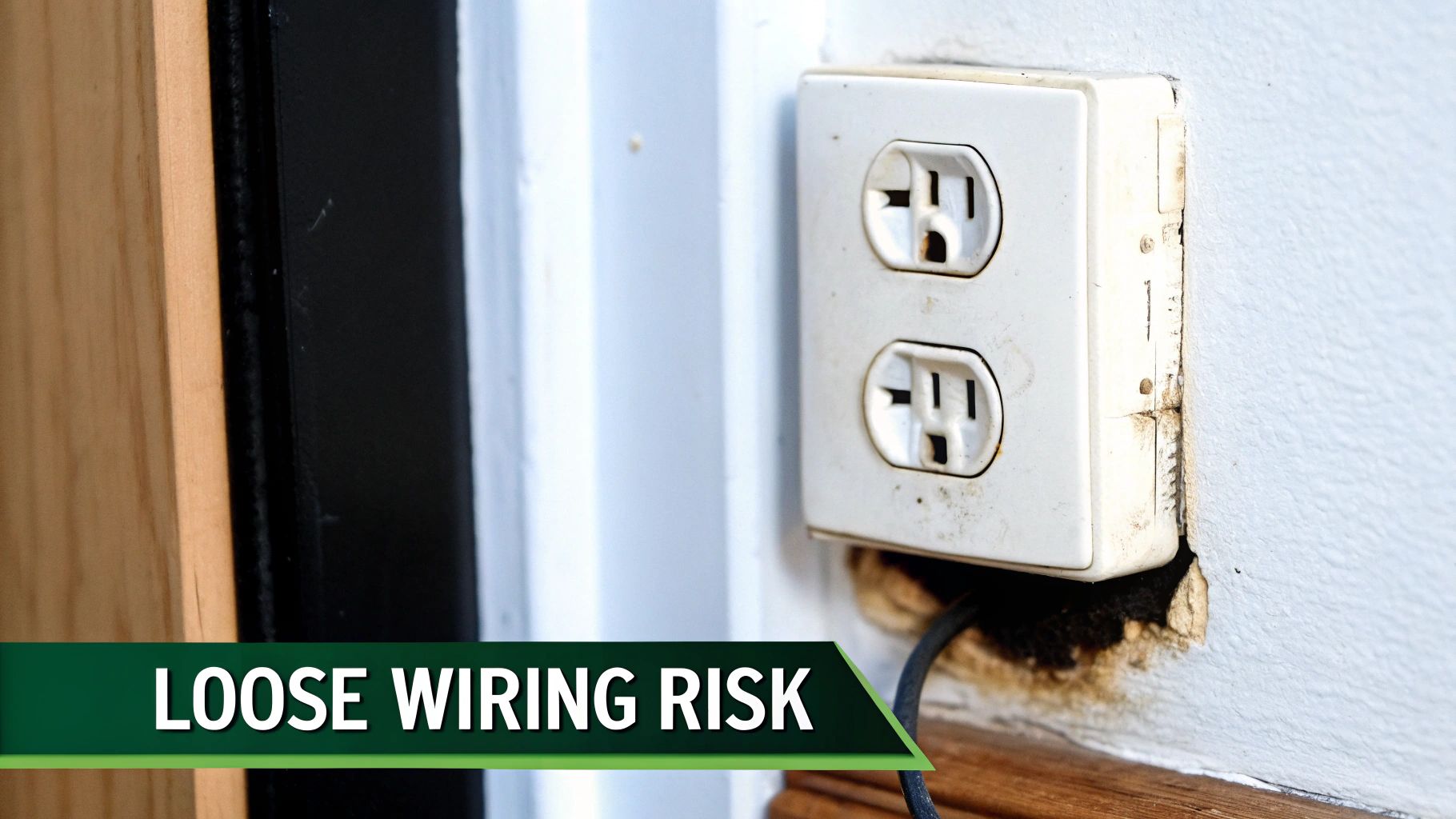
This isn't something you can just ignore. Random flickering, especially if it gets worse when you wiggle a light switch, is a major red flag for loose or outdated wiring. It's a fire hazard lurking in a surprising number of older homes. Here in Northern Utah's Weber and Davis counties, we see this issue in up to 40% of homes over 40 years old.
Decades of use cause connections to degrade and insulation to crack. It's an even bigger problem in homes with old aluminum wiring (common from 1965-1973), which expands and contracts more than copper. This creates tiny arcing sparks hotter than 10,000°F. There's a reason the NFPA identifies wiring issues as a leading cause of home fires. Discover more insights about this serious electrical risk from industry experts.
Telltale Signs Of Dangerous Wiring
So, how do you tell the difference between a simple flicker and a wiring hazard? The symptoms are often subtle but distinct. You need to use more than just your eyes—you have to listen and even smell for clues that something is wrong.
Pay close attention to these warning signs:
- Buzzing or Crackling Sounds: A faint buzzing from an outlet, switch, or your breaker panel is a classic sign of arcing. Electricity should be silent.
- A Faint Burning Smell: Ever catch a weird, acrid smell near an outlet or in a specific room? That could be the smell of plastic or wire insulation overheating. It's a critical warning.
- Warm or Discolored Outlets: If a switch plate or outlet feels warm to the touch or shows any scorch marks, that’s a sign of dangerous heat buildup from a poor connection.
These aren’t just quirks of an old house. They are urgent calls for a professional inspection.
The Problem With Old Aluminum Wiring
Here’s the thing about older homes: many built between the mid-1960s and early 1970s used solid aluminum wiring instead of copper. At the time, it was a cost-saving measure, but we now know it comes with significant risks. Aluminum expands and contracts much more than copper does with temperature changes, causing connections to loosen over time. This dramatically increases the chance of arcing and fire.
If your home was built during this period and you're seeing flickering lights, it's essential to have your wiring professionally inspected. An electrician can tell you for sure if you have aluminum wiring and recommend safe solutions, like specialized connectors or rewiring, to protect your home. A professional inspection is the only safe way to address these hidden dangers.
Not every flicker spells disaster. In fact, sometimes the cause behind your flickering lights is surprisingly simple—something you can safely check yourself before even thinking about calling an electrician. Let's walk through a few easy troubleshooting steps to rule out the basics first.
You know what? The most common culprit is often the bulb itself. Before you jump to conclusions and assume the worst, always start with the most obvious fix. It’s a quick check that can save you a whole lot of worry and the cost of a service call.
The Bulb and Fixture Check
This is your first line of defense. It’s completely safe, super easy, and solves a huge number of flickering issues right away. A faulty, old, or even just a poorly seated bulb is frequently the root of the problem, especially if the flickering is happening with just a single lamp or fixture.
Here’s a quick step-by-step process to follow:
- Turn Off the Power: This is non-negotiable. Always flip the light switch to the "off" position before you touch a bulb or fixture. Safety first, always.
- Check for Tightness: Gently twist the bulb to make sure it’s screwed in all the way. A loose bulb can't make a solid connection with the socket, and that's a classic cause of flickering.
- Swap the Bulb: If tightening it doesn’t do the trick, try swapping the bulb with a new one or grabbing one from a fixture you know works perfectly. If the flicker vanishes, you’ve found your problem. Easy peasy.
- Test the Fixture: What if a new bulb still flickers in that same socket? Now, try putting the original (flickering) bulb into a different lamp. If it works just fine somewhere else, the issue is likely with the original fixture’s wiring or the socket itself.
Important Safety Note: If you suspect the fixture itself is the problem—for instance, if the socket feels wobbly, looks burnt, or seems corroded—stop right there. That’s a clear sign it’s time to bring in a professional.
When to Draw the Line
Honestly, it’s crucial to know your limits. Your DIY troubleshooting should stop at the bulb and the plug. Trying to diagnose issues hiding inside your walls, light switches, or your main electrical panel is a risk you should never, ever take without proper training and tools.
Here’s a simple way to think about what's safe for you to handle versus what needs a pro:
| Safe DIY Checks | When to Call a Professional |
|---|---|
| Tightening a loose lightbulb. | Flickering is happening in multiple rooms. |
| Swapping a bulb with a new one. | You hear buzzing or smell something burning. |
| Plugging a lamp into a different outlet. | Breakers are tripping frequently. |
| Checking for incompatible dimmer switches. | Outlets or switches feel warm to the touch. |
Attempting to fix complex wiring or panel problems on your own can lead to severe electrical shock or create a serious fire hazard in your home. It's just not worth the risk. If your initial, simple checks don't solve the problem, the safest and smartest next step is to get an expert opinion.
To see how we safely get to the bottom of these things, you can learn more about our electrical troubleshooting services and how our licensed electricians pinpoint the true root cause. This ensures the problem is fixed correctly the first time, keeping your home and family secure.
Warning Signs That Demand An Immediate Electrician Visit
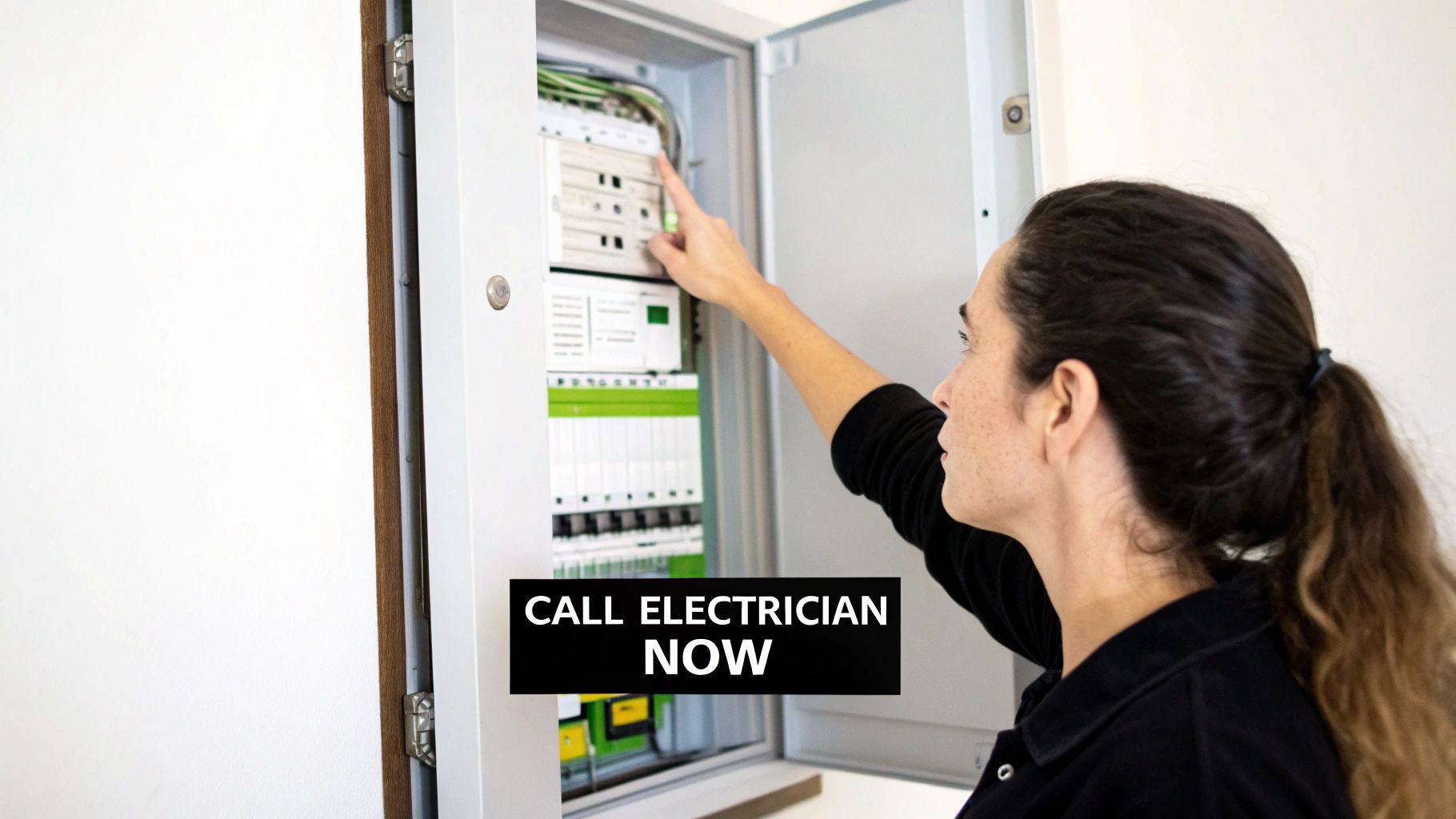
While some flickering lights are just minor annoyances, others are urgent warnings from your electrical system. You know what? Some symptoms aren't just hints; they’re your home's equivalent of a smoke alarm, signaling an immediate hazard that needs a professional.
If you notice any of the following red flags, it's time to stop troubleshooting and call a licensed electrician right away. These aren't suggestions; they are critical safety alerts. Acting quickly can protect your home and family from serious risks like an electrical fire.
Let's get straight to what you need to look out for.
The Smell Of Burning Plastic Or Ozone
This is the most critical warning sign. A distinct burning smell—often like hot plastic, rubber, or even a sharp, acrid ozone scent near an outlet, switch, or your breaker panel—is a sign of extreme overheating. This scent means wiring insulation is likely melting or a dangerous electrical arc is actively happening.
If you smell this, do not wait. Go to your electrical panel and shut off the breaker for that area immediately if you can safely identify it. This is a fire-in-progress situation that demands professional intervention.
Audible Buzzing Or Crackling Sounds
Electricity should be silent. If you hear a persistent buzzing, humming, or crackling sound coming from an outlet, light switch, or your breaker box, it’s a direct indicator of a loose connection or a failing component. That sound is often the noise of electricity arcing—jumping across a gap—which generates intense heat.
An electrical arc can reach temperatures hotter than 10,000°F, easily hot enough to ignite surrounding wood, insulation, or dust. This is one of the leading, yet hidden, causes of electrical fires. Ignoring these sounds is a serious gamble.
Visibly Scorched Or Warm Outlets
Your outlets and switch plates should always be cool to the touch. If you find one that is warm or hot, or if you see any dark discoloration or scorch marks around the plug slots, it's a sign of a dangerous wiring problem behind the faceplate. This heat buildup indicates a poor connection is creating resistance, which can quickly lead to a fire.
Unplug everything from that outlet immediately and do not use it again until an electrician has inspected it.
These red flags override any DIY instincts. They point to complex and dangerous issues related to what causes flickering lights in house. A professional diagnosis is the only safe path forward to ensure the problem is resolved at its source before it escalates into a disaster.
Your Trusted Solution For Flickering Lights In Northern Utah
We've walked through how flickering lights can be anything from a five-minute fix to a serious electrical red flag. While checking the simple stuff yourself is a smart first step, when the flicker sticks around or shows up all over the house, that’s your home’s way of saying it needs a professional eye. Honestly, guessing what's going on behind the walls just isn't worth the risk.
For homeowners and businesses across Weber, Davis, and Salt Lake counties, Black Rhino Electric is the local team you call to figure these things out safely. We understand the quirks of Northern Utah homes, from the old wiring in historic bungalows to the overloaded panels in modern builds. Our crew provides comprehensive residential lighting electrician services to find the real cause, not just treat the symptom.
Don't let a small annoyance grow into a dangerous reality. Protecting your home and family comes first, and a professional diagnosis is the only way to get lasting safety and real peace of mind.
Answering Your Questions About Flickering Lights
Flickering lights are one of those things that can be totally harmless or a serious warning sign. It’s no wonder we get so many calls about it. Knowing what's behind the flicker can give you some real peace of mind—or tell you it’s time to call for help.
Let’s tackle some of the most common questions we hear from homeowners right here in Northern Utah. Think of this as your first step in figuring out what your electrical system is trying to tell you.
Common Questions Answered
We’ve put together a quick table to answer the questions that come up most often. These are the things homeowners just like you ask us every day.
| Question | Answer |
|---|---|
| Can a bad breaker cause lights to flicker? | Absolutely. A worn-out or faulty circuit breaker can lose its firm grip on the electrical bus bar inside your panel. This creates a loose, inconsistent connection that often shows up as flickering lights on that specific circuit. If you hear a faint buzzing from the panel, that’s a major red flag—it’s time for a professional to take a look. |
| Why do my LED lights flicker when nothing else does? | LEDs are way more sensitive to tiny voltage changes than old-school incandescent bulbs. The most common culprit is pairing new LED bulbs with an older dimmer switch that wasn't designed for their low-wattage needs. You also see it with cheap, low-quality LEDs that just don't have the right internal guts to smooth out minor power dips. |
| Is it normal for lights to dim when the AC turns on? | It's common, but that doesn't make it ideal. Big appliances like your air conditioner or refrigerator pull a massive amount of power for a split second when they start up. This sudden demand can cause a temporary voltage drop across your entire system, making the lights dip. |
A slight, momentary dim isn't usually a crisis. But if it's a deep, dramatic dimming or it happens all the time, your electrical system is probably telling you it's overloaded.
If the dimming is severe or happens frequently, it's a strong sign that your electrical system is overloaded or your main service connection is insufficient for your home's needs.
At Black Rhino Electric, our licensed electricians provide clear answers and safe, effective solutions for your home. If you're tired of guessing what causes the flickering lights in your house, give us a call at 385-396-7048 or request a free quote for a professional diagnosis.