
Dealing with a sudden power outage in one room can be alarming, but don't panic just yet. Before you assume the worst, understand that troubleshooting home electrical problems often reveals a simple fix. Most of the time, the issue is something basic like an overloaded circuit or a tripped safety device, not a major wiring disaster.
Contents
- 1 Your Safe Starting Point for Electrical Issues
- 2 Decoding Common Electrical Symptoms in Your Home
- 3 Navigating Your Circuit Breaker Panel with Confidence
- 4 Diagnosing Faulty Switches, Outlets, and Fixtures
- 5 Knowing When to Call a Professional Electrician
- 6 Common Questions About Home Electrical Problems
- 7 When It’s Time to Call in the Pros
Your Safe Starting Point for Electrical Issues
Is there anything more frustrating than an outlet that just gives up or a light that refuses to turn on? This guide is your first-aid kit for those moments. We'll walk through the foundational checks any homeowner can safely perform to figure out what's going on, helping you distinguish between a simple reset and a real problem that requires a professional.
First Checks for Any Homeowner
Before you even think about complex wiring, the solution is often hiding in one of two places: a GFCI outlet or your main circuit breaker panel.
- GFCI Outlets: Modern electrical codes require GFCI (Ground Fault Circuit Interrupter) outlets in areas where electricity and water might mix, like kitchens, bathrooms, and garages. Their sole job is to detect tiny imbalances in current and instantly cut power. When one trips, it's not a failure; it’s a critical safety feature doing its job.
- Circuit Overloads: The other frequent culprit is a simple overload. Think about your morning routine: the coffee maker, the toaster, and the microwave are all running. That high demand can trip a circuit, which is your electrical system protecting itself from overheating.
The real key here is to be methodical. If you rush, you’ll miss the obvious fix. A calm, step-by-step approach will solve the problem in minutes more often than not.
A Simple Troubleshooting Path
To make it even clearer, this decision tree lays out the logical first moves for any electrical hiccup you encounter.
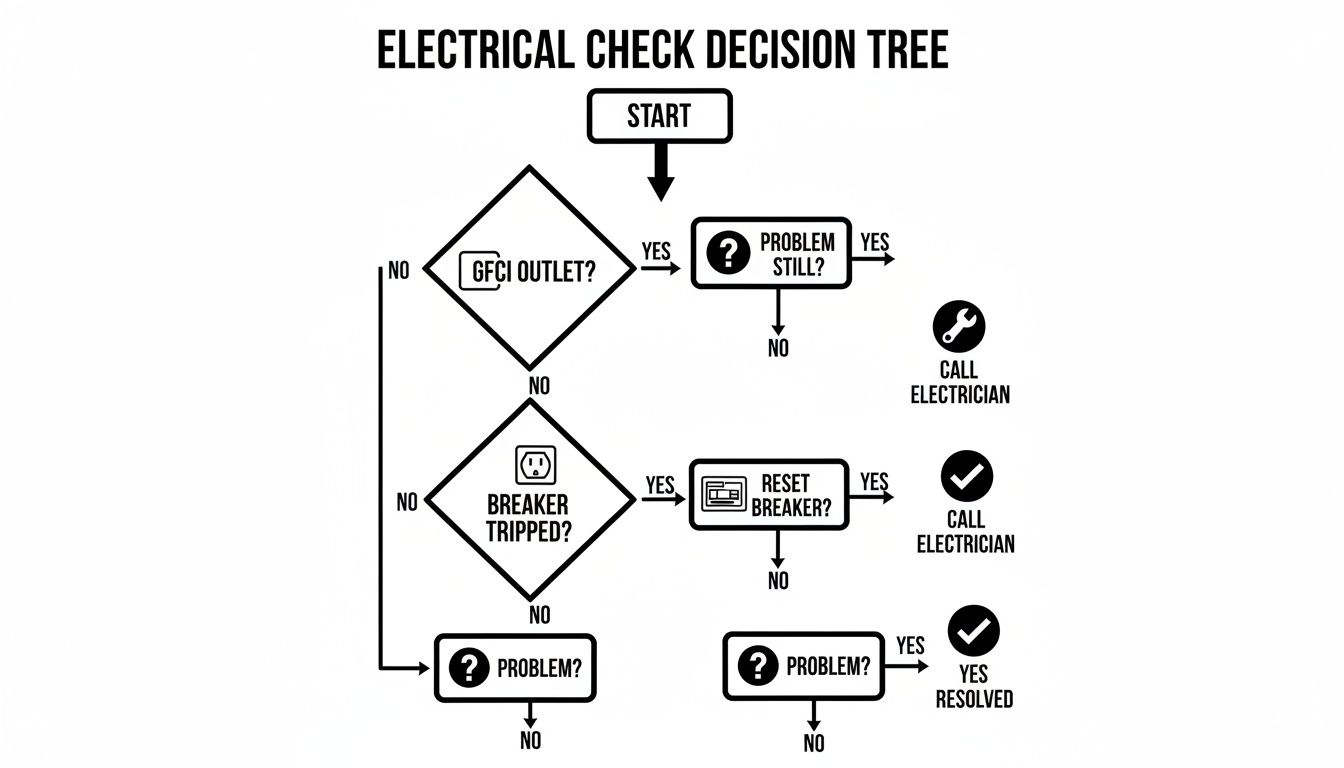
This visual guide reinforces the most important rule: always start with the easiest and safest checks. Go to the GFCI outlet first before you even walk over to the circuit breaker panel.
Understanding these initial steps is the most powerful skill a homeowner can have when an electrical issue pops up. It gives you the confidence to handle the small stuff and the clarity to know when it’s time to call in a licensed electrician. Now, let's dig into what some of these specific symptoms really mean.
Decoding Common Electrical Symptoms in Your Home
Flickering lights, dead outlets, and weird buzzing sounds aren't just quirks; they’re your home’s way of telling you something’s off. Learning to read these signals is the first step in troubleshooting home electrical problems and keeping your family safe. Let’s translate what your house is trying to say so you can tell a minor hiccup from a serious hazard.
Here’s the thing: your home’s wiring is a complex network, and different symptoms point to different issues. A light that constantly flickers isn't just a quirky bulb; it often means a loose connection somewhere is generating heat—a real fire risk. A dead outlet might seem simple, but the cause could be anything from a tripped GFCI down the hall to bad wiring hidden in the wall.
Common Symptoms and What They Mean
Think of yourself as a detective; every symptom is a clue. For instance, why do modern LED lights sometimes flicker or glow even when you turn them off? It's usually because of tiny amounts of leftover voltage in the circuit that old incandescent bulbs never noticed. It's typically harmless but can sometimes point to an incompatible dimmer switch.
Likewise, if a single outlet dies but its neighbors are working fine, the problem is likely with that specific receptacle or a loose wire in its box. And that faint buzzing you hear from a light switch? That's a major red flag. It’s the sound of electricity arcing—jumping across a gap—which is a direct route to a potential fire.
Ignoring small electrical symptoms is one of the biggest risks a homeowner can take. These issues rarely fix themselves and often escalate into more dangerous and costly problems over time.
Catching these issues early is critical for safety. The numbers on home electrical fires are sobering. They cause an estimated 51,000 fires in the U.S. every year, leading to nearly 500 deaths, over 1,400 injuries, and $1.3 billion in property damage. You can learn more about these home electrical fire statistics on the ESFI website.
To help you get a quick read on what might be going on, we’ve put together a simple table outlining the most common issues.
Common Electrical Symptoms and Potential Causes
This responsive table can help you quickly identify what might be behind some of the most common electrical issues in your home. It’s a starting point to help you separate simple fixes from the signs of a more serious problem.
| Symptom | Possible Simple Cause (DIY Check) | Possible Serious Cause (Call a Pro) |
|---|---|---|
| Flickering Lights | The lightbulb is loose or nearing the end of its life. | Loose wiring in the circuit, a faulty switch, or an overloaded circuit. |
| Dead Outlet(s) | A nearby GFCI outlet has tripped, or the circuit breaker is off. | A bad outlet, loose terminal connections, or burnt wiring inside the wall. |
| Buzzing Noises | A dimmer switch is not compatible with LED or CFL bulbs. | Arcing from a loose wire in a switch, outlet, or the breaker panel. |
| Breaker Trips Often | An overloaded circuit (too many high-power devices running at once). | A short circuit, a ground fault, or a failing circuit breaker. |
Think of this table as a quick reference guide, but always stick to the golden rule of electrical work: when in doubt, don’t risk it. A professional diagnosis from an experienced electrician is always the safest bet for anything more complicated than a loose bulb or a tripped breaker.
Your circuit breaker panel is the central nervous system of your home's electrical grid, yet for many homeowners, it’s an intimidating, mysterious metal box. The good news is that understanding your panel is the single most powerful skill for troubleshooting home electrical problems.
You know what? A little bit of knowledge here goes a long way in solving issues safely and quickly.
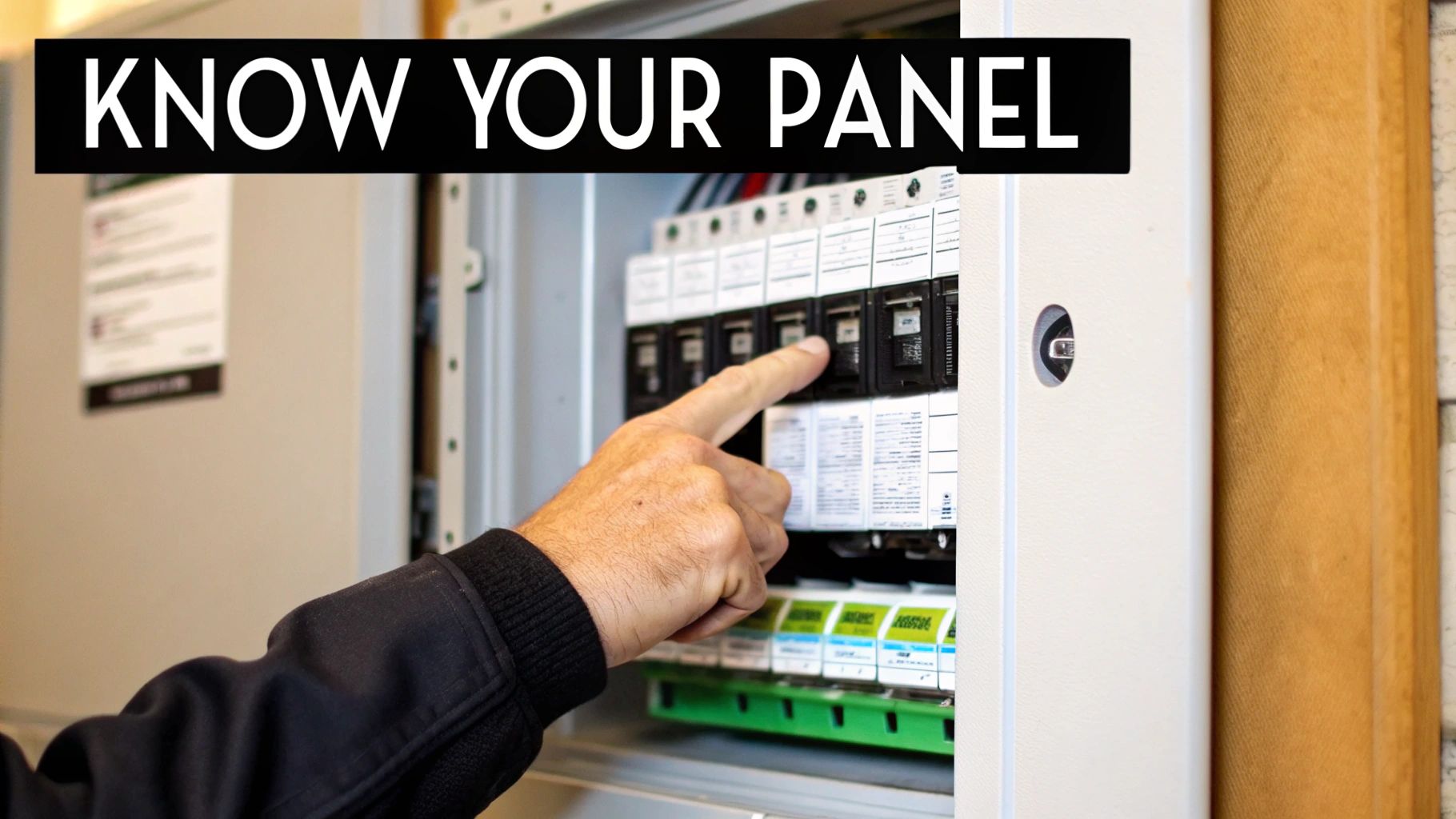
This panel is designed with one primary purpose: safety. Each switch, or breaker, is engineered to automatically trip—shutting off power—when it detects an overload or a dangerous fault. This prevents wires from overheating and is your first line of defense against electrical fires.
Understanding Your Panel's Layout
When you open that panel door, you'll see rows of switches. Ideally, there's a legend or diagram that maps each breaker to a specific room or major appliance, like "Kitchen Outlets" or "Air Conditioner."
If this legend is missing or outdated, creating an accurate one should be a top priority. It's a game-changer during an outage. Here’s a simple, two-person way to map it out:
- Work with a partner: One person stays at the panel while the other goes through the house with a lamp or phone charger.
- Flip and check: Systematically turn off one breaker at a time. Your partner can then call out which outlets or lights have lost power.
- Label clearly: Use a permanent marker or label maker to update the panel legend with clear, specific descriptions. "Upstairs Hall Bath" is a lot more helpful than "Bath 2."
Resetting a Tripped Breaker Safely
When a breaker trips, it usually moves to a middle position between "ON" and "OFF," though sometimes it goes all the way off. To reset it properly, you must push the switch firmly to the full "OFF" position first. You'll often feel a click. Only then should you flip it back to "ON."
However, if the breaker trips again immediately after you reset it, stop. This is a critical warning sign. It indicates a persistent problem like a short circuit, not just a temporary overload. Do not keep resetting it.
Differentiating Breaker Trip Types
Let me explain. Understanding why a breaker tripped helps you decide what to do next.
| Trip Scenario | What It Likely Means | Your Next Action |
|---|---|---|
| Simple Overload | You were running too many high-power devices at once (e.g., microwave and toaster). | Unplug one of the devices and then reset the breaker. |
| Instant Trip | The breaker trips immediately after being reset, often with a distinct "snap" sound. | Do not touch it again. This signals a short circuit or a dangerous fault that needs professional diagnosis. |
For persistent issues or if you're dealing with an older, maxed-out panel, a professional inspection is essential. You can learn more about modern solutions and why a panel upgrade might be a crucial safety investment on our service page.
Diagnosing Faulty Switches, Outlets, and Fixtures
Alright, you’ve confirmed the breakers are all in the “on” position, but something in the house still isn’t working. Now it’s time to play detective and narrow down the problem to a specific switch, outlet, or light fixture.
Here’s where a little bit of our team's field experience can help. Most people don’t realize that the wiring in their home is often a daisy chain. A single bad connection in one spot can knock out everything downstream from it. That's why a dead outlet in your garage might be the real reason the overhead lights won't turn on.
Diagnosing Faulty Wall Switches and Outlets
Ever flip a light switch and get nothing? Or plug your phone charger into an outlet, only to find it completely dead? These are some of the most common calls we get, and nine times out of ten, the problem is a worn-out device. Honestly, an outlet that’s seen years of use can lose its ability to grip a plug, leading to a loose, frustrating, and intermittent connection.
But this isn’t just an annoyance—it's a legitimate safety risk. When a plug is loose, tiny electrical arcs can jump between the contacts inside. This arcing generates a surprising amount of heat and can absolutely become a fire hazard over time.
Keep an eye out for these clear warning signs that a switch or outlet is on its last legs:
- Loose Plugs: If a cord practically falls out of the outlet on its own, it’s time for a replacement.
- Crackling or Buzzing: Any noise from a switch or outlet is the sound of dangerous arcing.
- Discoloration or Scorch Marks: This is an unmistakable sign of overheating.
- Intermittent Power: A light that works one minute but not the next often points to a loose wire connection inside the electrical box.
The Mystery of the Tripping GFCI
That little GFCI outlet in your bathroom or kitchen is your best friend when it comes to preventing electrical shock. But what do you do when it trips over and over? It’s not being difficult—it’s doing its job by detecting a ground fault.
The fault could be coming from a faulty appliance plugged into it, like an old hair dryer. Or, it could be something less obvious, like moisture getting into an outdoor receptacle that happens to be on the same circuit.
Here's an insider tip from our field experience: A single unprotected outdoor outlet exposed to rain can cause the GFCI outlets inside your garage to trip constantly. The fault isn't with the garage outlets at all, but with the unprotected one at the end of the line.
When Flickering Lights Point to a Deeper Issue
A single flickering light can sometimes be as simple as a loose bulb, so always give it a gentle twist to make sure it’s snug. But if tightening or even replacing the bulb doesn’t solve the problem, you might be looking at something more complex.
A faulty light switch, a loose wire inside the fixture’s canopy, or even a poor connection somewhere else on the circuit can all be the root cause. If you're dealing with persistent flickering, you can learn more about our professional solutions for lighting installation and repair on our service page.
These small, nagging issues can be symptoms of bigger risks. The U.S. Fire Administration reported that in 2023 alone, there were 23,700 residential electrical fires, leading to $1.5 billion in property losses. This data shows just how quickly a "minor" problem can escalate. You can discover more insights about residential electrical fire statistics and see why professional check-ups are so important.
Knowing When to Call a Professional Electrician
I get it. The DIY spirit is strong, and there's a real satisfaction in fixing things yourself. But when it comes to electricity, knowing your limits isn't just smart—it's the most critical part of keeping your family and home safe. This isn't about fearmongering; it's about having a healthy respect for the power behind your walls.

Some issues are just non-negotiable. They are absolute red flags that mean you should stop what you're doing, step back, and pick up the phone to call a licensed electrician. Immediately.
Unmistakable Signs of Danger
If you notice any of the following, don't wait to see if it gets better. These are serious warnings that something is dangerously wrong with your electrical system.
- Burning Smells: A distinct fishy or sharp plastic smell near an outlet, switch, or your breaker panel is the classic signature of overheating wires. Don't ignore it.
- Buzzing or Sizzling Sounds: Your walls and outlets should be silent. Any audible buzzing, humming, or sizzling is a sign of arcing—a major fire hazard.
- Scorched Outlets or Switches: Brown or black discoloration around an outlet or switch plate means it has gotten dangerously hot.
- An Immediately Tripping Breaker: You reset a breaker, and it snaps off again the second you flip it. That's a dead short or a ground fault. Continuously resetting it is just asking for trouble.
Projects That Are Never DIY
You can safely change a lightbulb or reset a GFCI outlet. That's fine. But some jobs carry risks far too high for an unlicensed person to tackle. A single mistake while trying to replace a circuit breaker or upgrade an entire electrical panel can lead to electrocution, fire, or catastrophic system failure. It’s just not worth the gamble.
According to the Electrical Safety Foundation International (ESFI), electrical malfunctions are responsible for approximately 35,000 home fires each year, leading to over 1,130 injuries and 500 deaths. A huge number of these are preventable with professional help. You can learn more about home electrical safety from the ESFI.
Your home's electrical system is no place for guesswork. If you've seen any of these red flags or just feel unsure about what you're dealing with, the safest and smartest move is to call for expert help.
Common Questions About Home Electrical Problems
When you're staring down an electrical mystery, a little expert insight goes a long way. It helps you make safe, smart decisions for your home and family. Let's tackle some of the most common questions we hear from homeowners right here in our area.
Why Do My Lights Flicker When a Large Appliance Turns On?
This is a classic, and honestly, it’s not always a five-alarm fire. Big appliances like your air conditioner or microwave pull a huge amount of current the split second they start. That momentary surge can cause a tiny voltage dip on the circuit, which you see as a quick flicker in the lights.
But—and this is a big but—if the flickering is really dramatic or happens all the time, it’s time to pay attention. That could point to an overloaded circuit or, more seriously, a loose connection somewhere in the system. If you’re concerned, it’s always a good call to have a pro run a load calculation and make sure everything is buttoned up tight.
Is It Safe to Replace a Two-Prong Outlet with a Three-Prong One?
Plain and simple: absolutely not safe if there isn't a ground wire in the electrical box. That third prong isn't for show; it’s a critical safety feature that protects you from a nasty shock.
Slapping a three-prong outlet on an ungrounded circuit is a serious code violation and creates a false sense of security. The right way to handle this is to have a licensed electrician either run a new ground wire to the outlet or install a GFCI outlet. A properly installed and labeled GFCI will provide shock protection even without a ground wire, keeping you safe.
Monthly Maintenance Tip: Get in the habit of testing your Ground Fault Circuit Interrupter (GFCI) outlets once a month. Just press the 'TEST' button to kill the power, then hit 'RESET' to bring it back. It’s a simple check that confirms this life-saving device is ready to do its job.
For a deeper dive into other common electrical questions, you might find our frequently asked questions page helpful.
When It’s Time to Call in the Pros
If you’ve run through the basics—resetting breakers, testing GFCIs—and the problem is still there, it's time to stop. Pushing further with electrical issues you don't understand is a recipe for trouble, and your safety is not worth the risk.
That’s where we come in. The licensed electricians at Black Rhino Electric are in neighborhoods across Weber, Davis, and Salt Lake counties every day, sorting out the tricky problems that go beyond a simple fix. We'll find the real source of the problem and give you straightforward solutions to get your home’s electrical system safe and sound again. For a safe and reliable fix from a local expert you can trust, call Black Rhino Electric at 385-396-7048 or request a free quote to get your power—and your peace of mind—back on track.