Feeling like your home is struggling to keep up with today's electrical demands? Learning how to upgrade an electrical panel is a crucial step towards modernizing your home for safety and future-proofing. This guide breaks down the entire process, starting with the most important question: do you actually need an upgrade?
Contents
Knowing When an Electrical Panel Upgrade Is Necessary
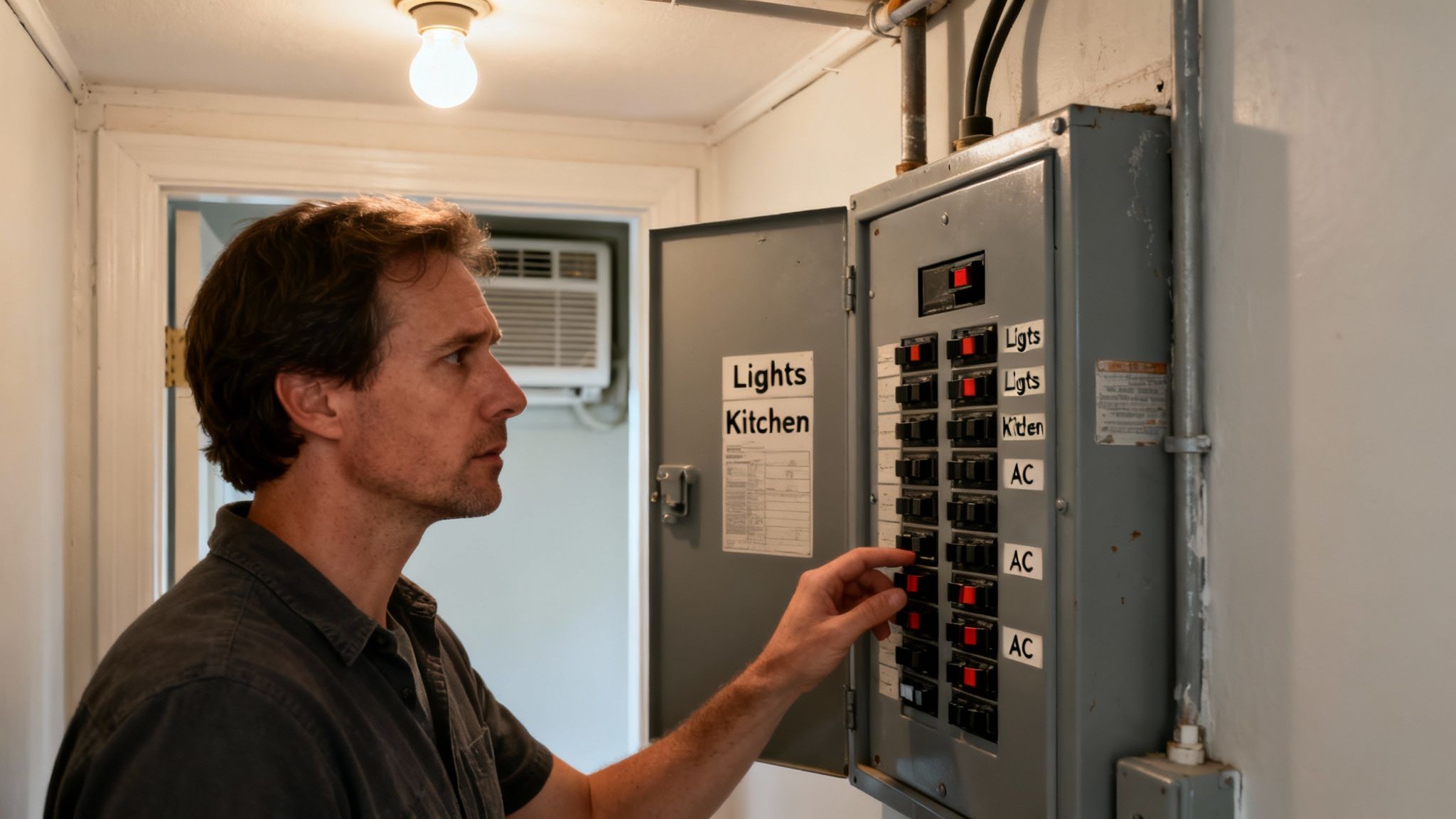
You know what? Your home's electrical panel is the unsung hero, working silently in your garage, basement, or utility closet. As a licensed electrician with years of field experience, I’ve seen firsthand how this central hub distributes power to every outlet, switch, and appliance you rely on. But when that hero starts to struggle, it can cause more than just minor annoyances—it can create serious safety hazards.
So, how can you tell if your panel is waving a white flag? It often comes down to recognizing the subtle (and not-so-subtle) warning signs that your electrical system is pushed to its limits.
The Age Factor: Your Home’s Electrical Birthdate
Let’s be real, a lot of homes here in Northern Utah have some history. If your house was built before the 1990s, there's a good chance it has a 100-amp panel, or even an older 60-amp system. Decades ago, this was more than enough to power a refrigerator, a television, and a few lights.
Here’s the thing: today’s electrical demands are on a whole different level. Think about all the devices we use daily—multiple computers, smart home gadgets, high-efficiency appliances, and maybe even an EV charger on the horizon. An older panel simply wasn't designed for this kind of load.
A panel that’s over 25 years old isn’t just outdated; it could be a safety risk. From my professional experience, internal components can wear out, connections can loosen, and the technology itself may lack modern safety features like Arc Fault Circuit Interrupters (AFCIs).
Telltale Signs Your Panel Is Overloaded
Your electrical system will usually give you clues when it's under stress. Ignoring them is like ignoring the check engine light on your car. It’s best to pay attention before a small problem becomes a major, expensive repair.
Here are some of the most common red flags that signal it’s time to consider an upgrade:
- Frequent Breaker Trips: A breaker is supposed to trip to prevent an overload, but if it happens regularly on the same circuit, your panel is telling you it can't handle the demand. This is especially true if a major appliance like a microwave or hairdryer is the culprit.
- Flickering or Dimming Lights: Ever notice the lights dip for a second when your air conditioner kicks on? This is a classic sign of an overloaded system struggling to provide enough power to everything at once.
- A Crackling Sound or Burning Smell: These are immediate, serious warnings. If you hear buzzing or crackling from your panel or detect a faint burning odor, shut off the main breaker if you can do so safely and call a licensed electrician immediately.
- Visible Rust or Corrosion: Any moisture in or around your electrical panel can lead to rust, which compromises the connections and creates a significant fire hazard.
Planning for the Future: Your Growing Power Needs
Sometimes, the need for an upgrade isn't about existing problems but about future plans. Your current 100-amp panel might be doing just fine today, but what about next year?
Major life changes and home improvement projects are the biggest drivers for a panel upgrade. If any of the following are in your plans, an electrical panel upgrade isn't just a good idea—it's a necessity.
- Adding a High-Demand Appliance: Installing a hot tub, a central air conditioning unit, or an electric tankless water heater requires a significant amount of power.
- Major Kitchen or Home Remodel: A modern kitchen with an induction cooktop, double ovens, and other high-end appliances will easily overwhelm an older panel.
- Installing an EV Charger: This is one of the most common reasons for an upgrade. A Level 2 EV charger is a dedicated, high-power circuit that most older panels cannot support alongside the rest of the home's load.
Ultimately, understanding these signs empowers you to make an informed decision about your home's safety and functionality.
What a Modern Electrical Panel Offers Your Home
Honestly, if you're picturing an electrical panel as just a boring gray box with a bunch of switches, it's time for a new perspective. Learning how to upgrade an electrical panel today means discovering technology that's lightyears ahead of what was available even a decade ago.
An upgrade is so much more than just getting additional breaker slots. It’s about investing in a smarter, safer, and more resilient home. Let me explain. The whole idea of the electrical panel is shifting from a passive power distributor to an active, intelligent hub for your entire home.
The Rise of the Smart Electrical Panel
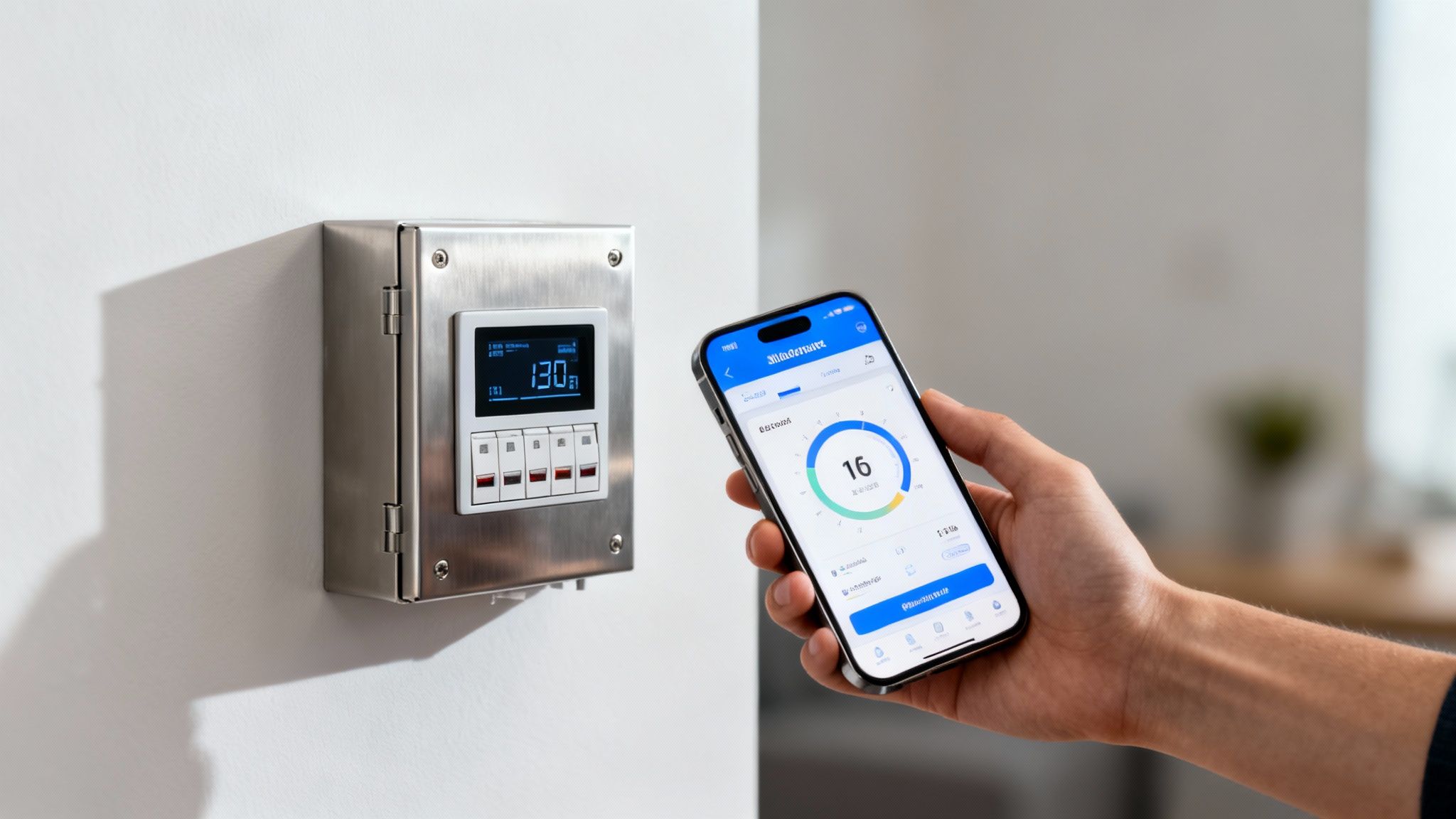
The biggest change? The move toward intelligent or "smart" panels. These systems provide incredible control and insight right from an app on your smartphone. Imagine getting a real-time alert if a circuit is about to overload, long before the breaker ever trips.
You could see exactly how much energy your kitchen appliances are using versus your home office. This isn't futuristic stuff—it's available right now.
- Circuit-Level Monitoring: See the energy consumption of individual circuits, helping you pinpoint energy hogs and make smarter usage decisions.
- Remote Control: Forgot to turn something off? With a smart panel, you can remotely shut down specific circuits from anywhere.
- Custom Alerts: Set up notifications for unusual activity, like a sump pump that hasn't run when it should have or a freezer that suddenly stops drawing power.
Future-Proofing for Home Electrification
Here’s the thing: our homes are becoming increasingly electric. From heat pumps to induction stoves and electric vehicles, the demand for clean, reliable power is only growing. A modern panel is the foundation for this transition.
A modern 200-amp panel doesn't just meet today's needs; it prepares your home for the next wave of technology. It ensures you have the capacity to adopt new innovations without another costly upgrade down the road.
This shift toward smart technology is reshaping the industry. The global market for smart electric panels is expanding rapidly, with some analyses projecting its value to grow from US$12.5 billion to over US$25.2 billion by 2034. This trend shows that homeowners and contractors are recognizing the immense value these intelligent features provide.
Seamless Integration and Cost Savings
Thinking about installing an EV charger or adding solar panels? A modern electrical panel is designed to integrate these systems seamlessly. Smart panels can automatically manage energy distribution, creating a truly connected home ecosystem.
For example, you can program your system to prioritize charging your EV during off-peak hours when electricity rates are lowest. Check out our guide on professional EV charger installations for more details on how this works. This intelligent load management not only prevents overloads but can also lead to significant savings on your utility bills over time.
A panel upgrade offers more than just power; it delivers:
- Enhanced Safety: Modern panels include advanced safety features like Arc Fault Circuit Interrupters (AFCIs) that protect against fire hazards.
- Increased Home Value: A new, capable electrical system is a major selling point for potential buyers.
- Total Peace of Mind: Knowing your home's electrical heart is robust, safe, and ready for the future is invaluable.
Ultimately, choosing to upgrade your electrical panel is a foundational investment. It’s a decision that provides long-term value that goes far beyond just keeping the lights on—it makes your home safer, more efficient, and ready for whatever comes next.
An electrical panel upgrade is a serious job, so it pays to get the groundwork right before a single tool comes out of the truck. Let me walk you through the non-negotiable first steps: the world of permits, codes, and the critical checks we perform before starting. Thinking about how to upgrade an electrical panel the right way begins right here—with the kind of due diligence that guarantees a safe, legal, and reliable result.
Here's the thing you absolutely can't ignore: this isn't a "wink-and-a-nod" situation where you can skip the official stuff. An electrical permit is more than just a piece of paper. It's the official record confirming the work was done to the strict safety standards of the National Electrical Code (NEC) and your local Northern Utah municipality.
Why Pulling a Permit Is Non-Negotiable
Honestly, I get why some homeowners wonder if they can just sidestep the permit office to save a few bucks or a bit of time. Is it really that big of a deal?
Yes, it absolutely is. Trying a panel upgrade without a permit is a risky gamble, and the potential consequences are way more expensive than the permit fee.
Here’s why a permit is mandatory:
- Safety Assurance: A permit triggers a final inspection from a city or county official. This is your third-party verification that the work was done correctly, leaving no hidden fire or shock hazards behind.
- Insurance Compliance: If an electrical fire ever happens and an investigation finds unpermitted work, your homeowner's insurance company has solid grounds to deny your claim. That could leave you facing catastrophic financial losses.
- Protecting Your Home’s Value: Unpermitted electrical work is a major red flag when you go to sell your home. It almost always pops up during the buyer's inspection, forcing you into costly last-minute repairs or even torpedoing the entire sale.
Think of a permit as your ultimate quality control. It’s the formal process that holds your electrician accountable and confirms every connection, wire, and breaker meets the highest safety standards required by law.
The Essential Pre-Upgrade Checks
Before a single wire gets disconnected, any good electrician will perform a few critical assessments. This isn't just a quick look-see; it’s a diagnostic process to map out the right upgrade for your home's specific needs. These checks prevent expensive surprises down the road and ensure your new panel can handle whatever you throw at it for years to come.
The All-Important Load Calculation
So, how do you know if you need a 100A panel or a 200A one? The answer comes from a detailed load calculation. This isn't guesswork. It's a systematic formula laid out by the NEC that accounts for your home's square footage, major appliances like your HVAC and water heater, and any future loads you're planning, like an EV charger or a hot tub.
This calculation gives us the precise electrical demand of your home, making sure the new panel has enough capacity without being overkill. For most modern homes, a 200-amp service has become the standard, providing plenty of juice for electrification projects and future growth.
Assessing the Service Entrance and Meter Base
Your electrical panel doesn't exist in a vacuum. It’s connected to the utility grid through the service entrance—the big wires running to your house from the pole or underground—and the meter base, which is the socket your electric meter plugs into.
Here’s a breakdown of what an electrician will inspect:
| Component | What They're Checking For | Why It Matters |
|---|---|---|
| Service Entrance Cable | Is the wire size sufficient for the new panel's amperage? Is the insulation cracked, frayed, or weathered? | An undersized or damaged service cable is a serious fire hazard and can't deliver the full power of your new panel. It often needs to be replaced during an upgrade. |
| Meter Base | Is the socket old, corroded, or damaged? Is it rated for the new amperage (e.g., 200A)? | The meter base is the gateway for all power entering your home. If it's not in good shape or properly rated, it must be replaced to ensure a safe, solid connection. |
| Grounding System | Is the existing grounding system up to current code? This includes the connection to ground rods and the water main. | Proper grounding is a critical safety feature that protects you, your family, and your electronics from electrical faults and power surges. It’s almost always updated during a panel replacement. |
By meticulously running through these checks, your electrician can build a clear, comprehensive plan. It’s this proactive approach that ensures your project goes smoothly, passes inspection without a hitch, and delivers the safe, reliable power your modern home deserves.
The Professional Upgrade Process from Start to Finish
So, what really happens on the day of the upgrade? It's easy to picture a chaotic mess of wires and tools, but the reality is a methodical, safety-first process. Understanding how to upgrade an electrical panel is really about knowing the careful steps a licensed pro takes to get the job done right, from the first call to the utility company to the final inspector's handshake.
Let me walk you through it. A professional panel swap is a highly coordinated effort, all designed to minimize how long your power is out while maximizing safety. It’s a full day’s work that follows a precise sequence to ensure every connection is rock-solid and every circuit is landed correctly. This isn’t just swapping a metal box; it’s rebuilding the heart of your home’s electrical system.
The Initial Coordination and Power Shutoff
The very first step on installation day doesn't even happen at your home. Your electrician will coordinate directly with your local utility company to schedule a temporary power disconnection. This is a non-negotiable safety step—that main service line coming into your house carries unfused, high-voltage electricity that is absolutely lethal to work with live.
Once the utility technician shows up and pulls your meter to cut the power, your home will go dark. A standard upgrade typically involves a power outage of 4 to 8 hours, so it's smart to plan your day around it. Charge your laptops and maybe plan an outing.
Decommissioning the Old Panel
With the power safely off at the source, the real work begins inside. The electrician will start by carefully removing the cover of your old panel.
Here’s what happens next:
- Circuit Identification: They'll double-check that all circuits are properly labeled. If the labels are faded or just wrong, they may need to do some quick tracing to confirm what each wire actually powers.
- Systematic Disconnection: One by one, each circuit is disconnected from its breaker. This is done with a practiced hand to avoid nicking or damaging the wires.
- Panel Removal: Once all the circuits are free, the electrician unbolts the old panel box from the wall. You're left with a neat bundle of wires, ready for their new home.
This flowchart shows the critical pre-upgrade checks that should have been completed long before we even get to this point.

Handling permits, load calculations, and meter checks upfront prevents any show-stopping surprises on install day.
Installing the New Electrical Panel
With the old box gone, it’s time to mount the new one. The new, typically larger panel is securely fastened to the wall, often with fresh mounting hardware to ensure it's perfectly level and stable for decades to come.
This is more than just hanging a box. The electrician has to ensure there's proper clearance around the panel as required by the National Electrical Code (NEC). That generally means a clear space of 30 inches wide and 36 inches deep in front of the panel is mandatory.
Honestly, this is one of the most physically demanding parts of the job. The electrician meticulously feeds every single wire from your home into the new panel through protective clamps, organizing them for the next crucial phase.
Meticulous Rewiring and Grounding
Now for the most detailed and time-consuming part of the whole process: connecting each individual circuit wire to a brand-new breaker.
The electrician will:
- Trim and Strip Wires: Each wire is cut to the perfect length, and the insulation is carefully stripped back just enough to expose clean copper for a solid connection.
- Connect to New Breakers: The hot wire (usually black or red) gets torqued down in the new circuit breaker, while the neutral (white) and ground (bare copper) wires land on their respective bus bars.
- Install Modern Breakers: Your new panel will be fitted with modern breakers, including Arc Fault Circuit Interrupters (AFCIs) and Ground Fault Circuit Interrupters (GFCIs), as required by today's codes for far greater safety.
At the same time, the grounding system is brought up to modern standards. This often means running a new, heavy-gauge copper wire to exterior ground rods and ensuring a solid bond to your home's metallic water piping. Proper grounding is a life-saving feature that can't be skipped. For a deeper dive, you can find more on the importance of professional work on breakers and panels.
Final Inspection and Powering Up
Once every wire is landed and every breaker is seated, the electrician reinstalls the new panel cover, or "dead front," which is what protects you from any live components. They'll then coordinate with the utility company to get the power restored. After the meter is back in, the electrician powers up your home one circuit at a time, testing each one to make sure everything works just as it should.
The last step is the official inspection. A local building inspector will visit to review the work, confirming it meets all NEC and local code requirements. Once you get that green tag, your project is officially complete. You can finally enjoy the peace of mind that comes with a safe, modern, and capable electrical system.
Here's a quick look at how the day and the surrounding steps typically break down.
Typical Electrical Panel Upgrade Timeline
| Phase | Description | Estimated Duration |
|---|---|---|
| Initial Consultation & Quote | An electrician assesses your current system, calculates your load needs, and provides a detailed proposal. | 1-2 hours |
| Permitting & Utility Coordination | Your electrician files for the necessary local permits and schedules the power disconnect with the utility company. | 1-2 weeks |
| Installation Day | The power is shut off, the old panel is removed, the new panel is installed, and all circuits are rewired. | 4-8 hours |
| Inspection | A city or county inspector verifies that the new installation meets all electrical code requirements. | 15-30 minutes |
| Final Power-Up & Labeling | Once approved, the system is fully energized, circuits are tested, and the panel is clearly labeled. | 30 minutes |
This timeline gives you a solid idea of the workflow, though keep in mind that utility and inspector schedules can sometimes add a little variability.
Budgeting for Your Electrical Panel Upgrade
Let’s talk about the bottom line, because a major home project always comes down to cost. Thinking about how to upgrade an electrical panel is one thing; figuring out how to pay for it is another. Honestly, there isn’t a single, one-size-fits-all price tag for this job.
The final cost is a mix of several key variables, from the size of the panel you need to the specific quirks of your existing electrical system. Understanding these factors is the first step toward building a realistic budget and seeing this project not just as an expense, but as a long-term investment in your home’s safety and future.
What Drives the Final Cost
So, why does one homeowner’s quote look so different from another’s? It all comes down to the details. A straightforward panel swap is one thing, but finding out you need a new service line or have to move the panel to meet modern code can change the scope entirely.
Here’s a breakdown of what really moves the needle on price:
- Panel Amperage: The most common upgrade is moving from an older 100-amp panel to the modern standard of 200 amps. A 200-amp panel and its breakers simply cost more, but they give you the capacity you need for modern life.
- Main Service Cable Replacement: If your existing service cable—that thick wire running from the utility line to your meter—is too small for the new amperage, it has to be replaced. This adds both material and labor costs. It's a very common requirement.
- Complexity of the Job: Is your panel wedged in a tight closet or behind decades of drywall? Those logistical challenges add to the labor time. Any repairs needed to the wall after mounting the new box also factor in.
- Regional Labor Rates: The cost of a licensed electrician’s time varies. Here in Northern Utah, you’re paying for a skilled professional who knows local codes and has years of experience—a crucial investment for a job this important.
A Look at Typical Cost Ranges
To give you a clearer picture, let’s run through a few common scenarios. These numbers are general estimates, of course. The only way to get a precise figure for your home is with a formal quote from a licensed electrician.
This table should give you a solid starting point for what to expect.
| Upgrade Type | Typical Amperage | Estimated Cost Range |
|---|---|---|
| Standard Panel Swap | 100A to 200A | $2,000 – $3,500 |
| Panel & Service Cable Upgrade | 100A to 200A | $3,000 – $5,000+ |
| Complex Upgrade with Relocation | Varies | $4,500 – $7,000+ |
As you can see, a simple panel replacement is the most budget-friendly option. But in reality, most homes upgrading to 200 amps will also require a new service cable, which is why that middle price range is often more realistic for a complete, up-to-code job.
Remember, these costs reflect a project done right: fully permitted, inspected, and completed by a licensed and insured professional. Cutting corners with unpermitted work might seem cheaper upfront, but it can lead to massive safety risks and financial headaches down the road.
An Investment in Your Home’s Future
It’s tempting to view this as just another repair bill, but an electrical panel upgrade is a proactive investment. The trend toward electrifying our homes is undeniable.
The global market for residential electrical panels is forecast to grow from US$27.0 billion to over US$41.1 billion in the next decade, and that growth is almost entirely driven by the adoption of EV chargers, solar power, and electric heat pumps. If you're interested in the data, you can learn more about the residential panel market projections.
This isn’t just a market trend; it’s a clear signal that homeowners are upgrading their infrastructure to support a more electric-powered lifestyle. Your new panel ensures you can safely add these technologies without overloading your system, boosting your home’s functionality, safety, and even its resale value. It’s a foundational step that prepares your property for the next 20 to 30 years.
Your Panel Upgrade Questions, Answered
Even after getting the rundown on upgrading an electrical panel, it’s completely normal to have a few more questions. Let's be honest, this is a big job, and you want to know exactly what you’re getting into before the work starts. We’ve pulled together the most common questions we get from homeowners right here in Northern Utah to give you straight answers based on our experience in the field.
Think of this as the last piece of the puzzle—tackling those practical, "what-if" concerns that pop up right before you decide to make the call.
How Long Will My Power Be Off During the Upgrade?
This is probably the first thing everyone asks, and for good reason. For a standard residential panel swap, you should plan on the power being completely off for 4 to 8 hours. This isn't just us flipping a switch; we coordinate with the local utility company to schedule a full disconnect at the meter for everyone's safety.
A straightforward panel replacement might land on the shorter end of that window. But if the job gets more involved—say, we need to replace the service mast or move the meter base—it could easily take up a full workday. We’ll always give you a clear time frame beforehand so you can plan for the outage.
Can I Just Upgrade the Panel Myself?
Let me be crystal clear on this one: absolutely not. This isn't a weekend DIY project. It's a dangerous, highly technical job that should only ever be handled by a licensed and insured electrician. There's just no safe way for a homeowner to tackle this.
Why are we so firm about this?
- Extreme Danger: You're dealing with high-voltage electricity that can be lethal if you make one wrong move.
- Code Complexity: The work demands a deep, current knowledge of the National Electrical Code (NEC) and all the local Utah amendments. It has to be done right to be safe and legal.
- Mandatory Inspections: Every panel upgrade requires a permit and has to pass a formal inspection. DIY work won't pass, period. It will have to be torn out and redone by a professional anyway.
- Insurance Nightmares: Trying this yourself can cause serious injury, create a major fire hazard, and will almost certainly void your homeowner's insurance policy if something goes wrong.
The bottom line is simple: the risks massively outweigh any money you think you might save. The safety of your family and your home rests on professional, qualified work.
What Is the Difference Between a 100 Amp and 200 Amp Panel?
This question comes up all the time, and it’s really about capacity. Think of it like a two-lane country road versus a four-lane highway. Both get you where you’re going, but that highway can handle a whole lot more traffic before things get backed up.
| Feature | 100-Amp Panel | 200-Amp Panel |
|---|---|---|
| Capacity | The old standard, common in homes built before the 1990s. Handles basic appliances. | The current standard for new construction and modern homes. Provides plenty of power for all-electric living. |
| Best For | Smaller homes with gas appliances and no high-demand items like EV chargers or hot tubs. | Homes with central A/C, electric heat, EV chargers, and multiple large appliances running at once. |
| Future-Proofing | Very limited. It will max out quickly if you add new tech or decide to remodel. | Excellent. It gives you robust capacity for future home electrification projects without needing another upgrade. |
Today, upgrading to 200 amps is the most common project we do. It’s the smart move that prepares a home for the next few decades of technology. If you have more questions, you can check out our detailed FAQ page for answers on a whole range of topics.
Ready to make sure your home's electrical system is safe, modern, and ready for whatever you plug in next? The experienced, licensed electricians at Black Rhino Electric are here to help. We offer transparent pricing, professional service, and peace of mind for every project across Weber, Davis, and Salt Lake counties. Contact us today for a professional consultation and a no-obligation quote.