Home panel surge protector systems are one of the smartest upgrades you can make to protect your expensive electronics and modern appliances. In a world filled with smart fridges, EV chargers, and delicate circuit boards, even a split-second surge can mean hundreds or thousands of dollars in damage. Honestly, adding whole-home surge protection is like putting a helmet on your entire electrical system.
In today’s high-tech world, your home is filled with thousands of dollars in sensitive electronics, from smart appliances to your EV charger. A single power surge, whether from a lightning strike or your own AC unit kicking on, can cause catastrophic damage. That’s why a home panel surge protector isn’t just a luxury—it’s an essential line of defense for your entire electrical system.
Contents
What is a Home Panel Surge Protector?
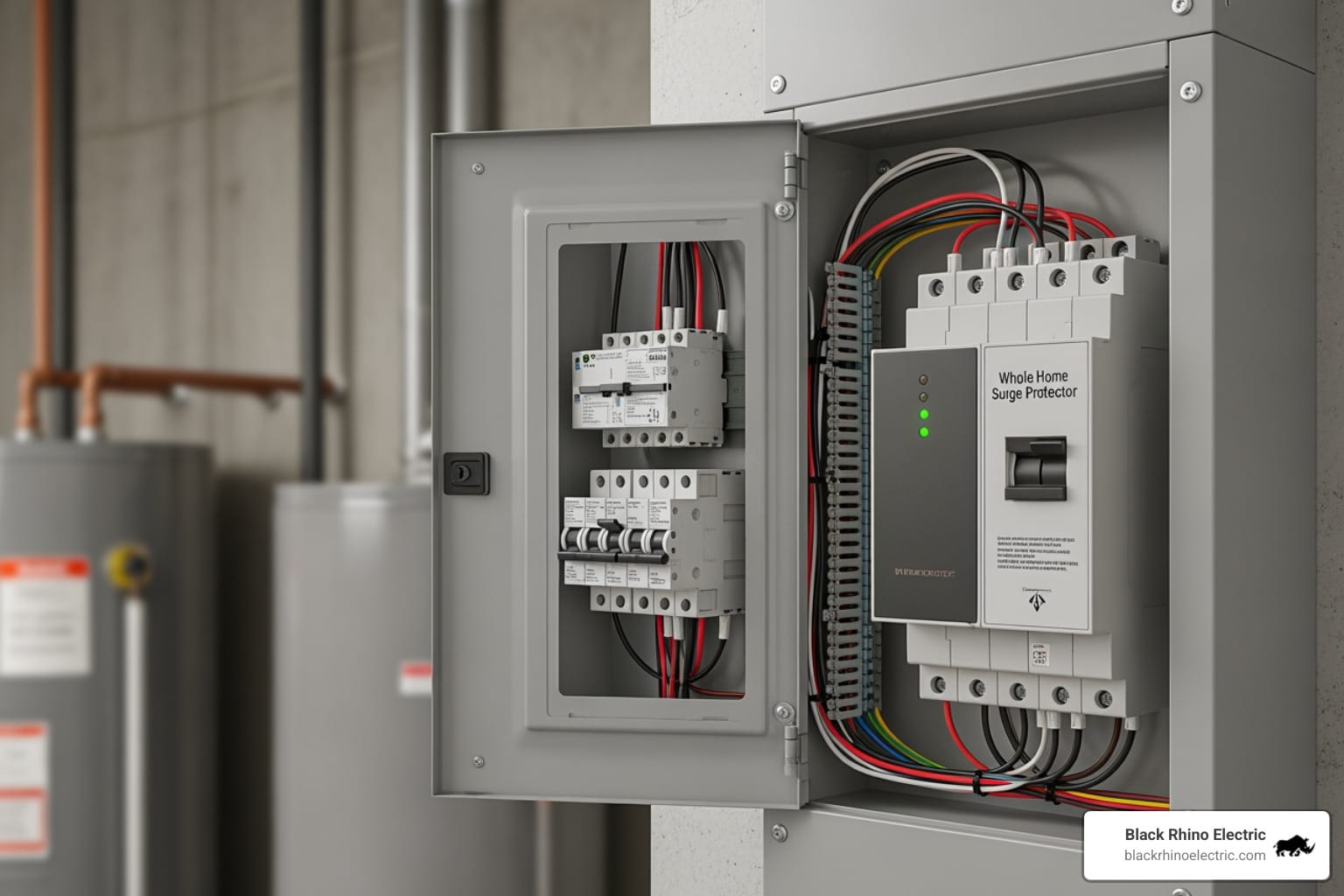
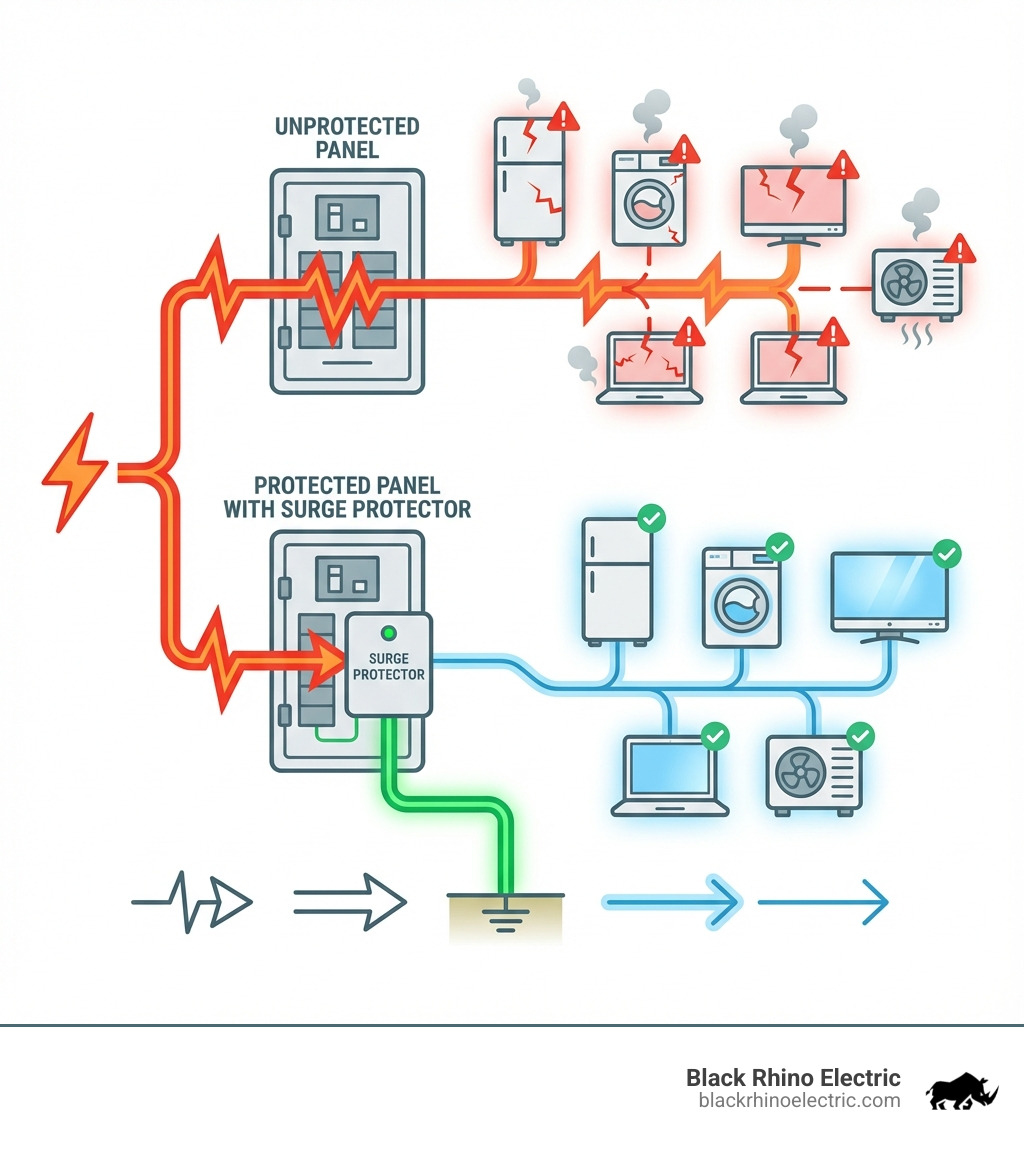
A home panel surge protector, also known as a whole-home surge protector or Type 2 SPD, is a device installed at your main electrical panel. It shields your entire home from dangerous voltage spikes, protecting everything from your refrigerator to your laptop. Unlike power strips that only protect devices plugged into them, this device safeguards all your circuits.
Here’s a quick overview:
- Function: Diverts excess voltage to the ground before it reaches your appliances.
- Protection: Covers hard-wired appliances like HVAC systems, water heaters, and EV chargers.
- Cost: An investment of $200-$700 (including installation) that can prevent thousands in damage.
- Key Fact: Up to 80% of power surges originate inside your home from appliances cycling on and off. For more background on how surges behave in modern electrical systems, you can also see the overview of power surges and surge protection principles.
Why Your Home’s Electronics Are Under Constant Threat
You know what? Most people think power surges only happen during lightning storms, but the truth is far more concerning. Your home experiences dozens of small voltage spikes every week, often from inside your house when your AC unit kicks on or your refrigerator compressor starts. Each tiny surge chips away at the delicate electronics in your appliances, shortening their lifespan in what experts call “death by a thousand cuts.”
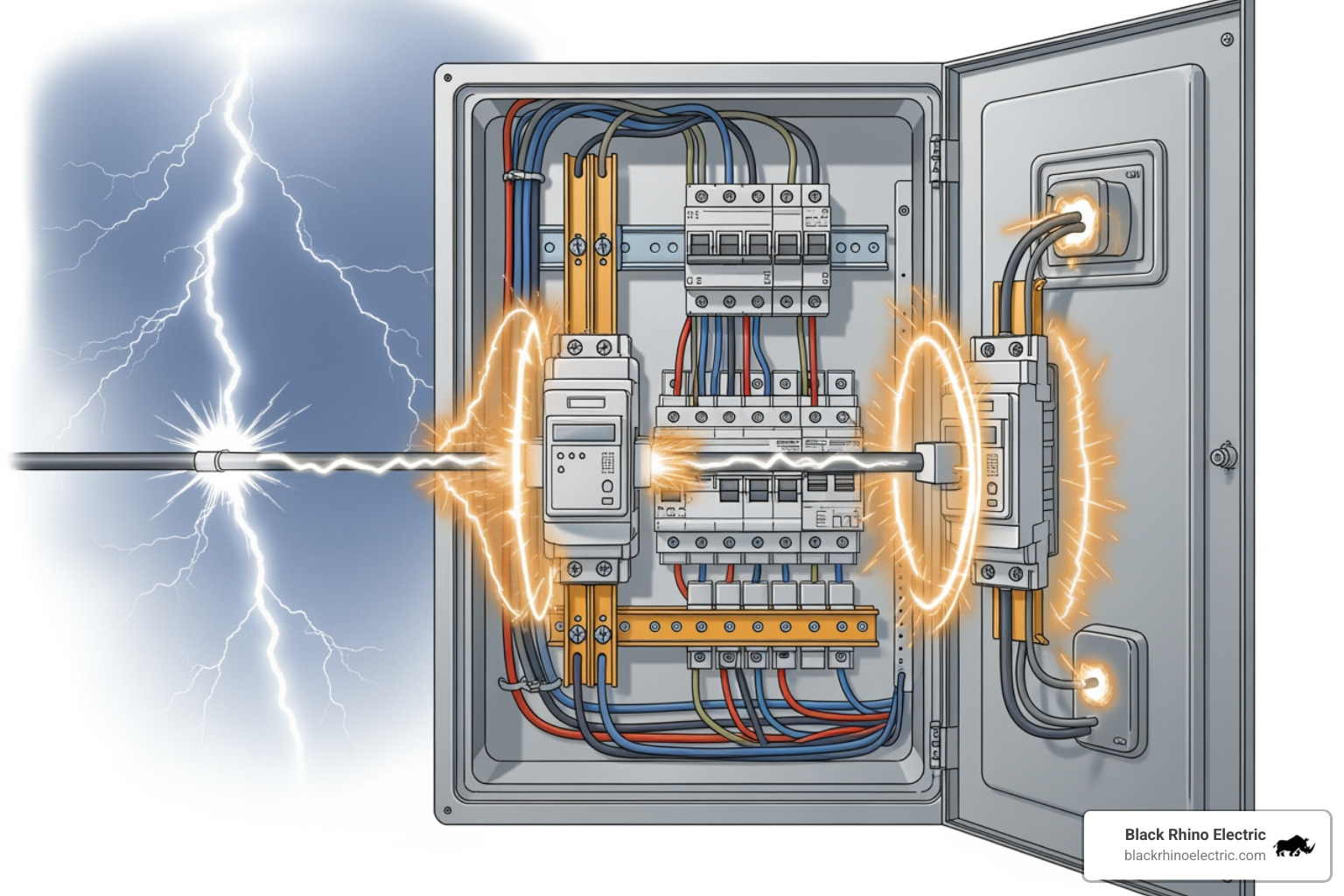
Then there are the big events: lightning strikes, utility grid switching, or a transformer failure down the street. These can send a massive voltage spike racing toward your home, potentially destroying everything in its path. Modern appliances are packed with sensitive microprocessors—your smart refrigerator, HVAC system, and EV charger are all vulnerable. A standard power strip only protects what’s plugged into it and is no match for a catastrophic surge. That’s where a whole-home surge protector changes everything.
The Ultimate Shield for Your Home’s Electronics
A whole-home surge protector, or Type 2 Surge Protective Device (SPD), is installed at your electrical panel. Unlike a power strip, it acts as a gatekeeper for your entire home, providing a comprehensive safety net.
How a Home Panel Surge Protector Works
Imagine a power surge as a sudden flood of voltage on your home’s electrical highway. Your home panel surge protector is the emergency off-ramp. It constantly monitors voltage levels. When it detects a spike, it acts in nanoseconds, diverting the excess current safely into your home’s grounding system before it can damage your electronics.
This is accomplished using Metal Oxide Varistors (MOVs), which channel the surge away from your circuits. While power strips (Type 3 SPDs) offer some protection, they are only designed for small, localized surges and only protect what’s plugged into them. They are no match for a major event like a lightning strike. A whole-home protector defends against both large external surges and the smaller, more frequent internal surges that degrade electronics over time. According to industry guidance from NEMA, a significant share of everyday surges actually originate inside the home as motors and compressors switch on and off.
Given the complexity and risk, this is a job for a professional. Why You Should Always Hire a Licensed Electrician is a must-read before considering any DIY electrical work.
Beyond Electronics: Key Benefits of a Whole-Home Surge Protector
Honestly, the peace of mind is one of the biggest perks. You’re not just protecting a TV; you’re safeguarding expensive, hard-wired systems that power strips can’t reach.
Here are the key benefits:
- Complete Home Coverage: A single device at your panel protects every circuit and outlet in your house.
- Hardwired Appliance Protection: It safeguards your refrigerator, washer, dryer, HVAC system, and even your EV charger in Ogden. These items contain vulnerable circuit boards that power strips can’t protect.
- Smart Home Security: Your smart thermostats, lighting, and security cameras rely on sensitive microprocessors. A whole-home protector keeps them safe from surges.
- Increased Home Safety: By diverting dangerous voltage, a surge protector significantly reduces the risk of electrical fires.
- Cost-Effectiveness: A one-time investment of $200 to $700 (including installation) can prevent thousands in replacement costs for fried appliances and electronics.
Choosing and Installing Your Home Panel Surge Protector
Ready to get protected? Choosing the right device and ensuring it’s installed correctly are critical. Here’s the thing: not all surge protectors are created equal, and this is one job you don’t want to leave to chance.
Understanding the Different Types of Surge Protection
Surge protection works best in layers. There are three main types of Surge Protective Devices (SPDs):
- Type 1 SPDs (Service Entrance): Installed on the utility side of your meter to stop massive external surges, like direct lightning, before they enter your home.
- Type 2 SPDs (Main Panel): This is your home panel surge protector. It’s installed at the main panel to protect all circuits from both external and internal surges. This is the most common and effective solution for whole-home protection.
- Type 3 SPDs (Point-of-Use): These are the power strips and outlet adapters you use for individual devices. They handle smaller, localized surges.
For optimal safety, we recommend a layered approach: a Type 2 protector at the panel for broad coverage, supplemented by Type 3 strips for your most sensitive electronics.
| Type of Surge Protector | Installation Location | Primary Protection Against | Best Use Case |
|---|---|---|---|
| Type 1 | Service Entrance (outside) | Very large, external surges (e.g., direct lightning) | High-risk areas or as part of a multi-layered system |
| Type 2 | Main Electrical Panel (inside) | Large external surges and internal surges | Whole-home protection for residential properties |
| Type 3 | Equipment Outlet (power strips) | Small, localized surges | Point-of-use protection for sensitive electronics |
For more on maintaining your home’s electrical health, see our Ultimate Guide to Electrical Maintenance for Homeowners.
Key Factors to Consider When Choosing Your Protector
Choosing the right protector involves more than just price. Here are the crucial factors:
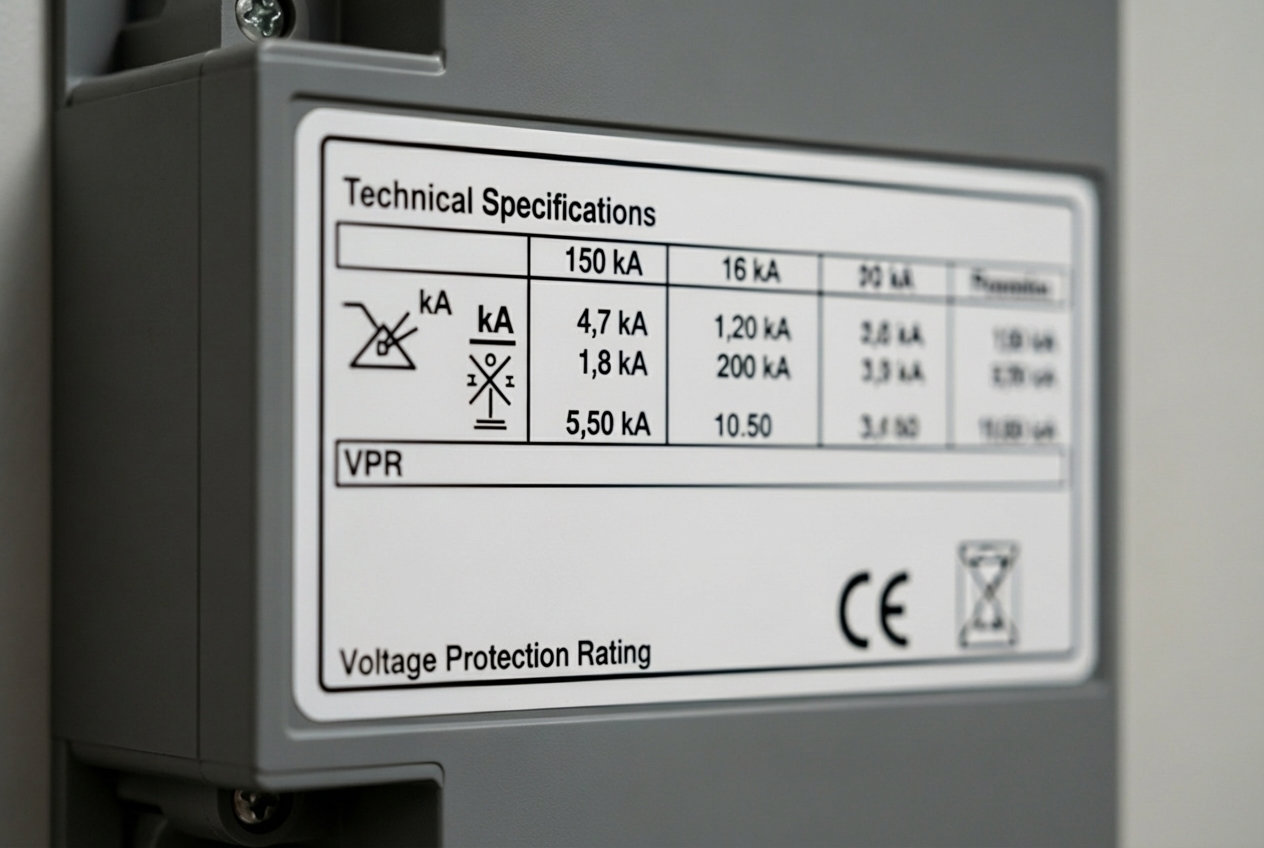
- kA Rating (Surge Current Capacity): Indicates how much surge current the device can divert. A higher rating (e.g., 80kA or 108kA) means better protection and a longer lifespan.
- Voltage Protection Rating (VPR): The maximum voltage that “passes through” during a surge. Lower is better—look for 600 volts or less.
- UL 1449 Certification: This is non-negotiable. It ensures the device meets stringent safety and performance standards. Look for UL 1449 4th Edition.
- NEC Compliance: Ensure the device complies with the National Electrical Code (NEC), such as NEC 230.67, for up-to-date safety.
- Connected Equipment Warranty: Many manufacturers offer warranties that cover damage to your electronics if the protector fails.
- LED Status Indicators: These lights show if the protector is working. If a light goes out, the unit needs replacement.
Our team at Black Rhino Electric can guide you through these options. Learn more about our Breakers & Panels Electrician services.
Installation and Cost: What to Expect
Installing a whole-home surge protector is not a DIY project. It involves working directly with your main electrical panel and high voltage. For safety and code compliance, professional installation by a licensed electrician is required.
- Cost and Time: The typical cost, including the device and professional installation, ranges from $200 to $700. The job usually takes only 1-2 hours.
- Lifespan and Replacement: Most units last 3-5 years, but their lifespan depends on the number of surges they absorb. A single large surge can wear one out instantly. Replace your unit if the indicator lights go out, you see physical damage, or the connected circuit breaker trips frequently.
Secure Your Home’s Electrical Future
Protecting your home from power surges is a crucial step in securing your property. A whole-home surge protector offers a powerful solution, shielding everything from major appliances to sensitive electronics. By investing in a quality device and professional installation, you’re ensuring your home’s electrical system is safe, reliable, and ready for the future.
If you’re in Weber County or the greater Ogden area and ready to safeguard your home, the expert team at Black Rhino Electric can help. Contact us today to learn more about our electrical panel services.