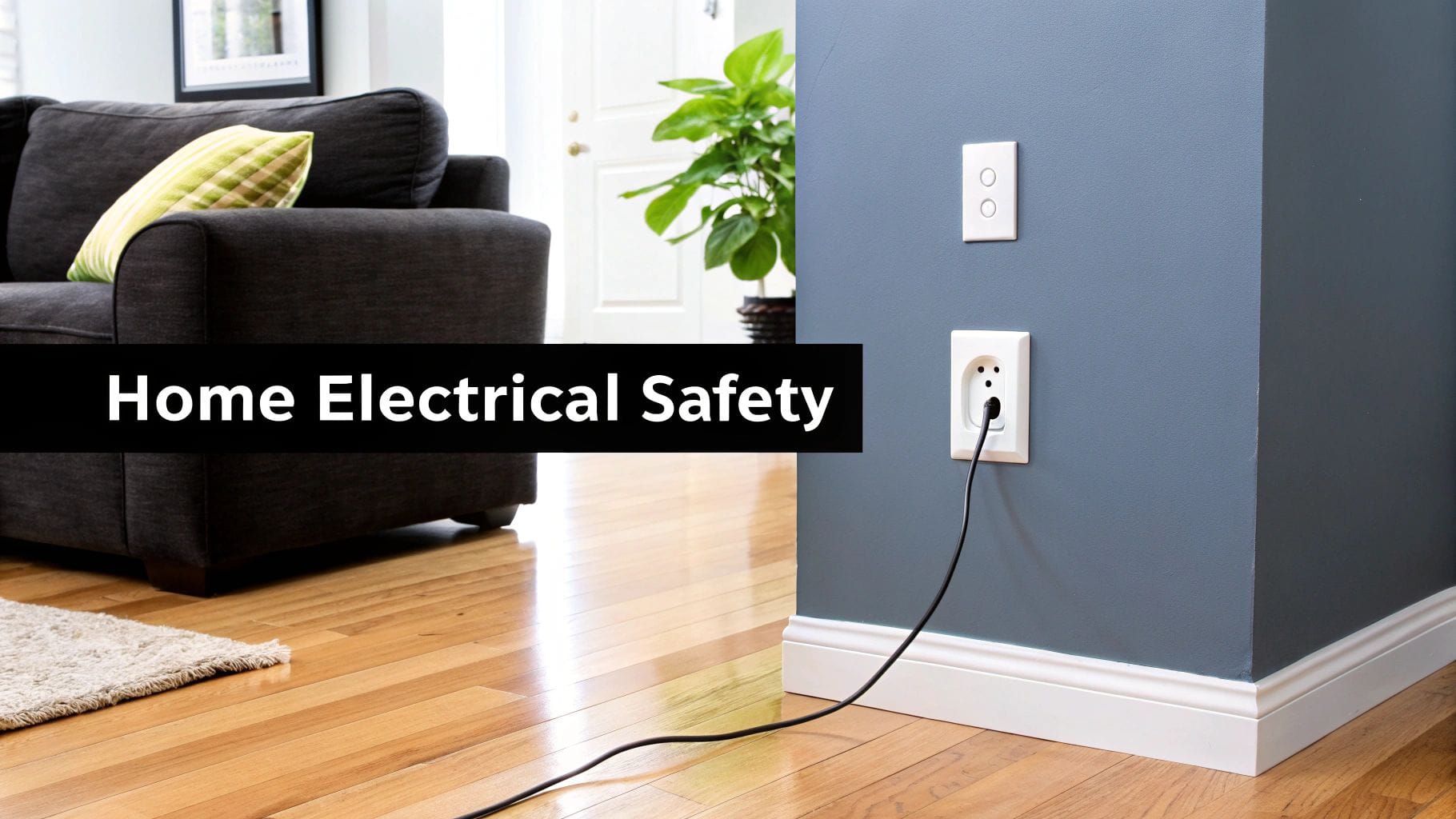
Your home's electrical system works silently in the background, but are you confident it's free from hidden dangers? Understanding and implementing home electrical safety tips is not just about maintenance; it's about proactive protection for your family and your biggest investment. Honestly, many of the most serious risks are invisible until it’s too late.
Flickering lights, frequently tripped breakers, and buzzing outlets are more than minor annoyances. They are clear warnings that your electrical system is under strain and requires immediate attention. Ignoring these signals can lead to catastrophic failures, including electrical fires, appliance damage, and even personal injury. Here's the thing: you don't have to live with that uncertainty. Taking deliberate, informed steps to secure your home’s wiring, outlets, and electrical panel can prevent disasters and ensure your system operates safely and efficiently for years to come.
This comprehensive guide is designed to empower homeowners, property managers, and businesses across Weber, Davis, and Salt Lake counties with actionable knowledge. We’ll move beyond generic advice and provide a detailed checklist covering everything you need to know.
You will learn how to:
- Identify and install critical safety devices like GFCIs and AFCIs.
- Recognize the signs of an overloaded circuit or an outdated panel.
- Implement room-by-room safety protocols for kitchens, bathrooms, and garages.
- Safely manage high-demand appliances, from hot tubs to Level 2 EV chargers.
This isn't just a list; it's a practical roadmap to a safer home. Let’s get started.
Contents
- 1 1. Install and Maintain GFCI and AFCI Protection
- 2 2. Conduct Regular Electrical Inspections
- 3 3. Use Surge Protectors and Whole-Home Surge Protection
- 4 4. Properly Ground and Bond Your Electrical System
- 5 5. Avoid Overloading Circuits and Outlets
- 6 6. Address Outdated Wiring and Panel Systems
- 7 7. Install Proper Lighting and Use Correct Bulb Wattages
- 8 8. Maintain Clear Access to Electrical Panels and Breakers
- 9 9. Properly Ground and Install EV Chargers
- 10 10. Test and Replace Damaged or Outdated Outlets and Switches
- 11 10-Point Home Electrical Safety Comparison
- 12 Your Next Step Towards a Safer Home
1. Install and Maintain GFCI and AFCI Protection
Among the most critical modern upgrades for home electrical safety are two specific types of protective devices: Ground Fault Circuit Interrupters (GFCIs) and Arc Fault Circuit Interrupters (AFCIs). While they sound similar, they serve distinct, life-saving functions that address different electrical hazards. Understanding their roles is a key part of any effective list of home electrical safety tips.
A GFCI is designed to protect you from severe electric shock. It constantly monitors the flow of electricity in a circuit. If it detects even a tiny imbalance, like when current travels through a person to the ground, it shuts off power in a fraction of a second. This rapid response is crucial in preventing electrocution.
An AFCI, on the other hand, is your first line of defense against electrical fires. It is engineered to detect dangerous arcing conditions, which are sparks that can occur from damaged, overheated, or stressed wiring. By shutting down the circuit when it senses these arcs, an AFCI can prevent a fire from ever starting.
Where and Why You Need Them
The National Electrical Code (NEC) mandates these devices in specific areas of the home for good reason. Here’s the thing: their placement is directly related to the risk level in each room.
- GFCI Protection: Required in areas where water and electricity are in close proximity. This includes all outlets in bathrooms, kitchens (especially countertops), garages, unfinished basements, laundry areas, and all outdoor receptacles.
- AFCI Protection: Required for circuits supplying outlets and devices in most habitable living spaces. This typically covers bedrooms, living rooms, dining rooms, hallways, and closets. A frayed lamp cord behind a bed or a damaged wire inside a wall are prime examples of hazards an AFCI can mitigate.
Actionable Maintenance and Installation Tips
Proper installation and regular maintenance are essential for ensuring these devices work when you need them most.
- Test Monthly: Both GFCI outlets and AFCI breakers have "Test" and "Reset" buttons. Press the "Test" button each month to ensure it trips the circuit, then press "Reset" to restore power. If it fails the test, it must be replaced immediately.
- Professional Installation: While replacing a GFCI outlet can be a DIY task for those with experience, installing AFCI protection typically involves work inside your main electrical panel. This is a job best left to a licensed electrician from a trusted company like Black Rhino Electric.
- Consider Upgrades: If you live in an older home, consider retrofitting circuits with AFCI and GFCI protection during any remodel. You can install dual-function breakers that provide both arc-fault and ground-fault protection in a single device, offering comprehensive safety.
2. Conduct Regular Electrical Inspections
Just as you schedule regular check-ups for your health or your vehicle, your home’s electrical system requires professional oversight to ensure it’s operating safely and efficiently. A professional electrical inspection is a comprehensive evaluation performed by a licensed electrician to identify hidden hazards, code violations, and outdated components. This proactive step is one of the most impactful home electrical safety tips for preventing fires and electrical shocks.
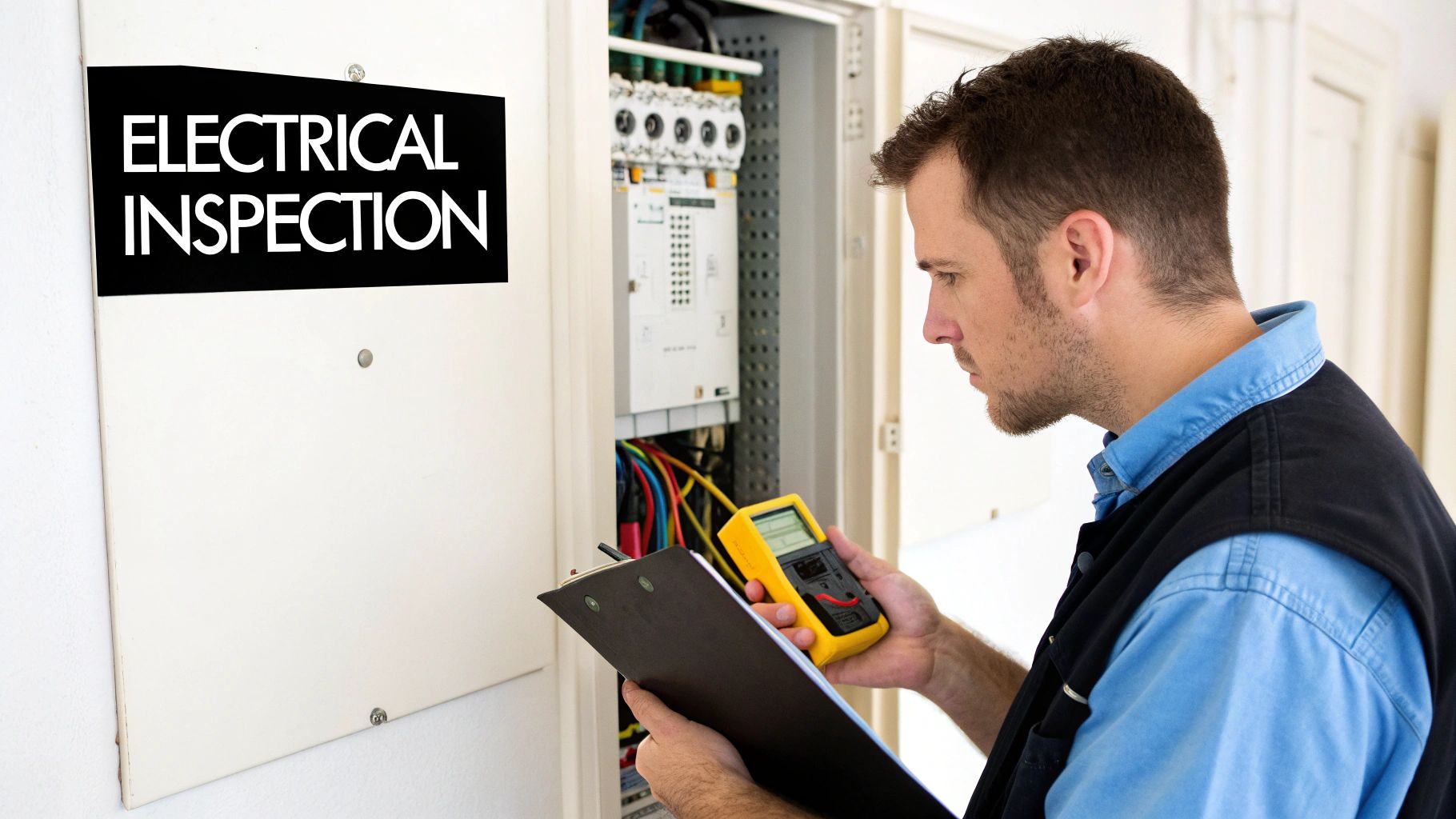
An inspection involves a thorough check of your entire system, from the service drop and electrical panel to individual outlets, switches, and wiring. Let me explain: the electrician looks for issues like overloaded circuits, degraded aluminum wiring common in older homes, missing GFCI protection, and improper grounding. The goal is to catch these problems before they escalate into dangerous situations, giving you a clear roadmap for necessary repairs or upgrades.
When and Why You Need Them
Scheduling an inspection isn't just for troubleshooting; it's a critical part of responsible homeownership. Here’s the thing: certain milestones and warning signs should always trigger a call for a professional evaluation.
- Before Buying a Home: An inspection reveals the true state of the electrical system, preventing you from inheriting costly and dangerous problems. A pre-purchase inspection that uncovers missing GFCI outlets, for example, allows you to negotiate repairs before closing.
- For Older Homes (25+ Years): Homes built decades ago were not designed for modern electrical loads. An inspection can identify outdated systems, such as knob-and-tube or old aluminum wiring, that pose a significant fire risk.
- During Major Renovations: Before you start a major remodel, an inspection ensures your current system can handle the new electrical demands of an updated kitchen or a home office.
- After Major Storms or Flooding: Water damage and power surges can compromise your electrical system’s integrity, making an inspection essential for safety.
Actionable Inspection and Maintenance Tips
Staying on top of your electrical system’s health is straightforward with a planned approach. Use these tips to integrate inspections into your home maintenance routine.
- Schedule Proactively: Don’t wait for a problem. Plan for a comprehensive electrical inspection every 3-5 years to catch developing issues early.
- Hire a Qualified Professional: Always use a licensed and insured electrician for your inspection. The team at Black Rhino Electric has the expertise to conduct thorough evaluations that adhere to the National Electrical Code (NEC).
- Keep Detailed Records: File every inspection report with your important home documents. This history is invaluable for future maintenance, insurance claims, and can increase your home's resale value.
- Verify Post-Work Compliance: After any significant electrical work is completed, have a final inspection performed to confirm everything was done correctly and is up to current code standards.
3. Use Surge Protectors and Whole-Home Surge Protection
Beyond immediate shock and fire hazards, a significant threat to your home's electronics comes from power surges. These sudden, brief spikes in voltage can be caused by anything from lightning strikes and utility grid switching to the cycling of large appliances inside your own home. Implementing surge protection is one of the most vital home electrical safety tips for safeguarding your valuable devices and appliances from costly damage.
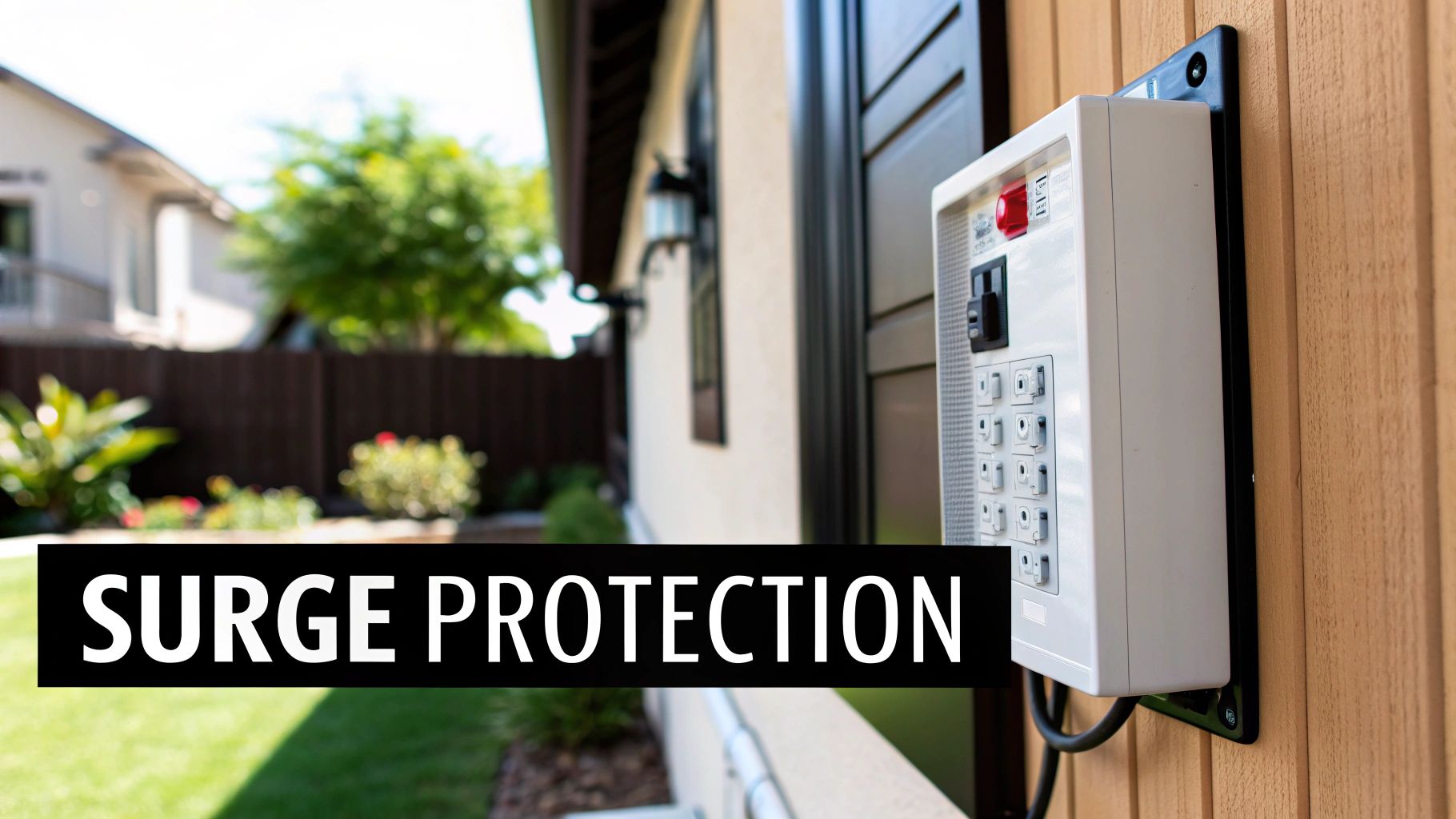
A point-of-use surge protector (often a power strip) is designed to protect specific electronics plugged directly into it. A whole-home surge protector, installed at your main electrical panel, provides a robust first line of defense for your entire electrical system, shielding everything from your HVAC unit to your smart home hubs.
Where and Why You Need Them
A layered approach using both types of surge protection offers the most comprehensive coverage. Here’s the thing: a powerful external surge can overwhelm a simple power strip, which is why a whole-home unit is so crucial.
- Whole-Home Surge Protection: This device is your home's main guard. It protects major appliances like refrigerators, dishwashers, and HVAC systems, as well as sensitive smart home technology that is hardwired into your home. A single lightning strike nearby could otherwise cause thousands of dollars in damage.
- Point-of-Use Surge Protectors: These are essential for sensitive and expensive electronics. Use them for your home entertainment system, computers, home office equipment, and charging stations. They protect against smaller, internal surges and provide a second layer of defense against larger external ones.
Actionable Maintenance and Installation Tips
Proper selection and maintenance are key to ensuring your surge protectors are ready to perform when a voltage spike occurs.
- Professional Installation: Installing a whole-home surge protector involves working directly in your main electrical panel. This is a complex and potentially dangerous task that should only be performed by a qualified and licensed electrician from a trusted company like Black Rhino Electric.
- Check Indicator Lights: Most surge protectors, like those from Belkin or Tripp Lite, have an indicator light that shows they are actively protecting your devices. If this light is off or flickering, the unit has likely sacrificed itself during a surge and needs to be replaced.
- Replace Regularly: The protective components inside point-of-use surge protectors wear out over time and after deflecting power surges. Plan to replace them every 3-5 years, or immediately after a major electrical event like a lightning strike.
- Avoid Daisy-Chaining: Never plug one power strip or surge protector into another. This practice, known as daisy-chaining, can overload the circuit, creating a serious fire hazard.
4. Properly Ground and Bond Your Electrical System
While devices like GFCIs and AFCIs act as your immediate responders, a properly grounded and bonded system is the fundamental framework that makes all other electrical safety measures possible. These two related concepts work behind the scenes to provide a safe path for stray electricity, protecting both your family and your property. Understanding their role is a foundational part of our list of home electrical safety tips.
Grounding connects your home's entire electrical system to the earth, usually through a metal ground rod driven into the soil. This gives dangerous fault currents, like those from a lightning strike or a major short circuit, a safe and direct path to dissipate harmlessly into the ground instead of through your home's structure or appliances.
Bonding, on the other hand, is the practice of connecting all the non-current-carrying metal parts of your electrical system together. This includes metal pipes, appliance frames, and outlet boxes. This ensures that if a live wire accidentally touches one of these components, they all stay at the same electrical potential, preventing you from becoming the path to ground and receiving a severe shock.
Why Grounding and Bonding Matter
Proper grounding and bonding are non-negotiable requirements of the National Electrical Code (NEC) because they address life-threatening hazards. Here’s the thing: without them, your home is vulnerable to risks you might not even consider.
- Shock Prevention: Bonding ensures that if you touch a metal appliance frame and a metal faucet simultaneously during a fault, you won't get electrocuted because there's no difference in electrical potential between them.
- Lightning Protection: A solid grounding system safely directs the immense energy from a lightning strike into the earth, preventing it from surging through your home's wiring and destroying electronics or starting a fire.
- System Stability: Grounding helps stabilize voltage levels and provides a reference point for all the protective devices on your circuits, allowing them to function correctly and trip when they're supposed to.
Actionable Maintenance and Verification Tips
Because this system is largely hidden, its integrity must be professionally verified. It's not a DIY-friendly aspect of your electrical system.
- Professional Inspection: During any comprehensive electrical inspection, ask the electrician to specifically verify the integrity of your grounding and bonding systems. This includes checking the connection to the ground rod and ensuring all required metal components are bonded.
- Never Bypass Grounding: The third prong on a plug is the grounding connection. Never remove it or use a "cheater" adapter to fit a three-prong plug into a two-prong outlet. This action completely defeats a critical safety feature.
- Verify During Upgrades: When adding new circuits for an EV charger, hot tub, or major appliance, a licensed electrician from a trusted company like Black Rhino Electric will ensure the new installation is properly grounded and bonded according to current codes.
- Check Metal Piping: Ensure that all metal water and gas piping systems are correctly bonded to your main electrical service panel. This is a common oversight in older homes that have undergone plumbing repairs.
5. Avoid Overloading Circuits and Outlets
One of the most common yet dangerous electrical mistakes is overloading a circuit. This happens when you draw more electrical current through a circuit than it is designed to handle, leading to tripped breakers, overheating wires, and a significant risk of fire. Understanding and managing your home's electrical load is a fundamental part of our list of home electrical safety tips.
A circuit overload is essentially asking a wire to do more work than it's built for. Think of it like a small garden hose trying to carry the same amount of water as a fire hose; the pressure builds until something gives. In your home, that "give" is either a tripped breaker (the safe outcome) or dangerously hot wires that can melt their insulation and ignite surrounding materials.
Where and Why Overloads Occur
Overloads are most common in areas where multiple high-power appliances are used, often simultaneously. Here’s the thing: many homeowners don’t realize which outlets share the same circuit until the power cuts out.
- Kitchens: This is a prime location for overloads. Running a microwave, a coffee maker, and a toaster oven at the same time on a single 15-amp circuit is a classic recipe for a tripped breaker.
- Home Offices: A modern home office with a powerful computer, multiple monitors, printers, and chargers can easily overwhelm a standard bedroom circuit that was never intended for that kind of load.
- Bathrooms: Using a high-wattage hair dryer and a space heater on the same outlet is a common cause of overloads and a serious fire hazard, especially with extension cords.
Actionable Tips to Prevent Overloads
Preventing overloads is about smart electricity usage and ensuring your system is robust enough for your needs.
- Map Your Circuits: Take some time to figure out which outlets and lights are connected to each breaker in your panel. This knowledge helps you distribute high-wattage appliances across different circuits.
- Calculate Your Load: A circuit should not exceed 80% of its rated capacity for continuous use. This means a 15-amp circuit can safely handle 12 amps, and a 20-amp circuit can handle 16 amps. Add up the amperage of devices you plan to use simultaneously.
- Install Dedicated Circuits: High-draw appliances like refrigerators, freezers, microwaves, and window air conditioners should have their own dedicated circuits. This prevents them from competing for power and is often required by code.
- Listen to Your Breakers: If a breaker trips frequently, don't just keep resetting it. This is a clear warning sign. Contact a professional from a trusted company like Black Rhino Electric to diagnose the issue and determine if a circuit upgrade is needed.
6. Address Outdated Wiring and Panel Systems
The wiring and electrical panel are the backbone of your home’s electrical system, yet they are often hidden and forgotten. However, if your home is more than a few decades old, these components may no longer meet modern safety standards or power demands, making an upgrade one of the most impactful home electrical safety tips you can follow. Outdated systems like knob-and-tube wiring, aluminum wiring, and certain infamous brands of breaker panels pose significant fire hazards.
Aluminum wiring, common in homes built from the mid-1960s to the early 1970s, expands and contracts more than copper, which can lead to loose connections, overheating, and fire. Knob-and-tube wiring, found in homes built before 1950, lacks a ground wire, making it incompatible with modern three-prong appliances and increasing shock risk. Similarly, older electrical panels, especially those from Federal Pacific Electric (FPE), are known for failing to trip during an overcurrent event, creating a dangerous situation.
When and Why an Upgrade is Non-Negotiable
Knowing the signs of an outdated system is crucial. Here’s the thing: ignoring them can have severe consequences, from appliance damage to a devastating house fire. An upgrade is often not just a recommendation but a necessity.
- Age of Home: If your home is over 40 years old and has its original wiring or panel, a professional inspection is critical to assess its condition and safety.
- Performance Issues: Frequent breaker trips, flickering lights, discolored outlets, or a burning smell from your panel are clear indicators that the system is overloaded or failing.
- Insurance and Code Compliance: Many insurance companies will not cover homes with certain outdated systems or may charge higher premiums. Upgrading ensures your home is safe and compliant with the current National Electrical Code (NEC).
- Modern Power Needs: An older 60-amp or 100-amp panel may not have the capacity for modern life, including high-draw kitchen appliances, home offices, and especially EV chargers.
Actionable Inspection and Upgrade Tips
Addressing outdated electrical infrastructure is a significant project, but it’s a vital investment in your family's safety and your home’s functionality.
- Schedule a Professional Inspection: Have a licensed electrician from a trusted company like Black Rhino Electric inspect your home for aluminum or knob-and-tube wiring and check the brand and condition of your electrical panel.
- Plan for the Future: When upgrading your panel, consider your future electrical needs. Upgrading to a 200-amp service provides ample capacity for additions, smart home technology, or a new hot tub.
- Prioritize Safety: If a full rewiring isn't immediately feasible, start with a panel upgrade. Replacing a known hazardous panel is a top priority. You can learn more about this crucial service by exploring our breaker and panel solutions.
- Get Detailed Estimates: Ensure any quote you receive clearly specifies the type of panel, the quality of the breakers being installed, and a full breakdown of labor costs. This protects you and guarantees a high-quality installation.
7. Install Proper Lighting and Use Correct Bulb Wattages
A surprisingly common yet overlooked electrical hazard involves the light fixtures and bulbs we use every day. Installing a light bulb with a wattage that is too high for its fixture can lead to dangerous overheating, melting wires, and ultimately, a fire. Understanding fixture limitations and making smart bulb choices is a fundamental part of our list of home electrical safety tips.
A light fixture's maximum wattage rating is a safety limit, not a suggestion. This rating, usually found on a sticker inside the fixture, indicates the highest wattage bulb it can safely handle without creating excessive heat. When you use a higher-wattage bulb, especially an old incandescent one, it generates more heat than the fixture’s wiring and components are designed for.
Modern LED bulbs have completely changed the game. They produce the same amount of light (lumens) as traditional bulbs but use a fraction of the power (watts) and generate significantly less heat. This makes them a much safer and more energy-efficient option for nearly any application.
Where and Why You Need to Pay Attention
Proper lighting selection is critical throughout your home, but some areas demand special attention due to environmental factors or fixture design. Let me explain: placement and fixture type are directly tied to fire and shock prevention.
- Enclosed and Recessed Fixtures: Lights in ceilings or enclosed spaces (like some vanity lights) trap heat. Using a 100W incandescent bulb in a fixture rated for 65W is a classic fire hazard. Switching to a low-wattage, enclosed-rated LED bulb eliminates this risk entirely.
- Damp and Wet Locations: Bathrooms, patios, and outdoor areas require fixtures specifically rated for these environments. A "wet-location rated" fixture is sealed to prevent moisture from reaching the electrical components, protecting against short circuits and shock.
Actionable Maintenance and Installation Tips
Ensuring your lighting is safe involves more than just screwing in a bulb. It requires a mindful approach to selection and installation.
- Always Check the Rating: Before installing any bulb, find and respect the maximum wattage rating on the fixture. Never exceed it.
- Upgrade to LEDs: Systematically replace old incandescent and CFL bulbs with energy-efficient LEDs. This simple swap reduces heat, lowers your energy bill, and improves overall safety. For example, replacing 20 old 60W bulbs with 10W LED equivalents can save over $200 a year.
- Use the Right Fixture for the Job: Install fixtures certified for their specific location. Use "wet-location" ratings for exposed outdoor areas and "damp-location" or "enclosed-rated" fixtures for bathrooms and covered porches.
- Ensure Dimmer Compatibility: If you want to dim your lights, make sure your LED bulbs are labeled "dimmable" and that you install a compatible LED dimmer switch. Using an old dimmer with LEDs can cause flickering and damage. For complex setups like smart home integration, expert guidance is key. If you need help with a safe and effective lighting plan, a professional lighting electrician from Black Rhino Electric can provide the right solutions.
8. Maintain Clear Access to Electrical Panels and Breakers
In an emergency, every second counts. Your electrical panel, or breaker box, is the central nervous system of your home's wiring. Knowing where it is and being able to access it instantly is not just a matter of convenience; it is a fundamental part of our list of home electrical safety tips that directly impacts your family's well-being.
An electrical panel houses the circuit breakers that protect your home from overloads and short circuits. If you need to shut off power due to a fire, a sparking appliance, or to help someone receiving an electric shock, you must be able to get to this panel without delay. Unfortunately, they are often located in out-of-the-way places like garages, basements, or laundry rooms, making them prime spots for clutter.
A blocked panel is a serious violation of safety codes and common sense. It prevents quick emergency shutoffs, makes routine maintenance difficult and dangerous for technicians, and can even create a fire hazard if flammable materials are stored too close to it.
Where and Why Clearance is Non-Negotiable
The National Electrical Code (NEC) is very clear about the space required around your electrical panel. This isn't a suggestion; it's a mandatory safety requirement enforced by local inspectors in Utah for a critical reason: to ensure a safe working space.
- Basement Panel: A panel hidden behind stacks of storage boxes and old furniture is a classic hazard. In an emergency, you don't have time to move a mountain of clutter to shut off the power.
- Garage Panel: Many homeowners install workbenches, shelves, or cabinets directly in front of their panel. This forces an electrician to work in a cramped, unsafe position and makes it impossible for you to act quickly.
- Laundry Room Panel: It's common to see a panel tucked behind a washing machine or dryer. These large appliances make access nearly impossible and introduce moisture into an area that should remain dry.
Actionable Tips for Panel Accessibility
Ensuring your panel is always accessible is a simple but crucial task. A quick audit and a few organizational changes can make all the difference.
- Maintain the Zone: Keep a space that is at least 3 feet deep and 30 inches wide directly in front of your panel completely clear at all times. Use floor tape to mark this "keep clear" zone if needed.
- Label Everything: Take the time to clearly and accurately label each breaker. This eliminates guesswork during an emergency and helps you identify which circuit controls what part of your home.
- Educate Your Household: Show every responsible member of your household where the main breaker is located and how to turn it off. This simple lesson could be life-saving.
- Improve Lighting: Panels are often in dark corners. Install a dedicated light source, like a battery-powered LED or a motion-sensor light, so you can see what you are doing.
9. Properly Ground and Install EV Chargers
The surge in electric vehicle (EV) ownership brings a powerful new appliance into the home: the Level 2 charger. While incredibly convenient, these chargers draw a significant amount of electricity, making proper installation a non-negotiable part of any list of home electrical safety tips. Unlike a standard appliance you just plug in, an EV charger requires a dedicated, high-amperage circuit that must be installed with precision to prevent serious hazards.
A Level 2 EV charger installation involves much more than connecting a few wires. It requires a dedicated circuit run directly from your main electrical panel, appropriately sized wiring to handle the high, continuous load, and specific safety devices like GFCI protection. A faulty installation can lead to overheating wires, a significant fire risk, damage to your vehicle's charging system, and potential voiding of your charger's warranty.
Proper grounding is especially critical. It ensures that any stray electrical current is safely directed away, protecting both you and your expensive vehicle from electrical faults. Let me explain: without a solid ground path, a short circuit could energize the charger's metal casing or even your car's chassis, creating a severe shock hazard.
Where and Why You Need It
Professional installation is not just a recommendation; it's a requirement for safety, performance, and code compliance. An amateur or DIY installation often overlooks crucial details that a licensed electrician is trained to handle.
- Dedicated Circuit: A Level 2 charger needs its own circuit to prevent overloading your home's existing wiring. For example, a Tesla Wall Connector often requires a dedicated 40-amp or 60-amp circuit.
- Panel Capacity: Your home's main electrical panel must have enough capacity to support the charger. An electrician performs a "load calculation" to verify this. A new EV owner in Salt Lake County, for instance, might need a panel upgrade to 200 amps to safely accommodate the new load.
- Code Compliance: The National Electrical Code (NEC) has a specific section, Article 625, that governs EV charger installations. Local municipalities in Davis, Weber, and Salt Lake counties also have specific codes that must be followed to ensure the installation is safe and will pass inspection.
Actionable Maintenance and Installation Tips
Ensuring your EV charger is safe from day one comes down to professional installation and awareness.
- Hire a Licensed Electrician: This is the most important tip. Never attempt to install a Level 2 charger yourself. A professional will ensure the wire gauge, breaker size, and grounding are all correct. You can learn more about safe and compliant EV charger installation here.
- Verify GFCI Protection: Depending on the location (especially in a garage or outdoors), your charger's circuit will require GFCI protection to prevent shock. An electrician will install the correct type of breaker for this.
- Get a Written Estimate: Before work begins, request a complete written estimate that includes any necessary panel work, permits, and inspection fees.
- Plan for Outdoor Installations: If your charger will be outside, ensure the plan includes proper grounding, bonding, and the use of weatherproof enclosures and wiring methods to protect it from the elements.
10. Test and Replace Damaged or Outdated Outlets and Switches
The outlets and switches you use every day are among the most common points of failure in a home's electrical system. Over time, these components can wear out, become damaged, or simply be too outdated to handle modern electrical loads safely. Addressing these issues is a fundamental part of our list of home electrical safety tips.
A faulty outlet can pose a significant fire risk due to loose internal connections that cause arcing, which generates intense heat. This is precisely the kind of hidden danger that can ignite nearby materials like insulation or drywall. Think about it: an outlet that feels warm to the touch isn't just an inconvenience, it's a clear warning sign.
A worn switch, on the other hand, might fail to make a clean connection, causing lights to flicker or requiring you to jiggle it to work. Beyond being annoying, this indicates internal wear that can lead to overheating and failure. These components are your direct interface with your electrical system, and their integrity is non-negotiable for safety.
Common Issues and Why They Matter
Recognizing the signs of a failing outlet or switch is key to preventing a potential disaster. Here’s the thing: these small devices are responsible for managing powerful electrical currents, and even minor flaws can have major consequences.
- Loose Connections: Does a plug feel loose when inserted into an outlet? This poor connection can cause dangerous arcing and heat buildup every time you use it. Replacing the outlet restores a secure connection, eliminating the fire hazard.
- Outdated Two-Prong Outlets: Older, ungrounded outlets lack a crucial safety feature that protects you and your electronics from electrical faults. Upgrading to a modern, three-prong grounded outlet is essential, especially for appliances in kitchens or home offices.
- Cracked or Broken Covers: A cracked faceplate is more than a cosmetic issue. It can expose live wires and internal components, creating a serious shock hazard for anyone, especially curious children or pets.
Actionable Maintenance and Replacement Tips
Regular inspection and timely replacement of these devices are simple but highly effective safety measures. Don't overlook these critical components of your electrical system.
- Perform a Physical Check: Periodically check outlets and switches. If they are warm to the touch, discolored, or make buzzing or crackling sounds, they need immediate attention.
- Replace Immediately: Any outlet or switch that feels loose, functions intermittently, or shows signs of damage should be replaced without delay.
- Upgrade for Modern Safety: When replacing outlets in homes with children, install tamper-resistant outlets (TRRs). These have internal shutters that prevent objects from being inserted. During an upgrade, consider adding outlets with built-in USB ports for convenience.
- Professional Assessment: While replacing a switch or outlet can be a DIY project for some, diagnosing underlying wiring issues requires expertise. A licensed electrician from a trusted company like Black Rhino Electric can test for proper grounding and ensure your entire circuit is safe.
10-Point Home Electrical Safety Comparison
| Item | Implementation complexity | Resource requirements | Expected outcomes | Ideal use cases | Key advantages |
|---|---|---|---|---|---|
| Install and Maintain GFCI and AFCI Protection | Low–Medium (outlet easy; breaker needs electrician) | Devices $20–$200; electrician for breaker installs | Reduces shock and arc-fire risk; code compliance | Wet locations, bedrooms, panel upgrades, remodels | Prevents electrocution and arc fires; circuit-level protection |
| Conduct Regular Electrical Inspections | Low (scheduling) to Medium (detailed testing) | Inspection fee $150–$300; licensed electrician and test tools | Identifies hazards, code violations, and needed upgrades | Homes >25 yrs, pre-sale, post-remodel, periodic maintenance | Catches hidden issues early; provides documentation for buyers/insurers |
| Use Surge Protectors and Whole-Home Surge Protection | Low for point-of-use; Medium for whole-home install | Point-of-use $20–$100; whole-home $300–$500+ plus electrician | Protects electronics and appliances from voltage spikes | Homes with sensitive electronics, lightning-prone areas, HVAC/EV protection | Reduces device damage; some systems include connected-equipment coverage |
| Properly Ground and Bond Your Electrical System | Medium–High (requires testing and proper connections) | Licensed electrician, grounding rods, test equipment; possible repairs | Safe fault paths; improved device protection and lightning mitigation | Older homes, new panels, areas with poor soil conductivity | Essential for shock protection and correct operation of safety devices |
| Avoid Overloading Circuits and Outlets | Medium (load calculations; may require upgrades) | Electrician time; possible new circuits or rewiring | Fewer trips, reduced fire risk, more reliable performance | Kitchens, home offices, workshops, high-draw appliances | Prevents overheating/fires; improves device reliability |
| Address Outdated Wiring and Panel Systems | High (major rewiring/panel replacement) | Significant cost $3k–$10k+; extended labor and downtime | Dramatically reduced fire risk; capacity for modern loads | Homes with aluminum, knob-and-tube, FPE panels; major remodels | Long-term safety, supports modern devices, improves resale/insurability |
| Install Proper Lighting and Use Correct Bulb Wattages | Low–Medium (bulb swaps easy; fixture changes moderate) | LED bulbs cost; occasional fixture or dimmer replacement | Lower heat/fire risk, energy savings, improved lighting quality | Recessed lights, bathrooms, enclosed fixtures, retrofit projects | Energy-efficient, long-lasting LEDs; reduced overheating risk |
| Maintain Clear Access to Electrical Panels and Breakers | Low (clearance) to Medium (panel relocation) | Time to clear space; relocation costs if moved | Quicker emergency shutoff; safer maintenance; code compliance | Basements, garages, utility rooms with stored items | Ensures safe access during emergencies and repairs; code-required clearance |
| Properly Ground and Install EV Chargers | High (dedicated circuits, panel capacity checks) | Charger + installation $500–$2,000+; possible panel upgrade, conduit/trenching | Safe, reliable Level 2 charging; warranty and code compliance | EV owners, garages, driveways, workplaces | Efficient home charging; preserves warranties; future-proofs home |
| Test and Replace Damaged or Outdated Outlets and Switches | Low–Medium (simple replacements but must be safe) | Parts $2–$15 each; electrician recommended for multiple or grounding fixes | Eliminates arcing/shock hazards; restores proper function | Homes with loose/hot outlets, two-prong ungrounded receptacles, pre-sale fixes | Inexpensive risk reduction; enables modern outlets (USB, tamper-resistant) |
Your Next Step Towards a Safer Home
Navigating the complexities of your home's electrical system can feel like a monumental task, but this comprehensive guide has equipped you with the knowledge to transform that challenge into a series of manageable, actionable steps. We've moved beyond the generic advice, providing you with a detailed roadmap to enhance your home's safety and your family's well-being. From the foundational importance of GFCI and AFCI protection to the nuances of installing a dedicated EV charger, you now have a powerful checklist to protect your property and loved ones.
The core principle weaving through all these home electrical safety tips is proactive awareness. It’s about cultivating a mindset where you actively look for potential hazards rather than waiting for a problem to announce itself. You now know not just what to look for, like flickering lights or buzzing outlets, but why it matters. Honestly, understanding the difference between an overloaded circuit and outdated wiring is the first step toward preventing a small issue from escalating into a catastrophic failure.
From Knowledge to Action: Your Safety Checklist
Let's distill the most critical takeaways into a simple, actionable plan. Think of this as your immediate "to-do" list to transition from reading about safety to actively implementing it.
- Immediate Assessment: Walk through your home with a fresh perspective. Are extension cords being used as permanent solutions? Are any outlets warm to the touch? Is your electrical panel accessible and clearly labeled? This initial walkthrough, armed with the insights from this article, can reveal low-hanging fruit you can address right away.
- Prioritize High-Impact Upgrades: Two areas offer the most significant return on safety: modern circuit protection and addressing outdated systems. If your home lacks comprehensive GFCI and AFCI coverage or still relies on an old fuse box or a problematic brand of breaker panel, these should be at the very top of your priority list.
- Establish a Maintenance Rhythm: Electrical safety isn't a one-and-done project. Here’s the thing, it’s an ongoing commitment. Set a recurring calendar reminder to test your GFCIs, AFCIs, and smoke detectors monthly. Schedule a professional whole-home electrical inspection every three to five years, or sooner if you're purchasing a new home or planning a major renovation.
You know what? Taking control of your home's electrical safety is one of the most empowering things you can do as a homeowner. It shifts your role from a passive occupant to an informed guardian of your space.
Ultimately, mastering these concepts provides more than just a safer house; it delivers invaluable peace of mind. The confidence that comes from knowing your electrical system is sound, your family is protected from shock and fire hazards, and your valuable electronics are shielded from power surges is a profound benefit. For property managers, contractors, and business owners, this diligence protects your investment, ensures compliance, and creates a secure environment for tenants, employees, and customers. Each tip implemented, from using the correct wattage bulb to investing in a whole-home surge protector, is another layer of defense you've built around what matters most. The journey to a truly safe electrical system begins with a single step, and you’ve already taken it by seeking out this knowledge. Now, it's time to put it into practice.
You don't have to figure it all out alone. If you're in Weber, Davis, or Salt Lake counties and feel overwhelmed or simply want a professional eye on your system, the experienced team at Black Rhino Electric is here to help. For peace of mind and to ensure every one of these home electrical safety tips is implemented correctly, give us a call at 385-396-7048 or request a free quote online to schedule your comprehensive electrical inspection today.