

Ever gotten an electrical quote and felt completely lost in the numbers? Using an electrician cost estimator is the first step, but understanding what goes into that final price is key to feeling confident in your decision. Think of a professional estimate less like a random price tag and more like a detailed recipe where every component has a specific cost.
Contents
Decoding Your First Electrical Estimate
Let me explain. Understanding how a professional electrical estimate is built is the first step to becoming an empowered homeowner. It's the difference between blindly accepting a number and confidently knowing exactly what you're paying for. A quick ballpark figure might give you a rough idea, but a formal, itemized bid provides the clarity you need to really evaluate any quote you receive.

The U.S. electricians industry is a massive field, on track to hit an estimated $312.2 billion in revenue in 2025. This growth reflects a huge demand for skilled electrical work across the country. You can see more insights about the electricians market on ibisworld.com. For a local contractor, this means competition is fierce, and the pressure to provide accurate, fair estimates is more intense than ever.
Key Components of an Estimate
So, what should you actually look for in a quote? A trustworthy estimate from a professional electrician will always break down the core costs. This isn't just a single number; it's a transparent look into the project's scope.
Here’s what you’ll typically see itemized:
- Labor Costs: This covers the time and expertise of the licensed electricians doing the work.
- Material Costs: This includes all the physical parts like wires, outlets, breakers, and fixtures.
- Permit Fees: If your local city or county requires it, these fees ensure the work is inspected and meets safety codes.
- Overhead and Miscellaneous: This can cover things like company insurance, travel time, and other operational expenses that keep the lights on.
Honestly, a detailed quote is a sign of a professional and trustworthy contractor. Vague, one-line estimates often hide unforeseen costs or just show a lack of thorough planning. This initial overview gets you ready for a deeper dive, making sure you can confidently navigate your next electrical project.
When you get a quote from an electrician, what are you actually paying for? A good estimate isn't just a single number pulled from thin air. It’s a transparent breakdown that shows you exactly where your money is going.
Think of it like a recipe. Each ingredient has a purpose and a cost, and when you see them all laid out, the final price makes sense. A trustworthy quote respects you as a customer and shows the contractor is confident in the work they’re proposing. Let’s look at the four main ingredients.
The Cost of Labor
First and foremost, you have labor. This isn’t just paying for a person to show up with a toolbelt; it’s compensation for years of apprenticeship, licensing, and hands-on experience that ensures your project is done safely and to code.
The labor rate reflects a few key things:
- The Electrician's Skill Level: A Master Electrician will command a higher rate than an apprentice, and for good reason. Their expertise is critical for complex jobs like a service panel upgrade or whole-home rewiring.
- Job Complexity: Installing a simple ceiling fan takes far less time and specialized knowledge than troubleshooting a tricky power outage that comes and goes. The more complex the work, the more you're paying for a skilled problem-solver.
Qualified labor is a premium and essential component of any quote. It's a major factor in the global electrical market, which is projected to reach about $1.36 trillion in 2025. This massive valuation, paired with a well-documented shortage of skilled tradespeople, means that an experienced electrician's time is a valuable and necessary investment.
Material Costs and Sourcing
Next up are the materials. This pillar covers every physical component needed for your job, from the big-ticket items down to the smallest connectors and screws.
This includes everything from copper wiring, circuit breakers, and electrical panels to outlets, switches, and light fixtures. Honestly, material prices can swing wildly. For instance, the global market price of copper directly impacts the cost of wiring, which is a major part of many electrical jobs.
Permits and Inspection Fees
Here’s the thing about permits and inspection fees: for most significant electrical work, they are non-negotiable. These costs are paid directly to your local Utah city or county, not to the contractor.
Think of permits as your built-in safety assurance. They ensure a third-party inspector verifies that all work meets current electrical codes, protecting your home and family from potential fire hazards or system failures.
This step is the hallmark of a professional, legitimate electrical contractor. Skipping it might save a few dollars upfront, but it creates enormous risks and potential headaches down the line, especially when you sell your home.
Overhead and Operational Costs
Finally, a small portion of your estimate covers the contractor's overhead. This is simply the cost of running a legitimate, insured, and reliable business so we can be there when you need us. It includes essentials like liability insurance, vehicle maintenance, specialized diagnostic tools, and travel time to and from your property. This ensures the company can stand behind its work and be there for you in the future.
Typical Breakdown of Electrical Project Costs
| Cost Component | Typical Percentage of Total Cost | What It Covers |
|---|---|---|
| Labor | 40% – 60% | The electrician's time, expertise, skill, and certification. |
| Materials | 30% – 50% | Wires, breakers, panels, outlets, fixtures, and all physical parts. |
| Permits & Fees | 3% – 8% | City or county fees for official inspection and code compliance. |
| Overhead | 5% – 15% | Insurance, tools, vehicle expenses, and general business costs. |
As you can see, labor and materials make up the bulk of the cost, while permits and overhead ensure the job is done legally, safely, and by a company that stands behind its work.
Hourly Rates vs Flat Rate Pricing
You know what? One of the biggest questions homeowners have is how electricians bill for their work. It's a critical part of any electrician cost estimator, and understanding the difference is key to avoiding surprises. The two main ways are hourly rates and flat-rate pricing. Let’s break them down so you can choose a model that feels fair and transparent.

The Predictability of Flat Rate Pricing
Let me explain. Flat-rate pricing means you agree on a single, fixed price for the entire project before we even pick up a tool. This price wraps up all the labor, materials, and other costs, no matter how many hours the job ultimately takes.
Honestly, this is the model we prefer here at Black Rhino Electric. Why? Because it puts you, the homeowner, in control. There are no surprise costs if a task takes longer than we thought because of something hidden in a wall.
The benefits are clear:
- Cost Certainty: You know the exact total from the get-go, which makes budgeting a whole lot easier.
- Focus on Quality: We’re motivated to work efficiently and get it right the first time, not to stretch out the clock.
- Complete Transparency: The price is based on the value of the finished job, not just the time it takes to get there.
This approach is perfect for bigger, well-defined projects like a panel upgrade or wiring a whole new bathroom. You know the scope, and you know the price. Simple.
When Hourly Rates Make Sense
On the other hand, some electricians charge by the hour plus the cost of materials. This can seem appealing for small, quick fixes or troubleshooting tasks where the scope isn't totally clear. For instance, if you just need someone to figure out why a light is flickering, an hourly rate might seem logical.
But here’s the thing: the major downside is unpredictability. A job that looks simple could uncover a more complex issue, and suddenly the billable hours start climbing. That can create a lot of stress if you’re trying to stick to a budget.
For this reason, hourly billing often leaves customers feeling vulnerable to escalating costs. A project's final price can become a moving target, which is why a clear, upfront flat-rate quote is almost always the safer, more transparent choice for ensuring peace of mind.
Real World Costs for Common Electrical Jobs
Theory and cost drivers are one thing, but what does an actual project look like on an invoice? Let's make this tangible. Here’s a practical electrician cost estimator for five of the most common jobs we tackle across Northern Utah, giving you a solid baseline for budgeting your next project.
These numbers are here to anchor your expectations, showing a typical range for both labor and materials. Of course, every home and project has its own quirks, but this will give you a much clearer picture of what to anticipate.
Upgrading an Electrical Panel to 200 Amps
You know what? This is one of the most important upgrades for any modern home. An old 100-amp panel just can’t keep up with today’s demands, from a high-efficiency HVAC system to an EV charger and an induction stove. It's just not built for it.
Bumping up to a 200-amp service gives your home the electrical muscle and safety it needs. This isn't just a simple swap; it involves replacing the main breaker panel, the heavy-duty service entrance cable, and sometimes the meter base itself. It's a significant job that requires careful planning and coordination with the utility company.
Installing a Level 2 EV Charger
With so many people making the switch to electric vehicles, a dedicated Level 2 charger at home has gone from a luxury to a necessity. It’s worlds faster, safer, and way more convenient than relying on a standard wall outlet.
The project involves running a brand new, dedicated 240-volt circuit from your electrical panel straight to your garage or wherever you park. The final cost often hinges on the distance from the panel and, critically, whether your current panel has enough capacity to handle the extra load. If you're thinking about this upgrade, you can learn more about our professional EV charger installation services to see exactly what the process involves.
Wiring a Bathroom Remodel
Honestly, bathroom remodels have a surprising amount of electrical work hiding behind the new tile and vanity. Modern bathrooms need dedicated circuits for things you might not even think about, like heated floors, jetted tubs, and high-wattage vanity lighting.
Plus, safety is paramount. Any outlet near a water source—sinks, tubs, showers—must have GFCI (Ground Fault Circuit Interrupter) protection. It's a non-negotiable safety code. The scope of the job can be as simple as moving an outlet or as complex as running multiple new circuits to support all those spa-like features.
Installing Recessed Lighting
Recessed lighting, or "can lights" as most people call them, can completely transform a room. It adds bright, modern light without the visual clutter of hanging fixtures. The cost really depends on how many lights you want and the structure of your ceiling.
Here's the thing: If we can get into an open attic right above the room, the installation is much simpler and more affordable. But if an electrician has to fish wires between floors or navigate around complex ceiling joists, the labor—and the cost—will naturally go up.
Hooking Up a Hot Tub
Finally, getting that new hot tub bubbling away requires a dedicated, GFCI-protected 240-volt circuit. This is a job that is strictly for a licensed professional. You're mixing high-power electricity and a giant tub of water; the safety risks are real and demand expertise.
The project involves installing a new breaker in the panel, running heavy-gauge wiring to an outdoor disconnect box near the tub, and then making the final connection to the hot tub itself.
Sample Cost Estimates for Popular Electrical Projects in Northern Utah
| Project Type | Estimated Labor Hours | Typical Material Cost Range | Estimated Total Project Cost Range |
|---|---|---|---|
| Panel Upgrade (to 200A) | 8 – 14 hours | $800 – $1,500 | $2,500 – $4,500+ |
| Level 2 EV Charger | 3 – 6 hours | $500 – $1,200 | $1,000 – $2,500+ |
| Bathroom Remodel Wiring | 4 – 10 hours | $300 – $800 | $800 – $2,000+ |
| Recessed Lighting (4-6) | 4 – 8 hours | $200 – $500 | $700 – $1,500+ |
| Hot Tub Hookup | 4 – 7 hours | $400 – $900 | $900 – $2,000+ |
Remember, these are just starting points. The best way to get a firm price is to have a professional electrician take a look at your specific situation.
How to Get Your Most Accurate Electrical Estimate
Here’s the thing: the quality of your estimate often boils down to the quality of the information you give us. To get the most accurate price, you have to be a partner in the process. A little prep on your end prevents surprises and makes sure the final quote truly reflects the work needed.
An electrician can give a much more precise quote when they have a crystal-clear picture of the project. Vague requests lead to vague estimates with lots of wiggle room, but detailed info lets us build a quote you can actually count on. The more you can share upfront, the better.
Be an Information Super-Provider
Think of yourself as the project manager for a minute. The goal is to knock out as many unknowns as possible before we even pull into your driveway. A little homework goes a long, long way.
Here are a few simple but powerful things you can do:
- Be Incredibly Detailed: Don't just say you need "new lighting." Get specific. Try: "I want six 4-inch recessed LED lights in the living room, centered in two rows of three, and I want them on a dimmer switch." See the difference?
- Provide Photos and Videos: A picture is truly worth a thousand words in our line of work. Send clear photos of your electrical panel, the area where you want the work done, and any existing wiring or fixtures. A short video walkthrough is even better.
- Mention Known Issues: Do you have old knob-and-tube wiring? Does a certain circuit breaker trip all the time? Telling us about these known headaches helps us anticipate challenges and factor them into the estimate right away.
Have an Open Conversation
A great estimate is a two-way street. It’s not just about you handing over information; it’s also about discussing your goals and expectations openly with the contractor.
Honestly, talking about your budget and timeline isn't taboo—it's essential. Knowing your budget helps an electrician recommend the right solutions, whether that's standard fixtures or higher-end smart home gear. A clear timeline helps them schedule your project without scrambling.
Before you agree to any work, always ask a few key questions. A true professional will be happy to confirm they are fully licensed and insured in Utah and will be transparent about the warranties they offer on their parts and labor.
The chart below shows why getting a detailed estimate is so important, especially for larger-scale projects.
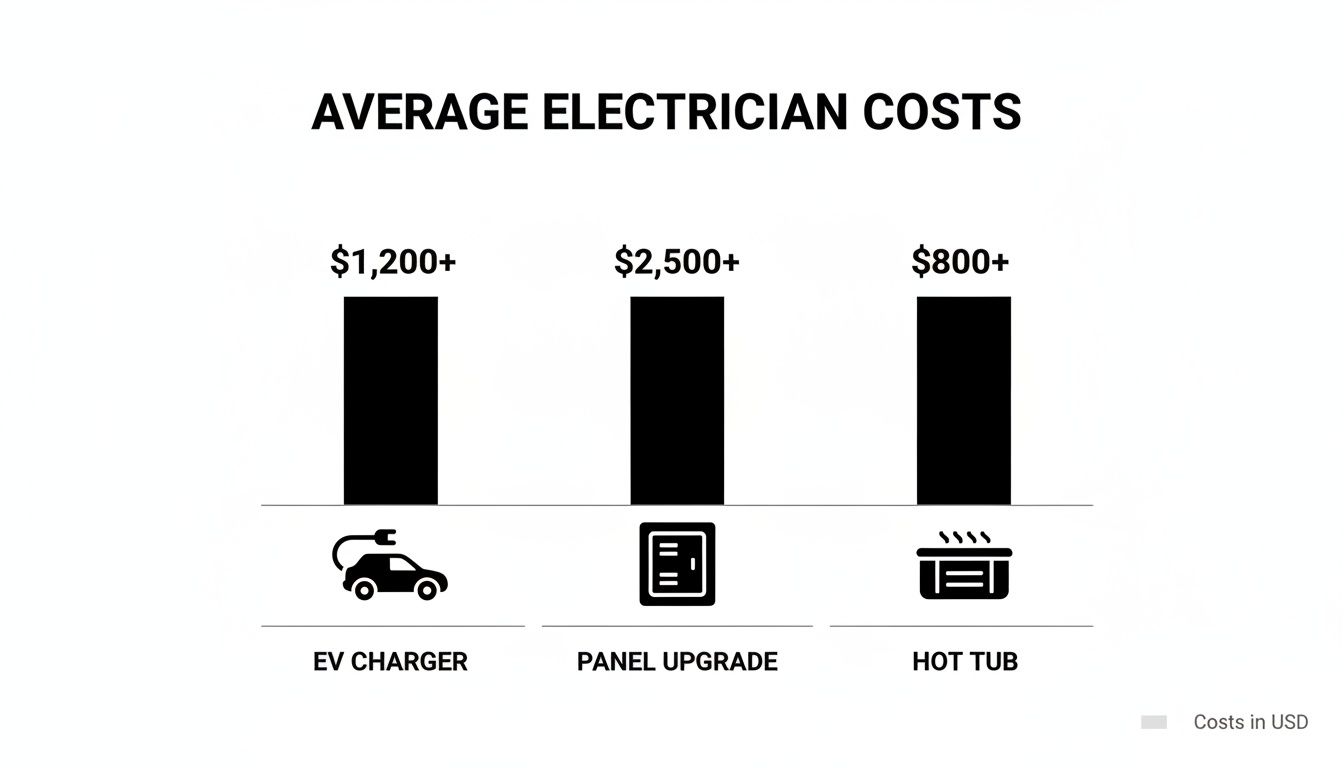
As you can see, major projects like panel upgrades are a significant investment. That just underscores the need for a precise, well-documented quote from the start. When you're ready for that level of detail, you can learn more about how to request an electrical estimate from our team.
Red Flags to Spot in an Electrician's Quote
Not all estimates are created equal. When you're trying to figure out what an electrician should cost, remember this: the lowest price isn’t always the best deal. An unusually low bid can be just as alarming as an outrageously high one.
Think of this as your guide to spotting the warning signs and steering clear of unreliable contractors.

Honestly, a "too-good-to-be-true" price often leads to cut corners, subpar materials, or hidden fees that conveniently pop up later. Learning to spot these red flags means you can choose a trustworthy professional with confidence.
Common Warning Signs
Keep an eye out for these common issues when you review any electrical quote. A true professional values transparency and your safety above all else, so anything less is cause for concern.
- Vague or Non-Itemized Quotes: Is the quote just a single number with no breakdown of labor, materials, or permits? Ask for more detail. A lack of transparency can easily hide inflated costs or scope gaps.
- Pressure to Decide Immediately: High-pressure sales tactics are a major red flag. A reputable electrician will give you the time and space you need to make an informed decision, not rush you into a "today only" deal.
- Large Upfront Cash Payments: A deposit for materials is pretty standard, but a demand for a huge cash payment upfront is suspicious. This could signal financial instability or, worse, a plan to disappear with your money.
Trust your gut. If an electrician seems evasive, can't show you proof of their license and insurance, or dismisses your safety concerns, it's best to just walk away. Your home's electrical system is too important to leave in the hands of someone who doesn't prioritize your well-being.
A Few Final Questions About Electrician Costs
Let's clear the air on a few common questions homeowners have. Getting straight answers is the best way to understand any quote you receive and move forward on your project with confidence.
Why Do Some Electrician Quotes Vary So Much?
Honestly, quotes can be all over the map for a few key reasons. Big differences usually come down to an electrician's experience level, whether they carry proper insurance, the quality of materials they use, and if they stand behind their work with a solid warranty.
A rock-bottom bid might look tempting, but it often comes from an unlicensed contractor or someone cutting corners with cheaper, less reliable parts. A detailed, transparent quote from a reputable company isn't just a number; it reflects a commitment to safety, code compliance, and work that lasts.
What Should I Expect for an Emergency Service Call?
Emergency calls almost always cost more because of the urgent, after-hours nature of the work. You can typically expect a standard dispatch or call-out fee just to get a truck to your door, plus an hourly rate that can be 1.5 to 2 times the normal daytime rate.
It’s smart to confirm this pricing structure before you authorize any emergency work. The last thing you want is a surprise on the bill.
A professional company will always be upfront about their emergency rates. That higher cost covers the premium of having a skilled electrician on standby, ready to solve urgent and often dangerous electrical problems at a moment's notice. For more answers to common questions, you can explore our comprehensive electrical FAQ page.
Does the Estimate Include Cleanup?
Most standard electrical estimates include a basic cleanup of debris directly related to the job—think wire clippings or packaging.
However, they almost never include things like drywall repair, patching, or painting. That kind of restorative work is considered a separate trade. It's always a good idea to clarify this with your electrician beforehand so everyone's on the same page.
Ready to move from estimates to action with a team you can trust? At Black Rhino Electric, we provide clear, upfront pricing without the guesswork. For a professional and accurate quote on your next electrical project, give us a call at 385-396-7048 or request a free quote online today.