Choosing the right commercial lighting salt lake solution is one of the smartest investments a local business can make. It impacts everything from your monthly power bill to employee morale and customer perception. Modern lighting does more than just brighten a space—it sharpens experiences, boosts productivity, and takes a serious bite out of your operational costs.
Honestly, are your outdated fixtures costing you more than you think?
Contents
- 1 Why Better Lighting Is a Bright Idea for Salt Lake Businesses
- 2 Understanding Your Commercial Lighting Options
- 3 The Financial Benefits of an LED Lighting Retrofit
- 4 Navigating Local Codes and Compliance
- 5 Our Step-by-Step Lighting Upgrade Process
- 6 How to Choose the Right Electrical Contractor
- 7 Your Questions About Commercial Lighting Answered
- 8 Ready to See Your Business in a New Light?
Why Better Lighting Is a Bright Idea for Salt Lake Businesses
A strategic lighting upgrade is a powerful tool. For a retail shop in Sugar House or a warehouse near the airport, the quality of light directly affects how well you operate and how customers feel. This isn't just about visibility; it's about creating an environment that works for you.
Let me explain. Poor lighting can drag down employee productivity, increase workplace errors, and create a pretty uninviting atmosphere for customers. On the flip side, a well-designed system can make a space feel modern, safe, and welcoming—a huge advantage in Salt Lake's competitive market.
The Tangible Benefits of a Lighting Overhaul
The advantages of a professional lighting upgrade go way beyond just flipping a switch. Here’s what Salt Lake businesses can actually expect:
- Significant Energy Savings: Modern LED fixtures can slash lighting-related energy use by up to 70%. That means immediate and substantial savings on your monthly utility bills.
- Enhanced Employee Well-being: The right light reduces eye strain and headaches. Studies show this can boost employee focus and morale. It just makes for a better workday.
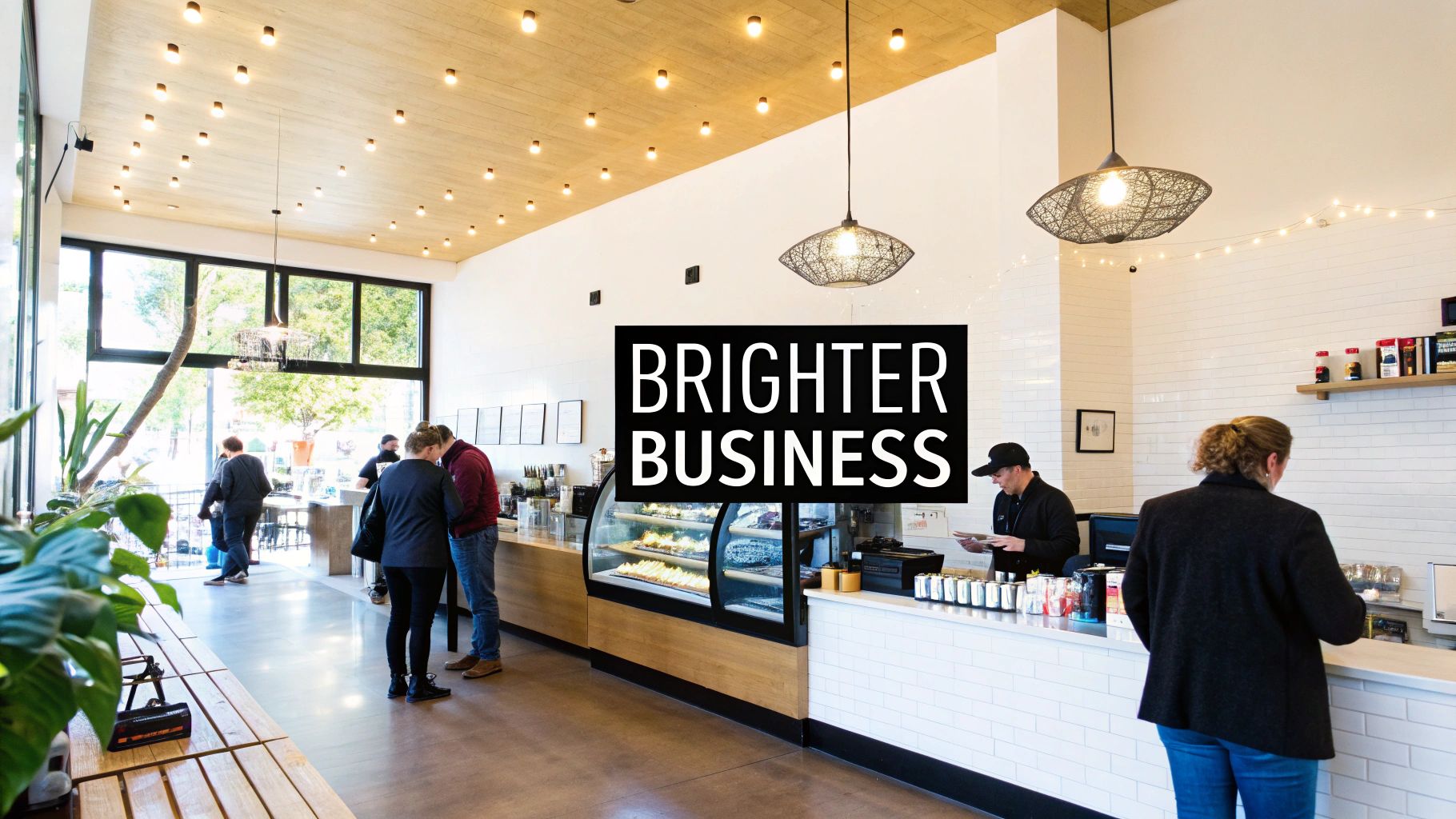
- Improved Customer Experience: For any customer-facing business, great lighting makes products look more appealing and creates a welcoming vibe that encourages people to stick around longer.
- Reduced Maintenance Costs: Older fluorescent tubes need constant ballast and bulb replacements. LEDs, on the other hand, have incredibly long lifespans, which drastically cuts down on maintenance calls and costs.
This table breaks down the core impacts in plain language:
| Benefit Category | Direct Impact on Your Business |
|---|---|
| Operational Costs | Lower energy bills and fewer maintenance calls. Simple as that. |
| Employee Productivity | A safer, more comfortable place to work. |
| Customer Perception | An attractive and professional-looking space that builds trust. |
| Safety & Security | Better visibility in parking lots, walkways, and inside your building. |
Understanding Your Commercial Lighting Options
Choosing the right commercial lighting for your Salt Lake business can feel a little overwhelming at first, especially with terms like troffers, lumens, and color temperature getting tossed around. But here’s the thing: it’s much simpler than it sounds.
Think of it like choosing the time of day. A warm, sunset-like glow is perfect for a cozy restaurant, while a bright, midday light keeps an office productive and alert.
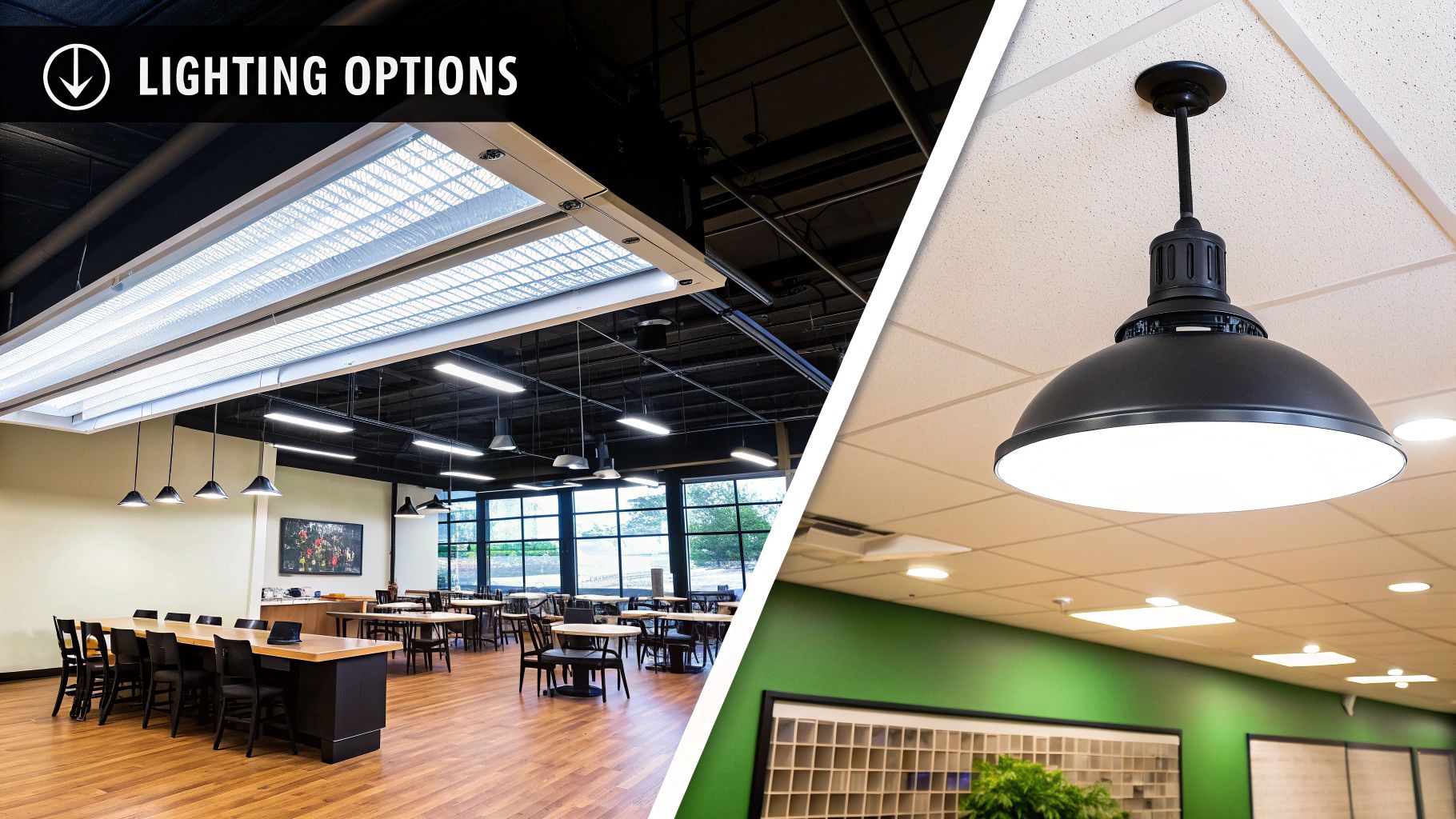
Simply understanding what your building uses now and what a modern upgrade looks like is the first step toward significant savings and a better environment for your team and customers.
Common Fixtures in Salt Lake Buildings
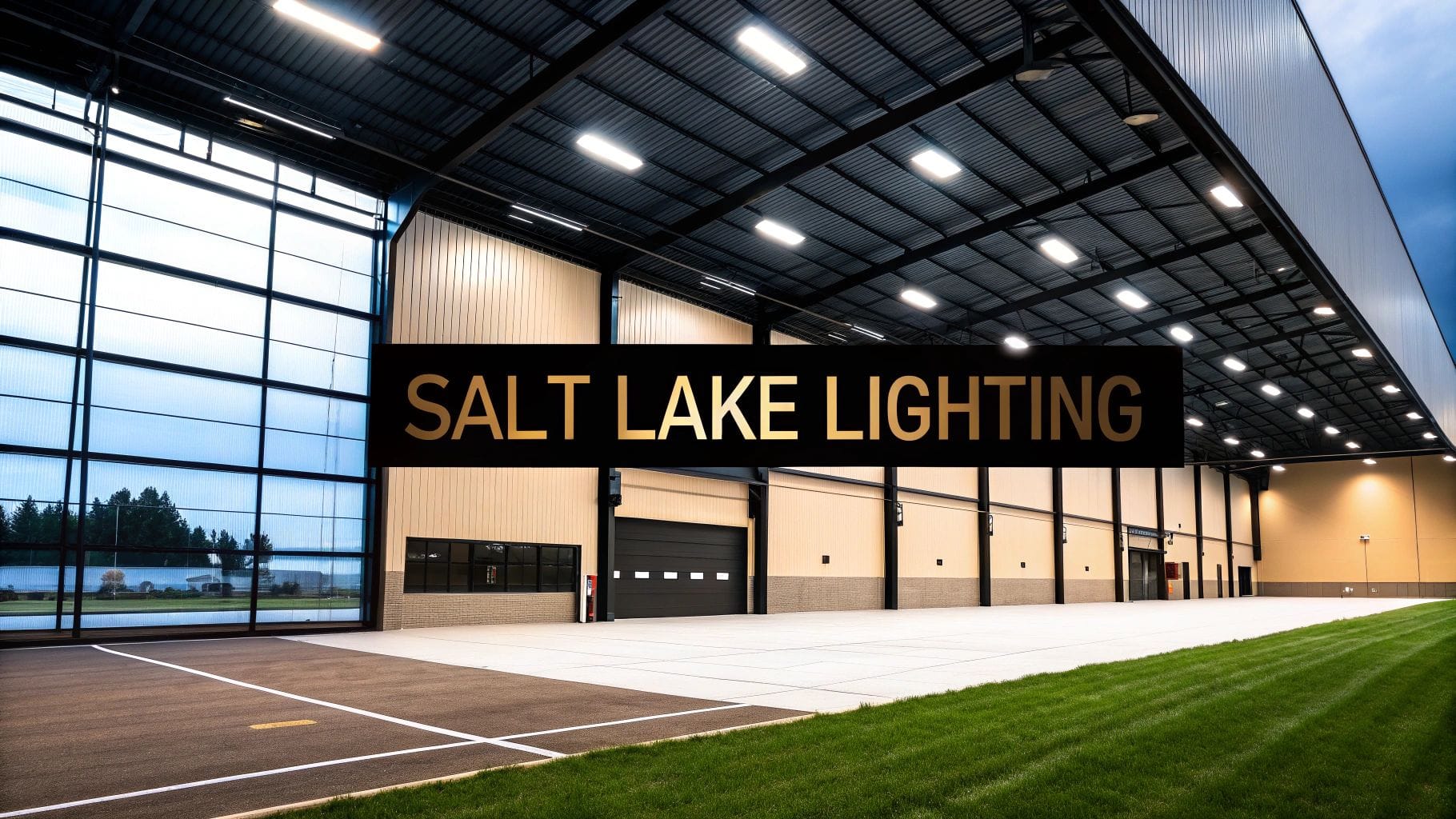
You’ve seen these fixtures everywhere, from downtown offices to industrial warehouses out near I-15. Each is designed for a specific purpose, and modern LED versions offer huge improvements over their older, energy-hungry counterparts.
- LED Troffers: These are the flat, rectangular panel lights you see in drop ceilings. They’re ideal for offices, schools, and retail spaces, providing smooth, even illumination without the flicker and hum of old fluorescent tubes.
- High-Bay Lights: Built for spaces with high ceilings (15 feet or more), these powerful fixtures are essential for warehouses, manufacturing plants, and gyms. Modern high-bay LEDs deliver exceptional brightness while consuming a fraction of the energy of old metal-halide lamps.
- Exterior and Security Lighting: This includes everything from parking lot pole lights to the wall packs on the side of your building. Upgrading to LED not only makes your property safer but also drastically cuts down on energy costs and maintenance.
There's a reason the commercial LED lighting market is growing so fast. Valued at USD 8.96 million in 2025, it’s projected to soar to USD 19.72 million by 2032. High-bay fixtures alone are expected to grow at a rate of 12.05%, promising 50-70% energy savings for businesses that make the switch.
Key Lighting Concepts Made Simple
To really dial in your lighting, you need to think about illumination levels. Different spaces have different needs, which is why it's helpful to review foot-candle requirements by area for various business types.
The goal is to match the light to the task. A detail-oriented manufacturing floor requires crisp, bright light to ensure safety and quality, whereas a restaurant's dining area needs softer, warmer light to create a comfortable atmosphere.
Let’s quickly compare the old guard with the new to see just how clear the benefits of an upgrade are.
A Quick Comparison of Commercial Lighting Types
This table breaks down the most common lighting technologies. For Salt Lake business owners, it’s easy to see why moving away from older, less efficient options is a smart financial decision.
| Lighting Type | Best Use Case | Average Lifespan | Energy Efficiency |
|---|---|---|---|
| LED | Offices, Warehouses, Retail, Exterior | 50,000+ hours | Excellent |
| Fluorescent | Older Offices, Schools | 10,000-20,000 hours | Moderate |
| Metal Halide | Old Warehouses, Sports Fields | 6,000-15,000 hours | Poor |
| Incandescent | Rarely Used Commercially | 1,000 hours | Very Poor |
The numbers don't lie. LEDs last longer, use far less energy, and provide better quality light. For any commercial space, the question isn't if you should upgrade, but when.
The Financial Benefits of an LED Lighting Retrofit
When you start looking at a professional lighting upgrade for your Salt Lake business, the conversation always turns to one thing: cost. But let me reframe that for you. An LED retrofit isn't just an expense; it's one of the smartest investments you can make in your bottom line. You're not just spending money—you're redirecting what you already spend on high energy bills and maintenance into a one-time upgrade that pays for itself.
The first and most obvious win is the immediate drop in your monthly power bill. For most businesses we work with, swapping out old fluorescent or metal halide fixtures for modern LEDs slashes energy use by 50% to 70%. That’s a huge, predictable chunk of change landing back in your budget, month after month.
But the real story is that the savings don't stop when you pay the power company. Think about all the hidden costs baked into your current lighting.
Beyond the Power Bill Savings
Older lights are needy. Ballasts burn out, bulbs pop, and you have to call a technician. Every time you need to rent a lift to change a bulb in a high-ceiling warehouse or pay someone to swap a dead ballast in an office, it costs you real time and money.
An LED retrofit all but erases those headaches. With lifespans often hitting 50,000 hours or more, these fixtures can run for years—sometimes over a decade—without anyone needing to touch them. This translates directly into major savings on parts and labor, freeing up your maintenance budget for things that actually need attention.
- Zero Re-lamping Costs: Forget about the cycle of buying and stocking replacement bulbs.
- No Ballast Failures: LEDs don't use the failure-prone ballasts that fluorescent and HID lights absolutely depend on.
- Reduced Labor Expenses: You can dramatically cut the hours your team—or an outside contractor—spends on lighting repairs.
Unlocking Local Utility Rebates
Here in Utah, the financial case gets even better. Our local utility, Rocky Mountain Power, offers some pretty substantial rebate programs to encourage businesses like yours to switch to energy-efficient tech. These programs can take a serious bite out of the upfront cost of your LED project.
Navigating the paperwork for these rebates can be a pain, frankly. But they are absolutely critical for getting the best return on your investment. A good contractor handles this entire process for you, making sure you get every dollar you're entitled to, which lowers your initial cost right off the bat.
Let's put it all together. Here’s a simple breakdown for a typical Salt Lake County business.
| Cost & Savings Factor | Old Fluorescent System | New LED System | Financial Impact |
|---|---|---|---|
| Annual Energy Cost | $10,000 | $4,000 | $6,000 Saved Annually |
| Annual Maintenance | $1,500 | $0 | $1,500 Saved Annually |
| Utility Rebate | N/A | ($5,000) | Reduces Initial Cost |
| Total Annual Savings | – | – | $7,500 |
This simple example shows how it all stacks up. The combined savings from lower energy bills and zero maintenance—kicked off by a one-time utility rebate—make a powerful financial argument. The upgrade doesn't just eventually pay for itself; it actively becomes a source of ongoing cash flow for your business.
For any general contractor or property manager in Utah, compliance isn't just a box to check—it's the foundation of a safe, legal, and efficient project. When it comes to commercial lighting Salt Lake projects, the rules are there to protect your investment, your tenants, and your bottom line. Trying to sidestep these regulations almost always leads to costly fines, painful project delays, and serious liability down the road.
This is about a lot more than just screwing in bright bulbs. It’s about meeting specific energy efficiency benchmarks, ensuring workplace safety, and even handling the proper disposal of the old gear you're tearing out. Let's break down what you actually need to know to keep your project on the right side of the law.
Meeting Energy Efficiency Standards
Utah follows its own version of the International Energy Conservation Code (IECC), which lays down the law for energy performance in both new builds and renovations. For lighting, this boils down to your system meeting specific criteria for power density—basically, a cap on the watts used per square foot.
Here's the good news: modern LED systems almost always blow these requirements out of the water with ease. The key is partnering with an experienced electrical contractor who designs your system to be compliant from the very first blueprint. That way, you sail through inspections instead of getting slapped with a rework order.
OSHA and Workplace Safety
Beyond the energy codes, the Occupational Safety and Health Administration (OSHA) has its own set of rules for adequate lighting levels. This isn't about saving energy; it's about keeping people safe. The right amount of light is absolutely critical for preventing accidents in warehouses, on manufacturing floors, and even in a standard office.
A professional lighting plan isn't just designed for energy savings. It’s engineered to meet or exceed OSHA's requirements, ensuring there's proper visibility for every task and eliminating the dangerous shadows or glare that can lead to a workplace incident.
Proper Disposal of Old Lighting
You can't just toss old fluorescent tubes or HID lamps into the nearest dumpster. It's a common mistake, but a costly one. Many of these older lighting technologies contain hazardous materials like mercury, and their disposal is tightly regulated.
- Fluorescent Tubes: Every one of these contains a small amount of mercury and is required to be recycled at a designated facility.
- HID Lamps: Those big High-Intensity Discharge lamps, like metal halide, often contain mercury too and need special handling.
- Ballasts: Old-school magnetic ballasts are the real trouble. Some contain PCBs, a highly toxic substance with strict—and expensive—disposal protocols.
A qualified electrical contractor will manage this entire process for you, making sure you stay compliant with all environmental regulations. This is a crucial step in protecting your business from fines and liability. To get a better handle on how a pro can help you steer clear of these issues, check out our guide on addressing commercial code violation repairs. It’s a small detail that can save you a massive headache.
Our Step-by-Step Lighting Upgrade Process
Embarking on a lighting project can feel like a huge undertaking, but having a clear, transparent process makes all the difference. We believe in showing you exactly what to expect at every stage of your commercial lighting Salt Lake upgrade. You know what? It all starts with a detailed understanding of your current system and your specific goals.
From there, we build a customized plan that’s efficient, code-compliant, and designed for the best possible return on your investment. Our job is to take the guesswork out of the equation by breaking down each step, ensuring a smooth, professional experience from start to finish.
Step 1: The Initial Lighting Audit
The first thing we do is a thorough on-site lighting audit. This is way more than a quick walkthrough; it’s a data-gathering mission.
Our electricians will meticulously document your existing setup—that includes fixture types, wattage, light levels, and operating hours. This diagnostic step is critical because it gives us the precise baseline we need to calculate your potential energy savings and pinpoint the best opportunities for improvement.
Step 2: Custom Design and Proposal
Once we have the data, we move on to the design phase. We don’t believe in one-size-fits-all solutions. Instead, we create a custom lighting design tailored to your facility's unique needs, whether it's an office, warehouse, or retail space.
This is where we present you with a clear, detailed proposal that spells it all out:
- Fixture Recommendations: The specific LED products we recommend and, more importantly, why we recommend them.
- Projected Savings: A straightforward calculation of your expected drop in energy costs and maintenance expenses.
- Rebate Analysis: We hunt down every applicable utility rebate and factor it directly into your project cost.
- Total Investment: A transparent, itemized quote with no hidden fees or surprises.
This infographic breaks down the key compliance areas we manage throughout our process, from meeting established standards to ensuring safe installation and proper disposal of old equipment.
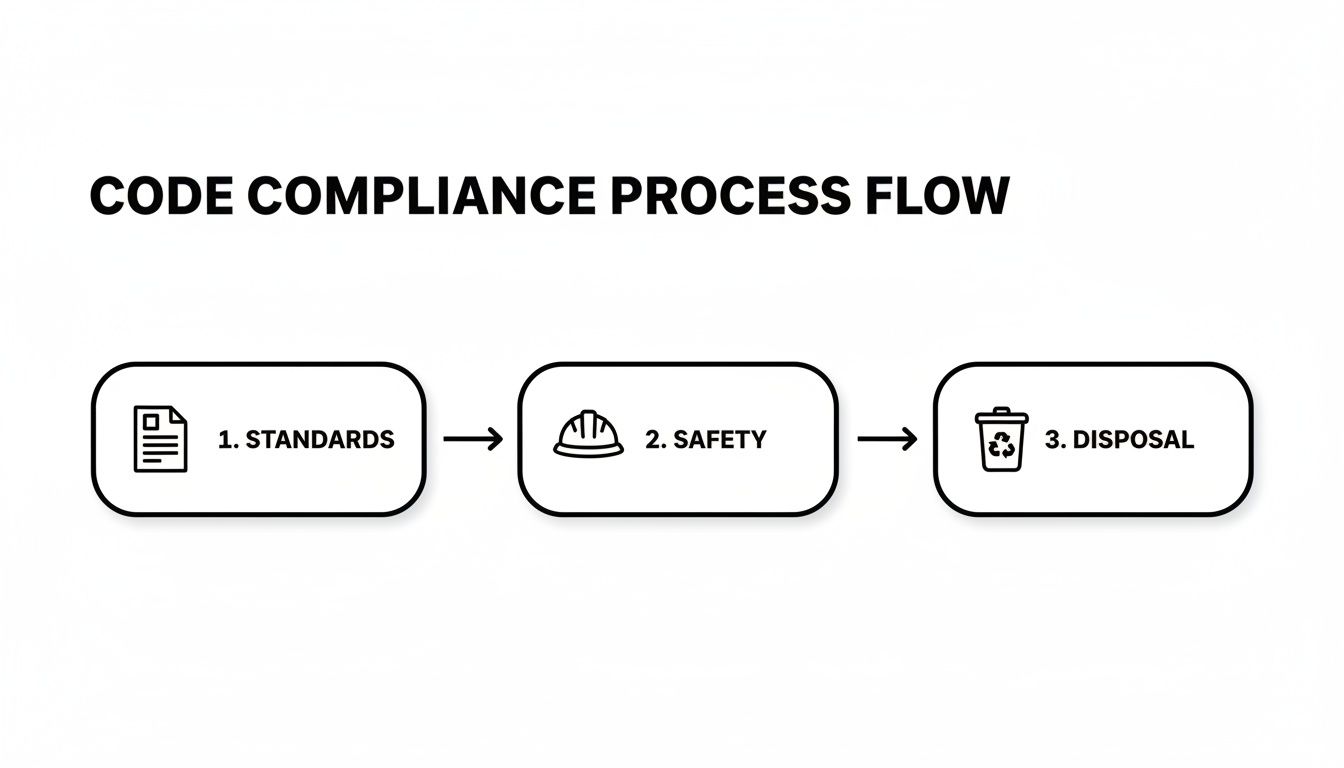
It shows that a successful project is about more than just hanging lights; it's about managing standards, safety, and environmental responsibility from beginning to end.
Step 3: Professional Installation and Final Inspection
With your approval, our licensed electricians get to work. We coordinate the installation schedule with you to cause the least possible disruption to your daily operations. Our team works cleanly, safely, and efficiently to get the job done right.
Getting the timing right is critical, especially given the rapid growth in Salt Lake's industrial market. With over 5 million square feet of new leasing activity and 3 million square feet of new industrial projects under construction, the demand for reliable, code-compliant electrical work is surging. You can learn more about the healthy state of Salt Lake's industrial market and see why efficient infrastructure has become so important.
After the final fixture is installed, we conduct a comprehensive walkthrough and inspection with you. We make sure every light works perfectly, the controls are set to your preference, and the site is cleaner than when we arrived.
Your complete satisfaction is our final checkpoint. We don’t consider a project finished until you are 100% happy with the results and can see the dramatic improvement in your facility's lighting for yourself.
How to Choose the Right Electrical Contractor
Picking the right partner for your commercial lighting project in Salt Lake is just as crucial as picking the right fixtures. This decision really shapes the safety, quality, and long-term performance of your entire system. A good contractor isn't just an installer; they're a long-term partner who protects your investment.
Verifying Licenses and Insurance
This is the absolute, non-negotiable first step. Any electrical contractor you even think about hiring must hold a current, valid license from the Utah Division of Professional Licensing (DOPL). Think of it as your baseline assurance that they meet the state's tough standards for knowledge and safety.
Just as important is proof of comprehensive liability insurance and workers' compensation. Here’s the thing: if an uninsured worker gets hurt on your property, you could be on the hook financially. Always, always ask for a certificate of insurance sent directly from their provider to make sure it's active.
Confirming Relevant Experience
Not all electricians are lighting specialists. You need a contractor with a proven track record specifically in commercial LED retrofits and installations. This isn't just about pulling wire; it's about understanding lighting design, knowing the local energy codes, and figuring out how to squeeze every last dollar out of utility rebates for Salt Lake businesses.
Ask potential contractors these direct questions:
- Can you show me a portfolio of recent commercial lighting jobs you've done in the Salt Lake area?
- How many LED retrofits has your team completed in buildings like mine?
- Are you up to speed on the latest rebate programs from Rocky Mountain Power?
This kind of targeted experience means they won’t be learning on your dime.
Checking Local References and Reputation
A contractor who is proud of their work will happily give you local references. Don't just get a list—actually call a few of them. Ask about their real-world experience. How was the communication? Were they professional? Did they stick to the schedule and the budget?
You can also get a good feel for a company's reputation and customer service by checking online reviews on platforms like Google.
The Importance of Transparent Pricing
Your project quote should be detailed, itemized, and easy to understand. Vague estimates that lump everything into one big number can be a red flag for hidden costs down the road. A trustworthy contractor provides a transparent proposal that breaks down the costs for labor, materials, and any other project fees.
Globally, the commercial LED lighting market is growing at a breakneck pace, projected to jump from $77.39 billion in 2025 to $193.38 billion by 2030, driven by booming construction and the demand for energy efficiency. You can read more about this market growth on GlobeNewswire. With so much at stake, partnering with a contractor who provides clear pricing is just plain smart for managing your budget.
A solid workmanship guarantee is another critical sign of a quality contractor. This shows they stand behind their work and are committed to your long-term satisfaction, ensuring your new lighting system delivers value for years to come.
Your Questions About Commercial Lighting Answered
When you’re thinking about a commercial lighting project for your business here in Salt Lake, a few questions always come up. That’s a good thing. To give you some clear answers right from the start, we’ve put together a few of the most common ones we hear from local business owners.
How Long Does a Typical Lighting Retrofit Take?
Are you worried about a major shutdown? Don't be. The timeline really depends on the size and complexity of your facility, but the truth is, many projects for small to mid-sized businesses are wrapped up in just a few days.
We’re experts at scheduling the work around your operations to keep disruptions to an absolute minimum for your team and your customers.
Can New Lighting Really Improve Productivity?
Absolutely. It’s not just about seeing better; it’s about feeling better. Think about it—harsh, buzzing fluorescent lights are a real drain.
Studies have shown that proper lighting, especially systems that mimic natural daylight, can cut down on employee eye strain and headaches. That leads to better focus and an improved mood, which translates directly into real, tangible productivity gains for your business.
The right light creates an environment where your team can actually perform at their best. It's a simple change that makes a significant impact on daily operations and overall morale.
What Is the First Step to Get a Quote?
It all starts with a professional lighting audit. A qualified electrician comes out to assess your current system, listens to what you want to achieve, and pinpoints the best opportunities for energy savings and those valuable local utility rebates.
This detailed assessment is the foundation for an accurate, transparent quote. No guesswork, just solid numbers based on your specific needs.
For more answers to common electrical questions, feel free to explore our full FAQ page for some extra insights.
Ready to See Your Business in a New Light?
Let's be honest, you've got enough on your plate without trying to untangle local energy codes and manufacturer spec sheets. You just want lighting that works—lighting that makes your space safer, more inviting, and easier on the budget. That’s where we come in.
The team at Black Rhino Electric lives and breathes this stuff. We've helped countless businesses across the Salt Lake area make the switch, handling everything from the initial audit to the final sign-off. As an electrical contractor, we know that getting these projects right is what builds a reputation. While others are reading up on Digital Marketing for Electricians to find work, we're busy doing it—and doing it well.
Let us handle the complexities so you can get back to what you do best.
Ready to start the conversation? Give us a call at 385-396-7048 or request a free quote online to schedule a professional lighting assessment and show you just how bright your business's future can be.