
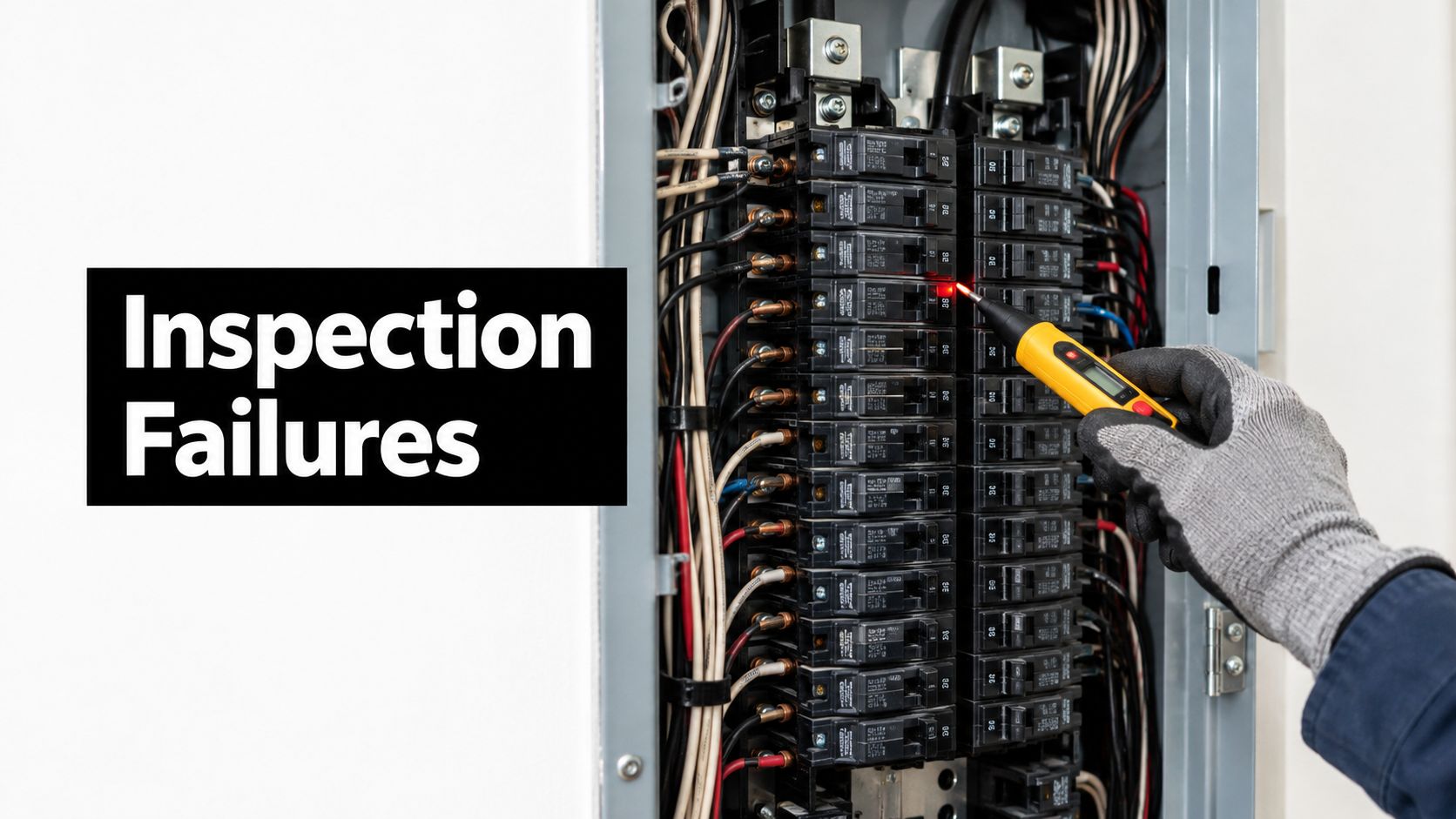
Inspections fail for life-safety wiring defects, missing GFCI or AFCI protection, incomplete grounding and bonding, and missing or incorrect permits and inspections. In other words, what will fail an electrical inspection is usually bigger than a loose outlet, even when the system still seems to work day to day.
A homeowner can have lights, receptacles, and appliances running normally and still get tagged for a failed inspection because inspectors judge code compliance and safety, not convenience.
What Typically Fails an Electrical Inspection
The fast answer is simple, most failures fall into three buckets, dangerous wiring defects, missing protection, and permit or documentation problems. That's why a system can look finished and still fail, because the inspector is checking whether it's safe, legal, and verifiable, not whether it powers on.
For landlords, sellers, and remodelers, the smartest way to think about inspection failure is by category. A useful rental-focused overview can help frame that mindset, especially when the property has been altered over time, like this guide to rental electrical compliance.
Read the failure like an inspector does
Inspectors care about what can start a fire, shock someone, or hide a hazard behind drywall. They also care about whether the work was permitted, inspected in sequence, and documented correctly. That means a project can fail even if the homeowner never noticed a problem.
Practical rule: if the defect affects safety, access, or proof of compliance, assume it can fail the inspection.
The rest of the checklist works the way a real field visit works, starting with the highest-risk items first. If the panel is wrong, the grounding is incomplete, the protection devices don't work, or the permit trail is missing, those issues get attention before anyone worries about cosmetic finishes.
Service, Panel, and Breaker Failures
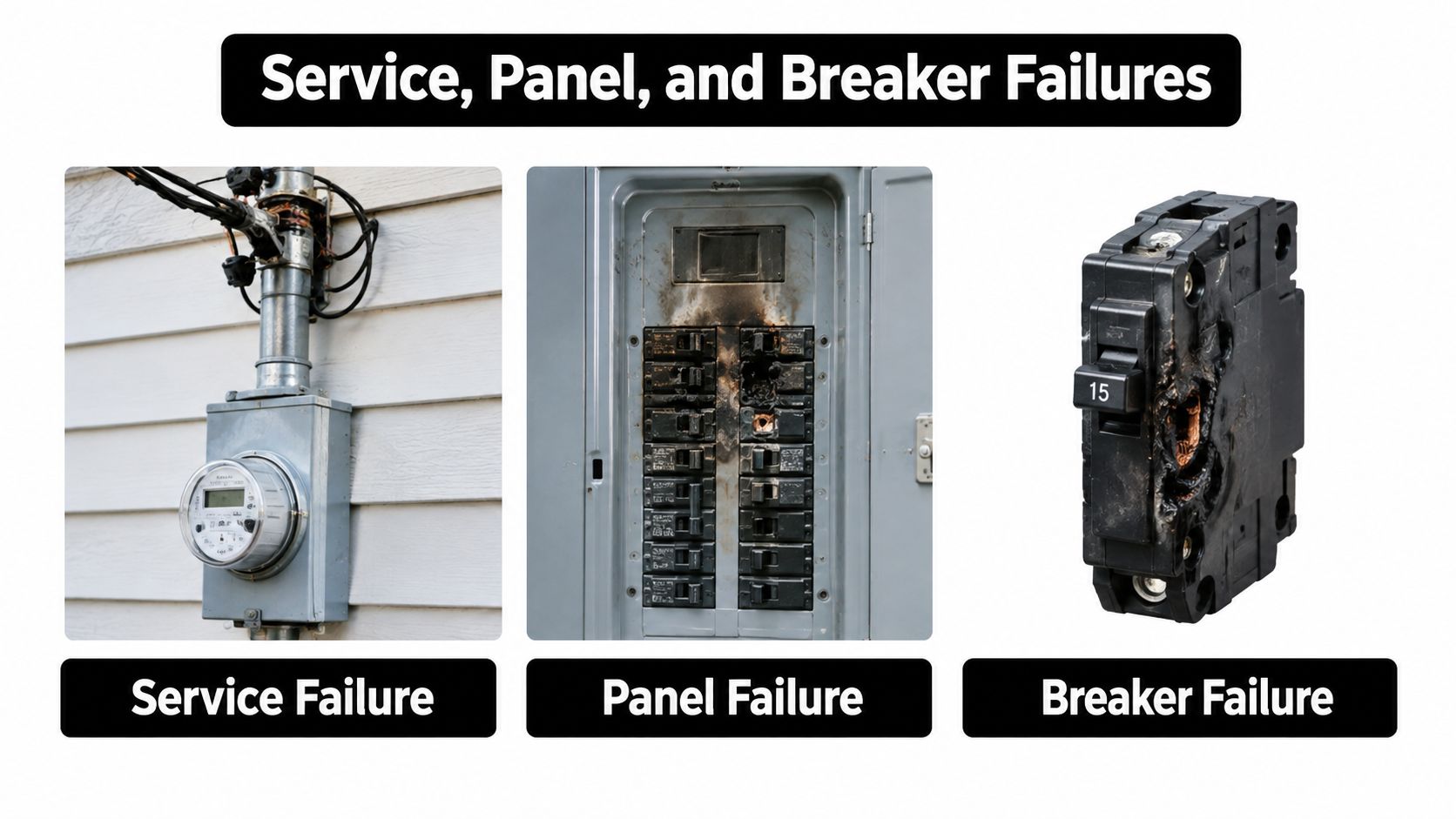
The panel is where inspectors start
Panel problems are hard failures because they affect the whole house. In Northern Utah, older homes often run into trouble when a 100-amp service gets asked to support a finished basement, a hot tub, or an EV charger. That's when a panel upgrade turns from “nice to have” into a practical correction before inspection.
The common panel failures are straightforward. Double-lugged neutrals, the wrong breaker type for the panel, open knockouts, missing dead-front covers, missing breaker ties where required, and inadequate working clearance all get flagged because they tell the inspector the installation wasn't completed safely.
What homeowners should not touch
Anything inside the service equipment belongs to a licensed electrician. Homeowners can stand back, clear the area, and note obvious red flags like rust, missing cover screws, scorching, buzzing, or a panel stuffed into a cramped closet. They should not open the panel to “check” anything live.
A broken or mismatched breaker isn't a cosmetic issue. It's a sign the circuit may not trip the way it should during a fault, which is exactly why inspectors treat breaker compatibility and enclosure condition as life-safety items. For panel work, the right move is to bring in a breaker panel electrician before the inspection, not after the correction notice lands.
If the panel cover is off, the knockouts are open, or the breaker brand doesn't belong there, don't gamble on a pass.
Grounding and Bonding Mistakes That Get Flagged
Grounding and bonding is one of the most frequently cited electrical code violation categories in national survey data, and inspectors don't need to see smoke before they reject a bad system. They verify the grounding electrode conductor, the electrode connection, bonding of service equipment, separation of neutral and ground downstream of the service disconnect, and a valid fault-current path.
A few failure points come up again and again. Loose or inaccessible grounding terminations, undersized or unprotected grounding electrode conductors, an unbonded metal water pipe or structural steel electrode, and a subpanel with the neutral bar bonded to the enclosure all create problems. Visual neatness doesn't fix a poor electrical path.
Why old receptacles fool homeowners
Older homes often have a "bootleg ground," where the receptacle appears grounded but the path is unsafe. That can fool a basic tester and still fail inspection because the circuit isn't bonded the right way. The homeowner sees a working outlet, the inspector sees a hidden hazard.
A licensed electrician also checks continuity and polarity before final approval, because a pretty installation with no reliable low-impedance fault path still misses the point. For a plain-language explainer on the symptom many homeowners notice first, see Black Rhino Electric on open ground.
GFCI and AFCI Protection Gaps
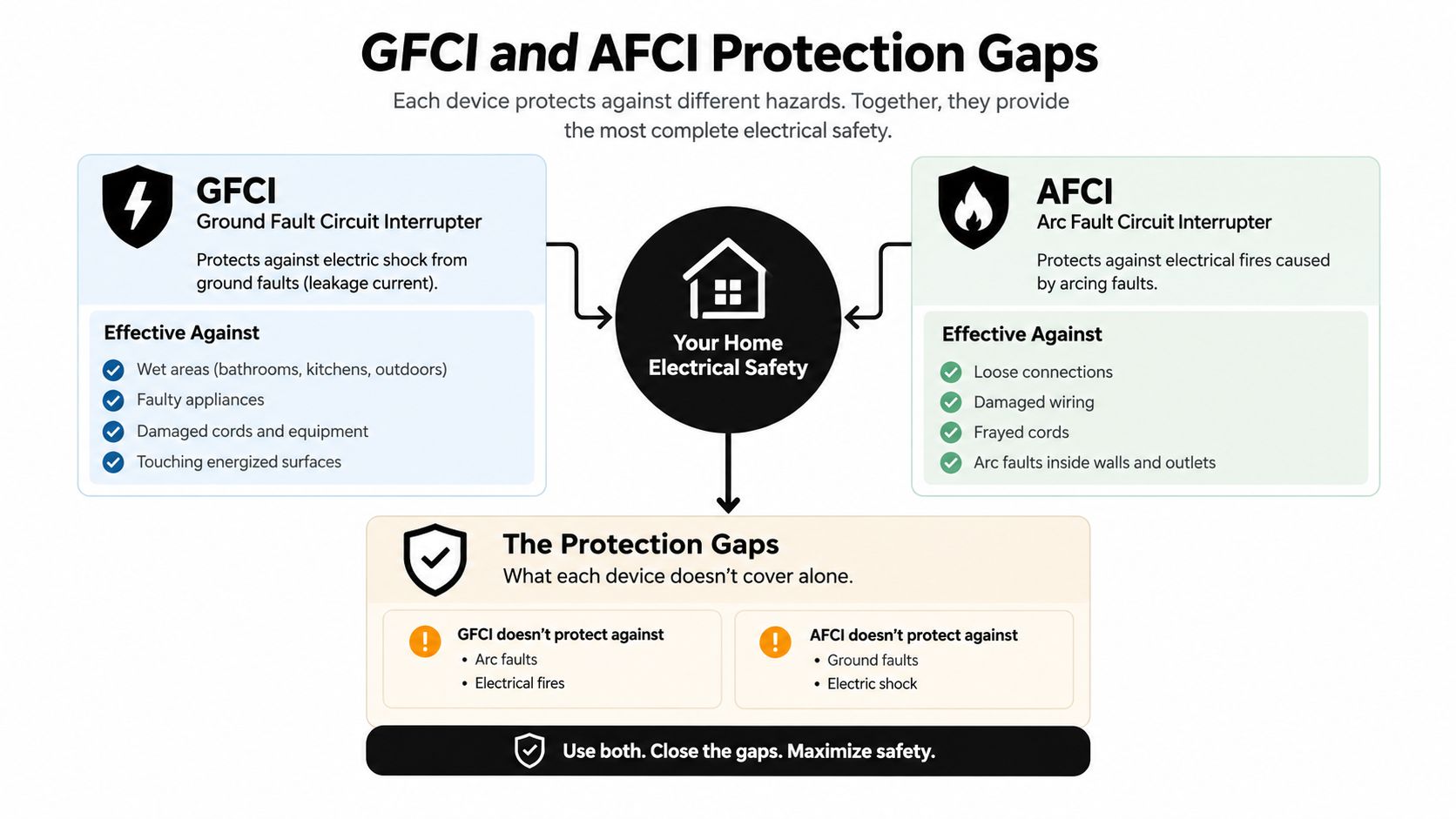
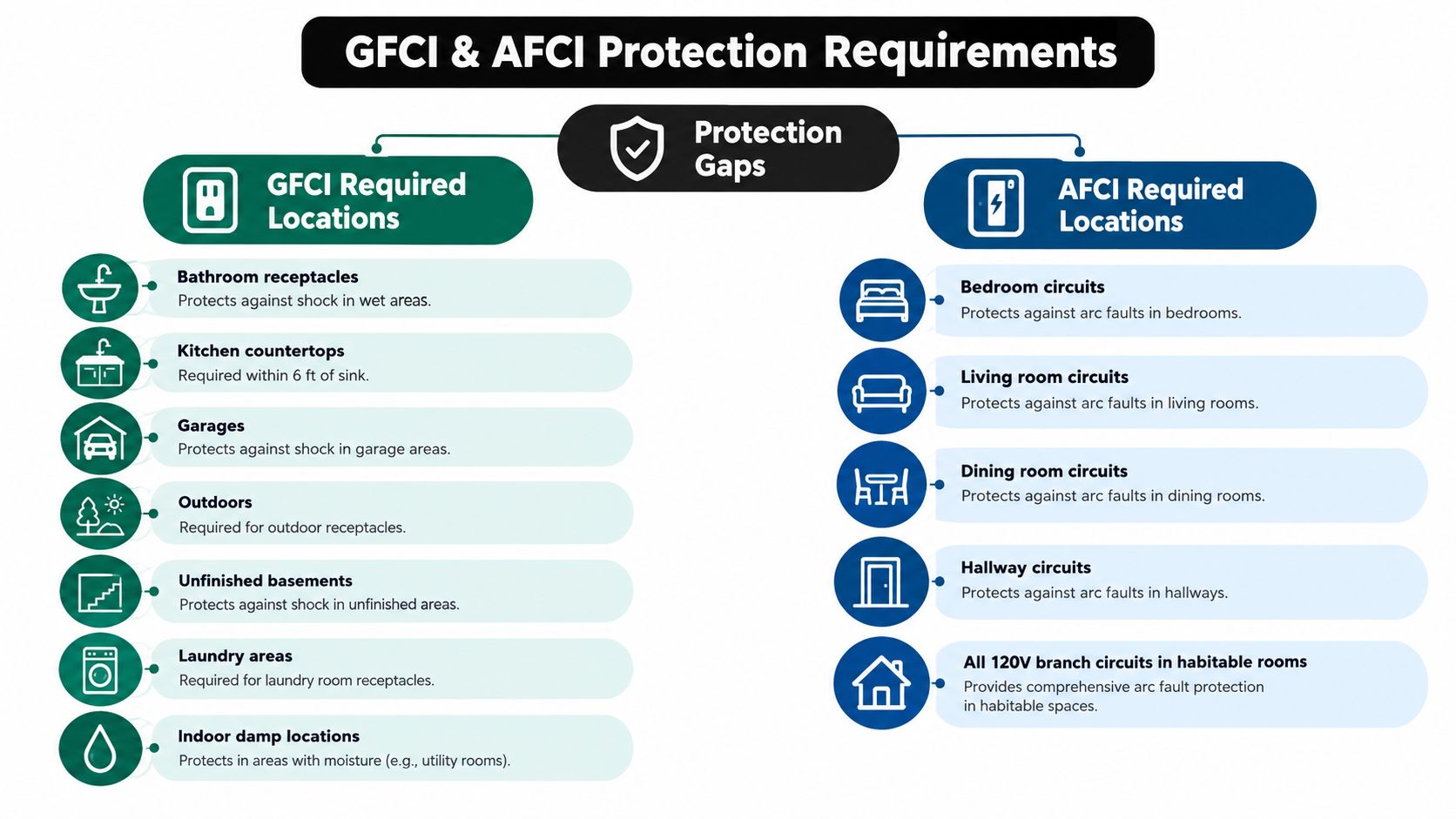
GFCI protection is required in Utah dwelling locations that are exposed to shock risk, including bathrooms, kitchens, garages, outdoors, unfinished basements, laundry areas, and indoor damp or wet locations. AFCI protection applies to dwelling circuits in the rooms and areas covered by the adopted code edition. For a clear distinction between the two, review the GFCI vs AFCI difference.
What inspectors actually catch
Inspection failures show up when the required device is missing, when a GFCI won't trip and reset properly, when line and load are reversed, or when receptacles that look protected aren't downstream of the device. AFCI problems show up when the breaker is incompatible with the panel or when the neutral configuration isn't right for the circuit.
Homeowners can safely do one useful check here, press the test and reset buttons on every GFCI. If the device doesn't trip and restore correctly, that's a real problem, not a nuisance. A receptacle near a sink, in a garage, or outdoors that lacks the right protection is the kind of defect inspectors spot immediately.
AFCI and GFCI are not substitutes for damaged wiring, loose connections, overloaded circuits, or poor box fill. They reduce risk, but they don't excuse bad workmanship.
Boxes, Covers, Cable Support, and Labeling

Small defects fail inspections all the time because they point to sloppy workmanship and hidden heat. Missing cover plates, overcrowded boxes, cables entering without clamps, unsupported cable runs, and incomplete labeling all tell the inspector the job wasn't finished to standard.
The visual checks homeowners can make
Homeowners can safely walk the house and look for a few obvious problems. Missing plates, loose receptacles, sagging cable, and unlabeled breakers are easy to spot. Those are worth fixing before the inspector arrives, because they're cheap problems that create an expensive second visit.
The reason inspectors care is simple. Overfilled boxes, exposed conductors, and poorly secured cable are the kind of conditions that invite arcing, insulation damage, and heat buildup. Once drywall goes up, those mistakes become harder to verify and more likely to trigger correction orders.
Good field rule: if the box is crowded, the cable is hanging loose, or the directory doesn't match reality, expect a correction.
Permits, Sequence, and Documentation Failures
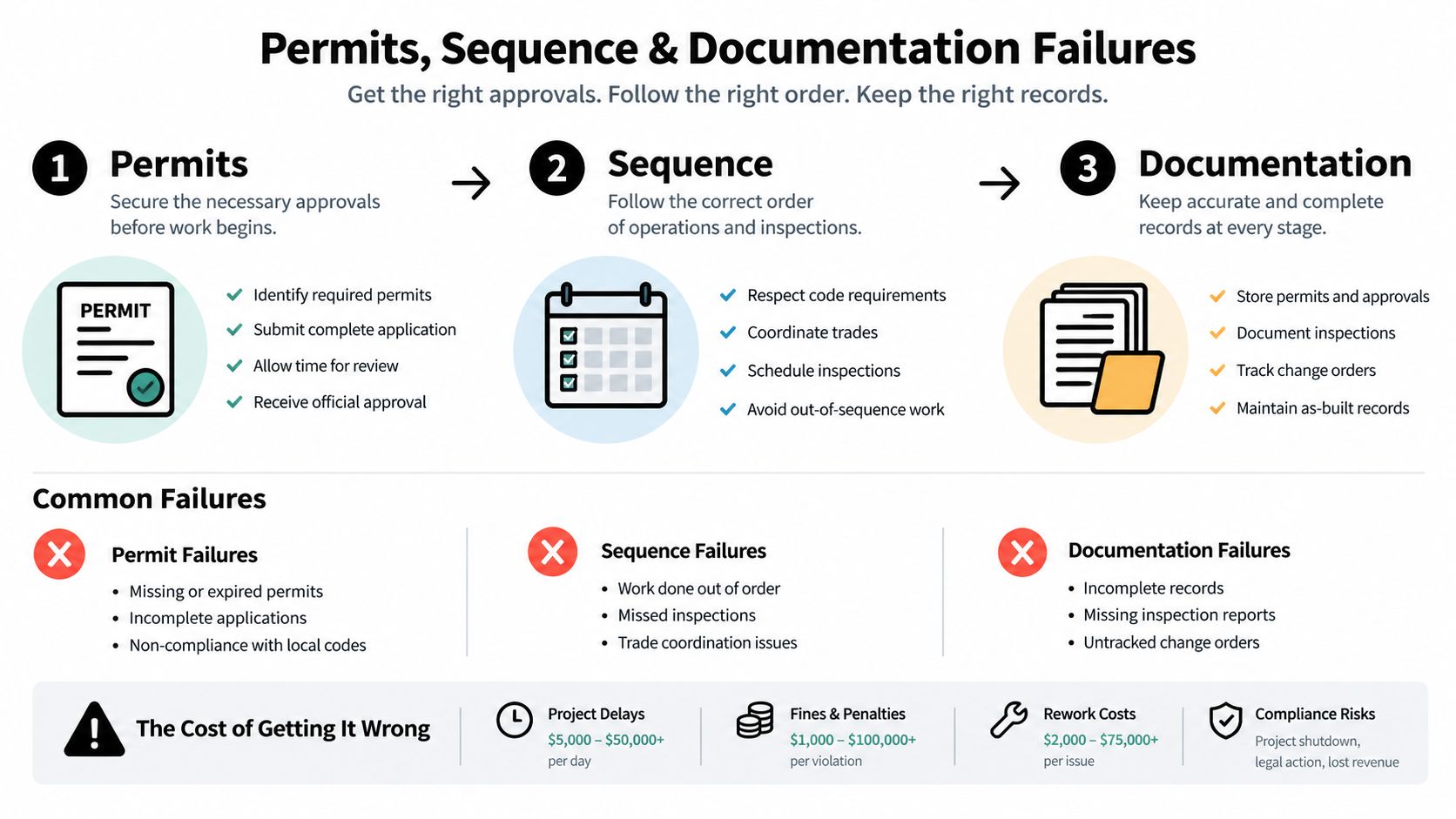
Electrical work needs a permit before the work starts, a rough-in inspection before anything gets covered, and final approval before occupancy. In Utah, that order matters. Pull the permit first, keep the work open for inspection, and do not assume drywall or a powered-up system will excuse a missed step.
A paperwork miss can fail the job even when the wiring looks clean. If drywall already hides the work, the inspector can require access before signing off. If the project moved ahead without the right permit, the inspection can fail on process alone. Reinspection fees also vary by the authority having jurisdiction in Utah, so check the local city or county schedule before you book another visit. For a scope check before work starts, check permit needs with Black Rhino.
Homeowners can usually spot the process problems early. Missing permit paperwork, the wrong inspection stage, or work that was closed in too soon are visible warning signs. The licensed electrician or permit holder has to correct the permit path, the access issue, and any correction tied to the approved scope.
Who Can Spot It and Who Must Fix It
| Inspection Failure Roles by Category | Homeowner Can Observe | Homeowner Can Correct | Licensed Electrician Required |
|---|---|---|---|
| Service, panel, and breaker issues | Yes, visible rust, missing cover, scorch marks, cramped clearance | No | Yes |
| Grounding and bonding defects | Sometimes, if the bonding or grounding path is visibly missing | No | Yes |
| GFCI and AFCI failures | Yes, by testing devices and checking labels | Sometimes, if it's only replacing a cover plate or resetting a tripped device | Yes, for wiring, breaker, or protection-device problems |
| Missing cover plates and loose faceplates | Yes | Often, if the homeowner is comfortable with a simple cover replacement on de-energized devices | Sometimes, if the box is damaged or live parts are exposed |
| Cable support and open splices | Sometimes, if cable is visibly sagging or a box is open | No | Yes |
| Panel directory and labeling errors | Yes | Often, if the label is only inaccurate and the circuit identity is known | No, unless labeling exposes a deeper wiring issue |
| Permit and inspection sequence issues | Yes | No | Usually yes, because the permit path and corrections need professional handling |
This is the cleanest way to sort the work. If the issue is inside the panel, inside the wall, or tied to protection and bonding, it needs a licensed electrician. If it's a missing plate or an obviously wrong label, that may be visible to a homeowner, but it still needs to be verified carefully before the final visit.
For homeowners trying to prep a property quickly, a decent front-office process matters too, especially when an inspector, contractor, and seller all need the same record. Services like front-office support for electrical firms can help keep calls and correction notes from getting lost, but the electrical correction itself still belongs in the field.
What Happens After a Failed Inspection
A failed inspection is usually a correction list, not a dead end. The inspector notes the defects, the homeowner or contractor fixes them, and a reinspection gets scheduled once the work is ready. Final approval comes only after every item on the list is cleared.
Some corrections move fast. A label update, a bad GFCI, or a missing cover plate can be handled quickly. Others, like a panel upgrade or a grounding correction, need planning, parts, and a clean sequence so the same mistake doesn't come back on reinspection.
The point isn't punishment. It's to catch the hidden issues that drive home electrical fires and shock hazards before they sit behind finished surfaces for years.
Pre-Inspection Triage for Homeowners
Before an inspector shows up, sort the job into four buckets, life-safety, access, documentation, and workmanship. That keeps the fix list honest and keeps everyone from wasting time on cosmetic distractions while a real hazard is still live.
| Pre-Inspection Triage Priorities | What to Check | Homeowner Action | Stop and Call an Electrician If |
|---|---|---|---|
| Life-safety | GFCI and AFCI function, visible heat damage, scorch marks, buzzing, tripped breakers that won't reset | Test GFCIs, look for obvious damage, keep the area clear | Any panel fault, repeated tripping, overheating, or exposed energized parts |
| Access | Working clearance at the panel, accessible junction boxes, no stacked storage in front of equipment | Clear the space and keep panels reachable | Equipment is blocked, buried, or requires moving built-in finishes |
| Documentation | Permit status, prior inspection records, circuit directory accuracy | Gather paperwork and verify labels match reality | The permit trail is missing or the listed scope doesn't match the work |
| Workmanship | Cover plates, secure devices, cable support, box fill concerns | Replace simple covers if it's safe and de-energized | Anything inside a box, wall, or panel looks incomplete or altered |
For sellers and landlords, a short previsit walkthrough saves time and heat. A Black Rhino Electric's inspection checklist can help organize the obvious items before the inspector or tenant complaint turns them into a bigger problem.
Grandfathered Wiring and When New Work Triggers Correction
Age alone doesn't fail an inspection. What changes the game is new work, altered circuits, or a scope expansion that brings adjacent wiring into review. Once that happens, the inspector is looking at the permitted project and the conditions it exposes, not just the date on the house.
That's why a hot tub addition can trigger GFCI and disconnect corrections, an EV charger can force a panel capacity review, and a kitchen remodel can uncover protection problems that were easy to ignore before. Older installations may stay legally accepted until they're disturbed, but unsafe or altered conditions don't get a free pass just because they're old.
For Northern Utah owners, that distinction matters during remodels, basement finishes, panel swaps, and service-related upgrades. The safe move is to verify the code scope before drywall closes anything, especially when the project touches dedicated circuits, access, or protection devices.
Common Questions About Electrical Inspection Failures
A failed inspection usually creates reinspection cost risk, and the exact fee depends on the local authority. The cleanest way to avoid paying twice is to correct the list fully before asking for another visit.
If drywall already covered the work, the inspector can require access so the concealed wiring can be verified. That's inconvenient, but it's part of the process when the permit or rough-in was skipped.
The homeowner or contractor should pull the permit according to the local rule and the job scope, not guess. For a real estate transaction, the best prep is to fix the life-safety items first, gather permit records, and schedule a licensed electrician to review the correction list before the buyer's deadline.
If a property in Weber, Davis, or Salt Lake County needs a pre-inspection walkthrough, panel troubleshooting, GFCI and AFCI corrections, or permit-ready electrical repairs, Black Rhino Electric handles that work day to day. Call 385-396-7048 or send the details through Black Rhino Electric if the goal is to get the correction list cleaned up before the inspector returns.
Black Rhino Electric helps Northern Utah homeowners, sellers, landlords, and remodelers fix the wiring issues that fail inspections, from panels and grounding to GFCI, AFCI, labeling, and permit-related corrections. If the project needs a troubleshooting visit, a code-conscious repair plan, or a panel review before the inspector shows up, visit Black Rhino Electric and set up the next step.