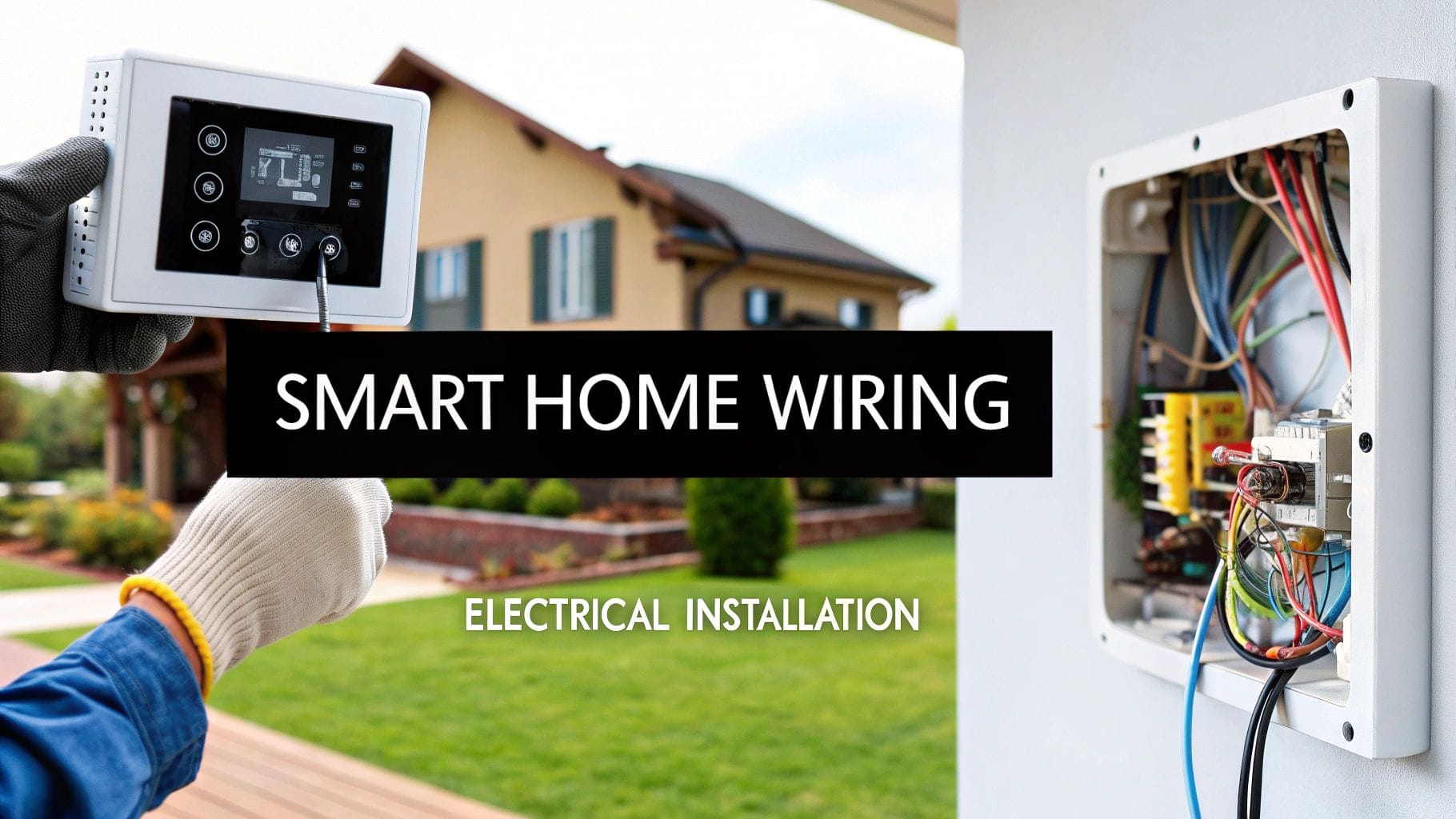
Picturing a home that dims the lights for movie night and adjusts the thermostat before you get home? That futuristic vision hinges on something surprisingly old-school: a professional, safe, and reliable smart home electrical installation. This isn't just about plugging in fancy gadgets; it’s about building a rock-solid electrical nervous system for your connected life.
Why Your Smart Home Dream Needs a Solid Electrical Foundation
Honestly, your smart home is only as smart as the electrical system that powers it. While a lot of these devices are marketed as simple "plug-and-play" toys, truly integrating them into your home’s infrastructure requires a real plan. Otherwise, you’re just setting yourself up for headaches like tripped breakers and spotty performance.
As licensed electricians with years of hands-on experience in Northern Utah, we at Black Rhino Electric have seen firsthand what works and what doesn't. This guide will walk you through everything you need to know, from the foundational wiring behind the walls to the critical safety standards that keep your family safe. Our goal is to make sure your home isn’t just smart, but intelligent and ready for whatever comes next.
Understanding What a Smart Home Installation Really Involves
So, what does a professional smart home electrical installation actually mean? It’s not just about plugging in a few cool gadgets. It’s about building the solid foundation—the wiring, the circuits, and the panel—that makes everything work together safely, day after day.
Think of your home's electrical panel as its heart. It’s responsible for pumping power to every light, device, and appliance. Just like a heart has to be strong enough to support an active lifestyle, your panel has to be ready for the demands of a connected home. Tacking on dozens of new "always-on" smart devices without a plan is asking for trouble. It can overload circuits and create some serious safety risks. This is where the line between a simple DIY plug-in and a professional, hardwired system becomes crystal clear.
Beyond the Wi-Fi Plug
The convenience of a smart plug is great for a lamp or a coffee maker, but a truly integrated smart home has components that are wired directly into your home’s electrical system. This is a completely different ballgame. These systems don't just sit on your Wi-Fi network; they become a permanent, working part of your home’s electrical anatomy.
We’re talking about systems like:
- Integrated Smart Lighting: In-wall smart switches and dimmers that control entire rooms, not just one bulb at a time.
- Automated Window Treatments: Motorized blinds and shades that need their own dedicated, constant power source to work flawlessly.
- Hardwired Security Systems: High-definition cameras and sensors that can’t afford to lose power when you need them most.
- Smart Thermostats: Devices tied directly into your HVAC system’s wiring for reliable, seamless climate control.
Trying to connect these components without a professional’s eye is like adding a new wing to your house without checking the foundation first—eventually, something is going to crack. The global smart home market is set to explode, with projections showing it will reach USD 489.2 billion by 2035. With U.S. smart homes expected to hit 140 million by 2027, making sure your electrical foundation is solid isn't just a good idea; it's essential. You can read the full research on smart home market growth to see just how fast this is all happening.
The Dangers of an Unprepared Electrical System
When you start hardwiring multiple smart devices, the demand on your electrical circuits multiplies. An older home's wiring, or even a modern home's standard setup, was likely never designed to support this kind of constant, stacked load.
The real risk isn't just that your new gadget won't work right. The greater danger is creating an overloaded circuit, which can lead to overheating wires inside your walls—a major fire hazard you might not notice until it’s far too late.
Here’s a look at what can happen when your system is pushed past its limits:
| Potential Problem | Why It Happens | The Smart Solution |
|---|---|---|
| Frequent Breaker Trips | The circuit is crammed with too many devices all asking for power at once. | A licensed electrician can run a load calculation and install dedicated circuits for power-hungry systems. |
| Flickering Lights | Adding a new smart device causes a voltage drop on an already strained circuit. | Panel upgrades and proper load balancing make sure power is delivered consistently to every part of your home. |
| Damaged Devices | Power surges or unstable voltage from shoddy wiring can easily fry your expensive electronics. | Professional installation ensures all connections are secure and up to code, protecting your investment. |
Ultimately, a professional smart home electrical installation isn't really about the devices themselves. It’s about making sure the foundational electrical work is robust, safe, and ready to support your connected lifestyle for years to come.
The Bones of a Smart Home: What Needs a Pro's Touch
Let's look past the flashy gadgets for a minute and talk about the actual electrical foundation of a modern smart home. A real smart home installation isn’t just about plugging things in. It’s about weaving these systems directly into your home’s wiring so they’re rock-solid, safe, and powerful enough to work every single time you need them.
These are the core components that absolutely need an expert electrician.
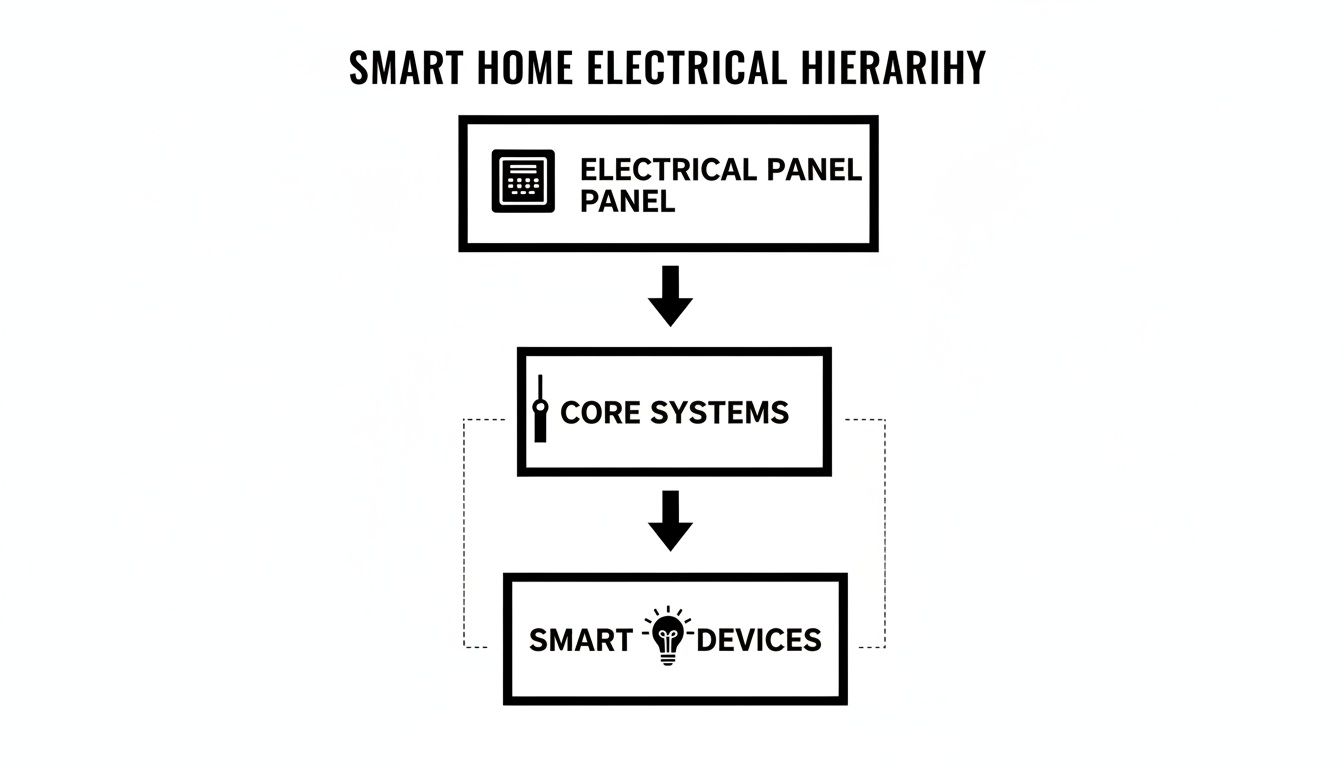
This diagram shows how everything connects, starting from your main electrical panel. Think of it like a tree—if the roots (the panel) are weak, everything up to the smallest leaf (your smart device) will be unreliable.
Hardwired Smart Lighting Systems
One of the biggest "wow" factors in a smart home is integrated lighting. I’m not talking about screwing in a Wi-Fi bulb. I mean installing in-wall smart switches and dimmers that let you control entire rooms and create custom lighting scenes with a single touch.
These devices have to be wired directly into your existing circuits, physically replacing the old switches you use every day. This means handling live wires, understanding what a circuit can handle, and making sure the new switch is compatible with your home's wiring. A pro makes sure these connections are tight and secure, preventing electrical arcs—a scary and common cause of house fires. If you're thinking about a lighting upgrade, our team can help you design a system that’s both stunning and safe.
Central Smart Thermostats
A smart thermostat does a lot more than just let you tweak the temperature from your phone. It connects directly to your HVAC system’s control board. This connection uses low-voltage wiring, which is safer than the high-voltage stuff in your walls, but it demands absolute precision.
Get it wrong, and you could end up with a thermostat that can't talk to the furnace, an HVAC system that won’t turn on at all, or a fried control board—a seriously expensive repair. An electrician makes certain that thermostat is wired perfectly from day one, so it communicates with your furnace and AC without a single hiccup.
High-Definition Security Cameras and Motorized Shades
What’s the point of a security camera if the battery dies? Hardwired cameras give you a constant, reliable stream of power, unlike their battery-powered cousins that can quit at the worst possible moment. The same goes for motorized shades; they offer incredible convenience but need a dedicated power source tucked away inside the wall.
Both of these jobs involve fishing new wires through walls and ceilings back to a power source. That's a skill. Doing it cleanly and safely, ensuring every connection meets local building codes here in Weber and Davis counties, is definitely a job for a professional.
A truly smart home doesn’t just have smart devices; it has an intelligent electrical infrastructure. The reliability of your most important systems—like security and lighting—depends entirely on the quality of the wiring behind the wall.
Low-Voltage vs. Line-Voltage Wiring
Here’s the thing: not all wiring is the same. A professional smart home installation requires an expert who knows their way around both low-voltage and line-voltage systems because they do very different jobs. Understanding the difference is key to getting the project done right.
We use both types of wiring to bring a smart home to life. Here’s a quick breakdown of what each one does.
Low-Voltage vs. Line-Voltage Wiring in Smart Homes
| Feature | Low-Voltage Wiring | Line-Voltage Wiring |
|---|---|---|
| Typical Voltage | 12V, 24V, or 48V | 120V or 240V |
| Common Uses | Security sensors, thermostats, doorbells, landscape lighting, data cables (Ethernet) | Standard outlets, lighting fixtures, major appliances, EV chargers, in-wall smart switches |
| Installation Complexity | Generally safer to handle but requires precision for data and communication signals. | Requires a licensed electrician due to high shock and fire risk; must follow strict electrical codes. |
| Why It Matters | Powers the "brains" and sensors of your smart home. | Powers the "muscle" and high-demand devices in your smart home. |
A licensed electrician is trained to handle both, making sure every component, from a tiny motion sensor to a powerful smart outlet, is installed correctly. This dual expertise is non-negotiable for a truly integrated system where every piece works together seamlessly and, most importantly, safely.
Why Your Electrical Panel Is the Heart of Your Smart Home
Your smart home is only as powerful as the electrical system behind it. While the smart speakers and cameras get all the attention, the real workhorse of your connected world is the electrical panel. It’s the central hub that safely distributes power to every single device, and its condition can make or break your entire investment.
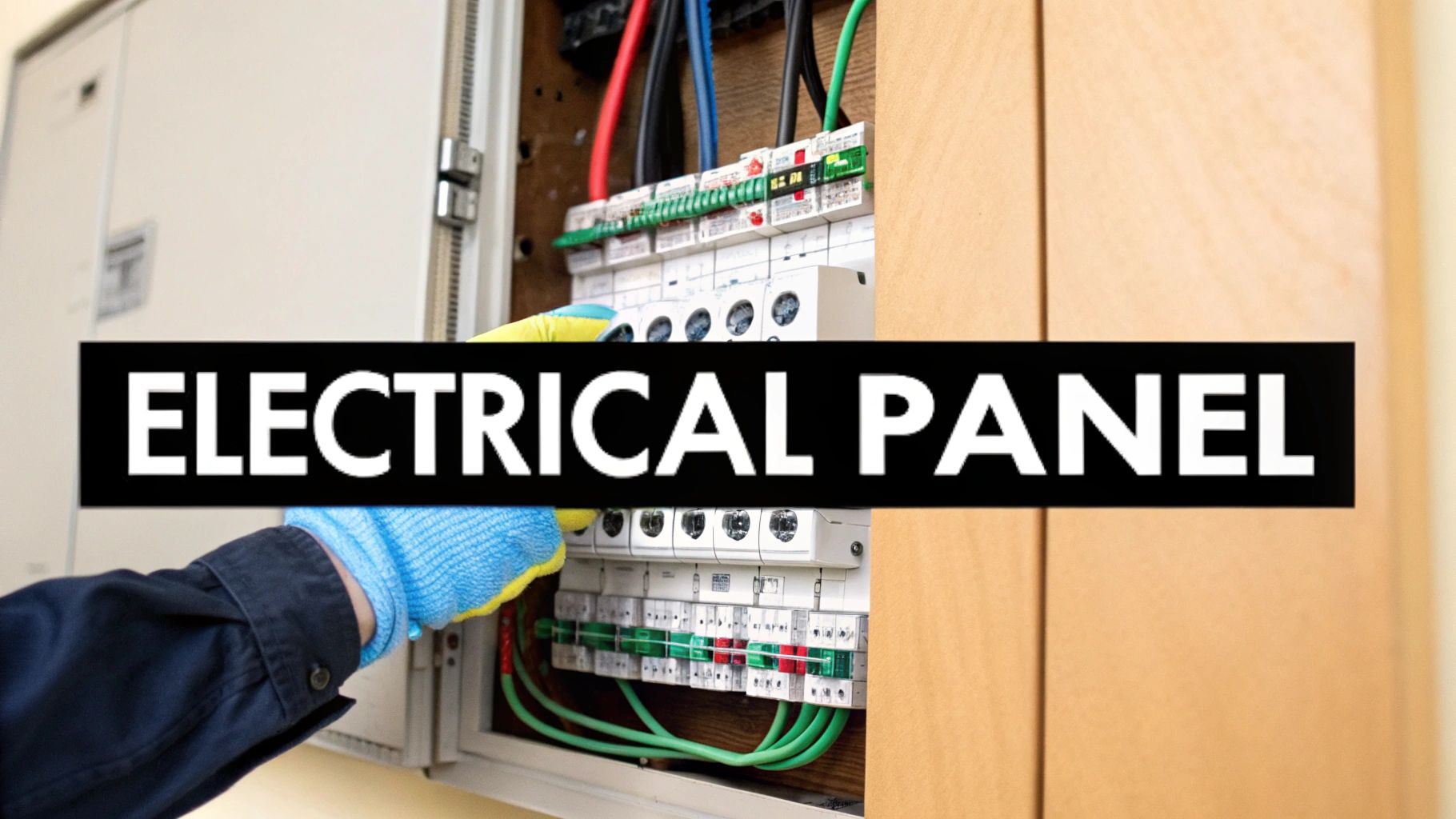
A lot of homes, especially older ones here in Northern Utah, were built for a handful of appliances—not for dozens of "always-on" smart devices. Every smart switch, camera, and hub adds a small but constant electrical load. Add them all up, and that cumulative demand can seriously strain an older or undersized panel.
Recognizing the Warning Signs of an Overloaded Panel
So, how can you tell if your electrical panel is struggling to keep up? The signs are often subtle at first, but they point to a system that’s being pushed way beyond its safe limits. Ignoring them can lead to frustrating performance issues or, far worse, create a serious fire hazard.
Here are some tell-tale signs that your panel might need a professional look:
- Frequent Breaker Trips: If a circuit breaker trips when you just use the microwave, that's a clear signal the circuit is overloaded.
- Flickering or Dimming Lights: Do your lights dip when the AC or another big appliance kicks on? This indicates a significant voltage drop, meaning the panel can’t handle the sudden power demand.
- Buzzing or Hissing Sounds: Your electrical panel should be silent. Any audible buzzing, humming, or crackling from the breaker box are urgent red flags that need immediate attention from a licensed electrician.
- A Smell of Burning Plastic: A faint burning odor near the panel or an outlet is a critical warning sign of overheating wires. Don't ignore this.
An electrical panel is your home's most important safety device. If it's showing signs of strain, it's not just an inconvenience; it's a direct threat to your home's safety and the longevity of your expensive smart devices.
This isn't just a local issue; it’s a nationwide trend. With smart home penetration in North America reaching 35.9% by the end of 2022, households are spending more than ever on connected tech. That growth makes professional wiring to manage these new electrical loads absolutely critical. You can discover more insights about the connected consumer market to see the full scope of this trend.
The Critical Role of Dedicated Circuits
Let me explain another key concept: dedicated circuits. Think of a dedicated circuit as an exclusive VIP lane on your home's electrical highway. It provides uninterrupted power to a single, high-demand appliance, has its own circuit breaker, and isn’t shared with any other outlets or lights.
Why is this so important for a modern home? Power-hungry items can draw a huge amount of electricity, and putting them on a shared circuit is a recipe for tripped breakers and potential damage.
Consider these common additions:
- EV Chargers: A Level 2 charger, like a Tesla Wall Connector, requires a robust dedicated circuit to charge a vehicle efficiently and safely.
- Home Theater Systems: High-end receivers, subwoofers, and projectors all consume significant power. They need a clean, dedicated power source for optimal performance.
- Hot Tubs and Spas: These luxury items are major power consumers and absolutely must have their own dedicated circuit to operate safely and meet electrical codes.
A professional smart home electrical installation always starts with an assessment of your panel and circuits. An expert from Black Rhino Electric can run a load calculation to determine if your current system is up to the task or if an upgrade is needed. To learn more about this crucial component, check out our guide on breakers and panel services for homeowners. We'll make sure your home's electrical heart is strong enough for today's technology—and whatever comes next.
Staying Safe: Codes and Permits in Northern Utah
When we talk about electrical work, safety isn't just a priority—it's the priority. This is especially true for a smart home installation. It's about way more than just making your life easier; it’s about making sure your family and home are protected from anything that could go wrong. A huge part of that protection is handling the local electrical codes and permits correctly.
Let me be straight with you: a building permit isn't just a piece of paper you file with the county. Think of it as a crucial safety check. It ensures a third-party inspector comes out to verify that every wire, connection, and device meets the strict standards of the National Electrical Code (NEC), as well as local rules here in Weber, Davis, and Salt Lake counties. That sign-off is your proof that the job was done right, dramatically cutting the risk of fire or shock.
Your Home’s Built-In Bodyguards: AFCIs and GFCIs
Modern homes have a couple of unsung heroes mandated by the electrical code: Arc-Fault Circuit Interrupters (AFCIs) and Ground-Fault Circuit Interrupters (GFCIs). They might sound technical, but their jobs are simple and incredibly important.
- Arc-Fault Circuit Interrupters (AFCIs): Picture a tiny, hazardous spark jumping between a couple of loose or damaged wires inside a wall. That's an arc fault, and it's one of the leading causes of electrical fires. An AFCI breaker is designed to detect that specific type of spark and instantly cut power to the circuit before a fire can even start. Code requires them in most living spaces now, like bedrooms, living rooms, and hallways.
- Ground-Fault Circuit Interrupters (GFCIs): A ground fault is when electricity finds a shortcut to the ground—and sometimes, that shortcut is through a person. GFCIs are constantly monitoring the flow of electricity. If they sense even the tiniest imbalance, they shut the circuit down in a fraction of a second to prevent a dangerous shock. You'll find them in any area where water is nearby: kitchens, bathrooms, garages, and all outdoor outlets.
A professional electrician knows exactly where these devices are required, giving you layers of automatic protection you never have to think about.
Why Codes Are Critical for Smart Home Safety
It’s no secret that the biggest driver behind the smart home boom is the desire for better security and safety. People want smart cameras, sensors, and locks to protect their homes, and this part of the market is growing faster than any other. You can learn more about the growth of the smart home safety market here. But here’s the thing: all that new tech requires specialized wiring to handle constant connectivity without introducing new electrical hazards.
A licensed electrician’s real job is to take those dense, complex electrical codes and apply them to your home and your project. This expertise is what guarantees your new smart system isn't just clever, but fundamentally safe for your family and your investment.
This commitment to doing things by the book is a core part of our promise at Black Rhino Electric. A properly permitted and inspected smart home electrical installation gives you something invaluable: peace of mind. When an inspector from Salt Lake County or Davis County signs off on our work, it’s not just a formality. It’s an official confirmation that the job was done to the highest safety standards possible.
How to Choose the Right Electrician for Your Project
You know what? The right electrical contractor is the difference between a smart home that works flawlessly and one that causes endless frustration. Choosing an electrician for your smart home electrical installation isn’t like hiring someone for a simple repair; it requires a specific skill set that bridges traditional electrical work with modern tech.
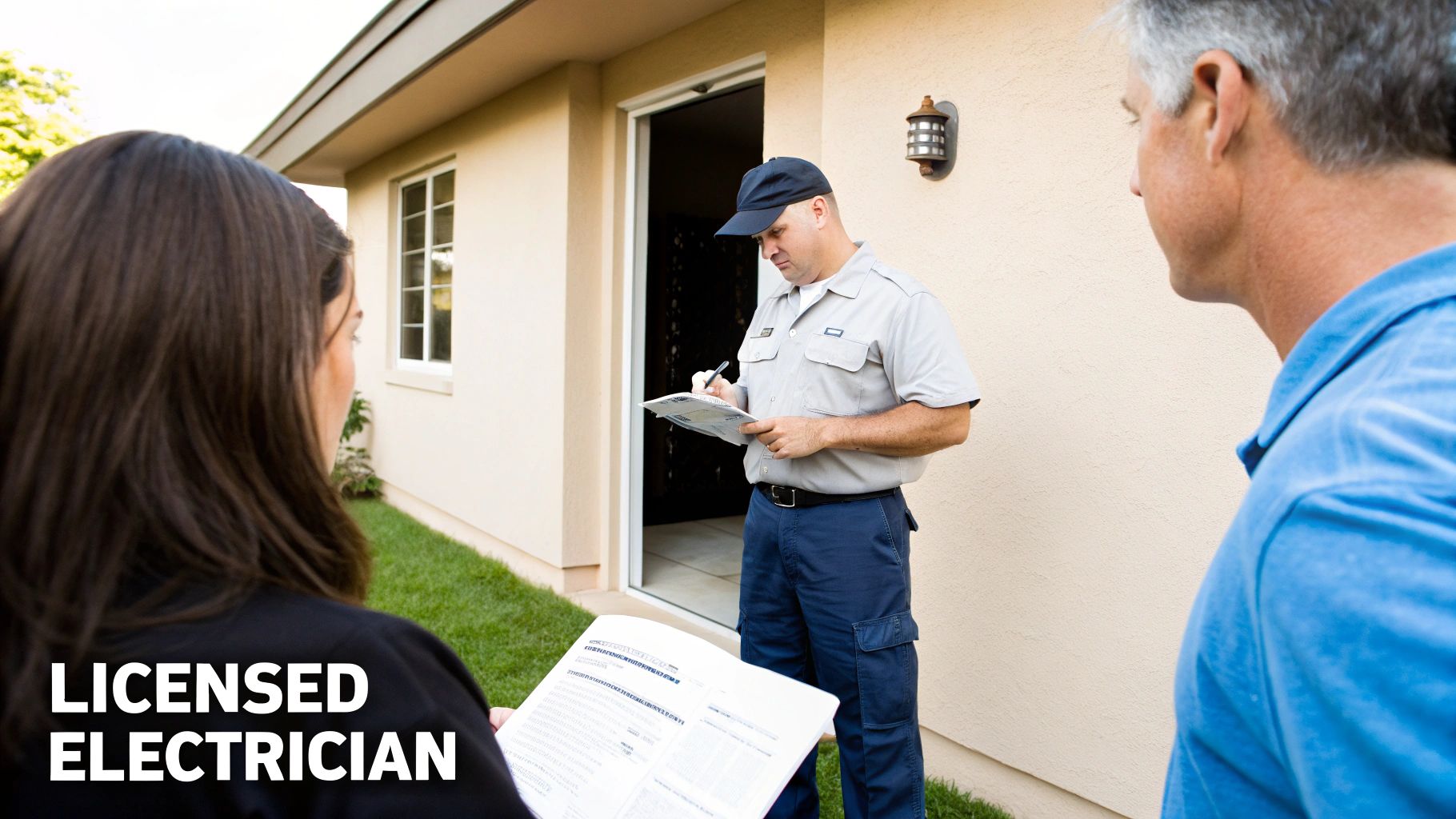
This isn’t the time to hire a general handyman or the cheapest option you can find. Smart home systems involve a delicate dance between high-voltage wiring for power and low-voltage wiring for data and communication. One wrong move can fry expensive equipment or, worse, create a hidden safety risk inside your walls.
The Non-Negotiable Checklist for Hiring an Electrician
Before you let anyone touch your home’s wiring, you need to do your homework. A few key questions can quickly separate the true professionals from the rest. Arm yourself with this checklist to ensure you’re hiring a qualified, trustworthy partner for your project in Weber, Davis, or Salt Lake counties.
Here’s what you absolutely must confirm:
- Licensing and Insurance: Is the electrician fully licensed to work in Utah and do they carry comprehensive liability insurance? This is your most basic protection against shoddy work and accidents.
- Specific Smart Home Experience: Ask them directly about their experience with smart home integrations. Have they installed smart lighting systems, hardwired security cameras, or integrated smart thermostats before?
- Knowledge of Both Wiring Types: Can they confidently discuss both line-voltage and low-voltage systems? A true smart home expert needs to be fluent in both to make all the components communicate correctly.
- Local Code Familiarity: Do they understand the specific electrical codes and permitting requirements for your city or county? This ensures the installation is not only safe but also fully compliant.
Hiring a qualified electrician isn't just about getting the job done; it's about protecting your investment. The right professional ensures your system is safe, reliable, and built to last, preventing costly repairs and giving you true peace of mind.
What to Expect in a Professional Quote
Once you’ve found a few promising candidates, the next step is getting a detailed quote. A vague, one-line estimate is a major red flag. A professional quote should be an itemized document that clearly outlines every aspect of the project, leaving no room for surprise charges later on.
A transparent quote should include:
- A Detailed Scope of Work: The quote must specify exactly what will be installed, from the number of smart switches to any new wiring being run.
- Itemized Material Costs: It should list the costs for all major components, like switches, outlets, wiring, and any necessary panel upgrades.
- Labor Costs and Timeline: The quote must clearly state the estimated labor hours or a flat rate for the job, along with a projected start and completion date.
- Permit Fees: If the project requires a permit, the cost for pulling it should be included so there are no surprises.
This level of detail shows that the contractor has thoroughly planned the project and is committed to transparency. At Black Rhino Electric, we believe in clear communication and upfront pricing. Our safety-first approach and punctuality are cornerstones of our service, aligning perfectly with what homeowners should demand from a trusted electrical partner on their smart home journey.
Smart Home Installation: Your Questions Answered
Jumping into a smart home project brings up a lot of questions. That’s perfectly normal. You're making a real investment in your home's future, and you deserve clear, straightforward answers.
We've gathered some of the most common questions we hear from homeowners right here in Northern Utah. Think of this as your starting point for making smart decisions for your family and your property.
What's the Average Cost for a Smart Home Electrical Installation?
This is usually the first question on everyone's mind, and the honest answer is: it really depends. The cost is tied directly to the size and scope of your project.
A basic job, like swapping a few traditional light switches for smart ones, might only cost a few hundred dollars. It's a fantastic starting point for many homeowners to test the waters.
But a comprehensive, whole-home system is a different story. If your vision includes integrated lighting throughout the house, hardwired security cameras, automated shades, and needs an electrical panel upgrade to handle it all, the cost could range from several thousand to over ten thousand dollars.
The final price tag is influenced by your home's age, the condition of its existing wiring, and how complex your chosen systems are. Here at Black Rhino Electric, we provide transparent, itemized quotes so you see exactly where every dollar goes before we even pick up a tool.
Can I Install a Smart Home System Myself?
It’s tempting to DIY home projects, but electrical work is one place where it's just not worth the risk. For simple plug-in devices—like a smart speaker or a coffee maker on a smart plug—you're perfectly fine. Go for it. But the moment a device needs to be hardwired into your home's electrical system, it's time to call a professional.
Here’s the thing:
- Safety Risks: Wiring a smart switch or outlet incorrectly can create a serious fire hazard from electrical arcing inside your walls. It’s a silent danger you won’t see until it’s too late.
- Device Damage: One wrong connection can send the wrong voltage to your expensive smart devices, frying them permanently.
- Code Violations: Electrical work has to follow strict local and national codes. If it doesn't, you'll run into major headaches when it's time to sell your home.
- Insurance Issues: If an electrical fire does happen, your homeowner's insurance may deny the claim if the work wasn't done by a licensed electrician.
To keep your home and family safe, any task that involves touching your home's wiring should be left to a licensed professional.
How Long Does the Installation Process Usually Take?
Like the cost, the project timeline depends entirely on the scale of the work.
A smaller job, like installing a smart thermostat and a handful of in-wall dimmers, can often be wrapped up in just a few hours. We can be in and out with very little disruption to your day.
For a bigger, more involved project—say, one that needs a full panel upgrade, new dedicated circuits run, and a complete security and lighting system installed—the work could take several days. During our initial consultation, we'll give you a clear and realistic project timeline so you know exactly what to expect and can plan your life around it.
A professionally installed smart home system is a significant upgrade that enhances your daily life and boosts your property's market appeal. Buyers today see integrated systems as a sign of a modern, well-maintained, and energy-efficient home.
Will a Smart Home System Actually Increase My Property Value?
Absolutely. A fully integrated and professionally installed smart home system is a powerful selling point that makes your property stand out.
Potential buyers see it as a premium upgrade that delivers security, convenience, and modern efficiency. A hardwired system signals a thoughtful, high-quality investment—a world away from a messy collection of mismatched DIY gadgets. This not only makes your home more attractive but can genuinely contribute to a higher resale value when you decide to sell.
Ready to transform your home with a professional smart home electrical installation? The licensed team at Black Rhino Electric has the expertise to bring your vision to life safely and efficiently. To get started, you can call us at 385-396-7048 or request a free quote online today.