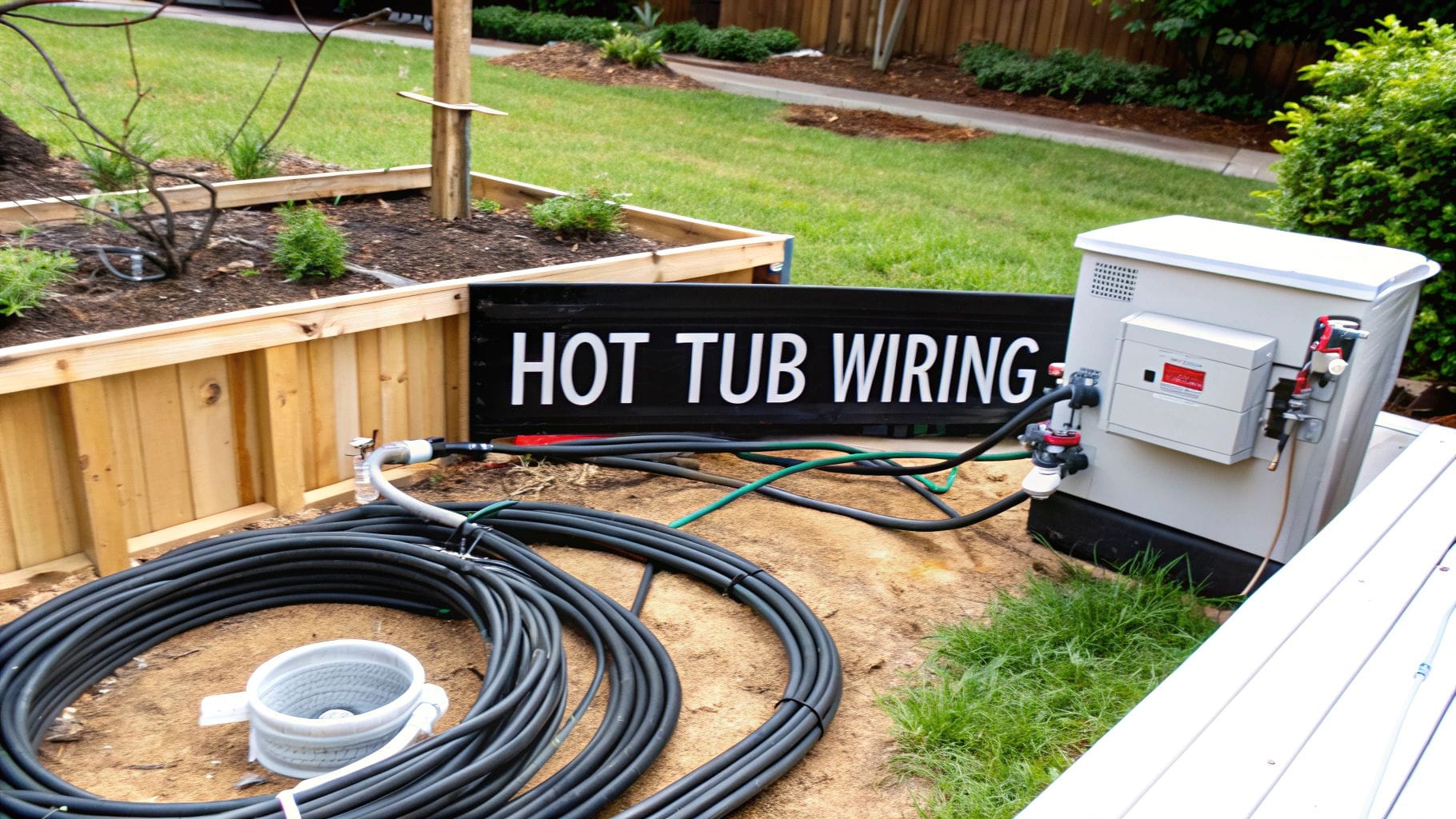
Getting a new hot tub is an exciting moment, but honestly, the most critical step for your safety and long-term enjoyment is getting the wiring for hot tub installation perfect. This guide will break down the complex electrical requirements into simple, understandable concepts so you can relax with true peace of mind. We'll walk you through the non-negotiable safety standards, from dedicated circuits and GFCI protection to the specific codes we follow here in Utah.
Why Proper Hot Tub Wiring Is Non-Negotiable
Have you ever wondered what really separates a relaxing soak from a serious safety hazard? It all comes down to the electrical setup. A hot tub is a powerful appliance that combines high-voltage electricity and a whole lot of water, creating a situation where there is absolutely zero room for error. An improper installation isn't just a minor inconvenience; it's a genuine risk to your home and family.
Here’s the thing: cutting corners can lead to significant dangers.
- Electrical Shock: Incorrect GFCI protection or faulty grounding can create a life-threatening risk. It's that serious.
- Fire Hazard: Using undersized wires is like trying to send a river through a garden hose—they overheat and can easily start a fire.
- Equipment Damage: Improper voltage or unstable connections can fry your hot tub's expensive internal components, turning your investment into a write-off.
- Code Violations: A DIY job can fail inspection, leading to fines and the headache of having to pay a professional to redo it all anyway.
Understanding Your Hot Tub's Power Requirements
Before you even start dreaming about that first relaxing soak, we need to talk about power—and a lot more of it than a standard outdoor outlet can handle. Proper wiring for a hot tub is a serious electrical job. Most modern tubs are powerful appliances that need a dedicated 240-volt circuit just to run their heaters and jets safely and efficiently.

Think of your home's electrical system like a highway. A normal 120-volt outlet is a single-lane side street, perfect for a lamp or a phone charger. Your hot tub, with its big heater and powerful pumps, needs its own multi-lane expressway. Without it, you get traffic jams—or in electrical terms, overloaded circuits and constantly tripped breakers.
This is why a dedicated circuit isn't just a friendly suggestion; it's a hard-and-fast requirement for safety and performance. A dedicated circuit means one specific circuit breaker in your electrical panel is connected only to your hot tub. Nothing else. This guarantees the tub gets all the consistent energy it demands without fighting with other appliances for power.
Volts and Amps Explained
You're going to hear two terms thrown around a lot: volts and amps. Let me explain.
- Voltage (Volts): This is the "pressure" of the electricity. While some small, "plug-and-play" tubs might limp along on a standard 120V outlet, nearly all full-sized hot tubs require 240V. This is what allows them to run powerful heaters and multiple jet pumps at the same time.
- Amperage (Amps): This measures the "volume" of electrical current being pulled. Hot tubs are thirsty, typically needing a circuit rated for 50 or 60 amps. That’s a massive draw that demands heavy-duty wiring all the way from the panel.
A common mistake we see is people underestimating these needs. Trying to run a 240V hot tub on an undersized circuit is a recipe for disaster. It leads to nuisance breaker trips, damaged equipment, and a very real fire risk.
Hot tub wiring is a high-stakes game of safety. In fact, wiring mistakes are responsible for roughly 12% of all hot tub malfunctions, often stemming from undersized wires that dangerously overheat. As a result, the National Electrical Code (NEC) has tightened its rules, now requiring hardwired connections for most models to improve safety. You can learn more about these hot tub market trends and their impact on installation standards.
Why Your Electrical Panel is Key
The heart of this whole operation is your home's main electrical panel. Before a single wire is run, a qualified electrician has to confirm if your panel can even handle the new load. This involves two critical checks:
- Sufficient Capacity: Your panel has a total amperage rating, maybe 100A, 150A, or 200A. An electrician will perform a load calculation to make sure adding a huge 50A or 60A circuit won't push your entire system past its safe limit.
- Physical Space: A 240V circuit needs a "double-pole" breaker, which takes up two physical slots in the panel. If your panel is already full, you might be looking at adding a subpanel or upgrading the main panel itself to make room.
To give you a clearer picture, here's a quick side-by-side of what different hot tubs typically demand.
Hot Tub Electrical Requirements at a Glance
This table breaks down the typical specs for standard and high-performance hot tubs, helping you quickly see where your new spa might land.
| Component | Standard Hot Tub (2-4 Person) | Large / High-Performance Hot Tub (5+ Person) |
|---|---|---|
| Voltage | Typically 240V | 240V |
| Required Circuit | Dedicated 40A or 50A | Dedicated 50A or 60A |
| Breaker Type | 2-Pole GFCI Breaker | 2-Pole GFCI Breaker |
| Wire Size (Copper) | 8-Gauge or 6-Gauge | 6-Gauge |
Knowing these basic power requirements is the first step toward a safe, successful installation. It helps you have an informed conversation with your electrician and truly understand the scope of the project from the get-go.
GFCI Protection: The Lifesaving Component You Can't Skip
When it comes to wiring a hot tub, some things are just non-negotiable. At the very top of that list is the Ground Fault Circuit Interrupter, or GFCI.
Think of a GFCI as a hyper-vigilant lifeguard for your electrical circuit. It’s constantly watching the flow of electricity, and the second it senses a tiny imbalance—the kind that could cause a tragic shock—it slams on the brakes and cuts the power in a split second.
Let me be clear about how crucial this is. A ground fault happens when electricity finds an unintended path to the ground. In a wet environment like a hot tub, that path could be through the water or, terrifyingly, through a person. This protection isn't just a good idea; it's a life-saving essential required by law.
The Role of the GFCI Breaker
For a 240V hot tub, you won't be using a standard GFCI outlet like the one in your bathroom. Instead, the protection is built right into a special GFCI circuit breaker, which is installed in your main electrical panel or in a separate disconnect panel near the spa.
This device does two critical jobs:
- Ground Fault Protection: Its main purpose is to protect people from shock. It does this by instantly cutting power if it detects even a minuscule leak in the current.
- Overcurrent Protection: It also acts as a standard breaker, tripping if the hot tub’s pumps or heater pull too much amperage. This prevents wires from overheating and becoming a fire hazard.
The Emergency Disconnect Switch
Beyond the GFCI breaker, the National Electrical Code (NEC) has another critical safety rule under Article 680, which specifically covers pools and spas. It requires a manual emergency disconnect switch.
This switch must be:
- Readily Accessible: You have to be able to get to it fast in an emergency.
- Within Sight: It must be located in your line of sight from the hot tub.
- At a Safe Distance: It has to be at least five feet away from the water's edge but no more than 50 feet away.
Why the five-foot rule? It’s simple. This prevents someone who is in the water from being able to touch the metal disconnect box at the same time, which eliminates another potential shock hazard. This switch gives you a clear, physical way to kill all power to the tub for maintenance or in an emergency.
The NEC rules aren't just arbitrary guidelines; they are safety standards written from decades of experience with electrical accidents. The specific placement and type of GFCI protection are designed to create multiple layers of safety between you and 240 volts of electricity.
The data backs this up. Improper electrical setups are a major factor in the 5,000+ hot tub injuries reported annually in the U.S., most of which come from GFCI failures or overloaded circuits. Since recent NEC updates, requiring dedicated 50-60A, 240V lines for all tubs, electrical risks have been drastically reduced. You can explore more insights on the hot tub industry and safety standards on mordorintelligence.com. Understanding how to install GFCI power outlets correctly is a foundational element of electrical safety.
GFCI vs. Standard Breaker
It’s easy to confuse a GFCI breaker with a standard one, but they are worlds apart in what they do. A standard breaker only cares about overloads; a GFCI cares about your life.
| Feature | Standard Breaker | GFCI Breaker |
|---|---|---|
| Primary Function | Protects wiring and equipment from overcurrents (too many amps). | Protects people from electrical shock by detecting ground faults. |
| Sensing Mechanism | Trips when the amperage exceeds its rating (e.g., 50A). | Trips when it detects a tiny imbalance (4-6 milliamps) in current. |
| Key Benefit | Prevents electrical fires. | Prevents electrocution. |
| Reset Method | A simple "Off" then "On" switch. | Includes a "Test" button that should be pressed monthly. |
Bottom line: both the GFCI breaker and the emergency disconnect are absolute must-haves. They are the seatbelt and airbag of your hot tub's electrical system, working together to make sure every soak is a safe one.
Choosing the Right Wire Gauge and Conduit
The wires are the arteries of your hot tub’s electrical system. That’s not an exaggeration. Choosing the right size and type isn’t just a good idea—it’s a non-negotiable safety rule. Think of it this way: a tiny garden hose can't supply enough water for a fire truck, and an undersized wire can't safely handle the massive electrical current your hot tub needs.
This is where wire gauge comes in. Honestly, it’s a bit backward. With wire gauge, a lower number means a thicker, beefier wire. This thicker wire has less resistance, which allows it to carry a heavy electrical load over a long distance without dangerously overheating.
Why Wire Gauge and Type Matter
For most 240V hot tubs that call for a 50-amp circuit, the industry standard and National Electrical Code (NEC) require 6-gauge copper wire. Using anything smaller, like an 8 or 10-gauge wire, creates a serious fire hazard. The wire simply can't get rid of the heat generated by that much current, and the insulation can melt and ignite whatever’s nearby.
Beyond the gauge, the type of wire is just as critical. You’ll usually see our electricians using individual THHN/THWN wires run inside a protective conduit. These wires are specifically designed to hold up in the wet, demanding outdoor environment where your hot tub lives.
Choosing the correct wire gauge isn't just a best practice; it's a fundamental safety requirement. An undersized wire is one of the most common—and dangerous—mistakes in a DIY installation. It directly compromises the integrity of your entire electrical system.
This diagram helps visualize how all the safety components work together in a proper hot tub installation.
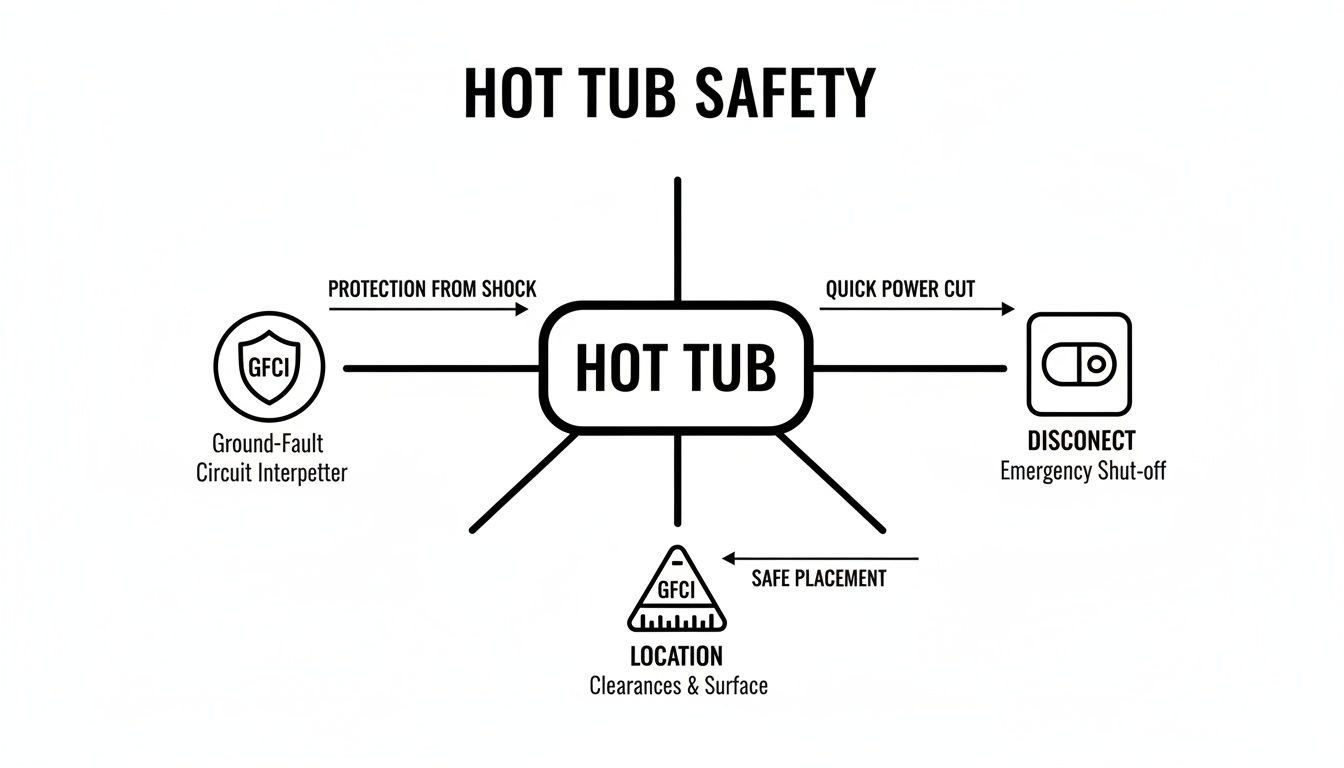
As you can see, the wiring is interconnected with GFCI protection, the emergency disconnect, and the hot tub's location. Each piece of the puzzle is critical for safety.
Protecting Your Wires with Conduit
The wires themselves are only half the battle. They need to be shielded from physical damage, moisture, and sunlight. That protection comes from conduit, which is basically a durable tube that protects the electrical wiring all the way from the panel to the hot tub.
You know what? The type of conduit we use often depends on where it's being installed. Here are the two most common options:
- Schedule 40/80 PVC: This is a rigid plastic conduit that’s perfect for underground runs. It’s waterproof, corrosion-resistant, and the absolute go-to for burying electrical lines.
- Rigid Metal Conduit (RMC) or Electrical Metallic Tubing (EMT): These metal options are used for areas where the conduit is exposed, like when it’s running along the side of your house. They offer far better physical protection against a stray lawnmower or clumsy feet.
Here in Northern Utah, we also have to account for our specific climate. The ground freezes and thaws, causing "frost heave" that can shift and damage improperly buried lines. That’s why local codes require underground conduit to be buried at a specific depth, usually 18 to 24 inches, to stay below the frost line and keep the connection secure for decades.
Getting the materials and installation techniques right is essential. It's also why we always perform a full evaluation of your home's breakers and electrical panels before starting any hot tub project, ensuring your system can handle the new load safely.
Wire Gauge and Conduit Sizing Guide for 240V Hot Tubs
To make things a bit easier, here’s a quick reference table that matches the most common hot tub circuits to the correct wire and conduit sizes.
| Circuit Amperage | Required Copper Wire Gauge (AWG) | Recommended Conduit Size (Schedule 40/80 PVC) |
|---|---|---|
| 40 Amps | 8-Gauge | 3/4-inch |
| 50 Amps | 6-Gauge | 3/4-inch or 1-inch |
| 60 Amps | 6-Gauge | 1-inch |
Getting these details right ensures your hot tub installation isn't just functional—it's fundamentally safe and built to last.
Proper hot tub wiring isn’t just about following best practices—it’s about following the law. This is where we move from the physical work in your yard to the paperwork that guarantees it’s all safe and compliant. Dealing with permits can feel like a maze, but it’s a system designed to protect you.
Here’s the thing: municipalities throughout Northern Utah, from Weber and Davis counties down to Salt Lake, all require an electrical permit for a hot tub installation. This isn't just bureaucratic red tape; it's a formal process that ensures an independent expert signs off on the safety of the work.
Why a Permit is Your Best Friend
Think of an electrical permit as a layer of insurance you didn't know you needed. It triggers an official inspection by a city or county official who has no connection to the electrician doing the work. Their only job is to confirm that every single detail—from the wire gauge buried underground to the GFCI protection—meets the National Electrical Code (NEC) and any local rules.
This verification is absolutely critical for a few reasons:
- Your Safety: It’s third-party proof that the wiring for your hot tub is installed correctly, drastically cutting the risk of fire or electrical shock.
- Homeowners Insurance: If something ever went wrong, your insurance provider will ask for proof that the work was permitted and inspected. Without it, they could deny your claim, leaving you with the bill.
- Home Resale Value: When you go to sell your home, unpermitted electrical work becomes a major headache. It can delay or even kill a sale.
- Avoiding Rework: Failing an inspection means the job has to be fixed and reinspected. That costs time and money. A permit makes sure the job is done right the first time.
The Permit and Inspection Process Explained
So, what does this actually look like? While the details can vary slightly between cities like Ogden, Layton, or Salt Lake City, the core steps are the same. A professional electrician handles this whole process for you, making it painless for the homeowner.
- Permit Application: Before a single tool comes out, we submit a detailed application to your local building department. This includes plans showing the scope of work, load calculations, and the materials we’ll be using.
- Work Completion: Once the permit is issued, our licensed electricians get the job done, following the approved plans and all relevant codes to the letter.
- Scheduling the Inspection: With the installation complete, we coordinate with the local inspector to schedule their on-site visit.
- The Inspection: The inspector shows up to review the entire electrical system. They'll check the breaker in your main panel, the depth of the buried conduit, where the disconnect switch is located, and the final connection at the hot tub itself.
- Final Approval: Once the inspector confirms everything is up to code, they "pass" the inspection and officially close the permit. That final sign-off is your proof of a safe, compliant installation.
This whole process removes the guesswork. It ensures that every hot tub installation we handle at Black Rhino Electric isn't just functional, but meticulously checked for safety. That’s what gives you real peace of mind.
Ultimately, handling local codes and permits is a non-negotiable part of a professional installation. It’s the final check that turns an exciting new toy into a safe, reliable retreat for your family. This commitment to doing things by the book is what separates a pro job from a risky shortcut. When we’re done, you don't just have a new hot tub; you have the confidence that it was installed perfectly.
Why Trust Black Rhino Electric for Your Hot Tub Installation
After digging into the details of hot tub wiring, one thing becomes pretty clear: this isn't a DIY weekend project. Getting it wrong is risky, and getting it right requires a pro who knows the code inside and out. That’s exactly where we’ve built our reputation. At Black Rhino Electric, we’re known for safety-first work, straight-up pricing, and a deep understanding of Northern Utah's specific electrical rules. We’re not just installers; we’re career electricians focused on keeping your home and family safe.
Here’s the thing: we handle the entire process from start to finish. No headaches for you.
- We manage everything: From the initial load calculation at your panel to coordinating with the local inspector and making sure it passes.
- Code-compliant work, guaranteed: Every connection we make and every component we install is done to meet—and often exceed—both national and local standards.
- Real peace of mind: You can relax knowing the job was done correctly the first time, with no shortcuts.
We take a lot of pride in being the local hot tub electrician our neighbors trust for safe, reliable work.
Hot Tub Wiring Questions We Hear All The Time
Even with a solid plan, it's completely normal to have questions about the nuts and bolts of hot tub wiring. Getting clear answers is the best way to feel good about the project. We’ve pulled together a few of the most common questions our electricians hear from homeowners right here in Northern Utah.
Can I Just Plug My Hot Tub into a Regular Outdoor Outlet?
For most hot tubs, the answer is a firm no. While some small, 120V "plug-and-play" models exist, the vast majority of modern spas need a dedicated 240V circuit. They draw a lot of power—typically 40, 50, or even 60 amps—to run those powerful heaters and jets.
Trying to run a 240V spa on a standard outlet isn’t just impossible; trying to force it is incredibly dangerous. The very first step should always be checking the manufacturer's electrical spec sheet. It tells you everything you need to know.
What’s the Ballpark Cost to Wire a Hot Tub?
The final cost can swing quite a bit depending on a few key things. The biggest drivers are the distance from your main electrical panel to the tub's spot, whether your panel can handle a new high-amperage circuit, and how complex the conduit run is. Trenching under a landscaped yard is a different job than running conduit along a basement wall, for example.
We believe in total transparency. That’s why we provide detailed, upfront quotes before any work begins. You'll know the full cost right from the start, with zero surprises.
Will I Need to Upgrade My Home's Electrical Panel?
It’s a real possibility, especially in older homes. Many existing panels simply weren't designed with enough capacity or physical space to add a big 240V double-pole breaker for a hot tub.
Part of our first on-site visit is a thorough look at your current system. We'll determine if a panel upgrade is needed to safely and reliably power your new spa. It’s all about making sure the heart of your home’s electrical system is ready for the job.
Ready to enjoy your new hot tub with the peace of mind that comes from a professional, code-compliant installation? The licensed electricians at Black Rhino Electric are here to make sure your project is done right, right from the start. Give us a call at 385-396-7048 or request a free quote online today.