Ever wonder how to truly protect your brand new TV, your computer, or the smart thermostat you just installed? While it’s easy to blame a big lightning storm for frying your electronics, what is whole house surge protection and could it prevent damage from threats already inside your house? Here's the thing: small, unnoticed power surges can slowly kill the delicate circuits in your most expensive devices, and a whole-house unit is your first line of defense.
Contents
Your Home’s Invisible Shield Against Power Surges
Have you ever had an electronic device just die on you for no good reason? You know what? The real culprit often isn’t one big power surge, but thousands of small ones that happen right inside your walls. These little zaps are far more common and, over time, just as destructive as a nearby lightning strike.
In fact, it’s estimated that over 80% of power surges are generated internally. They come from perfectly normal, everyday things, such as:
- Large appliances like air conditioners, refrigerators, and washers cycling on and off.
- Running power tools in your garage or workshop.
- Even older, faulty wiring can be a source.
Each of these small electrical spikes is like a tiny hammer, repeatedly striking the sensitive components of your electronics. For homeowners here in Northern Utah who've invested thousands in their home tech—from EV chargers to smart home hubs—that slow, steady damage is a real and costly risk. Every surge, big or small, shortens the life of the things you rely on.
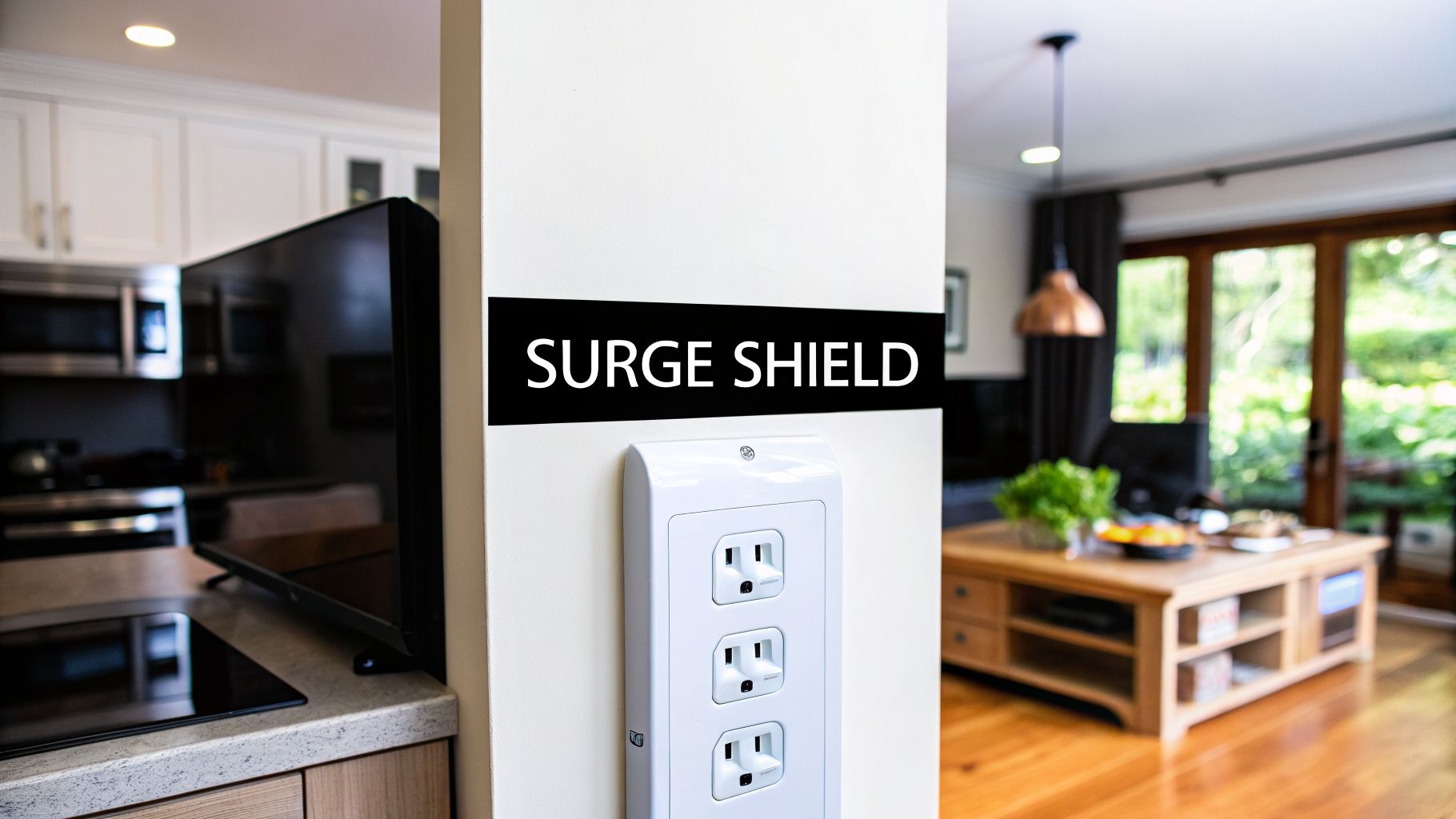
A whole-house surge protector gets installed right at your main electrical panel. It acts like a bouncer, stopping those voltage spikes dead in their tracks before they ever get a chance to race through your home’s wiring.
With our growing reliance on sensitive electronics and the wild weather we sometimes get, this kind of protection has become more critical than ever. The market for these devices is expected to hit USD 1,799 million by 2032, driven by new requirements in the National Electrical Code (NEC) and a sharp rise in awareness about surge damage. You can review the full market projections to see just how fast this is growing.
This isn't a luxury anymore. It’s a fundamental safeguard for any modern home.
How Whole House Surge Protection Actually Works
So, how does one little box protect every single outlet, appliance, and smart device in your home? It’s a fair question. The answer is simpler than you’d think.
Imagine your home’s electrical system is like its plumbing. The voltage flowing through the wires is like the water pressure in your pipes. Normally, that pressure is steady and predictable. A power surge is a sudden, violent spike in that pressure—think of a water hammer effect that can burst pipes and flood your basement.
A whole-house surge protector is the pressure-relief valve for your home’s electrical system. Its job is to keep that pressure from ever getting out of control.
The Gatekeeper at Your Electrical Panel
Your whole-house surge protector is installed right where it matters most: at your main electrical breakers and panels. It’s a small, unassuming box that gets wired directly into your system, where it acts as the primary gatekeeper, constantly monitoring the voltage coming in from the utility.
Its entire job is to watch for any voltage that jumps above the normal, safe level for your home—typically around 120 volts.
The moment it detects a dangerous spike, it acts. Instantly. Within nanoseconds—literally faster than you can blink—the device opens a path and shunts all that excess, damaging energy away from your home’s sensitive circuits. It sends it safely into your grounding system, where the spike can dissipate harmlessly into the earth.
This infographic breaks down the two main sources of these power surges—the big ones from outside and the smaller, more frequent ones that happen inside your home.

As you can see, your home is vulnerable to both massive external events like a lightning strike and the countless smaller surges generated by your own large appliances kicking on and off.
Understanding Surge Protector Specs
The technical specs on a surge protector can look like a foreign language. But knowing what they mean is how you choose the right level of protection, because not all surge protectors are created equal. Let me explain the three numbers that really matter.
A whole-house surge protector is your first and most critical line of defense. It handles the big, dangerous surges from outside so your smaller, plug-in protectors can handle the rest.
These specifications tell you exactly how a surge protector will perform when you need it most. The table below cuts through the jargon.
Understanding Surge Protector Specifications
| Specification | What It Measures | What to Look For |
|---|---|---|
| Joule Rating | This is the device's energy absorption capacity. Think of it like a shield's health bar; a higher number means it can absorb more energy from surges over its lifetime before wearing out. | A higher number is always better. Look for a rating of at least 1,000 joules, but for serious protection, 2,500 joules or more is what we recommend for a whole-house unit. |
| Clamping Voltage | This is the voltage level that triggers the surge protector to act. It’s the "let-through" voltage—the maximum voltage that will pass through to your devices before the protector clamps down. | A lower number is better here. For a 120V line, a clamping voltage of 400 volts or less is good. It means less of the surge ever reaches your expensive electronics. |
| Response Time | This measures how fast the device can detect a surge and divert the excess voltage. Electrical surges happen incredibly fast, so the device needs to be faster. | Look for a response time of one nanosecond or less. A fast response time is non-negotiable for stopping a surge before it can fry sensitive microprocessors. |
Getting these specs right is the difference between having real protection and just having a box on the wall. It’s cheap insurance for thousands of dollars worth of electronics.
Why Power Strips Alone Are Not Enough
Honestly, a lot of folks think the power strips they have plugged in around the house are all they need. It’s a common mistake, and a totally understandable one. They’re called “surge protectors,” right? The problem is, relying only on those strips is like trying to guard a fortress by putting a few soldiers inside the castle, but leaving the main gate wide open.
Those individual power strips are known in the trade as point-of-use or Type 3 surge protectors. They’re only designed to handle the small, internal power fluctuations that happen inside your home. They simply aren’t built to stop the massive voltage spikes from a lightning strike or a problem on the utility grid.
When a powerful surge hits from the outside, it will blow right past those small devices, frying them and your expensive electronics in the process.
The Gatekeeper and Bodyguard Analogy
Let me explain the right way to think about this. The only strategy that truly works is a layered defense, with two different types of protection working as a team.
Think of your home's entire electrical system as a VIP that needs protecting.
The Gatekeeper (Whole-House Surge Protector): This is your Type 1 or Type 2 surge protector, installed right at your electrical panel. It’s the tough-as-nails gatekeeper standing guard at the single entry point to your home. Its job is to stop massive external surges—from lightning or the power company—before they even get inside. It takes the big hit.
The Bodyguards (Point-of-Use Power Strips): These are the individual strips you plug your electronics into. Think of them as close-protection bodyguards for your computer, TV, or gaming console. They handle any tiny bit of voltage that might sneak past the main gatekeeper—we call this “let-through” voltage. They also guard against smaller surges created by your own appliances cycling on and off.
Without the gatekeeper at the panel, the bodyguards are left to face the full force of a major attack. It's a fight they are guaranteed to lose every single time. Relying only on power strips leaves your most critical and expensive systems—your HVAC, EV charger, refrigerator, and all the wiring in your walls—dangerously exposed.

Layered Protection Is The Only Answer
A single layer of defense just doesn't cut it anymore, not in a modern home filled with sensitive electronics. Both types of protection have distinct jobs, and they’re designed to work together as a complete system.
The table below breaks down the key differences and shows why you really need both.
Whole House vs. Point-of-Use Surge Protection
| Feature | Whole House (Type 1 or 2) | Point-of-Use (Type 3) |
|---|---|---|
| Location | At the main electrical panel or meter. | Plugged into individual wall outlets. |
| Protects Against | Large, external surges (lightning, grid issues). | Small, internal surges and residual voltage. |
| Coverage | Protects the entire home's electrical system. | Protects only the devices plugged into it. |
| Key Role | First line of defense; blocks major threats. | Second line of defense; guards specific devices. |
| Protects | HVAC, EV chargers, appliances, all outlets. | Laptops, TVs, gaming consoles, office equipment. |
This layered approach is the industry standard for a reason—it’s the only way to ensure all your electronics are truly safe, from the big-ticket appliances to your laptop.
As our homes get smarter, this becomes even more critical. The surge protection device market is projected to reach USD 4.88 billion by 2030, driven by the fact that the number of smart home devices in the U.S. is expected to climb to 93.59 million by 2027. You can read more about the growing surge protector market and see why every expert recommends this combined strategy.
The Real Value of Whole-House Surge Protection
When people think about surge protection, they usually picture a dramatic lightning strike. But the real value of whole-house surge protection isn't just about surviving one big disaster. It's about protecting your home's entire nervous system from daily stress, saving you from costly repairs, and letting you sleep better at night.
It’s an investment that pays for itself, often in ways you don't even see.
Protect Your Home's Most Critical Systems
Think about the most expensive, hard-wired equipment in your house—the stuff you can't just unplug when a storm rolls in. A whole-house surge protector is the only practical way to shield these high-value assets from electrical spikes.
- HVAC Systems: Your furnace and air conditioner run on sensitive control boards. A surge can fry one in a second, and replacing it can run hundreds, if not thousands, of dollars.
- Major Kitchen Appliances: Modern refrigerators, ovens, and dishwashers are full of microprocessors. One good power spike can take out your entire kitchen's brainpower.
- EV Chargers: If you have an electric vehicle, your Level 2 charger is a major investment. Protecting it means you can always count on a full charge when you need it.
These systems are the workhorses of your home. Leaving them exposed to constant electrical stress is a financial gamble. It’s a gamble you don’t have to take.
Extend the Lifespan of All Your Electronics
Most people think surge damage is a sudden event—a device gets zapped and it's dead. The more common threat, however, is much sneakier. It's the slow, cumulative damage from thousands of small, internal micro-surges that degrade components over time.
These tiny, daily surges act like a slow poison, shortening the lifespan of everything plugged in. A whole-house surge protector filters out this "electrical noise," letting your devices run on cleaner, more stable power.
This means your TVs, computers, smart speakers, and even your LED light bulbs will simply last longer. By shielding them from this constant electrical wear and tear, you're not just preventing one big failure—you're getting more life out of every electronic device you own.
Increase Your Home's Value and Safety
Finally, a whole-house surge protector is a tangible upgrade that adds to your home's safety and resilience. For potential buyers, it’s a clear sign that a home has been properly maintained and protected, which is a significant selling point in a tech-heavy world.
A home equipped with this level of protection is simply a safer, more modern, and more valuable property.
The financial risk from power surges is huge. The market for surge protection devices is projected to hit USD 5.86 billion by 2034. With over 20 million cloud-to-ground lightning strikes in the U.S. each year, the danger is very real. In fact, homes without this protection face up to 90% higher damage rates from electrical events. You can see the full analysis of the surge protection market for more details.
When you add up the thousands of dollars invested in your home's appliances and electronics, a pointed question comes to mind. Can you really afford not to protect it?
Professional Installation: What to Expect
So you’re ready to add this critical shield to your home. Smart move. But what does getting a whole-house surge protector installed actually look like? Let’s be clear: this is one of those jobs where calling a professional isn’t just a good idea—it’s absolutely essential for safety and for the device to even work correctly.
Working inside a live electrical panel is incredibly dangerous. It demands a deep understanding of electrical systems, proper grounding, and local codes. This is not a DIY project. A licensed electrician from a trusted company like Black Rhino Electric makes sure the job is done right, keeping your home, your expensive electronics, and your family safe.

Here's the thing: a proper installation is more than just clipping a box onto your panel. It’s a methodical process to guarantee your home is truly protected when a surge hits.
The Installation Process, Step-by-Step
A professional installation follows a clear, predictable sequence. Every step is there for a reason—to ensure the system performs exactly as it should when you need it most.
Initial Expert Assessment: The first thing our electrician does is a thorough evaluation of your current electrical system. This isn't a quick glance. We’ll inspect your main service panel, check for available space, assess the health of your breakers, and most importantly, verify your home has a proper and effective grounding system. A surge protector is useless without a good, clean path to ground.
Selecting the Right SPD: Not all homes are the same, and neither are all surge protectors. Based on our assessment, we’ll help you select the right Surge Protection Device (SPD). The choice depends on your panel's amperage, the electrical load from things like EV chargers or a basement workshop, and the level of protection you’re after. We’ll explain the options in plain English, focusing on what matters, like the Joule rating and clamping voltage.
Safe and Code-Compliant Installation: This is where expertise really shines. The electrician will turn off the main power to your home to work safely. The SPD is then carefully installed at your main electrical panel, typically connecting to a dedicated two-pole circuit breaker. We make sure all connections are rock-solid and the wires are as short and straight as possible. This detail is critical—it maximizes the device's reaction speed.
Final System Test and Walk-Through: Once the device is installed and power is restored, we don’t just pack up and leave. We run a final system check, verifying the SPD’s indicator lights are on and confirming all your home's circuits are functioning correctly. We’ll also show you how the system works and what those little lights mean so you can monitor its status over time.
This structured process is how we deliver trustworthy, authoritative electrical work that meets the highest standards of safety and quality.
What’s the Typical Investment?
Investing in whole-house surge protection is one of the most cost-effective upgrades you can make for your home's safety.
For most homes here in Northern Utah—including areas like Weber, Davis, and Salt Lake counties—the total cost for professional installation, including the device and labor, typically ranges from $400 to $800.
That investment is minor compared to the gut-wrenching cost of replacing a fried HVAC system, a high-end refrigerator, or your entire home entertainment setup. By explaining the process, we want to give you the transparency needed to make a confident, informed decision about protecting your home.
Common Questions About Whole House Surge Protection
Even after you get the basic idea, it's smart to have more questions before you commit. You've invested a lot in your home, and you want to be sure you're making the right call to protect it. We get it. We believe in giving clear, expert answers so you can feel confident in your decision.
Let's dig into some of the most common questions our electricians hear from homeowners just like you here in Northern Utah.
Is It Really Necessary If I Already Use Power Strips?
This is the number one question we get, and it’s a great one. The short answer is yes, you absolutely still need whole-house protection. Relying only on power strips is like locking your bedroom doors but leaving the front door wide open.
Let's run through that layered defense idea one more time.
- Whole-House Protectors (The Gatekeepers): These are installed at your main panel to stop massive, external surges from lightning or grid issues before they ever get inside your home’s wiring.
- Power Strips (The Bodyguards): These smaller protectors guard specific devices against any tiny leftover voltage from a big hit, plus smaller internal surges created by your own appliances.
Without that gatekeeper at the panel, a major surge will completely overwhelm your power strips. They just aren't built to handle that kind of raw power. That leaves your most expensive equipment—like your HVAC system, refrigerator, and EV charger—totally exposed. A layered system is the only way to get complete protection.
How Long Does a Whole House Surge Protector Last?
Another excellent question. A whole-house surge protector isn’t a "set it and forget it" device for life. It works by absorbing energy from power surges, and just like the shocks on your car, it wears out over time as it takes hits.
Most quality surge protection devices (SPDs) are built to last for years, but its real lifespan depends on one thing: how many surges it has to deal with. If you're in an area with frequent thunderstorms or shaky grid power, your device will work harder and will likely need to be replaced sooner.
Nearly all modern SPDs come with status indicator lights, usually green LEDs. As long as those lights are on, you know the device is on guard. If a light goes out or turns red, it means the device did its job—it sacrificed itself to stop a major surge—and it's time to have a licensed electrician replace it.
Can It Protect My Home From a Direct Lightning Strike?
Here’s the thing, and we believe in being upfront about this. A direct lightning strike on or right next to your home is one of the most powerful forces in nature. It unleashes an overwhelming amount of energy. No residential surge protector can guarantee 100% protection against a direct hit.
However, what a whole-house system does provide is the best possible defense you can get for your home. It will successfully stop the vast majority of surge events, especially those caused by distant lightning that travels down utility lines. While a direct strike is a worst-case scenario, having a whole-house SPD gives your home and your electronics the highest level of protection possible, dramatically increasing their chances of survival.
For more answers to common electrical questions, you can explore our detailed FAQ page.
Is Whole House Surge Protection Required by Code?
Yes, for many homeowners, it now is. The National Electrical Code (NEC), which sets the standard for safe electrical work, has been updated to address how critical surge protection has become.
As of the 2020 and 2023 NEC updates, surge protection is now mandatory for all new home constructions and anytime service equipment is replaced or upgraded. That includes common jobs like upgrading your electrical panel. This change just shows how essential these devices are for modern homes packed with sensitive electronics.
At Black Rhino Electric, we are experts in the latest NEC requirements. We make sure every installation for our clients in Weber, Davis, and Salt Lake counties is not only effective but also fully code-compliant, keeping your home safe and up to current standards. It's part of our commitment to providing authoritative, trustworthy service you can count on.
Don't wait for a costly disaster to find out what a power surge can do. To safeguard your home with a professionally installed system, call the Black Rhino Electric team today at 385-396-7048 or request a free quote online to get started.