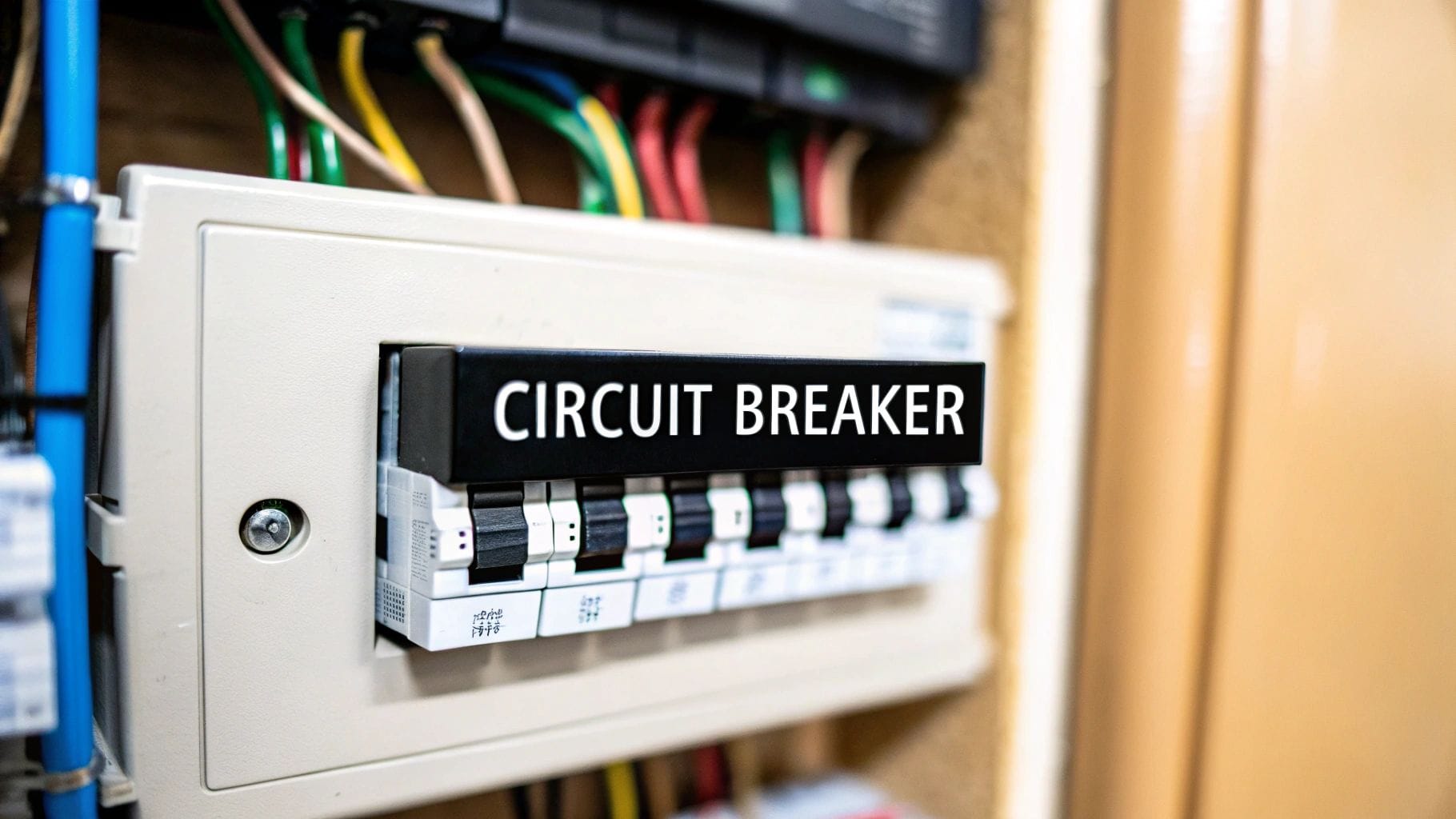
Have you ever wondered what that mysterious switch is that you have to flip back on when the power suddenly cuts out? That simple device is the guardian of your home's electrical system, and understanding what is a circuit breaker is the first step toward a safer home. Think of it as a vigilant protector, constantly monitoring the flow of electricity to prevent disaster and keep your family safe.
Contents
- 1 Your Home's Unsung Electrical Guardian
- 2 How a Circuit Breaker Actually Works
- 3 Exploring the Different Types of Circuit Breakers
- 4 Recognizing the Warning Signs of a Faulty Breaker
- 5 When Your Electrical Panel Needs a Modern Upgrade
- 6 Your Partner for Electrical Safety in Northern Utah
- 7 Quick FAQ for Homeowners
Your Home's Unsung Electrical Guardian
A circuit breaker's job is simple but absolutely critical: to automatically shut off power the moment it detects a dangerous situation, like an electrical overload or a short circuit. This single, automatic action prevents wires from overheating, stops potential fires before they can start, and protects your expensive electronics from getting fried. Honestly, it’s one of the most important safety devices in any modern home.
Without this silent protector, the immense electrical current flowing through your walls would be completely unchecked. A simple frayed cord or plugging in one too many appliances on a holiday could lead to disaster. The breaker is the intelligent gatekeeper that says "stop" long before danger escalates.
The Core Functions of a Circuit Breaker
To truly appreciate its role, it helps to see a circuit breaker not just as a switch, but as a device performing several crucial jobs at once. Let me explain. Its primary responsibilities boil down to three key functions, each contributing to the safety of your home's wiring and everything plugged into it.
Here’s a look at what it’s doing behind that metal panel door:
- Overload Protection: This is the most common reason for a breaker to trip. It happens when you draw more power from a circuit than it's designed to handle—like running a microwave, coffee maker, and toaster all at once in the kitchen. The breaker senses the excess current generating heat and shuts down the power to prevent the wires inside your walls from dangerously overheating.
- Short Circuit Protection: A far more immediate and serious threat, a short circuit occurs when a "hot" wire accidentally touches a neutral or ground wire. This creates a path of least resistance, causing a massive, instantaneous surge of electricity. A breaker can detect this surge in milliseconds and snap open, cutting the power instantly to prevent sparks, electrical shock, and fires.
- Manual Disconnect: Beyond its automatic safety features, a circuit breaker also serves as a manual switch. This allows a qualified electrician to safely de-energize a specific circuit to perform repairs, install a new ceiling fan, or conduct maintenance without shutting down the entire house.
A properly functioning circuit breaker is your first and most effective line of defense against electrical fires. Data from the National Fire Protection Association (NFPA) shows that electrical failures or malfunctions are a leading cause of home fires, making the role of the breaker absolutely indispensable.
Ultimately, understanding these functions changes how you see a tripped breaker. It’s not just an annoyance; it's proof that your electrical system's guardian just did its job perfectly, protecting your home and family from a potentially hazardous situation.
How a Circuit Breaker Actually Works
So, you know what a circuit breaker is supposed to do. But how does that simple-looking switch actually pull it off? Let’s get into the mechanics, without needing an engineering degree.
Inside every breaker, a clever little mechanism is constantly on watch for two main threats to your home's electrical system. It's not just a switch; it's a dedicated safety device. Seeing a tripped breaker shouldn’t be frustrating—it’s proof that it just did its job perfectly to protect your home and everyone in it.
The whole point of a circuit breaker is to prevent dangerous overcurrents that can lead to electrical fires, specifically those known as Class C fire safety incidents. These are fires involving live electrical gear, which is exactly what a breaker is designed to shut down before trouble starts.
The Two Key Threats a Breaker Stops
A circuit breaker is built to handle two very different kinds of electrical problems. Each one is caught by a separate internal mechanism, ensuring both slow-burn issues and sudden dangers are stopped cold.
The first, and most common, is a thermal overload.
- What it is: This happens when you plug too much stuff into one circuit, pulling more power than the wires can safely handle. Think about running a space heater, vacuum, and TV all at once. The wires in your walls slowly but surely start to heat up.
- How the breaker reacts: Inside the breaker is a small, heat-sensitive piece of metal called a bimetallic strip. As too much current flows through it, the strip gets warm and starts to bend. If it gets hot enough, it bends just far enough to physically trip the switch, cutting off power before your home’s wiring can overheat and become a serious fire hazard.
The second threat is a magnetic short circuit.
This one is much more sudden and dangerous. A short circuit occurs when a hot wire makes contact with a neutral or ground wire. This creates an immediate, uncontrolled, and massive surge of electricity.
When a short circuit happens, the breaker has to act instantly. Its magnetic trip mechanism can sense that massive surge and open the circuit in under 0.1 seconds—literally faster than you can blink—to prevent a disaster.
Visualizing the Process
If you want to simplify it, just think of the breaker's job in three steps: it monitors the flow of electricity, detects a problem, and then protects your system.
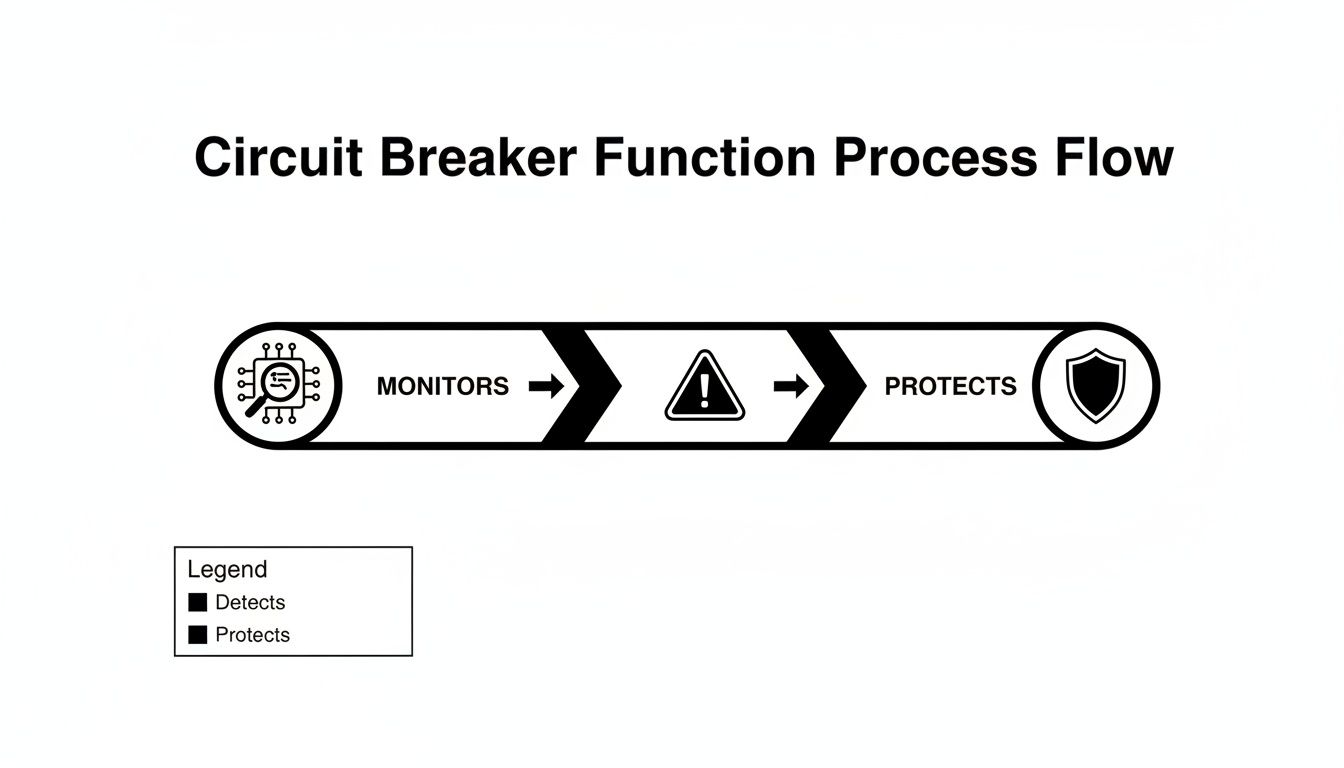
This flowchart really nails it. The breaker is in a continuous cycle of watching the current, spotting dangerous overloads or shorts, and tripping to protect everything downstream. That simple loop is the core of your home's electrical safety.
You know what? The technology behind circuit breakers is a market marvel. The global market, valued at nearly $24.4 billion in 2025, is projected to grow to over $55 billion by 2035. For small businesses in Davis County, properly functioning breakers are shown to cut electrical downtime by 80%, a critical advantage when US power interruptions cost businesses over $150 billion annually.
Exploring the Different Types of Circuit Breakers
Think of your electrical panel not as a single guard, but as a specialized team where each member has a specific job. Different circuit breakers are designed to protect against different types of electrical threats, and knowing who’s on the team gives you a real advantage in understanding the safety of your Northern Utah home.
Here’s the thing: not all breakers are created equal. Some are the generalists, the grunts handling everyday electrical loads, while others are highly specialized life-savers. Let's break down the key players you'll find in a modern electrical panel.
Standard Single-Pole and Double-Pole Breakers
These are the workhorses of your electrical system. They’re on the front lines, protecting most of the circuits in your home against the two most common threats: overloads and short circuits.
- Single-Pole Breakers: These are the most common type you'll see. They're narrow, have a single toggle switch, and protect 120-volt circuits. These are the circuits that power your standard outlets, lighting, and smaller appliances like your TV or computer.
- Double-Pole Breakers: You can spot these easily—they are twice as wide as a single-pole breaker and have two connected toggle switches that operate as one unit. They protect 240-volt circuits for your big, power-hungry appliances like electric dryers, ovens, water heaters, and central air conditioning units.
These standard breakers form the backbone of your home's electrical protection. But for areas where the risks are a little higher, you need to call in the specialists.
GFCI Breakers: The Shock Protectors
Ever wondered why outlets near sinks have those little "Test" and "Reset" buttons? That's GFCI protection at work, and you can get that exact same safety feature built right into the breaker itself.
A Ground Fault Circuit Interrupter (GFCI) breaker is a true lifesaver. Its only job is to constantly monitor the electricity flowing out and back on a circuit. If it detects even a tiny imbalance—meaning electricity is leaking out and potentially flowing through a person—it slams the brakes and shuts off the power in a fraction of a second. That rapid response is what prevents a serious electrical shock.
GFCI protection isn't just a good idea; it's required by the National Electrical Code in any area where electricity and water might mix. That includes kitchens, bathrooms, laundry rooms, garages, unfinished basements, and all outdoor outlets.
AFCI Breakers: The Fire Prevention Specialists
While GFCIs protect you from shock, Arc Fault Circuit Interrupter (AFCI) breakers protect your home from fire. An arc fault is a dangerous electrical spark that can happen when wires are damaged, frayed, or loose inside your walls. These tiny arcs can generate intense heat, easily igniting surrounding materials like wood framing or insulation.
An AFCI breaker uses sophisticated electronics to detect the unique electrical signature of a dangerous arc and immediately cuts the power. It's smart enough to distinguish between a hazardous arc and the normal, harmless sparks you might see when plugging in an appliance. This technology is absolutely crucial for preventing fires that can start silently behind your drywall.
If you want to get a better handle on all the components that make up your panel, you can learn more about our professional breaker and panel services.
Circuit Breaker Types and Their Functions
| Breaker Type | Protects Against | Common Locations | Key Feature |
|---|---|---|---|
| Standard | Overloads & Short Circuits | General lighting & outlets | Basic overcurrent protection |
| GFCI | Electrical Shock | Kitchens, Bathrooms, Outdoors | "Test" and "Reset" button |
| AFCI | Electrical Fires from Arcs | Bedrooms, Living Rooms, Hallways | Advanced arc detection |
Recognizing the Warning Signs of a Faulty Breaker
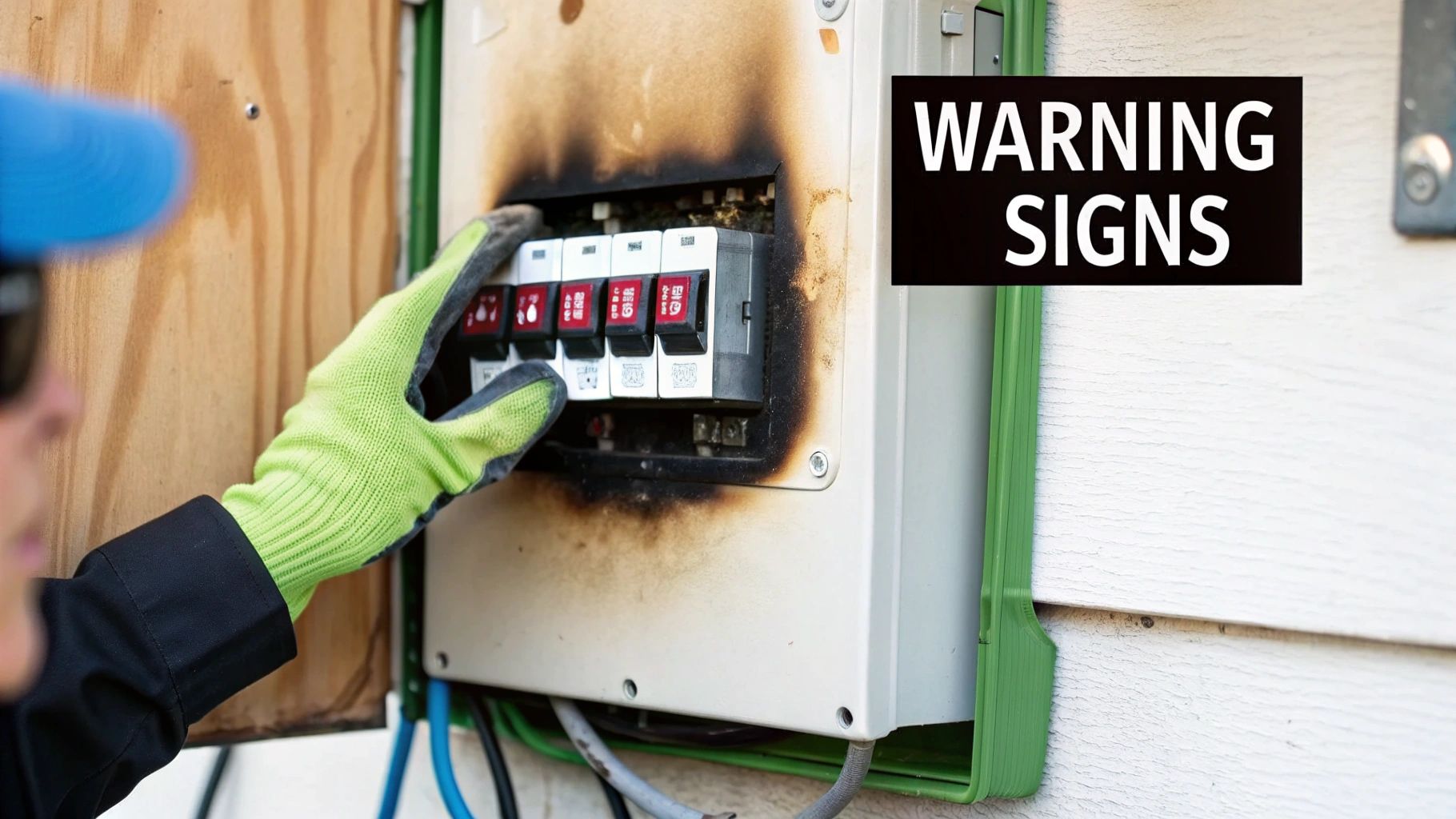
Here’s the thing, even the most reliable safety devices can wear out over time. A failing circuit breaker isn't just an inconvenience that cuts power to your game console; it's a serious electrical hazard that puts your home and family at risk.
Recognizing the early warning signs is your first and most important step in preventing a dangerous failure. Ignoring these red flags can lead to overheating, electrical fires, and significant damage. Let’s walk through the specific symptoms that tell you a breaker needs immediate attention from a professional.
Frequent and Unexplained Tripping
Is there one breaker in your panel that seems to trip all the time, even when you haven't plugged anything new in? A breaker is supposed to trip during an overload, but constant tripping without an obvious cause often points to a worn-out or faulty breaker.
Over time, the internal mechanisms can weaken, making the breaker overly sensitive. It might start tripping at current levels well below its actual rating. This isn't just annoying; it’s a clear sign that the component itself is no longer reliable.
Physical Signs of Damage or Overheating
Your senses can be powerful tools for detecting electrical problems. A quick look—and sniff—at your electrical panel can reveal critical issues that demand immediate action. Never ignore these signs:
- A Distinct Burning Smell: If you notice a sharp, acrid smell similar to burnt plastic coming from your electrical panel, that's a major red flag. This odor means a breaker or its wiring is overheating to the point of melting its plastic housing.
- Visible Scorch Marks or Melting: Look for any discoloration, black or brown marks, or signs of melted plastic on or around a circuit breaker. This is physical evidence of a dangerous heat buildup that could escalate into a fire.
- Breaker is Hot to the Touch: While breakers can feel slightly warm during normal operation, a breaker that is noticeably hot to the touch is a clear indicator of a poor connection or an internal fault. Excess heat is the enemy of any electrical system.
A breaker that feels loose, wobbles in its slot, or fails to stay in the "ON" position is a definite hazard. This indicates a poor connection to the panel's bus bar, which can create electrical arcing—a primary cause of electrical fires.
Other Critical Symptoms
Beyond the most obvious signs, other issues can also signal that a breaker is on its last legs. A buzzing or humming sound coming from the panel is never a good sign. It often points to a breaker that isn't making a solid connection or is failing internally.
Another key symptom is when a breaker won't reset properly. If you flip the switch to the "OFF" position and then back to "ON" and it either feels mushy or immediately trips again (without anything plugged into that circuit), the breaker has likely failed.
If you're encountering these kinds of frustrating issues, our expert team can help with professional electrical troubleshooting services.
When Your Electrical Panel Needs a Modern Upgrade
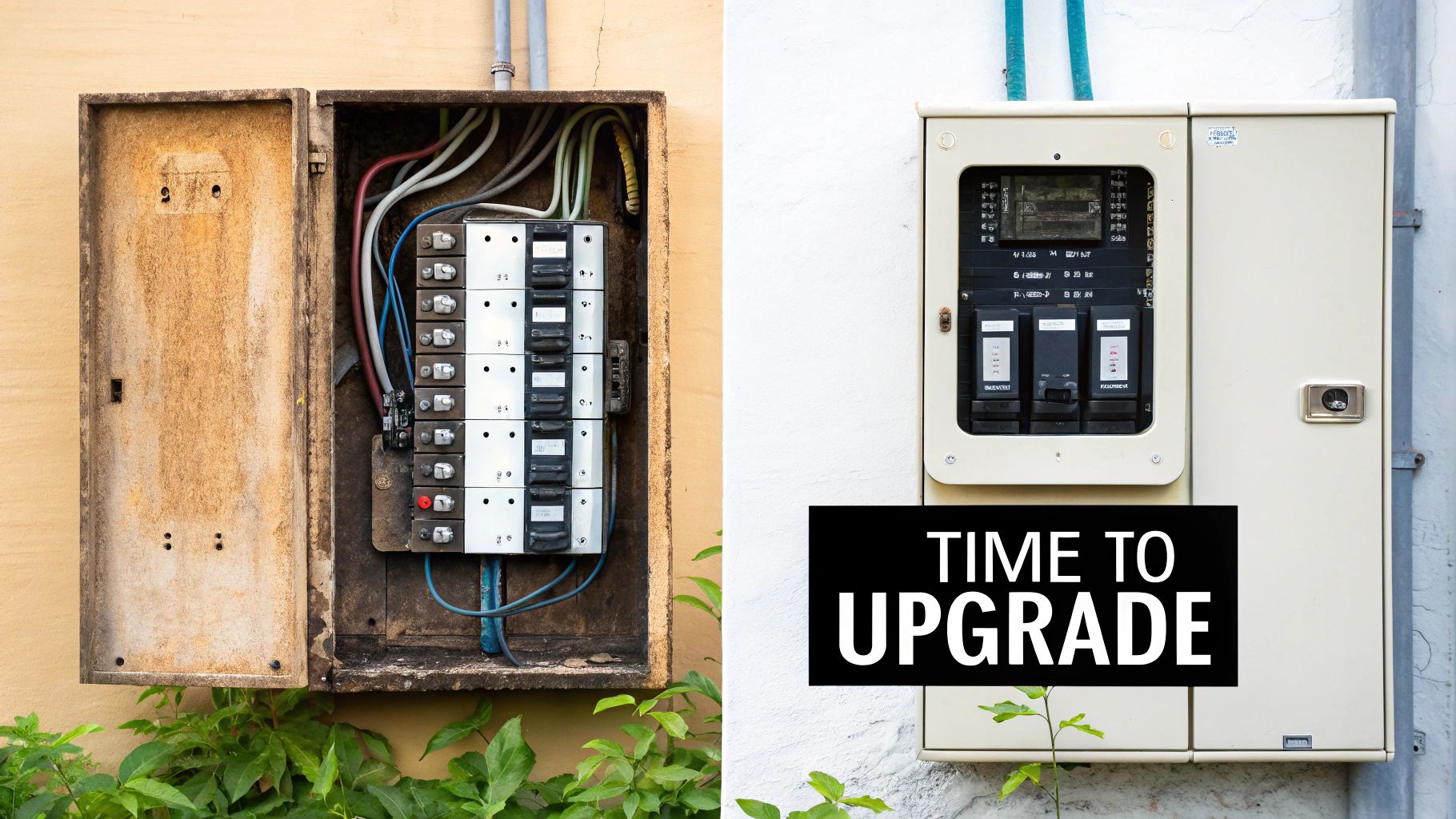
Your electrical panel is the heart of your home's power, but if it’s old, it simply can't keep up with modern life. An outdated panel isn't just an inconvenience—it can be a serious liability. Knowing when it’s time for an upgrade is a big deal for the safety and smooth operation of your home, especially for families here in Weber, Davis, or Salt Lake County.
An upgrade isn't just about making room for more breakers. Think of it as a critical investment in your home's future. Let's walk through the clear signs that your panel is due for a replacement.
Adding Major Appliances or Systems
Planning to install a new hot tub, add central air, or finally get that electric vehicle charger you’ve been eyeing? These high-power additions put a huge new strain on your electrical system. An older panel, particularly one that's already packed, might not handle that increased load safely.
Take a modern EV charger, for instance. It needs its own dedicated, high-amperage circuit that older panels often can't support without a serious overhaul. If you're thinking about an EV, it's smart to learn about a professional EV charger installation and what it means for your panel. Tacking that kind of load onto an outdated system is just asking for tripped breakers and creating a potential fire hazard.
A panel upgrade ensures your home can safely support new technologies. It provides the necessary capacity and modern safety features, preventing overloads and protecting your valuable new appliances from electrical issues.
Running Out of Breaker Space
Ever open your panel door only to find every single slot is taken? That’s a loud-and-clear sign your panel has hit its limit. Some people try to use "tandem" or "cheater" breakers to cram more circuits into a full panel, but that’s often against electrical code and is a genuinely unsafe workaround.
A full panel means you can't:
- Finish a basement or build an addition.
- Remodel your kitchen with modern appliances.
- Add a dedicated home office circuit for sensitive equipment.
If your panel is maxed out, the only safe and responsible solution is upgrading to a larger one that can handle what your home needs today—and what you might add tomorrow.
Obsolete and Dangerous Panels
Not all electrical panels are created equal. Some older models are now known to be flat-out dangerous. Brands like Federal Pacific Electric (FPE) and Zinsco, which were installed in homes for decades, have since been identified as having major design flaws. The breakers in many of these panels can fail to trip during an overload or short circuit, creating an extreme fire risk.
If your home has one of these panels, an upgrade isn’t just a good idea—it's a critical safety measure. These panels are ticking time bombs, and replacing one should be at the top of any homeowner’s list.
Your Partner for Electrical Safety in Northern Utah
From sorting out a tripped breaker to planning a full panel upgrade, your home’s electrical system isn't something to leave to chance. At Black Rhino Electric, we bring our commitment to safety and deep expertise to every single job for homeowners and businesses throughout Weber, Davis, and Salt Lake counties. Our licensed electricians have years of hands-on experience diagnosing faulty breakers, upgrading outdated panels, and ensuring every home we service meets the highest safety standards.
When it comes to planning electrical work, from a panel upgrade to a full safety inspection, pros often turn to tools like electrical estimating software to map out a project accurately. That same commitment to precision is what our professional service is all about—it ensures you get a clear, fair quote for the work your home actually needs. We’ve built our reputation on trustworthy service and straight talk, making sure you feel confident and informed every step of the way.
At Black Rhino Electric, we believe in a safety-first approach. Our licensed and insured electricians are not only skilled in their craft but are dedicated to upholding the highest standards of electrical safety on every single project, big or small.
Quick FAQ for Homeowners
Even after getting the hang of what a circuit breaker is, it’s normal to have a few practical questions. Getting clear, straightforward answers helps you handle the small stuff with confidence and know exactly when it’s time to call a pro. Here are a few of the most common questions our electricians hear from homeowners right here in Northern Utah.
How Do I Safely Reset a Tripped Circuit Breaker?
Resetting a breaker is usually simple, but your first step should always be safety. Before opening the panel, unplug any large appliances from the affected outlets. Then, find the tripped breaker and push its switch firmly all the way to the "OFF" position before flipping it back to "ON". If it trips again right away, stop. This indicates a more serious problem that requires a professional diagnosis.
What Is the Difference Between a Circuit Breaker and a Fuse?
The biggest difference is reusability. A circuit breaker is an automatic, resettable switch. A fuse, on the other hand, is a one-time-use device containing a metal filament that melts to break the circuit during an overload. Once a fuse blows, it must be replaced, which is why modern homes use the safer and more convenient circuit breaker system.
Can I Replace a Circuit Breaker Myself?
Absolutely not. Working inside a live electrical panel is incredibly dangerous and should only be handled by a licensed electrician. The risk of severe electrical shock or starting a fire is extremely high. An expert from Black Rhino Electric ensures the correct breaker is installed safely and to code, keeping your home and family protected.
How Often Should My Electrical Panel Be Inspected?
For general safety, having a qualified electrician inspect your panel every three to five years is a smart move. An inspection is also crucial when buying a home, planning a major remodel, or adding a high-power appliance. This proactive step can identify potential hazards before they become serious problems.
If you're dealing with a faulty breaker or just want the confidence that your electrical system is safe and up to the task, Black Rhino Electric is here to help. For expert service in Weber, Davis, and Salt Lake counties, give us a call at 385-396-7048 or request a free quote online today.