If you’ve ever flipped a breaker after the toaster and microwave called it quits, you’ve already met the heart of your Home’s power—your electrical panel. It keeps your lights steady, your devices safe, and your family protected. Let’s make sense of what’s behind that metal door, especially for homes here in Ogden.
Contents
- 1 Why the electrical panel matters more than you think
- 2 Do I need an upgrade? Clear signs to watch
- 3 What actually happens during a panel installation in Ogden
- 4 Safety and code basics Utah homeowners should know
- 5 Main panel, subpanel, or both?
- 6 Costs, timelines, and what influences them
- 7 Simple prep that makes installation smoother
- 8 Solar, EV chargers, and the “future you” test
- 9 Quick FAQ for homeowners
- 10 Why Black Rhino Electric for Ogden homes
Why the electrical panel matters more than you think
It’s tempting to view the panel as a metal box with switches. Technically true; practically false. Inside lives a careful control center that routes electricity to every circuit in your home—and shuts things down fast when something goes wrong. For homeowners in the Wasatch Front, the panel supports more than the basics. Winter space heaters, basement shops, home offices, EV chargers, even hot tubs and snow-melt systems—these extra loads all ask the panel for safe, steady power. A modern panel doesn’t just handle load; it adds protection through Breakers, grounding, and options like surge protection. A healthy panel is quiet and boring. That’s what you want—boring. Safe power, day after day, without tripped breakers or warm covers.
Do I need an upgrade? Clear signs to watch
Here’s the thing: not every flicker is an emergency. But some patterns are worth attention, especially in older Ogden homes.
- Frequent breaker trips — If the same breakers trip when you use the microwave plus something else, the circuit, or the overall service, may be at its limit.
- Old or crowded panel — Full of tandem breakers, no labeling, or tough to open? That can point to capacity and safety concerns.
- Aluminum or outdated service — Many mid-century homes still have older service equipment. Some brands are known issues (for example, Federal Pacific and certain Zinsco Panels).
- New loads added — EV Charger, Hot Tub, finished basement, or HVAC upgrade? These usually demand more capacity.
- Lights dim when big loads start — AC or well pump kicks on and lights dip? Not a good long-term sign.
- Warm or buzzing panel — Panels should be cool and quiet.
- Two-prong outlets, mixed grounding, or no GFCI/AFCI protection — Modern safety expectations may not be met. If any of these ring a bell, a professional load calculation can tell you if your panel is sized right for the way you live.
What actually happens during a panel installation in Ogden
Let me explain what the process looks like when you work with Black Rhino Electric. We keep it clear and tidy.
- Site visit and load calculation — We review your current panel, circuits, and future loads. We ask about projects: EV, hot tub, kitchen, shop tools—because that changes the plan.
- Permits and utility coordination — We pull permits with Ogden City Building Services and coordinate with Rocky Mountain Power if we’re upgrading the service or meter. This part matters—safe work needs proper shutoff and inspection.
- Panel selection and placement — We choose a panel that fits your space and loads. We confirm clearances: typically 3 feet of working space in front, about 30 inches width, and proper height. Not in closets or bathrooms.
- Temporary power plan — If needed, we minimize downtime. Many swaps are completed same day; larger service changes can take a bit longer, but we schedule it to reduce disruption.
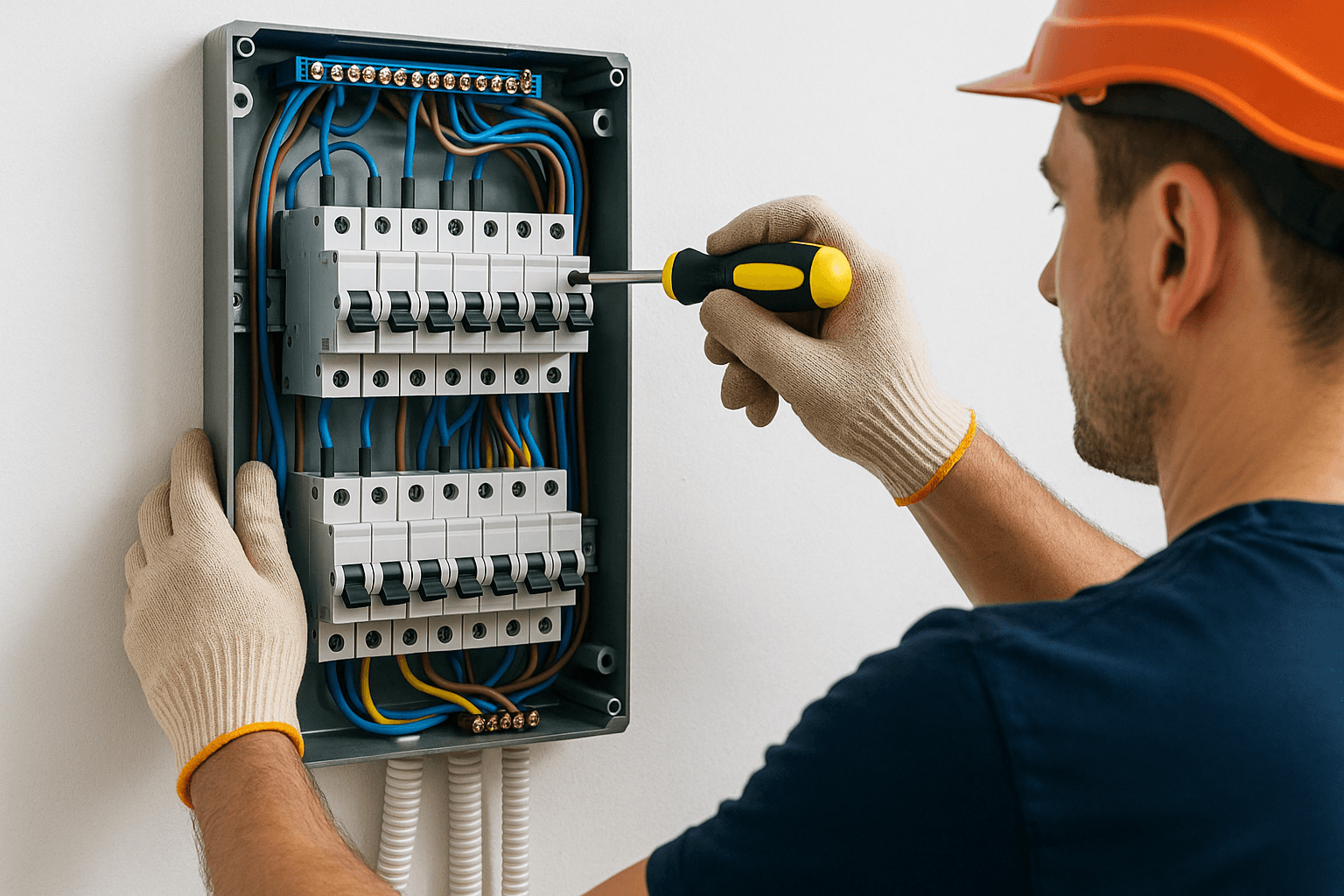
- Installation day — We mount the new panel, re-land wires, install new breakers, upgrade grounding and bonding, and label every circuit. Older bonding methods? We correct them.
- Inspection and turn-on — City inspection verifies code compliance. Once approved, the utility restores service if they were involved. You get a clean, labeled, up-to-code panel. You’ll see a neater layout, clear labels, and smooth operation. Honestly, it feels good to open the panel and know what’s what.
Safety and code basics Utah homeowners should know
You don’t need to memorize code, but a few points help.
- Grounding and bonding — This is your safety net. It gives stray electricity a safe path home. Bad grounding causes nuisance trips—or worse.
- Breaker types matter — Standard, GFCI (shock protection), and AFCI (fire prevention) breakers protect different spaces. Newer codes require AFCI in many living areas and GFCI anywhere moisture is a factor.
- Working clearances — Panels need a clear space around them. Storage in front of the panel is a safety hazard and a code issue.
- Weather-ready equipment — Exterior panels, meter bases, and the service mast need the right outdoor ratings—Ogden snow and wind aren’t gentle.
- Permits and inspections — Utah follows the National Electrical Code as adopted by the state, and Ogden inspectors check to that standard. It’s not red tape; it’s a safety checklist. Bottom line: a code-compliant circuit breaker panel isn’t a luxury; it’s how you keep your home and loved ones safe.
Main panel, subpanel, or both?
This part confuses people, so here’s a quick rundown in plain language.
- Main service panel — The primary panel with the main disconnect. It’s where the utility power enters your home.
- Subpanel — A smaller panel fed from the main. Great for a detached garage, basement shop, or an addition where you want local circuits and shorter wire runs.
- Whole-home surge protection — Installed at the panel, it protects sensitive electronics from spikes caused by storms, utility events, or even large loads turning on. Cheap insurance, frankly. Sometimes a subpanel solves crowding, but not always. If the main service is undersized, we’ll talk about a panel upgrade first.
Costs, timelines, and what influences them
No surprises—here’s what commonly affects the price and schedule in Ogden:
- Service size — Upgrading to 200A costs more than swapping a 100A panel for a new 100A.
- Location and wiring condition — Tight spaces, short feeders, aluminum wiring, or brittle insulation add time.
- Grounding and bonding corrections — Older homes often need updates here to pass inspection.
- Utility coordination — If Rocky Mountain Power needs to upgrade the meter or service drop, lead time can vary.
- Add-ons — EV charger circuit, hot tub circuit, or whole-home surge protection increase scope. Typical panel replacements can be done in a day. Full service upgrades can take a bit longer because of inspection and utility coordination. We map it out upfront so you’re never guessing.
Simple prep that makes installation smoother
A little prep goes a long way—and keeps the day on track.
- Clear access — Leave a 3-foot area in front of the panel free of storage.
- Protect valuables — We’re careful, but panel work can be dusty; a quick cover helps.
- Plan for a short outage — Refrigerators usually ride through short outages fine—minimize door openings. If you work from home, have a laptop charged.
- Pets and kids — Keep them away from the work area. We like pets, but not near live wires. You know what? Labeling a few rooms you’ve always wondered about helps us label the panel even better.
Solar, EV chargers, and the “future you” test
Here’s the thing: power needs grow. Maybe not today, but soon.
- EV charging — Level 2 chargers (240V) often call for a 40–60 amp circuit. That’s a big bite out of a small panel.
- Heat pumps and mini-splits — Energy-efficient upgrades can still add electrical load.
- Kitchen remodels — Induction ranges, microwaves, and upgraded Lighting add multiple new circuits.
- Solar-ready planning — Solar interconnections have specific requirements. We can plan the panel layout and bus rating to avoid headaches later. A panel sized with the “future you” in mind saves money and avoids do-overs.
Quick FAQ for homeowners
- Is panel work a DIY project? No. Shock and fire risks are real, and unpermitted work can void insurance and fail inspection.
- Can I keep my old breakers? Sometimes—but mixing brands or old breakers in a new panel isn’t always allowed. We only install listed combinations.
- Will you label everything? Yes. Clear labels make life easier during storms, holidays, and remodels.
- Do you install whole-home surge protection? Absolutely. It’s one of the highest-value upgrades for modern electronics.
- What about aluminum branch circuits? We evaluate and use approved connectors or recommend rewiring where needed.
Why Black Rhino Electric for Ogden homes
We’re local. We know how Ogden’s older bungalows near Historic 25th Street differ from newer builds on the East Bench—and how winter weather plays into outdoor equipment and grounding. We coordinate with city inspectors and Rocky Mountain Power, and we keep your schedule and budget in mind. More than that, we care about clean work. Straight conduit, tidy wire management, labeled circuits, and a panel you won’t be nervous to open. It’s the little things, but they add up to trust. If you’re curious, even a little, about your panel’s health, an assessment can bring real peace of mind. And if you’re planning an EV, a hot tub, or a remodel, planning now avoids rework later. Ready to talk through your home’s needs? Call Black Rhino Electric at 801-810-4292 or click Request a Free Quote. We’ll help you choose the right electrical panel installation for your Ogden home—safe, clean, and ready for whatever you plug in next.