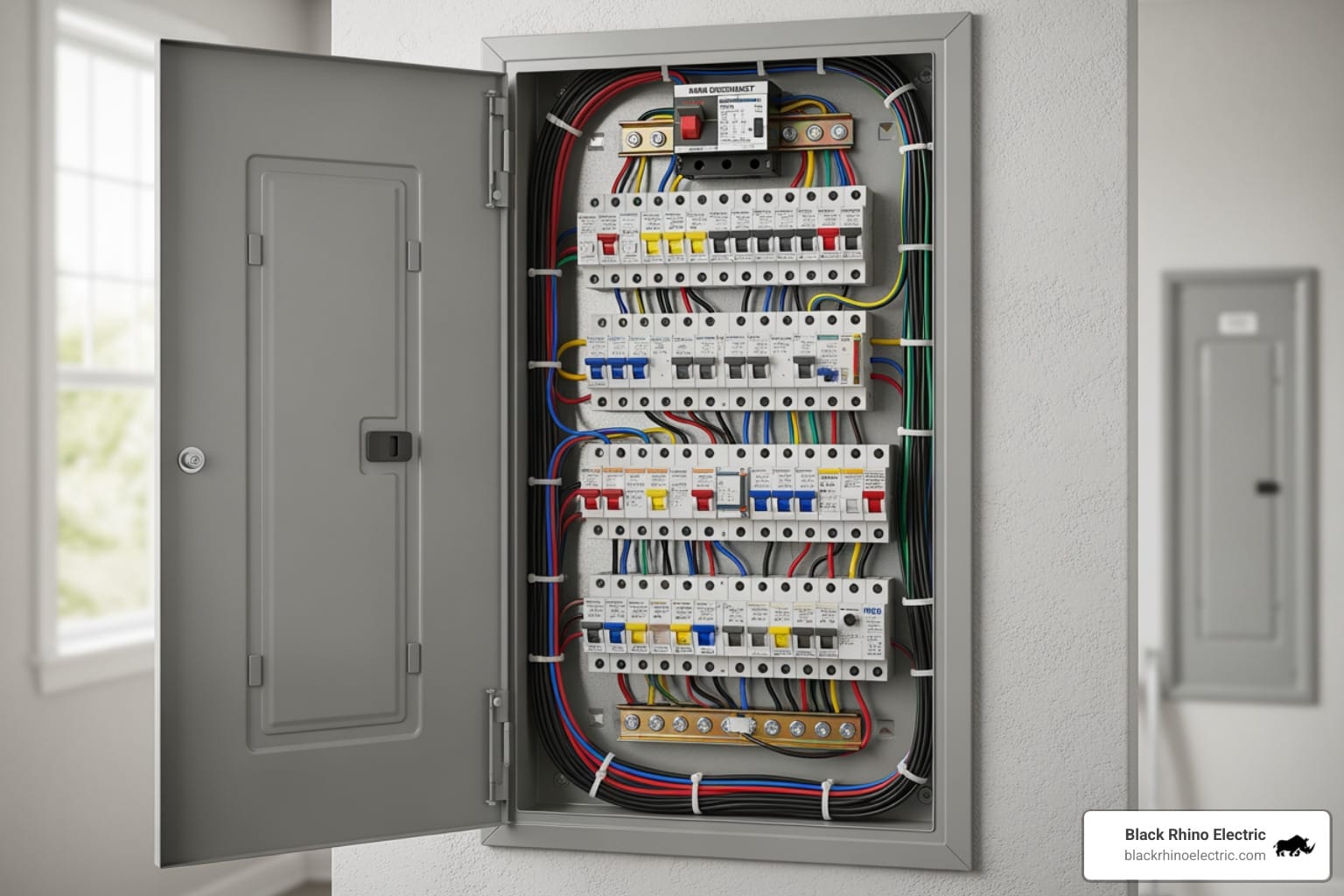
Your home’s electrical panel is the unsung hero working 24/7 to power your life, but honestly, it’s often forgotten until something goes wrong. Proactive electrical panel maintenance is one of the most critical steps you can take to prevent electrical fires, protect your expensive electronics, and ensure your home’s electrical system runs safely and efficiently. Let me explain why this simple act of prevention is so powerful.
Contents
Why Your Electrical Panel Deserves Attention
Quick Answer: Essential Electrical Panel Maintenance Tasks
- Visual inspections every 6-12 months for damage, corrosion, or overheating signs
- Professional inspection every 3-5 years by a licensed electrician
- Monthly GFCI/AFCI testing to ensure protective devices work properly
- Annual circuit breaker exercising to prevent breakers from getting stuck
- Panel cleaning to remove dust and debris that can cause overheating
- Connection tightening by professionals to prevent dangerous hot spots
- Thermal imaging to detect hidden problems before they cause failures
Here’s the thing: your electrical panel is the heart of your home’s power system. Yet research shows that 1 in 3 electrical panels were not reviewed in the past 12 months. That’s a problem.
The statistics are eye-opening:
- More than two-thirds of electrical system failures can be prevented by routine maintenance
- Equipment failure rates are 3 times higher for components not part of a scheduled maintenance program
- Only 42% of homeowners contact a professional for panel inspections
You know what? These numbers tell us that most people are leaving their electrical safety to chance.
The Primary Benefits of Regular Electrical Panel Care
When you maintain your electrical panel properly, you’re investing in multiple layers of protection:
Safety Benefits:
- Prevents electrical fires from overheating connections
- Eliminates shock hazards from damaged components
- Detects issues before they become emergencies
Financial Benefits:
- Reduces utility bills by preventing energy waste
- Extends the lifespan of expensive appliances
- Avoids costly emergency repairs and property damage
Performance Benefits:
- Ensures consistent power distribution throughout your home
- Prevents nuisance breaker trips
- Maintains optimal operation of all circuits
A well-maintained panel doesn’t just keep the lights on—it protects your entire home investment. For more comprehensive guidance, check out Electrical Maintenance 101.
Red Flags: Telltale Signs Your Panel Needs Help
Your electrical panel will tell you when something’s wrong – you just need to know what to look for.
Immediate Warning Signs:
- Frequent breaker trips: A sign of overloaded circuits or failing breakers.
- Burning smell or scorch marks: An emergency requiring immediate attention.
- Buzzing or crackling sounds: Indicates dangerous loose connections.
- Warm switches/outlets: A sign of excessive current or bad connections.
- Flickering lights: A classic circuit overload warning.
Age and Condition Indicators:
- Panel is more than 25-40 years old
- Rust, corrosion, or moisture around the panel
- Outdated fuse box instead of modern circuit breakers
- Panel lacks GFCI or AFCI protection in required areas
Capacity Issues:
- You regularly need to unplug devices to use others
- Adding new appliances causes breaker trips
- The panel feels crowded with no room for additional circuits
Honestly, if you’re experiencing any of these issues, don’t wait. These aren’t problems that fix themselves – they only get worse and more dangerous over time.
A Practical Guide to Electrical Panel Maintenance
Maintaining your electrical panel might sound intimidating, but it’s a partnership between simple homeowner tasks and critical professional services. The key is understanding what you can safely do and when to call a licensed electrician. Safety is paramount, and the National Electrical Code (NEC) provides the standards for safe electrical systems.
DIY Safety Checks vs. Professional Service: Know the Difference
Let’s be clear: never open your electrical panel and touch internal components unless you are a qualified professional. However, there are crucial homeowner tasks that contribute to your home’s electrical safety.
Homeowner Tasks (External & Observational):
- Visual Inspection (External): Look at the outside of your panel for rust, discoloration, or damage. Ensure the door is closed and the area is clear.
- Circuit Labeling: Ensure every breaker is clearly and accurately labeled. This is crucial for quick identification during troubleshooting or emergencies.
- Clearing Access: The NEC requires three feet of clear space around your panel for emergency access. Keep this area clear of storage.
- Testing GFCI Outlets: Test GFCI outlets monthly by pressing the “TEST” button (power should cut off) and then “RESET” (power should restore). These protect you from shock in wet areas like kitchens and bathrooms.
- Exercising Circuit Breakers: Annually, flip each breaker off and on to prevent them from sticking. Unplug sensitive electronics first.
Professional Tasks (Internal & Technical):
When it comes to the internal workings of your panel, that’s where our licensed electricians come in. These tasks require specialized tools and expertise.
- Tightening Connections: We use calibrated torque wrenches to tighten all connections, preventing heat buildup and fire risk from loose wires.
- Thermal Imaging: We use infrared cameras to detect hidden “hot spots” caused by loose connections or failing components before they cause a failure.
- Breaker Testing: We test breakers to confirm they trip correctly under fault conditions, protecting your home from overloads and short circuits.
- Cleaning and Inspection: We clean the panel’s interior to remove dust and debris that can cause overheating and inspect components for wear or damage.
- Load Balancing: We analyze your panel’s load distribution to prevent inefficiencies and can rebalance circuits for optimal performance.
- Code Compliance Check: We verify your panel meets current NEC and local Weber County codes, which is crucial for safety and home value.
For anything beyond external visual checks and GFCI testing, it’s always best to call a professional. As fully licensed electricians, we prioritize your safety. Learn more about Why You Should Always Hire a Licensed Electrician.
Establishing a Smart Maintenance Schedule
So, how often should this happen? A smart electrical panel maintenance schedule combines your proactive checks with regular professional inspections.
Homeowner Checks (Every 6-12 Months):
These are the external visual inspections, GFCI testing, and clearing access we discussed. They’re quick, easy, and can flag immediate concerns.
Professional Inspections (Every 3-5 Years):
This is where we step in for the deep dive. We recommend a professional inspection every three to five years for most homes in Weber County to catch subtle issues before they escalate.
More Frequent Professional Inspections May Be Needed If:
- Your Home is Older (25+ years): Inspect every 1-2 years, as older systems are more prone to failure.
- You Experience Frequent Issues: If you see any red flags like tripping breakers, call for an inspection immediately.
- You Have High-Demand Usage: Homes with EV chargers, hot tubs, or many appliances need more frequent checks.
- You’ve Had Recent Renovations: A panel inspection is wise after any major renovation or new appliance installation.
Remember the statistic: 1 in 3 electrical panels were not reviewed in the past 12 months. Don’t let your home be part of that statistic! Proactive scheduling is key. For more information on how we can help, explore our Breakers & Panels Electrician services.
Next Steps: Upgrading and Professional Care
Sometimes, maintenance isn’t enough. Just like an old car, your electrical panel might reach a point where an upgrade is the safest and most efficient path forward.
When to Consider a Full Panel Upgrade
An electrical panel upgrade is about future-proofing your home, enhancing safety, and meeting modern power demands. Here are key indicators that it might be time:
- Insufficient Capacity: If you’re constantly tripping breakers, your panel likely can’t handle your home’s electricity demand.
- Outdated Technology (Fuse Boxes): Fuse boxes are outdated and less safe than modern circuit breakers. An upgrade is essential for safety and convenience.
- Panel Age: Panels over 25 years old have a higher risk of failure and should be considered for replacement.
- Frequent Breaker Trips: If breakers trip often or immediately after resetting, it points to a serious issue that may require an upgrade.
- Burning Smells or Scorch Marks: Any burning smell, buzzing, or scorch marks are emergency signs of a fire hazard. Call a professional immediately.
- Home Renovations or Additions: Major renovations or adding high-demand appliances like an EV charger or hot tub often require a panel upgrade to handle the new load.
- Lack of GFCI/AFCI Protection: Modern codes require GFCI/AFCI protection. An upgrade is the best way to add these life-saving devices to an older system.
Upgrading your panel is a significant investment in safety and peace of mind. To understand the financial aspect, you can explore the Cost to Upgrade an Electrical Panel.
Trust the Experts for Your Home’s Electrical Needs
When it comes to electrical panel maintenance, repairs, or upgrades, the stakes are too high for DIY. Improper work can lead to fires, shocks, and property damage. At Black Rhino Electric, our licensed and insured electricians serve Weber County, including Ogden, Roy, and surrounding areas, with an unwavering commitment to safety and quality.
We provide lasting solutions, from routine inspections to full panel replacements, EV charger installations, and hot tub wiring. We understand the needs of our community and deliver code-compliant work that improves safety and efficiency. Don’t gamble with your home’s electrical system. For comprehensive electrical panel maintenance or expert upgrades, trust the professionals who truly care.
Ready to ensure your electrical panel is safe, efficient, and up to code? Don’t wait for a problem to arise. Give us a call at 801-810-4292 or Request a Free Quote today!