Planning a big electrical project? It's natural to wonder about the bottom line, and understanding the electrical wiring cost per foot is the perfect place to start. When installed by a professional, this cost typically lands somewhere between $3 and $12. That all-in price covers a lot more than just the wire—it includes the electrician's time, skill, and all the necessary materials to get the job done right and safely.
Contents
Your Quick Guide to Electrical Wiring Costs
Honestly, trying to budget for a wiring project can feel a little overwhelming because so many factors are at play. You might wonder, is that price for snaking a wire through a tricky, finished wall or just for an easy run across an open attic?
That’s why thinking in "cost per foot" helps. It’s a bundled rate, a simple way to ballpark projects by combining labor, materials, and other essentials into a single number. It helps you get a feel for the investment needed, whether you're adding a couple of outlets in the living room or wiring a whole basement remodel.
Estimated Electrical Wiring Cost Per Foot (Installed)
To make these numbers more concrete, it helps to see how they apply to common jobs around the house. A simple circuit for a new ceiling fan just won't cost the same per foot as a heavy-duty line for that hot tub you’ve been dreaming about.
This table gives you a quick overview of estimated installed costs for common residential wiring scenarios, including both materials and professional labor.
| Wiring Scenario | Common Wire Type | Estimated Cost Per Foot (Installed) |
|---|---|---|
| Standard Interior Outlets & Lights | 14/2 or 12/2 NM-B (Romex) | $3 – $6 |
| Kitchens & Appliance Circuits | 12/2 NM-B or 10/3 NM-B | $5 – $9 |
| Main Feeder Line (to Subpanel) | SER Cable (Aluminum) | $7 – $12 |
| Outdoor or Underground Runs | UF-B Cable in Conduit | $8 – $12+ |
Think of this table as your starting point for budgeting. Keep in mind that the complexity of the job is always a major factor. How easy is it to access the wiring path? What kind of conduit do we need? All these details will influence the final price, which we'll break down next.
What Really Goes Into the Cost Per Foot
When you hear a price for electrical work, it's easy to fixate on the wire itself. But the electrical wiring cost per foot is a lot more than just the copper and plastic. That "per foot" number is really a bundled rate that covers three things: the materials, the skilled labor, and the business overhead needed to do the job right.
Let me explain. Think of it like a good meal at a restaurant. The price on the menu isn't just for the steak; it also covers the chef’s time, the grill they cooked it on, and the server who brings it to your table. As experienced electricians at Black Rhino Electric, we know that professional work runs on the same principle, making sure every part of the process is accounted for.
The Cost of Materials
The most obvious piece of the puzzle is the physical wire, but not all wire is created equal. A good electrician chooses the right type based on where it’s going, how much power it needs to handle, and what the local building codes demand.
Here’s a quick rundown of the common players:
- NM-B (Romex): This is the stuff you’d recognize—the flat, plastic-sheathed cable that runs through walls and ceilings for most of your home’s outlets and lights. It's the everyday workhorse.
- THHN/THWN: These are individual, insulated wires that get pulled through a protective pipe called conduit. You’ll see them in unfinished basements, garages, or commercial spaces where the wiring needs an extra layer of armor.
- UF-B: The name says it all: "Underground Feeder." This tough, water-resistant cable is built for direct burial, perfect for running power to a detached garage or powering landscape lighting.
Now, the price of these materials swings up and down, mostly tied to the global copper market. It's not a small thing, either. Since 2019, copper wire prices have shot up dramatically, climbing an average of about 50% from pre-pandemic levels. That volatility hits project costs directly. You can read more about the global trends in copper prices to get a sense of how big-picture economics affects your home project.
The Value of Professional Labor
Here's the thing: the most significant part of the cost is usually the labor. This isn’t just about paying someone to pull a wire from point A to point B. It’s about paying for expertise, safety, and a job done efficiently.
A licensed electrician's hourly rate covers years of training, a deep understanding of the National Electrical Code (NEC), and the skill to troubleshoot tricky problems on the spot. That knowledge is what keeps your home safe from fire and ensures the work passes inspection.
Labor costs cover the actual time it takes to:
- Plan the circuit layout for safety and efficiency.
- Drill holes and fish wires through walls, ceilings, and floors without turning your home into a construction zone.
- Make solid, code-compliant connections at every outlet, switch, and breaker.
- Test the whole system to make sure it’s working perfectly and, most importantly, safely.
A straightforward run in an open basement is going to take way less time—and cost less in labor—than a complex job that involves carefully navigating finished walls and ceilings.
Essential Overhead Costs
Finally, a slice of that per-foot cost covers the electrician's overhead. These are the behind-the-scenes expenses that every professional, licensed contractor has to manage to operate legally and safely.
This bucket includes things like:
- Licensing and Insurance: This protects both you and the electrician if something goes wrong.
- Permits and Inspections: The cost of filing the right paperwork with the city and coordinating inspections to verify the work meets code.
- Specialized Tools and Equipment: Professional-grade gear, from wire fish tapes to circuit testers, is essential for a safe, high-quality job.
- Vehicle and Fuel Costs: Getting technicians, tools, and materials to your doorstep is part of the service.
When you add it all up—materials, skilled labor, and operational overhead—you get the total electrical wiring cost per foot. Understanding this breakdown helps you see the real value behind the price tag and why hiring a qualified pro is a critical investment in your home’s safety.
Key Factors That Drive Your Wiring Costs
So, why does one homeowner’s project come in at $4 per foot while their neighbor’s hits $10 for what seems like a similar job? The answer is always in the details. The final electrical wiring cost per foot isn't some random number; it’s a calculated figure based on a few critical variables that change from one house to the next.
Understanding these factors will help you see exactly where your money is going and why a professional quote might be higher—or lower—than you first guessed. These elements directly impact the materials we need and, more importantly, the amount of skilled labor it takes to get the work done safely and up to code.
Wire Gauge and Type
Not all wires are created equal, and the type of wire needed for your project is a primary cost driver. A thicker wire, known as a lower gauge (like a 10-gauge), has more copper inside and costs more than a thinner wire (like a 14-gauge). The job dictates the gauge; a high-power appliance like an electric range needs a much beefier wire than a simple bedroom light fixture.
Beyond its thickness, the wire’s protective jacket also affects the price.
- Standard Romex (NM-B): This is your typical indoor wiring, perfectly suited for dry locations tucked away inside walls.
- Underground Feeder (UF-B): This cable has a tough, water-resistant jacket, making it more expensive but absolutely necessary for buried lines running to a shed or an outdoor outlet.
- THHN in Conduit: Sometimes, individual wires are run inside a protective pipe (conduit). This adds the cost of both the specialized wire and the conduit itself, but it offers superior protection in garages, basements, or commercial settings.
The choice isn't about preference; it's about safety and code compliance. Using the wrong type of wire is a serious fire hazard, which is why a professional assessment is so crucial.
Accessibility of the Wiring Path
You know what? This is often the biggest variable in labor costs. Imagine running a wire across an open, unfinished attic—it’s a straight shot, quick and easy. Now, picture running that same wire from your basement breaker panel up to a second-floor bedroom, all behind finished drywall.
The complexity of the path is a massive cost multiplier. An easily accessible run might take an hour, while carefully fishing a wire through insulated walls without causing major damage could take several hours of meticulous work for the same length.
This is where an electrician’s skill truly shines. We use specialized tools like fish tapes and flexible drill bits to navigate these hidden spaces with minimal disruption. The more complex the path—working around plumbing, HVAC ducts, and fire breaks—the more time and expertise are required, which is reflected in the final electrical wiring cost per foot.
Local Market and Code Requirements
Where you live also plays a significant role in your project's cost. Labor rates for licensed electricians vary by region, and permitting fees can differ from one city to another. A project in a high-cost-of-living area will naturally have higher labor expenses than one in a more rural location.
Furthermore, material prices are constantly shifting due to supply and demand. Recent data shows just how much these costs can fluctuate regionally. For example, the price of Romex® 12/3 cable—a residential staple—jumped 23.12% nationally in just six months, with some of the highest increases seen right here in the West. This trend is part of a broader rise in electrical material costs driven by copper market volatility.
These local factors, from labor rates to specific municipal codes that might require certain materials like conduit, all get factored into the final estimate. It's also why a detailed quote from a local expert like Black Rhino Electric is essential for understanding your specific project costs, including any necessary upgrades to your home’s electrical panel.
Comparing Costs for Common Wiring Projects
That whole "cost per foot" thing is useful for comparing wire types, but let's be honest—it doesn't tell you what a project will actually cost. To make sense of the numbers, you have to see how they play out in the real world. A simple bedroom circuit is a totally different ballgame than a heavy-duty line for a hot tub.
Every job is unique. The final price tag depends on the path we have to take, how much power the new circuit needs, and whether we're working with open studs or finished walls. Let's walk through a few common scenarios we tackle every week right here in Northern Utah.
Project Example 1: Wiring a New Bedroom Addition
Let's say you're adding a 200-square-foot primary bedroom onto your home. This isn't just one outlet. It means running a brand-new circuit from your main electrical panel to power a whole system of outlets, switches, and maybe some nice recessed lighting or bedside sconces.
For a standard bedroom, we'd pull 12-gauge NM-B (you probably know it as Romex) to meet modern code. Today's rules require outlets every 12 feet and on any wall wider than two feet, so the wire adds up.
- Estimated Footage: You’re looking at around 75-125 feet of wire to run from the panel, loop between all the outlet boxes, and connect to the switches and lights.
- Key Cost Factors: The big variable is accessibility. If the walls are open during construction, running the wire is straightforward. But if we're fishing wires into an existing, finished space? That takes more time, care, and labor.
- Estimated Total Cost: For a project like this, homeowners can typically expect a range of $900 – $2,000. That covers the new circuit breaker, all the wire, boxes, outlets, and the professional installation to make it safe and sound.
Project Example 2: Installing a Dedicated 240V Circuit
Now, let's talk about a bigger job, like that hot tub you've been dreaming of or an EV charger for the garage. These high-power appliances demand their own dedicated 240-volt circuit, which means running a much beefier cable straight from the panel. This is a serious electrical upgrade, not just another outlet.
We’d be using a thick, multi-conductor cable—like a 6-gauge or 8-gauge wire—to safely handle all that amperage. The wire itself costs more per foot, and the installation is more involved.
This quick visual breaks down what drives up the cost, from the wire itself to the path it has to take.
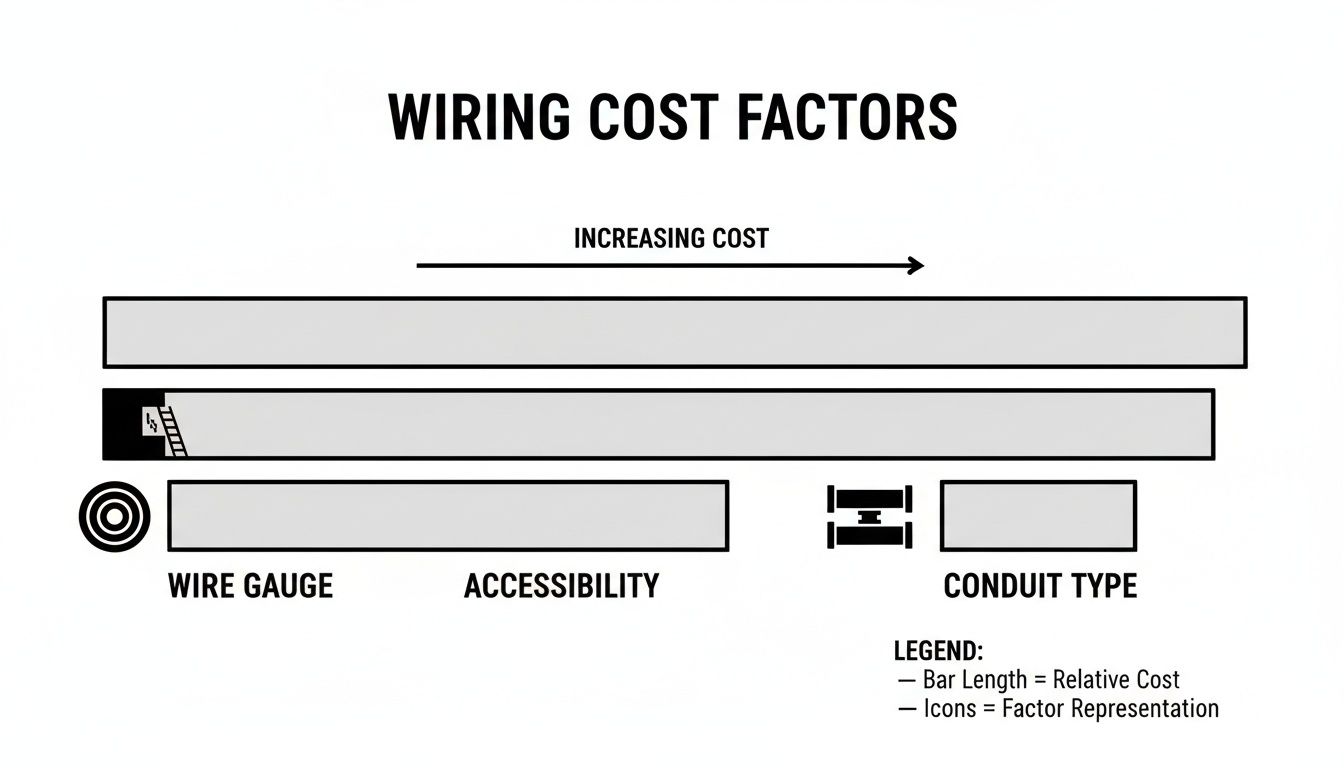
As you can see, any project that needs thicker wire, has tricky access, or requires protective conduit is naturally going to have a higher cost.
Sample Project Cost Estimates
The best way to really get a feel for this is to see a few different jobs side-by-side. This table gives you a ballpark idea of how the scale and complexity of a wiring project affect the bottom line.
| Project Example | Estimated Footage | Key Cost Factors | Estimated Total Cost Range |
|---|---|---|---|
| Simple Lighting Circuit | 40 – 60 ft | Standard 14/2 wire, easy access through an attic. | $400 – $800 |
| New Bedroom Wiring | 75 – 125 ft | Multiple outlets/switches, may require fishing wires. | $900 – $2,000 |
| EV Charger / Hot Tub | 30 – 100 ft | Heavy-gauge wire, dedicated breaker, outdoor conduit. | $1,200 – $3,000+ |
| Subpanel for Basement | 20 – 50 ft | Thick aluminum SER cable, new panel installation. | $1,500 – $2,800 |
It's also worth remembering that raw material prices, especially for copper, can swing wildly. Historical data shows that producer prices for copper wire can jump 11–15% in a single year thanks to global market shifts. That volatility directly impacts what we all pay for everything from basic Romex to heavy-duty feeder cables.
At the end of the day, the final cost always boils down to that simple mix: the quality of the materials, the amount of skilled labor needed, and the overall scope of your project.
DIY Wiring vs. Hiring a Professional Electrician

It’s tempting to look at the electrical wiring cost per foot and think, "I can save a bundle by doing this myself." Let's be honest, changing a light fixture is one thing. But running new circuits through your walls? That’s a whole different ballgame.
The appeal of saving money on labor is powerful, I get it. The problem is, the real risks of DIY electrical work are huge, and they often don't show up until it’s way too late. This isn't just about connecting wires; it's about understanding the tangled web of codes, load calculations, and safety rules that keep your home—and your family—safe.
The Hidden Dangers of DIY Electrical Work
The most obvious concern with DIY wiring is safety. A single mistake—a connection that isn't torqued down just right, a circuit you accidentally overloaded, or using the wrong type of wire for the job—can lead to a disaster. According to the Electrical Safety Foundation International, electrical failures cause around 51,000 home fires every single year, resulting in devastating property loss and, tragically, loss of life.
But the danger isn't just about immediate fire or shock hazards. Shoddy DIY work creates ticking time bombs that are both expensive and dangerous down the road.
- Failed Home Inspections: The moment you decide to sell your house, a professional inspector is going to go through that electrical system with a fine-tooth comb. Unpermitted, sloppy DIY wiring is a massive red flag that can kill a sale or force you into costly, last-minute repairs just to close the deal.
- Voided Homeowner's Insurance: Buried in the fine print of most insurance policies are clauses that can void your coverage entirely if a fire or other damage is traced back to unpermitted or non-professional electrical work. That "savings" from your weekend project could literally cost you everything you own.
- Code Violations: The National Electrical Code (NEC) is a beast of a book, hundreds of pages long and updated every three years. Professionals live and breathe these codes because they’re designed for one thing: safety. A DIY project almost guarantees you’ll violate codes you didn't even know existed.
The Unseen Value of Hiring a Professional
Hiring a licensed and insured electrician from a company like Black Rhino Electric isn't just paying for labor. It's an investment in your peace of mind. You're buying expertise that protects your home for decades.
A professional electrician doesn't just pull wire; they design a safe, efficient, and reliable system. This means calculating the right circuit loads, choosing the correct wire gauge, and making sure every single connection is solid and up to code.
Here’s what that professional expertise really gets you:
- Safety and Compliance: We work with the NEC every day. We make sure every part of the job, from the breaker in the panel to the outlet on the wall, meets or exceeds the latest safety standards.
- Efficiency and Expertise: A project that might take you a whole weekend of frustration and multiple trips to the hardware store, a pro can often knock out in just a few hours. We have the right tools, and more importantly, the experience to handle the curveballs—like brittle old wiring or tricky wall access—safely and quickly.
- Liability and Insurance: A licensed contractor carries liability insurance. If an accident happens on your property during the job, you are protected.
- A Guarantee on Workmanship: We stand behind our work. If something goes wrong with the installation, we come back and make it right. That’s a guarantee you just don't get from a YouTube video.
So while the upfront electrical wiring cost per foot might seem higher with a pro, the long-term value, safety, and security are priceless.
A Few Common Questions About Wiring Costs
When you're thinking about an electrical project, the cost is always a big part of the conversation. It makes sense. You want to know what you’re getting into. Here are a few of the most common questions we get from homeowners right here in Weber and Davis counties.
How Often Does a House Need to Be Rewired?
Here’s the thing: quality copper wiring, installed correctly, can easily last 50 to 70 years. The metal itself is incredibly durable. But codes change, technology moves on, and the way we live today is completely different from how people lived in the 1960s. That's why having a pro take a look at your system every 25 years is a smart move, especially in older homes.
Now, some types of wiring are a different story altogether. If you have these, the timeline moves from "someday" to "now":
- Knob-and-tube wiring: Common in homes built before the 1950s, this stuff is ungrounded and simply doesn't meet modern safety standards. It’s a major fire risk.
- Aluminum wiring: Used for a short period from the mid-1960s to the early 1970s, aluminum wiring has a nasty habit of expanding and contracting. This leads to loose, overheating connections—another serious fire hazard.
Will Rewiring My House Increase Its Value?
Absolutely. It’s not always a dollar-for-dollar return like a kitchen remodel, but the real value is in safety, function, and getting your home sold without a hitch. Updated, code-compliant electrical work is a massive selling point because it knocks a huge red flag off the home inspection report.
Think of it this way: a home with a modern electrical system is a safer, more reliable investment. A potential buyer knows they won't get hit with a surprise five-figure rewiring job right after moving in. That peace of mind can be the difference between a deal falling through and your home selling quickly.
Is DIY Rewiring Ever a Good Idea?
Honestly? No. It’s just not worth the risk. Swapping out a light fixture is one thing, but pulling new circuits and working in a live panel is a complex, dangerous job that belongs in the hands of a licensed electrician.
The risks of getting it wrong are just too high—from fire and electrocution to completely voiding your homeowner's insurance. Electrical codes are thick, complicated documents for a reason. An experienced electrician knows those codes, has the right tools, and has the training to keep your family safe. Investing in a professional is really an investment in your own peace of mind.
When you're ready for a safe, code-compliant electrical solution with clear, upfront pricing, trust the local experts at Black Rhino Electric. Give our team a call at 385-396-7048 or request a free quote online to get started.