When you're looking for dependable electrical contractors utah, you're not just hiring someone to connect wires; you're entrusting them with the safety of your home and family. The right professional ensures your project is done safely, on time, and up to code. This guide is designed to help you confidently navigate the process of finding a top-tier electrician along the Wasatch Front.
Contents
Verifying Credentials Before You Hire
Before you let an electrician touch a single wire, confirming they are properly licensed and insured is non-negotiable. This isn’t just red tape; it’s a simple check that protects you from bad work, potential lawsuits, and a lot of financial heartache. Let me explain why this foundation is so critical.
The state’s growth has put a huge demand on skilled trades. Utah's construction industry has been booming, adding roughly 5,000 jobs in the past year alone. That means a ton of work and a sustained need for qualified electricians.
How to Verify a Utah Electrician's License
Your best friend here is the Utah Division of Professional Licensing (DOPL). It’s a public website where you can look up any contractor's license status in seconds. Never just take their word for it—always check for yourself. It also helps to understand the marketing strategies electrical contractors use to present themselves, which can give you a fuller picture of their professionalism.
A valid license is proof that they’ve met the state's minimum standards for safety and knowledge. In Utah, you'll generally run into three types of electrical licenses:
- Master Electrician: This is the highest level you can get. A Master Electrician has years of experience, has passed a tough exam, and is qualified to design, install, and maintain just about any electrical system you can think of.
- Journeman Electrician: This is a fully qualified professional who has finished their apprenticeship and passed the state exam. They can work on their own for most projects but can't pull permits for new installations like a Master can.
- Apprentice Electrician: This person is still learning the trade and is required to work under the direct supervision of a Journeyman or Master electrician.
For any real project—from a simple panel upgrade to wiring a new build—you want to make sure a Master or Journeyman electrician is running the show. This guarantees a higher level of expertise and makes someone clearly accountable for the work.
Insurance Is Your Financial Safety Net
Just as critical as a license is proper insurance. Any legitimate electrical contractor will carry two key types of coverage: General Liability and Workers' Compensation.
General Liability Insurance protects your property. Simple as that. If a contractor accidentally starts a fire or drills through a pipe while running wire, their liability insurance covers the cost to fix it. Without it, you could be left holding a massive bill for their mistake.
Workers' Compensation protects you if an electrician gets hurt while working on your property. This insurance covers their medical bills and lost wages, so you aren't held personally responsible for an accident on your job site. A contractor who invests in their team's safety is one you can trust—it shows they’re serious about their business. We take that commitment to heart at Black Rhino Electric; you can learn more about our team and values on our site.
Matching Your Project to the Right Electrical Pro
You know what? Finding the right electrician in Northern Utah isn't just about finding someone with a license. It's about finding a team whose skills actually line up with what you need done.
Not all electricians are created equal. Some crews spend their days wiring up massive commercial warehouses, while others are masters of residential remodels and tricky smart home integrations. Getting this match right from the start is the key to avoiding headaches, blown budgets, and frustrating delays down the line.
Are you tearing out a kitchen and need a full rewire plus a panel upgrade? Or are you finally getting that EV charger installed in the garage? Each of those jobs needs a completely different touch.
What Homeowners Typically Need
For most of us, electrical work at home is about upgrades, repairs, or adding something new. The focus is always on safety, making life easier, and getting new tech to play nicely with an older system.
Some of the most common calls we get include:
- Panel Upgrades: A lot of older homes in Ogden, Bountiful, and Layton are running on electrical panels that just can't keep up with modern life. A panel upgrade isn't a luxury; it's a critical safety and capacity improvement, especially if you're adding big-ticket items like an EV charger or a hot tub.
- Troubleshooting and Repairs: Those flickering lights, dead outlets, or breakers that trip all the time? They're more than just annoying. They can be legitimate fire hazards that need a professional diagnosis.
- Smart Home Automation: Getting smart lights, thermostats, and security systems to work seamlessly takes more than just plugging things in. It requires a solid grasp of low-voltage wiring and how it all connects to your network.
- EV Charger Installation: With electric vehicles becoming so popular, a properly installed Level 2 charger is one of our most requested residential jobs. It’s all about getting fast, safe charging right in your own garage.
No matter the job, every qualified pro is built on the same foundation: the right license, proper insurance, and real-world experience.
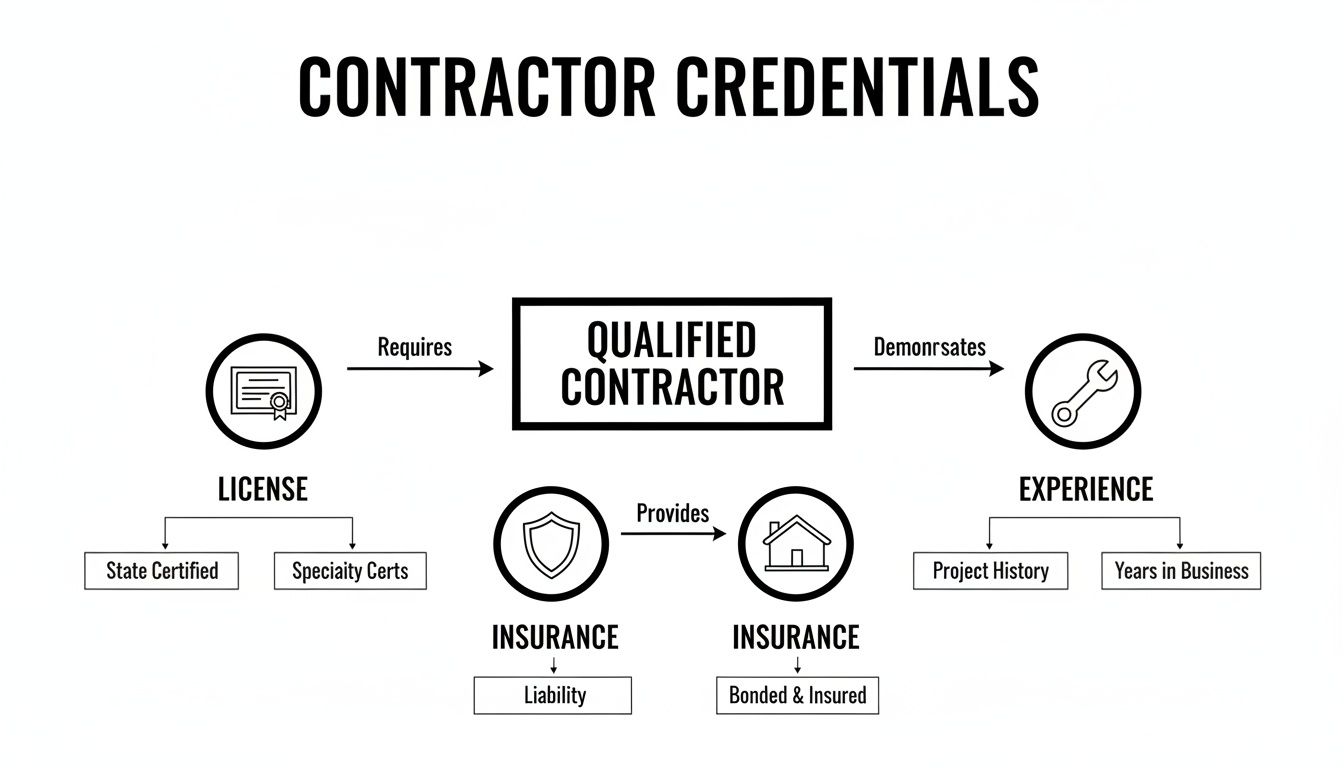
Think of these three things as non-negotiable. They work together to ensure you’re hiring a competent, trustworthy, and accountable professional.
Residential vs. Commercial Work: They're Not the Same
While an outlet is an outlet, commercial electrical work is a whole different ballgame. It operates on a much bigger scale, involves more complex systems built for heavy-duty use, and has to meet a tougher set of commercial building codes.
Here’s the key takeaway: A contractor’s experience has to match the project’s environment. The electrician who is a rockstar at residential smart home setups might not be the best fit for wiring a three-phase motor in an industrial shop.
To help you figure out exactly what your project demands, a side-by-side comparison can make things crystal clear. It ensures you’re asking the right questions from the get-go.
Residential vs. Commercial Electrical Services Checklist
| Service Category | Common Residential Needs | Common Commercial Needs |
|---|---|---|
| System Scale & Voltage | Single-phase power (120/240V). | Three-phase power for heavy machinery and equipment. |
| Wiring & Conduit | Wires are typically run through wood frames using non-metallic (NM) sheathed cable. | Wiring is often housed in metal conduit for durability and fire protection. |
| Lighting Projects | Recessed lighting, landscape lighting, smart dimmers, and fixture installation. | High-bay lighting, emergency exit lighting, complex control systems, and energy-efficient retrofits. |
| Code & Inspections | Adherence to the National Electrical Code (NEC) and local residential building codes. | Strict compliance with NEC, plus additional OSHA safety regulations and accessibility standards. |
Knowing exactly where your project falls helps you narrow down your search and find a contractor who can get the job done right—safely, on time, and on budget.
Meeting Modern High-Tech Electrical Demands
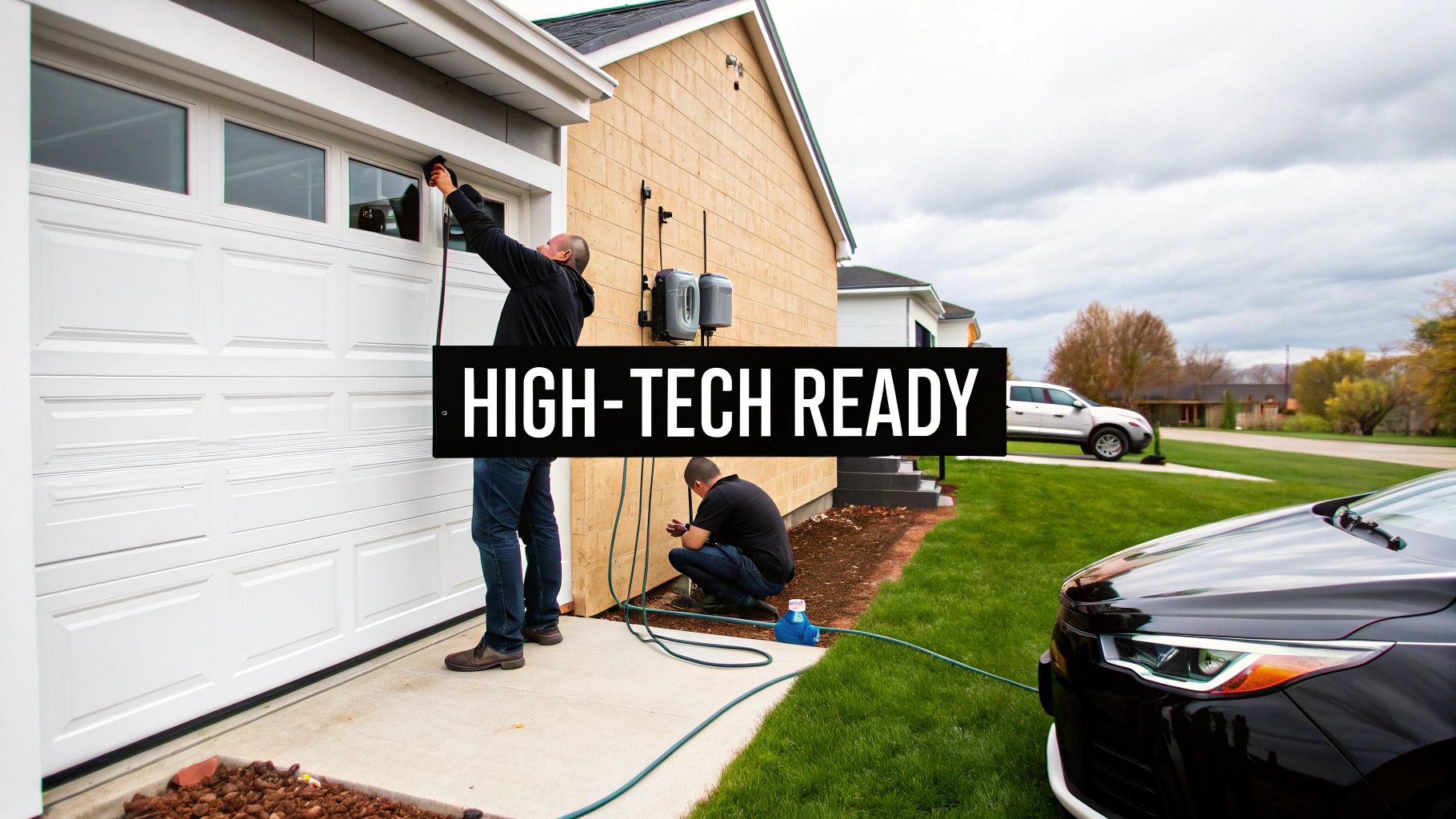
Utah’s tech scene isn’t just about software and startups; it’s fundamentally changing the wiring inside our homes and businesses. Today’s properties need to handle a ton more than just lights and a refrigerator. We're talking smart home gadgets, dedicated home offices, EV chargers, and even commercial data centers.
Here's the thing: every new smart speaker, high-powered computer, or electric vehicle you add places more strain on your electrical panel. An older system simply wasn’t designed to support this constant, cumulative load. That’s why forward-thinking electrical solutions aren’t a luxury anymore—they're a flat-out necessity.
Future-Proofing Your Home and Business
This shift is creating specialized demand all over Northern Utah. The market is increasingly driven by sectors like data centers, renewable energy, and EV infrastructure. In fact, data centers show the highest optimism (57%) among all construction segments, which tells you just how critical high-tech electrical work has become.
Here’s what this means for your property in real terms:
- Dedicated Circuits: High-power equipment, from that new treadmill in the basement to the servers in your office, needs its own dedicated circuit. This stops you from overloading your system and constantly tripping breakers.
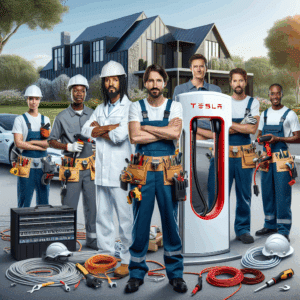
- EV Charger Wiring: You can't just plug a Level 2 charger into any old outlet. Properly installing one for a Tesla or any other EV requires specific knowledge to ensure safe, efficient charging without compromising your home's entire electrical system. You can learn more about what the process involves with professional EV charger installation services.
- Smart Home Integrations: A truly smart home needs more than just a good Wi-Fi signal. Understanding the wiring behind a complete smart home lighting installation is key. A qualified contractor makes sure all the components talk to each other flawlessly, so your smart home is actually smart, not just frustrating.
Why Specialization Matters
The electrical needs of a tech startup in Silicon Slopes are worlds apart from those of a historic home in Ogden. One requires complex data cabling and power solutions that can support server racks, while the other might need a delicate panel upgrade that preserves the home's original character.
Key Insight: Choosing an electrical contractor isn’t just about finding someone who can run wires. It's about finding a specialist who understands the unique power requirements of your specific high-tech application, whether it's for your family's convenience or your business's productivity.
This kind of specialized expertise ensures your electrical system isn't just functional for today but is also ready for tomorrow's innovations. A contractor with a forward-thinking approach will recommend solutions that meet your immediate needs while adding long-term value and safety to your property.
Key Questions to Ask Before You Hire an Electrician
You've got a shortlist of potential electricians, which is a great start. But the real test comes when you talk to them. This is your chance to go beyond the basics and see who really knows their stuff, especially here in Northern Utah.
Honestly, how a contractor answers these questions tells you just about everything you need to know. It’s one thing to have a license; it’s another to have years of hands-on experience navigating the specific codes in Weber, Davis, or Salt Lake counties. You want confidence, not just a quote.
Questions About Their Real-World Experience
First things first, you need to know if their experience actually matches your project. A generic "we do it all" isn't good enough. Get specific.
- Can you show me a few projects like mine that you've completed nearby? This confirms they have a track record with similar jobs and are familiar with the local inspection process. It’s a simple question that a good contractor will be happy to answer.
- Who is actually doing the work? Will a Master Electrician be on-site or at least overseeing the project? This clarifies the chain of command and makes it clear who is ultimately responsible for the quality and safety of the work.
- How do you keep up with changes to the National Electrical Code (NEC) and local county amendments? This is a big one. It shows their commitment to safety and continuing education in a field where the standards are always evolving.
The market for skilled electricians in Utah is tight. The local IBEW has grown to 3,200 members, but even with an 800-student apprentice program, many companies still report a shortage of top-tier talent. This gives a real advantage to established, experienced firms. You can learn more about the local electrical workforce in Utah to see why that experience is so critical.
Clarifying Logistics and Safeguards
Beyond their technical skills, you need to understand how they run their business. These questions are about protecting yourself from headaches down the road by clarifying warranties, emergency response, and how they manage the project itself.
A contractor's willingness to communicate openly about their processes is a direct reflection of their work quality. Vague or hesitant answers are a major red flag.
A professional will have clear, confident answers ready to go.
- What does your warranty cover, and for how long? You want to know the specifics for both materials (the parts) and workmanship (the labor).
- How do you handle project changes or unexpected issues that come up? This reveals their communication style and their process for managing change orders, which can definitely impact your final budget.
- Do you offer emergency services, and what’s a realistic response time? Knowing they’re available for urgent issues, especially after the project is finished, provides some serious peace of mind.
How To Read And Compare Project Estimates
Getting a few project estimates is a smart move, but honestly, an estimate is so much more than just the final price tag. Learning how to actually read and compare quotes from various electrical contractors utah can save you from hidden fees, misunderstandings, and shoddy work.
It’s how you make sure you’re getting real value, not just the lowest price on the page.

Unpacking The Details Of A Professional Bid
A professional, transparent estimate should be a detailed document that clearly spells out every piece of the job. Vague, one-line quotes? That’s a major red flag in my book. Here’s the thing: you need to see exactly what you're paying for to make a smart decision.
A trustworthy bid will always include:
- A Detailed Scope of Work: This section should describe precisely what’s being done, from the specific circuits getting installed to the exact locations of new outlets or fixtures.
- Itemized Costs: Look for a clean breakdown separating material costs from labor. This transparency helps you see where your money is going and keeps contractors from padding material prices.
- A Realistic Timeline: The estimate should give you a projected start date and an estimated completion date. This helps you manage your expectations and coordinate schedules.
- Clear Payment Terms: This part outlines how and when payments are due. It should specify the deposit and the schedule for the remaining payments, ensuring there are no surprises later.
Flat-Rate vs. Time-And-Materials Pricing
When you start comparing estimates, you'll probably run into two main ways contractors price their work. Understanding the difference is crucial for picking what works best for your project and your budget.
Each has its place, and a good contractor will explain why they chose a particular method for your specific job.
Let's break them down.
| Pricing Model | How It Works | Best For |
|---|---|---|
| Flat-Rate Pricing | You get a single, upfront price for the entire job, no matter how long it takes. | Projects with a clearly defined scope, like installing an EV charger or upgrading a panel. You know the exact cost from day one. |
| Time-and-Materials (T&M) | You're billed for the actual hours the electricians work, plus the cost of all materials used. | Troubleshooting complex, unpredictable problems where the full scope isn't known until the work is underway. |
The cheapest quote is rarely the best value. An unusually low bid might signal that the contractor is cutting corners—using cheap materials, hiring inexperienced labor, or just planning to hit you with extra charges later.
A quality estimate is a sign of a professional operation. It shows the contractor has thoroughly looked at your project and is committed to being open and honest from the start.
Why A Local Utah Electrician Just Gets It
When you need an electrician here in Northern Utah, you're not just hiring for technical skill. You're hiring for local knowledge. There’s a huge difference between a contractor who just works in your town and one who is truly part of it—and that difference shows up in the quality, speed, and safety of your project.
Hiring an electrician who is deeply rooted in your community offers advantages a big, faceless chain simply can't match. Frankly, they understand the quirks that make our area unique.
An electrician based right here in Northern Utah lives and breathes the local regulations. They have firsthand, real-world experience with the specific building codes and permitting processes in Weber, Davis, and Salt Lake counties. This isn't just about following rules; it's about avoiding expensive delays and headaches.
Here’s what that local expertise really means for you:
- Faster Project Turnaround: A local contractor knows the inspectors by name and understands the exact documentation needed for a permit in Layton versus, say, Ogden. This insider knowledge helps your project move smoothly from start to finish.
- Smarter Solutions: They know the common housing stock, from historic bungalows with aging, brittle wiring to new builds with high-tech demands. This lets them anticipate problems before they shut down your project.
- Established Relationships: Local electricians have built solid relationships with area suppliers. That often means better and faster access to high-quality materials when they're needed most, especially during supply chain hiccups.
Choosing a contractor who intimately knows the local landscape is one of the best ways to ensure your project is completed correctly, safely, and without the bureaucratic nightmares that can derail even a simple installation. You're hiring someone who already knows the playbook.
Reliability and a Reputation on the Line
What happens when you have an electrical emergency in the middle of a January snowstorm? When you work with a local company, help is just a short drive away, not hours. That proximity provides incredible peace of mind, knowing a trusted professional is nearby and ready to respond when you really need them.
A local contractor’s reputation is built on community trust. They aren’t an anonymous entity; they're your neighbors. Their entire business is tied to the quality of their work and the satisfaction of the people they serve right here. That accountability is a powerful incentive to deliver exceptional service on every single job.
When you hire a local team, you're also putting money back into your own community. You're supporting a business that hires local talent, contributes to the local economy, and is committed to keeping Northern Utah’s homes and businesses safe. It's about building a lasting relationship with a team that’s just as invested in your property’s safety as you are.
Ready to partner with a team that combines deep local expertise with an unwavering commitment to quality? At Black Rhino Electric, we're proud to serve our neighbors across Weber, Davis, and Salt Lake counties. For a transparent estimate and service you can rely on, give us a call at 385-396-7048 or request a free quote online to get your project started.